2027 How to Become a Certified Personal Trainer

Co-Founder and Chief Data Scientist
Becoming a certified personal trainer is one of the more direct ways to enter the fitness field, but the choice is not as simple as buying the first certification you see online. Employers, gyms, private clients, and insurance providers often look at the credibility of your credential, your ability to work safely with different clients, and your readiness to keep learning as exercise science and fitness technology evolve. This guide explains how to become a certified personal trainer, what education is usually required, how certification programs differ, what online training can and cannot provide, and how to think about salary, career paths, legal risk, and long-term growth.
Quick Answer: How to Become a Certified Personal Trainer
To become a certified personal trainer, you typically need a high school diploma or GED, CPR/AED training if required by the certifying organization or employer, completion of a personal trainer certification course, and a passing score on the certification exam. Many candidates finish the process in three to six months, although the timeline depends on the program, study pace, and exam availability. A degree is not always required, but coursework in exercise science, kinesiology, nutrition, business, or health administration can strengthen your qualifications and help you move into specialized or leadership roles.
Key Things You Should Know About How to Become a Certified Personal Trainer
- The usual minimum education requirement is a high school diploma or GED. Still, 92,158 exercise trainers and group fitness instructors in the US hold a bachelor's degree, which may improve competitiveness for some roles.
- Major certification options include organizations such as the National Academy of Sports Medicine (NASM), the American Council on Exercise (ACE), ISSA, NSCA, and ACSM. Each has a different emphasis, so the best choice depends on the clients and settings you want to serve.
- Many candidates can prepare for and complete a certification program in about three to six months. Accelerated options may be faster for students who can study consistently.
- The annual average salary for certified personal trainers in the US is estimated at $68,730, with states such as New Jersey and New York reporting higher wages.
- Employment for fitness trainers and aerobics instructors is projected to grow 12% between 2024 and 2034, with about 74,200 job openings annually during this period.
- How to become a certified personal trainer
- Minimum education requirements for personal trainers
- Personal trainer certification options
- How long certification usually takes
- What certification programs teach
- Online personal trainer certification options
- Online vs. in-person personal trainer programs
- Certified personal trainer salary expectations
- Career paths for certified personal trainers
- Job outlook for personal trainers
- Legal and insurance issues for trainers
- Ways to lower education and certification costs
- Health diagnostics and client assessment skills
- Technology trends in personal training
- Flexible and online learning pathways
- Master's degrees and earning potential
- Healthcare administration degrees for fitness careers
- Education paths that pair well with certification
- Mentorship and networking for career growth
- Medication, supplement, and client safety awareness
- Building a customized learning plan
- Soft skills personal trainers need
- Public health education for fitness professionals
- Supplementary online degrees
- How to choose a certification program
- Business skills for personal trainers
- Personal branding for certified trainers
- Biology knowledge and personal training
- Fast associate degrees for trainers
- Bachelor's degrees and personal training careers
How do you become a certified personal trainer?
The path to becoming a certified personal trainer usually starts with choosing a reputable certification that matches your intended work setting. For example, someone who wants to train general fitness clients at a gym may choose a broad CPT credential, while someone interested in strength and conditioning, corrective exercise, or clinical-adjacent wellness may prefer a certification with a more specialized framework. Well-known organizations such as the National Academy of Sports Medicine (NASM) and the American Council on Exercise (ACE) offer programs that cover human anatomy, exercise technique, client assessment, program design, coaching communication, and professional standards.
Most certification paths require you to study independently or through a guided course and then pass an exam. Some exams are delivered through testing centers, while others may use online proctoring. After certification, you can begin applying for entry-level personal training roles, contracting with gyms, building a private client base, or adding the credential to an existing wellness or coaching practice. If you want stronger academic preparation, especially for advanced roles, Research.com also provides information on affordable exercise science degree programs.
Step-by-Step Path to Certification
- Clarify your target role. Decide whether you want to work in a commercial gym, boutique studio, corporate wellness program, athletic setting, online coaching business, or private practice.
- Check prerequisites. Many programs expect candidates to be at least 18 years old, have a high school diploma or equivalent, and hold CPR/AED certification when required.
- Compare certification providers. Review organizations such as NASM, ACE, ISSA, NSCA, and ACSM. Focus on recognition, curriculum quality, exam format, renewal rules, and employer preferences in your area.
- Study the core material. Learn anatomy, physiology, movement screening, safe exercise instruction, client communication, program progression, and professional ethics.
- Practice coaching skills. Reading is not enough. You need to become comfortable demonstrating exercises, cueing movement, modifying workouts, and documenting client progress.
- Pass the certification exam. Schedule the exam only after you are comfortable with practice questions and can apply concepts to client scenarios.
- Maintain your credential. Plan for continuing education, recertification fees, CPR/AED renewal, and specialty training as your career develops.
Typical Certification Timeline
| Stage | What You Do | Decision Point |
| Career planning | Choose the type of clients and work environment you want. | Pick a certification aligned with your preferred setting. |
| Prerequisites | Confirm diploma or GED status and CPR/AED requirements. | Resolve missing requirements before registering for the exam. |
| Coursework | Study exercise science, assessments, coaching, and program design. | Select self-paced, guided, hybrid, or in-person preparation. |
| Exam | Take the certifying organization's exam. | Review retake rules and exam fees before scheduling. |
| Career launch | Apply to gyms, build a client list, or begin online coaching. | Decide whether you need specialty credentials or a related degree. |
Continuing Education
Certification is not a one-time event. Most certifying bodies require continuing education units, often called CEUs, to keep your credential active. These requirements help trainers stay current on programming methods, safety standards, client communication, and emerging areas such as virtual coaching, wearable technology, and special population training. Workshops, online courses, conferences, and specialty credentials can all contribute to renewal. Trainers who want to move beyond client sessions into management, marketing, or program leadership may also consider related academic options such as sport management degrees online.
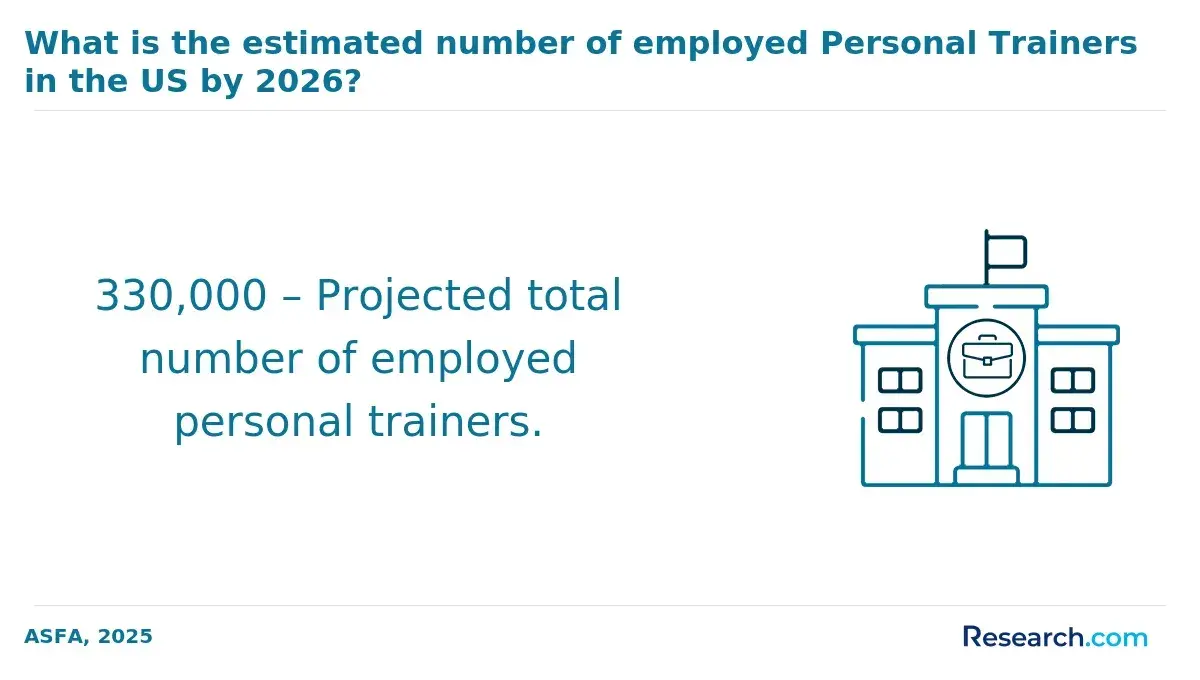
As of 2025, there are around 330,000 personal fitness trainers and group exercise instructors in the United States. Around 63.2% are women and 36.8% are men.
What are the minimum educational requirements to become a certified personal trainer?
A high school diploma or equivalent is typically the minimum educational requirement for personal trainer certification. That level of education helps ensure candidates can manage basic science concepts, communicate clearly with clients, calculate training variables, and understand professional documentation. However, the minimum requirement is not always the strongest preparation for the job.
Many trainers build stronger credentials through coursework in exercise science, kinesiology, nutrition, public health, psychology, business, or sports management. A bachelor's degree is not mandatory for many personal training jobs, but it can be useful when applying for higher-responsibility roles, working with specialized populations, moving into wellness leadership, or preparing for graduate study. Around 92,158 exercise trainers and group fitness instructors in the country have a bachelor's degree.
Students who want a broader academic foundation may compare exercise science and sports science programs with other strong college majors to pursue. The best choice depends on whether your long-term goal is client training, business ownership, athletic performance, rehabilitation-adjacent work, corporate wellness, or graduate school.
| Education Level | How It Helps | Best For |
| High school diploma or GED | Meets the common baseline requirement for certification eligibility. | Entry-level candidates who want the fastest route into the field. |
| Personal trainer certification | Shows you have passed an industry exam covering fitness assessment, programming, and safety. | People who want to train clients professionally. |
| Associate degree | Adds general education and introductory health, science, or business coursework. | Students who want a lower-cost academic credential alongside certification. |
| Bachelor's degree | Builds deeper knowledge in exercise science, kinesiology, management, or related fields. | Trainers seeking specialization, leadership, or stronger employer competitiveness. |
| Graduate degree | Supports advanced roles in administration, research, public health, or performance-related fields. | Professionals targeting leadership, teaching, or specialized wellness careers. |
What certificates are available to become a personal trainer?
Personal trainer certifications vary in focus, exam structure, cost, renewal requirements, and employer recognition. Like other career-focused certificate programs, the value of a CPT credential depends on whether it is respected in your target market and whether it prepares you to work safely with real clients. The following certifications are among the commonly recognized options in the field.
| Certification | Main Emphasis | Who It May Fit Best |
| National Academy of Sports Medicine (NASM) Certified Personal Trainer (CPT) | Uses the OPT, or Optimum Performance Training, model with attention to functional training, strength, flexibility, and individualized programming. | Candidates who want a structured model for designing programs for a wide range of clients. |
| American Council on Exercise (ACE) Certified Personal Trainer | Emphasizes practical coaching, evidence-based exercise programming, client assessment, and behavior change strategies. | Future trainers who want broad preparation for general fitness clients and wellness-focused coaching. |
| International Sports Sciences Association (ISSA) Certified Fitness Trainer | Offers flexible study options and covers exercise science, program planning, client communication, and motivation. | Learners who need scheduling flexibility and want practical career-entry preparation. |
| National Strength and Conditioning Association (NSCA) Certified Personal Trainer (NSCA-CPT) | Places strong emphasis on strength, conditioning, performance, exercise technique, and program development. | Trainers interested in athletic performance, functional strength, and performance-oriented settings. |
| American College of Sports Medicine (ACSM) Certified Personal Trainer | Uses a science-based approach covering exercise physiology, assessment, programming, and health-related fitness principles. | Candidates who want a research-informed credential and may work with health-focused clients. |
What is the certification exam process like?
The exam process usually begins with registration through the certifying organization's website. You select the credential, pay the required fees, confirm eligibility, and choose a test format if options are available. Exams often include multiple-choice questions that require you to apply exercise science concepts, design safe programs, interpret client information, and respond appropriately to professional scenarios.
Before sitting for the exam, use the provider's study guide, practice tests, textbook, videos, or review modules. Many exams take between two to four hours. After passing, you receive documentation of your certification, which may include a certificate, digital badge, or verification listing. Renewal usually requires continuing education within a specified period, so review recertification rules before you commit to a provider.
Questions to Ask Before Choosing a Certification
- Do gyms or employers in my area recognize this credential?
- Is the program appropriate for the clients I want to train?
- What are the full costs, including study materials, exam fees, retakes, and renewal?
- Does the program require CPR/AED certification before testing or before certification is awarded?
- Can I access instructors, practice exams, workshops, or career support?
- How often do I need to renew, and how many CEUs are required?
How long does it take to become a certified personal trainer?
Most candidates can complete preparation for a personal trainer certification in three to six months, although some need less time and others take longer. The timeline depends on your prior knowledge, study hours per week, course format, comfort with anatomy and physiology, and how quickly you can schedule the exam. Candidates who already have a background in exercise science or coaching may move faster, while career changers with limited science exposure may benefit from a slower study plan.
Passing the exam is only one milestone. Building confidence with clients takes additional time. New trainers often need supervised practice, mentorship, shadowing, or entry-level gym experience to develop professional judgment and coaching presence.
What are the continuing education requirements for personal trainers?
Most certifying organizations require personal trainers to earn continuing education units every two to four years to keep their credentials active. CEUs may include workshops, online modules, specialty certifications, fitness conferences, or approved courses in areas such as corrective exercise, nutrition basics, behavior change, senior fitness, or youth training. Ongoing learning matters because trainers need the right skills in an evolving field and must adapt to new client needs, technologies, and safety expectations.
What can you expect from personal trainer certification programs?
A quality personal trainer certification program should prepare you for both the exam and the practical realities of working with clients. The strongest programs go beyond memorization and teach you how to make safe decisions, adjust exercises, communicate clearly, and build progressive plans based on individual goals and limitations.
- Exercise science foundations. Expect coverage of anatomy, physiology, biomechanics, energy systems, and movement principles that support safe training decisions.
- Client assessment and intake. Programs usually explain screening, goal setting, fitness assessments, health history review, and when to refer a client to a healthcare professional.
- Program design. You should learn how to create strength, cardiovascular, mobility, and conditioning plans with appropriate progressions.
- Exercise technique and coaching cues. Many programs include videos, demonstrations, or practice recommendations to help you teach movement safely.
- Behavior change and communication. Trainers must help clients build consistency, so coaching psychology, motivation, and adherence strategies matter.
- Exam preparation. Study guides, practice exams, quizzes, flashcards, and review modules can help you understand the exam structure.
- Professional standards. Strong programs cover ethics, documentation, scope of practice, client confidentiality, and continuing education.
| Program Feature | Why It Matters | Red Flag |
| Recognized credential | Employers and clients are more likely to trust certifications they know. | The provider makes broad promises but has little industry recognition. |
| Clear exam structure | You need to know how you will be tested and what retake rules apply. | Exam requirements, fees, or passing standards are hard to find. |
| Practical learning tools | Videos, case studies, and coaching examples help translate theory into client work. | The course is mostly superficial content with little applied practice. |
| Continuing education pathway | Renewal is part of long-term credential maintenance. | The provider does not explain recertification or CEU expectations clearly. |
Can you earn a personal trainer certification online?
Yes. Many personal trainer certification providers offer online study programs, digital textbooks, video lessons, quizzes, practice exams, and remote support. Some also allow the certification exam to be taken through online proctoring, while others require testing at an approved site. Online certification can be a good option if you need flexibility, live far from a workshop location, or want to study while working.
The main limitation is that online study does not automatically give you hands-on coaching experience. If you choose an online program, look for ways to practice exercise demonstration, receive feedback, shadow experienced trainers, or complete in-person workshops. Online learning can prepare you for the knowledge exam, but your first clients will still expect safe, confident, and professional coaching.
An online route can also help candidates access a specific certification that is not offered locally. Location still affects earnings after certification. The highest-paying states for certified personal trainers include New Jersey ($66,970) and New York ($65,370). See the chart below for more details.
How do online certified personal trainer programs compare to in-person programs?
Online and in-person personal trainer programs can both lead to certification, but they suit different learning styles and career situations. The right choice depends on how you learn best, whether you need hands-on feedback, your budget, and your schedule.
| Factor | Online Programs | In-Person Programs |
| Flexibility | Often self-paced, making them easier for working adults or students with family responsibilities. | Usually follow a fixed schedule and require attendance at a specific location. |
| Hands-on practice | May rely on videos, virtual demonstrations, and independent practice. | Can provide direct coaching practice, instructor correction, and peer interaction. |
| Cost and convenience | Can reduce commuting, relocation, and scheduling costs. | May cost more when travel, parking, or time away from work are included. |
| Interaction | May include forums, virtual office hours, or online instructor support. | Offers face-to-face discussion and immediate feedback. |
| Best fit | Self-directed learners who need flexibility and can create their own practice opportunities. | Learners who want structure, live instruction, and supervised skill development. |
Before choosing either format, verify that the certification is recognized by the gyms, studios, or employers you plan to approach. The delivery format matters less than the quality of the credential, the rigor of the exam, and your ability to coach safely. Trainers who already hold a bachelor's degree and want to build business leadership skills may also compare options such as online MBA no GMAT programs.
Average Cost of Personal Trainer Certifications in the US
The cost of personal trainer certifications in the US varies by certifying organization, included study materials, exam structure, and optional workshops. A reputable personal trainer certification often costs between $500 and $2,000. When comparing programs, look beyond the advertised price and include exam retakes, CPR/AED training, renewal fees, CEUs, textbooks, and specialty add-ons.
How much can I earn as a certified personal fitness trainer?
Certified personal trainer earnings depend on location, employer type, experience, client base, specialization, hours worked, and whether you are an employee or independent contractor. Trainers in higher-cost regions, trainers with specialized expertise, and trainers who build a strong private client base may earn more than entry-level gym employees. Income can also fluctuate for self-employed trainers because cancellations, marketing costs, insurance, rent, and taxes affect take-home pay.
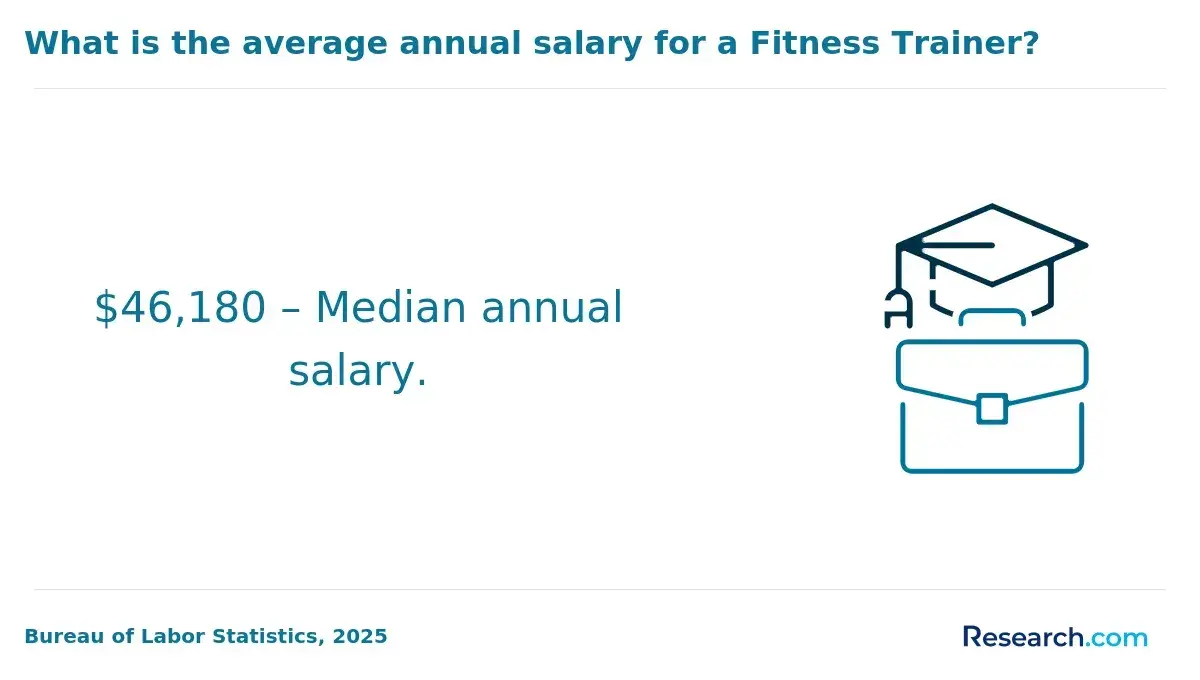
The estimated annual average salary for a certified personal trainer in the United States is $46,180—similar in general range to several high paying jobs with associates in arts. Treat salary figures as planning estimates, not guarantees. Before choosing this career, compare local job postings, pay structure, commission policies, benefits, and expected client volume.
| Factor | How It Can Affect Pay |
| Location | Wages often differ by state, metro area, and cost of living. |
| Employment model | Employees may receive more stability, while contractors may have more pricing flexibility but more business expenses. |
| Specialization | Training athletes, seniors, post-rehabilitation clients, or corporate wellness participants may require additional credentials. |
| Client acquisition | Independent trainers must market, retain clients, and manage scheduling to sustain income. |
| Experience | Experienced trainers often become better at assessment, retention, referrals, and program design. |
What career paths are available for certified personal trainers?
A CPT credential can lead to several types of fitness and wellness roles. Your best path depends on whether you prefer one-on-one coaching, group instruction, business operations, specialized populations, or leadership.
- Fitness coach or personal trainer: Fitness coaches create individualized programs, monitor progress, teach exercise technique, and help clients work toward health and performance goals. This path can also pair with several career options with a sport management degree.
- Group fitness instructor: These professionals lead classes such as strength training, aerobics, cycling, yoga-inspired formats, or conditioning sessions. The role requires strong public speaking, safety awareness, and the ability to manage different ability levels at once.
- Corporate wellness coach: Corporate wellness trainers support employee fitness programs, assessments, wellness challenges, and education sessions. Knowledge of motivation, stress, and behavior can be useful, which is why some trainers explore affordable online psychology degree programs.
- Specialized trainer: Some trainers focus on athletes, older adults, corrective exercise, weight management, mobility, or clients with specific health considerations. These paths usually require additional training and a clear understanding of scope of practice.
- Fitness director: Fitness directors manage staff, programming, budgets, scheduling, member experience, and marketing for gyms or wellness facilities. Trainers interested in communication strategy or digital marketing may consider options such as an online communications masters.
Starting a Business
Many certified trainers eventually consider independent work, online coaching, mobile training, or opening a studio. Business ownership can offer more control, but it also requires pricing strategy, client contracts, bookkeeping, marketing, insurance, scheduling systems, and tax planning. Trainers who want to manage their own books may review the best bookkeeper certification options to build practical financial skills.
The top-paying industries for certified personal trainers are the amusement and recreational industries (175,020) and civic and social organizations (25,050).
What is the job outlook for certified personal trainers?
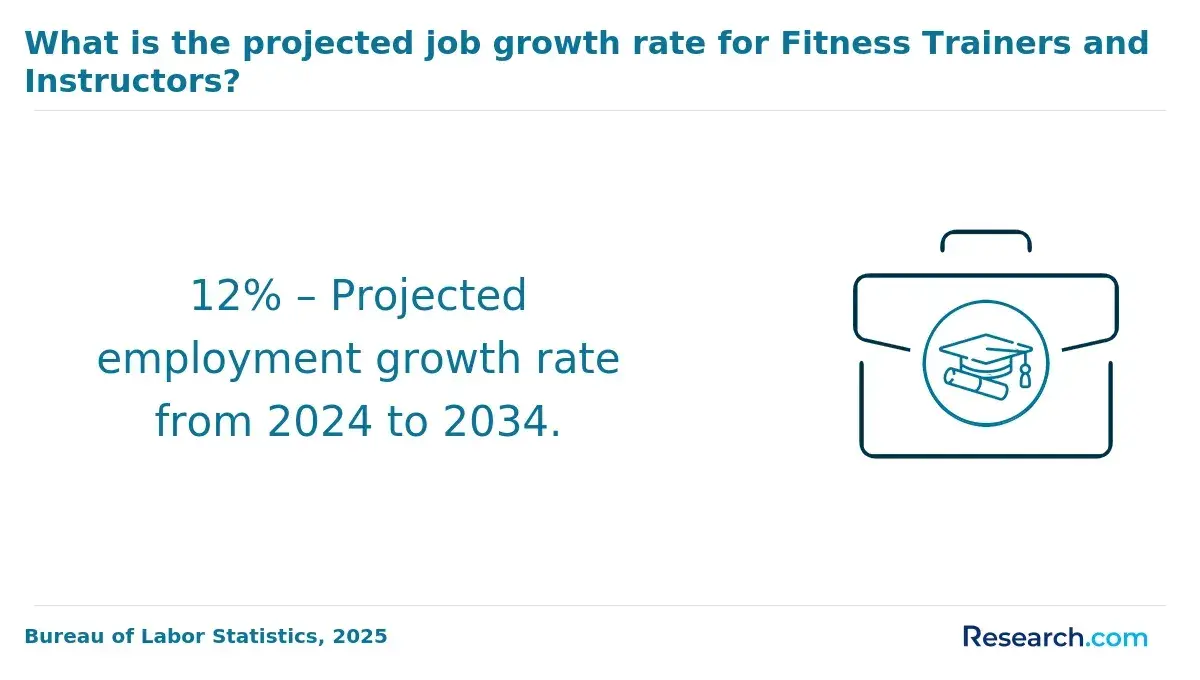
The employment outlook for fitness trainers and aerobics instructors remains strong. Through 2034, employment is expected to grow by 12%, reflecting continued interest in fitness, wellness, preventive health, and active aging. Demand may come from gyms, health clubs, studios, community organizations, corporate wellness programs, online coaching platforms, and clients seeking individualized support.
During this period, there will be an average of 69,000 job openings each year. Job openings may result from growth as well as the need to replace workers who change occupations or leave the labor force. For someone researching how to become a certified personal trainer for 2027, the practical takeaway is clear: certification can open doors, but employability improves when you combine a credible credential with coaching skill, client retention ability, specialization, and professional reliability.
What are the legal and insurance considerations for personal trainers?
Personal training involves physical activity, injury risk, personal data, and sometimes clients with medical histories. Legal preparation is not optional, especially if you work independently. You need to understand liability, documentation, client screening, professional boundaries, and insurance coverage before you begin charging clients.
- Liability insurance: Professional liability coverage can help protect you if a client claims injury or negligence. Some gyms cover employees, but independent contractors and self-employed trainers often need their own policy.
- Client waivers and informed consent: A waiver does not eliminate all legal risk, but it documents that the client was informed of exercise-related risks. Use professionally reviewed forms when possible.
- Health screening: Intake forms, readiness questionnaires, and medical history reviews help identify clients who may need clearance or referral before training.
- Local rules and employer policies: Requirements can vary by location, facility, or employer. Confirm whether background checks, CPR/AED status, specific certifications, or facility policies apply.
- Scope of practice: Personal trainers should not diagnose injuries, prescribe diets as medical treatment, adjust medications, or provide healthcare advice unless they hold the appropriate professional license. Refer clients to healthcare professionals when needed.
- Emergency readiness: CPR, AED, and first aid knowledge are important for client safety. Trainers who want broader healthcare-adjacent preparation may research medical certificate programs.
How to Save on Education Costs While Pursuing Personal Trainer Certifications
Certification can be affordable compared with many degree programs, but costs add up when you include study materials, exam fees, CPR/AED training, retakes, CEUs, workshops, specialty credentials, and business startup expenses. A cost-conscious plan helps you avoid overspending before you know which clients or employers you want to serve.
- Compare full program costs. Do not evaluate only the base price. Include books, exam attempts, proctoring, renewal, CEUs, and optional bundles.
- Watch for discounts. Certification providers may offer seasonal pricing, package discounts, or payment plans.
- Use free or included study resources first. Avoid buying every add-on until you know what the core course already provides.
- Prioritize credentials with clear career value. A low-cost credential is not a bargain if local employers do not recognize it.
- Consider affordable online education carefully. If you need college coursework or a degree, compare flexible options such as cheap online courses.
The smartest cost-saving strategy is to match your spending to your career stage. Start with a respected CPT credential, add CPR/AED and insurance, gain real client experience, and then invest in specialty credentials or degrees once your niche is clearer.
Can Health Diagnostics Certifications Enhance Your Personal Training Practice?
Better client assessment can improve programming, but personal trainers must stay within their professional scope. Health diagnostics education may help you understand screening, referral needs, and client risk factors, but it does not make a trainer a medical provider. If you are interested in allied health learning, programs such as online sonography certificate programs may broaden your understanding of healthcare environments. For most trainers, however, CPR/AED, first aid, exercise assessment, and referral protocols are more directly relevant starting points.
How Can Emerging Technologies Transform the Personal Training Industry?
Technology is changing how trainers assess, communicate, and deliver programs. Wearables can track activity, heart rate, recovery indicators, and client adherence. Online platforms can support remote coaching, video feedback, and habit tracking. AI-enabled tools may help organize data or draft programs, but trainers still need professional judgment to adapt workouts safely for individual clients. Candidates who want flexible academic options while working in the field can also compare easy online degrees, especially if they need a broader credential for business or management goals.
Achieve Your Goals with Flexible and Online Learning Programs
Flexible learning is useful for aspiring trainers who are balancing work, family, military service, athletics, or another career. Online CPT programs can let you study anatomy, program design, client assessment, and professional standards without relocating or attending scheduled campus sessions.
A self paced online college model can also work well for students who need more control over their schedule. The trade-off is accountability: self-paced learners must create a study calendar, practice consistently, and seek feedback instead of relying only on reading modules.
Some certification providers offer hybrid models that combine online content with optional workshops. These can be especially helpful if you want the flexibility of online study but still need supervised practice with exercise technique, cueing, and assessment.
What Should I Consider When Choosing a Certification Program?
The best personal trainer certification is not always the cheapest, fastest, or most heavily advertised option. Choose based on recognition, curriculum, exam rigor, support, renewal rules, and fit with your career goals. If you plan to keep advancing academically, you can also explore graduate pathways such as fastest online master's degrees, but a master's program should support a clear professional objective rather than serve as a generic credential upgrade.
| Selection Factor | What to Check | Why It Matters |
| Recognition | Ask local gyms and employers which certifications they accept. | A credential only helps if it is trusted in your target market. |
| Curriculum | Review coverage of anatomy, assessment, programming, technique, ethics, and behavior change. | Training clients safely requires applied knowledge, not just test preparation. |
| Exam format | Check test length, delivery method, retake policy, and included attempts. | Exam logistics affect your timeline and total cost. |
| Learning support | Look for practice exams, instructor access, study plans, and practical demonstrations. | Support can improve readiness, especially for first-time candidates. |
| Renewal | Confirm CEU requirements, renewal cycle, and fees. | Long-term costs continue after certification. |
How Can Business Management Skills Enhance My Personal Training Business?
Business skills matter because personal training is often both a service profession and a sales-driven profession. Trainers must manage scheduling, pricing, client communication, payments, referrals, cancellations, and documentation. If you run your own practice, weak business systems can limit income even when your coaching is strong. Training in billing, administration, or operations, including options such as billing and coding online classes, may be useful for trainers who want stronger back-office skills or plan to work in health-adjacent organizations.
Key Findings
- Employment for fitness trainers and aerobics instructors is projected to grow 12% between 2024 and 2034, with an average of 74,200 job openings annually.
- There are around 370,100 fitness trainers and instructors in the US, showing that the occupation already has a sizable workforce.
- The estimated annual average salary for certified personal trainers in the US is $67,330, with New Jersey and New York among the top-paying states.
- Many personal trainer certification programs can be completed in three to six months, and online formats can help students study around work or family obligations.
- A high school diploma or GED is generally the minimum education requirement, but a bachelor's degree can strengthen career options for some trainers.
How Can I Build a Strong Personal Brand as a Certified Personal Trainer?
A strong personal brand helps clients understand what you do, who you serve, and why they should trust you. Start with a clear niche, such as beginner strength training, weight management support, senior fitness, busy professionals, athletic performance, or online accountability coaching. Then build a consistent presence through a professional website, social media channels, client testimonials, educational content, and transparent service packages. Additional education, including flexible online degrees, can support credibility when it is directly connected to your niche and client needs.
How Can a Biology Background Enhance My Personal Training Career?
Biology can strengthen a trainer's understanding of human systems, adaptation, metabolism, tissue response, and exercise-related physiological change. That knowledge can make it easier to explain training concepts and recognize when a client's situation requires referral. A biology background does not replace a CPT credential, but it can complement one well. If you are weighing science-based career directions, Research.com also covers what can I do with a biology degree.
Here's What Graduates Have to Say About Becoming a Certified Personal Trainer
- Certification helped me turn my interest in fitness into paid work. I liked that the process was clear, and I was able to start building client experience soon after passing the exam. The biggest reward has been seeing clients gain confidence and consistency. Jason
- Studying online made the process manageable with my schedule. I could review lessons when I had time and still prepare seriously for the exam. Now I get to help people improve their strength, energy, and mindset. Rachel
- The variety is what keeps the work interesting. Some days involve one-on-one coaching, others involve group sessions or program planning. Every client has different goals, so I am always learning how to communicate better and adjust workouts safely. Emma
How Can a Master's Degree Boost My Earning Potential?
A master's degree may help trainers move into leadership, administration, research, teaching, corporate wellness, or specialized health and performance roles. It is not necessary for most entry-level personal training jobs, so the return depends on your career target. Graduate study in health administration, business, exercise science, public health, or related fields can be useful when it leads to a role with broader responsibility. If you are comparing options, review programs tied to measurable career outcomes, such as the highest paying masters.
How Can an Affordable Online Bachelor's Degree in Healthcare Administration Benefit My Fitness Career?
Healthcare administration can be relevant for trainers who want to manage wellness programs, work in health-adjacent organizations, coordinate services, or understand compliance and operations. An affordable online bachelors degree healthcare administration may help you build skills in budgeting, management, policy, and organizational systems. It is most useful if your goal extends beyond session-based training into leadership or program administration.
What other educational paths can complement a personal trainer certification?
A CPT credential can stand alone for many entry-level roles, but related education can broaden your options. Exercise science, kinesiology, nutrition, psychology, business, public health, sports management, and healthcare administration all support different career directions. Associate degrees can be a cost-conscious way to add academic structure before committing to a bachelor's program. Research.com’s guide to the best associate degrees can help you compare broader education pathways that may pair with a fitness career.
How Can Professional Mentorship and Networking Accelerate My Personal Training Career?
Mentorship helps new trainers avoid common mistakes, improve coaching judgment, and understand how the industry works beyond certification exams. Shadowing experienced trainers, joining professional associations, attending workshops, and building relationships with physical therapists, dietitians, gym managers, and wellness professionals can create referral and learning opportunities. If you are considering accelerated graduate education later, options such as a one year masters program may support advancement when aligned with a specific role.
How Can Pharmacological Expertise Enhance My Client Safety and Program Effectiveness?
Trainers often encounter clients who use supplements, prescriptions, or over-the-counter medications. You should not provide medical advice unless you are licensed to do so, but basic awareness can help you ask better screening questions and refer clients appropriately. Advanced pharmaceutical training, such as a Pharm D online pathway, is far beyond what most personal trainers need, but it illustrates the importance of understanding where fitness coaching ends and licensed healthcare guidance begins.
How Can a Customized Learning Path Elevate My Personal Training Career?
A customized learning plan prevents random credential stacking. Start with your target clients, then choose education that supports those clients. For example, a trainer working with older adults may prioritize balance, mobility, and chronic-condition awareness, while a trainer building an online business may study marketing, communication, and client retention. Flexible and cost-conscious learning resources, including online colleges, can help you add credentials without overextending your budget.
What Soft Skills Are Essential for a Successful Personal Trainer?
Technical knowledge matters, but soft skills often determine whether clients stay. Successful trainers communicate clearly, listen carefully, motivate without shaming, adapt sessions when needed, and maintain professional boundaries. They also document progress, manage expectations, and help clients build habits between sessions. Students looking for flexible education options that may strengthen communication and professional skills can compare online schools with no application fee.
| Soft Skill | Why It Matters in Personal Training |
| Communication | Clients need clear instructions, feedback, and explanations they can understand. |
| Empathy | Many clients feel intimidated, discouraged, or unsure when starting fitness programs. |
| Adaptability | Workouts often need adjustment because of fatigue, pain, schedule changes, or progress plateaus. |
| Professionalism | Reliability, confidentiality, and boundaries help build trust. |
| Sales and retention | Trainers must explain value, maintain relationships, and encourage long-term engagement ethically. |
How Can an Advanced Degree in Public Health Enhance My Personal Training Career?
Public health education can help trainers understand wellness at a population level, including prevention, health behavior, community programs, and data-informed decision-making. This background may be especially useful for corporate wellness, community fitness, nonprofit health initiatives, or programs serving specific populations. Trainers interested in this direction may explore an affordable master's in public health if they want to move beyond individual coaching into broader wellness strategy.
How Can Supplementary Online Degrees Strengthen My Career as a Personal Trainer?
Supplementary online degrees can support a personal training career when they solve a real career need. Business coursework can help with private practice, psychology can support behavior change, and health administration can support wellness program leadership. Flexible associates degrees online may be a practical starting point for trainers who want college credit without immediately committing to a four-year degree.
Can a Fast Associates Degree Accelerate My Career as a Certified Personal Trainer?
An accelerated associate degree can add structure, general education, and career-relevant coursework while allowing you to continue working. A fast associates degree online may be useful if you want to build academic momentum, prepare for a bachelor's program, or add business and health-related knowledge to your CPT credential. It should not replace a recognized personal trainer certification if your goal is direct client training.
How Can a Bachelor's Degree Enhance My Career in Personal Training?
A bachelor's degree in exercise science, kinesiology, sports management, nutrition, health science, or a related area can deepen your knowledge and improve access to certain roles. It can also help if you want to specialize, manage a fitness facility, pursue graduate school, or work in settings that prefer a degree. For working adults who need speed and flexibility, the fastest online bachelor's degree programs may be worth comparing carefully for accreditation, transfer policies, cost, and career fit.
Common Mistakes to Avoid When Becoming a Certified Personal Trainer
- Choosing a certification only because it is cheap. A low price is not helpful if employers do not recognize the credential.
- Ignoring renewal costs. CEUs, recertification, CPR/AED updates, and insurance are ongoing expenses.
- Assuming online study equals coaching readiness. You still need practice demonstrating exercises, cueing clients, and adjusting programs.
- Working outside your scope. Do not diagnose, prescribe medical diets, treat injuries, or advise on medications unless you are licensed to do so.
- Skipping business planning. Independent trainers need pricing, contracts, marketing, bookkeeping, cancellation policies, and liability coverage.
- Relying only on salary averages. Local demand, employment structure, client retention, and specialization can change actual earnings significantly.
Key Insights
- A credible CPT certification is the core requirement for most entry-level personal training roles; a degree can help, but it is not always required to start.
- The strongest certification choice depends on your career goal, employer expectations, curriculum quality, exam process, renewal rules, and total cost.
- Online certification can be convenient and rigorous, but new trainers should intentionally seek hands-on practice and feedback.
- Personal training careers can include gym employment, group instruction, corporate wellness, specialty coaching, management, online coaching, or business ownership.
- Legal protection matters. Trainers should understand liability insurance, waivers, health screening, documentation, emergency readiness, and scope of practice.
- Long-term growth comes from combining technical competence, soft skills, client retention, continuing education, and business judgment.
References:
- Projections Central. (2024). Long-term occupational projections. Retrieved from Projections Central.
- U.S. Bureau of Labor Statistics. (2025). Fitness trainers and instructors. Retrieved from BLS.
- U.S. Bureau of Labor Statistics. (2025). Occupational Employment and Wage Statistics (OEWS) Tables. Retrieved from BLS.
Other Things You Need to Know About How to Become a Certified Personal Trainer
In 2027, the best certification for becoming a personal trainer varies depending on individual goals and specific needs. However, widely recognized certifications include the National Academy of Sports Medicine (NASM), American Council on Exercise (ACE), and the National Strength and Conditioning Association (NSCA). These certifications are respected for their comprehensive curricula, expert-backed content, and industry recognition.
In 2027, personal trainers should be aware of trends such as the increasing integration of technology in fitness programs, personalized workout plans using AI, and the growing demand for virtual training sessions. Staying updated with these trends can enhance client engagement and career opportunities.