2027 How to Become a Mental Health Counselor in Wyoming

Co-Founder and Chief Data Scientist
Becoming a mental health counselor in Wyoming is a licensure-driven career decision, not just a degree choice. The state has substantial behavioral health needs: 21% of adults have experienced depression at some point in their lives, according to the Wyoming Prevention Depot (n.d.), and rural distance can make access to counseling difficult. For students and career changers, that creates both opportunity and responsibility.
This guide explains how to become a Licensed Professional Counselor (LPC) in Wyoming, what education and supervised experience are required, how practicum and internship training fit into the process, what career options exist after graduation, and how to evaluate whether this path fits your goals. It also covers telehealth, substance abuse treatment, school-based roles, practice management, reimbursement challenges, and common mistakes to avoid before you commit time and money to a counseling program.
Quick Answer: How Do You Become a Mental Health Counselor in Wyoming?
To become a mental health counselor in Wyoming, you generally need a bachelor’s degree, a qualifying master’s degree in counseling or a closely related field, supervised clinical experience, required licensure exams, and approval from the Wyoming Mental Health Professions Licensing Board. Candidates commonly begin as Provisional Professional Counselors (PPCs) while completing clinical requirements before advancing to full LPC licensure. Wyoming requires a minimum of 3,000 hours of supervised clinical experience, and licensed counselors must complete continuing education requirements, which are 45 units.
Key Things You Should Know About Becoming a Mental Health Counselor in Wyoming
- Wyoming has a clear need for behavioral health professionals, with 32.4% of adults with anxiety or depression reporting an unmet counseling or therapy need.
- The career outlook is strong: mental health counselor employment in Wyoming is projected to grow 21% from 2020 to 2030.
- Mental health counselors in Wyoming earn an average annual salary of $66,430, with earnings commonly ranging from $40,000 to $70,000 depending on location, experience, setting, and specialization.
- Telehealth is especially important in Wyoming because it can help counselors reach clients in rural and underserved communities.
- Counselors who can integrate mental health care, substance abuse treatment, trauma-informed practice, and community-based support may find broader opportunities in the state.
- What does a mental health counselor do in Wyoming?
- What steps are required to become a mental health counselor in Wyoming?
- How should students prepare for a Wyoming counseling career?
- Why do practicum and internship hours matter?
- Which counseling specializations are available in Wyoming?
- How does Wyoming support counselor professional development?
- Is Wyoming a good state for mental health counselors?
- How can counselors add substance abuse treatment to their practice?
- What is the job demand for mental health counselors in Wyoming?
- What are Wyoming’s marriage counseling credential requirements?
- How can accelerated MFT programs help Wyoming counselors?
- What other mental health specializations can Wyoming counselors pursue?
- What jobs can mental health counseling graduates pursue in Wyoming?
- How can counselors strengthen their academic credentials?
- How can counselors manage a private or group practice more effectively?
- What challenges should Wyoming counselors expect?
- What are Wyoming’s LPC licensure requirements?
- How can counselors use telehealth effectively in Wyoming?
- How can counselors move into school psychology?
- How can counselors handle insurance and reimbursement issues?
- How can counselors use trauma-informed care in Wyoming?
What is the role of a mental health counselor in Wyoming?
Mental health counselors in Wyoming assess client needs, provide therapy, create treatment plans, support crisis intervention, document clinical progress, and coordinate care with physicians, schools, social service agencies, and community organizations. Their work is especially important in a state where geography can limit access to regular in-person care.
Wyoming’s mental health needs are significant. Around 40.2% of adults in Wyoming reported symptoms of depression or anxiety, according to the National Alliance on Mental Illness (2021). Counselors help respond to these needs through individual counseling, group therapy, family support, addiction-related services, telehealth, and referrals to higher levels of care when needed.
Common issues Wyoming counselors address
- Substance abuse: Wyoming has had increasing drug overdose-related deaths since 2017, which makes addiction screening, relapse prevention, and coordinated recovery support important parts of many counseling roles.
- Self-harm and suicide risk: The state had one of the highest suicide rates in the nation in 2021, so counselors may need strong skills in risk assessment, safety planning, crisis response, and referral coordination.
- Trauma and PTSD: Counselors may support clients affected by personal trauma, economic stress, family disruption, accidents, disasters, or community-wide hardship.
- Family and relationship concerns: In smaller communities, family systems, communication patterns, and community ties can strongly affect client well-being.
| Work Setting | Typical Counselor Responsibilities | When This Setting May Fit You |
| Community mental health centers | Provide counseling, crisis support, case coordination, and services for clients with complex needs | You want broad clinical exposure and are comfortable working with high-need populations |
| Hospitals and healthcare facilities | Support patients with behavioral health needs, coordinate referrals, and work with interdisciplinary teams | You prefer structured environments and collaboration with medical professionals |
| Schools | Support students’ emotional, social, and academic needs while working with families and educators | You want to work with children or adolescents in an educational setting |
| Private practice | Deliver therapy, manage records, handle scheduling and billing, and build a referral network | You want more independence and are prepared for business responsibilities |
| Telehealth practice | Provide virtual counseling while maintaining privacy, documentation, and clinical standards | You want to serve rural clients or need a flexible service model |
The core value of counseling in Wyoming is not only clinical skill. Counselors must also understand rural access barriers, privacy concerns in smaller communities, referral limitations, and the importance of trust-building over time.
What are the steps to pursue mental health counseling in Wyoming?
The path to becoming a mental health counselor in Wyoming includes education, supervised training, examinations, and licensure review. The process is similar in structure to other counseling paths, whether you are comparing LPC requirements with grief counseling qualifications or exploring broader clinical mental health roles.
- Earn a bachelor’s degree: Start with an undergraduate degree in psychology, counseling, social science, human services, or a related area. A bachelor’s degree alone does not qualify you for independent LPC practice, but it prepares you for graduate study.
- Complete a master’s degree: Enroll in a graduate counseling program that aligns with Wyoming licensure expectations. Master’s programs commonly take two to three additional years. According to the Council for Accreditation of Counseling and Related Educational Programs, 75,877 students enrolled in master's degree programs in counseling in 2023.
- Complete practicum and internship training: Graduate programs include supervised field experiences where students begin applying counseling theory, ethics, assessment, and documentation skills with real clients.
- Apply for provisional status when appropriate: Candidates must first apply to become a Provisional Professional Counselor (PPC) as they complete clinical requirements before earning a full LPC license.
- Accumulate supervised clinical experience: Wyoming requires a minimum of 3,000 hours of supervised clinical experience through the Wyoming Mental Health Professions Licensing Board.
- Pass the required examination: Candidates must pass the National Counselor Examination (NCE) or the National Clinical Mental Health Counseling Examination (NCMHCE). In addition, candidates must take the Certification Examination administered by the Commission on Rehabilitation Counselor Certification (CRCC).
- Submit the LPC application: Provide documentation of your graduate education, supervised hours, examination results, and any other Board-required materials.
- Maintain the license: After licensure, counselors must complete continuing education requirements, which are 45 units.
| Stage | Main Goal | Decision Point |
| Bachelor’s degree | Build a foundation in human behavior, research, ethics, and helping skills | Choose courses and volunteer experiences that support graduate counseling admission |
| Master’s degree | Complete advanced counseling coursework and supervised field training | Confirm that the program supports Wyoming licensure goals before enrolling |
| PPC phase | Practice under supervision while building required hours | Choose a supervisor and work setting that provide strong clinical feedback |
| LPC application | Demonstrate that education, hours, and exams meet state requirements | Keep detailed documentation from the beginning to avoid application delays |
| License renewal | Stay current through continuing education | Select training that improves your actual clinical niche, not just the easiest credits |
The data below show the total student statistics of CACREP-accredited programs in the U.S.
How can students in Wyoming prepare for a career in mental health counseling?
Students should prepare for counseling as both an academic pathway and a future licensed profession. The right program should not only offer interesting courses; it should help you meet licensure expectations, gain supervised experience, and build employable skills for Wyoming’s behavioral health settings.
- Choose an accredited, licensure-aligned program: Look closely at program accreditation, curriculum, practicum structure, internship placement support, and graduate outcomes. A master's in counseling guide can help you compare program formats and understand what graduate counseling study usually involves.
- Match the program to your intended role: Clinical mental health counseling, school counseling, marriage and family therapy, and addiction counseling can lead to different training requirements and work settings.
- Build relevant experience early: Volunteer roles, peer support work, crisis line experience, behavioral health internships, and human services jobs can help you confirm that counseling is the right fit.
- Join professional networks: Organizations such as the Wyoming Counseling Association can help students find conferences, workshops, mentors, and state-specific professional updates.
- Watch state and community initiatives: Wyoming Department of Health programs, local clinics, nonprofits, and community health organizations may offer training, volunteer, or employment opportunities.
- Attend career events: Career fairs and employer information sessions can help students understand which agencies hire provisional counselors and what supervisors expect from new graduates.
Questions to ask before choosing a counseling master’s program
| Question | Why It Matters |
| Does the program prepare graduates for Wyoming LPC requirements? | A program can be academically strong but still fail to match your intended state licensure path. |
| How are practicum and internship placements arranged? | Field placement support can affect your training quality and graduation timeline. |
| Can online students complete fieldwork in Wyoming? | Online coursework does not remove the need for approved supervised clinical experience. |
| What supervision options are available after graduation? | You will need supervised hours before full LPC licensure. |
| What is the total cost beyond tuition? | Fees, books, travel, technology, supervision, and exam costs can affect affordability. |
How important is practicum experience for mental health counselors in Wyoming?
Practicum and internship experiences are essential because they bridge classroom learning and real clinical practice. Wyoming requires candidates to complete a minimum of 100 hours of practicum experience over an academic term of 10 weeks and at least 600 internship hours. These experiences are where students begin learning how to conduct sessions, document care, receive supervision, respond to risk, and work within ethical boundaries.
- Clinical skill development: Students practice assessment, treatment planning, case notes, referral decisions, and professional communication under supervision.
- Exposure to Wyoming-specific barriers: Fieldwork can reveal how rural distance, limited providers, transportation, privacy concerns, and community stigma affect client care.
- Professional networking: Supervisors, agency leaders, and internship colleagues can later become references, employers, or referral partners.
- Career testing: Practicum helps students discover whether they prefer schools, community clinics, hospitals, addiction treatment, telehealth, or private practice.
Students should treat field placement selection as a major career decision. A convenient placement is not always the best placement. Strong supervision, ethical practice standards, diverse client exposure, and clear feedback are usually more valuable than a site that simply fits your schedule.
What specializations can mental health counselors in Wyoming pursue?
Mental health counselors in Wyoming can build careers around different client populations, treatment needs, and work settings. Specialization can make a counselor more competitive, but it should be chosen strategically based on training requirements, community demand, and long-term career goals.
| Specialization | Primary Focus | Wyoming Salary Information Stated |
| Substance Abuse Counseling | Supports clients dealing with alcohol, drug, and related recovery concerns; may include relapse prevention and family support | The average annual salary for substance abuse counselors is $53,272. |
| Behavior Disorder Counseling | Helps clients manage behavioral concerns such as ADHD, oppositional defiant disorder, and conduct disorder | The average salary for behavior disorder counselors in Wyoming is around $41,945 per year. |
| Marriage and Family Therapy | Works with couples and families on communication, conflict, relational patterns, and family functioning | Marriage and family therapists earn $73,896 in the state. |
| Licensed Professional Counseling | Provides broader mental health counseling and may include rehabilitation, career, or clinical mental health services | In Wyoming, LPCs earn between $50,000 to $80,000. |
How to choose a specialization
- Choose substance abuse counseling if you want to work in recovery programs, community agencies, crisis services, or integrated behavioral health.
- Choose marriage and family therapy if you want to focus on relationships, family systems, couples work, and multi-person treatment planning.
- Choose school-related counseling if you want to support children and adolescents in educational environments.
- Choose general LPC practice if you want flexibility across private practice, agencies, healthcare, and community counseling.
Specialization should not be based only on salary. Consider supervision availability, licensing rules, demand in your region, client population, and whether you are willing to pursue extra training or credentials.
How does Wyoming support mental health counselors' professional development?
Wyoming counselors can continue developing professionally through state-required continuing education, workshops, peer consultation, supervision, professional associations, conferences, and training in high-need areas such as telehealth, trauma, suicide prevention, substance use, and rural mental health care.
Professional groups, including the Wyoming Mental Health Association and the Wyoming Counseling Association, can provide networking, advocacy, professional updates, and education opportunities. These resources may be particularly useful for counselors in rural locations who need peer connection and consultation beyond their immediate workplace.
Counselors planning their licensure path can also review this guide on how to become a therapist in Wyoming for a step-by-step overview of the state process. Professional development should be treated as more than a renewal requirement; it is how counselors keep their practice ethical, current, and responsive to community needs.
Is Wyoming a good place to work as a mental health counselor?
Wyoming can be a strong place to build a counseling career if you are prepared for rural practice realities, workforce shortages, and a high need for accessible care. It may be especially appealing to counselors who value community-based work, telehealth, broad clinical responsibilities, and serving underserved populations.
| Potential Advantage | What It Means for Counselors | Trade-Off to Consider |
| Strong need for services | Counselors may find opportunities in clinics, schools, community programs, hospitals, and private practice | High need can also mean heavy caseloads and emotional strain |
| Salary potential | Wyoming LPCs have higher annual incomes when compared with examples such as licensed counselor skills Hawaii | Pay varies by employer, location, licensure level, and specialization |
| Interstate Counseling Compact participation | Wyoming’s compact membership can make cross-state practice easier for eligible licensed counselors | Multi-state practice still requires attention to compact rules, documentation, and client location |
| Mental health awareness efforts | State initiatives to reduce stigma and improve awareness can support service use | Stigma and limited local resources can still affect whether clients seek help |
| Rural practice opportunities | Counselors can serve communities where access is limited, with only one provider for every 270 residents | Professional isolation, travel, and limited referral options can be challenging |
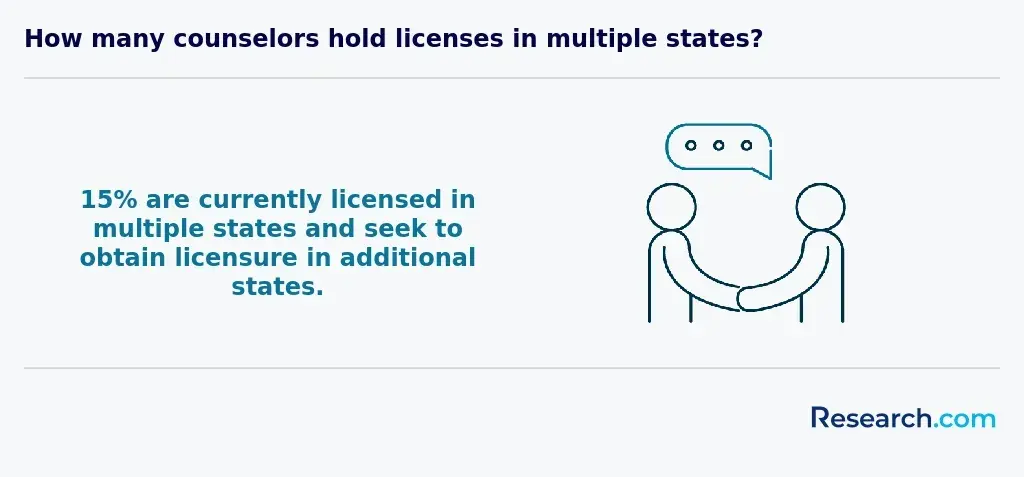
According to the American Counseling Association (2024), 15% of counselors in the U.S. are already holding multi-state licenses. For Wyoming counselors, this matters because interstate practice and telehealth may become increasingly relevant for serving clients across geographic boundaries.
How can mental health counselors integrate substance abuse treatment into their practice in Wyoming?
Adding substance abuse treatment skills can make a Wyoming counselor more useful in community mental health, rural care, crisis response, and integrated behavioral health settings. Many clients present with both mental health and substance use concerns, so counselors who understand screening, motivational interviewing, relapse prevention, recovery planning, and referral coordination can provide more complete care.
Counselors should not simply add addiction language to their services without proper training. They should verify credential requirements, seek supervision from experienced addiction professionals, and understand when a client needs a higher level of care. For a Wyoming-specific pathway, review how to become a substance abuse counselor in Wyoming.
What is the demand for mental health counselors in Wyoming?
Wyoming’s demand for mental health counselors is shaped by workforce shortages, rural access barriers, unmet therapy needs, and increased attention to behavioral health. Nationally, approximately 69,610 mental health counselors will be needed by 2036. Wyoming’s need is especially visible because many communities have limited access to providers.
The state’s Department of Workforce Services projects 24.4% growth from 2022 to 2032 for mental health counselors. This is close to the Oklahoma LPC job growth of 25%, showing that demand is not isolated to one state but is part of a broader need for counseling professionals.
Where Wyoming counselors may find demand
- Healthcare facilities: Hospitals and clinics may need counselors for behavioral health screening, care coordination, crisis support, and patient counseling.
- Community organizations: Nonprofits and public agencies often provide counseling, prevention, outreach, and support services for vulnerable populations.
- Private practices: Counselors may serve individuals, couples, families, or groups seeking therapy for anxiety, depression, trauma, stress, and relationship concerns.
- Schools and youth services: Student mental health needs can create demand for professionals who understand child and adolescent development.
- Substance use and recovery programs: Addiction-related concerns create opportunities for counselors with appropriate training and supervision.
The chart below dissects the projected demands for mental health professionals in the U.S.
What are the licensing and certification requirements for marriage counselors in Wyoming?
Marriage counseling work in Wyoming requires attention to the correct credential pathway. Professionals who want to provide marriage and family therapy should complete appropriate graduate coursework, supervised clinical practice, and state-specific requirements related to couples and family systems. This differs from general counseling because the work focuses heavily on relational dynamics, family patterns, and multi-client treatment planning.
Before choosing this path, compare LPC and MFT requirements carefully. If your goal is couples and family therapy, review the Wyoming-specific details in this guide to marriage counselor education requirements in Wyoming.
How can accelerated MFT programs benefit mental health counselors in Wyoming?
Accelerated MFT programs may help counselors or students complete specialized marriage and family therapy coursework more quickly than traditional options. This can be useful for professionals who already know they want to work with couples, families, and relational systems. However, speed should not be the only factor. Students should confirm accreditation, clinical placement quality, faculty support, licensure alignment, and whether the compressed format is realistic alongside work and family responsibilities.
For students comparing timelines and formats, accelerated MFT programs can be worth reviewing as part of a broader program search.
What other mental health specializations can counselors pursue in Wyoming?
Wyoming counselors can expand into related fields such as marriage and family therapy, substance abuse counseling, school counseling, trauma-focused care, rehabilitation counseling, crisis work, and integrated behavioral health. The right choice depends on client population, state credential rules, available supervision, and long-term career goals.
If family systems and relationship work are your primary interests, learn more about how to become a marriage and family therapist in Wyoming. Counselors who choose an adjacent specialization should confirm whether it requires a separate license, endorsement, certification, or supervised experience track.
What careers are available to Mental Health Counseling Graduates in Wyoming?
Graduates with a master’s degree in clinical mental health counseling in Wyoming can pursue multiple career paths in counseling, especially after meeting provisional or full licensure requirements. The right role depends on credential status, supervision needs, client population, and preferred work environment.
| Career Option | Typical Responsibilities | Best Fit For |
| Mental Health Counselor | Provides therapy for individuals or groups dealing with anxiety, depression, stress, trauma, and relationship concerns | Graduates seeking a broad clinical counseling role |
| Substance Abuse Counselor | Supports clients in recovery, relapse prevention, treatment planning, and family education | Counselors interested in addiction treatment and integrated care |
| School Counselor | Helps students with emotional, social, academic, and developmental concerns | Professionals who want to work with children and adolescents |
| Provisional Counselor | Works under supervision while completing required experience for full licensure | Recent graduates progressing toward LPC status |
| Certified Mental Health Worker | Supports licensed professionals through direct care, crisis support, and service coordination | Professionals building experience in community or healthcare settings |
New graduates should evaluate roles by supervision quality, caseload expectations, documentation requirements, benefits, travel demands, and whether the position helps them progress toward full licensure.
How can mental health counselors expand their academic credentials to further their careers in Wyoming?
Additional academic credentials can help Wyoming counselors move into specialized practice, leadership, teaching, assessment-related roles, or higher-level clinical positions. Useful areas may include trauma-informed care, substance abuse intervention, neuropsychological assessment, school-based services, and evidence-based treatment approaches.
Before enrolling in another program, counselors should ask whether the credential will improve licensure eligibility, increase clinical competence, support a specific career move, or justify the cost. Those comparing psychology-related programs in the state can review the best psychology schools in Wyoming as a starting point for identifying academic options.
How can mental health counselors improve their practice management in Wyoming?
Practice management matters for counselors who work in private practice, group practice, telehealth, or contract-based settings. Clinical skill alone is not enough; counselors also need reliable scheduling, documentation, billing, informed consent procedures, referral systems, privacy safeguards, and a plan for managing cancellations, emergencies, and client communication.
- Use secure systems: Scheduling, telehealth, records, and billing tools should support confidentiality and efficient documentation.
- Create clear intake procedures: Clients should understand fees, insurance, privacy, emergency limits, telehealth rules, and cancellation policies before treatment begins.
- Track referral sources: Knowing whether clients come from physicians, schools, agencies, online searches, or word of mouth helps counselors build sustainable practices.
- Seek business mentorship: Experienced clinicians can help newer counselors avoid common operational and ethical errors.
For professionals trying to move efficiently through the early career process, this guide to the quickest path to becoming a counselor in Wyoming can help clarify the steps involved.
What challenges do mental health counselors face in Wyoming?
Wyoming offers meaningful counseling opportunities, but the work can be demanding. Counselors should understand the challenges before entering the field so they can choose sustainable jobs, supervision arrangements, and service models.
- Workforce shortage: Limited provider availability can increase caseloads, waitlists, and pressure on existing counselors, especially in rural areas.
- Complex licensure documentation: Candidates often need to manage requirements for both provisional and full licensure, including supervised hours, exams, and formal Board documentation.
- Insurance limitations: Counselors may face restricted session coverage, documentation burdens, prior authorization requirements, or reimbursement issues.
- Professional isolation: Rural counselors may have fewer nearby peers, supervisors, specialists, and referral options.
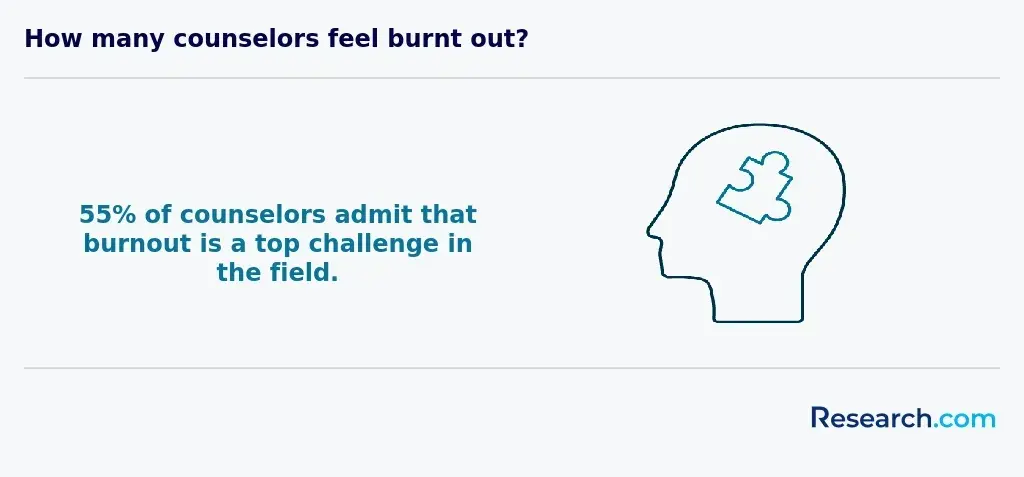
- Burnout risk: High caseloads, crisis work, administrative demands, and emotional intensity can affect well-being. Nationwide, 55% of counselors say that burnout is among the top challenges in the field.
Common mistakes to avoid
| Mistake | Why It Can Hurt You | Better Approach |
| Choosing a program without checking licensure alignment | You may graduate without the coursework or fieldwork needed for your intended credential | Confirm requirements with the licensing board and program before enrolling |
| Focusing only on tuition | Total cost may include fees, books, travel, technology, supervision, exams, and lost work time | Compare full cost of attendance and expected financing options |
| Assuming online programs automatically work for Wyoming | Online coursework may not guarantee approved practicum or internship placement | Ask where Wyoming students complete supervised fieldwork |
| Waiting to track clinical hours | Missing records can delay licensure review | Document supervision, hours, settings, and responsibilities from the start |
| Entering private practice too quickly | Business, billing, risk management, and crisis procedures require preparation | Build clinical experience, supervision, and administrative systems first |
What are the LPC licensure requirements in Wyoming?
Wyoming LPC licensure requires candidates to satisfy academic, supervised experience, examination, and continuing education standards. The major steps include completing a qualifying master’s degree, gaining supervised clinical experience, passing required examinations, applying first for provisional status when applicable, and submitting documentation to the licensing board for full LPC approval.
Because licensure rules can affect program choice, internship planning, and employment eligibility, students should review requirements before enrolling in a graduate program. For a more detailed breakdown, see this guide to LPC license requirements in Wyoming.
How can mental health counselors effectively integrate telehealth into their practice in Wyoming?
Telehealth can help Wyoming counselors reach clients who live far from clinics, lack transportation, or prefer virtual access. It is not simply a video call, however. Counselors must use secure technology, protect confidentiality, verify client location, plan for emergencies, document care properly, and understand state rules that apply to remote services.
- Use compliant technology: Platforms should support privacy and secure communication.
- Plan for emergencies: Counselors need the client’s physical location, emergency contacts, and crisis referral options for each session.
- Adapt clinical skills: Virtual counseling requires attention to screen fatigue, privacy at the client’s location, nonverbal cues, and engagement strategies.
- Clarify boundaries: Informed consent should explain telehealth risks, technology failures, fees, confidentiality, and when in-person care may be more appropriate.
Counselors interested in broader community-based care may also benefit from interdisciplinary training concepts found in a social work degree, especially when coordinating services for clients with complex social needs.
How can mental health counselors transition into school psychology in Wyoming?
Mental health counselors who want to move into school psychology should expect additional education or credential review because school psychology involves assessment, learning supports, behavioral interventions, consultation with educators, and school-system regulations. Counseling experience can be valuable, but it may not automatically satisfy school psychology requirements.
Before making the transition, compare coursework, practicum requirements, state credentialing rules, and whether your previous graduate credits can transfer. For timeline and requirement details, review How long does it take to become a school psychologist in Wyoming?.
How can mental health counselors overcome insurance and reimbursement challenges in Wyoming?
Insurance and reimbursement can strongly affect whether a counseling practice remains financially sustainable. Wyoming counselors may encounter coverage limits, different payer rules, documentation demands, denied claims, and reimbursement rates that do not always reflect the time required for quality care.
- Learn billing basics early: Understand claims, diagnosis coding, session documentation, prior authorization, and payer timelines.
- Use organized systems: Billing software or a qualified billing specialist can reduce errors and missed payments.
- Set transparent payment policies: Clients should know fees, insurance responsibilities, cancellation rules, and out-of-pocket costs before treatment begins.
- Track denials and delays: Repeated claim issues can reveal payer-specific patterns that need process changes.
Because counseling often overlaps with social services and community support, counselors may find useful context in this guide to social worker education requirements in Wyoming.
How can mental health counselors implement trauma-informed care in their practice in Wyoming?
Trauma-informed care means recognizing that trauma can shape behavior, relationships, emotional regulation, trust, and treatment engagement. In Wyoming, this approach can be especially useful for clients affected by violence, accidents, substance use, family disruption, economic stress, loss, or community-level hardship.
Counselors can implement trauma-informed care by creating emotionally safe environments, screening sensitively, avoiding unnecessary retraumatization, giving clients choice when possible, building coping skills, and using evidence-based interventions within their scope and training. Trauma-informed practice is also useful for counselors moving into educational roles. For related guidance, review how to become a school counselor in Wyoming.
Is Becoming a Mental Health Counselor in Wyoming Worth It?
Becoming a mental health counselor in Wyoming can be worth it for people who want meaningful clinical work, are comfortable with a structured licensure process, and are prepared for the realities of rural and underserved care. The state’s need for counselors is clear, and projected growth suggests continued opportunity. However, the path requires graduate education, supervised clinical hours, exams, documentation, and ongoing professional development.
| This Path May Be a Good Fit If You... | You May Want to Reconsider or Explore Alternatives If You... |
| Want a licensed clinical role focused on therapy and mental health treatment | Want to enter the workforce quickly without graduate school |
| Are comfortable with supervision, documentation, and ethical regulation | Prefer work with minimal emotional intensity or crisis exposure |
| Want to serve rural, underserved, or community-based populations | Need a career with highly predictable hours and low administrative burden |
| Are interested in telehealth, integrated care, addiction treatment, or trauma-informed work | Do not want to manage licensure renewal, continuing education, or insurance issues |
Key Insights
- Wyoming needs more mental health professionals, and counselors play a major role in expanding access to care, especially in rural areas.
- The LPC pathway requires a qualifying graduate degree, practicum and internship training, provisional practice when applicable, 3,000 hours of supervised clinical experience, required examinations, and 45 units of continuing education for ongoing credential maintenance.
- Program choice matters. Students should verify accreditation, licensure alignment, field placement support, total cost, and supervision options before enrolling.
- Specializations such as substance abuse counseling, marriage and family therapy, school counseling, trauma-informed care, and telehealth can expand career options, but each may require additional training or credentials.
- Wyoming can be a rewarding state for counselors, but professionals should prepare for rural access barriers, insurance complexity, workforce shortages, high caseloads, and burnout risk.
- The best career decisions are made early: choose the right degree, document hours carefully, seek strong supervision, build practical skills, and avoid relying on salary or program speed alone.
Related Articles for Nearby States
- 2027 How to Become a Mental Health Counselor in Montana
- 2027 How to Become a Mental Health Counselor in South Dakota
- 2027 How to Become a Mental Health Counselor in Nebraska
- 2027 How to Become a Mental Health Counselor in Colorado
- 2027 How to Become a Mental Health Counselor in Idaho
- 2027 How to Become a Mental Health Counselor in Utah
- 2027 How to Become a Mental Health Counselor in North Dakota
- 2027 How to Become a Mental Health Counselor in Kansas
- 2027 How to Become a Mental Health Counselor in Iowa
- 2027 How to Become a Mental Health Counselor in Nevada
References:
- American Counseling Association. (2024). Counseling Workforce Survey Report. https://www.counseling.org/resources/research-reports/counseling-workforce-report
- America's Health Rankings. (n.d.). Mental Health Providers in Wyoming. Retrieved August 2024, from https://www.americashealthrankings.org/explore/measures/MHP/WY
- Kaiser Family Foundation. (2023). Mental Health in Wyoming. https://www.kff.org/statedata/mental-health-and-substance-use-state-fact-sheets/wyoming
- National Alliance on Mental Illness. (2021, February). Mental Health in Wyoming. https://www.nami.org/wp-content/uploads/2023/07/WyomingStateFactSheet.pdf
- U.S. Bureau of Labor Statistics. (2024, April 3). May 2023 State occupational employment and wage estimates - Wyoming. Occupational Employment and Wage Statistics. https://www.bls.gov/oes/current/oes_wy.htm
- Wyoming Department of Workforce Services. (2024, July). Wyoming Long-Term Industry and Occupational Employment Projections, 2022-2032. https://doe.state.wy.us/lmi/projections/2024/WY_LT_Projections_2022-2032.pdf
- Wyoming Prevention Depot. (n.d.). Depression in Lifetime. Retrieved August 2024, from https://www.wyomingpreventiondepot.org/dataprofiles/Chart/County/MentalHealth/Prevalence/859
Other Things You Should Know About Mental Health Counseling in Wyoming
In 2027, to become a licensed mental health counselor in Wyoming, you need a master’s degree in counseling or a related field and at least two years of supervised professional experience post-degree. Additionally, passing the National Clinical Mental Health Counseling Examination (NCMHCE) is mandatory.
In Wyoming, mental health counselors can diagnose mental health illnesses, but specific licensure is required. To diagnose, counselors must be an LPC or a PPC who is under the supervision of a licensed and designated supervisor. Counselors without these titles may provide some therapeutic services but cannot formally diagnose mental health conditions.
To become a licensed mental health counselor in Wyoming in 2027, start by earning a master’s degree in counseling. Next, complete supervised clinical hours and pass the National Counselor Examination. Finally, apply for licensure with the Wyoming Mental Health Professions Licensing Board.