
2027 How to Become a Mental Health Counselor in Louisiana

Co-Founder and Chief Data Scientist
Louisiana needs more qualified mental health counselors, but the path to becoming licensed is not always obvious. The state has around 6,708 Licensed Professional Counselors (LPCs), yet many residents still live in areas where mental health services are difficult to access. According to the Health Resources and Services Administration (2024), 3,084,511 Louisiana residents are in designated shortage areas, which means the need for trained counselors remains a serious workforce and public health issue.
This guide explains how to become a mental health counselor in Louisiana, what LPCs do, what degree and supervised experience are required, how licensure works, and which career paths may offer the best fit. It is written for students comparing counseling programs, career changers exploring mental health professions, and graduates preparing for Louisiana licensure.
You will also learn how to evaluate counseling specializations, reduce education costs, prepare for practicum and internship requirements, understand job demand, and avoid common mistakes that can delay licensure or limit career options.
Quick Answer: How do you become a mental health counselor in Louisiana?
To become a mental health counselor in Louisiana, you generally need a bachelor’s degree, a master’s degree in counseling or a closely related field, required practicum and internship experience, a provisional LPC credential before completing post-graduate supervised hours, 3,000 hours of supervised practice over at least two years, and a passing score on the National Clinical Mental Health Counselor Examination (NCMHCE) or the National Counselor Examination (NCE). After meeting these requirements, candidates apply to the Louisiana State Board of Licensed Professional Counselors for full LPC licensure.
| Requirement | What Louisiana candidates should know |
| Graduate education | A master’s degree in counseling is required for LPC licensure. |
| Clinical training during the degree | Candidates complete 100 practicum and 600 internship hours. |
| Post-graduate supervised experience | Louisiana requires 3,000 hours of supervised practice, including at least 1,900 hours of direct client services. |
| Licensure exam | Candidates must pass either the NCMHCE or the NCE. |
| Career outlook | The projected growth rate for mental health counselors in Louisiana is 11% from 2020 to 2030, with 440 new positions annually from 2020 to 2030. |
| Average salary | Mental health counselors in Louisiana earn an average annual salary of $42,280. |
Key Things You Should Know
- A graduate degree is essential. Louisiana LPC candidates must complete a master’s degree in counseling or an approved related field before pursuing full licensure.
- Supervised experience takes time. Licensure requires 3,000 hours of supervised practice, including at least 1,900 hours of direct client services.
- Demand is tied to access gaps. Louisiana has large mental health shortage areas, and only 23.91% of mental health needs are currently being met (HRSA, 2024).
- Salary varies by role and specialization. The average annual salary for mental health counselors in Louisiana is $42,280, while some related roles report higher or lower averages.
- Program choice matters. Accreditation, practicum quality, internship placement support, exam preparation, and licensure alignment should be evaluated before enrolling.
- What does a mental health counselor do in Louisiana?
- What are the steps to become a mental health counselor in Louisiana?
- How should Louisiana students prepare for a counseling career?
- Why does practicum experience matter for Louisiana counseling students?
- Which counseling specializations are available in Louisiana?
- What financial aid and career resources can counseling students use?
- Is Louisiana a strong state for mental health counselors?
- How strong is demand for mental health counselors in Louisiana?
- How can LPCs add substance abuse counseling to their work?
- Can counselors expand into school counseling?
- What jobs can mental health counseling graduates pursue?
- Can social work complement a counseling career?
- Why does program accreditation matter?
- Can accelerated programs help candidates enter counseling faster?
- How is telehealth affecting counseling in Louisiana?
- Which continuing education options can strengthen practice?
- What challenges should Louisiana counselors expect?
- What are the requirements for marriage counseling in Louisiana?
- How can professional associations support counselor career growth?
- Can school psychology broaden a counseling career?
What does a mental health counselor do in Louisiana?
Mental health counselors in Louisiana assess, diagnose, and treat emotional, behavioral, and psychological concerns through counseling and therapy. Their clients may be dealing with anxiety, depression, trauma, grief, relationship problems, addiction, school-related stress, family conflict, or major life transitions.
The role is especially important in Louisiana because mental health needs are widespread. KFF reported that around 39.1% of adults in Louisiana were experiencing mental health challenges in 2023. Counselors often work with clients affected by poverty, community violence, natural disasters, substance use, and limited access to consistent care.
LPCs and other mental health counseling professionals may work in private practices, hospitals, schools, community mental health centers, rehabilitation programs, nonprofit agencies, correctional settings, and telehealth platforms. In rural and underserved areas, they may be one of the few accessible behavioral health providers.
Typical responsibilities
- Conducting assessments: Counselors gather client histories, identify symptoms, screen for risk, and determine appropriate treatment goals.
- Providing individual counseling: They help clients understand emotions, change harmful patterns, build coping skills, and work toward measurable goals.
- Facilitating group therapy: Counselors may lead groups for grief, addiction recovery, anger management, trauma, or life skills.
- Responding to crises: In urgent cases, they may provide safety planning, suicide risk assessment, referral coordination, or immediate stabilization support.
- Coordinating care: Counselors frequently collaborate with physicians, social workers, school staff, case managers, and family members when appropriate.
- Documenting treatment: Accurate notes, treatment plans, consent forms, and progress updates are part of ethical and compliant practice.
- Supporting community outreach: In shortage areas, counselors may educate communities about mental health resources and reduce stigma around treatment.
| Work setting | Common client needs | Why it may appeal to counselors |
| Community mental health center | Severe stress, trauma, crisis needs, limited access to care | Strong mission focus and exposure to varied clinical cases |
| Private practice | Anxiety, depression, relationships, life transitions | More autonomy after licensure, with responsibility for business operations |
| School or education setting | Academic pressure, bullying, family stress, emotional development | Opportunity to support children, adolescents, and families |
| Hospital or integrated care setting | Behavioral health concerns connected to medical conditions | Team-based care and interdisciplinary collaboration |
| Substance use treatment program | Alcohol or drug addiction, relapse prevention, family recovery | Specialized work with high community need in Louisiana |
A Louisiana counselor described the work this way: “I started practicing in New Orleans after finishing my degree at Louisiana State University. Many clients here carry trauma related to hurricanes, displacement, financial strain, or family instability. The work can be difficult, but helping someone rebuild a sense of safety and hope is deeply meaningful.”
That experience reflects a broader truth about counseling in Louisiana: clinical skill matters, but cultural awareness, patience, and community commitment are just as important.
What are the steps to become a mental health counselor in Louisiana?
The Louisiana LPC pathway is structured around education, supervised training, examination, and board approval. Candidates should plan carefully because missing a requirement, enrolling in the wrong type of program, or starting supervised hours before holding the correct credential can delay licensure.
- Earn a bachelor’s degree. Most candidates begin with an undergraduate degree in psychology, counseling, social work, human services, or another behavioral science field. The bachelor’s degree does not make you an LPC, but it prepares you for graduate-level counseling coursework.
- Complete a master’s degree in counseling or a related field. Louisiana requires graduate preparation for LPC licensure. A 60-credit master’s degree in counseling or a closely related discipline is a common route. A doctorate in counseling may also qualify if it satisfies the required academic standards.
- Complete required practicum and internship hours. During the graduate program, candidates complete 100 practicum and 600 internship hours. These experiences introduce students to supervised client work before post-graduate practice.
- Obtain the provisional LPC credential before counting supervised hours. Candidates must hold a provisional LPC credential before accumulating the post-graduate supervised hours required for full LPC licensure.
- Complete supervised post-graduate practice. Louisiana requires 3,000 hours of supervised hands-on training across at least two years. At least 1,900 hours must involve direct client services. This supervised period is similar in seriousness to the clinical preparation described in counseling psychologist training, although the professional license and scope differ.
- Pass the required examination. Candidates must pass either the National Clinical Mental Health Counselor Examination (NCMHCE) or the National Counselor Examination (NCE).
- Submit the LPC application to the state board. The Louisiana State Board of Licensed Professional Counselors reviews documentation, supervised experience, examination results, and other state-specific materials.
- Consider optional specialized credentials. Certifications in areas such as addiction counseling, trauma-informed care, family systems, or school-based counseling may improve fit for specific roles, but they do not replace LPC licensure.
| Stage | Main goal | Common mistake to avoid |
| Undergraduate study | Build a foundation in human behavior, research, and helping skills | Assuming a bachelor’s degree alone qualifies you for independent counseling practice |
| Graduate program | Complete the counseling curriculum required for licensure | Choosing a program without checking whether it aligns with Louisiana LPC requirements |
| Practicum and internship | Gain supervised clinical exposure during the degree | Treating placement quality as less important than course convenience |
| Provisional LPC period | Accumulate required supervised post-graduate hours | Starting hours before confirming they will count toward licensure |
| Exam and application | Demonstrate readiness for professional practice | Waiting until the last minute to organize supervision records and board documents |
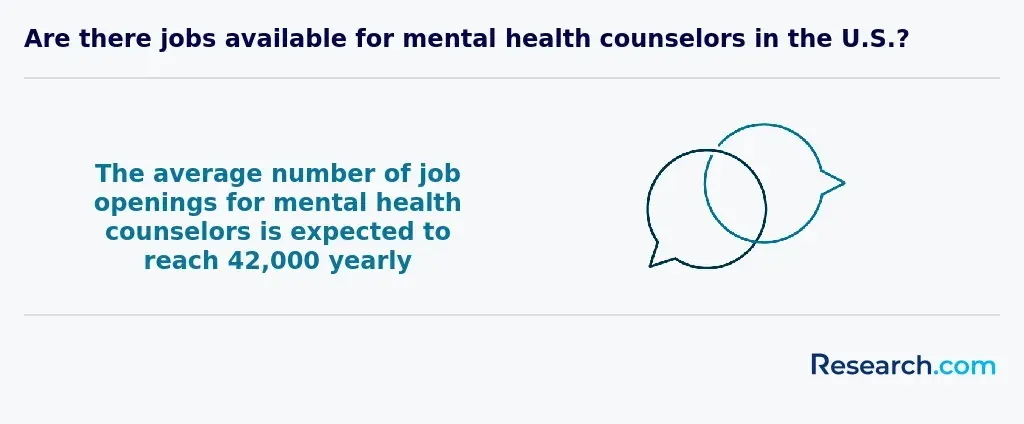
Nationally, there are around 42,000 yearly jobs available in this field, so Louisiana candidates who complete the licensure process may also have options beyond the state, especially if they understand interstate practice rules and endorsement requirements.
How should Louisiana students prepare for a counseling career?
Students preparing for mental health counseling in Louisiana should focus on three priorities: choosing the right academic program, gaining strong clinical experience, and building a professional network before graduation. A counseling degree is not just a credential; it is the foundation for licensure, ethical practice, and employability.
Choose a program that supports licensure
Program selection should begin with licensure alignment. Look for coursework in counseling theories, ethics, diagnosis, assessment, multicultural counseling, human development, group counseling, career counseling, research, and clinical practice. Accreditation from the Council for Accreditation of Counseling and Related Educational Programs (CACREP) can be especially useful because it signals that a program has been evaluated against recognized counseling education standards. In 2023, 75,877 students nationwide enrolled in CACREP-accredited programs.
Students who need flexibility can compare campus-based programs with online counseling degree options. Online study can work well for working adults, but students should confirm how practicum and internship placements are arranged in Louisiana and whether the program meets state requirements.
Build experience before graduate school if possible
Undergraduate students and career changers can strengthen their applications by volunteering or working in human services settings. Examples include crisis hotlines, youth programs, domestic violence agencies, addiction recovery programs, disability services, and nonprofit community organizations.
Connect with the counseling profession early
Professional organizations such as the Louisiana Counseling Association can help students find workshops, conferences, mentors, job leads, and licensure updates. Students should also monitor events and workforce initiatives from the Louisiana Department of Health, especially if they are interested in public service or underserved communities.
| Preparation step | Why it matters | Question to ask |
| Check accreditation and licensure alignment | Not every graduate program automatically satisfies state counseling requirements | Will this program prepare me for Louisiana LPC eligibility? |
| Review practicum and internship support | Clinical placement quality affects skill development and networking | Who helps students secure approved placements? |
| Compare delivery formats | Online, hybrid, and campus programs can differ in flexibility and fieldwork logistics | Can I complete required in-person clinical hours near where I live? |
| Ask about exam preparation | The NCMHCE or NCE is required for licensure | Does the program provide exam review resources? |
| Evaluate faculty and community partnerships | Strong connections can lead to practicum sites, internships, supervision, and employment | Where do recent graduates complete supervised experience? |
This chart illustrates the latest enrollment statistics on CACREP-accredited programs in the nation.
Why does practicum experience matter for Louisiana counseling students?
Practicum and internship experiences are where counseling students begin turning academic knowledge into clinical judgment. Louisiana requires 100 practicum and 600 internship hours, and these hours should be treated as career-building opportunities rather than box-checking requirements.
Strong clinical placements help students practice assessment, treatment planning, documentation, crisis response, ethical decision-making, and supervised counseling techniques. They also expose students to the realities of Louisiana’s mental health landscape, including rural access barriers, trauma-related needs, substance use concerns, and the financial limitations many clients face.
What students should gain from practicum and internship
- Applied counseling skills: Students learn how to translate theories and interventions into real sessions with real clients.
- Feedback from supervisors: Quality supervision helps students recognize blind spots, refine documentation, and handle complex cases more safely.
- Professional confidence: Direct practice reduces the gap between classroom learning and post-graduate supervised work.
- Understanding of local communities: Placements in Louisiana can reveal how culture, family systems, religion, geography, trauma, and poverty shape treatment needs.
- Employment connections: Many students meet future supervisors, colleagues, and employers through field placements.
One Louisiana counselor described his practicum at a New Orleans community mental health center as a turning point. He said the placement forced him to manage complicated cases involving severe anxiety and depression while learning how to stay grounded and empathic. He also emphasized that supervision was essential because a trusted mentor helped him process difficult cases and later connected him to his first professional role.
The lesson for students is straightforward: choose placements carefully. A convenient site is helpful, but a well-supervised site with diverse client exposure can shape your long-term competence and confidence.
Which counseling specializations are available in Louisiana?
Mental health counselors in Louisiana can pursue several specializations depending on the populations they want to serve, the settings where they want to work, and the credentials they are willing to complete. Specialization can help counselors build expertise, but it should be chosen strategically rather than simply because it sounds interesting.
| Specialization | Primary focus | Louisiana salary information stated | Best fit for counselors who want to... |
| Substance Abuse Counseling | Assessment and treatment for clients affected by alcohol, drugs, or other substance use concerns | Approximately $44,832 | Work in addiction treatment, recovery programs, hospitals, or community agencies |
| Behavior Disorder Counseling | Support for clients with behavioral concerns such as ADHD, oppositional defiant disorder, or conduct disorder | Around $36,739 | Help children, adolescents, families, or clients needing behavior-focused interventions |
| Licensed Professional Counselor (LPC) | Broad mental health counseling for individuals and groups | Between $40,000 and $87,000 | Provide therapy in private practice, clinics, agencies, hospitals, or community settings |
| School Counseling | Academic, social, emotional, and career support for students | $63,440 | Work in K-12 educational environments and support student development |
| Marriage and Family Therapy | Relationship, couple, and family-system concerns | $64,540 | Focus on couples, family conflict, parenting concerns, and relational patterns |
Choosing a specialization should depend on licensure rules, job market fit, client population, supervision availability, and long-term career goals. For example, counselors drawn to family systems may compare LPC practice with marriage and family therapy requirements, while those interested in schools should confirm whether school counseling credentials are separate from LPC licensure.
Reviewing how other states structure licensure can also help counselors understand portability and professional differences. For comparison, Research.com’s guide to Illinois LPC careers explains another state’s pathway and can be useful for counselors thinking about mobility.
What financial aid and career resources can counseling students use?
Graduate counseling education can be expensive, and students should build a funding plan before enrolling. Tuition is only one part of the cost. Candidates may also need to budget for textbooks, technology, commuting, background checks, liability insurance, exam fees, supervision-related costs, and reduced work hours during practicum or internship.
- University scholarships and grants: Counseling departments and graduate schools may offer merit-based or need-based aid. Students should ask whether awards are available specifically for counseling, behavioral health, or service in underserved communities.
- Federal financial aid: Eligible students can complete federal aid forms and compare loan options, but borrowing should be evaluated against realistic salary expectations after graduation.
- National and state professional awards: Organizations such as the American Counseling Association and state-level counseling groups may offer scholarships, grants, or reduced-cost training opportunities.
- Loan repayment programs: Counselors serving in underserved areas may qualify for programs such as the National Health Service Corps (NHSC) Loan Repayment Program if they meet eligibility and service requirements.
- Employer tuition reimbursement: Some behavioral health agencies help employees pay for graduate study or certifications when the training supports workforce needs.
- Paid or stipend-supported placements: Some practicum or internship sites may offer stipends, especially in high-need settings, although students should not assume all placements are paid.
- Professional development discounts: Membership in counseling associations may reduce the cost of workshops, conferences, webinars, and continuing education.
Students should map funding options against the full licensure timeline, not just the degree. Understanding how to become a therapist in Louisiana can help candidates anticipate the sequence of education, supervision, examination, and application expenses.
| Cost factor | Why students overlook it | How to plan smarter |
| Practicum and internship logistics | Students may focus only on tuition and ignore travel, scheduling, and unpaid hours | Ask programs how placements work and whether students can keep employment while completing hours |
| Licensure exam preparation | Exam costs and study materials may come after graduation | Ask whether the program includes NCMHCE or NCE preparation |
| Supervision period | Candidates may not realize how long post-graduate supervision can affect income and job options | Ask potential employers whether supervision is included as part of the role |
| Online program residency or fieldwork requirements | Flexible coursework may still require in-person clinical training | Confirm all in-person requirements before enrolling |
Is Louisiana a strong state for mental health counselors?
Louisiana can be a meaningful place to work as a mental health counselor because the need for services is clear, but it is not the right fit for every professional. Candidates should weigh mission, salary, cost of living, licensure rules, mobility, and the emotional demands of working in high-need communities.
| Factor | Potential advantage | Potential drawback |
| Community need | Counselors can make a visible difference in shortage areas and underserved communities | High need can mean heavy caseloads and complex client situations |
| Salary and affordability | Louisiana’s cost of living is lower than the national average | The average salary for mental health counselors in Louisiana is below the national average of $60,080 |
| Licensure mobility | Louisiana offers limited licensure by endorsement for qualified professionals from other states | Endorsement is not automatic and may still involve additional steps |
| Counseling Compact participation | Louisiana’s participation may improve multistate practice options in participating states | Counselors still need to follow compact rules and participating-state requirements |
| State workforce initiatives | Louisiana has taken steps such as expanding Medicaid reimbursement for provisional LPCs (Louisiana Department of Health, 2024) | Policy improvements do not eliminate workforce shortages or all funding barriers |
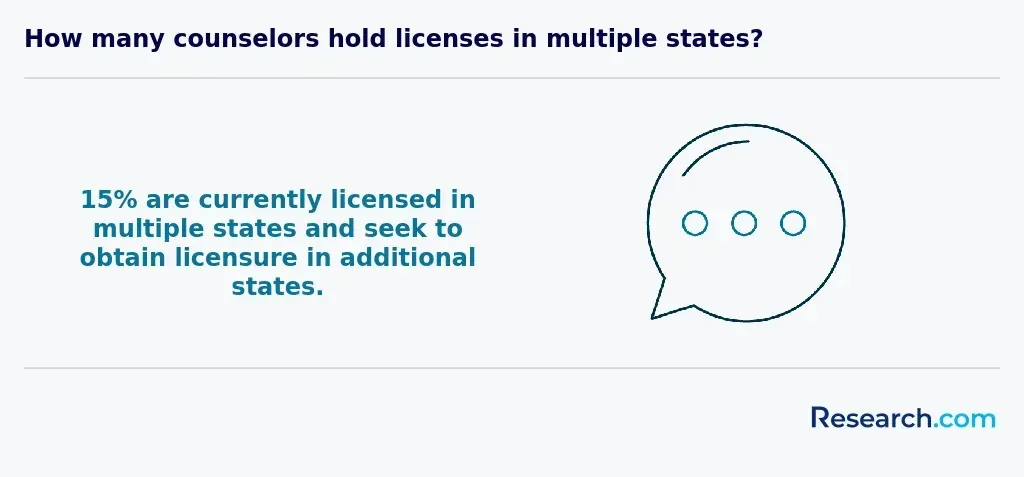
Louisiana’s membership in the Counseling Compact may be especially relevant for counselors interested in multistate practice. The compact can support professional mobility for licensed counselors in participating states, which matters because 15% of counselors nationwide are seeking additional licensure across states.
For many counselors, Louisiana is appealing because the work is mission-driven and community-centered. For others, the combination of lower compensation, high client need, and complex systems may require careful financial and professional planning.
How strong is demand for mental health counselors in Louisiana?
Demand for mental health counselors in Louisiana is substantial because large portions of the state have unmet mental health needs. HRSA reported in 2024 that only 23.91% of mental health needs were being met, and the state continues to face serious concerns related to drug overdoses and suicides. These conditions create demand across hospitals, community mental health agencies, schools, rehabilitation programs, integrated care clinics, nonprofit organizations, and private practices.
Employment projections also point to continued need. The job outlook for mental health counselors in Louisiana includes a projected growth rate of 11% from 2020 to 2030 and 440 new positions annually from 2020 to 2030.
Students who may relocate later should compare Louisiana’s requirements with other states before choosing a program or pursuing additional credentials. For example, Research.com’s guide on how to become a licensed counselor in Oregon can help candidates understand how licensure pathways differ across states.
| Demand driver | What it means for counselors |
| Mental health shortage areas | More communities need accessible counseling services, especially outside major metro areas |
| Substance use concerns | Counselors with addiction-related training may be valuable in treatment and recovery settings |
| Youth mental health needs | Schools and community programs may need professionals who can support students and families |
| Telehealth growth | Remote counseling can improve access when transportation or geography creates barriers |
| Integrated care models | Behavioral health providers may work more closely with medical teams and community services |
What specializations can mental health counselors in Louisiana pursue to improve career options?
Louisiana counselors who want broader career options can build expertise in areas such as marriage and family therapy, school counseling, substance abuse counseling, trauma-informed practice, and behavioral disorder counseling. The right specialization depends on your preferred client population, required credentials, and the work setting you want.
For example, counselors interested in relationship and family systems should review the education, training, and licensure expectations described in Research.com’s guide on how to become a marriage and family therapist in Louisiana. Specialization can make a counselor more competitive, but candidates should confirm whether the role requires a separate license, endorsement, certification, or supervised experience beyond LPC preparation.
How can LPCs add substance abuse counseling to their work?
Substance abuse counseling is a practical specialization for Louisiana counselors because addiction concerns often overlap with trauma, depression, anxiety, family stress, housing instability, and legal or employment problems. LPCs who want to serve this population should seek training in substance use assessment, relapse prevention, motivational interviewing, co-occurring disorders, family education, and referral coordination.
Adding this focus may involve continuing education, certification, supervised experience with addiction cases, and collaboration with treatment programs. Counselors should also understand how substance use treatment settings document care, coordinate with medical providers, and handle confidentiality requirements.
For a more focused pathway, review Research.com’s guide on how to become a substance abuse counselor in Louisiana.
Can counselors expand into school counseling?
School counseling can be a strong direction for professionals who want to support children and adolescents in educational settings. The role often combines mental health awareness with academic planning, social-emotional development, crisis response, family communication, and career guidance.
However, school counseling is not automatically the same as clinical mental health counseling. Counselors considering this path should verify whether additional coursework, certification, or state education requirements apply. The work environment is also different: school counselors follow academic calendars, collaborate with teachers and administrators, and often manage large student populations.
Research.com’s overview of school counselor career requirements can help candidates decide whether this path fits their goals.
What jobs can mental health counseling graduates pursue?
A master’s degree in clinical mental health counseling can lead to several types of roles in Louisiana, although exact eligibility depends on licensure status, supervised experience, employer requirements, and specialization. Graduates should distinguish between roles available before full LPC licensure and positions that require independent clinical authority.
| Career path | What the role involves | Important consideration |
| Mental Health Counselor | Provides therapy and support for clients dealing with anxiety, depression, trauma, grief, relationship concerns, and other mental health needs | Independent practice generally requires full LPC licensure |
| Substance Abuse Counselor | Works with clients affected by alcohol or drug use concerns, often in treatment centers, hospitals, and community agencies | Additional addiction-specific training or certification may improve employability |
| School Counselor | Supports students’ academic, social, emotional, and career development | May require education-specific credentials beyond clinical counseling preparation |
| Geriatric Counselor | Helps older adults manage grief, health changes, family transitions, isolation, and end-of-life concerns | Training in aging, grief, and family systems can be valuable |
| Rehabilitation Counselor | Assists people with disabilities, injuries, or functional limitations in reaching personal and employment goals | May involve collaboration with medical, vocational, and social service providers |
A counselor practicing in New Orleans described the transition from graduate school to employment as both motivating and uncertain. After graduating from Louisiana State University, he found that internships, professional relationships, and community connections were essential to securing his first position. He noted that the work can be demanding, but seeing progress in individuals and families made the career feel worthwhile.
For graduates, the takeaway is clear: clinical training alone is not enough. Networking, supervision planning, specialization, and a realistic understanding of the local job market all affect career entry.
Can social work complement a counseling career in Louisiana?
Some counselors consider social work because it can broaden their understanding of case management, community systems, public benefits, advocacy, and client access barriers. This can be helpful for counselors serving clients affected by poverty, housing instability, family disruption, disability, or complex healthcare needs.
However, social work and counseling are separate professional paths with different education and licensure requirements. Counselors should not assume they can move into social work roles without meeting state-specific standards. If this route interests you, compare the social worker education requirements in Louisiana before making academic or career decisions.
Why does program accreditation matter for counseling careers in Louisiana?
Accreditation affects more than reputation. It can influence licensure preparation, curriculum quality, practicum structure, faculty qualifications, employer confidence, and the ease of comparing programs. A strong counseling program should prepare students for ethical practice, clinical documentation, diagnostic reasoning, cultural competence, supervised fieldwork, and licensure examination requirements.
Students should evaluate programs based on curriculum, practicum support, internship partnerships, faculty experience, exam preparation, graduate outcomes, and fit with Louisiana LPC requirements. Rankings can help identify options, but they should never be the only deciding factor. For students comparing behavioral science programs in the state, Research.com’s guide to the best psychology schools in Louisiana may be a useful starting point.
Can accelerated programs help candidates enter counseling faster?
Accelerated pathways may appeal to career changers and working adults who want to enter the counseling field efficiently. These programs can compress coursework or offer more flexible scheduling, but speed should not come at the expense of licensure alignment, supervised clinical quality, or student support.
Before choosing an accelerated option, candidates should ask whether the program meets Louisiana LPC requirements, includes the required practicum and internship experiences, supports clinical placement, prepares students for the NCE or NCMHCE, and provides advising for provisional licensure. Research.com’s guide to the quickest path to becoming a counselor in Louisiana can help students understand where time can be saved and where requirements cannot be skipped.
How is telehealth affecting counseling in Louisiana?
Telehealth is changing how Louisiana residents access mental health counseling, especially when transportation, provider shortages, disability, scheduling conflicts, or distance from urban centers makes in-person care difficult. For counselors, telehealth can expand reach, improve appointment flexibility, and support continuity of care.
At the same time, telehealth requires careful attention to privacy, informed consent, emergency planning, technology reliability, documentation, and state practice rules. Counselors should understand how to handle crisis situations when a client is remote, how to verify location at the time of service, and how to protect confidential information.
Counselors interested in school-based or hybrid service models may also want to explore Research.com’s guide on how to become a school counselor in Louisiana.
Which continuing education options can strengthen counseling practice?
Continuing education helps counselors maintain competence, respond to emerging needs, and deepen expertise beyond entry-level licensure preparation. Useful areas may include trauma-informed counseling, substance use treatment, suicide prevention, ethics, telehealth, multicultural counseling, child and adolescent counseling, family systems, grief counseling, and assessment.
Supplemental certifications can be valuable when they align with actual client needs and employer expectations. They should not be pursued just to add letters after a name. Before paying for any certification, counselors should confirm whether it is recognized by employers, accepted for continuing education when needed, and relevant to their scope of practice.
For candidates still working through initial licensure, Research.com’s guide to LPC license requirements in Louisiana explains the core requirements that come before optional specialization.
What challenges should Louisiana counselors expect?
Mental health counseling in Louisiana can be rewarding, but candidates should understand the difficulties before entering the field. Many of the challenges are tied to service shortages, client poverty, high need, reimbursement limitations, and the emotional intensity of clinical work.
| Challenge | How it affects counselors | How to prepare |
| Limited access to care | Counselors may face long waitlists, high demand, and pressure to serve clients with complex needs | Build referral networks and learn crisis triage procedures |
| Licensure complexity | Graduates must manage coursework, exams, supervised hours, documentation, and board rules | Track requirements early and consider affordable graduate options such as a low-cost master's in counseling online |
| Economic barriers for clients | Clients may struggle with insurance gaps, transportation, or inability to pay for consistent treatment | Learn about community resources, sliding-scale care, and public mental health systems |
| Trauma and social stressors | Counselors may work with clients affected by violence, disasters, addiction, domestic violence, or severe instability | Seek strong supervision and training in trauma-informed care |
| Burnout risk | Heavy caseloads and emotionally intense work can lead to compassion fatigue or vicarious trauma | Use consultation, boundaries, peer support, and sustainable scheduling practices |
Common mistakes to avoid
- Choosing a program based only on convenience. Flexibility matters, but licensure alignment and clinical placement support matter more.
- Ignoring accreditation and state requirements. A program may be legitimate but still fail to match Louisiana LPC expectations.
- Assuming online programs are automatically accepted. Online coursework can be useful, but students must verify fieldwork and licensure eligibility.
- Underestimating the supervised experience period. The 3,000-hour requirement affects employment choices, income planning, and timeline.
- Focusing only on salary averages. Actual earnings depend on setting, experience, specialization, location, licensure status, and workload.
- Neglecting self-care and consultation. Counselors serving high-need populations need structured support to remain effective.
This chart shows the hindrances counselors face because of having low compensation or debt.
What are the requirements for marriage counseling in Louisiana?
Counselors who want to focus on couples and families should understand that marriage counseling may involve a distinct training and licensing pathway. This work typically emphasizes family systems, couple dynamics, communication patterns, conflict resolution, parenting concerns, and relational trauma.
Requirements may include specific graduate coursework, supervised clinical experience with couples and families, and credentials that demonstrate competence in marriage and family therapy. Because rules can change and credential titles matter, candidates should review state-specific requirements carefully. Research.com’s guide to marriage counselor education requirements in Louisiana provides a more detailed overview.
How can professional associations support counselor career growth?
Professional associations can help Louisiana counselors stay informed, connected, and professionally current. Membership may provide access to ethics updates, continuing education, conferences, policy alerts, peer consultation, mentoring, job boards, and leadership opportunities.
Associations can be especially useful during transitions: choosing a graduate program, preparing for supervision, entering private practice, adding a specialization, or navigating changes in licensure rules. They may also help counselors understand the types of counseling degrees available and how different credentials align with career goals.
Can school psychology broaden a counseling career?
School psychology may interest counselors who want deeper training in child development, assessment, learning challenges, behavioral intervention, and school-based systems. This path can complement counseling skills, but it is not simply an add-on to LPC practice. School psychology has its own preparation and credentialing expectations.
Counselors considering this move should compare program length, practicum requirements, assessment training, and employment settings before committing. For state-specific details, see How long does it take to become a school psychologist in Louisiana?. This path may be most useful for professionals who want to work closely with students, educators, families, and special education teams.
Here’s what Louisiana counselors say about the work
- “Becoming a mental health counselor in Louisiana has given me the chance to walk with people through some of the hardest chapters of their lives. Watching clients build stability, confidence, and hope makes the work feel deeply worthwhile.” - Naomi
- “Practicing in Louisiana means serving people with many different backgrounds, histories, and strengths. The cultural richness of the state has made me a better listener and a more thoughtful clinician.” - Jake
- “Counseling here feels like more than employment. The professional community is committed, the learning never stops, and the need for compassionate mental health care is visible every day.” - Max
Related Articles for Nearby States
- 2027 How to Become a Mental Health Counselor in Mississippi
- 2027 How to Become a Mental Health Counselor in Arkansas
- 2027 How to Become a Mental Health Counselor in Texas
- 2027 How to Become a Mental Health Counselor in Alabama
- 2027 How to Become a Mental Health Counselor in Tennessee
- 2027 How to Become a Mental Health Counselor in Missouri
- 2027 How to Become a Mental Health Counselor in Oklahoma
- 2027 How to Become a Mental Health Counselor in Florida
- 2027 How to Become a Mental Health Counselor in Kentucky
- 2027 How to Become a Mental Health Counselor in Georgia
References:
- American Counseling Association. (2024). Counseling Workforce Survey Report. https://www.counseling.org/resources/research-reports/counseling-workforce-report
- Health Resources and Services Administration. (2024, June 30). Designated health professional shortage areas statistics: Third quarter of fiscal year 2024. https://data.hrsa.gov/Default/GenerateHPSAQuarterlyReport
- KFF. (2023). Mental Health in Louisiana. https://www.kff.org/statedata/mental-health-and-substance-use-state-fact-sheets/louisiana
- Louisiana Department of Health. (2024, May 20). LDH to expand mental health provider workforce with new provisional licensure eligibility. Behavioral Health. https://ldh.la.gov/news/provisional-licensure
- Louisiana State Board of Licensed Professional Counselors. (n.d.). Rules, standards and procedures. Laws & Rules. Retrieved September 2024, from https://www.lpcboard.org/rules
- ONET OnLine. (2024, August 9). Mental health counselors. Louisiana Employment Trends. Retrieved September 2024, from https://www.onetonline.org/link/localtrends/21-1014.00?st=LA
- U.S. Bureau of Labor Statistics. (2024, April 3). May 2023 state occupational employment and wage estimates - Louisiana. Occupational Employment and Wage Statistics. https://www.bls.gov/oes/current/oes_la.htm
Key Insights
- Louisiana has a clear need for more counselors. The state has around 6,708 LPCs, but 3,084,511 residents live in mental health shortage areas, and only 23.91% of mental health needs are currently being met.
- The LPC pathway is structured and cannot be rushed past key requirements. Candidates need graduate education, 100 practicum and 600 internship hours, a provisional LPC credential, 3,000 supervised post-graduate hours, and a passing NCMHCE or NCE score.
- Program choice is one of the most important decisions. Students should confirm accreditation, Louisiana licensure alignment, field placement support, exam preparation, and supervision guidance before enrolling.
- Specialization should match demand and credentials. Substance abuse counseling, school counseling, marriage and family therapy, behavioral disorder counseling, and geriatric or rehabilitation-focused work can expand options, but some paths require additional training or separate credentials.
- Louisiana can be rewarding but demanding. Counselors may find meaningful work in underserved communities, but they should plan for lower-than-national-average pay, high client need, complex social issues, and burnout risk.
- Telehealth and interstate mobility are changing the field. Telehealth can improve access across rural and underserved areas, while Louisiana’s participation in the Counseling Compact may support broader practice opportunities for eligible licensed counselors.
Other Things You Should Know About Mental Health Counseling in Louisiana
In 2027, aspiring mental health counselors in Louisiana must complete 3,000 hours of supervised practice to qualify for licensure. This experience must include at least 1,900 hours of direct client contact and be overseen by a qualified supervisor.
To become a licensed mental health counselor in Louisiana in 2027, you must earn a relevant master's degree, complete required supervised experience, pass the National Counselor Examination (NCE), and apply for licensure with the Louisiana Licensed Professional Counselors Board of Examiners.
In Louisiana, licensed professional counselors can diagnose mental health conditions, provided they have completed a master's degree in counseling, accrued 3,000 hours of supervised practice, and passed the National Counselor Examination. Diagnosis authority aligns with their licensure and expertise.


