2027 Online Clinical Psychology Degree Programs That Accept 60, 75, or 90 Transfer Credits

Co-Founder and Chief Data Scientist
If you already have college credits, the right online clinical psychology degree can turn prior coursework into faster progress. NCES distance education tables released in 2024 show that more than half of U.S. undergraduates took at least one online course, making online degree completion a mainstream path.
This guide is for transfer and returning students comparing programs that may accept 60, 75, or 90 credits. You will learn how transfer limits, major requirements, residency rules, and tuition models affect your remaining courses, graduation timeline, and total cost.
Key Things You Should Know
- Most online clinical psychology bachelor's programs are 120-credit degrees; transferring 60, 75, or 90 credits can leave about 60, 45, or 30 credits, but only if those credits apply to general education, electives, and major requirements.
- A school that "accepts up to 90 transfer credits" usually still requires at least 30 credits in residence, and many psychology majors require upper-division courses to be completed through the degree-granting institution.
- Before enrolling, request an official transfer evaluation, confirm institutional accreditation, check minimum grade rules, and ask whether accepted credits reduce both tuition and time-to-completion.
How Many Transfer Credits Can You Apply Toward an Online Clinical Psychology Degree?
For most students, an "online clinical psychology degree" at the transfer-credit stage means a bachelor's degree in psychology, clinical psychology, counseling psychology, or a related concentration. A bachelor's degree can prepare you for graduate study or entry-level behavioral health and human services roles, but it does not by itself qualify you to practice independently as a licensed clinical psychologist; that typically requires a doctoral degree, supervised experience, and state licensure.
Transfer credit limits matter because a 120-credit bachelor's degree has several layers: general education, lower-division electives, upper-division psychology courses, major requirements, and institutional residency credits. The table below shows how 60, 75, and 90 transfer credits usually affect a 120-credit online psychology degree before school-specific rules are applied.
| Transfer scenario | Typical remaining credits in a 120-credit degree | Best fit | Main caution |
| 60 transfer credits | About 60 credits remain | Students with an associate degree or two years of prior college coursework | You may still need many upper-division psychology courses and research methods courses. |
| 75 transfer credits | About 45 credits remain | Students with extra electives, changed majors, or multiple prior institutions | Some credits may transfer only as electives and not reduce major requirements. |
| 90 transfer credits | About 30 credits remain | Degree-completion students close to senior standing | Residency rules may require the final 30 credits, capstone, or upper-division major courses at the new school. |
"Accepted" credits are not always the same as "applied" credits. A university may accept 90 credits onto your transcript but apply only 72 toward the actual clinical psychology degree plan if the remaining courses do not match general education, major, or elective slots.
Which Online Clinical Psychology Degree Programs Accept 60, 75, or 90 Transfer Credits?
Programs that accept 60, 75, or 90 transfer credits are usually bachelor's degree-completion programs rather than graduate clinical psychology programs. Graduate programs often accept far fewer credits because counseling, assessment, practicum, and research requirements must align closely with accreditation and licensure expectations.
The examples below reflect common transfer-friendly online psychology pathways in the U.S. Always verify the current catalog and request a formal transfer evaluation because program names, concentrations, and transfer limits can change.
| Program type | Typical maximum transfer range | Examples of schools or pathways to investigate | What to verify |
| Online BA or BS in Psychology with a clinical, mental health, or counseling concentration | Up to about 90 semester credits in many 120-credit programs | Southern New Hampshire University, Liberty University, Capella University, Walden University, Purdue Global | Whether clinical, counseling, abnormal psychology, statistics, or research methods must be taken at the school. |
| Online psychology bachelor's degree without a clinical concentration | Often 60 to 90 credits depending on residency and source of credit | Arizona State University Online, Penn State World Campus, Oregon State Ecampus, University of Florida Online | Whether the curriculum supports graduate admission goals in clinical psychology, counseling, or social work. |
| Online applied behavioral health, human services, or addiction studies degree | Often 60 to 90 credits in transfer-friendly completion formats | Public universities, adult-completion colleges, and competency-based institutions | Whether the degree title and courses match your career or graduate school requirements. |
| Online master's or doctoral clinical psychology pathway | Usually limited transfer credit | Graduate clinical, counseling, or psychology programs | Whether the program meets state licensure requirements and whether supervised fieldwork is available locally. |
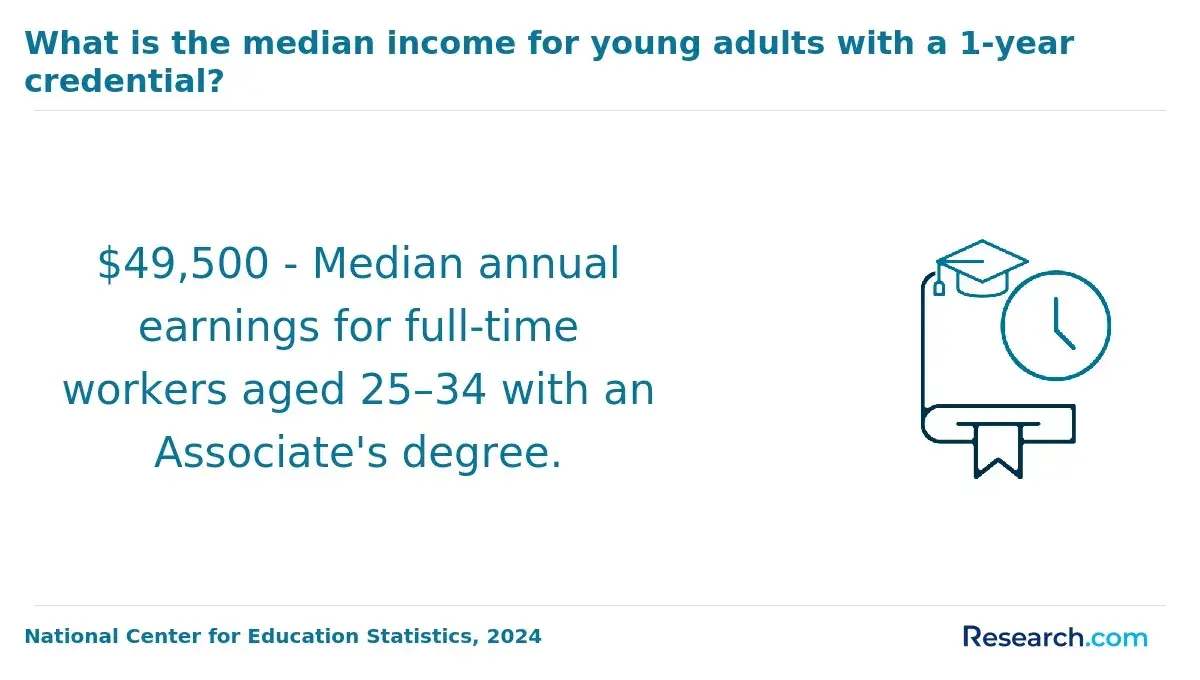
Students comparing healthcare-related online options sometimes discover that psychology is not the only transfer-friendly path into patient-facing or administrative work. If your goal is broader health systems leadership rather than clinical mental health preparation, compare psychology programs with healthcare administration programs before committing your transfer credits.
How Can You Tell Whether Transfer Credits Will Actually Apply Toward Your Clinical Psychology Degree?
The most important question is not "How many credits will the school take?" but "How many credits will satisfy this exact degree plan?" A strong transfer evaluation should map each accepted course to a requirement, not simply list it as general credit.
Use the following checklist before you assume that 60, 75, or 90 credits will reduce your remaining workload. These steps help you avoid enrolling in a program that looks generous but still leaves you with more courses than expected.
- Ask for an official or preliminary degree audit that shows each transferred course and the requirement it fulfills.
- Confirm whether psychology courses transfer as major credits, upper-division credits, lower-division credits, or general electives.
- Check whether statistics, research methods, abnormal psychology, developmental psychology, and capstone courses have direct equivalents.
- Ask whether quarter credits, competency credits, military credits, or exam credits convert differently from semester credits.
- Request a written estimate of remaining credits, expected terms, tuition, fees, and any required field experience or capstone.
A common red flag is language such as "up to 90 credits accepted" without a sample degree plan. That phrase tells you the maximum the institution may place on your transcript, but it does not prove those credits will meet clinical psychology major requirements.
What Types of Previous College Credits Can Transfer Into an Online Clinical Psychology Degree?
Online clinical psychology and psychology programs may evaluate many kinds of prior learning, but each source is treated differently. Regionally accredited college coursework is usually the most straightforward, while alternative credit is more likely to face caps or course-equivalency limits.
The table below summarizes common credit sources and how they may be used in a 120-credit online psychology degree. This matters because the same number of transferred credits can produce very different graduation plans depending on the credit type.
| Credit source | How it may apply | Common limitation |
| Community college coursework | General education, lower-division psychology, electives, and associate-degree blocks | May not satisfy upper-division psychology requirements. |
| Four-year college coursework | General education, major courses, electives, and upper-division requirements | Course content must match the receiving school's curriculum. |
| Previously completed psychology courses | Introductory psychology, lifespan development, social psychology, abnormal psychology, statistics, or research methods | Clinical or research courses may need a recent syllabus review. |
| Alternative credit and exams | Electives or selected general education requirements | Often subject to institutional caps and minimum score rules. |
| Military training | Electives, leadership, health, or social science credits when ACE-recommended | May not replace core psychology courses. |
If you are weighing several health-focused education paths, compare how each field treats transfer credits. For example, best medical coding online programs may apply prior coursework differently because they often emphasize coding systems, billing procedures, and certification preparation rather than psychology major sequencing.
How Do Residency and Upper-Division Requirements Affect Clinical Psychology Transfer Students?
Residency requirements are the credits you must complete at the school awarding the degree. In many online bachelor's programs, the practical effect is that even if the university accepts 90 credits, you still need about 30 credits through that institution.
Upper-division rules can be just as important. Clinical psychology-related bachelor's programs often expect advanced coursework in research methods, abnormal psychology, personality theory, psychological testing foundations, ethics, and a senior capstone. The comparison below shows how residency and upper-division requirements can change the value of transferred credits:
| Requirement | Typical rule | Why it matters for transfer students |
| Institutional residency | Often 30 credits or a set share of the degree | Creates a minimum number of courses you must take after transfer, even with 90 accepted credits. |
| Major residency | Some psychology major courses must be completed at the school | Prior psychology credits may become electives if they do not match the major sequence. |
| Upper-division requirement | A required number of 300- or 400-level credits | Community college credits may not reduce this requirement. |
| Capstone or senior seminar | Usually completed at the degree-granting institution | May prevent a student from finishing entirely through transferred coursework. |
| Minimum grade rule | Often C or higher, though some major courses may require a higher grade | Credits with low grades may be rejected or accepted only as electives. |
Students interested in clinical health careers should also consider whether their target occupation has fieldwork rules that are more restrictive than psychology bachelor's programs. For instance, ultrasound tech online programs typically involve clinical training requirements that cannot be replaced by general transfer credit.
How Does the Transfer Credit Evaluation Process Work for an Online Clinical Psychology Degree?
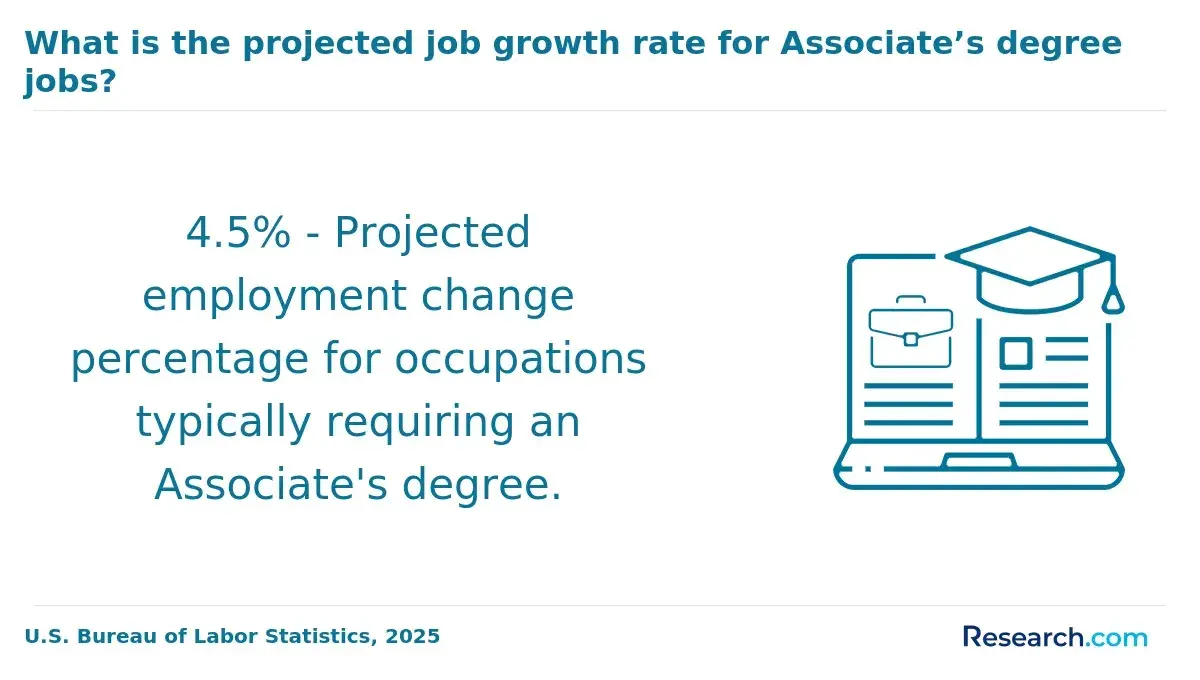
The transfer credit evaluation process is the school's formal review of your prior coursework, test scores, military records, and alternative learning. It should result in a degree plan showing what remains, not just an admissions decision.
Follow this sequence when comparing online clinical psychology programs. It keeps you from choosing a school based only on advertised transfer maximums.
- Collect official transcripts from every college attended, including institutions where you withdrew or earned only a few credits.
- Save course descriptions and syllabi for psychology, statistics, research methods, science, and clinical-related courses.
- Submit transcripts before or immediately after applying, depending on the school's policy.
- Ask the admissions or registrar's office for a program-specific degree audit for the clinical psychology, counseling, or mental health concentration.
- Compare audits from multiple schools using remaining credits, remaining major courses, cost per credit, fees, and projected completion date.
- Get any transfer promises in writing before registering for classes.
Do not rely only on an unofficial conversation with an enrollment counselor. The registrar, transfer office, department chair, or academic advisor may have the final authority on whether a course applies to the major.
How Long Does It Take to Finish an Online Clinical Psychology Degree With 60, 75, or 90 Transfer Credits?
Time-to-completion depends on remaining credits, course load, term length, course availability, and whether major courses must be taken in sequence. A student entering with 90 applicable credits may finish much faster than a student entering with 90 accepted credits that apply mostly as electives.
The table below uses common full-time and part-time pacing to show how remaining credits can translate into completion time. It is an estimate, not a guarantee, because online programs use different calendars and course loads.
| Applied transfer credits | Approximate credits remaining | Possible full-time completion pace | Possible part-time completion pace |
| 60 credits | 60 credits | About 2 academic years if taking 30 credits per year | About 3 to 4 years if taking 15 to 20 credits per year |
| 75 credits | 45 credits | About 1.5 academic years if courses are available in sequence | About 2 to 3 years depending on the term load |
| 90 credits | 30 credits | About 1 academic year in many programs | About 18 to 24 months for many working adults |
The most efficient program is usually the one with the fewest remaining required courses, not simply the one with the highest transfer cap. If graduate school is your next goal, a slightly longer degree plan with stronger research methods, statistics, and faculty support may be more valuable than the fastest completion route.
Students planning long-term advancement in healthcare leadership may eventually compare psychology with graduate management options. If that is part of your plan, review how undergraduate credits position you for an online masters in healthcare management or another graduate pathway before selecting electives.
How Much Can Transfer Credits Reduce the Cost of an Online Clinical Psychology Degree?
Transfer credits can reduce cost because most online bachelor's programs charge tuition by the credit. The basic formula is simple: fewer remaining credits usually means less tuition, although fees, books, technology charges, prior-learning assessment fees, and financial aid rules can change the final price.
College Board's 2024 pricing report lists average published tuition and fees for in-state public four-year colleges at $11,610 for the academic year, which is a useful reminder that every extra term has a real cost. Online programs may price courses differently, so the safest comparison is remaining credits multiplied by the actual per-credit tuition you will pay.
The table below uses a hypothetical $400 per-credit tuition rate to show how transfer credits can affect direct tuition. Use the same method with each school's current tuition to build your own comparison.
| Applied transfer credits | Credits remaining | Estimated tuition at $400 per credit | Potential tuition difference compared with starting from zero credits |
| 60 credits | 60 credits | $24,000 | $24,000 less than paying for all 120 credits at this rate |
| 75 credits | 45 credits | $18,000 | $30,000 less than paying for all 120 credits at this rate |
| 90 credits | 30 credits | $12,000 | $36,000 less than paying for all 120 credits at this rate |
Cost comparisons should include more than tuition. Ask each school about graduation fees, online course fees, transcript fees, portfolio assessment fees, books, required software, and whether transfer students qualify for institutional scholarships.
If your career goal is medication-focused clinical care rather than psychology or counseling preparation, the training path is very different and usually requires professional doctoral study. In that case, compare requirements for online PharmD programs rather than assuming psychology transfer credits will serve the same purpose.
Can Prior Learning, Military Training, Exams, or Certifications Count Toward an Online Clinical Psychology Degree?
Many online degree-completion programs consider learning outside traditional college classrooms, but alternative credit is rarely unlimited. It may help fill electives or general education gaps, yet clinical psychology major courses usually require close content alignment.
These credit sources are worth asking about when you are short of the 60-, 75-, or 90-credit threshold. Each one can help, but only if the school's catalog allows it and the credit fits your degree audit.
- Prior learning assessment: Some universities let adult students submit portfolios documenting college-level learning from work, training, or professional experience.
- Military training: Schools may award credit based on ACE recommendations listed on a Joint Services Transcript.
- Standardized exams: CLEP, DSST, AP, or IB scores may satisfy selected general education or elective requirements.
- Professional certifications: Human services, healthcare, crisis intervention, or behavioral health credentials may be reviewed for elective credit, depending on the school.
- Workforce or employer training: Some institutions evaluate structured corporate training if it has recognized credit recommendations.
The best use of alternative credit is strategic. If you already have 80 college credits but lack a science general education course or free elective, exam credit may help you reach senior standing; if you lack upper-division abnormal psychology or research methods, alternative credit is less likely to replace those courses.
Do Older College Credits Expire When Transferring Into an Online Clinical Psychology Degree?
Older college credits do not always expire, but some are more vulnerable than others. General education credits in English, history, humanities, and social sciences are often accepted even after many years, while statistics, research methods, technology-heavy courses, and clinical content may receive closer review.
The age of your credits matters most when course content has changed or when a program uses prerequisites to protect academic readiness. For a clinical psychology-related bachelor's degree, older credits in introductory psychology may transfer easily, but older statistics or research methods courses may need department approval or repetition.
Common mistakes include assuming old credits will transfer automatically, ignoring minimum grade requirements, and failing to provide syllabi for courses with unclear titles. The better approach is to submit every transcript, ask which older courses require review, and compare whether retaking one course could unlock faster progress through the major sequence.
Accreditation also matters. Credits from regionally accredited institutions are generally easier to transfer into bachelor's degree programs. Credits from nationally accredited, unaccredited, or non-U.S. institutions may require extra review, may transfer only as electives, or may not transfer at all.
Other Things You Should Know About Clinical Psychology
No. A bachelor's degree can support entry-level work or prepare you for graduate study, but independent clinical psychologist licensure usually requires a doctoral degree, supervised clinical experience, and passing required exams set by your state board.
Either can work. A BS may include more science, statistics, or research coursework, while a BA may include more liberal arts electives. The better option is the degree that applies more of your credits and meets your graduate school prerequisites.
It can be, if the institution is properly accredited and the curriculum includes the coursework your next step requires. Graduate programs and employers usually care more about accreditation, grades, prerequisites, research preparation, and relevant experience than whether courses were online.
If you are close to finishing an associate degree, completing it may help because some schools apply associate-degree blocks more cleanly. If you still have many courses left, ask target universities for audits both with and without the associate degree before deciding.
References
- MS in Clinical Psychology - Vanguard University https://www.vanguard.edu/academics/academic-programs/graduate/clinical-psychology-ms
- CalSouthern Online Degree Programs https://www.calsouthern.edu/online-degree-programs/
- Online Psychology Degrees – Carlow University https://online.carlow.edu/psychology-degrees/