2027 Cheapest Accredited Online Clinical Psychology Degree Programs That Accept FAFSA

Co-Founder and Chief Data Scientist
Finding an affordable online clinical psychology degree is harder than comparing tuition alone because FAFSA eligibility, accreditation, transfer credit, and licensure rules all affect the real cost. The stakes are high: the maximum Federal Pell Grant for the 2024-25 award year is $7,395, which can meaningfully reduce undergraduate costs but will not cover every program.
This guide is for students comparing low-cost online psychology, clinical psychology, and clinical mental health pathways. You will learn how to identify FAFSA-eligible options, estimate net cost, avoid accreditation mistakes, and choose a program that fits your career goal.
Key Things You Should Know
- The cheapest FAFSA-eligible online options are usually undergraduate psychology degrees with clinical psychology tracks or concentrations; fully online doctoral programs that lead directly to clinical psychologist licensure are uncommon and require extra accreditation review.
- For undergraduate students, the 2024-25 Federal Pell Grant maximum is $7,395, while graduate students generally rely more on unsubsidized federal loans, scholarships, assistantships, employer aid, and school-based grants.
- Cost should be judged by net price, transfer acceptance, required residency or practicum travel, licensure fit, and total borrowing-not just the advertised per-credit tuition.
Which Are the Cheapest Accredited Online Clinical Psychology Degree Programs That Accept FAFSA?
The lowest-cost online clinical psychology path depends on the degree level. At the bachelor's level, students usually enroll in an online psychology degree with clinical psychology, counseling, behavioral health, or human services coursework.
At the graduate level, students should distinguish clinical psychology from clinical mental health counseling, because the licensure pathway and accreditor expectations can differ.
The table below highlights affordable, institutionally accredited online options or closely related pathways that participate in federal student aid. Tuition changes often, so use these examples as a shortlist and verify the current cost, fees, transfer policy, and aid eligibility directly with each school before applying.
| School | Online program pathway | Degree level | Why it may be cost-effective | FAFSA relevance | Important caution |
| University of Florida Online | Psychology major with behavioral and clinical coursework options | Bachelor's | Low published in-state online tuition can make it one of the strongest values for Florida residents | Institution participates in federal student aid | Out-of-state tuition can change the value calculation |
| University of Central Florida Online | Psychology, including clinical psychology-related coursework | Bachelor's | Large public university with online delivery and transfer-friendly pathways | Institution participates in federal student aid | Students should confirm whether the specific track is available fully online |
| Fort Hays State University | Online psychology degree pathway | Bachelor's | Known for comparatively low online tuition among public universities | Institution participates in federal student aid | Not a standalone licensure-qualifying clinical psychology doctorate |
| Eastern New Mexico University | Online psychology degree pathway | Bachelor's | Public-university pricing may be competitive for transfer students | Institution participates in federal student aid | Students should compare fees and residency rules, not tuition only |
| CUNY School of Professional Studies | Online psychology degree pathway | Bachelor's completion | Can be affordable for New York residents and students bringing transfer credits | Institution participates in federal student aid | Best suited to students who already have college credit |
| University of the Cumberlands | Clinical mental health counseling pathway | Master's | May be relevant for students pursuing counselor licensure rather than psychologist licensure | Institution participates in federal student aid | Counseling licensure is not the same as clinical psychologist licensure |
A key takeaway is that "clinical psychology" can mean different things in admissions pages. A bachelor's degree can prepare students for graduate study or behavioral health support roles, but it does not independently qualify someone to practice as a licensed clinical psychologist. Students aiming for psychologist licensure usually need a doctoral degree, supervised clinical training, and state licensure.
How Does FAFSA Eligibility Work for Online Clinical Psychology Degree Programs?
FAFSA eligibility means a student may be considered for federal grants, work-study, and federal loans at an eligible institution and program. It does not mean the program is free, that every student receives grants, or that the full cost will be covered.
For online clinical psychology pathways, eligibility usually depends on four conditions. Students should confirm each one before paying an application deposit:
- The institution must participate in Title IV federal student aid programs and have a valid federal school code.
- The specific degree or certificate must be an eligible program, not just a continuing education or noncredit offering.
- The student must meet federal aid requirements, including citizenship or eligible noncitizen status, enrollment status, satisfactory academic progress, and other federal rules.
- The student must complete the FAFSA for the correct aid year and respond to any school verification requests on time.
Online students are often surprised that federal aid rules are tied to enrollment intensity. A student taking fewer credits may receive less aid in a term, while a student who withdraws can owe money back under return-of-aid rules. This is why part-time students should ask the financial aid office for a term-by-term aid estimate rather than relying on a full-time example.
Students comparing health-focused degrees may also want to understand how federal aid works in other regulated programs, such as online PharmD programs, because professional licensure programs often have stricter accreditation, residency, and clinical placement requirements than general online degrees.
How Much Does an Online Clinical Psychology Degree Cost After Financial Aid?
The real cost after financial aid is the school's cost of attendance minus grants and scholarships, plus any loans the student chooses to borrow. Cost of attendance can include tuition, mandatory fees, books, course materials, technology, transportation for residencies, and living expenses used for aid calculations.
The table below shows how costs usually differ by degree level. It does not predict what any student will pay, but it helps explain why two "affordable" programs can lead to very different out-of-pocket costs.
| Program type | Typical role in clinical psychology pathway | Common cost drivers | Financial aid pattern | Best affordability strategy |
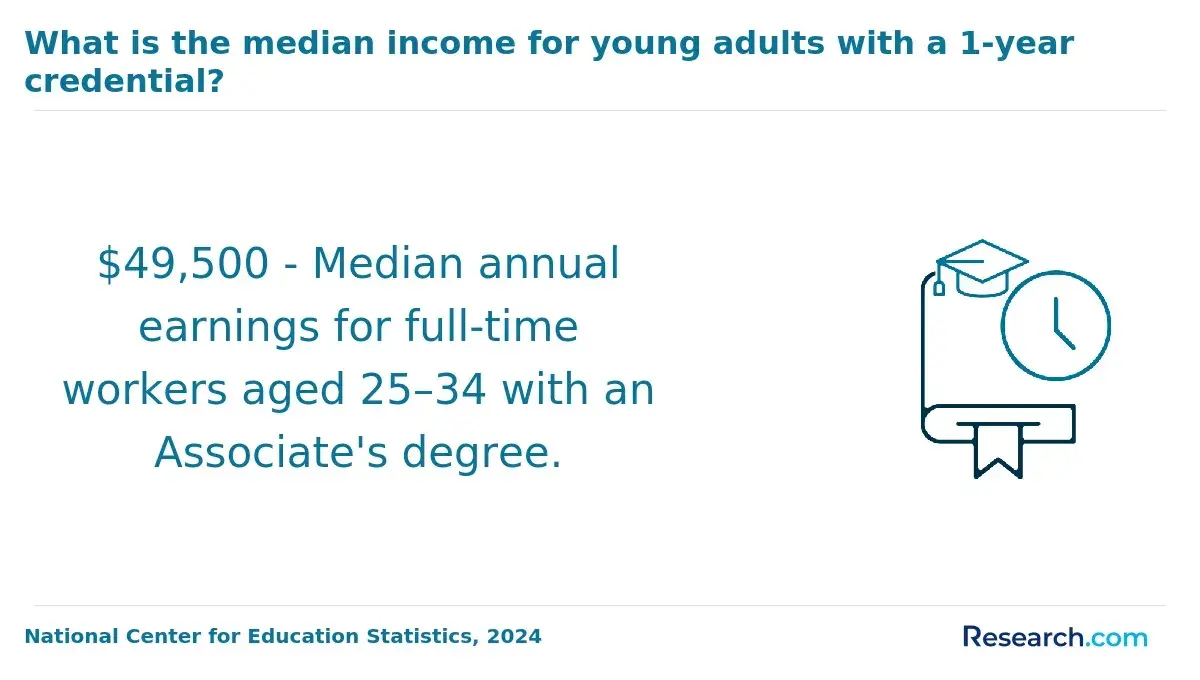
| Online associate degree in psychology | Lower-division transfer pathway | Community college tuition, transferability, general education fees | Pell Grants may be available for eligible students | Use it to complete transferable credits before a bachelor's program |
| Online bachelor's in psychology | Entry point for graduate study or behavioral health support roles | Per-credit tuition, residency status, transfer credits, upper-division requirements | Pell Grants, subsidized loans, unsubsidized loans, scholarships, work-study | Maximize transfer credit and compare net price across public universities |
| Online master's in clinical psychology or counseling-related field | Graduate preparation; may lead to counseling licensure if designed for that purpose | Higher graduate tuition, practicum fees, supervision, travel, licensure exam costs | Mostly unsubsidized federal loans, scholarships, employer aid, school grants | Verify licensure alignment before borrowing |
| Doctoral clinical psychology program | Required pathway for clinical psychologist licensure in many states | Doctoral tuition, internship, residency, dissertation, travel, limited online availability | Loans, assistantships, fellowships, scholarships, institutional aid | Prioritize accreditation, funding, match rates, and licensure outcomes |
For undergraduates, the 2024-25 Pell Grant maximum of $7,395 can significantly reduce tuition at lower-cost public online programs. However, Pell eligibility is based on financial need, enrollment intensity, and federal rules, so students should compare personalized aid offers rather than assuming they will receive the maximum.
The most common pricing mistake is choosing the lowest per-credit rate without calculating remaining credits. A $350-per-credit program that accepts 75 transfer credits can cost less than a $250-per-credit program that accepts only 30 credits.
Which Affordable Online Clinical Psychology Degree Programs Offer the Best Value?
The best value is not always the lowest tuition. A stronger-value program combines a manageable net price with recognized accreditation, flexible scheduling, strong transfer policies, relevant coursework, and a realistic path toward the student's intended career.
Use the following comparison points to separate low advertised tuition from genuine value:
- Net price after grants and scholarships: Ask for an aid estimate based on your FAFSA, transfer credits, enrollment plan, and residency status.
- Transfer acceptance: A program that accepts more prior credit can lower both tuition and time to completion.
- Licensure alignment: If you want to become a licensed psychologist, confirm whether the degree actually supports that path in your state.
- Clinical or practicum requirements: Online coursework may still require local placements, campus visits, background checks, or liability insurance.
- Completion support: Advising, tutoring, placement support, and predictable course scheduling can reduce the risk of paying for extra semesters.
- Borrowing level: A slightly higher-tuition program may be a better value if it offers larger grants or helps you avoid private loans.
A more expensive program may be worth choosing if it has stronger licensure fit, better transfer evaluation, required courses available every term, or a clear supervised practice pathway. Conversely, a very cheap program is a poor fit if it does not support your graduate school prerequisites or state licensing goal.
Students who are drawn to psychology but primarily want healthcare leadership roles may find better career alignment in online masters in healthcare management programs, especially if they already have clinical or administrative experience and do not want a counseling or psychologist licensure route.
Are the Cheapest Online Clinical Psychology Degree Programs Properly Accredited?
Accreditation is the most important quality check in this search because it affects federal aid, credit transfer, graduate admission, employer recognition, and licensure. For FAFSA purposes, the institution must be accredited by a recognized accreditor and approved for federal student aid participation.
Students should understand the difference between institutional and programmatic accreditation. Institutional accreditation applies to the college or university as a whole. Programmatic accreditation applies to a specific professional program and may be essential for licensure or employer acceptance.
| Accreditation type | What it tells you | Why it matters for clinical psychology students | What to verify |
| Institutional accreditation | The college or university meets broad academic and operational standards | Usually required for federal student aid and transfer recognition | Confirm the school appears in federal and accreditor databases |
| APA accreditation | A doctoral, internship, or postdoctoral psychology program meets American Psychological Association standards | Often important for clinical psychologist licensure and competitive employment | Confirm whether the exact doctoral program is APA-accredited |
| CACREP accreditation | A counseling program meets counseling education standards | Relevant for clinical mental health counseling licensure, not psychologist licensure | Check state counselor licensing board rules |
| State authorization | The school can offer distance education to students in your state | Online students may be blocked from enrolling or completing placements in some states | Ask whether your state is approved for enrollment and practicum placement |
A major red flag is a school that says it is "approved," "recognized," or "licensed" but does not clearly name a recognized institutional accreditor. Another red flag is an online doctoral clinical psychology program that implies licensure eligibility without explaining APA status, internship expectations, and state-by-state limitations.
What FAFSA Grants and Federal Aid Can Pay for an Online Clinical Psychology Degree?
Federal aid can help pay for eligible online degree programs, but the type of aid depends heavily on whether the student is undergraduate or graduate. Grants are most common at the undergraduate level, while graduate students often rely more on loans and school-specific aid.
The main federal aid categories to understand are:
- Federal Pell Grant: Need-based undergraduate grant aid that does not usually need to be repaid if the student remains eligible and completes enrollment requirements.
- Federal Supplemental Educational Opportunity Grant: Additional campus-based undergraduate aid for students with exceptional financial need, available only at participating schools with limited funds.
- Federal Work-Study: Part-time employment funding that may be available through participating schools, though online students should ask whether remote or local placements exist.
- Direct Subsidized Loans: Undergraduate loans for eligible students with financial need, with the government covering interest during certain periods.
- Direct Unsubsidized Loans: Undergraduate and graduate loans that accrue interest while the student is in school.
- Direct PLUS Loans: Credit-based federal loans for graduate students or parents of dependent undergraduate students.
The federal graduate unsubsidized loan limit is commonly up to $20,500 per academic year for eligible students, but borrowing the maximum is not always wise. Students should estimate total debt across the entire program and compare it with likely earnings in their intended role.
If the goal is to enter healthcare quickly with a shorter training path, students may also compare psychology with the best medical coding online programs, since some coding programs may have lower total costs and more direct entry-level employment alignment.
How Do Transfer Credits Lower the Cost of an Online Clinical Psychology Degree?
Transfer credits can be one of the biggest cost reducers in an online psychology degree. They lower tuition by reducing the number of credits a student must complete at the new school, and they can also shorten the time spent paying fees, buying materials, and balancing school with work.
Before enrolling, students should request a formal transfer evaluation and ask how credits apply to the degree, not just whether the school accepts them. General elective credit is helpful, but credits that satisfy major, prerequisite, or general education requirements are more valuable.
| Transfer scenario | How it affects cost | What the student should check |
| Associate degree transfer | May satisfy lower-division general education requirements | Whether the associate degree is covered by an articulation agreement |
| Previous psychology coursework | Can reduce major requirements if courses match content and level | Whether abnormal psychology, statistics, research methods, and developmental psychology transfer into the major |
| Military or workforce credit | May reduce electives or general education credits | Whether the school follows ACE credit recommendations and how credits apply |
| Credit by exam | Can lower cost for general education or introductory subjects | Whether the school accepts CLEP, DSST, or other exam credit and what score is required |
Transfer credit is especially important for adult learners and degree completers. However, students should avoid assuming that every accepted credit lowers the program cost equally. If a school accepts 60 credits but only 30 apply to the degree plan, the student may still pay for extra coursework.
The practical move is to compare at least three schools using the same question: "How many credits will I still need after transfer evaluation?" That number is more useful than the headline tuition rate.
Which Students Benefit Most From a Low-Cost Online Clinical Psychology Degree With FAFSA?
A low-cost online clinical psychology pathway can be a strong fit for students who need flexibility and want to reduce borrowing while preparing for graduate study or behavioral health work. It is less ideal for students who need a highly supervised, licensure-specific doctoral pathway and assume online coursework alone will satisfy clinical psychologist requirements.
The students most likely to benefit include:
- Undergraduate students planning for graduate school who need an affordable psychology foundation before applying to master's or doctoral programs.
- Working adults who already have transfer credits and need an online degree completion route.
- Students with financial need who may qualify for Pell Grants, state grants, or institutional scholarships.
- Students exploring behavioral health, case management, research assistant, human services, or graduate-preparation roles rather than immediate psychologist licensure.
- Students who can complete practicum or internship requirements locally if the program requires field experience.
Students should be cautious if they want a guaranteed route to independent clinical practice, need a fully online doctoral program, or cannot complete in-person placements. Clinical psychology is a regulated field, and state boards can have detailed requirements that online coursework alone may not satisfy.
If your interest is healthcare operations rather than therapy, assessment, or psychological research, healthcare administration programs may offer a more direct route to management, compliance, patient services, or operations roles.
How Does the Cost of an Online Clinical Psychology Degree Affect Career ROI?
Career ROI depends on how much the student pays, how much debt they take on, whether the degree supports licensure or graduate admission, and what roles become realistic after completion. Psychology can lead to meaningful work, but the return varies widely by degree level.
According to the U.S. Bureau of Labor Statistics' May 2024 wage data, the median annual wage for clinical and counseling psychologists was $96,100. That figure is useful for understanding the licensed psychologist labor market, but it should not be applied to bachelor's graduates because clinical psychologist roles typically require doctoral education, supervised experience, and licensure.
The ROI question should be different at each level:
- Associate degree: Best ROI when used as a low-cost transfer pathway, not as a final credential for clinical practice.
- Bachelor's degree: Best ROI when it minimizes debt while preserving options for graduate school, human services, research support, or behavioral health-adjacent roles.
- Master's degree: Best ROI when the program clearly aligns with counseling or psychology-related licensure rules in the student's state.
- Doctoral degree: Best ROI when accreditation, internship placement, funding, and licensure outcomes justify the total cost and time commitment.
Borrowing heavily for a non-licensure online program can weaken ROI if the student later needs a separate graduate degree. A lower-cost bachelor's program can improve long-term ROI by leaving more financial room for the master's or doctorate that may be required for clinical practice.
Students comparing clinical healthcare paths may also examine ultrasound tech online programs, which can involve different accreditation, clinical training, and employment timelines than psychology degrees.
How Should Students Choose the Cheapest FAFSA-Eligible Online Clinical Psychology Degree?
The best choice is the program with the lowest realistic total cost that still supports your career goal. That means verifying aid, accreditation, transfer credits, licensure fit, and completion logistics before enrolling.
Use this step-by-step process before committing to a school:
- Define the career goal first: Decide whether you want graduate school preparation, counseling licensure, behavioral health support work, research experience, or clinical psychologist licensure.
- Confirm the exact credential: Check whether the program is psychology, clinical psychology, counseling, human services, or another related field.
- Verify FAFSA eligibility: Confirm the school participates in federal student aid and that your exact program is Title IV-eligible.
- Check institutional accreditation: Make sure the college or university is accredited by a recognized institutional accreditor.
- Check programmatic accreditation if needed: For doctoral clinical psychology, verify APA status; for counseling licensure pathways, check CACREP relevance and state rules.
- Request a transfer evaluation: Ask how many credits apply to your degree plan and how many credits remain.
- Ask for a net price estimate: Compare tuition, fees, books, technology charges, travel, residency costs, and expected aid.
- Review placement requirements: Confirm whether practicums, internships, background checks, or campus visits are required.
- Estimate borrowing across the full program: Do not judge affordability by one term's aid package.
- Compare at least three offers: Choose based on net cost, completion time, accreditation, support, and career fit.
Common mistakes include assuming FAFSA means free tuition, overlooking fees, ignoring state authorization, failing to renew aid, and choosing a program that sounds clinical but does not meet the student's intended licensure requirements. The safest approach is to get written answers from admissions, financial aid, and the academic department before enrolling.
If you are comparing psychology with other health-related programs, review total cost and aid rules across fields rather than assuming one online healthcare degree works like another.
Other Things You Should Know About Clinical Psychology Programs
No. A bachelor's degree in psychology can prepare you for graduate study or entry-level behavioral health-adjacent roles, but clinical psychologist licensure generally requires a doctoral degree, supervised clinical experience, and passing required exams.
Not necessarily. Online courses often require strong time management, independent reading, writing, research, statistics, and discussion participation. The flexibility can help working students, but the academic expectations should be comparable at reputable accredited schools.
Some do and some do not. Bachelor's programs may offer optional internships or capstones, while graduate licensure-oriented programs often require practicum or internship hours. Always ask whether placements can be completed in your state or local area.
It can be a good choice if you are interested in human behavior, research, counseling concepts, or social services. However, if you want a direct job-training credential, compare psychology with applied healthcare, business, data, or public service programs before committing.
References
- The 4 Best Online Colleges that Accept FAFSA https://joinjuno.com/financial-literacy/financial-aid/online-colleges-accept-fafsa
- 2025 Most Affordable Online Colleges for Psychology Degrees https://www.onlineu.com/most-affordable-colleges/psychology-degrees
- Section 3: Professional Practice - CACREP https://www.cacrep.org/section-3-professional-practice/
- Best Online Master's & Doctoral Programs In Psychology 2025 https://www.psychology.org/rankings/best-online-graduate-degree-programs/
- 2025's Most Affordable Online Master’s Degrees in Psychology https://www.onlinemastersdegrees.org/most-affordable/psychology-programs/
- Doctor of Psychology (PsyD) Online Degree Program https://www.calsouthern.edu/online-degree-programs/behavioral-sciences/doctor-psychology-psyd/
- Internships https://careers.pacificclinics.org/internships
- Online Master’s in Clinical Psychology https://onlinecounselingprograms.com/online-counseling-degrees/online-masters-in-psychology/clinical-psychology/
- Careers at Compass Health Network https://compasshealthnetwork.pinpointhq.com/internships
- Practicum vs. Internship in Counseling Programs: What’s the Difference? https://www.nec.edu/news/practicum-vs-internship-counseling-programs