2027 Fastest Accredited Online Applied Psychology Programs: Accelerated Degrees and Completion Times

Co-Founder and Chief Data Scientist
Driven by expanding applications of behavioral science in corporate strategy, healthcare, and human resources, overall employment for psychologists is projected to grow 6% through 2034, generating roughly 12,900 job openings each year. To help students enter this expanding market faster, accredited universities are offering accelerated, hybrid-online Applied Psychology programs.
While traditional programs require up to 4 years, fast-track online pathways allow students to complete their degree in as few as 12 to 18 months. This guide can help students compare the fastest accredited online applied psychology programs and evaluate actual completion timelines and tuition costs.
Key Things You Should Know
- The fastest realistic route is usually a bachelor's-completion program that accepts about 60 to 90 transfer credits, potentially reducing a 120-credit degree to roughly 12 to 24 months; students starting from zero should expect closer to three to four years even in accelerated terms.
- Accelerated online applied psychology programs commonly use 4-, 6-, 8-, or 10-week courses, but shorter terms compress the same credit requirements into less time and often require heavier weekly reading, writing, and discussion work.
- Accreditation matters more than speed: look first for institutional accreditation, then check whether your goal requires specialized review, such as ABAI-related coursework for behavior analysis or counseling-specific accreditation for licensure-track graduate study.
Which Colleges Offer the Fastest Accredited Online Applied Psychology Programs?
The fastest accredited online applied psychology programs are usually not "short" degrees in the sense of requiring fewer credits. They are fast because they offer frequent start dates, shorter academic terms, generous transfer-credit review, credit for prior learning, or a master's curriculum that can be completed in a compact sequence.
Because schools use different labels, applied psychology may appear as a dedicated applied psychology degree, a psychology degree with an applied concentration, an applied behavior analysis track, an industrial-organizational focus, or a human services-oriented psychology program. If you are comparing speed across fields, it may also help to look at broader accelerated career programs to understand how compressed calendars work in other online degrees.
The table below summarizes examples of accredited U.S. online programs that are commonly considered by students seeking an applied, career-focused psychology pathway. Advertised timelines can change, so use this as a shortlist for questions to ask admissions rather than as a guarantee of your personal graduation date.
| College or university | Online applied psychology-related option | Accreditation to verify | Format features that may speed completion | Best fit |
| University of Southern California | Online Master of Science in Applied Psychology | WSCUC institutional accreditation | Master's-level sequence advertised around 16 months for eligible students | Students seeking an applied graduate degree for consumer, organizational, or human behavior roles |
| Liberty University | Online Master of Arts in Applied Psychology | SACSCOC institutional accreditation | 8-week courses and an advertised average timeline of about 1.5 years | Students who want a non-licensure applied psychology master's with accelerated terms |
| National University | Online psychology degree options with applied behavior analysis-related study | WSCUC institutional accreditation | 4-week courses, monthly starts, and transfer-credit review | Adult learners who want highly frequent start dates and concentrated courses |
| Southern New Hampshire University | Online BA in Psychology with career-focused concentrations | NECHE institutional accreditation | 8-week undergraduate terms and transfer of up to 90 credits toward many bachelor's programs | Transfer students who want a bachelor's-completion route with broad online support |
| Eastern Kentucky University | Online psychology options with applied behavior analysis-related coursework | SACSCOC institutional accreditation | 8-week terms and transfer-friendly online degree planning | Students interested in behavior-focused applied psychology coursework |
| Purdue Global | Online psychology programs with applied behavior analysis-related pathways | HLC institutional accreditation | Online terms, prior learning assessment options, and career-focused curriculum planning | Working adults who may have prior college, military, or professional learning |
The shortest advertised option is not automatically the best option. A 16-month applied psychology master's may be faster than finishing a bachelor's from scratch, but it requires an eligible bachelor's degree first; a bachelor's-completion program may be faster only if the school accepts enough prior credits.
How Long Does It Take to Complete an Accredited Online Applied Psychology Degree?
Completion time depends on degree level, transfer status, enrollment intensity, and whether the program includes fieldwork, a capstone, or sequenced prerequisites. In practical terms, "fastest" means the shortest accredited path that still satisfies degree requirements and supports your next goal, not simply the program with the shortest marketing claim.
The table below compares common online applied psychology pathways by realistic completion time. It separates students who already have credits from those starting a degree from the beginning because this is the factor that most often changes the timeline.
| Pathway | Typical credits | Fastest realistic timeline | More common timeline | What may extend the timeline |
| Bachelor's completion in applied psychology or psychology | Usually 120 semester credits total, with 60 to 90 credits transferred in | About 12 to 24 months | About 18 to 30 months | Rejected transfer credits, missing general education courses, required upper-division residency credits |
| Full online bachelor's from first year | Usually 120 semester credits | About three years with year-round full-time study | About four years | Part-time enrollment, course availability, work schedule, repeated courses |
| Online master's in applied psychology | Commonly about 30 to 36 graduate credits | About 12 to 18 months | About 18 to 24 months | Part-time pacing, thesis or capstone timing, practicum requirements in adjacent fields |
| Competency-based psychology-related degree | Varies by school and assessment model | Potentially faster for experienced students | Highly individual | Self-pacing difficulties, subscription-term limits, assessment revisions |
Students should also distinguish course length from degree length. An 8-week term can help you complete more courses per year, but a 120-credit bachelor's still requires 120 credits unless transfer credit, prior learning credit, or institutional policy reduces what you must take at that school.
How Do Accelerated and Competency-Based Online Applied Psychology Programs Work?
Accelerated online applied psychology programs compress the academic calendar. Instead of taking four or five courses across a 15- or 16-week semester, students may take one or two courses at a time in shorter blocks and repeat that pattern year-round.
The most common accelerated formats affect your timeline in different ways. Before enrolling, ask whether the format changes the number of credits required, the number of courses you can take per term, or only the pace at which each course is delivered.
- Short-term courses: 4-, 6-, 8-, or 10-week classes let students complete more course starts each year, but each class usually has the same credit value and may require more weekly study time.
- Year-round enrollment: Programs with summer, winter, or monthly starts can reduce waiting time between courses, which is especially useful if you need only a few classes to finish.
- Stacked course scheduling: Some students take one intensive course at a time instead of several at once, which can help working adults stay focused while still moving quickly.
- Competency-based education: Students progress by demonstrating mastery, so experienced learners may move faster, while students new to psychology may need a more traditional pace.
- Prior learning assessment: Eligible military training, workplace learning, professional certifications, or portfolio evidence may convert into credits at some institutions.
Competency-based programs can be attractive, but they are not automatically easier. They work best for students who can write independently, manage deadlines without frequent reminders, and already understand some psychology, statistics, research, human services, or organizational behavior concepts.
What Accreditation Should an Online Applied Psychology Program Have?
For online applied psychology programs, the first accreditation checkpoint is institutional accreditation from an agency recognized by the U.S. Department of Education or the Council for Higher Education Accreditation. This matters for federal financial aid eligibility, transfer credit, employer recognition, and graduate school admissions.
Programmatic accreditation is more goal-dependent. General applied psychology bachelor's and non-licensure master's programs often do not have a required specialized accreditor, while clinical, counseling, school psychology, behavior analysis, and doctoral pathways may have additional standards.
The table below explains which accreditation signals matter for different goals. Use it to avoid paying for a fast program that does not match your intended credential or graduate pathway.
| Student goal | Accreditation or approval to check | Why it matters |
| General applied psychology bachelor's degree | Institutional accreditation | Supports transfer, financial aid eligibility, and recognition by many employers and graduate schools |
| Non-licensure applied psychology master's | Institutional accreditation; graduate school reputation and curriculum fit | Useful for applied roles, but it typically does not qualify someone to practice independently as a psychologist |
| Behavior analysis pathway | Institutional accreditation plus coursework alignment with behavior analysis credential requirements | Credential eligibility can depend on coursework, supervision, degree level, and current board rules |
| Counseling or clinical mental health licensure | State board requirements and, often, counseling-specific accreditation or approved curriculum | Licensure rules vary by state and may require practicum, internship, exams, and supervised experience |
| Licensed psychologist pathway | Doctoral-level program review, internship requirements, and state psychology board rules | A bachelor's or master's in applied psychology alone is not the standard route to independent psychologist licensure |
Accreditation checks are not unique to psychology. Students comparing regulated online health degrees, such as an online PharmD, face a similar issue: the fastest option is only useful if it satisfies the credentialing rules attached to the career.
How Can Transfer Credits and Prior Learning Shorten an Online Applied Psychology Degree?
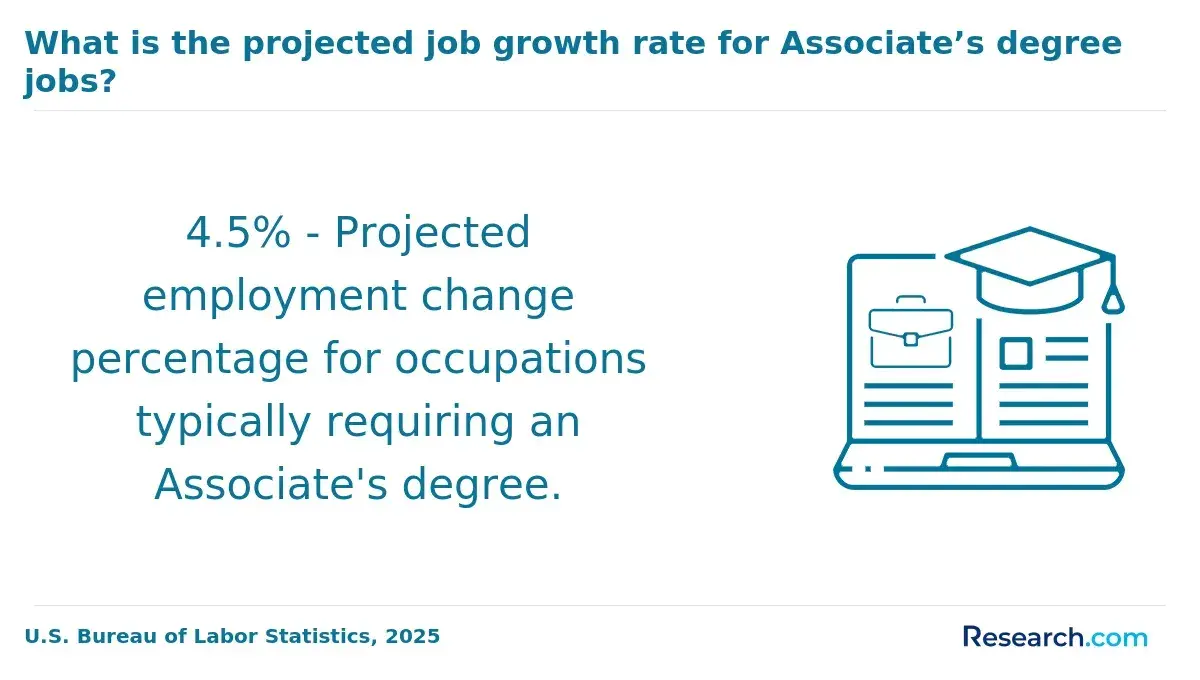
Transfer credit is usually the biggest reason one student can finish an online applied psychology bachelor's in about a year while another needs several years. Many accelerated bachelor's-completion programs are built for students who already have general education credits, an associate degree, military credits, or previous psychology coursework.
Before relying on an advertised fast timeline, ask the school for a formal or preliminary transfer evaluation. The list below shows the credit categories that can shorten the degree and the limits that can reduce the benefit.
- Community college and previous university credits: These often apply to general education, electives, and lower-division requirements, but upper-division psychology requirements may still need to be completed at the degree-granting school.
- Associate degrees: A completed associate degree can simplify transfer planning, especially when articulation agreements exist, but it may not cover statistics, research methods, or major prerequisites.
- Credit by exam: CLEP, DSST, AP, or IB credit may reduce general education requirements if the institution accepts the exam and score.
- Military and workplace learning: Some schools review American Council on Education recommendations, professional training, or portfolios, but policies vary widely.
- Residency requirements: Even transfer-friendly schools commonly require a minimum number of credits to be taken through their institution, which can set a floor on how fast you can finish.
A practical rule is to compare the number of credits accepted, not just the number of credits you previously earned. A student with 90 accepted credits toward the exact degree plan is in a very different position from a student with 90 credits that transfer mostly as electives.
What Are the Admission Requirements and Start Dates for Accelerated Online Applied Psychology Programs?
Admission requirements for accelerated online applied psychology programs are usually straightforward at the bachelor's level and more selective at the master's level. However, missing documents, prerequisite gaps, and late transfer evaluations can push your start date back by weeks or months.
The most common requirements are listed below. Gather them before applying so you can enter the earliest available start date and avoid being admitted without a realistic degree plan.
- Undergraduate applicants: High school transcript or GED, transcripts from all prior colleges, minimum GPA if required, identity verification, and sometimes placement or advising steps.
- Bachelor's-completion applicants: Official college transcripts, transfer-credit evaluation, proof of associate degree if applicable, and confirmation of remaining major requirements.
- Graduate applicants: Regionally or institutionally accredited bachelor's degree, minimum GPA, statement of purpose, résumé, recommendations if required, and sometimes prerequisite psychology or statistics coursework.
- Behavior analysis or field-focused applicants: Verification that coursework, supervision, or field placement rules match current credential or employer expectations.
Start dates vary by school. Some universities use monthly or multiple annual starts, while others admit by semester. Programs with fieldwork, clinical components, or cohort sequencing may have fewer start dates because placements and course order must be coordinated.
This is one reason students should compare psychology with other structured online fields carefully. For example, an ultrasound tech school may be online for didactic coursework but still depend heavily on clinical scheduling; applied psychology programs are often more flexible, but behavior analysis, counseling, or practicum-based tracks can still have timing constraints.
How Much Does a Fast Online Applied Psychology Degree Cost, and Is Financial Aid Available?
The cost of a fast online applied psychology degree depends on tuition per credit, the number of credits you must complete at the institution, technology fees, textbooks, transfer-credit policies, and whether acceleration causes you to take more credits in a billing period. Faster graduation can reduce time out of the workforce, but it does not always reduce tuition.
As a national benchmark, the College Board's 2024 Trends in College Pricing and Student Aid reported average published tuition and fees of $11,610 for in-state students at public four-year institutions for 2024-25. Online applied psychology programs may charge below or above that benchmark depending on residency rules, private versus public status, and per-credit pricing.
When schools publish specific tuition or fee amounts, compare them as a total program cost rather than as a single per-credit figure. The main cost categories to request from each school are:
- Tuition for the remaining credits you must complete after transfer evaluation
- Online, technology, graduation, transcript, or proctoring fees
- Textbooks, digital course materials, testing platforms, and statistics software if required
- Portfolio or prior learning assessment fees, if you plan to seek credit for experience
- Field placement, background check, or liability insurance costs if your concentration requires them
Financial aid may be available if the institution and program are eligible and the student meets federal aid rules. Common options include Pell Grants for eligible undergraduates, federal student loans, employer tuition assistance, military education benefits, state grants, scholarships, and payment plans.
Students comparing psychology with other online health degrees often notice that tuition and aid rules differ by credential level. Researching affordability in programs such as online DNP programs can provide a useful point of comparison for how graduate-level online pricing, fees, and clinical requirements affect total cost.
Can You Work Full Time While Completing an Accelerated Online Applied Psychology Degree?
Many students can work full time while earning an accelerated online applied psychology degree, but the realistic pace depends on course length, writing load, statistics requirements, family obligations, and whether the program has synchronous meetings. Shorter terms are flexible in calendar design, not necessarily lighter in workload.
The table below compares common enrollment patterns for working adults. Use it to choose a pace that supports completion without creating a high risk of withdrawal or repeated courses.
| Enrollment pattern | Typical course load | Timeline effect | Best for |
| Full-time accelerated | Often two courses per short term or a heavy year-round schedule | Fastest, especially with transfer credit | Students with predictable schedules, strong writing skills, and limited outside obligations |
| Moderate accelerated | Often one course per short term year-round | Slower than full-time but still steady | Full-time workers who want momentum without overload |
| Part-time traditional | One or two courses per standard semester | Longest but often most manageable | Students with rotating shifts, caregiving responsibilities, or limited study time |
| Competency-based | Self-paced within subscription or assessment periods | Can be fast or slow depending on mastery and discipline | Experienced adult learners who can work independently |
A slower plan may be the smarter choice if you are taking statistics for the first time, returning to school after a long break, managing unpredictable work hours, or preparing for graduate school where grades and faculty recommendations matter. Finishing quickly is less helpful if the pace damages your GPA or prevents you from building relevant experience.
Are Accelerated Online Applied Psychology Degrees Respected by Employers and Graduate Schools?
Employers and graduate schools generally care more about accreditation, degree level, curriculum relevance, grades, experience, and skills than whether a program was completed online or on campus. An online applied psychology degree from an accredited institution can be respected when the transcript, coursework, and outcomes align with the role or graduate program.
Applied psychology is broad, so outcomes vary. Graduates may pursue roles related to human services, case management support, behavioral health administration, market research support, training and development, customer experience, organizational behavior, or preparation for graduate study. The degree is usually strongest when paired with internships, research methods, data analysis, writing samples, or supervised experience.
It is also important to understand title limits. A bachelor's or non-licensure master's in applied psychology usually does not qualify someone to practice independently as a licensed psychologist, therapist, counselor, or psychiatric prescriber. Students interested in advanced clinical nursing and mental health practice may compare separate pathways such as the fastest PMHNP programs, which have different admissions, clinical, and licensure requirements.
For graduate school, accelerated completion is not a problem by itself. What can raise concerns is weak accreditation, low grades, missing prerequisites, limited faculty interaction, or a curriculum that does not match the intended graduate field.
How Should You Compare the Fastest Accredited Online Applied Psychology Programs?
The best fast online applied psychology program is the one that gives you the shortest verified path to your goal after transfer review, not the one with the boldest completion-time claim. Compare programs with the same assumptions: your accepted credits, your weekly study time, your desired career path, and any licensure or credential requirements.
Use the following steps before enrolling. They are designed to turn an advertised timeline into a realistic graduation estimate.
- Verify institutional accreditation through the school, the accreditor, or federal accreditation databases.
- Request a written transfer-credit evaluation showing exactly which requirements are complete and which remain.
- Ask how many courses you can take per term and whether approval is needed for overloads.
- Confirm whether the program has required course sequences, prerequisites, capstones, internships, practica, or fieldwork.
- Calculate total cost based on remaining credits, not the full catalog price or the per-credit rate alone.
- Ask whether courses are asynchronous, synchronous, self-paced, cohort-based, or available every term.
- Check whether the degree supports your next step, such as employment, graduate admission, behavior analysis credentialing, or preparation for a licensure-track program.
Several common mistakes can make a "fast" program take longer than expected. The table below pairs those red flags with better comparison habits.
| Common mistake | Why it creates risk | Better approach |
| Assuming accelerated means easier | Short terms often increase weekly workload | Ask for sample syllabi and estimate weekly study hours |
| Counting earned credits instead of accepted credits | Some credits may transfer only as electives or may not apply to the major | Get a degree audit before committing |
| Ignoring residency requirements | The school may require a minimum number of credits taken in-house | Ask for the minimum institutional credit requirement |
| Choosing speed over accreditation | Weak accreditation can limit aid, transfer, employment, or graduate options | Verify accreditation before applying |
| Overlooking licensure limits | Applied psychology degrees are often non-licensure programs | Check state board rules if your goal involves counseling, therapy, or psychology licensure |
| Underestimating statistics or research courses | These courses can slow students who are less prepared for quantitative work | Plan lighter terms around difficult prerequisites |
If two accredited programs look similar, choose the one that provides the clearest written degree plan, the most favorable transfer evaluation, transparent total cost, and a schedule you can sustain.
Other Things You Should Know About Applied Psychology
No. Applied psychology uses psychological principles in practical settings such as organizations, human services, behavior support, research, training, or consumer behavior. Clinical psychology focuses on assessment and treatment of mental health conditions and usually requires a doctoral or licensure-specific pathway.
Usually not with a general applied psychology degree alone. Therapist licensure typically requires a counseling, marriage and family therapy, social work, or clinical psychology program that meets state-specific coursework, practicum, internship, exam, and supervised experience rules.
Many accredited universities do not mark the diploma as online, but policies vary. Ask the registrar what appears on the diploma and transcript if this matters for your employer or graduate school applications.
Prioritize research literacy, statistics, professional writing, ethical decision-making, cultural awareness, interviewing or helping skills, behavior observation, data interpretation, and workplace communication. These skills often matter as much as the degree title in applied roles.
References
- Are There APA-Accredited Master’s in Psychology Programs? APA vs MPCAC Accreditation https://www.onlineeducation.com/psychology/faqs/apa-accredited-psychology-programs
- Masters in Psychology and Counseling Accreditation Council | Council for Higher Education Accreditation https://www.chea.org/masters-psychology-and-counseling-accreditation-council
- What to Look For with Accreditation https://mastersinpsychologyguide.com/articles/masters-in-psychology-accreditation-what-to-look-for/
- Bachelor's to Graduate Accelerated Pathways | CIIS https://www.ciis.edu/academics/bachelors-to-graduate-accelerated-pathways
- Can You Complete an Online Psychology Degree in One Year? https://www.counselingpsychology.org/articles/complete-online-degree-psychology-one-year/
- Online Degree Completion Program in Applied Psychology https://www.elms.edu/academics/online-ce/psychology/
- Top Accrediting Bodies For Counseling Degrees https://www.psychology.org/resources/accreditation-for-counseling-degrees/
- Applied Psychology, B.A. Online https://www.pointloma.edu/adult-degree-completion/programs/applied-psychology-ba-online
- Top 10 Best Online Bachelors in Psychology Degree Programs 2016 https://www.bestpsychologydegrees.com/top/online-bachelors/
- Psychology Accreditation: What you need to know https://www.onlinepsychologydegrees.com/articles/accreditation/