2027 Fastest Accredited Online Supply Chain Management Programs: Accelerated Degrees and Completion Times

Co-Founder and Chief Data Scientist
The hard part is not finding an online supply chain management degree; it is figuring out which accredited program can actually be finished quickly. The U.S. Bureau of Labor Statistics reports a May 2024 median pay of $80,880 for logisticians, with much faster-than-average projected growth, making speed and credibility important.
This guide is for working adults, transfer students, military learners, and career changers comparing accelerated online options. You will learn how term length, transfer credits, prerequisites, course load, competency-based pacing, and any experiential requirements can change the real graduation timeline.
Key Things You Should Know
- The fastest accredited online supply chain management degrees are usually bachelor's-completion programs that accept up to about 90 transfer credits, allowing prepared students to finish roughly 30 remaining credits in about 12 to 18 months.
- Accelerated formats typically use 5-week, 7.5-week, or 8-week courses, while competency-based programs may move faster for students who already know operations, procurement, inventory, analytics, or logistics concepts.
- Starting from zero credits, most online bachelor's degrees still require about 120 credits and commonly take 3 to 4 years; master's programs are shorter at about 30 to 36 credits and often take 10 to 24 months.
Which Colleges Offer the Fastest Accredited Online Supply Chain Management Programs?
The fastest accredited online supply chain management program for you is usually the one that combines recognized accreditation, short terms, generous transfer policies, and a curriculum that matches your remaining credits. The table below compares well-known U.S. online options that are commonly relevant to students seeking supply chain, logistics, operations, or global logistics degrees.
| College or university | Online supply chain-related degree | Accreditation to verify | Speed features | Fastest realistic path | Best fit |
| Western Governors University | B.S. Supply Chain and Operations Management | NWCCU institutional accreditation; business accreditation status should be verified for the current catalog | Competency-based terms; students advance by demonstrating mastery | Potentially faster than term-based study for experienced learners, but pace depends on completed competencies | Working adults with operations, inventory, procurement, manufacturing, or logistics experience |
| Southern New Hampshire University | B.S. Operations Management with logistics or supply chain-aligned coursework | NECHE institutional accreditation; programmatic business accreditation should be confirmed | 8-week undergraduate terms; accepts many transfer credits | About 1 to 2 years for students entering with substantial transfer credit | Transfer students who want predictable course pacing and frequent online terms |
| Colorado State University Global | B.S. Operations Management or supply chain-related specialization options | HLC institutional accreditation; business accreditation status should be checked by program | 8-week courses; monthly starts; transfer-friendly online model | About 12 to 24 months for students with most general education and elective credits completed | Adults seeking frequent start dates and structured accelerated terms |
| Arizona State University Online | Business degree options with global logistics or supply chain-related pathways | HLC institutional accreditation; AACSB accreditation through W. P. Carey School of Business for eligible business programs | 7.5-week courses; large online course inventory | Often fastest for students who transfer cleanly into the major map | Students who want a major research university brand and AACSB business context |
| Florida International University Online | B.B.A. Logistics and Supply Chain Management | SACSCOC institutional accreditation; AACSB business accreditation | Fully online upper-division business pathway; advisor-guided sequencing | Fastest for students who already meet lower-division business prerequisites | Students prioritizing a dedicated logistics and supply chain business major |
| Penn State World Campus | B.S. Project and Supply Chain Management or graduate supply chain options | Middle States institutional accreditation; AACSB business accreditation where applicable | Online delivery from a recognized public university system | Not always the shortest, but strong for students balancing reputation with flexibility | Students who want a respected program and can follow a planned course sequence |
| Rutgers University | Online master's-level supply chain management options | Middle States institutional accreditation; AACSB business accreditation | Graduate-level online supply chain curriculum; shorter credit total than a bachelor's | Often about 18 to 24 months, depending on course load | Bachelor's degree holders seeking faster graduate specialization |
In this context, "fastest" should not mean "least rigorous." It means the shortest credible route through an accredited curriculum after accounting for transfer credits, required prerequisites, course availability, and the number of classes you can handle at once.
If your goal is speed, separate full bachelor's programs from bachelor's-completion programs. A school may advertise accelerated online courses, but a student entering with no college credit still has far more work to complete than a transfer student who only needs upper-division business and supply chain courses.
How Long Does It Take to Complete an Accredited Online Supply Chain Management Degree?
Completion time depends first on degree level. A bachelor's degree usually requires about 120 credits, while a supply chain management master's degree often requires about 30 to 36 credits. That is why a graduate program can be shorter in calendar time, but it is only available after you already hold a bachelor's degree.
The table below summarizes common online completion scenarios. Use it to estimate your timeline before accepting an advertised "fast" completion claim.
| Student starting point | Typical remaining credits | Common online format | Realistic completion range | Main factor that changes the timeline |
| No prior college credit | About 120 credits | Standard or accelerated undergraduate terms | About 3 to 4 years full time | Course load and year-round enrollment |
| Associate degree completed | About 60 credits | Bachelor's-completion pathway | About 18 to 30 months | Whether credits apply to major, general education, and prerequisites |
| Maximum transfer student | About 30 credits | Accelerated 7.5-week or 8-week terms | About 12 to 18 months | Residency requirement and course sequencing |
| Experienced learner in competency-based program | Varies by completed competencies | Self-paced competency terms | Potentially under 2 years for prepared students | Prior knowledge, time available, and assessment pace |
| Bachelor's degree holder entering master's program | About 30 to 36 graduate credits | Online graduate terms | About 10 to 24 months | Full-time enrollment and capstone or project requirements |
Students who do not yet have college credit may want to compare fast transfer-building routes before entering a bachelor's program. Some learners begin with associates degrees online, then transfer into a supply chain bachelor's-completion program if the credits are accepted cleanly.
The fastest timeline is usually not the best timeline for everyone. If you work full time, have caregiving responsibilities, or are new to business coursework, taking fewer courses per term may protect your GPA and reduce the risk of stopping out.
How Do Accelerated and Competency-Based Online Supply Chain Management Programs Work?
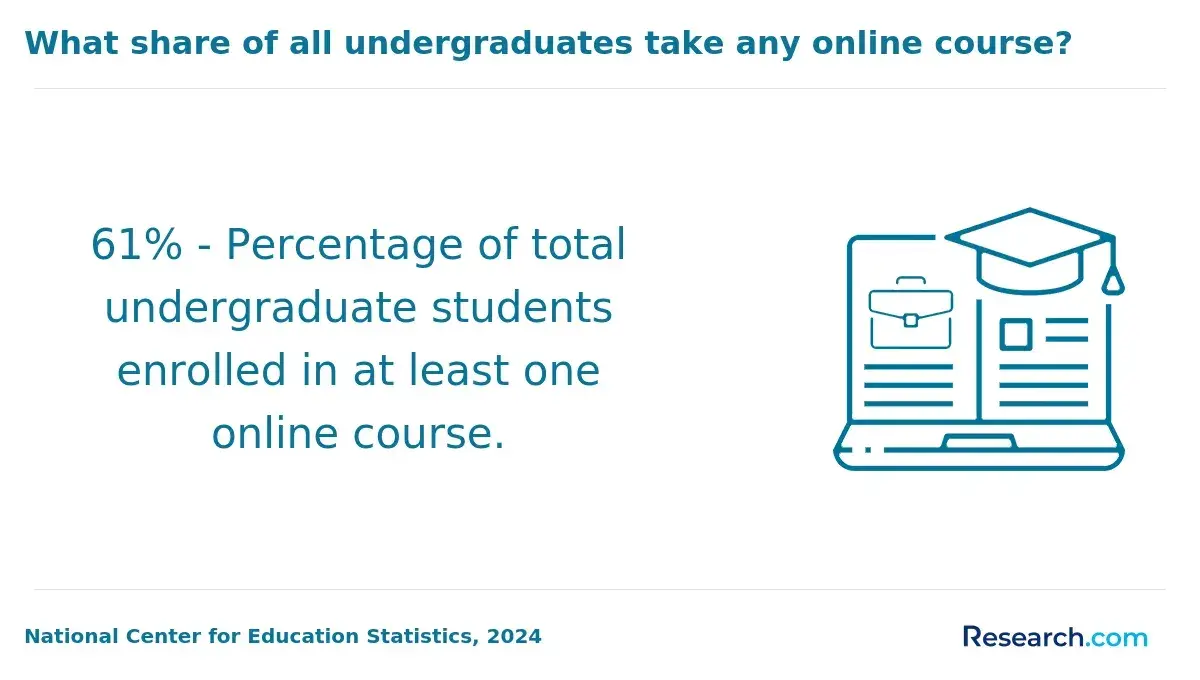
Accelerated online supply chain management programs usually move faster by compressing the academic calendar, not by removing essential content. A 7.5-week or 8-week course can cover the same outcomes as a 15-week course, which means the weekly reading, assignments, discussions, and exams may feel nearly doubled.
These are the formats you are most likely to see when comparing fast accredited online programs. Each can shorten time to graduation, but each has a different workload pattern.
- Short-term courses: Courses run in 5-week, 7.5-week, or 8-week blocks, allowing students to complete more course starts per year.
- Year-round enrollment: Programs offer fall, spring, and summer terms so students do not lose several months waiting for the next academic year.
- Multiple start dates: Some schools begin online terms monthly or several times per semester, which can reduce waiting time after admission or transfer evaluation.
- Competency-based education: Students progress after proving mastery, which can help experienced professionals move quickly through familiar material.
- Stackable credits: Some certificates, military training, or professional learning may apply toward degree requirements if approved by the institution.
Competency-based education can be the fastest route for a student who already understands forecasting, warehousing, sourcing, transportation, quality management, and spreadsheet-based analysis. It can be frustrating for students who need more instructor-led pacing or who underestimate how much independent study is required.
The same "fast does not mean easy" principle applies across online education. Readers comparing accelerated degree structures in other fields, including the easiest doctorate to get, should still verify accreditation, workload, residency rules, and realistic weekly time requirements.
For supply chain management, accreditation matters because it affects financial aid eligibility, transfer credit, employer recognition, and graduate school options. At minimum, choose a school with institutional accreditation recognized by the U.S. Department of Education or the Council for Higher Education Accreditation.
Programmatic accreditation is also useful, especially for business degrees. AACSB, ACBSP, and IACBE are common business accreditors, though not every legitimate supply chain program will hold the same programmatic credential.
The table below explains the accreditation layers you may encounter. It helps you distinguish a credible accelerated program from one that is merely fast.
| Accreditation type | What it evaluates | Why it matters for speed-focused students | What to verify |
| Institutional accreditation | The college or university as a whole | Usually required for federal financial aid and easier credit transfer | Current status in federal or accreditor databases |
| Business programmatic accreditation | Business school or business programs | Can strengthen employer and graduate school confidence | AACSB, ACBSP, or IACBE status for the specific school or program |
| Specialized logistics credentials | Industry-aligned content, certificates, or preparation | May add career value but does not replace institutional accreditation | Whether credits apply to the degree and whether the credential is optional |
A red flag is a school that emphasizes speed but makes accreditation hard to confirm. Another warning sign is an "international" or "private" accreditor that is not recognized for U.S. federal aid or mainstream transfer purposes.
Transfer credit is often the biggest reason one accredited online supply chain management program is faster than another. A school that accepts 90 credits toward a 120-credit bachelor's degree may leave you with only 30 credits, but only if those credits satisfy the right categories.
Before enrolling, ask for a written transfer evaluation and degree plan. The following credit sources may shorten your timeline if the school approves them:
- Community college credits: General education and lower-division business courses may reduce the number of remaining bachelor's credits.
- Completed associate degree: Some articulation agreements transfer the degree as a block, but major prerequisites may still be required.
- Military training: ACE-recommended credits may apply to electives, logistics, leadership, or technical areas.
- Professional certifications: Some schools review APICS, project management, procurement, or related credentials for possible credit.
- Prior learning assessment: Portfolios, exams, or faculty reviews may convert documented experience into credit at selected institutions.
- Employer training: Corporate learning in operations, inventory systems, safety, quality, or analytics may be reviewed if it has formal documentation.
The table below shows how transfer-credit decisions can affect time to graduation. The key lesson is that accepted credits and applicable credits are not always the same.
| Transfer situation | Possible time benefit | Common limitation | Question to ask |
| Credits accepted as general electives | May reduce total credits needed | May not satisfy supply chain major requirements | How many credits apply directly to my degree plan? |
| Credits satisfy prerequisites | Can unlock upper-division courses sooner | Course equivalencies may require syllabus review | Will I need any bridge or prerequisite courses? |
| Maximum transfer credits approved | Can create a 12- to 18-month completion path | Residency rules may require a minimum number of credits at the school | What is the minimum number of credits I must complete here? |
| Prior learning credit awarded | Can shorten electives or lower-division requirements | Often capped and rarely replaces advanced major courses | Which requirements can prior learning satisfy? |
Transfer rules vary widely by discipline and institution. For example, students comparing professional online pathways such as MLIS programs will often find different rules for prerequisites, accreditation, and graduate transfer credits than they would in undergraduate business programs.
Accelerated online supply chain management programs often have flexible admissions, but "easy to enter" does not always mean "fast to finish." The fastest students are usually those who submit complete transcripts early, meet business prerequisites, and start in the next available term without waiting for missing documents.
Most online bachelor's programs ask for the materials below. Requirements vary by school, so confirm them before assuming you can start immediately.
- Online application and application fee or fee waiver
- Official high school transcript, GED documentation, or prior college transcripts
- Transfer-credit evaluation for all previous institutions attended
- Minimum GPA requirement, often with conditional admission options at some schools
- Math, English composition, accounting, economics, statistics, or business prerequisite review
- Proof of English proficiency for applicants whose prior education requires it
- FAFSA submission if the student wants federal financial aid consideration
Graduate supply chain programs usually require a completed bachelor's degree. Some may request a resume, statement of purpose, professional experience, statistics preparation, or quantitative readiness, while many online business programs no longer require the GMAT for all applicants.
Start dates can affect speed as much as course length. A program with monthly starts may be faster to enter, but a semester-based program may still be faster overall if it accepts more of your credits or offers the required courses in a better sequence.
A fast online supply chain management degree can cost less if it reduces the number of terms you pay for, but speed alone does not guarantee savings. Tuition structure matters: some schools charge per credit, some charge per term, and competency-based programs may reward students who complete more courses within a flat-rate term.
For federal aid context, the maximum Federal Pell Grant for the 2024-25 award year is $7,395. That amount can help eligible undergraduates, but it rarely covers the full cost of a bachelor's degree, so students should compare tuition, fees, books, transfer credits, and time away from work.
The table below summarizes cost factors that can change the real price of a fast online supply chain degree. Use it to compare programs beyond the advertised tuition rate.
| Cost factor | Why it matters | How it affects accelerated students |
| Per-credit tuition | You pay for each credit attempted | Transfer credits can directly reduce the bill |
| Flat-rate term tuition | You pay for a time block rather than each course | Finishing more courses per term may lower total cost, but only if you can sustain the pace |
| Technology and online fees | Fees can add to each term or course | Shorter programs may reduce repeated term-based fees |
| Books, software, and simulations | Supply chain courses may use analytics tools or case platforms | Costs can cluster when courses are stacked in accelerated terms |
| Repeated or withdrawn courses | Failed pacing can create extra tuition | Overloading can become more expensive than taking a manageable schedule |
Students can usually use federal financial aid only at eligible accredited institutions and only if they meet enrollment requirements. Employer tuition assistance, military education benefits, scholarships, payment plans, and credit for prior learning may also reduce out-of-pocket cost.
Affordability comparisons are useful across online degree fields, even when the subject differs. A student comparing the total cost of a supply chain degree can use similar questions found in guides to an affordable game development degree: What is the per-credit rate, what fees apply, how many credits transfer, and how many terms will I actually need?
Yes, many students work full time while completing an online supply chain management degree, but the fastest plans require careful workload management. Supply chain courses often involve quantitative reasoning, process analysis, forecasting, supplier decisions, transportation trade-offs, and case-based problem solving, which can be difficult to rush.
The table below compares common course-load choices for working adults. It shows why "accelerated" may be realistic for one student and too demanding for another.
| Enrollment pattern | Typical pace | Best for | Risk |
| One accelerated course at a time | Steady but slower | Full-time workers new to online learning | Graduation may take longer than advertised |
| Two accelerated courses at a time | Fast bachelor's-completion pace | Students with strong time management and prior coursework | Weekly workload can become intense |
| Full-time year-round enrollment | Fastest term-based route | Students with predictable schedules and support | Burnout, lower grades, or withdrawals |
| Competency-based acceleration | Variable and self-paced | Experienced professionals who can study independently | Progress may slow if concepts are unfamiliar |
To finish quickly while working, build a weekly schedule before the term starts. Reserve time for reading, discussion boards, analytics assignments, group work, exams, and unexpected work demands.
Students should be cautious about taking two quantitative or project-heavy courses at the same time. Pairing a demanding analytics course with a lighter elective may be more sustainable than stacking statistics, operations modeling, and procurement analysis in one short term.
Employers and graduate schools generally care more about accreditation, curriculum relevance, skills, and institutional reputation than whether the courses were online. An accelerated online supply chain management degree from a properly accredited institution can be respected when the transcript, learning outcomes, and degree requirements are comparable to campus-based study.
The career value of the degree depends on the role you are targeting. Supply chain management can lead toward logistics coordination, procurement, inventory planning, demand planning, operations supervision, transportation analysis, distribution management, sourcing, and project management. The BLS May 2024 median pay for logisticians provides a useful labor-market benchmark, but salary varies by experience, industry, location, and responsibility level.
Employers increasingly value practical tools and measurable skills. Programs that include Excel, ERP systems, data visualization, forecasting, procurement strategy, supplier management, lean operations, quality improvement, and capstone projects may help students show job-ready evidence.
Accreditation expectations also vary by field. Supply chain management is not typically a state-licensed profession in the way therapy, nursing, or teaching may be, so the accreditation decision is usually about institutional legitimacy, transferability, aid, and employer confidence rather than licensure.
By contrast, students in fields such as accredited MFT programs online must pay close attention to state licensure pathways in addition to school accreditation.
How Should You Compare the Fastest Accredited Online Supply Chain Management Programs?
The best fast program is the one you can complete quickly without sacrificing accreditation, transfer value, learning quality, or career fit. A school with a slightly longer advertised timeline may still be the better choice if it accepts more credits, has stronger business accreditation, offers better advising, or aligns with your target role.
Use the following steps before enrolling. They are designed to help you verify the real completion time rather than relying on marketing language.
- Confirm institutional accreditation through an official accreditor or federal database before discussing speed.
- Ask whether the business school or program has AACSB, ACBSP, or IACBE accreditation, if that matters for your goals.
- Request a written transfer-credit evaluation showing exactly which credits apply to your degree plan.
- Ask how many credits must be completed at the institution because residency requirements can limit acceleration.
- Review the course rotation to confirm required supply chain courses are available when you need them.
- Compare 7.5-week, 8-week, and competency-based formats based on your weekly study time, not just calendar length.
- Ask whether internships, capstones, simulations, proctored exams, or group projects could affect scheduling.
- Calculate total cost using remaining credits, fees, books, repeated-course risk, and the number of terms you expect to attend.
- Speak with an advisor about full-time versus part-time pacing before registering for multiple accelerated courses.
- Check whether the curriculum supports your target role, such as procurement, logistics, operations analysis, or supply planning.
Common mistakes include assuming all credits transfer, confusing shorter terms with lighter work, ignoring prerequisites, choosing the cheapest program without checking accreditation, and selecting a program that does not match the student's schedule. Another mistake is focusing only on a school's fastest advertised student instead of asking for the typical path for someone with your transcript.
If you are comparing accelerated education more broadly, remember that each field has its own accreditation and career rules. A supply chain degree should be evaluated differently from clinical, library science, design, or doctoral pathways, even though the same basic questions about cost, credit transfer, and legitimacy still apply.
Other Things You Should Know About Supply Chain Management
Logistics usually focuses on the movement, storage, and delivery of goods. Supply chain management is broader and can include sourcing, procurement, production planning, supplier relationships, inventory, transportation, analytics, and risk management.
You do not need to be a mathematician, but you should be comfortable with spreadsheets, basic statistics, business math, forecasting concepts, and data-based decisions. If you have been away from math for a while, review algebra and Excel before starting accelerated courses.
Certifications can strengthen a resume, especially for experienced professionals, but they usually do not replace a bachelor's degree when an employer requires one. Some schools may review certifications for credit, but policies vary.
It depends on your goal. A supply chain management degree is more targeted for logistics, procurement, operations, and planning roles, while a general business degree may offer broader flexibility. Choose the option that best matches the jobs you plan to pursue.
- Our Visitor https://kimteducation.com/msc-in-logistics-and-supply-chain-management-top-up/
- Logistics and Supply Chain Management Certification Training Warsaw | Logistics Courses Online Poland https://unichrone.com/pl/logistics-and-supply-chain-management-training/warsaw
- Accreditation as a Strategic Driver of Alignment Across Higher Education and Industry https://acbspjournal.org/2026/05/22/accreditation-as-a-strategic-driver-of-alignment-across-higher-education-and-industry/
- 2025 Most Affordable Online Supply Chain Management Degrees https://www.onlineu.com/most-affordable-colleges/supply-chain-management-degrees
- 4 Reasons Why Supply Chain Management is a Good Career Path https://www.michiganstateuniversityonline.com/resources/supply-chain/4-reasons-to-choose-career-in-supply-chain/
- 4 Benefits of an Accelerated 1 Year Master’s in Supply Chain Management https://exploreblog.ashland.edu/4-benefits-of-an-accelerated-1-year-masters-in-supply-chain-management
- Pathways to SCMP Designation | Supply Chain Canada https://www.supplychaincanada.com/education-and-training/pathways-to-scmp-designation
- The Supply Chain Management Certifications Needed for Your Career | Prologis https://www.prologis.com/insights-news/blog/certifications-needed-your-career-supply-chain-management
- Accelerated, Executive, & Advanced-Standing Master’s in SCM https://supplychainmanagementedu.org/degrees/accelerated-executive-advanced-standing-masters/