2027 Fastest Accredited Online Supply Chain Management Degree Programs That Accept Transfer Credits

Co-Founder and Chief Data Scientist
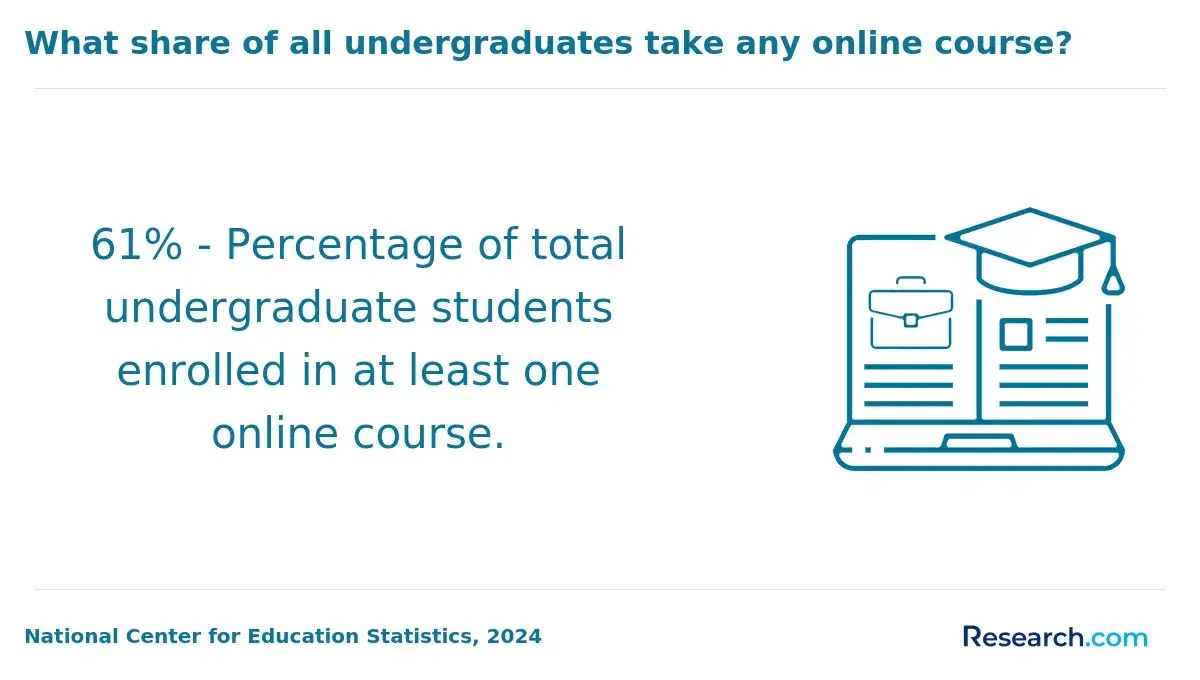
Your fastest path to an accredited online supply chain management degree depends less on the advertised program length and more on how many credits actually apply to the major. NCES reported in its Condition of Education 2024 that 54% of undergraduates took at least one distance education course, which makes online degree completion a mainstream option.
This guide is for transfer students, working adults, military learners, and degree completers who want the quickest legitimate route to graduation. You will learn how to compare accreditation, transfer-credit rules, residency requirements, accelerated formats, costs, and realistic timelines before enrolling.
Key Things You Should Know
- The fastest realistic route is usually a regionally accredited 120-credit online bachelor's program that accepts up to 90 transfer credits and requires about 30 credits in residence; highly prepared full-time students may finish the remaining work in roughly 8 to 18 months, depending on course availability and major requirements.
- Transfer-friendly options to compare first include competency-based programs such as Western Governors University, 8-week or accelerated-course schools such as Southern New Hampshire University and CSU Global, and logistics-focused programs with generous residency policies such as Bellevue University, UMass Global, and Embry-Riddle Worldwide.
- The key number is not the maximum transfer allowance; it is the number of credits that apply to general education, business core, upper-division supply chain courses, and electives after the official degree audit.
What Are the Fastest Accredited Online Supply Chain Management Degree Programs That Accept Transfer Credits?
The fastest accredited online supply chain management degree programs for transfer students are typically bachelor's completion programs with regional accreditation, year-round online terms, flexible start dates, and a policy allowing most of the first three years of coursework to transfer.
Supply chain management may appear under several closely related degree names, including logistics, operations management, global supply chain management, transportation management, or business administration with a supply chain concentration.
The table below highlights well-known U.S. online programs that are commonly strong candidates for transfer students. Policies can change, so treat this as a shortlist for deeper review rather than a final enrollment decision.
| School | Online degree or major | Accreditation context | Transfer-friendly feature | Why it may be fast | Best fit |
| Western Governors University | BS Supply Chain and Operations Management | Regionally accredited by NWCCU; business programs accredited by ACBSP | May allow substantial transfer into a 120-competency-unit degree, subject to evaluation | Competency-based pacing lets prepared students move faster after mastering required outcomes | Self-directed adults with strong work experience or prior business coursework |
| Southern New Hampshire University | BS Operations Management with logistics or supply chain-related coursework | Regionally accredited by NECHE | Accepts up to 90 transfer credits toward many bachelor's programs | Multiple 8-week undergraduate terms make it easier to take courses year-round | Students with broad transfer credits who want predictable online scheduling |
| Colorado State University Global | BS Operations Management and Supervision with supply chain-related specialization options | Regionally accredited by HLC | Often allows up to 90 transfer credits, with alternative credit options | 8-week courses and frequent starts can reduce waiting time between terms | Working adults who want structured accelerated sessions |
| Bellevue University | BS Supply Chain, Transportation and Logistics Management | Regionally accredited by HLC | Designed for adult transfer students; commonly requires a final block of institutional coursework | Major-focused completion pathways can be efficient after general education is complete | Students seeking a degree specifically named in logistics and supply chain |
| University of Massachusetts Global | BBA Supply Chain Systems | Regionally accredited by WSCUC | Adult-completion model with generous transfer evaluation | Short online sessions and applied business curriculum can support faster progression | Students who want a business degree with supply chain systems emphasis |
| Embry-Riddle Aeronautical University Worldwide | BS Logistics and Supply Chain Management | Regionally accredited by SACSCOC | Military, professional, and prior-learning-friendly evaluation options | Online terms and logistics-specific curriculum can work well for experienced learners | Military-affiliated students and learners interested in aviation, transportation, or global logistics |
| Arizona State University Online | BS Supply Chain Management | Regionally accredited by HLC; W. P. Carey School of Business is AACSB-accredited | Accepts transfer credits, though business major sequencing can affect applicability | 7.5-week online course format may accelerate progress for students with the right prerequisites | Students prioritizing a large AACSB-accredited business school brand |
| Florida International University Online | BBA Logistics and Supply Chain Management | Regionally accredited by SACSCOC; business school is AACSB-accredited | Transfer credit accepted under university and business-school rules | Fully online business pathway can be efficient for students entering with lower-division requirements met | Students who want an AACSB-accredited online BBA in logistics and supply chain |
For the fastest legitimate completion plan, start with programs that publish both a maximum transfer-credit policy and a clear residency requirement. A school that accepts 90 credits but only applies 72 to your degree may be slower than a school with a lower headline cap but a better curriculum match.
Before choosing, ask each school for an official or pre-admission transfer estimate. Use this sequence to compare options:
- Confirm regional institutional accreditation first.
- Ask whether the degree is supply chain-specific or a broader business, logistics, or operations degree.
- Request a written transfer-credit review showing credits applied by category, not just total credits accepted.
- Check how many upper-division business or supply chain credits must be completed at the school.
- Map the remaining courses by term to see whether prerequisites or course rotations will delay graduation.
How Fast Can You Complete an Online Supply Chain Management Degree With Transfer Credits?
A 120-credit bachelor's degree can move quickly when previous coursework fits the new degree plan. In practical terms, the fastest students are those who already completed most general education, lower-division business prerequisites, and electives before transferring.
The table below shows realistic completion ranges based on remaining credits. These are planning estimates, not guarantees, because online term length, course load, prerequisite sequencing, and financial aid rules vary by school.
| Transfer credits that apply to the degree | Credits remaining in a 120-credit degree | Typical fast full-time pace | Typical working-adult pace | What can slow the timeline |
| 90 credits | 30 credits | 8 to 12 months | 12 to 18 months | Residency rules, capstone timing, required upper-division major courses |
| 75 credits | 45 credits | 12 to 18 months | 18 to 24 months | Missing business core courses or statistics, accounting, economics, and operations prerequisites |
| 60 credits | 60 credits | 18 to 24 months | 24 to 36 months | Course overload limits, work schedule, sequential major requirements |
| 30 credits | 90 credits | 30 to 36 months | 36 to 48 months | General education gaps and limited summer or accelerated course availability |
| 0 credits | 120 credits | 36 to 48 months | 48 months or more | Full degree sequence, placement requirements, and part-time enrollment |
Students with an associate degree often have an advantage because many general education and lower-division credits are already packaged in a way that universities can evaluate. If you are still early in your path, comparing associate's degrees online can help you understand how credit-stacking works before you enter a bachelor's completion program.
The main mistake is assuming that "90 credits accepted" means "30 credits left." A supply chain program may still require upper-division courses in procurement, logistics analytics, inventory planning, transportation, global supply chain strategy, or a capstone. If those courses were not part of your previous degree, they must still be completed.
How Many Transfer Credits Can You Apply Toward an Online Supply Chain Management Degree?
Many transfer-friendly online bachelor's programs allow up to 75% of the degree to come from transfer, prior learning, exams, or military credit. For a 120-credit degree, that commonly means a ceiling near 90 credits, with at least 30 credits completed through the degree-granting institution.
The table below explains the difference between credits accepted by the university and credits that actually shorten your supply chain management degree. This distinction is where many transfer students either save time or lose it.
| Credit category | What it means | How it affects speed | Common issue |
| Accepted transfer credits | Credits the university records from prior colleges or approved sources | May count toward total credits needed for graduation | Some may become excess electives if they do not match degree requirements |
| Applied degree credits | Credits placed into general education, business core, major, or elective slots | Directly reduce the number of courses left | Old or unrelated credits may not satisfy required business or supply chain courses |
| Upper-division transfer credits | Junior- or senior-level coursework accepted from another institution | Can be valuable if the program requires many advanced business credits | Some schools limit how many upper-division major credits may transfer |
| Elective credits | Credits that count toward graduation but not a specific requirement | Helpful only if the degree has open elective space | Students with many electives may still need major coursework |
| Alternative credits | CLEP, DSST, ACE-recommended training, military learning, or portfolio credit | Can reduce remaining general education or elective requirements | Not always accepted for upper-division supply chain courses |
To avoid surprises, ask admissions for a degree audit that separates general education, business core, major, concentration, electives, and residency requirements. If a school will only provide a total number of accepted credits, you do not yet have enough information to know whether the program is truly fast.
Accreditation is the first filter for any fast online degree. A program can be accelerated and flexible, but if the institution lacks recognized accreditation, the degree may create problems for financial aid, credit transfer, employer recognition, or graduate school admission.
For supply chain management, the most important baseline is institutional accreditation from a recognized regional or national accreditor. Business-school accreditation, such as AACSB, ACBSP, or IACBE, can add value, but it is not always required for employment. The safest approach is to verify both the university and, when applicable, the business school.
Use this checklist before applying or paying a deposit:
- Search the school in the U.S. Department of Education's Database of Accredited Postsecondary Institutions and Programs.
- Confirm that the accreditor is recognized by the U.S. Department of Education or CHEA.
- Check the school's official catalog for the exact online degree name, total credits, residency requirement, and transfer policy.
- Look for business-school accreditation if you plan to pursue an MBA, graduate business program, or employer-sponsored tuition reimbursement.
- Avoid schools that advertise extreme speed, vague accreditation, guaranteed credit transfer, or unusually high pressure to enroll immediately.
Accreditation checks are not unique to supply chain degrees. The same habit matters when comparing professional programs such as accredited MFT programs online, where recognition can affect licensure or graduate-level eligibility.
A helpful rule is simple: speed should come from legitimate transfer credit, short terms, flexible pacing, or prior-learning assessment, not from cutting required academic standards.
Transfer credit can come from more than traditional college courses. However, each source is evaluated differently, and supply chain management programs often protect upper-division major courses more carefully than electives or general education requirements.
The most common credit sources include the following. Review each category because the fastest plan often combines more than one type of eligible credit.
- College transfer credits: Courses from accredited colleges may apply to general education, business core, electives, or major requirements if the content, level, and grade meet the receiving school's rules.
- Associate degree block transfer: Some universities treat a completed associate degree as satisfying many lower-division requirements, especially when articulation agreements exist.
- Advanced Placement or International Baccalaureate credit: These may satisfy general education or elective requirements if scores meet the university's catalog policy.
- CLEP and DSST exams: Exam credit may help with general education, introductory business, or elective areas, but schools often cap the amount and may exclude upper-division major requirements.
- Military training: Joint Services Transcript or Community College of the Air Force credits may apply when ACE recommendations align with degree requirements.
- Professional certifications and workplace training: Some schools award credit for ACE-reviewed training, industry credentials, or documented learning portfolios.
- Prior learning assessment: Portfolio-based credit can be useful for experienced logistics, procurement, transportation, warehousing, or operations professionals, but it requires documentation and faculty evaluation.
If your earlier credits came from a different major, do not assume they are wasted. General education, statistics, accounting, economics, information systems, project management, and business communication courses often remain useful in a supply chain management curriculum.
Residency requirements determine how many credits you must complete at the school that awards the degree. Major requirements determine which supply chain or business courses you cannot replace with unrelated transfer credits. Together, these rules often matter more than the transfer maximum.
The table below summarizes the policy areas that usually decide whether a transfer-friendly program is truly fast for your transcript.
| Requirement | Typical rule | Why it matters for transfer students | Question to ask |
| Institutional residency | Often around 30 credits for a 120-credit bachelor's degree | Even with 90 accepted credits, you may still need a full year of institutional coursework | How many credits must I complete through your university? |
| Major residency | A portion of upper-division major credits must be completed at the school | Prior business electives may not replace required supply chain courses | How many supply chain or business-core credits must be taken here? |
| Upper-division requirement | Programs often require a minimum number of 300- or 400-level credits | Community college credits may satisfy lower-division needs but not advanced major credits | How many upper-division credits will remain after my transfer evaluation? |
| Capstone requirement | Usually completed at the degree-granting institution | May only be offered in certain terms or after prerequisites | When is the capstone offered, and what must I finish first? |
| Minimum grade policy | Often C or higher for transfer, sometimes higher for business prerequisites | Older or low-grade courses may not apply to the major | Do you require a minimum grade for accounting, statistics, economics, or operations courses? |
Two students can transfer the same number of credits and graduate at different speeds because their credits fill different requirements. A student with 75 credits that match general education, business core, and analytics prerequisites may finish faster than a student with 90 credits that mostly transfer as free electives.
Avoid enrolling before you see a term-by-term completion plan. If the school cannot show when each remaining course is offered, the advertised acceleration may not match the actual schedule.
The value depends on how the school treats alternative credit. Prior learning, standardized exams, military training, and professional certifications can be powerful for filling general education, business foundation, or elective requirements. They are less likely to replace advanced supply chain strategy, analytics, procurement, or capstone courses.
Use alternative credit strategically rather than randomly. The goal is to eliminate specific unmet requirements, not simply accumulate credits that may become unused electives.
- Get an unofficial degree audit before taking new exams or submitting a portfolio.
- Identify the exact requirements still open after traditional transfer credits are applied.
- Ask which CLEP, DSST, Sophia, StraighterLine, Study.com, ACE, military, or certification credits the school accepts.
- Confirm whether alternative credits count toward residency limits, major requirements, or only electives.
- Calculate whether the time and fee for earning the credit are worth the number of courses eliminated.
Military learners should ask whether the school evaluates the Joint Services Transcript, Community College of the Air Force coursework, Defense Acquisition University training, and logistics-related military occupations. Supply chain management is one of the more practical business fields for translating military logistics, transportation, inventory, and operations experience into academic credit.
Prior-learning rules also matter beyond the bachelor's level. If you eventually compare graduate or doctoral pathways, resources such as easiest doctorate to get can help you see how accelerated formats differ by credential level, though doctoral transfer policies are usually much more restrictive than bachelor's policies.
The total cost depends on the number of credits left, per-credit tuition, fees, books or course materials, technology fees, and whether you qualify for federal aid, employer tuition assistance, military benefits, scholarships, or state grants. Transfer credits can lower cost substantially because you pay only for remaining requirements, but a higher per-credit tuition school may still be expensive even with generous transfer acceptance.
College Board's Trends in College Pricing and Student Aid 2024 reported average published tuition and fees of $11,610 for in-state public four-year students and $43,350 at private nonprofit four-year institutions for the 2024-25 academic year. For online transfer students, the takeaway is not that your program will match those averages; it is that credits saved through transfer can be financially meaningful when each remaining credit carries tuition and fee costs.
The table below shows how remaining credits drive tuition exposure. Use the school's actual per-credit rate to replace the sample logic in your own comparison.
| Credits remaining | How transfer credits affect cost | Cost risk to watch | Best cost-control move |
| 30 credits | You pay for roughly one year of full-time bachelor's coursework | High per-credit tuition or mandatory fees can still raise total cost | Compare total program cost, not just transfer maximum |
| 45 credits | You may need three to five accelerated terms, depending on course load | Prerequisites can add extra courses if not already completed | Ask for a locked degree plan before committing |
| 60 credits | You may complete about half the degree at the new school | Part-time pacing may extend fees across more terms | Check whether summer or back-to-back online terms are available |
| 90 credits | You are closer to a traditional two- to three-year online plan | Tuition inflation and life interruptions become bigger factors | Consider a lower-cost pathway for remaining general education first |
Financial aid can help, but it should not be treated as a discount unless it is a grant or scholarship. Federal loans must be repaid, and accelerated enrollment can affect aid eligibility if you take unusual course loads or terms.
Before enrolling, request a full cost estimate that includes:
- Tuition for all remaining credits after transfer evaluation
- Mandatory online, technology, graduation, transcript, and assessment fees
- Books, simulations, software, proctoring, or supply chain analytics tools
- Charges for prior-learning assessment, portfolio review, or credit-by-exam posting
- Financial aid package terms, including grants, scholarships, loans, and employer reimbursement timing
The lowest tuition is not always the fastest route, and the fastest route is not always the best value. The best financial choice is usually the accredited program that applies the most useful credits, offers the fewest repeated courses, and provides a realistic schedule you can complete without stopping out.
Fast online supply chain management programs usually fall into three formats: accelerated term-based, competency-based, and self-paced within structured deadlines. The right option depends on your work schedule, prior knowledge, self-discipline, and how quickly you can master business and analytics content.
The table below compares the major online formats from a transfer-student perspective. It focuses on pace and fit rather than ranking one model as universally better.
| Format | How it works | Fastest when | Potential drawback | Best for |
| Accelerated term-based | Courses run in short sessions, often 5 to 8 weeks | You can take back-to-back courses year-round | Deadlines are compressed, and taking too many courses can be overwhelming | Students who want structure and predictable due dates |
| Competency-based | You progress by demonstrating mastery of competencies | You already know the material from work, military, or prior study | Requires strong independence and comfort with assessment-heavy learning | Experienced learners who can move quickly without weekly lectures |
| Self-paced online | You work through course material within a broader completion window | You can dedicate concentrated time and avoid procrastination | Less structure can lead to delays if motivation drops | Students with irregular schedules or seasonal work demands |
| Traditional online semester | Courses follow standard 15- or 16-week terms | You need a steadier pace or must balance heavy work and family obligations | May take longer even with transfer credits | Students who value slower pacing and more time per course |
Accelerated formats are not automatically easier. A 7- or 8-week course usually covers the same learning outcomes as a longer course, just with less recovery time between assignments. Supply chain classes may include quantitative work in forecasting, inventory management, data interpretation, operations planning, or process improvement, so speed should match your academic readiness.
Fast online degree formats appear across many fields, from business programs to a game development degree, but transferability works differently in each discipline. Supply chain management is often more transfer-friendly than highly sequential technical majors because general business and operations courses can overlap across institutions.
Choose a slower option if you are returning after a long break, need to rebuild math or writing skills, work unpredictable hours, or want more time for internships and networking. The fastest program is only useful if you can complete it successfully.
Are Fast Accredited Online Supply Chain Management Degrees Respected by Employers and Graduate Schools?
Fast accredited online supply chain management degrees can be respected when the institution is properly accredited, the curriculum is credible, and the student can demonstrate relevant skills. Employers generally care about whether you can analyze operations problems, coordinate suppliers, interpret data, manage inventory, improve processes, and communicate across teams.
The labor market context is favorable for logistics-related roles. The U.S. Bureau of Labor Statistics, in its 2024 Occupational Outlook Handbook update, listed the median annual wage for logisticians at $79,400 in May 2023 and projected 19% job growth from 2023 to 2033. This does not mean every graduate will earn that wage, but it shows why many working adults see supply chain education as a practical business pathway.
Common roles connected to supply chain management education include:
- Logistics coordinator: Tracks shipments, monitors delivery timelines, and supports carrier or vendor communication.
- Supply chain analyst: Uses data to evaluate demand, inventory, supplier performance, and process efficiency.
- Procurement specialist: Supports sourcing, purchasing, vendor evaluation, and contract coordination.
- Operations supervisor: Oversees workflow, staffing, production schedules, or distribution processes.
- Inventory planner: Helps balance stock availability, carrying costs, demand forecasts, and replenishment timing.
Graduate schools typically focus on institutional accreditation, GPA, prerequisite coursework, recommendations, test requirements if any, and fit with the graduate program. If you may pursue an MBA, MS in supply chain management, analytics degree, or operations-focused graduate certificate, consider whether the undergraduate business school has AACSB, ACBSP, or IACBE accreditation.
Field-specific accreditation varies by discipline. For example, students comparing MLIS programs often look for different professional recognition than business students do, which is why you should evaluate accreditation within the context of your target career or graduate pathway.
Red flags include vague school names, unclear accreditation, pressure-based enrollment calls, promises of guaranteed jobs, unusually short timelines with no transfer-credit review, and refusal to provide a written degree plan. A respected fast degree should be fast because your prior learning counts, not because the program avoids academic rigor.
Other Things You Should Know About Supply Chain Management
Either can work, depending on your goal. A supply chain-specific degree may be better for logistics, procurement, transportation, or operations roles, while a broader business degree with a supply chain concentration may offer more flexibility for management, sales operations, or an MBA later.
Many general education credits do not expire, but some schools apply age limits to technical, quantitative, business, or major courses. Ask whether older statistics, accounting, information systems, operations, or analytics courses still satisfy current requirements.
You can, but it is risky. If you register before seeing how credits apply, you may take courses you do not need or discover later that major requirements remain. A written degree audit is the safer starting point.
Some programs require internships, practicums, projects, or capstones, while others make them optional. Working adults may be able to use current employment for applied projects if the school approves it in advance.
- Scholarship for Future Supply Chain Leaders https://johngalt.com/scholarships
- Earning an Online Doctorate in Supply Chain Management https://www.gograd.org/online-phd-programs/best-supply-chain-management-degrees/
- 2025 Most Affordable Online Supply Chain Management Degrees https://www.onlineu.com/most-affordable-colleges/supply-chain-management-degrees
- Best Online Universities With Generous Transfer Credit Policies https://www.collegetransitions.com/blog/best-online-universities-with-generous-transfer-credit-policies/
- FULL-TIME | WINNIPEG LOCATIONS LOGSF-DP Logistics and Supply Chain Mgmt - Business Administration https://catalogue.rrc.ca/Programs/WPG/Fulltime/LOGSF-DP/PrinterFriendly
- Top Online Schools That Accept Transfer Credits https://www.edvisorly.com/student-guides/online-schools-that-accept-transfer-credits
- Pathways to SCMP Designation | Supply Chain Canada https://www.supplychaincanada.com/education-and-training/pathways-to-scmp-designation
- Study Logistics and Supply Chain Management Abroad https://www.aeccglobal.com/study-abroad/courses/logistics-and-supply-chain-management