2027 General Degree Recruiter Preference Report: What Employers Value Most in New Graduates

Co-Founder and Chief Data Scientist
Entry-level General applicants now face screening systems that reward job-ready evidence over broad classroom credentials alone. NACE's Job Outlook 2025 reported that U.S. employers expected to hire 7.3% more new college graduates, but competition remains high because recruiters compare resumes for skills, internships, tools, and communication proof.
This guide is for General degree graduates, career changers, and nontraditional learners who want to understand recruiter preferences, required technical skills, screening standards, and interview benchmarks so they can tailor resumes, prepare for assessments, and improve their chances of securing offers.
Key Things to Know About Recruiter Preferences in the General Industry
- Recruiters hiring General graduates usually value transferable evidence first: problem-solving, written communication, teamwork, digital fluency, internship experience, and measurable academic or project outcomes.
- NACE's recent employer survey data consistently places problem-solving near the top of resume attributes, with about 90% of responding employers identifying it as important for new graduates.
- For broad entry-level roles, the strongest hiring edge usually comes from combining a degree with Excel or spreadsheet skill, basic data analysis, CRM or project tools, a tailored resume, and proof from internships, capstones, part-time work, or volunteer projects.
- Do General jobs require a degree?
- What are the top qualities employers look for in General graduates today?
Do General jobs require a degree?
Many entry-level General roles do not require one specific major, but they often require proof that the candidate can communicate clearly, learn quickly, manage information, and operate in a professional environment.
In practice, a General degree can be useful for roles such as administrative coordinator, operations assistant, customer success associate, recruiting coordinator, sales development representative, program assistant, business analyst trainee, or nonprofit project associate.
The degree matters most when the employer uses it as a baseline filter. It matters less when the employer uses skills-based hiring, work samples, certifications, internships, or referrals to decide who gets interviewed. Nontraditional learners comparing flexible education paths can also review college degrees for seniors when deciding whether a broad degree, completion program, or targeted credential fits their career stage.
The table below summarizes how recruiters typically view degree and non-degree routes for broad entry-level roles. Use it to decide whether your next move should be finishing a degree, adding a certificate, building a portfolio, or applying directly:
| Entry path | How recruiters often view it | Best fit | Main limitation |
| General bachelor's degree | Signals persistence, writing ability, broad learning, and eligibility for degree-filtered roles | Corporate, nonprofit, government, education administration, operations, sales, and coordinator roles | May look too broad unless paired with role-specific skills or experience |
| Associate degree plus work experience | Can be competitive when the resume shows direct workplace results | Administrative, support, customer-facing, logistics, and local employer roles | May not pass degree filters for some corporate or management-track openings |
| Certificate or bootcamp | Helpful when tied to a tool or function the job posting names | Data support, digital marketing, project coordination, HR support, bookkeeping, or CRM-heavy roles | Weak if it replaces, rather than demonstrates, real project evidence |
| No degree, strong portfolio | Most useful in skills-first employers or smaller companies that review work samples closely | Sales, customer success, operations support, content, recruiting, and small-business roles | Can be screened out by automated filters before a recruiter reviews the application |
A degree is usually worth completing if you are close to graduation, targeting large employers, or applying to roles that list "bachelor's required." A certificate or portfolio may make more sense if you already have workplace experience and need to prove a specific tool, such as Excel, Salesforce, Google Analytics, Tableau, or project management software.
What are the top qualities employers look for in General graduates today?
Recruiters value General graduates who can translate broad learning into workplace behavior. The strongest candidates do not simply claim they are adaptable; they show how they handled ambiguity, analyzed information, worked with others, and delivered something useful.
NACE employer surveys continue to rank problem-solving, teamwork, communication, and work ethic among the most desired attributes in new graduates. For General degree holders, that means recruiters are often looking for evidence that the candidate can succeed without needing a narrowly defined technical major.
The table below connects common recruiter-valued qualities with the type of proof that makes those qualities credible on a resume or in an interview:
| Employer-valued quality | What it means in entry-level General roles | Evidence recruiters trust |
| Problem-solving | Can break down unclear tasks and propose workable next steps | Capstone projects, process improvements, customer issue resolution, research summaries |
| Written communication | Can produce clear emails, reports, summaries, and documentation | Writing samples, newsletters, policy briefs, research papers, grant drafts, CRM notes |
| Professional judgment | Can handle deadlines, confidentiality, and competing priorities | Internships, office work, leadership roles, supervisor references |
| Digital adaptability | Can learn platforms quickly and use tools accurately | Excel files, dashboards, CRM experience, project boards, learning certificates |
| Collaboration | Can work across departments, customers, students, vendors, or clients | Group projects, student organization leadership, volunteer coordination, team metrics |
To make these qualities visible, General graduates should convert classroom and part-time experiences into outcomes. Recruiters respond better to "Created a weekly inventory tracker that reduced missing supply requests" than to "Strong organizational skills." The first statement gives the recruiter something concrete to evaluate.
One practical way to prepare is to build a short evidence bank before applying. Include examples from school, work, volunteering, athletics, caregiving, campus leadership, and community projects. Then match the best evidence to each job posting.
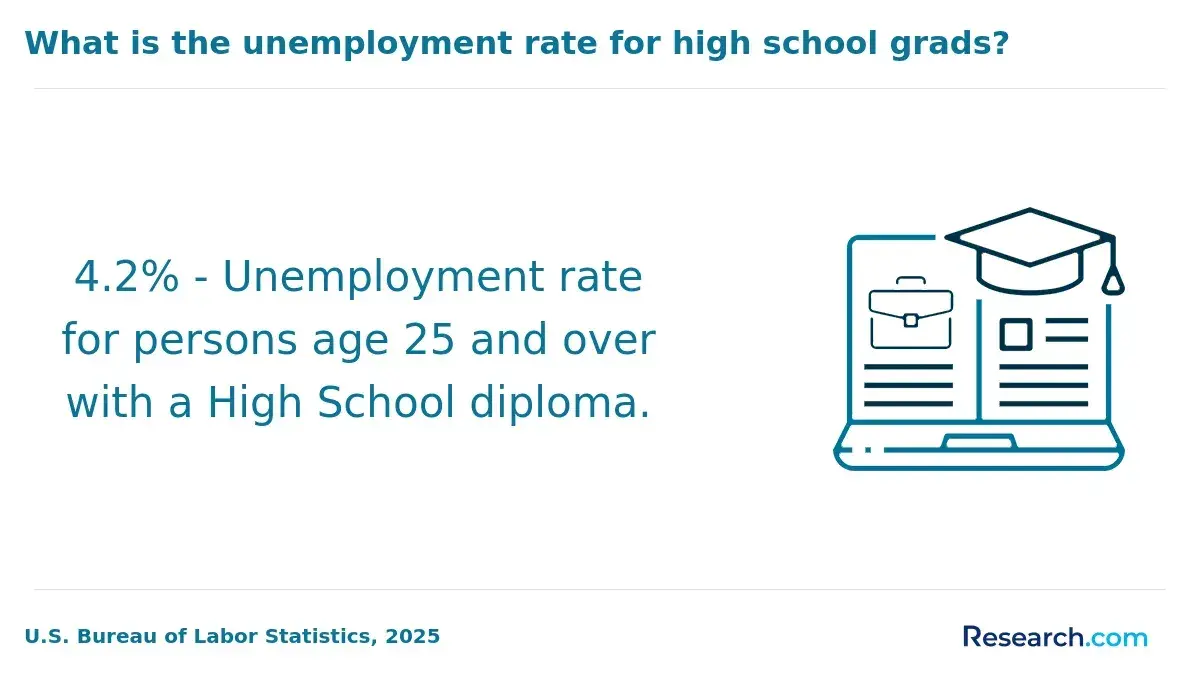
Technical expectations for General graduates have risen because many entry-level roles now involve data, automation, customer platforms, workflow systems, or digital reporting. Employers rarely expect advanced engineering-level expertise from a broad degree holder, but they do expect comfort with common business technology.
The U.S. Bureau of Labor Statistics reported that the median annual wage for business and financial occupations was $80,920 in May 2024, compared with $49,500 for all occupations. This is not an entry-level promise, but it shows why building business and analytical skills can expand the long-term value of a General degree.
The table below groups high-demand technical skills by the types of roles General graduates commonly pursue. It is meant to help applicants prioritize skills based on the job family they are targeting:
| Role family | Technical skills recruiters often request | Why the skill matters |
| Administrative and operations support | Spreadsheet formulas, calendar systems, document control, basic reporting | These roles depend on accuracy, scheduling, records, and process follow-through |
| Business or data support | Excel, basic SQL concepts, dashboard reading, data cleaning, chart interpretation | Employers need entry-level staff who can turn information into usable summaries |
| Customer success and sales support | CRM updates, pipeline tracking, email sequencing, customer notes, account research | Recruiters want candidates who can support revenue teams without losing details |
| Human resources and recruiting support | Applicant tracking systems, interview scheduling tools, spreadsheet tracking, compliance basics | Accuracy and confidentiality are central to people operations work |
| Marketing and communications support | Content management, analytics basics, email platforms, social scheduling, SEO fundamentals | Employers expect entry-level staff to measure and organize digital communication work |
Because AI and automation tools are increasingly used in everyday workflows, recruiters also value candidates who can use generative AI responsibly. That means checking outputs, protecting confidential information, citing sources when needed, and using AI to improve drafts or summaries rather than submitting unverified work.
Graduates should avoid claiming "advanced" technical skill unless they can demonstrate it. A safer strategy is to list specific tasks: "Excel: XLOOKUP, pivot tables, conditional formatting, data cleaning" or "CRM: lead updates, account notes, task reminders, pipeline reports."
Employer Confidence in Online vs. In-Person Degree Skills, Global 2024

Specialized certifications are usually not mandatory for broad General roles, but they can help when they match a specific job function. A certificate has the highest value when it names a tool, method, compliance area, or professional standard that the employer already uses.
Certification decisions should be practical. A low-cost spreadsheet, project management, CRM, or digital marketing certificate may help an entry-level applicant prove readiness quickly.
By contrast, regulated fields may require formal accredited education, supervised practice, or licensure rather than a short certificate; candidates comparing broad General pathways with licensed healthcare routes can use resources on online speech language pathology programs to understand how different credential requirements can be.
The table below compares common certificate options for General graduates. It focuses on recruiter value rather than prestige alone:
| Credential type | Recruiter value for entry-level General roles | When it makes sense | When it may not be worth it |
| Excel or spreadsheet certificate | High for administrative, operations, finance support, and analyst trainee roles | You lack work experience but can prove data accuracy and reporting skill | You cannot explain formulas, pivot tables, or practical use cases in an interview |
| Project management fundamentals | Moderate to high for coordinator and operations roles | You want to support timelines, vendors, events, or cross-functional tasks | The role is primarily customer-facing and does not mention coordination duties |
| CRM or sales platform training | High for sales development, customer success, and account support roles | You are applying to revenue teams that use Salesforce, HubSpot, or Zendesk | You list the tool but have no examples of tracking leads, accounts, or service issues |
| Digital marketing certificate | Moderate for communications, content, and marketing assistant roles | You can pair it with samples, campaign metrics, or analytics screenshots | You expect the certificate alone to replace a portfolio |
| Compliance or industry-specific certificate | Varies widely by sector | The job posting names the credential or the field is regulated | The credential is expensive and not requested by target employers |
Before paying for a certification, review 20 to 30 job postings in your target role and location. If the credential, tool, or method appears repeatedly, it may be worth pursuing. If it appears rarely, focus first on internships, portfolio work, networking, and stronger resume evidence.
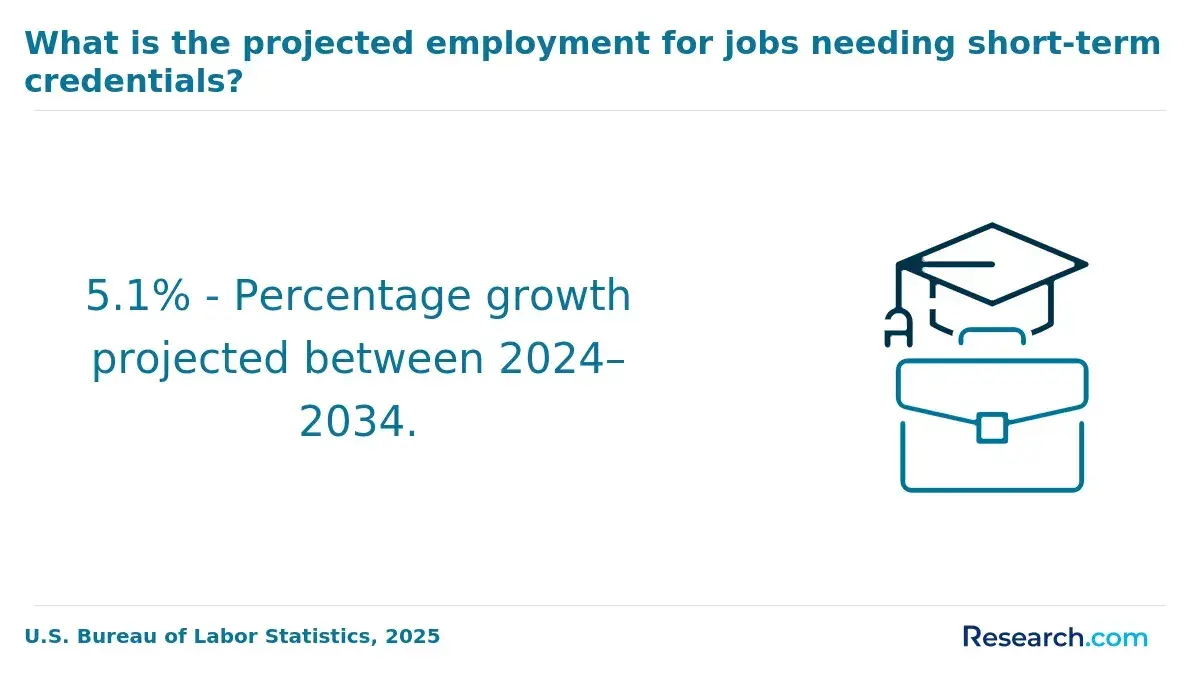
GPA matters, but it is usually not the deciding factor for most General entry-level roles unless the employer has a formal cutoff, the role is highly competitive, or the candidate has limited work experience. Recruiters tend to use GPA as one signal among several: consistency, academic effort, quantitative comfort, and ability to meet standards.
Academic honors can help at the margin, especially when they show discipline or writing strength. However, honors rarely compensate for a generic resume, weak communication, no work examples, or failure to meet the job's requested skills.
The table below shows a practical recruiter evaluation matrix for General applicants. It helps candidates understand what to emphasize depending on their academic profile:
| Candidate profile | Likely recruiter interpretation | Best positioning strategy |
| High GPA with internships | Strong academic and practical signal | Lead with internship outcomes, then include GPA and honors |
| High GPA with no experience | Promising but untested in workplace settings | Translate capstones, research, campus leadership, and class projects into work-like evidence |
| Average GPA with strong work experience | Often competitive if achievements are specific | Emphasize results, tools, customer impact, reliability, and supervisor trust |
| Low GPA with clear upward trend | May be acceptable if the candidate explains growth and shows readiness | Omit GPA if not required, highlight recent performance, portfolio work, and professional references |
| Academic honors but no role match | Positive but not enough on its own | Connect honors to job-relevant skills such as research, writing, analysis, or leadership |
General graduates should list GPA when it is strong, requested, or required by the employer. If GPA is not strong and the application does not require it, use the resume space for projects, internships, tools, leadership, or work outcomes instead.
For candidates planning longer-term advancement, GPA may matter less over time than work performance and graduate credentials. Those moving toward business leadership roles can later compare options such as a 1 year executive MBA online after they have enough professional experience to benefit from it.
Employers recruit General graduates through both formal and informal channels. Large organizations often rely on campus recruiting, applicant tracking systems, internship pipelines, and early-career programs. Smaller employers may rely more heavily on referrals, local networks, career centers, and direct outreach.
According to the BLS Occupational Outlook Handbook, business and financial occupations are projected to add many openings annually across the 2023 to 2033 period, partly because of replacement needs and growth. For General graduates, this means opportunities may be spread across industries rather than concentrated in one obvious "General" hiring market.
The table below summarizes recruitment channels and how recruiters commonly use them. It can help candidates decide where to spend job-search time instead of applying randomly:
| Recruitment channel | How employers use it | Best-fit candidates |
| Campus career centers | Source interns, recent graduates, and employer-referred applicants | Students and recent alumni with access to career advising and employer events |
| Handshake and university job boards | Post early-career roles and screen for graduation date, major, and eligibility | Applicants seeking internships, trainee roles, and coordinator openings |
| Search profiles, verify experience, assess professional communication, and contact passive candidates | Candidates with optimized profiles, clear target roles, and visible projects | |
| Company career pages | Capture applications directly through ATS filters | Applicants targeting specific employers or rotational programs |
| Staffing and temp-to-hire agencies | Fill administrative, operations, customer support, and project support needs quickly | Candidates who need experience, references, and fast exposure to office roles |
| Professional associations and local chambers | Support networking, events, referrals, and local employer visibility | Candidates targeting nonprofits, small businesses, civic roles, or regional employers |
To get better response rates, candidates should use a mixed strategy rather than depending on one job board. A strong weekly plan may include targeted applications, recruiter outreach, alumni messages, career center appointments, and follow-ups to employers that recently posted multiple entry-level roles.
Graduates interested in corporate management, operations, consulting, or business development should also pay attention to employer preferences for accredited business education over the long run. For example, candidates comparing future graduate business options can review an AACSB accredited online MBA when evaluating whether a later business degree could support advancement.
General applicants may not face the same technical tests as software engineers or accountants, but employers still assess practical readiness. The most common formats test communication, judgment, organization, data comfort, and role-specific problem-solving.
The table below outlines common assessment formats for General entry-level roles and what each format is designed to reveal. Use it to prepare the right kind of evidence before the interview:
| Assessment or interview format | What recruiters are evaluating | Common roles |
| Behavioral interview | Past examples of teamwork, conflict resolution, accountability, and learning | Most entry-level General roles |
| Writing exercise | Clarity, tone, grammar, audience awareness, and ability to summarize | Administrative, communications, HR, nonprofit, and program roles |
| Spreadsheet task | Accuracy, formulas, sorting, filtering, and basic analysis | Operations, analyst trainee, finance support, and coordinator roles |
| Case or scenario interview | Problem structure, prioritization, judgment, and communication under ambiguity | Consulting-adjacent, operations, customer success, and business support roles |
| Presentation | Organization, audience fit, confidence, and ability to explain recommendations | Sales, marketing, program, and client-facing roles |
| Work simulation | Task management, email judgment, customer handling, and professional prioritization | Administrative, customer support, recruiting, and operations roles |
Preparation should be active rather than theoretical. Recruiters can usually tell when a candidate has memorized interview tips but has not practiced the actual task:
- Choose three job postings in your target role and identify the repeated duties, tools, and business problems.
- Prepare five STAR stories that show problem-solving, teamwork, deadline management, customer service, and learning a new tool.
- Practice one spreadsheet task using a small dataset, such as sorting contacts, creating a pivot table, and summarizing findings in three sentences.
- Write a one-page sample memo or email response that shows professional tone and concise reasoning.
- Record a two-minute explanation of a project, then revise it until it is clear, specific, and free of filler.
For AI-assisted assessments, use caution. Employers may allow AI tools for drafting or analysis, but submitting unverified, generic, or obviously AI-generated answers can damage trust. Always follow assessment instructions and be ready to explain your reasoning.
Recruiters reject many General applicants before interviews because the resume does not show a clear role match. Broad degrees can be powerful, but they become a disadvantage when the application looks unfocused, generic, or unsupported by evidence.
Automated applicant tracking systems also raise the stakes. A resume that lacks the job title, tools, skills, or duty language from the posting may never receive serious review, even if the candidate could perform the job.
The table below identifies common screening red flags and the stronger alternative recruiters prefer to see:
| Screening red flag | Why it hurts the applicant | Stronger alternative |
| Generic resume objective | Signals no clear target role or employer fit | Use a focused summary naming the role family, tools, and strongest evidence |
| Only listing coursework | Does not prove workplace application | Translate coursework into projects, deliverables, research, presentations, or reports |
| Soft skills with no examples | Recruiters cannot verify claims | Attach soft skills to outcomes, such as resolved issues, coordinated events, or improved tracking |
| Unexplained employment gaps | Creates uncertainty about recent activity | Briefly account for caregiving, study, freelance work, volunteering, or skill-building when relevant |
| Sloppy formatting or errors | Raises concerns about attention to detail | Use consistent dates, plain headings, readable fonts, and careful proofreading |
| Inflated tool proficiency | Can be exposed quickly during interviews or assessments | List specific tasks you can perform with each tool |
Common mistakes are avoidable with a simple screening audit. Before submitting an application, compare your resume with the posting and ask whether a recruiter can understand your target role within 10 seconds:
- Replace broad phrases such as "hard worker" with evidence such as "managed weekly scheduling for 18 volunteers."
- Move the most relevant experience to the top half of the resume, even if it came from a class project or volunteer role.
- Use the same terminology as the job posting when it truthfully matches your experience.
- Remove outdated high school details unless they are unusually relevant or you are very early in college.
- Proofread file names, email addresses, dates, and links because small errors can signal weak professionalism.
General graduates should position themselves around a target role, not around the word "general." Recruiters need to see a clear connection between the applicant's degree, skills, experience, and the employer's immediate needs.
A strong resume for a General graduate usually has four parts: a focused summary, a skills section tied to the posting, experience bullets with outcomes, and projects or coursework translated into workplace language. The same positioning should appear on LinkedIn, Handshake, portfolio pages, and email outreach.
Use this sequence to tailor each application efficiently without rewriting everything from scratch:
- Identify the job family first, such as operations assistant, HR coordinator, customer success associate, sales development representative, or program assistant.
- Highlight 6 to 10 keywords from the posting, including tools, duties, customer types, reporting tasks, and collaboration requirements.
- Rewrite your summary to match the role family and include your strongest proof, such as internship experience, spreadsheet work, writing strength, or customer service outcomes.
- Convert academic projects into business-style bullets that name the problem, action, tool, and result.
- Mirror the resume language on LinkedIn so recruiters see the same role target, skills, and evidence across platforms.
- Attach or link to a simple portfolio only when it adds proof, such as a writing sample, dashboard, project brief, or presentation.
For online profiles, the headline should be specific enough for search. "General Studies Graduate Seeking Entry-Level Operations Roles" is stronger than "Recent Graduate Looking for Opportunities." If you have a role direction, add it: "Entry-Level HR and Recruiting Coordinator Candidate | Scheduling, ATS Support, Excel."
Graduates should also ask career advisors practical questions: Which employers hired students from this major recently? Which job titles respond best to this degree? Are there alumni in operations, HR, sales, nonprofit administration, or business support? Which resume bullets look too academic? These questions turn advising from general encouragement into employer-specific strategy.
There is no single required software stack for every General role, but some tools appear across many entry-level postings. Recruiters are most impressed when applicants connect tools to actual work outcomes, not when they list a long software inventory with no context.
The most useful tools fall into a few workplace categories. These categories help candidates decide what to learn first if they have limited time before applying.
- Productivity tools: Microsoft Excel, Google Sheets, Word, Google Docs, PowerPoint, Google Slides, Outlook, Gmail, and shared calendar systems.
- Collaboration tools: Microsoft Teams, Slack, Zoom, Google Meet, SharePoint, Google Drive, and basic file-naming or version-control habits.
- Project and workflow tools: Trello, Asana, Monday.com, Jira basics, Notion, Airtable, or similar task-tracking systems.
- Customer and business platforms: Salesforce, HubSpot, Zendesk, Workday basics, Greenhouse, Handshake, or other CRM, HR, and applicant systems depending on the role.
- Analysis and presentation tools: Excel pivot tables, basic Tableau or Power BI viewing, Google Analytics basics, survey tools, and simple dashboard interpretation.
For most General graduates, Excel or Google Sheets should come first. Recruiters often treat spreadsheet competence as a proxy for attention to detail, quantitative comfort, and readiness for administrative or analytical work.
A simple portfolio can make tool knowledge more credible. For example, a candidate can build a mock customer tracker, event budget, recruiting pipeline, nonprofit donor report, or social media performance dashboard. The goal is not to create a perfect corporate system; it is to show that the applicant can organize data and explain decisions.
Other Things You Should Know About General
Yes, but remote entry-level roles are often more competitive because they attract applicants from a wider geography. Candidates should apply only when they can show independence, written communication, time management, and comfort with collaboration tools.
Quality matters more than volume. A practical target is a steady weekly mix of tailored applications, networking messages, alumni outreach, and follow-ups rather than dozens of generic submissions.
Yes. Recruiters may value volunteer work when it shows scheduling, leadership, budgeting, communication, customer service, event planning, data tracking, or community coordination. Describe it with the same clarity as paid experience.
A temp or contract role can be smart if it builds office experience, tools, references, or industry exposure. Waiting may make sense if you already have strong experience and are actively interviewing for roles aligned with your long-term path.
- ON-IT: Learning unit 1 – What is the purpose of an internship? https://learn.uni-med.net/mod/page/view.php
- To what degree: Understanding what UK businesses look for in graduates https://www.unialliance.ac.uk/2024/08/14/towhatdegree/
- What Employers Actually Want From Graduates https://bodyswaps.co/resources/blog/what-employers-actually-want-from-graduates
- The Top Soft Skills You Need to Succeed - The Arnold Group https://arnoldgrouphr.com/the-top-soft-skills-you-need-to-succeed/
- The Importance of Internships and Early Career Growth | CA Global https://www.caglobalint.com/post/the-hidden-power-of-internships-and-why-they-matter-more-than-you-think/
- Why graduates and young professionals need to have soft skills to impress employers - Oxford Media & Business School https://oxfordbusiness.co.uk/2023/10/17/the-importance-of-soft-skills-as-a-graduate/
- The Effects of Academic, Extracurricular, and Co-Curricular Engagement on Undergraduate Employability and Compensation https://articlegateway.com/journals/index.php/JABE/article/view/7942
- What are the top 10 skills that'll get you a job when you graduate? https://targetjobs.co.uk/careers-advice/skills-for-getting-a-job/what-are-top-10-skills-thatll-get-you-job-when-you-graduate