2027 General Degree Unemployment Risk Report: Which Career Paths Offer the Most Stability

Co-Founder and Chief Data Scientist
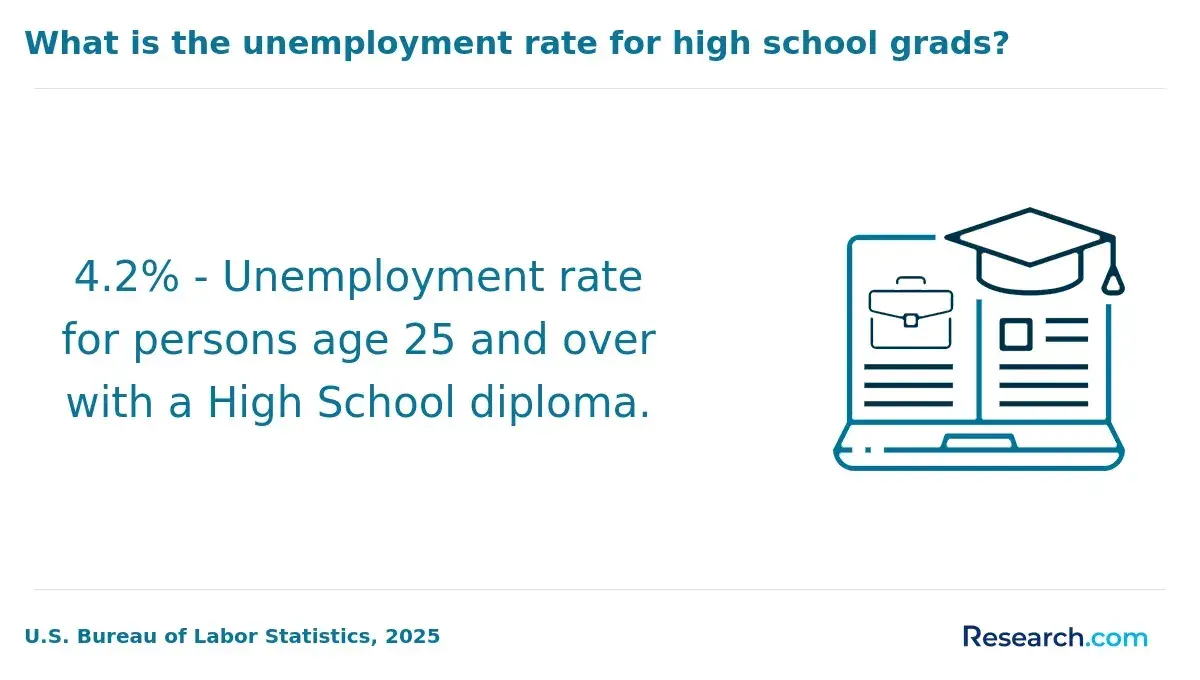
Choosing a general degree can feel flexible but uncertain: the same broad education can lead to stable healthcare administration work, volatile entry-level sales roles, or policy and operations careers. BLS annual data show workers age 25 and older with a bachelor's degree or higher had a 2.5% unemployment rate in 2024, well below workers with only a high school diploma. This guide helps students, career changers, and graduates compare safer paths, understand trade-offs, and build a practical plan that improves employability without relying on one narrow major.
Key Things You Should Know
- General degree holders tend to reduce unemployment risk when they pair broad coursework with a specific function such as operations, healthcare administration, compliance, analytics, human resources, project coordination, or public service.
- BLS 2024 wage and projection data point to stronger stability in healthcare, government, education support, utilities, insurance, logistics, and professional services than in highly discretionary fields such as some entertainment, luxury retail, and commission-heavy sales roles.
- The safest strategy is not simply choosing the highest-paying occupation; it is combining transferable skills, industry demand, region-specific hiring, internships, and credible credentials that make a general degree easier for employers to interpret.
- Which General Career Paths Have the Lowest Unemployment Risk?
- Which Industries Offer the Most Stable Employment for General Graduates?
Which General Career Paths Have the Lowest Unemployment Risk?
A general degree usually refers to a broad program such as general studies, liberal studies, interdisciplinary studies, or an individualized bachelor's degree. These programs can be useful because they build communication, problem-solving, research, and organizational skills, but their employment risk depends heavily on whether the graduate can connect those skills to a clear job function.
The lowest-risk career paths for general graduates are typically those tied to essential services, regulated work, business operations, or data-informed decision-making. The table below compares common paths where a general degree can be competitive, especially when supported by internships, minors, certificates, or relevant work experience.
| Career path | Common roles for general graduates | Stability profile | Relevant 2024 BLS median pay context |
| Healthcare administration and patient services | Patient access coordinator, clinic operations assistant, healthcare program coordinator | Low to moderate unemployment risk because demand is tied to aging populations, insurance processes, and ongoing care delivery | Medical and health services managers had a 2024 median annual wage of $117,960 |
| Government, public administration, and compliance | Program assistant, benefits specialist, compliance coordinator, policy aide | Often stable because funding cycles can be slower-moving and roles support public services, though hiring may vary by budget | Compliance officers had a 2024 median annual wage of $78,420 |
| Operations, logistics, and project coordination | Operations coordinator, project assistant, supply chain associate | Moderate to low risk when tied to essential goods, infrastructure, healthcare, or business continuity | Project management specialists had a 2024 median annual wage of $100,750 |
| Human resources and workforce development | HR assistant, recruiter, benefits coordinator, training coordinator | Moderate risk because hiring slows during downturns, but benefits, compliance, and employee relations remain necessary | Human resources specialists had a 2024 median annual wage of $72,910 |
| Business analysis and management support | Administrative analyst, management analyst assistant, process improvement associate | Moderate to low risk for graduates who can use data, documentation, and workflow tools | Management analysts had a 2024 median annual wage of $101,190 |
| Education support and student services | Academic advisor assistant, enrollment coordinator, student success specialist | Moderate risk; demand is steadier in public institutions and workforce training than in tuition-sensitive private services | Training and development specialists had a 2024 median annual wage of $65,850 |
The main pattern is clear: broad degrees become safer when attached to operational responsibility. A graduate who can coordinate people, budgets, data, compliance documents, or services is usually less vulnerable than one who markets the degree only as "flexible."
Higher pay and lower unemployment risk do not always move together. Commission sales, early-stage startups, media, and entertainment may offer upside, but they can also expose new graduates to layoffs, irregular income, or fewer entry-level training structures. Those paths can still make sense for entrepreneurial students who can tolerate volatility, build a strong portfolio, and maintain a financial cushion.
Which Industries Offer the Most Stable Employment for General Graduates?
Industry choice is one of the strongest unemployment-risk filters for general graduates. A stable occupation in an unstable industry can still create job insecurity, while an ordinary administrative or coordination role in an essential industry may offer better continuity.
The following comparison focuses on sectors where general graduates often find roles without needing a highly specialized undergraduate major. It also explains why each industry may be more or less resilient during slowdowns.
| Industry | Why it can be stable | Best-fit general degree roles | Main risk to watch |
| Healthcare and social assistance | Demand is tied to medical need, aging, insurance administration, and care coordination | Patient services, program coordination, scheduling, quality support | Some roles require healthcare knowledge, privacy training, or experience with electronic health records |
| Federal, state, and local government | Many roles support essential public services and have structured hiring systems | Program assistant, eligibility worker, administrative analyst, compliance support | Hiring timelines can be slow and budget-dependent |
| Education and workforce development | Schools, colleges, and training providers need advising, enrollment, records, and student support | Student services, admissions support, training coordination | Enrollment shifts and funding changes can affect staffing |
| Insurance and risk management | Businesses and households continue needing claims, underwriting support, and compliance services | Claims assistant, underwriting associate, customer operations, compliance coordinator | Automation may reduce repetitive processing roles |
| Utilities, infrastructure, and transportation | These sectors support essential systems that remain necessary across economic cycles | Operations support, safety coordination, logistics administration | Some advancement paths require technical or regulatory knowledge |
| Professional, scientific, and technical services | Organizations need consulting, research, project support, and business services | Project coordinator, research assistant, client operations, analyst support | Client-funded work can contract quickly during recessions |
For students comparing industries, the practical question is not simply "Where are jobs available?" It is "Which employers still need this function when budgets tighten?" Essential services, regulated documentation, and compliance-heavy work tend to create more durable demand than roles tied mainly to discretionary spending.
One common mistake is assuming a famous industry is automatically safer. Technology companies, for example, may offer strong pay, but nontechnical generalist roles can be vulnerable when firms cut recruiting, marketing, or administrative headcount. A less glamorous role in healthcare operations or municipal government may provide steadier employment.
Specialization is the bridge between a broad degree and a stable job. General graduates do not always need a second major, but they do need a market signal that tells employers what problems they are prepared to solve.
The strongest specializations usually combine transferable skills with a durable labor-market need. Students can build these through minors, concentrations, electives, internships, undergraduate certificates, graduate certificates, or targeted master's programs.
| Specialization | Why it improves stability | Good fit for students who | Potential limitation |
| Healthcare administration | Connects communication and organization skills to a high-need service sector | Like coordinating services, working with records, and improving patient processes | Advancement may require healthcare systems knowledge or graduate study |
| Data analytics for business | Turns broad problem-solving into measurable reporting, dashboard, and decision-support skills | Enjoy spreadsheets, patterns, and explaining findings to nontechnical teams | Entry-level competition is stronger without a portfolio |
| Human resources and employment law basics | Supports hiring, benefits, compliance, training, and employee relations functions | Prefer people-focused roles with policy and documentation responsibilities | Recruiting-heavy jobs may slow when employers freeze hiring |
| Public administration and policy | Prepares graduates for government, nonprofit, and community program roles | Want mission-driven work and can navigate rules, forms, and stakeholder needs | Public hiring can be slow and highly procedural |
| Project management | Applies across healthcare, construction support, IT, education, logistics, and corporate operations | Are organized, deadline-oriented, and comfortable coordinating teams | Credibility often depends on documented project experience |
| Communication disorders support pathway | Can lead toward more specialized graduate study and healthcare-adjacent careers | Are interested in speech, language, child development, or rehabilitation services | Licensure careers generally require a qualifying graduate degree |
Students interested in healthcare-adjacent stability should understand the credential ladder before committing. For example, speech-language pathology roles generally require graduate-level preparation and state licensure, so comparing online speech language pathology programs can help students evaluate cost, flexibility, and licensure alignment before choosing that route.
The best specialization is specific enough to make hiring easier but not so narrow that it locks the graduate into one employer type. Project management, analytics, compliance, and healthcare operations are strong examples because they can transfer across industries.
Location can change unemployment risk as much as the career path itself. General graduates often compete for roles where local employer density matters: hospitals, colleges, government offices, logistics hubs, insurers, corporate headquarters, and regional nonprofits.
Regional demand affects both job availability and bargaining power. A graduate pursuing healthcare administration may find more openings near hospital systems and aging-population regions, while a public administration graduate may benefit from proximity to state capitals, county agencies, or major municipal employers.
| Location factor | Why it matters | How to evaluate it |
| Employer concentration | More employers in the same sector reduce dependence on one organization | Search for clusters of hospitals, government agencies, insurers, universities, or logistics firms |
| Public-sector presence | Government and education roles can provide structured hiring and benefits | Review state, county, city, school district, and public university job boards |
| Cost of living | A stable job may still be a poor fit if wages do not support local expenses | Compare entry-level salaries with rent, commuting, insurance, and student loan payments |
| Remote-work competition | Remote roles widen access but also increase applicant pools | Track whether postings require local residency, hybrid attendance, or industry-specific experience |
| Licensure and state rules | Some education, counseling, healthcare, and public-service paths vary by state | Confirm requirements with the relevant state board or employer before enrolling in a program |
A major red flag is choosing a specialization without checking local demand. If a region has few employers in that field, a graduate may need to relocate, accept a lower-level role, or use the specialization in a different industry.
Students who need geographic flexibility should favor portable functions: compliance, project coordination, data reporting, HR operations, healthcare administration, and customer operations. These appear in many regions and are easier to reposition than niche roles tied to one local employer base.
Skills are the most important unemployment-risk reducer for general graduates because they translate broad education into employer-ready value. Employers may appreciate communication and critical thinking, but they usually hire for a clearer combination of tools, tasks, and outcomes.
Graduates should build a skill stack that proves they can do the work on day one. The following categories are especially useful because they transfer across stable industries and are visible in job postings.
- Operational skills: scheduling, process documentation, workflow coordination, budgeting basics, vendor communication, and quality improvement.
- Data skills: Excel, spreadsheets, basic statistics, dashboard tools, CRM reporting, survey analysis, and clear data storytelling.
- Compliance skills: records management, privacy awareness, policy interpretation, audit support, and risk documentation.
- Communication skills: professional writing, stakeholder updates, meeting facilitation, client service, and conflict resolution.
- Technology skills: collaboration platforms, project management software, database basics, AI-assisted research, and responsible prompt use.
AI is changing the entry-level market by automating routine writing, summarization, scheduling, and basic analysis. That does not make general graduates obsolete, but it raises the bar: the safer worker is the one who can use AI tools to improve accuracy, speed, and documentation while still applying judgment, confidentiality, and human communication.
One practical step is to build a portfolio even for noncreative careers. A general graduate can show a sample dashboard, process-improvement memo, policy brief, training guide, event plan, or project timeline. This reduces employer uncertainty and helps the degree look intentional rather than vague.
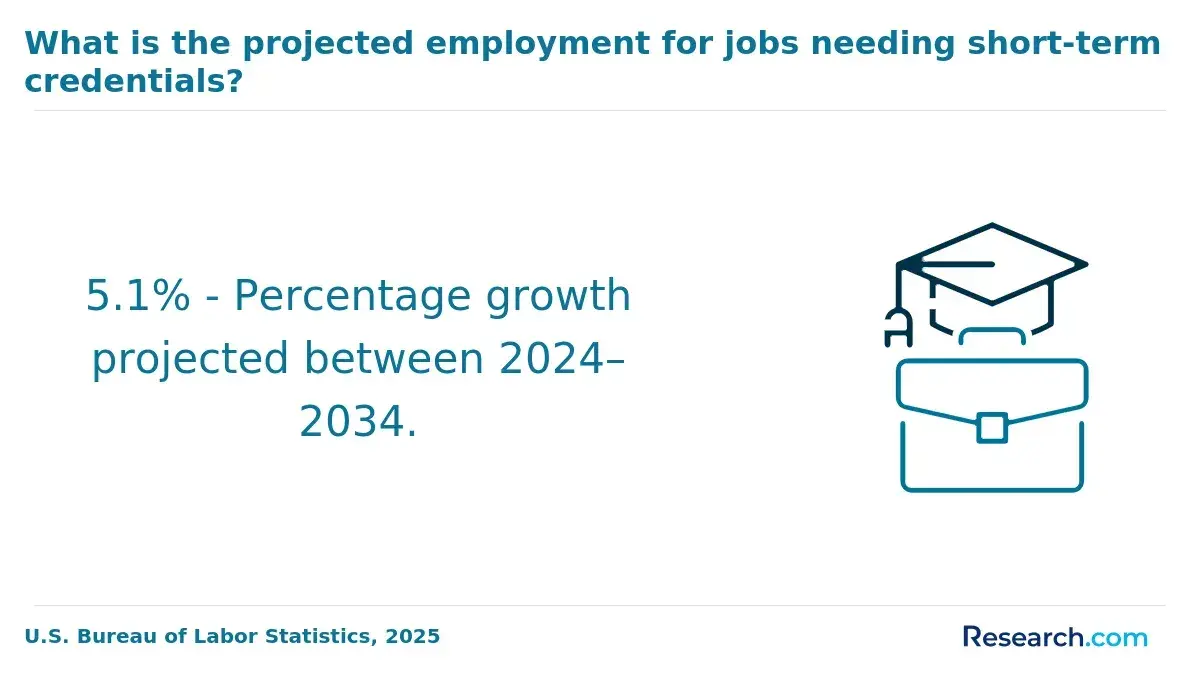
Certifications can improve job security when they validate a real workplace function. They are most useful when paired with experience, internships, or projects; a certificate alone rarely offsets a weak employment strategy.
The most valuable credentials for general professionals are those that align with a stable role family. Before paying for any credential, students should check whether it appears in job postings for their target occupation and region.
| Credential area | Examples of useful credentials | Best for | Stability value |
| Project management | CAPM, PMP for experienced professionals, Agile or Scrum credentials | Project coordinators, operations staff, business support roles | Shows ability to manage deadlines, stakeholders, scope, and documentation |
| Human resources | aPHR, PHR, SHRM-CP depending on eligibility | HR assistants, recruiters, benefits coordinators, employee relations support | Signals knowledge of HR practices and compliance-sensitive work |
| Data and business analytics | Excel, SQL, Tableau, Power BI, Google Analytics, industry analytics certificates | Analyst assistants, operations analysts, marketing analysts, reporting roles | Makes broad reasoning skills measurable and job-specific |
| Healthcare administration | Revenue cycle, medical office, privacy, quality improvement, or health information credentials | Patient access, clinic coordination, records, billing support | Connects general skills to healthcare systems and terminology |
| Business management | Graduate certificates, MBA-related credentials, accredited business coursework | Working professionals seeking advancement into management | Can strengthen mobility when paired with experience and employer recognition |
For professionals considering business credentials, accreditation matters because it can affect employer confidence and transferability. Comparing an AACSB accredited online MBA can be a practical step for graduates who already have work experience and want management roles with broader mobility.
Common mistakes include collecting low-recognition certificates, choosing credentials before identifying target jobs, and paying for programs that do not match local employer requirements. The safer approach is to reverse-engineer the credential from job postings, alumni outcomes, and employer preferences.
Employment stability changes by career stage. Entry-level general graduates face the highest ambiguity because they must prove direction, skills, and work habits. Midcareer professionals often have lower risk if they can show results, manage systems, or supervise teams. Late-career professionals may have strong expertise but need to keep technology and credential signals current.
BLS 2024 wage data show general and operations managers had a median annual wage of $103,980, which illustrates why experience can change the value of a broad degree. The degree may open the first door, but stability and earnings often improve when the worker becomes responsible for processes, teams, budgets, or measurable outcomes.
Here is how general graduates should think about risk at each stage:
- Early career: Prioritize internships, entry-level titles with training, supervisor references, and a clear skill stack over prestige alone.
- Years three to seven: Move from task completion to ownership of projects, reporting, compliance workflows, client accounts, or team coordination.
- Midcareer: Consider management, specialized certificates, or graduate study only when it supports a defined advancement path.
- Career changers: Translate prior experience into a stable function, such as operations, training, compliance, customer success, or healthcare administration.
- Later career: Keep digital tools, AI workflows, and industry compliance knowledge current to avoid being screened out for newer roles.
Graduate business education can be useful for experienced professionals who need leadership, finance, strategy, or executive decision-making skills. A flexible option such as a 1 year executive MBA online may fit working adults, but it should be evaluated against tuition, employer support, time demands, and realistic promotion pathways.
The biggest mistake at this stage is assuming another degree automatically lowers unemployment risk. Education helps most when it solves a specific career bottleneck: lack of management credibility, missing technical fluency, licensure requirements, or limited access to higher-level roles.
Emerging stable paths for general graduates tend to sit at the intersection of human judgment, technology adoption, compliance, and essential services. These roles are less about chasing a trendy title and more about applying broad skills to problems employers cannot ignore.
Several long-term paths stand out because they combine growth potential with transferable skills. They are not risk-free, but they can offer better resilience than roles built only around routine administration or basic content production.
| Emerging path | Why it may be stable long term | How a general graduate can prepare |
| Healthcare operations and care coordination | Healthcare systems need people who can manage patient flow, records, referrals, and service quality | Take healthcare administration, privacy, medical terminology, and process-improvement coursework |
| AI-assisted business operations | Organizations need workers who can use AI responsibly while checking accuracy, bias, and confidentiality | Build skills in workflow automation, documentation, data review, and ethical AI use |
| Risk, compliance, and privacy support | Regulation, cybersecurity concerns, and data governance create ongoing documentation needs | Study privacy basics, audit support, policy writing, and records management |
| Workforce development and training | Employers need reskilling programs as technology changes job tasks | Develop instructional design, facilitation, HR, and learning-management-system skills |
| Sustainability and resilience operations | Organizations are planning for energy costs, supply chain disruption, and reporting expectations | Combine project coordination with environmental policy, procurement, or facilities knowledge |
| Community health and social services administration | Public and nonprofit systems need coordination for benefits, outreach, case support, and program delivery | Gain experience in nonprofits, public health, grant support, and client services |
Some emerging fields require advanced preparation. For example, students drawn to speech, language, rehabilitation, or child-development services should distinguish support roles from licensed clinical roles, because the latter usually require graduate education and state approval.
The safer way to approach emerging careers is to build a durable base first: data literacy, project coordination, compliance awareness, and industry knowledge. Trend-based titles may change, but those capabilities remain useful across employers.
Students should evaluate unemployment risk as part of a broader career decision, not as the only factor. A very stable path may feel limiting if it does not fit your interests, while a high-growth field may be risky if you lack the required skills or live far from relevant employers.
A practical evaluation process helps you compare stability, salary, cost, time, and fit before choosing a general degree pathway. Use the steps below before declaring a specialization, enrolling in graduate school, or committing to a career track.
- Choose three target roles, not just one broad field, and collect recent job postings from your preferred region.
- Identify the industries that hire those roles most often, then separate essential-service employers from more cyclical employers.
- Compare required skills, software, certifications, internships, and experience across postings to find the common requirements.
- Check whether the role has advancement paths into management, compliance, analytics, healthcare operations, public administration, or specialized services.
- Estimate the full cost of preparation, including tuition, fees, books, unpaid internship time, certification exams, commuting, and lost work hours.
- Ask whether the path remains employable if the economy slows, AI tools improve, or your first employer downsizes.
- Build evidence before graduation through internships, volunteer administration, campus employment, portfolio projects, and supervisor references.
Nontraditional learners should also consider timing and flexibility. Adults returning to school, including retirees or near-retirees seeking meaningful second careers, may benefit from comparing college degrees for seniors if they need online formats, transfer-credit options, or programs aligned with part-time study.
Red flags include choosing a path only because it sounds high-paying, ignoring regional demand, assuming a broad degree will "work anywhere," relying on outdated salary claims, or enrolling in a costly program without confirming employer recognition. A safer decision balances labor-market evidence with personal fit, debt tolerance, and a concrete plan for gaining experience.
Economic cycles affect general graduates differently depending on whether their work is considered essential, revenue-generating, compliance-related, or discretionary. During expansions, employers may hire more recruiters, sales representatives, marketing coordinators, and client support staff. During contractions, those same roles can become more exposed if they are not tied to core operations.
BLS employment projections for 2024 to 2034 show total U.S. employment growing by about 5.2 million jobs, a long-run signal that demand will not be evenly distributed across fields. For a general graduate, that means stability depends less on the degree title and more on whether the chosen function sits in a growing or protected part of the economy.
Some roles are more cyclical because employers can delay or reduce them quickly. Others remain necessary even when budgets are tight. This distinction is especially important for graduates deciding between high-upside and high-stability paths.
- More recession-sensitive paths: commission-based sales, event planning, recruiting, luxury retail management, advertising support, travel services, and startup generalist roles.
- More recession-resistant paths: healthcare operations, public benefits administration, insurance claims, compliance support, utilities coordination, safety administration, and essential logistics.
- Mixed-risk paths: marketing analytics, HR, project coordination, and customer success; these can be stable in essential industries but vulnerable in discretionary or venture-funded sectors.
A practical way to judge cyclicality is to ask what happens to the role if revenue falls for two quarters. If the answer is "the work is delayed," risk is higher. If the answer is "the organization cannot legally or operationally stop doing it," risk is lower.
Other Things You Should Know About General
A general degree can carry higher risk if it is presented without a clear career direction. Risk drops when students add a specialization, internship, technical skill, certificate, or work experience tied to a specific function such as operations, healthcare administration, HR, analytics, or public service.
Healthcare administration, government program support, compliance, insurance operations, project coordination, and essential logistics are often among the more stable options. The best choice depends on your region, skills, and whether you can show relevant experience.
Not always. A high-paying path may involve layoffs, commissions, or volatile demand. A better approach is to compare salary with job growth, industry stability, advancement options, cost of preparation, and your tolerance for income uncertainty.
Yes, if the certification matches the jobs you want. Project management, HR, analytics, healthcare administration, and compliance credentials can help, but they work best when supported by projects, internships, or relevant job experience.
- The Labor Market for Recent College Graduates https://www.newyorkfed.org/research/college-labor-market
- Are Young College Graduates Losing Their Edge in the Job Market? https://www.clevelandfed.org/publications/economic-commentary/2025/ec-202514-are-young-college-graduates-losing-their-edge-in-the-job-market
- More Graduates, Fewer Jobs: Looking into Graduate Unemployment in Developing Countries https://greennetwork.asia/gna-knowledge-hub/more-graduates-fewer-jobs-looking-into-graduate-unemployment-in-developing-countries/
- Degrees of Job Security | Federal Reserve Bank of Minneapolis https://www.minneapolisfed.org/article/2010/degrees-of-job-security
- How Do Workforce Training Programs Support Economic Stability? https://slatez.org/workforce-training-economic-stability/
- Getting a job without a 4-year degree. Prospects increase with a certificate. https://www.luminafoundation.org/resource/non-degree-credentials-provide-value-for-adults-in-the-labor-market/
- Work-life balance and job stability of utmost importance for Gen Z https://workplacewellbeing.pro/news/work-life-balance-and-job-stability-of-utmost-importance-for-gen-z/
- What Careers Can Offer True Long-Term Stability? - Her Culture https://www.herculture.org/posts/2025/9/14/what-careers-can-offer-true-long-term-stability
- Top Recession-Proof Careers That Actually Offer Long-Term Stability https://girlboss.com/blogs/read/top-recession-proof-careers-that-actually-offer-long-term-stability
- Considering Job Training? Look At These 5 Facts https://medcerts.com/blog/considering-unemployment-job-training-look-at-these-five-facts