2027 General Degree Automation Exposure Report: Which Career Paths Face the Most AI and Technology Disruption

Co-Founder and Chief Data Scientist
Choosing a general degree career now means asking a new question: Will AI replace the work, change it, or make it more valuable? A 2024 Federal Reserve-linked survey found that 28% of employed U.S. adults had already used generative AI at work, showing that workplace change is no longer theoretical.
This guide is for general studies, liberal arts, interdisciplinary, business, and undecided students who want practical career direction. You will learn which paths face the most disruption, which remain resilient, and how to choose a career strategy that balances salary, stability, and adaptability.
Key Things You Should Know
- General graduates face the highest automation exposure in routine administrative, data-processing, basic content, clerical finance, and scripted customer support roles, while careers requiring judgment, relationship-building, regulation, care, or cross-functional leadership tend to be more resilient.
- BLS 2023-2033 projections published in 2024 show much stronger growth in healthcare, computer, mathematical, and management-related work than in many office support occupations, so career stability depends heavily on specialization rather than the degree title alone.
- The best long-term strategy is not to avoid AI-heavy fields, but to combine transferable general-degree strengths with AI literacy, data interpretation, communication, project coordination, domain knowledge, and ethical decision-making.
- Which General Career Paths Face the Greatest Risk of AI and Automation?
- Which Job Tasks Are Most Likely to Be Automated in General Careers?
Which General Career Paths Face the Greatest Risk of AI and Automation?
A general degree is broad by design. It may include general studies, liberal studies, interdisciplinary studies, humanities, social science, communication, public administration, or business foundations. That flexibility can be valuable, but it also means students must choose a career direction deliberately because automation risk varies more by job task than by degree name.
AI and automation exposure means the extent to which software, machine learning, robotics, workflow tools, or generative AI can perform important parts of a job. Exposure is not the same as elimination.
Many roles will be redesigned so that entry-level employees use AI to draft, summarize, analyze, schedule, or research faster, while humans remain responsible for judgment, accountability, client interaction, and final decisions.
The table below ranks common general-degree career paths by likely automation exposure. It combines task structure, typical entry-level responsibilities, human interaction requirements, regulatory sensitivity, and BLS salary context from May 2024 occupational wage data where directly relevant.
| Career path | Typical fit for general graduates | Automation exposure | Why disruption risk is higher or lower | Salary context |
| Data entry and records processing | Administrative support, operations, back-office roles | Very high | Work is structured, repetitive, rules-based, and often tied to digital forms or databases. | Lower than most bachelor-level professional roles in BLS May 2024 wage data |
| Basic bookkeeping and clerical finance | Accounting support, payroll support, billing coordination | High | Cloud accounting platforms and AI tools increasingly handle categorization, reconciliation, and routine reporting. | Moderate, but advancement usually requires stronger accounting, analytics, or compliance skills |
| Scripted customer support | Call centers, service desks, client intake | High | Chatbots and voice AI can resolve common questions, though complex escalation and relationship management remain human-led. | Generally lower than roles involving account management or technical support |
| Basic marketing content and social media coordination | Communications, marketing assistant roles | Medium to high | Generative AI can draft posts, emails, summaries, and ad variations; strategy and brand judgment still matter. | Improves with analytics, campaign strategy, and industry specialization |
| Human resources coordination | HR assistant, recruiting coordinator, employee relations support | Medium | Screening, scheduling, and documentation can be automated, but conflict resolution, compliance, and workforce planning require human judgment. | BLS May 2024 data places HR specialists above many administrative support roles |
| Market research and business analysis | Research assistant, analyst, operations analyst | Medium | AI speeds up data cleaning and synthesis, but business interpretation and recommendations remain valuable. | BLS May 2024 data shows market research analysts earn substantially more than clerical roles |
| Project coordination and operations management | Project assistant, program coordinator, operations associate | Medium to low | Tools automate scheduling and reporting, but coordinating people, risks, budgets, and stakeholders is harder to automate fully. | Advancement can lead to higher-paying management or analyst roles |
| Healthcare administration and patient services management | Clinic coordinator, health program assistant, care navigation | Lower | AI supports documentation and triage, but healthcare is regulated and relationship-intensive. | BLS May 2024 data shows medical and health services managers among higher-paying management occupations |
| Social services and community program roles | Case management support, nonprofit program coordination | Lower | Human trust, local context, emotional intelligence, and ethical judgment are central to the work. | Often lower than corporate management roles, but stability may be stronger in public and healthcare-linked settings |
For decision-making, the highest-risk paths are not always bad choices, but they require a plan. A student who wants administrative work should aim for regulated, technical, or coordination-heavy versions of that work instead of roles built mostly around typing, routing, filing, or simple data transfer.
Which Job Tasks Are Most Likely to Be Automated in General Careers?
Automation risk becomes clearer when you look at tasks rather than job titles. A general graduate in marketing, HR, finance, operations, education support, healthcare administration, or public service may use similar AI tools, but the consequences differ depending on how much of the job is routine and how much requires human accountability.
The table below separates tasks that are most exposed from tasks that are more likely to remain human-led. This helps students evaluate job descriptions before applying.
| Task type | Automation likelihood | Examples in general careers | What humans still add |
| Data entry, form completion, file routing | Very high | Updating CRM records, entering invoices, moving applications through workflow systems | Exception handling, quality control, privacy judgment |
| Routine writing and summarization | High | Drafting meeting notes, email templates, social captions, first-pass reports | Tone, audience fit, accuracy checks, persuasion, brand judgment |
| Scheduling and status tracking | High | Calendar coordination, task reminders, basic project dashboards | Prioritization, negotiation, escalation, stakeholder alignment |
| Basic research and information retrieval | Medium to high | Compiling competitor lists, summarizing policies, gathering vendor details | Source evaluation, context, ethics, final recommendation |
| Customer intake and triage | Medium to high | Chat support, benefits questions, appointment intake | Empathy, complex cases, conflict resolution, regulated decisions |
| People management and coaching | Low to medium | Team leadership, onboarding, performance support | Trust, motivation, accountability, judgment under uncertainty |
| Community, clinical, legal, or compliance-sensitive decisions | Lower | Patient navigation, social services referrals, HR investigations, policy interpretation | Professional responsibility, documentation, ethics, human consequences |
Students should read job postings with a task lens. If most duties are described as "enter," "process," "route," "compile," or "respond to standard inquiries," the role may be more exposed. If the posting emphasizes "advise," "coordinate," "analyze," "resolve," "manage stakeholders," or "interpret policy," the role is more likely to be AI-augmented rather than replaced.
A practical way to assess exposure is to ask four questions before choosing a career path:
- How much of the work follows predictable rules or templates?
- Does the role require accountability for decisions that affect people, money, safety, privacy, or compliance?
- Will AI make the employee faster, or will it reduce the need for the role itself?
- Can the role become more valuable if the worker learns data, AI tools, project management, or industry-specific regulations?
AI adoption is not moving evenly across the labor market. General graduates entering technology, finance, insurance, professional services, marketing, healthcare administration, logistics, and education technology will often encounter AI-enabled workflows earlier than peers in smaller local organizations or highly relationship-based community settings.
U.S. Census Business Trends and Outlook Survey releases in 2024 showed that AI use was most visible in information, professional services, finance, and related knowledge-work sectors. For general graduates, that means the same job title can feel very different depending on the industry.
| Industry | AI adoption pattern | Likely impact on general graduates | Career strategy |
| Information and digital media | Fast adoption of generative AI, analytics, recommendation systems, and content tools | Entry-level writing, research, and coordination tasks may shrink or require higher output expectations | Build analytics, audience strategy, product knowledge, and AI-assisted content quality control |
| Finance and insurance | Strong use of automation for risk, compliance, customer service, fraud detection, and reporting | Routine processing roles are exposed, but compliance, client advising, and operations analysis remain valuable | Learn financial regulation, data literacy, privacy, and process improvement |
| Professional, scientific, and technical services | Rapid use of AI for research, document drafting, project support, and client deliverables | General graduates may compete with AI-enhanced workers unless they specialize | Pair communication skills with domain knowledge, project management, and tool fluency |
| Healthcare administration | Growing use of AI for scheduling, documentation, billing support, and patient communications | Back-office tasks change, but regulated patient-facing coordination remains resilient | Develop HIPAA awareness, care coordination, data interpretation, and service design skills |
| Retail, logistics, and operations | Automation in inventory, forecasting, routing, scheduling, and customer support | Basic coordination may be automated, while operations supervisors and process analysts gain importance | Learn workflow systems, supply chain basics, Excel or BI tools, and frontline leadership |
| Government, education, and nonprofits | Often slower adoption due to budgets, procurement, privacy, and policy constraints | Roles may be less abruptly disrupted, but digital modernization is still increasing | Build grant writing, program evaluation, stakeholder communication, and responsible AI awareness |
The key decision is whether you want to work in a fast-adopting industry and become an AI-augmented employee, or choose a slower-moving, human-centered sector where technology changes are more gradual. Fast-adopting sectors may offer higher upside, but they also demand faster skill renewal.
The most resilient general graduates are not necessarily the most technical. They are the ones who can combine human judgment with technology-enabled productivity. AI can draft, summarize, and classify, but it does not fully understand organizational politics, ethical trade-offs, community needs, customer trust, or long-term strategy.
The table below compares skill categories that improve resilience. Use it to identify gaps in your current degree plan, resume, or professional development plan.
| Skill category | Why it matters in an AI-enabled workplace | Examples of evidence students can build |
| AI literacy | Workers who understand AI limits can use tools productively without creating errors or compliance risks. | AI-assisted research project, prompt documentation, comparison of AI output with verified sources |
| Data interpretation | AI produces summaries, but humans must decide what the numbers mean for business or public decisions. | Spreadsheet dashboard, survey analysis, budget comparison, operations report |
| Writing and communication | AI increases content volume, which makes clear editing, audience judgment, and persuasion more valuable. | Policy brief, client memo, campaign plan, grant narrative, presentation deck |
| Project coordination | Automation can track work, but people still need someone to align timelines, stakeholders, and decisions. | Event plan, implementation timeline, team leadership role, project management certificate |
| Ethical and regulatory judgment | AI use raises issues in privacy, fairness, accessibility, safety, employment, and consumer protection. | Compliance case study, HR policy review, healthcare privacy training, responsible AI reflection |
| Domain specialization | General skills become more valuable when applied to a specific sector or problem area. | Healthcare administration internship, nonprofit program evaluation, finance operations project |
Students should prioritize a "T-shaped" profile: broad communication and critical thinking across the top, plus one deeper specialization such as healthcare administration, HR, analytics, operations, public policy, instructional design, or business technology. That combination gives a general degree clearer labor-market value.
If you are early in your degree, focus on the following sequence:
- Choose one industry direction before your final year, even if your major remains broad.
- Complete at least one project that uses data, AI tools, or workflow software to solve a realistic problem.
- Build a resume section for technical tools and a portfolio section for writing, analysis, or project examples.
- Use internships, part-time work, volunteering, or campus roles to prove judgment, reliability, and communication.
- Review job postings every semester and update your skill plan based on repeated employer requirements.
Long-term stability for general graduates usually comes from specialization, not from avoiding technology. The strongest paths are those where AI improves productivity but humans remain necessary because the work involves trust, regulation, complex coordination, or decisions with real consequences.
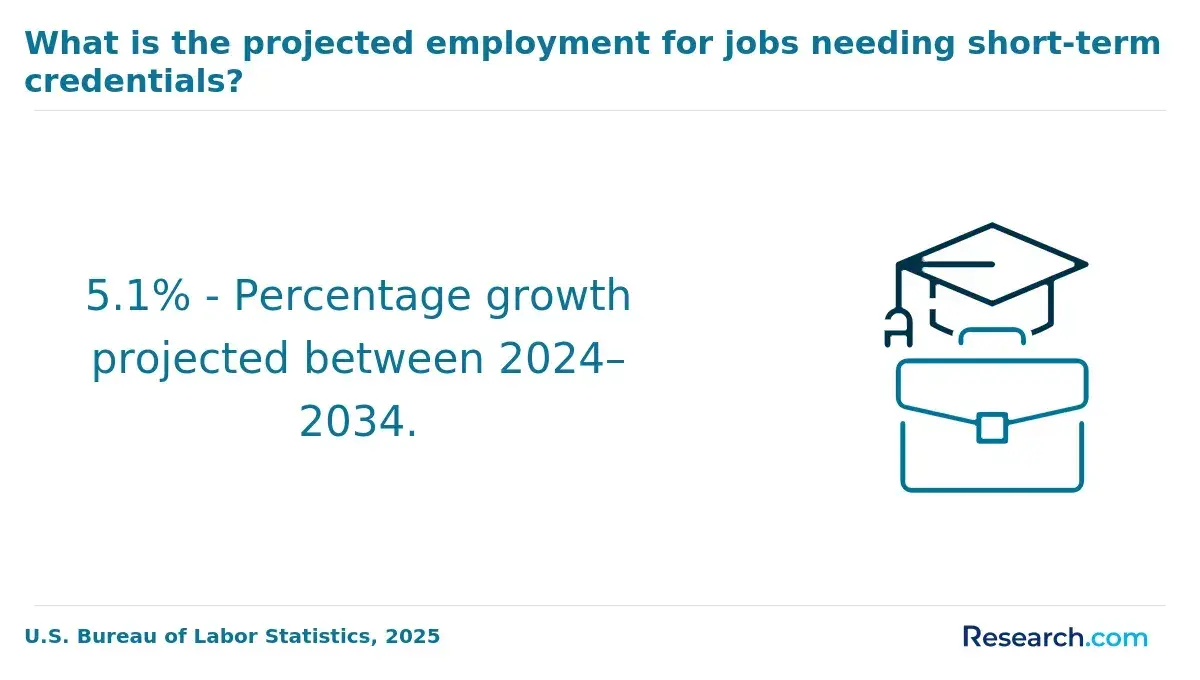
BLS 2023-2033 projections published in 2024 show healthcare and professional roles among the stronger areas of expected employment growth. For general students, that supports a practical conclusion: pairing a broad degree with healthcare, management, analytics, compliance, or human services can improve resilience.
| Specialization | Stability outlook | Why it may be resilient | Good fit for students who like |
| Healthcare administration | Strong | Aging population, regulation, patient coordination, and complex operations create durable demand. | Organization, service, policy, systems, and healthcare settings |
| Human resources and workforce development | Moderate to strong | AI can automate screening and documentation, but employee relations and compliance need judgment. | People, conflict resolution, training, organizational culture |
| Project management and operations | Strong | Organizations need people who can implement change, manage risks, and connect teams. | Planning, execution, problem-solving, coordination |
| Data-informed business or policy analysis | Strong if paired with domain knowledge | AI expands access to analysis, but employers still need interpretation and recommendations. | Research, numbers, writing, strategy |
| Public administration and nonprofit program management | Moderate to strong | Funding, compliance, community relationships, and human needs limit full automation. | Public service, community impact, policy, communication |
| Communication strategy and public relations | Moderate | Routine drafting is exposed, but reputation, crisis communication, and stakeholder trust remain human-led. | Writing, persuasion, media, brand voice |
| Education support and instructional coordination | Moderate | AI changes tutoring and content creation, but student support and learning design still require human insight. | Teaching, mentoring, design, accessibility |
Students interested in regulated, patient-facing communication work may also explore online speech language pathology programs, but they should understand that speech-language pathology usually requires graduate education, supervised clinical experience, and state licensure.
The best specialization depends on your tolerance for technology change. Healthcare administration and public service may offer steadier human-centered work, while analytics, operations, and communication strategy may offer faster advancement for students who actively learn AI tools.
AI can put downward pressure on salaries for routine work while increasing rewards for workers who can manage systems, interpret data, lead teams, or apply AI within a specific domain. For general graduates, salary growth often depends less on the first job title and more on how quickly the worker moves from task execution to judgment-based responsibility.
BLS May 2024 wage data shows a clear gap between support roles and roles involving analysis or management. For example, customer service and clerical support occupations generally pay far less than management analysts, market research analysts, and healthcare managers. The lesson is not that every student should chase the highest-paying occupation, but that advancement usually requires specialization beyond general office work.
The table below summarizes how AI may affect salary trajectories across common pathways.
| Pathway | Early-career salary pressure | Advancement potential | Best salary-protection strategy |
| Administrative support | High | Limited unless it leads to operations, HR, executive support, or compliance | Move toward workflow ownership, reporting, vendor coordination, or regulated processes |
| Customer support | High for scripted roles | Better in account management, technical support, customer success, or service operations | Learn product knowledge, escalation management, CRM analytics, and client retention |
| Marketing and communications | Medium to high for basic content | Strong for strategy, analytics, brand management, and crisis communication | Pair writing with campaign measurement, audience research, and AI quality control |
| HR and training | Medium | Strong in employee relations, compliance, organizational development, and workforce analytics | Build labor law awareness, facilitation skills, HR systems knowledge, and data literacy |
| Business analysis and operations | Medium | Strong for workers who combine process knowledge with data and stakeholder management | Learn spreadsheets, BI tools, process mapping, project management, and industry context |
| Healthcare administration | Lower for patient-facing coordination, medium for billing and documentation | Strong in clinic management, quality improvement, compliance, and care operations | Develop privacy, reimbursement, patient experience, and healthcare operations knowledge |
Graduate education can help when it is aligned with a clear advancement path, not when it is used to postpone career decisions. Mid-career professionals who want management roles may compare a 1 year executive MBA online with shorter certificates in analytics, project management, HR, or healthcare administration before committing to a larger investment.
A useful salary rule is to avoid roles where AI makes you only faster at low-value tasks. Aim for roles where AI helps you supervise decisions, improve processes, serve clients better, reduce risk, or generate insights that leaders act on.
AI is not only removing or compressing tasks; it is also creating new work. General graduates can be strong candidates for emerging roles that require translation between technical teams, business users, customers, and communities. These roles often need communication, documentation, training, ethics, and change-management skills rather than advanced programming alone.
For students with broad academic backgrounds, the opportunity is to become the person who helps organizations use AI responsibly and practically. That may mean writing better procedures, training employees, testing AI outputs, improving customer workflows, or helping teams adopt new tools.
| Emerging opportunity | Why general graduates may fit | Skills to add |
| AI adoption coordinator | Connects employees, managers, vendors, and policies during tool rollouts | Project management, training, documentation, change management |
| AI content quality specialist | Reviews AI-generated content for accuracy, tone, accessibility, and brand fit | Editing, source verification, SEO basics, compliance awareness |
| Responsible AI policy assistant | Supports internal guidance on privacy, bias, transparency, and acceptable use | Ethics, policy writing, legal research basics, risk documentation |
| Customer experience automation analyst | Improves chatbots, service workflows, and escalation paths | Customer journey mapping, CRM systems, analytics, communication |
| Workforce training and AI enablement specialist | Helps employees learn new tools and avoid misuse | Instructional design, facilitation, tool testing, adult learning |
| Operations automation associate | Identifies repetitive workflows and helps teams redesign processes | Process mapping, spreadsheets, workflow software, stakeholder interviews |
These jobs may not always appear with "AI" in the title. Search postings for terms such as automation, digital transformation, workflow improvement, enablement, knowledge management, operations analyst, customer experience, business process, and responsible technology.
The opportunity created by AI outweighs the disruption when a role lets you move closer to decisions, users, systems, or strategy. It is less attractive when the role simply asks you to produce more routine output with fewer resources.
General students can prepare for AI-driven change by turning a broad degree into a focused career package. That package should include a target industry, a small set of technical tools, strong communication evidence, and a clear explanation of how the degree helps solve workplace problems.
Admissions and degree timelines vary by school, but many general studies or interdisciplinary programs accept transfer credits and are designed for students who changed majors, returned to college, or want flexible course combinations. Adult learners comparing college degrees for seniors should look closely at transfer policy, online support, career services, and whether courses include current technology and workplace applications.
Use the following action plan to make a general degree more resilient:
- Pick a career cluster, such as healthcare operations, HR, public administration, marketing analytics, project coordination, nonprofit management, or business operations.
- Audit job postings in that cluster and list the tools, credentials, and responsibilities that appear repeatedly.
- Choose electives that build domain knowledge instead of taking only unrelated courses for convenience.
- Complete at least one AI-aware project, such as comparing AI-generated research with verified sources or redesigning a workflow using automation tools.
- Build a portfolio with writing samples, dashboards, presentations, process maps, policy briefs, or case studies.
- Get experience through internships, volunteer leadership, campus work, military experience translation, part-time employment, or community projects.
- Learn the privacy, bias, citation, and confidentiality rules that apply to AI use in your target field.
- Update your resume every term so it shows outcomes, tools, and decisions rather than only course names.
Cost should also shape your preparation plan. College Board's 2024 pricing data listed average published tuition and fees for public four-year in-state students far below private nonprofit four-year pricing, before grants and aid. That does not mean the cheapest school is always the best choice, but it does mean students should compare net price, transfer credit, completion time, employer tuition support, and career outcomes before borrowing heavily.
The biggest preparation mistake is avoiding AI because it feels threatening. Employers are more likely to value graduates who can use AI carefully, explain its limits, and improve human decisions than graduates who pretend the tools do not exist.
Students should evaluate general careers by balancing automation risk with salary, growth, personal fit, education requirements, and the ability to move into higher-value work. A high-paying role with heavy routine automation exposure may be less attractive than a moderately paid role with strong advancement, regulation, or human-centered complexity.
Use this comparison framework when choosing a path, internship, concentration, certificate, or graduate program:
- Identify the core tasks of the job, not just the title.
- Check whether the tasks are routine, rules-based, digital, and repeatable.
- Look for human anchors such as trust, negotiation, regulation, safety, care, leadership, or ethical responsibility.
- Compare salary with advancement pathways, not only entry-level pay.
- Review BLS projections and job postings, but remember that regional employers and industries adopt technology at different speeds.
- Ask whether additional education, certification, licensure, or experience is required for the resilient version of the role.
- Choose programs and credentials that teach current tools, applied projects, and industry context rather than theory alone.
Business-focused students considering graduate study should compare program accreditation, cost, format, employer recognition, and analytics content. For example, an AACSB accredited online MBA may be worth considering for students targeting management, consulting, analytics, or operations leadership, but it should be evaluated against career goals and expected debt.
Watch for these red flags when planning a general-degree career:
- Choosing a job only because the current salary looks acceptable, without checking whether the work is mostly routine.
- Assuming an entire profession will disappear because some tasks can be automated.
- Ignoring licensure, compliance, or graduate education requirements in healthcare, counseling, education, legal, or clinical pathways.
- Relying on a broad degree title without building a specialization, portfolio, internship, or tool-based evidence.
- Believing AI skills alone are enough without communication, ethics, domain knowledge, and judgment.
- Borrowing for a program before comparing net price, transfer credits, completion time, and career services.
The strongest career choice is usually an AI-augmented path, not an AI-free path. Look for work where technology handles routine output while you develop expertise in decisions, relationships, strategy, operations, compliance, or care.
Employers are becoming less impressed by a broad degree alone and more interested in evidence that a candidate can use technology responsibly, communicate clearly, and solve ambiguous problems. This does not make general degrees obsolete; it changes how students must package them.
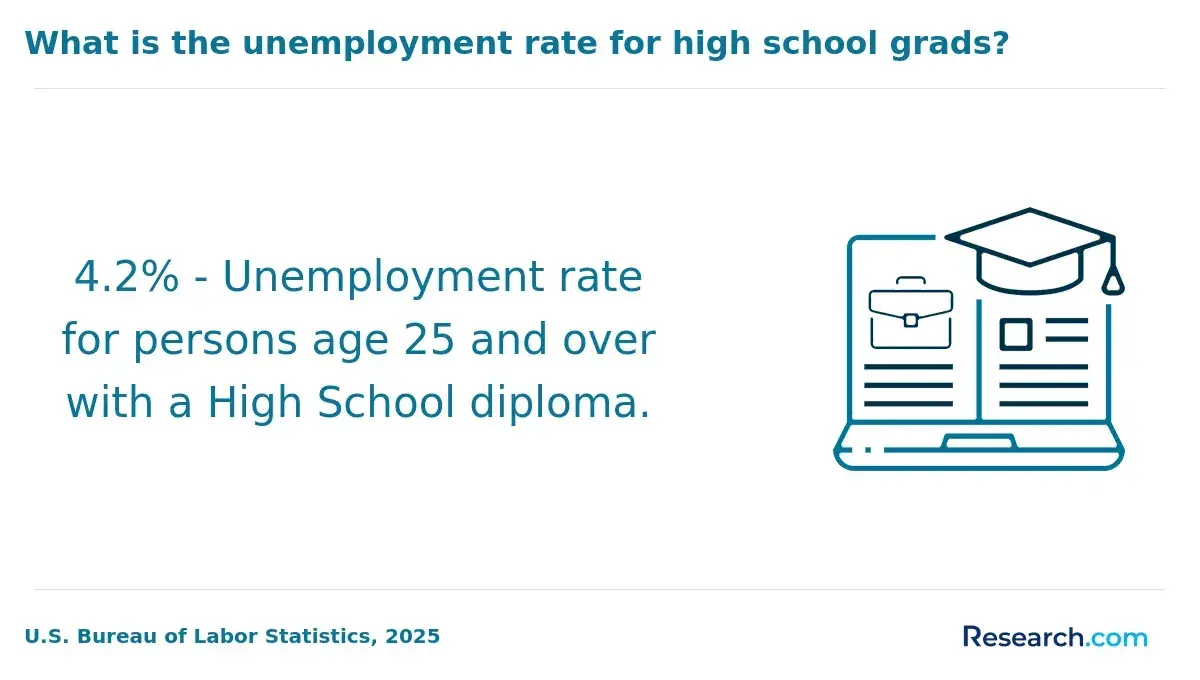
BLS 2024 education and labor force data continues to show that bachelor's degree holders have lower unemployment than workers with only a high school diploma. However, the AI era makes the field of study, internships, tools, projects, and specialization more important because employers can automate some entry-level training tasks that used to be assigned to junior employees.
For general graduates, the new hiring signal is a combination of breadth and proof. Employers increasingly want to see that candidates can move across functions, learn unfamiliar systems, and verify AI-generated output instead of accepting it blindly.
Students should expect more job postings to value the following evidence:
- Portfolio projects showing research, writing, analysis, presentation, or process improvement using real or simulated workplace problems.
- Comfort with productivity platforms, spreadsheets, databases, CRM systems, project management tools, and AI writing or research assistants.
- Ability to check AI outputs for accuracy, bias, privacy concerns, tone, and business relevance.
- Internship, volunteer, campus employment, military, or community experience that proves reliability and people skills.
- Industry-specific knowledge in areas such as healthcare, finance, education, public administration, logistics, communications, or human resources.
A common mistake is assuming that "soft skills" alone will protect a career. Communication, empathy, and judgment matter, but they are strongest when paired with a practical workplace skill such as data analysis, compliance, operations, sales, case coordination, or project management.
Other Things You Should Know About General Degree Automation Exposure
Careers built around repetitive digital tasks face the most risk. Examples include data entry, basic records processing, scripted customer service, routine bookkeeping support, and entry-level content production that does not require strategy or judgment.
Yes, but it needs direction. A general degree is strongest when paired with a specialization, internship experience, portfolio work, AI literacy, data skills, and evidence of communication or project coordination ability.
Not necessarily. AI-heavy fields can offer strong opportunities if the role involves analysis, implementation, training, compliance, customer experience, or management. The bigger risk is choosing a role where AI simply replaces routine tasks without creating a path to higher-value work.
Choose a target industry, build practical tool skills, complete applied projects, learn responsible AI use, and develop human-centered strengths such as writing, leadership, negotiation, ethical judgment, and stakeholder communication.
- Top 20 Predictions from Experts on AI Job Loss https://aimultiple.com/ai-job-loss
- Which occupations are at highest risk of being automated? https://www.ons.gov.uk/employmentandlabourmarket/peopleinwork/employmentandemployeetypes/articles/whichoccupationsareathighestriskofbeingautomated/2019-03-25
- How AI may reshape career pathways to better jobs | Brookings https://www.brookings.edu/articles/how-ai-may-reshape-career-pathways-to-better-jobs/
- AI's Impact on Graduate Jobs: A 2025 Data Analysis | IntuitionLabs https://intuitionlabs.ai/articles/ai-impact-graduate-jobs-2025
- What Jobs Will AI Replace? | Built In https://builtin.com/artificial-intelligence/ai-replacing-jobs-creating-jobs
- The 65 Jobs With the Lowest Risk of Automation by Artificial Intelligence and Robots - USCI https://www.uscareerinstitute.edu/blog/65-jobs-with-the-lowest-risk-of-automation-by-ai-and-robots
- AI Skills for Life and Work: Labour market and skills projections https://www.gov.uk/government/publications/ai-skills-for-life-and-work-labour-market-and-skills-projections/ai-skills-for-life-and-work-labour-market-and-skills-projections