2027 General Degree Underemployment Report: Which Graduates Are Most Likely to Work Below Their Education Level

Co-Founder and Chief Data Scientist
Many General graduates face a difficult first-job question: take the available job now or keep pushing for work that actually uses a bachelor's degree? The New York Fed's recent labor market data shows that roughly 4 in 10 recent college graduates are underemployed, meaning their jobs typically do not require a degree.
For General, general studies, and broad liberal arts students, the risk is often higher because the degree is flexible but less occupation-specific. This guide explains who is most at risk, which roles better use the degree, and how to avoid long-term low-credential work.
Key Things to Know About Underemployment in General Industry
- Underemployment means working in a role that typically does not require a bachelor's degree; recent New York Fed data places overall recent graduate underemployment near 40%, with broad generalist pathways often facing above-average exposure because they do not point to one licensed or technical occupation.
- General graduates are best protected when they pair broad coursework with a marketable track such as analytics, human resources, communications, project coordination, public administration, sales operations, or nonprofit program work.
- Low-credential jobs are not always dead ends, but Strada and Burning Glass Institute research published in 2024 found that graduates underemployed in their first job are much more likely to remain underemployed years later, so every fallback role needs a clear exit plan.
- How likely is it for General graduates to become underemployed?
- Is the college curricula for General keeping up with employer expectations?
How likely is it for General graduates to become underemployed?
General graduates have a moderate-to-high underemployment risk because the degree usually signals broad college-level ability rather than preparation for one specific occupation.
Employers may value the writing, research, teamwork, and problem-solving skills that come with a General degree, but many entry-level postings now ask for proof of job-ready tools, internships, data skills, customer-facing experience, or industry knowledge.
The risk is not the same for every graduate. The table below separates common outcomes by how well the job uses a bachelor's-level General education:
| Outcome type | Typical roles | Degree-use level | What it means for the graduate |
| Strong degree-level fit | Program coordinator, research assistant, HR assistant, communications associate, policy aide, analyst trainee | High | The role uses writing, analysis, coordination, and judgment, and it can lead to a clearer professional ladder. |
| Bridge role | Sales development representative, recruiting coordinator, nonprofit outreach associate, operations assistant | Mixed | The job may not fully use the degree at first, but it can become degree-level if it builds measurable skills and internal mobility. |
| Low-credential fallback | Retail associate, food service worker, cashier, basic call center representative, receptionist without advancement track | Low | The role may provide income but often does not build the evidence employers expect for degree-level General career paths. |
Recent graduates are most vulnerable when they leave school without an internship, a defined occupational target, or a portfolio of work samples. A General degree can still be worthwhile, but it needs to be treated as a platform, not a complete career plan by itself.
Is the college curricula for General keeping up with employer expectations?
General curricula can align well with employer expectations when programs require applied writing, quantitative reasoning, digital tools, career projects, and internships. The problem is that many General programs still allow students to assemble broad coursework without building a visible employment signal. That can make graduates look capable but hard to place.
Employer expectations have shifted toward skills-based evidence. AI tools also affect entry-level work by automating routine drafting, research summaries, scheduling, and basic reporting, which means new graduates must show higher-value judgment, tool fluency, and project ownership earlier than before.
The table below shows where a broad General curriculum may fall short and what employers usually want to see instead:
| Curriculum area | Common gap | Employer expectation | Degree-level career relevance |
| Writing and communication | Academic essays without business or public-facing samples | Briefs, reports, proposals, web copy, stakeholder updates | Communications, policy, HR, nonprofit, operations |
| Research | Library research without applied data interpretation | Survey summaries, market scans, evidence-based recommendations | Research assistant, analyst trainee, program associate |
| Quantitative reasoning | Basic general education math only | Excel, spreadsheets, dashboards, basic statistics, data storytelling | Operations, sales analytics, HR analytics, public administration |
| Career preparation | Optional internships or late job-search support | Internship experience, employer projects, alumni referrals | All degree-level entry paths |
| Technology use | Limited exposure to workplace platforms | CRM, project management tools, collaboration software, AI-assisted workflows | Business operations, marketing, recruiting, administration |
If a student discovers late that their General program lacks business depth, graduate study is one option, but it should be chosen carefully. For example, an AACSB accredited online MBA may make sense for graduates who already have work experience and want a structured business credential, but it is usually not the fastest fix for a senior who simply needs an internship, portfolio, and targeted entry-level applications.
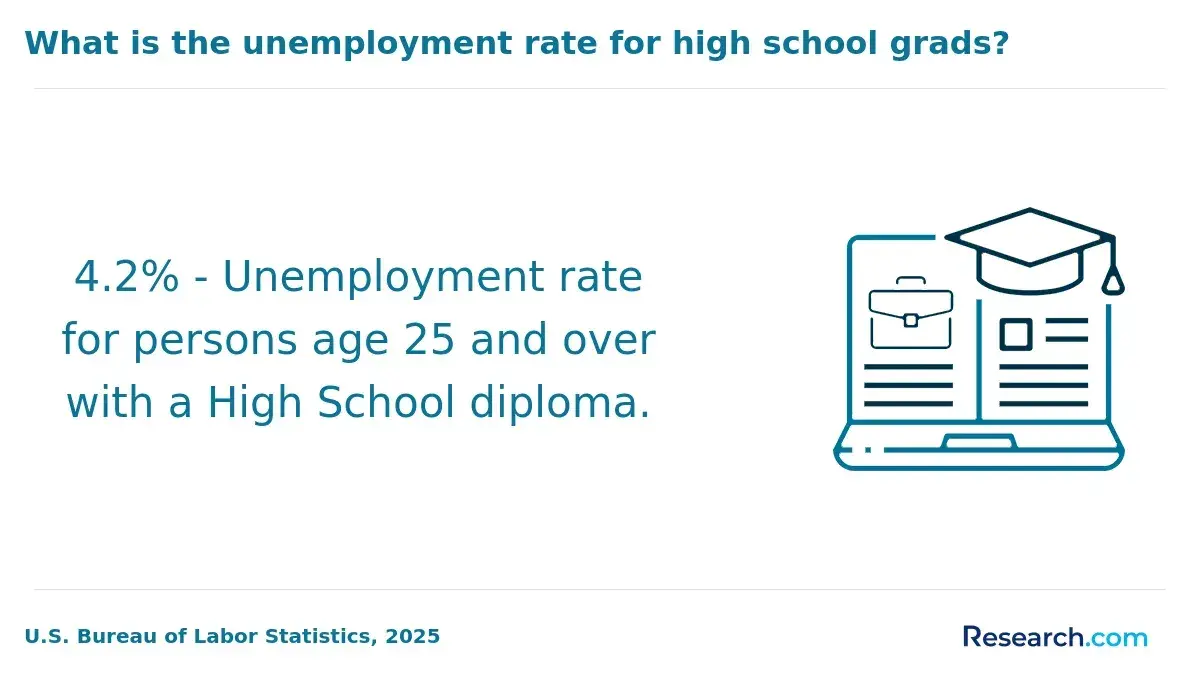
General graduates usually face higher underemployment risk than graduates from programs tied to licensed, technical, or tightly defined occupations. The New York Fed's recent major-level labor market tracking shows that underemployment is not evenly distributed across majors: career-specific fields such as nursing and engineering tend to have stronger degree-to-job alignment, while broad humanities, social science, and generalist pathways tend to face more mismatch.
The table below compares General degrees with several common major categories using the most important decision factor-how directly the major maps to degree-level openings:
| Major category | Typical underemployment exposure | Why the risk differs | Best protection strategy |
| General studies or broad liberal arts | Often above the all-major recent graduate benchmark of roughly 40% | The degree is flexible, but employers may not see a specific job function without added experience or specialization. | Choose a career track by junior year and build internship, tool, and portfolio evidence. |
| Nursing and allied health | Usually lower | Licensure and clinical training create a direct hiring pathway. | Complete required clinical hours and state licensing steps. |
| Engineering and computer science | Usually lower, though competition varies by market | Technical projects and occupational titles are clearer to employers. | Build applied projects, internships, and current software skills. |
| Business administration | Moderate | The degree is broad but more directly tied to corporate functions than many General programs. | Specialize in analytics, accounting, supply chain, HR, or finance. |
| Psychology, communications, and social sciences | Often moderate-to-high | Many roles require graduate training or practical experience for degree-level entry. | Add research, data, counseling-adjacent, HR, or communications experience. |
The main lesson is not that General degrees are weak. It is that they are less self-explanatory. A nursing graduate applies for nursing jobs; a General graduate must translate the degree into a credible business, public-sector, nonprofit, education-adjacent, or communications pathway.
Employer Confidence in Online vs. In-Person Degree Skills, Global 2024

Taking a low-credential role can affect career growth because early work history shapes how employers read a resume. The risk is not moral or personal; it is practical.
Applicant tracking systems and recruiters often scan for role titles, tools, industries, and responsibilities that match the opening. A graduate who spends two years in unrelated work may need stronger proof to be considered for analyst, coordinator, communications, HR, or program roles.
The table below explains the trade-off between immediate income and long-term career signaling:
| Choice after graduation | Short-term benefit | Career-growth risk | When it makes sense |
| Take a low-credential job immediately | Income, routine, employer reference | May not build relevant experience for degree-level openings | When finances require it and the graduate keeps applying, upskilling, and networking. |
| Take a bridge job in a target industry | Industry exposure and internal mobility | Can still stall if duties stay clerical or transactional | When the employer has a clear promotion path and the role teaches transferable systems. |
| Hold out briefly for degree-level work | Better alignment with long-term goals | Income gap and possible resume gap | When the graduate has savings, strong applications, and active interviews. |
| Upskill while working part time | Builds evidence while managing finances | Progress can be slow without a schedule | When the graduate needs a credential, portfolio, or software proof to compete. |
The best strategy is usually not "never take a fallback job." It is "never take a fallback job without a conversion plan." General graduates should keep a running record of measurable work outcomes, ask for stretch assignments, and apply for internal roles before their experience becomes too disconnected from professional openings.
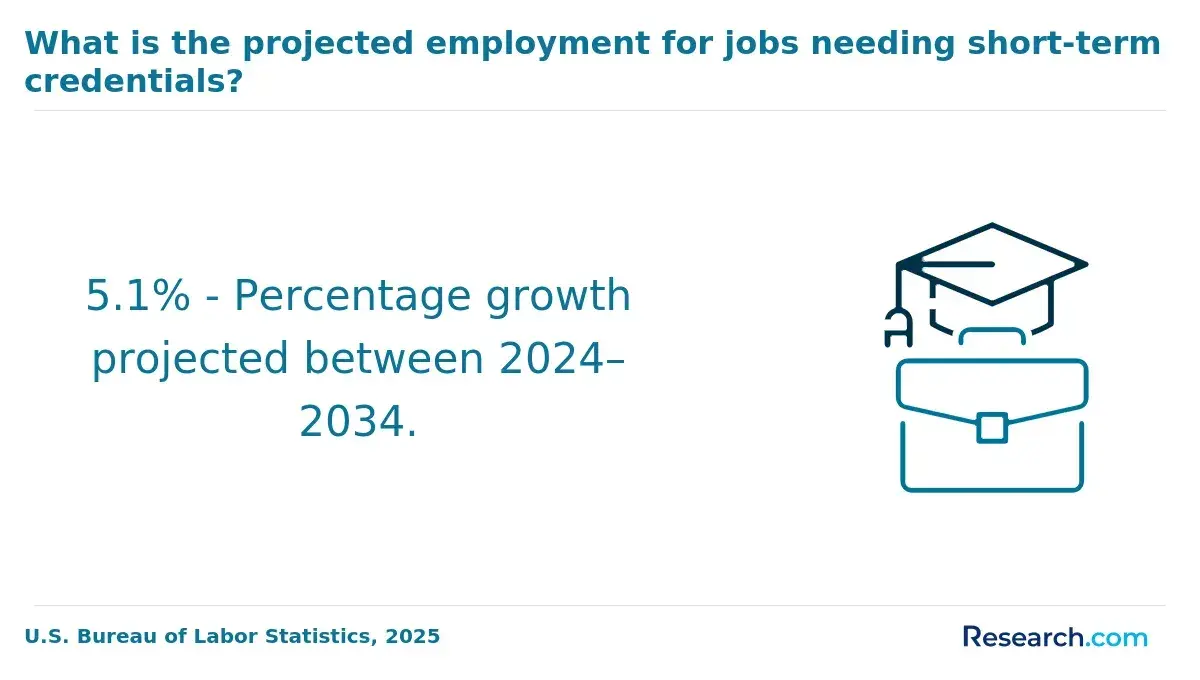
The salary gap between degree-level roles and low-credential fallback work can be large. BLS May 2024 wage data is useful here because it compares occupation medians, not promises for any individual graduate. Location, employer size, experience, and industry can all move pay up or down.
The table below compares common degree-level destinations for General graduates with common fallback roles. The point is not that every General graduate will enter the higher-paying job immediately, but that role alignment strongly affects earning potential:
| Role type | Example occupation | BLS May 2024 median annual pay | Typical degree-use level |
| Degree-level | Management analyst | $101,190 | High |
| Degree-level | Market research analyst | $76,950 | High |
| Degree-level | Human resources specialist | $72,910 | High |
| Degree-level | Public relations specialist | $69,780 | High |
| Low-credential fallback | Customer service representative | $39,680 | Low-to-mixed |
| Low-credential fallback | Retail sales worker | $34,730 | Low |
Using these occupation medians, the difference between a human resources specialist role and a customer service representative role is about $33,000 per year. That gap can affect loan repayment, savings, housing choices, and the ability to accept unpaid or low-paid career-building opportunities later.
Debt also matters. Federal Direct undergraduate loans first disbursed for the 2024-25 award year carried a fixed interest rate of 6.53%, which makes prolonged low earnings more costly for borrowers.
Graduates who must take a lower-paying role should contact their loan servicer early, compare repayment options, and avoid assuming that a temporary income problem will fix itself without a career plan.
General graduates are often pushed into low-credential roles by a combination of weak career targeting, limited work experience, local labor market constraints, and unclear employer signals. The degree may be valuable, but the job market rewards clarity.
If an employer cannot tell what professional function a graduate is ready to perform, the application often loses to a candidate with a more specific major, internship, certificate, or portfolio.
The most common barriers are avoidable if students address them before graduation. These mistakes are especially risky for General majors because the degree gives flexibility but not automatic occupational identity:
- Applying broadly to "any entry-level job" instead of targeting one or two job families such as HR, operations, communications, public service, or research.
- Waiting until senior year to seek internships, employer projects, alumni referrals, or career-center feedback.
- Listing coursework without translating it into workplace skills such as reporting, stakeholder communication, data cleanup, scheduling, budgeting, or policy research.
- Ignoring geography and industry concentration; some markets have more coordinator, analyst, nonprofit, government, healthcare administration, and corporate operations roles than others.
- Assuming a bachelor's degree alone will overcome missing software skills, weak interview examples, or no practical experience.
- Accepting the first low-credential job without asking how people advance from that position into professional roles.
Adult learners and career changers face a related issue: they may already have experience, but it may not be packaged as degree-level evidence. For older students comparing flexible pathways, guides to college degrees for seniors can be useful when evaluating whether a program offers career services, transfer credit, and practical specialization rather than only convenience.
A strong General graduate resume should answer one question quickly: "What professional problem can this person help us solve?" Instead of presenting the degree as broad interest, the resume should frame the graduate as a candidate for a specific job family.
The steps below help General graduates reposition their resumes for degree-level openings and reduce the chance of being screened into low-credential work:
- Choose one target role family before rewriting the resume, such as HR assistant, program coordinator, communications associate, research assistant, operations coordinator, or sales operations analyst.
- Rewrite the summary line around that target, using phrases from real job postings without copying full sentences or stuffing keywords.
- Move relevant projects, internships, volunteer leadership, campus employment, and research experience above unrelated part-time jobs when they better match the target role.
- Convert academic work into employer language, such as "analyzed survey responses," "prepared stakeholder brief," "managed event logistics," or "built Excel tracker."
- Add a skills section only for tools the graduate can actually use, such as Excel, Google Workspace, PowerPoint, Canva, Salesforce basics, Tableau basics, SPSS, project management platforms, or CRM systems.
- Quantify outcomes where possible, including number of participants coordinated, reports produced, records cleaned, events supported, or communication materials created.
- Create two resume versions if necessary: one for professional degree-level roles and one for temporary income roles, so fallback applications do not dilute the main career message.
The biggest resume mistake is treating "General" as the headline. Employers rarely hire for general ability alone. They hire for coordination, analysis, communication, service improvement, compliance support, recruiting, outreach, operations, or research. The resume should make that function obvious in the first half of the page.
Certifications can help General graduates qualify for degree-level roles when they add a specific, employer-recognized skill. They are not magic substitutes for experience, and they should be chosen based on actual job postings in the graduate's target market.
The table below summarizes certifications and credentials that can strengthen a General graduate's signal for common degree-level pathways:
| Career target | Helpful credential or training signal | Why it may help | Important limitation |
| Project coordination | CAPM or project management certificate | Shows knowledge of project terminology, scheduling, scope, and stakeholder coordination. | Best paired with campus, internship, volunteer, or work projects. |
| Human resources | aPHR, SHRM-CP preparation, HR certificate | Signals interest in recruiting, employee relations, compliance, and HR operations. | Some HR roles still prefer direct office, recruiting, or administrative experience. |
| Data and operations | Google Data Analytics, Excel, Tableau, SQL fundamentals | Helps a broad degree look more analytical and job-ready. | Portfolio examples matter more than course completion alone. |
| Marketing and communications | Google Analytics, HubSpot, digital marketing certificates | Supports entry into content, campaign coordination, and marketing operations roles. | Employers will want writing samples and campaign or project evidence. |
| Sales operations or customer success | Salesforce Administrator basics or CRM training | Connects customer-facing experience to higher-skill revenue operations roles. | Certification is strongest when the candidate can describe process improvements. |
| Public service or nonprofit work | Grant writing, program evaluation, nonprofit management certificate | Shows applied knowledge beyond broad coursework. | Local experience and mission fit are often important. |
For regulated careers, a short certificate is usually not enough. A General graduate interested in speech-language pathology, for example, typically needs graduate education and state licensure rather than only a resume credential, so comparing online speech language pathology programs may be more relevant than stacking unrelated certificates.
General students can reduce underemployment risk by turning a flexible degree into a focused employment strategy before graduation. The most successful approach is to combine early career targeting, applied experience, technical proof, and direct employer contact.
The following sequence gives students a practical plan from freshman year through the first post-graduation job search:
- Pick a working career hypothesis early, even if it changes later; examples include HR, communications, public administration, nonprofit programs, operations, policy research, sales operations, or market research.
- Audit 10 real job postings each semester and write down repeated tools, responsibilities, and qualifications.
- Select electives that close those gaps, especially statistics, business writing, data analysis, public speaking, budgeting, organizational behavior, or digital communication.
- Complete at least one internship, co-op, paid campus job, research assistantship, or employer-sponsored project before senior year.
- Build a small portfolio with work samples such as reports, dashboards, policy briefs, campaign plans, event plans, research summaries, or process maps.
- Ask alumni for informational interviews before asking for job referrals; the goal is to understand hiring language and identify realistic entry points.
- Apply in focused weekly batches instead of sending generic applications, then track response rates by resume version, role type, and location.
- Evaluate fallback offers by asking whether the role builds skills, provides internal mobility, and supports a 6- to 12-month transition plan.
Graduate school should be a strategic choice, not a panic response to a hard job market. A certificate or portfolio may produce a faster return for a new graduate who lacks tools or experience.
By contrast, an advanced business degree may fit someone who has already built professional experience and wants management mobility; in that case, comparing options such as a 1 year executive MBA online can be reasonable, but it is usually not designed as a first step for someone with no work history.
Some General graduates move out of low-credential work quickly, especially when they use the first job to gain employer references, software experience, and industry knowledge. However, underemployment can become sticky when the role does not build skills that degree-level employers recognize.
A 2024 report from the Strada Institute for the Future of Work and the Burning Glass Institute found that 52% of bachelor's graduates were underemployed one year after graduation, and graduates underemployed in their first job were far more likely to remain underemployed years later.
For General graduates, this matters because a flexible degree can either become a launchpad or a holding pattern depending on the first two years of work experience.
Low-credential work is less risky when it has a visible ladder. Before accepting a fallback job, graduates should look for signs that the role can realistically lead to degree-level responsibilities:
- There is a documented path from the role into coordinator, analyst, supervisor, recruiting, operations, or client success positions.
- The job teaches software, reporting, compliance, CRM, scheduling, budgeting, or stakeholder communication skills that appear in degree-level postings.
- The employer promotes internally and can name examples of recent employees who moved from frontline work into professional roles.
- The graduate sets a 6- to 12-month exit target instead of waiting indefinitely for advancement.
A low-credential job becomes a bigger problem when it consumes all job-search time, offers no skill development, and is unrelated to the graduate's intended field. In that case, holding the job for income may be necessary, but the graduate should treat evenings, weekends, and networking time as the real bridge to degree-level work.
Other Things You Should Know About General
Yes, many federal, state, and local roles accept broad bachelor's degrees, especially in administration, public programs, human services support, communications, and analyst trainee tracks. Graduates should read postings carefully because some roles require specific coursework, civil service exams, security clearance, or specialized experience.
Employers usually care more about accreditation, skills, experience, and role fit than whether the degree was online or campus-based. The bigger risk is choosing an online program with weak career services, few applied projects, or limited internship support.
Relocation can help when the local market has few degree-level openings in the graduate's target field. Before moving, graduates should compare job volume, salary ranges, cost of living, remote options, and alumni presence in the destination market.
They can be useful if the experience is directly tied to a target career and produces strong work samples or references, but students should be cautious. Paid internships, campus jobs with professional duties, short-term projects, and nonprofit consulting projects can also provide career evidence without creating the same financial strain.
- Are universities equipping graduates for the real world? https://www.ufs.ac.za/are-universities-equipping-graduates-for-the-real-world
- Are Young College Graduates Losing Their Edge in the Job Market? https://www.clevelandfed.org/publications/economic-commentary/2025/ec-202514-are-young-college-graduates-losing-their-edge-in-the-job-market
- Underemployment and Overqualification among Fresh Graduates https://www.krinstitute.org/publications/underemployment-and-overqualification-among-fresh-graduates
- The Labor Market for Recent College Graduates https://www.newyorkfed.org/research/college-labor-market
- Early Careers of Tertiary Graduates in Poland https://polish-sociological-review.eu/pdf-119247-47999
- Unemployment rate for college graduates: Key statistics [2025] https://www.wooclap.com/en/blog/unemployment-rate-for-college-graduates/