2027 General Degree Industry Demand Report: Which Sectors Are Expanding Hiring the Fastest

Co-Founder and Chief Data Scientist
Choosing a general degree is really a market-fit decision: broad study can open doors, but only if you connect it to sectors that are hiring. The National Association of Colleges and Employers reported that employers planned to hire 7.3% more new college graduates from the Class of 2025 than the prior class, signaling renewed demand for adaptable early-career talent.
This report explains where general degree holders are finding opportunity, which roles pay best, how remote work and AI are changing expectations, and how students can turn a flexible degree into a focused career plan.
Key Things You Should Know
- A general degree does not map to one occupation, so demand is strongest when graduates target high-volume functions such as operations, human resources, customer success, healthcare administration, public service, sales enablement, and analyst support.
- BLS 2024 wage data shows several generalist-friendly business roles sit well above the $49,500 median annual wage for all occupations, including management analysts and project management specialists.
- Hiring is expanding fastest for graduates who pair broad communication, research, and problem-solving skills with job-specific proof such as data literacy, CRM experience, project tools, internships, certifications, or sector knowledge.
- Will pursuing a General degree lead directly to a job?
- What is the projected job growth rate for General roles over the next decade?
Will pursuing a General degree lead directly to a job?
A general degree can lead directly to a job, but it usually does not do so in the same way that nursing, accounting, engineering, or teaching degrees do. "General degree" commonly refers to general studies, interdisciplinary studies, liberal studies, humanities-focused programs, or broad bachelor's programs that build transferable skills rather than training for a single licensed occupation.
The practical advantage is flexibility. Employers in business services, healthcare administration, education support, nonprofit operations, government, sales, and customer-facing roles often need people who can write clearly, coordinate projects, learn systems, communicate with stakeholders, and solve messy problems. The drawback is that graduates must translate the degree into an employer-ready profile.
A general degree is most likely to lead directly to employment when the student has a defined target role before graduation. For example, a student aiming at human resources should graduate with HR coursework, internship experience, applicant tracking system familiarity, and ideally an entry-level HR credential. A student aiming at operations should show spreadsheet skills, workflow improvement projects, and experience coordinating people or processes.
Students should also be honest about fit. If the career goal requires licensure, advanced clinical training, or a technical portfolio, the general degree may be only a first step. For working adults, career changers, and older learners comparing flexible study options, resources on college degrees for seniors can help clarify whether a broad degree, career-focused certificate, or professional program better matches the next move.
Use this decision rule: choose direct entry if you can name three target job titles and build evidence for them before graduation; choose additional credentials if the postings repeatedly ask for specialized software, licensure, analytics tools, or industry knowledge you do not yet have.
What is the projected job growth rate for General roles over the next decade?
There is no single projected job growth rate for "General roles" because the Bureau of Labor Statistics does not classify general degree graduates as one occupation. The better approach is to look at occupations that commonly hire broad-degree candidates and reward transferable skills.
The table below summarizes demand signals for roles that are realistic targets for general degree holders who add relevant experience, coursework, or credentials. These figures should be used as labor-market benchmarks, not as promises for any individual graduate.
| Role family | Why it fits general degree holders | BLS 2024-2034 outlook signal | Best preparation focus |
| Management analysts | Employers value research, writing, process improvement, and stakeholder communication. | Projected to grow faster than average at about 9%. | Excel, data storytelling, operations projects, consulting-style case work. |
| Market research analysts | General graduates with research and communication strengths can move into consumer, policy, or business analysis. | Projected to grow faster than average at about 7%. | Survey design, statistics basics, visualization, marketing analytics. |
| Human resources specialists | The work depends on communication, compliance awareness, recruiting coordination, and employee relations. | Projected to grow about as fast as or faster than average at about 6%. | HR systems, employment law basics, recruiting metrics, SHRM or HRCI-aligned study. |
| Social and community service managers | Nonprofits and public agencies need coordinators who can manage programs, grants, and community partnerships. | Projected to grow faster than average at about 8%. | Program evaluation, grant writing, case management exposure, public-sector experience. |
| Public relations specialists | Writing, audience analysis, media coordination, and campaign planning align well with broad liberal studies training. | Projected to grow about as fast as average. | Writing samples, social analytics, media lists, campaign portfolio. |
For students, the key takeaway is that growth is role-specific. A general degree has stronger ROI when it is paired with a high-demand function; it has weaker ROI when the graduate applies broadly to "any office job" without a skill signal.
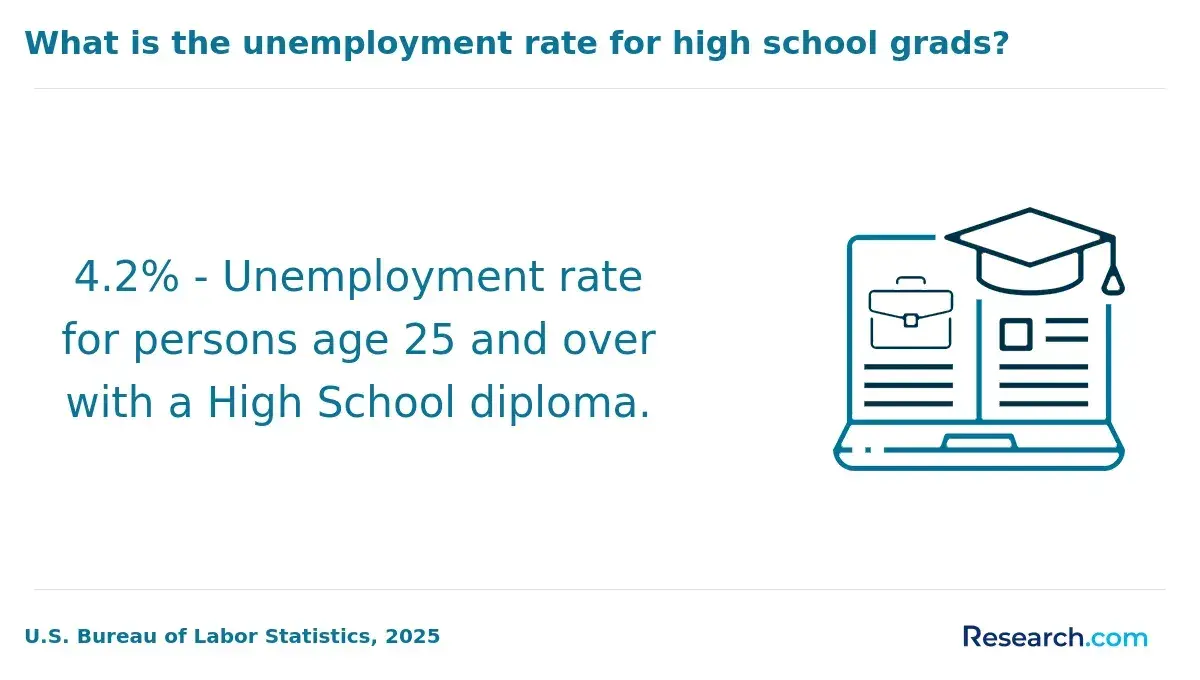
There is no reliable national "average employee retention rate" for the general degree industry because general degree holders work across many industries. The best federal proxy is employee tenure. BLS reported that the median tenure for wage and salary workers was 3.9 years in January 2024, which means today's labor market rewards adaptability but also sees regular job movement.
Retention varies sharply by sector. Public-sector and education roles often offer more stability, structured benefits, and predictable ladders, while sales, customer success, staffing, and some startup roles can have faster turnover. Healthcare administration and government jobs may retain employees longer because of benefits and internal mobility, but they can also require patience with bureaucracy and slower promotion cycles.
General degree holders should treat retention as a career-design issue. If you want stability, prioritize government, higher education administration, healthcare systems, insurance, and established nonprofits. If you want faster raises or faster responsibility, private-sector operations, sales operations, consulting support, and technology-enabled services may offer more mobility but require stronger performance metrics.
A common mistake is judging a sector only by starting salary. A lower initial offer with tuition support, certification reimbursement, internal promotion tracks, and strong benefits may outperform a slightly higher offer in a high-turnover environment.
The most in-demand roles for general degree holders are rarely labeled "general." They are roles where employers need communication, coordination, customer judgment, research, documentation, and cross-functional problem-solving.
The table below groups practical job targets by the type of work a graduate would actually perform. This helps students search more effectively than using broad phrases such as "general studies jobs."
| Job role | Typical responsibilities | Entry-level proof employers want | Growth path |
| Operations coordinator | Track workflows, update reports, coordinate schedules, support process improvements. | Spreadsheet skills, project coordination examples, attention to detail. | Operations analyst, operations manager, process improvement specialist. |
| Human resources coordinator | Schedule interviews, maintain employee records, support onboarding, assist with benefits and compliance. | HR coursework, confidentiality, applicant tracking system exposure. | HR specialist, recruiter, HR business partner. |
| Customer success or account coordinator | Support clients, track service issues, communicate renewals, coordinate between sales and operations. | CRM familiarity, writing ability, service metrics, presentation skills. | Customer success manager, account manager, revenue operations analyst. |
| Program coordinator | Manage events, documents, stakeholders, grant deliverables, or community services. | Volunteer, internship, nonprofit, campus leadership, or grant-support experience. | Program manager, grants manager, director of programs. |
| Research or policy assistant | Collect information, summarize findings, prepare briefs, support surveys or public reports. | Writing samples, research methods, data cleaning basics. | Policy analyst, market research analyst, evaluation specialist. |
| Communications associate | Write web copy, social posts, newsletters, press materials, and stakeholder updates. | Portfolio, editing samples, content calendar experience, analytics basics. | Communications manager, public relations specialist, content strategist. |
The strongest entry-level applicants do not simply say they are adaptable. They prove it with work samples: a dashboard, a writing portfolio, a process map, an event plan, a research brief, a CRM project, or a before-and-after workflow improvement.
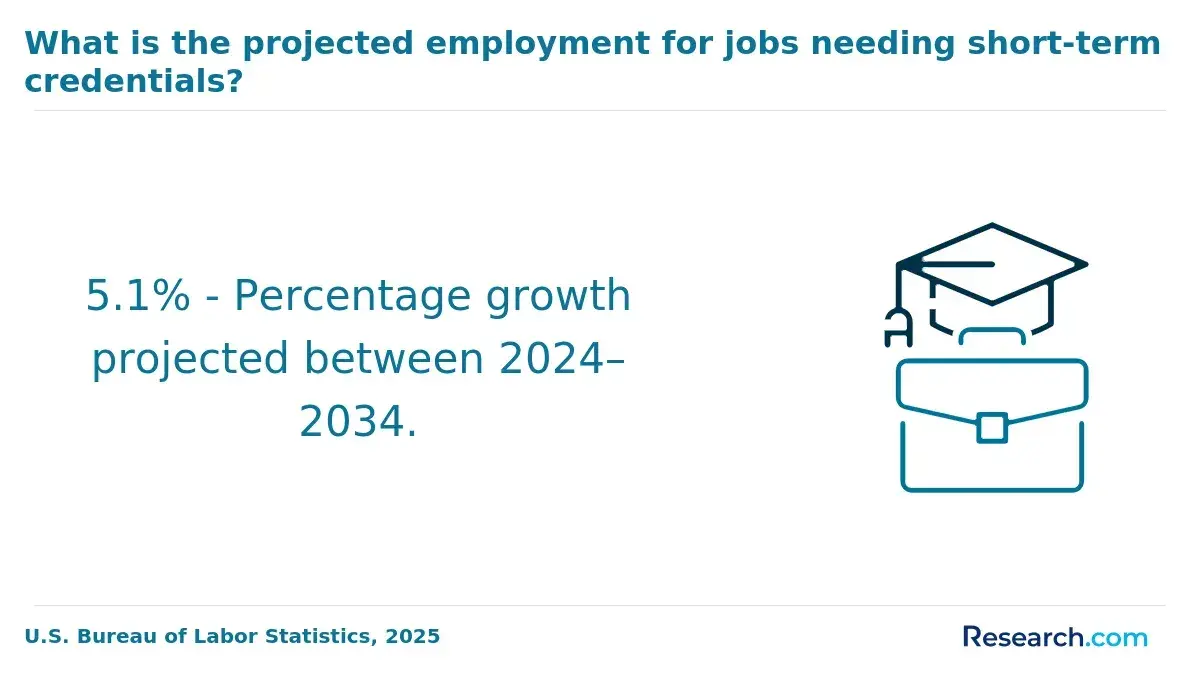
Yes, there are remote work opportunities for general degree holders, especially in roles tied to administration, recruiting coordination, customer success, content operations, research support, claims processing, enrollment advising, and sales support. However, remote roles are more competitive because applicants are not limited by geography.
BLS American Time Use Survey data for 2024 found that 35% of employed people did some or all of their work at home on days they worked. For general degree holders, that means remote work is realistic, but it is not evenly distributed across sectors or experience levels.
Remote-friendly roles usually require stronger self-management and clearer evidence of output. Employers want candidates who can communicate asynchronously, document decisions, use collaboration tools, manage deadlines, and handle ambiguity without constant supervision.
Use these steps to improve your chances for remote or hybrid roles:
- Target job titles that are operationally remote-friendly, such as recruiting coordinator, customer success associate, enrollment advisor, research assistant, claims associate, or content coordinator.
- Build proof of remote readiness by using tools such as spreadsheets, project boards, CRM systems, shared documents, and video communication in internships or class projects.
- Write resume bullets around measurable outputs, such as improved response time, organized records, coordinated events, completed research briefs, or supported client accounts.
- Apply early and tailor materials carefully because remote entry-level postings often receive more applications than local hybrid roles.
A common mistake is applying only to fully remote jobs. Hybrid roles in regional hubs often have less competition and may offer better mentoring for early-career graduates.
General graduates qualify for better roles when they combine broad education with specific, employer-recognizable skills. The degree tells employers you can learn across disciplines; credentials and work samples show where you can contribute now.
The table below separates core skills from optional credentials so students can decide what is necessary for their target sector and what is merely nice to have.
| Skill or credential area | Why it matters | Best-fit roles | How to prove it |
| Writing and documentation | Most generalist roles require clear emails, reports, summaries, procedures, and stakeholder updates. | Communications associate, program coordinator, HR coordinator, policy assistant. | Writing portfolio, research brief, policy memo, edited newsletter. |
| Data literacy | Employers increasingly expect entry-level staff to interpret spreadsheets and basic metrics. | Operations coordinator, market research assistant, HR analyst assistant. | Excel or Google Sheets projects, dashboard samples, data cleaning exercises. |
| Project coordination | High-volume sectors need people who can move tasks across teams without losing details. | Operations associate, program coordinator, implementation assistant. | Project plan, timeline, process map, event plan, internship examples. |
| Customer and stakeholder communication | Client-facing roles depend on judgment, empathy, escalation handling, and follow-through. | Customer success associate, account coordinator, admissions counselor. | Service metrics, call notes, CRM experience, role-play examples. |
| Sector-specific knowledge | Broad degrees become more marketable when tied to healthcare, finance, education, public administration, or technology services. | Compliance assistant, patient services coordinator, claims associate, public program assistant. | Relevant coursework, internship, certificate, volunteer work, terminology familiarity. |
| Professional credentials | Credentials help employers see a defined direction, especially when the degree title is broad. | HR, project management, business operations, analytics, nonprofit management. | SHRM-aligned study, CAPM, Google Analytics, Salesforce basics, grant writing certificate. |
Students targeting business leadership may eventually compare graduate options such as an AACSB accredited online MBA, but most early-career candidates should first build role-specific experience. An MBA is usually more valuable after you can connect it to management, finance, operations, or strategy goals.
To build a competitive profile, prioritize the following sequence:
- Choose one primary sector and two backup sectors before your final year of study.
- Collect 5 to 8 job postings and identify repeated tools, verbs, credentials, and responsibilities.
- Use electives, internships, certificates, and campus projects to fill those exact gaps.
- Create a small portfolio that includes writing, analysis, coordination, or communication samples.
- Revise your resume by job function rather than by degree title, using keywords from the postings you actually want.
Entry-level pay for general graduates varies widely because the degree feeds into many occupations. The safest way to estimate earnings is to compare target roles with BLS occupational wage benchmarks, then remember that first jobs often pay below the median until the worker has experience, technical tools, or supervisory responsibility.
The table below gives salary context for common generalist pathways using May 2024 BLS wage data. These figures are role benchmarks, not guaranteed starting salaries.
| Role benchmark | May 2024 median annual wage | What it means for entry-level planning |
| All occupations | $49,500 | This is a useful baseline when evaluating whether a first offer is below, near, or above the overall labor-market median. |
| Human resources specialists | $72,910 | Entry-level HR coordinators may start below this, but HR specialization can improve earnings as compliance and recruiting experience grow. |
| Market research analysts | $76,950 | Graduates with statistics, survey, Excel, or visualization skills are better positioned than applicants with writing skills alone. |
| Management analysts | $101,190 | This median reflects experienced analytical and consulting work; new graduates usually need operations or analyst experience first. |
| Public relations specialists | $69,780 | Writing samples, campaign metrics, and media or social analytics can make candidates more competitive. |
| Social and community service managers | $78,240 | Management-level pay typically comes after program, nonprofit, case support, or public-service experience. |
For a first job, compare more than salary. Benefits, promotion pace, credential reimbursement, hybrid flexibility, location costs, and manager quality can change the real value of an offer. A modest starting salary in a structured sector can be worthwhile if it leads to a defined specialist role within 18 to 24 months.
Red flags include vague job descriptions, commission-only pay without training, unpaid "trial" work, roles that require a degree but offer no growth path, and employers that cannot explain how performance is measured.
The highest compensation for general professionals usually appears in industries where broad skills are paired with revenue, risk, compliance, analytics, or management responsibility. A general degree alone is rarely the pay driver; the pay driver is the function and industry context.
The table below compares compensation potential by industry type and explains why some sectors pay more than others. Use it to identify where additional skills may produce the strongest return.
| Industry | Why compensation can be higher | General-degree roles that can grow well | Trade-off to consider |
| Professional, scientific, and technical services | Client projects, consulting margins, and specialized business needs reward analytical and communication skills. | Consulting analyst, project coordinator, research associate, operations analyst. | Work can be deadline-heavy and performance-driven. |
| Finance and insurance | Risk, compliance, claims, sales support, and client service roles can lead to credential-based advancement. | Claims associate, compliance assistant, client service associate, operations specialist. | Regulatory detail and sales pressure may not fit every student. |
| Information and technology-enabled services | Companies need nonengineering talent in customer success, implementation, content operations, and revenue operations. | Customer success associate, implementation coordinator, sales operations assistant. | Entry-level competition is high, and tool fluency matters. |
| Management of companies and enterprises | Corporate headquarters roles often require coordination across HR, operations, communications, and administration. | Executive operations assistant, HR coordinator, internal communications associate. | Promotion may require internal networking and patience. |
| Federal, state, and local government | Public agencies offer stable ladders, benefits, and policy or program specialization. | Program analyst trainee, public information assistant, administrative analyst. | Hiring timelines can be slow and application requirements detailed. |
Students who want higher compensation should not simply chase the highest-paying industry. They should choose the sector where they can credibly build scarce skills. A general graduate with strong data and process-improvement evidence may do better in operations than in communications; a strong writer with public-facing judgment may do better in public relations, policy, or higher education advancement.
Graduate business study can make sense once a professional has a clearer leadership track. For example, a working professional considering accelerated advancement may compare a 1 year executive MBA online, but that route is usually designed for experienced professionals rather than first-job seekers.
Recruitment in the general degree labor market is becoming more skills-based, technology-filtered, and evidence-driven. Employers still value degrees, but they increasingly expect candidates to show tools, projects, internships, credentials, or measurable outcomes that match the job description.
Several trends matter before you apply:
- Skills-based screening is rising: Many employers use skills, tools, and competencies to filter applicants, so resumes should include specific systems, methods, and project outcomes rather than only coursework.
- AI is changing entry-level work: Writing, research, scheduling, reporting, and customer support roles increasingly use AI tools, which means graduates should learn how to review AI output, protect data, and improve productivity without relying on automation blindly.
- Internships and work samples carry more weight: A general degree becomes more competitive when paired with evidence such as a research memo, dashboard, campaign, event plan, process improvement, or client-service metric.
- Hybrid work remains a major entry point: Fully remote roles are attractive but crowded, while local hybrid roles may offer stronger mentoring and better response rates.
- Sector-specific language matters: Healthcare, insurance, government, nonprofits, and technology services use different terminology, so applicants should tailor resumes for each sector instead of sending one generic version.
Graduates should also avoid common application mistakes:
- Do not apply only to jobs with "general studies" in the description; search by function, such as operations coordinator, HR coordinator, program assistant, research assistant, or customer success associate.
- Do not rely on a degree title to explain your value; translate coursework into employer outcomes such as writing, analysis, coordination, compliance, service, or reporting.
- Do not ignore regional employers; hospitals, universities, public agencies, insurers, logistics firms, and utilities often hire generalist talent into stable roles.
- Do not pursue credentials randomly; choose credentials only after reviewing job postings in your target sector.
- Do not accept a role without asking about training, promotion paths, manager expectations, and performance metrics.
The best recruitment strategy is targeted volume: build a focused resume for one role family, apply across several sectors, and track which titles produce interviews. If one sector generates no response after 30 to 40 tailored applications, adjust the resume, add a skill signal, or pivot to a related role family.
The highest hiring volume for general degree holders tends to come from sectors with large administrative, communication, coordination, customer, compliance, and people-operations needs. These sectors do not always require a narrowly technical major, but they do expect evidence that the candidate can contribute quickly.
The table below compares major hiring sectors by role fit and career logic. It is designed to help students choose a sector based on opportunity type, not just perceived prestige.
| Sector | Why hiring volume is strong | Common entry points | Best fit for graduates who want |
| Healthcare and social assistance | Large systems need coordinators, patient access staff, program assistants, compliance support, and community outreach workers. | Healthcare administrative assistant, patient services coordinator, community program coordinator. | Mission-driven work, stable demand, and room to specialize later. |
| Professional and business services | Consulting, staffing, outsourcing, and corporate service firms hire adaptable graduates for client-facing and internal operations roles. | Operations associate, recruiting coordinator, account coordinator, analyst assistant. | Fast learning, performance-based advancement, and exposure to multiple industries. |
| Government and public administration | Agencies need administrative analysts, program coordinators, case support, public information staff, and compliance assistants. | Program assistant, eligibility specialist, administrative analyst trainee. | Stability, benefits, public impact, and structured career ladders. |
| Education and higher education administration | Schools and colleges need admissions, advising, registrar, student services, and program operations staff. | Admissions counselor, student success coordinator, academic program assistant. | Student-facing work, predictable advancement, and education benefits. |
| Finance, insurance, and real estate services | These employers need client service, claims, compliance, risk operations, and sales support talent. | Claims associate, client service representative, compliance assistant, loan processing assistant. | Clear metrics, industry credentials, and upward mobility. |
| Nonprofit and community organizations | Organizations need grant support, volunteer coordination, fundraising, communications, and program administration. | Development assistant, volunteer coordinator, program associate. | Mission alignment, broad responsibility, and portfolio-building experience. |
Healthcare deserves special attention because it has both high-volume administrative roles and specialized clinical pathways. A general degree can support nonclinical entry, but licensed clinical roles usually require targeted graduate education; students exploring that direction may compare online speech language pathology programs if they want a regulated healthcare career path rather than a broad administrative one.
The best sector choice depends on your risk tolerance. High-volume sectors are easier to enter but may start with routine work. Specialized niches can pay more later but often require credentials, technical tools, or graduate study.
Other Things You Should Know About General
It can be worth it if you use it strategically. The strongest outcomes usually come from pairing the degree with internships, sector-specific coursework, technical tools, certifications, or a portfolio tied to a clear role family.
Good first jobs include operations coordinator, HR coordinator, program assistant, customer success associate, admissions counselor, claims associate, and research assistant. The best choice depends on whether you prefer people operations, analysis, public service, communications, or client-facing work.
Not always. Certifications help most when job postings repeatedly ask for a specific tool or body of knowledge, such as HR, project management, analytics, grant writing, Salesforce, or compliance. Avoid paying for credentials that are not mentioned in target job ads.
Yes, but remote roles are competitive. General degree holders are most likely to find remote or hybrid opportunities in recruiting coordination, customer success, research support, enrollment advising, content operations, claims processing, and administrative support roles that rely on digital collaboration.
- The future of work: Emerging job trends and the impact of AI (2025-2030) | EIT Deep Tech Talent Initiative https://www.eitdeeptechtalent.eu/news-and-events/news-archive/the-future-of-work-emerging-job-trends-and-the-impact-of-ai-2025-2030/
- How does a college degree improve graduates’ employment and earnings potential? - APLU https://www.aplu.org/our-work/4-policy-and-advocacy/publicuvalues/employment-earnings/
- 10 in-demand careers for the future https://www.vu.edu.au/about-vu/news-events/vu-blog/10-in-demand-careers-for-the-future
- Top Degrees in Demand for the Future: 2026 & Beyond https://skillifysolutions.com/blogs/career-growth/top-degrees-in-demand-for-the-future/
- European Graduate Employment Disparities: Which Regions Pose the Greatest Challenge? - Non-GAAP Earnings https://www.dotnetcurry.com/expert-time/European-Graduate-Employment-Disparities-Which-Regions-Pose-the-Greatest-Challenge-40-6293
- All questions https://www.careerpilot.org.uk/parent-zone/all-questions/what-job-sectors-are-there-and-which-sectors-will-grow-in-the-future
- The fastest growing jobs require a college degree - or more https://jedkolko.com/2024/09/03/the-fastest-growing-jobs-require-a-college-degree-or-more/
- Annual Grad Report - ZipRecruiter Economic Research https://www.ziprecruiter-research.org/annual-grad-report
- More Degrees, Tougher Odds: Why the Job Market in 2026 Leaves New Grads Behind https://www.ibisworld.com/blog/2026-job-market-leaves-new-grads-behind/1/1126/
- Assessment of priority skills to 2030 https://www.gov.uk/government/publications/assessment-of-priority-skills-to-2030/assessment-of-priority-skills-to-2030