2027 General Degree Payback Report: Which Programs Deliver the Best Cost-to-Salary Return

Co-Founder and Chief Data Scientist
Choosing a general degree is really a payback decision: will the program's cost lead to enough career flexibility, salary growth, or graduate-school access to justify the investment? BLS 2024 data shows bachelor's degree holders had median weekly earnings of $1,543, compared with $930 for workers whose highest credential was a high school diploma.
This guide is for students, adult learners, and career changers comparing broad degree options. You will learn which general programs tend to offer stronger cost-to-salary returns, what affects break-even time, and how to choose a financially safer path.
Key Things You Should Know
- A general degree usually pays back best when it is paired with a marketable concentration, internship, transfer plan, licensure pathway, or graduate-school target rather than treated as a stand-alone credential.
- College Board's 2024 pricing data shows published tuition and fees range from $4,050 at public two-year colleges to $43,350 at private nonprofit four-year colleges, making school choice one of the biggest ROI drivers.
- BLS 2024 earnings data shows bachelor's degree holders had a median weekly earnings premium of $613 over high school graduates, but the actual payoff depends heavily on major, debt, location, work experience, and occupation.
- What Is the Return on Investment of a General Degree?
- Which General Programs Deliver the Best Cost-to-Salary Return?
What Is the Return on Investment of a General Degree?
The return on investment of a general degree is the relationship between what you spend to earn the credential and the financial value you may receive afterward. In practical terms, ROI asks whether tuition, fees, books, living costs, lost wages, and loan interest are outweighed by higher earnings, better job stability, promotion access, or eligibility for advanced study.
A "general degree" can mean several things. It may refer to general studies, liberal arts, interdisciplinary studies, humanities, social sciences, general business, communication, or a transfer-oriented associate degree. These programs are often flexible, but flexibility cuts both ways: it can help you adapt across industries, or it can make your career path less direct if you do not build specific skills along the way.
A simple payback formula is: total net cost divided by annual earnings gain. For example, if a degree costs $40,000 after grants and the student's annual earnings increase is $10,000, the rough payback period is four years before taxes, interest, and career interruptions. This is only a planning estimate, not a guarantee, because actual salaries vary by employer, region, industry, experience, and economic conditions.
General degree ROI is strongest when the degree does at least one of three things: helps you enter a higher-paying occupation, qualifies you for advancement, or creates a low-cost bridge into a more specialized bachelor's, master's, or licensed profession. It is weakest when the program is expensive, lacks career advising, has poor transfer policies, or does not connect to an identifiable job market.
Which General Programs Deliver the Best Cost-to-Salary Return?
The best cost-to-salary returns among general programs usually come from broad degrees that connect to high-demand business, technology, healthcare, education, or public-sector roles. A broad major can still produce a strong outcome, but the student must make the program less "general" through electives, projects, internships, certifications, and work experience.
The table below compares common general degree pathways by their likely ROI profile. The salary signals are based on broad U.S. occupational categories reported in BLS May 2024 wage data, so they should be used as directional benchmarks rather than promises for a specific graduate.
| General program pathway | Best cost-to-salary use case | 2024 salary signal | ROI caution |
| General business or business administration | Best for students targeting operations, sales management, finance support, HR, entrepreneurship, or management-track roles | Business and financial operations occupations had a median annual wage of about $80,920 | ROI weakens if the program lacks analytics, accounting, project work, or employer connections |
| Interdisciplinary studies with data, technology, or business electives | Best for students who combine communication, research, analytics, and industry-specific coursework | Computer and information technology occupations had a median annual wage of about $105,990 | A purely self-designed curriculum can confuse employers unless the student builds a clear portfolio |
| Communication or media studies with digital skills | Best for marketing, content strategy, public relations, internal communications, and client-facing roles | Media and communication occupations had a median wage above the all-occupation median in 2024 | Creative portfolios and internships matter more than the degree title alone |
| Psychology, sociology, or general social science | Best as a foundation for HR, case management, research support, public service, graduate study, or counseling-related pathways | Community and social service occupations had a median annual wage near the mid-$50,000 range in 2024 | Many higher-paying clinical or counseling roles require graduate education and state licensure |
| Liberal arts or general studies transfer degree | Best for students completing low-cost credits before transferring into a bachelor's program | The financial value depends mostly on the completed bachelor's pathway, not the associate degree alone | Credits that do not transfer cleanly can erase the cost advantage |
| Education-focused general studies | Best for students preparing for teacher certification, instructional support, training, or graduate education programs | Education, training, and library occupations had a median annual wage around the upper-$50,000 range in 2024 | Licensure rules vary by state, and a general degree may not meet certification requirements by itself |
For most students, the highest-return "general" program is not necessarily the one with the highest posted salary category. It is the one that combines a reasonable net price with a clear career path, transferable credits, and proof of skill. A low-cost general business degree with internships may outperform a more expensive interdisciplinary degree with no work experience or portfolio.
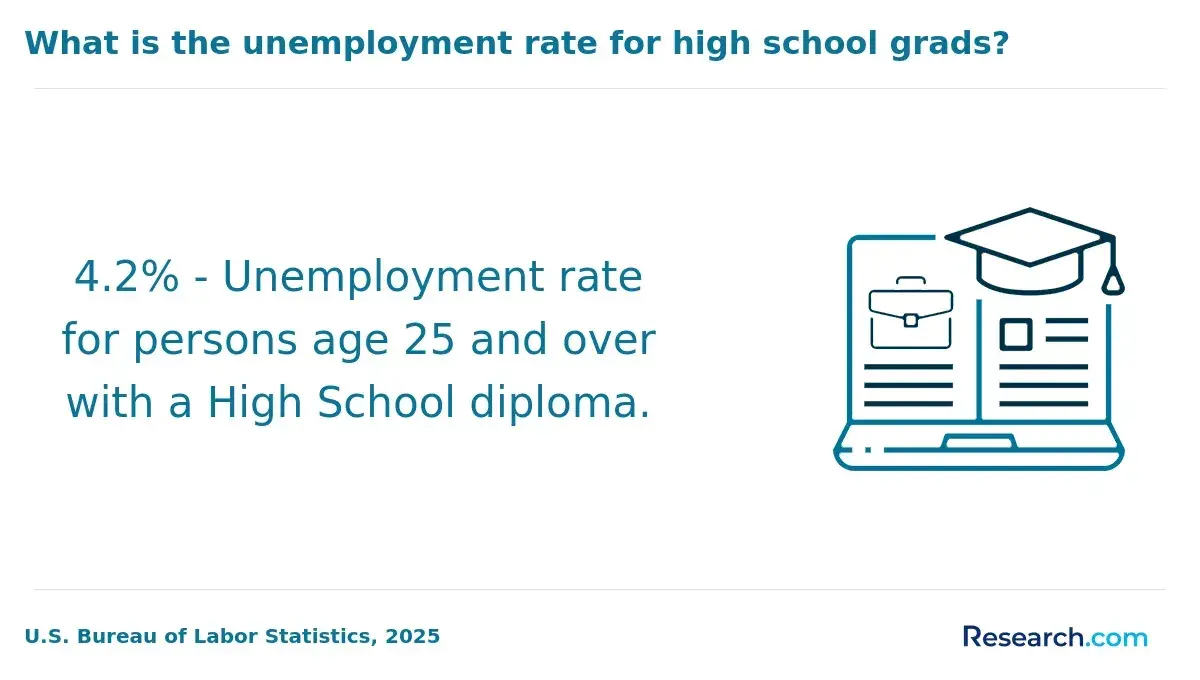
Tuition has an immediate effect on payback because every extra amount borrowed must be repaid from future earnings. College Board's 2024 Trends in College Pricing data shows that published tuition and fees differ sharply by institution type, which means students can change ROI before they take a single class by choosing a lower-cost pathway.
The table below shows why the same general degree can have very different financial outcomes depending on where the student starts. These are published tuition and fee figures, not total cost of attendance, so housing, transportation, books, food, and loan interest can raise the real cost.
| Institution type | Published tuition and fees for 2024-25 | Payback implication |
| Public two-year college, in district | $4,050 | Often the strongest starting point for general education credits if transfer agreements are clear |
| Public four-year college, in state | $11,610 | Usually a strong ROI option when the program has good completion rates and employer connections |
| Public four-year college, out of state | $30,780 | Can be harder to justify for a general degree unless the program offers exceptional outcomes or aid |
| Private nonprofit four-year college | $43,350 | May be worth it with strong grants, elite networks, or specialized advising, but sticker price alone can lengthen payback |
Students should focus on net price, not sticker price. Net price is what remains after grants and scholarships are applied. A private college with a large aid package may cost less than a public option, while an out-of-state public program may become expensive if aid is limited.
Program format also affects cost. Online programs can reduce commuting and relocation costs, but they are not automatically cheaper. Before enrolling, compare tuition per credit, mandatory fees, technology fees, transfer-credit limits, residency requirements, and whether online students have equal access to career services. For business students considering graduate study later, comparing options such as an AACSB accredited online MBA can also help you understand how accreditation and price interact at the next degree level.
Break-even time is the point at which the financial gain from the degree catches up with what the student spent to earn it. For general degrees, this calculation should be conservative because outcomes depend on how well the program connects to a career track.
The table below uses simple illustrative math based on published tuition and fees only. It excludes living costs, books, taxes, financial aid, loan interest, and time out of the workforce, so students should treat it as a starting estimate rather than a complete financial model.
| Pathway | Approximate published tuition and fees | Possible payback logic | What could change the result |
| Two years at a public two-year college | $8,100 | Can break even quickly if credits transfer or lead to a promotion | Nontransferable credits, delayed transfer, or weak advising can reduce savings |
| Four years at an in-state public four-year college | $46,440 | Often reasonable if the graduate enters a professional role or uses the degree for advancement | Changing majors late or extending enrollment can lengthen payback |
| Four years at an out-of-state public four-year college | $123,120 | Requires stronger salary outcomes, grants, or a compelling program advantage to justify the higher cost | Debt and relocation costs can make the break-even period much longer |
| Four years at a private nonprofit four-year college | $173,400 | May pay back if grants lower the net price or the school provides strong networks and outcomes | Sticker-price borrowing for a broad degree is a major ROI risk |
One useful benchmark is the bachelor's earnings premium over a high school diploma. Using BLS 2024 median weekly earnings, the difference is $613 per week before taxes. That benchmark helps explain why completing a degree can be financially meaningful, but it should not be used as a guaranteed personal salary increase.
A practical target is to keep total student debt below the likely first-year salary in the field you are pursuing. For broad programs, a safer version is even stricter: keep borrowing low until you have a clear job target, transfer map, or employer-supported advancement plan.
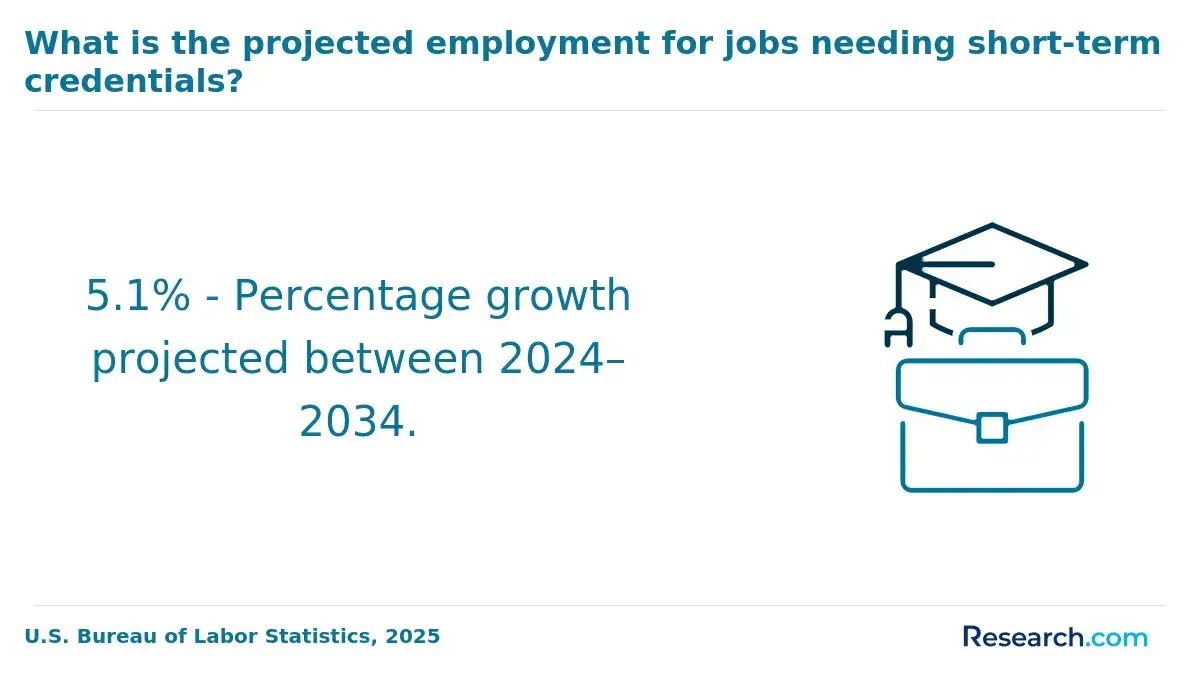
The biggest ROI drivers for a general degree are not always the major name. They are the decisions that determine whether the degree becomes a clear employment signal or just a collection of credits.
Students should evaluate the following factors before committing to a program because each one can directly affect cost, completion time, job access, or salary potential.
- Net price after aid: Compare the actual cost after grants and scholarships, not only the published tuition.
- Transfer-credit policy: Ask which credits apply to the major, not merely which credits are accepted by the institution.
- Accreditation: Confirm institutional accreditation and, when relevant, programmatic accreditation for business, education, healthcare, counseling, or licensure-related pathways.
- Career alignment: Choose electives that point toward a real job family, such as operations, HR, marketing analytics, public administration, education, or healthcare support.
- Work-integrated learning: Prioritize internships, practicums, co-ops, service learning, research assistantships, or capstone projects with employer relevance.
- Completion timeline: A lower tuition rate may not help if poor advising causes extra semesters.
- Local labor market: A general degree may pay differently in a major metro area, rural market, government employer, nonprofit, or remote-first industry.
Common mistakes can be expensive. Students often choose a broad program because they are undecided, then postpone career planning until graduation. A better approach is to use the first year to test career directions through introductory courses, informational interviews, student work, and labor-market research.
Another red flag is assuming that "online" automatically means high ROI. Online learning can be excellent, but the program should still provide advising, faculty access, tutoring, career support, and clear transfer or graduation requirements. A cheap program that students do not finish is not a good financial deal.
Employer demand has a major effect on general degree value because broad credentials rely on transferable skills. When hiring is strong in business operations, healthcare administration, data support, education, public service, and technology-adjacent roles, students with general degrees can compete more effectively if they show relevant skills.
BLS employment projections published in 2024 estimated total U.S. employment growth of 4.0% from 2023 to 2033. That overall figure is modest, so students should not assume that any degree will be enough; they should target sectors where demand, replacement needs, or credential requirements create openings.
AI and automation are also changing the value of general education. Writing, research, communication, and critical thinking still matter, but employers increasingly expect graduates to use digital tools, interpret data, manage projects, and communicate across technical and nontechnical teams. A general degree that includes spreadsheet modeling, basic statistics, AI literacy, presentation skills, and industry software is more defensible than one built only around broad survey courses.
Some high-demand pathways require specialized graduate education or licensure. For example, students interested in communication sciences, schools, or healthcare settings may use a broad undergraduate degree as preparation for online speech language pathology programs, but they must verify prerequisites, clinical requirements, accreditation, and state licensure rules before assuming eligibility.
Students can improve the financial value of a general degree by treating it as a customizable career platform. The goal is to graduate with a degree, a skill set, a work history, and a clear story that employers can understand quickly.
Use the following steps before and during enrollment to reduce risk and strengthen payback potential.
- Start with an occupation target: Identify three roles you would realistically pursue after graduation and review job postings for required skills, software, credentials, and experience.
- Calculate net cost: Compare total program cost after grants, scholarships, employer tuition assistance, transfer credits, and expected borrowing.
- Ask for outcomes data: Request graduation rates, transfer rates, placement information, internship access, and typical employers for the program.
- Build a concentration even if the major is broad: Combine general education with a focused cluster such as HR, data analysis, public administration, digital marketing, nonprofit management, education, or healthcare administration.
- Earn proof of skill: Complete a portfolio, capstone, internship, certification, research project, or supervised field experience that demonstrates applied ability.
- Control time to completion: Meet with an advisor before each registration period and confirm that every course advances graduation, transfer, licensure, or career goals.
- Limit borrowing early: If you are undecided, start with lower-cost credits until your career path becomes clearer.
Students should also ask admissions advisors specific questions instead of relying on program brochures. Useful questions include: Which courses transfer into my intended major? What jobs have recent graduates entered? Are internships required or optional? Do online students receive the same career services? What happens if I change concentrations?
The strongest strategy is to combine affordability with direction. A general degree can be a smart investment when each semester narrows the gap between your current skills and the roles you want after graduation.
A general degree should be compared with similar fields because the best ROI choice may be a more focused program, a lower-cost transfer pathway, or a specialized credential. The right option depends on whether you need flexibility, licensing, technical preparation, management skills, or graduate-school eligibility.
The table below compares common alternatives. It is designed to help students decide when a general degree makes sense and when a more specialized program may provide a clearer financial path.
| Option | Typical advantage | Best fit | ROI trade-off |
| General studies or liberal arts | Flexible curriculum and strong transfer potential | Undecided students, adult learners with prior credits, or students planning graduate study | Needs a career focus to compete with specialized majors |
| Business administration | Broad but employer-recognized pathway | Students interested in management, operations, sales, HR, entrepreneurship, or finance support | Can be generic without analytics, accounting, leadership experience, or internships |
| Information technology or data-focused degree | Clearer technical skill signal | Students comfortable with systems, data, troubleshooting, or software tools | May require continuous upskilling and stronger quantitative preparation |
| Healthcare or allied health program | Often tied to defined roles and credential requirements | Students who want direct patient care, healthcare administration, or licensed pathways | Clinical, licensure, or prerequisite rules can limit flexibility |
| Education degree | Clear route into teaching or instructional roles | Students committed to schools, training, curriculum, or youth services | State certification requirements must be checked early |
| Short-term certificate or bootcamp | Lower time commitment and targeted skills | Students seeking a quick skill upgrade or career test before a degree | May not replace a bachelor's degree for roles with degree screens |
Associate degrees can offer excellent ROI when they are used strategically. A transfer-oriented associate degree can lower the cost of a bachelor's degree, while a career-focused associate degree may lead directly into technical or healthcare roles. The risk is choosing an associate pathway without confirming whether credits apply to the next credential.
Bachelor's degrees usually provide the strongest general-purpose labor-market signal. They are often required for professional roles, management-track jobs, and graduate programs. However, the payoff depends on finishing without excessive debt and graduating with work experience.
Master's degrees can improve ROI when they unlock a licensed profession, leadership role, or specialized salary band. They are less attractive financially when the student pays a high price for a credential that is not required or valued in the target occupation.
A general degree can be worth it if you need flexibility, have transfer credits, want a bachelor's credential for advancement, or plan to enter a field where broad communication, analysis, and management skills are valued. It is less likely to be worth a high price if you have no career direction, no transfer plan, no work-based learning, and no evidence that employers in your target field value the credential.
Choose a general degree if you fit one of these profiles.
- You are starting at a low-cost college and plan to transfer into a focused bachelor's program.
- You already have credits and need a flexible completion degree to qualify for promotion or graduate school.
- You want a broad professional foundation but are willing to build a concentration through electives, internships, and projects.
- You are an adult learner whose employer values bachelor's completion more than a specific major.
Consider a different option if the career you want requires a specific major, certification, portfolio, technical skill set, or license. Nursing, teaching, accounting, engineering, counseling, and many healthcare roles may have strict educational rules that a general degree does not satisfy by itself.
Older learners should pay special attention to time horizon and opportunity cost. If the goal is personal enrichment, career transition, or part-time work rather than maximum salary growth, resources on college degrees for seniors can help compare flexible options that fit different financial and life goals.
The best final decision is not "general degree or no degree." It is whether a specific program, at a specific net price, with a specific career plan, gives you a realistic path to better opportunities. If you can name the roles you want, explain how the curriculum prepares you, and keep debt manageable, a general degree can be a practical and financially defensible investment.
General graduates can earn a wide range of salaries because the degree does not point to one occupation. A general studies graduate working in administrative support may have a very different earnings path from a general business graduate who moves into operations management, sales leadership, or analytics.
Education level still matters. BLS 2024 data shows that workers with higher levels of education generally had higher median weekly earnings and lower unemployment rates. The table below provides a broad earnings context for deciding whether to pursue an associate, bachelor's, or graduate credential.
| Highest education level | Median weekly earnings in 2024 | How to interpret the number |
| High school diploma | $930 | Useful baseline for estimating the earnings premium of a degree |
| Associate degree | $1,099 | Often valuable when it transfers efficiently or connects to a technical pathway |
| Bachelor's degree | $1,543 | Common minimum credential for many professional, management-track, and graduate-school pathways |
| Master's degree | $1,840 | Can improve ROI when required for advancement, licensure, or specialized leadership roles |
These figures show why degree completion can matter, but they do not mean every general degree produces the same premium. A bachelor's degree in a broad field is most financially useful when the student develops job-ready evidence: internships, writing samples, spreadsheets, data dashboards, client projects, teaching experience, research experience, or industry certifications.
Mid-career professionals should also evaluate opportunity cost. If leaving work for two years would reduce income, a shorter or flexible graduate option may produce a better payoff. For experienced managers comparing advancement routes, a 1 year executive MBA online may be relevant if the goal is leadership mobility rather than a first professional credential.
Other Things You Should Know About General
It can be, especially when the applicant has relevant experience, strong communication skills, digital skills, and a clear career focus. Employers may be less persuaded if the degree is broad and the candidate cannot show applied skills or explain how the program connects to the role.
General business, interdisciplinary programs with data or technology coursework, and transfer-focused general studies pathways often have stronger ROI potential. The best choice depends on net cost, transferability, internships, and the occupations you plan to pursue.
It can be worth it if it is low cost and transfers cleanly into a bachelor's program. It is riskier if credits transfer only as electives or if the student does not have a plan for employment or continued study.
Warning signs include high debt, unclear accreditation, weak advising, poor transfer policies, no career services, no internships, and limited information about graduate outcomes. Ask for net price, completion rates, transfer rules, and examples of recent graduate pathways before enrolling.
- Study Abroad Cost Breakdown by Country | Complete Guide https://abroadin.com/blog/study-abroad-cost-breakdown/
- Benefits of a College Degree on Salary & Earning Potential | UMass Global https://www.umassglobal.edu/blog-news/how-college-impacts-salary-and-future-earning-potential
- Fees and Cost of Living https://www.studyinfinland.fi/funding-your-studies/fees-and-cost-living
- Is College Worth It? A Comprehensive Return on Investment Analysis - FREOPP https://freopp.org/whitepapers/is-college-worth-it-a-comprehensive-return-on-investment-analysis/
- Investment in a college degree pays off by age 34 - Utah System of Higher Education https://ushe.edu/investment-in-college-pays-off-by-34/
- Is Graduate School a Good Investment? Here’s the Formula. https://marottaonmoney.com/is-graduate-school-a-good-investment-heres-the-formula/
- Is College Worth it? | Return on Investment Analysis of College Degree https://educationdata.org/college-degree-roi
- StudentSpace - How Much Do Studies in Poland Cost? Explaining Tuition Prices and Fees https://www.studentspace.pl/en/blog/post/how-much-do-studies-in-poland-cost-explaining-tuition-prices-and-fees
- How does a college degree improve graduates’ employment and earnings potential? - APLU https://www.aplu.org/our-work/4-policy-and-advocacy/publicuvalues/employment-earnings/
- College Graduate Salaries: 2025 Projections | Bankrate https://www.bankrate.com/loans/student-loans/average-college-graduate-salary/