2027 General Degree Wage Advantage by Region: Where Graduates Gain the Biggest Earnings Edge

Co-Founder and Chief Data Scientist
Choosing where to use a general degree can matter almost as much as choosing the degree itself. BLS data for 2024 shows workers with a bachelor's degree had median weekly earnings of $1,543, compared with $930 for high school graduates, but that advantage stretches or shrinks by region, industry, and living costs.
This guide is for students, recent graduates, career changers, and adult learners who want to compare locations intelligently. You will learn where general graduates often gain the biggest earnings edge and how to decide whether moving, staying, or upskilling makes the best financial sense.
Key Things You Should Know
- The national bachelor's degree wage premium remains substantial: BLS 2024 data reports median weekly earnings of $1,543 for bachelor's degree holders versus $930 for workers with only a high school diploma.
- The strongest nominal salary regions for general graduates are typically high-income metro corridors in the Northeast, West Coast, and Washington, D.C. area, but the best real value often depends on housing, taxes, commuting, and industry concentration.
- General degree ROI is usually highest when graduates pair broad education with marketable skills such as data analysis, project management, business communication, sales operations, healthcare administration, or AI-assisted workflow tools.
- What Is the Regional Wage Advantage for General Graduates?
- Which U.S. Regions Offer the Highest Salaries for General Graduates?
What Is the Regional Wage Advantage for General Graduates?
A general degree usually refers to a bachelor's program in general studies, liberal studies, interdisciplinary studies, humanities, social sciences, or another broad field that is not tied to one licensed occupation. Its value comes from transferable skills: writing, research, communication, analysis, problem-solving, leadership, and the ability to learn quickly across different business settings.
The regional wage advantage is the extra earning power a graduate can reasonably access in one location compared with workers who have less education, fewer transferable skills, or weaker access to high-wage industries. It is not a guaranteed salary. It depends on the job market, employer mix, experience level, and whether the graduate can translate a broad degree into a specific role.
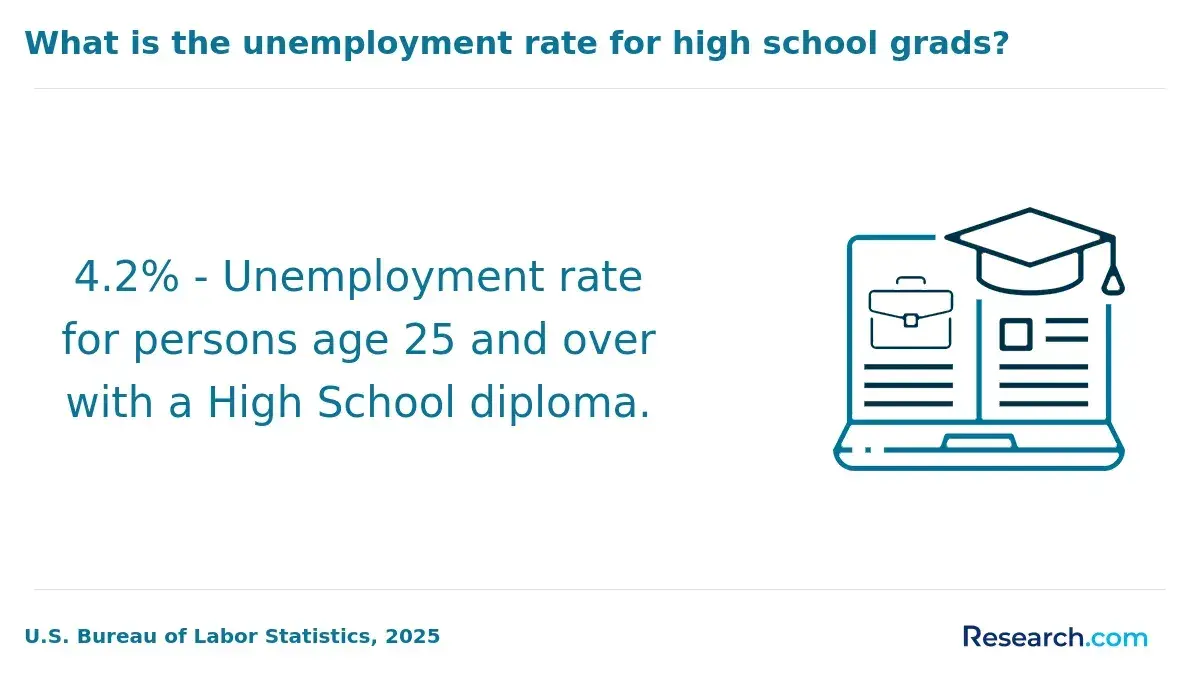
BLS 2024 education data gives the clearest national baseline: bachelor's degree holders had median weekly earnings of $1,543 and an unemployment rate of 2.5%, while high school graduates had median weekly earnings of $930 and an unemployment rate of 4.2%. For readers, the key point is not just that a degree can raise earnings potential; it is that the degree tends to work best when used in regions where employers pay more for communication, analytical, managerial, and technical-adjacent roles.
A general degree may be a good fit if you want flexibility, plan to work in business or public service, expect to pursue graduate study later, or already have work experience and need a bachelor's credential to advance. It may be a weaker fit if your goal requires a specific license, such as nursing, accounting, teaching in some states, or clinical practice. In those cases, a general degree may need to be paired with a specialized graduate or certification pathway.
The table below summarizes how to think about regional wage advantage without assuming that every graduate in a region earns the same amount. Use it as a decision framework rather than a salary promise.
| Factor | Why it affects wage advantage | What to compare before choosing a region |
| Industry concentration | Regions with more headquarters, hospitals, universities, government agencies, or tech employers often pay more for broad professional skills. | Look at the industries hiring for analyst, coordinator, manager-track, HR, marketing, and operations roles. |
| Cost of living | A higher salary may not improve financial outcomes if rent, transportation, and taxes absorb the increase. | Compare take-home pay against housing, commuting, healthcare, and state/local tax costs. |
| Experience level | Entry-level workers often see smaller regional differences than experienced professionals. | Review salary ranges separately for associate, mid-level, senior, and manager roles. |
| Credential stack | General degrees become more valuable when paired with job-specific skills. | Check whether employers ask for Excel, SQL, CRM systems, project management, HR platforms, or writing samples. |
Which U.S. Regions Offer the Highest Salaries for General Graduates?
The highest salaries for general graduates are usually found in regions where high-paying industries need adaptable college-educated workers. These include metro areas with finance, technology, consulting, healthcare administration, government contracting, higher education, biotechnology, media, and corporate headquarters activity.
Based on current U.S. labor market patterns reflected in BLS wage releases and employer demand, the strongest nominal salary opportunities tend to cluster in the Northeast, West Coast, and Washington, D.C. corridor. However, "highest salary" and "best financial outcome" are not the same thing. A $75,000 job in a very expensive market may leave less disposable income than a lower salary in a more affordable region.
The table below compares major U.S. regions from the perspective of a general degree graduate seeking professional roles rather than a single occupation.
| Region | Typical wage advantage pattern | Best-fit general degree pathways | Main trade-off |
| Northeast | Often strong in nominal pay, especially around finance, healthcare, education, media, and policy hubs. | Business operations, communications, nonprofit leadership, university administration, public policy, HR, marketing. | High housing and commuting costs can reduce the practical value of salary gains. |
| West | Often strong in tech-adjacent, entertainment, sustainability, healthcare, and corporate operations roles. | Project coordination, customer success, product operations, content strategy, sales operations, administrative management. | Top-paying metros can be highly competitive and expensive. |
| South | Often moderate in nominal pay but attractive in high-growth metros with lower costs. | Healthcare administration, logistics, business services, state government, education administration, corporate support. | Salary levels can vary sharply between major metros and rural areas. |
| Midwest | Often offers balanced value where wages are steady and living costs are more manageable. | Manufacturing administration, insurance, healthcare systems, higher education, supply chain, public sector roles. | Some markets have slower salary acceleration than coastal hubs. |
| Mountain West | Often attractive for graduates seeking growth markets, hybrid work, and expanding business services. | Operations, government administration, outdoor and hospitality business roles, healthcare support, tech-adjacent roles. | Rapid population growth can push housing costs up faster than wages. |
The best-paying region for a general graduate is usually the one where your degree aligns with a dominant local industry. For example, a strong writer may do better in a Northeast policy or communications hub, while a graduate with Excel, CRM, and customer success skills may find better opportunities in Western or Mountain West tech-adjacent markets.
Cost of living can completely change the meaning of a salary offer. A graduate comparing regions should focus on real wage advantage, which means the amount of income left after major expenses, not just the number on the offer letter.
BEA regional price data published in recent releases shows that prices differ meaningfully across U.S. states and metro areas, especially for housing. For general graduates, this means a high-cost metro must usually offer either a much higher salary, faster advancement, stronger networking value, or better long-term career upside to justify the move.
The table below shows how salary and living costs interact. It is designed to help you interpret job offers rather than rank every state.
| Scenario | What it means for a general graduate | When it may be worth it |
| High salary, high cost | You may gain prestige, networks, and advancement, but monthly savings can be limited. | Worth considering if the role accelerates your career or gives access to a high-growth industry. |
| Moderate salary, low cost | Your paycheck may stretch further even if the nominal salary is lower. | Often attractive for debt repayment, first jobs, family stability, or remote-friendly careers. |
| Low salary, low cost | Affordability helps, but slow wage growth can limit long-term progress. | May work if you have strong local ties or a clear promotion path. |
| High salary, moderate cost | This is often the strongest real wage combination. | Best for graduates who can find growing metros with professional roles and manageable housing. |
To compare regions, build a realistic monthly budget before accepting an offer. Include rent, utilities, car or transit costs, health insurance, student loan payments, retirement contributions, taxes, and emergency savings. A common mistake is comparing only gross salary while ignoring relocation deposits, higher insurance premiums, parking, childcare, or longer unpaid commuting time.
Degree cost also matters. College Board's 2024 pricing data lists average published tuition and fees for public four-year in-state students at $11,610 for the academic year, before room, board, grants, or scholarships. That number is a reminder that ROI starts before graduation: choosing an affordable program, transferring credits, or using employer tuition assistance can improve the value of any regional wage advantage.
Entry-level and experienced salaries differ by region because employers pay for different levels of risk. New graduates are often evaluated on internships, writing ability, software familiarity, and professionalism. Experienced graduates are evaluated on outcomes: projects completed, teams supported, revenue influenced, budgets managed, or systems improved.
BLS 2024 education data shows the national bachelor's-level earnings premium, but regional experience premiums are usually shaped by local employer density. A new graduate may see only a modest pay difference between two cities, while a manager or specialist may see a much larger gap because high-wage regions compete more aggressively for proven talent.
The table below explains how regional differences usually appear across career stages for general graduates.
| Career stage | How regional salary differences tend to show up | Best regional strategy |
| Entry-level | Differences are often narrower because employers are paying for potential, not a long record of results. | Prioritize job availability, training quality, mentorship, and affordable living costs. |
| Early career | Regional gaps widen as graduates develop software, client, operations, or industry-specific skills. | Move toward regions with more employers in your target industry and clear promotion ladders. |
| Mid-career | Experience can command stronger premiums in high-cost or high-growth metros. | Compare salary growth, management opportunities, and employer concentration before relocating. |
| Experienced professional | Specialization, leadership, and networks often matter more than the undergraduate major. | Target regions where your industry knowledge is scarce or highly valued. |
New graduates should be careful not to overpay for a city before their income catches up. A high-cost metro can be worth it if it offers rapid advancement, but it can also slow savings if the first job is low paid. Experienced graduates, by contrast, may benefit more from relocation because they can negotiate salary, signing support, hybrid work, or leadership responsibilities.
A common mistake is treating an entry-level offer as a permanent reflection of degree value. For general graduates, early jobs often serve as bridges. The smartest first role is usually one that builds a marketable skill stack, not necessarily the one with the highest starting salary.
The best return on investment for a general degree usually comes from regions where three things overlap: reasonable education costs, accessible professional jobs, and living costs that allow graduates to save or repay debt. A region with the highest salary is not automatically the best ROI region if the cost of getting and using the degree is too high.
For many students, ROI starts with program selection. A general degree from an accredited institution, completed affordably and paired with internships or work experience, can be more financially useful than an expensive program without a clear career plan. Adult learners and working professionals should also consider whether a faster graduate credential, such as a 1-year executive MBA online, could improve advancement in business-heavy regions after they have built work experience.
The table below compares regional ROI patterns from the perspective of a general degree holder rather than a single occupation.
| Regional ROI profile | Where it commonly appears | Why it can work | Risk to watch |
| High salary, high advancement | Major Northeast, West Coast, and D.C.-area metros. | Strong networks and high-value employers can accelerate long-term earnings. | Housing costs may delay savings or debt repayment. |
| Moderate salary, strong affordability | Many Midwest and Southern metros. | Lower living costs may improve monthly cash flow. | Some markets may offer fewer specialized advancement options. |
| Growth-market ROI | Selected Southern and Mountain West metros. | Expanding employers can create new professional roles. | Population growth can raise housing costs quickly. |
| Local-network ROI | Regions where the graduate already has family, work history, or employer ties. | Lower relocation costs and stronger local references can improve outcomes. | Staying may limit exposure to higher-paying industries. |
To estimate ROI, compare total education cost, expected debt, likely starting salary, local cost of living, and realistic salary growth over the next several years. Avoid using only average salaries because they can hide large differences by occupation, employer, and experience level.
Relocating can be financially worthwhile for general graduates, but only when the move improves both career opportunity and net financial position. A larger paycheck should be weighed against rent, taxes, transportation, relocation costs, and the likelihood of advancement.
Before relocating, evaluate the move in a structured way. The following steps help prevent a common mistake: chasing a salary headline without confirming whether the region actually improves your life and career.
- Compare the salary offer against your current or likely local salary for the same role level.
- Estimate monthly living costs in the new region, including rent, utilities, commuting, insurance, and taxes.
- Check whether the region has multiple employers in your target industry so you are not dependent on one company.
- Ask whether the role builds transferable skills that will matter in your next job.
- Calculate relocation expenses, including deposits, moving costs, travel, temporary housing, and lost work time.
- Consider lifestyle fit, support networks, climate, safety, healthcare access, and long-term family needs.
Relocation often makes sense when the new region offers a meaningful salary increase, better advancement, and a cluster of employers in the same field. It may not make sense if the salary increase is small, the job is unstable, or the move would increase debt.
Remote and hybrid work have changed the equation. Some general graduates can earn wages tied to higher-paying employers while living in lower-cost regions, but employers may adjust pay by location. Always ask whether compensation is location-based before assuming remote work will deliver a permanent wage advantage.
A general degree becomes more regionally valuable when it is paired with skills employers can immediately use. This is especially important because broad degrees signal adaptability, but employers still need evidence that a candidate can perform specific tasks.
The most valuable skill combinations vary by region and industry, but several skills consistently help general graduates compete for better-paid professional roles.
- Data and spreadsheet skills: Excel, Google Sheets, basic SQL, reporting dashboards, and comfort interpreting metrics.
- Business communication: concise writing, presentation skills, client communication, proposal writing, and stakeholder updates.
- Project coordination: scheduling, budgeting support, workflow tracking, meeting documentation, and risk follow-up.
- AI-assisted productivity: using approved tools to summarize information, draft documents, organize research, and improve routine workflows.
- Customer and revenue operations: CRM systems, account support, sales enablement, customer success processes, and retention analysis.
- People and organization skills: HR basics, training coordination, conflict management, recruiting support, and employee communications.
Graduates aiming for business leadership roles should also understand accreditation and program quality if they pursue graduate study. For example, an AACSB-accredited online MBA may be relevant for professionals who want a recognized business credential while continuing to work in a high-opportunity region.
AI is changing entry-level work, especially in writing, research, marketing, operations, and administrative roles. That does not make general degrees obsolete, but it raises the bar. Graduates who can use AI responsibly, verify information, communicate clearly, and connect tools to business outcomes are more likely to preserve their wage advantage.
The fastest salary growth for general careers is most likely in regions where population growth, employer expansion, and professional services demand are rising together. That often includes selected Southern and Mountain West metros, along with established high-wage hubs that continue to add advanced business, healthcare, technology, and government-related roles.
BLS employment projections released in 2024 continue to show stronger opportunities in healthcare, professional and business services, and technical fields than in many routine administrative categories. For general graduates, this means salary growth is likely to be strongest when they move toward roles connected to growing industries rather than roles built only around general office support.
The table below outlines where salary growth potential may be strongest and what graduates should verify before making a decision.
| Growth pattern | Regions where it may appear | Why it matters for general graduates | What to verify |
| Healthcare administration growth | South, Midwest, Northeast, and retirement-growth markets. | Hospitals, clinics, insurers, and senior-care organizations need coordinators, analysts, trainers, and managers. | Check whether roles require healthcare experience, compliance knowledge, or a graduate credential. |
| Tech-adjacent business growth | West Coast, Mountain West, selected Southern metros, and remote-first employers. | General graduates can enter customer success, operations, implementation, content, or project roles. | Check software requirements and whether employers expect technical literacy. |
| Government and contracting growth | D.C. corridor, state capitals, defense regions, and infrastructure-heavy markets. | Policy, writing, compliance, research, and program coordination skills can carry wage value. | Check citizenship, clearance, background, or procurement requirements. |
| Logistics and operations growth | South, Midwest, inland ports, and major distribution corridors. | Broad-degree graduates can move into scheduling, vendor coordination, process improvement, and operations supervision. | Check shift schedules, travel expectations, and advancement pathways. |
A region with rapid salary growth is attractive, but it is not automatically better than a region with consistently high wages. Fast-growth markets can become expensive quickly, and job competition may rise as more workers move in. The best choice is a region where growth aligns with your skills and where you can realistically enter the industries creating that growth.
Students should choose a region by matching career goals, affordability, and skill-building opportunities. The smartest region is not always the highest-paying one; it is the place where your degree, experience, and target industry can produce the best long-term outcome.
Use the following process to narrow your options before enrolling in a program, applying for jobs, or relocating after graduation.
- Define your target role family, such as HR, marketing, policy, operations, healthcare administration, sales support, education administration, or project coordination.
- Identify regions where those roles are common and connected to strong industries.
- Compare starting salaries separately from mid-career salaries so you understand both short-term and long-term value.
- Estimate total degree cost, including tuition, fees, books, living costs, transfer credits, and time away from full-time work.
- Check accreditation, especially if you plan to use the degree for graduate school, employer reimbursement, or public-sector advancement.
- Look for internships, employer partnerships, alumni networks, career services, and regional hiring pipelines.
- Decide whether your priority is maximum salary, affordability, job stability, family needs, or fastest advancement.
Admissions requirements for general degree programs vary, but many bachelor's programs consider high school transcripts, transfer credits, prior college work, standardized test policies, essays, and sometimes work experience. Adult learners should also ask about credit for prior learning, flexible schedules, online course options, and employer tuition benefits. Students comparing college degrees for seniors may place extra weight on flexibility, support services, and practical career or personal goals rather than traditional campus life.
Red flags include choosing a region based only on advertised salaries, ignoring accreditation, assuming all metro areas in a state have the same labor market, overlooking internship access, and taking on high debt without a clear role strategy. A general degree can be valuable, but it works best when it is connected to a region, industry, and skill plan.
Industries drive regional wage advantage more than geography alone. A general graduate in a high-paying industry can outperform a similar graduate in a lower-paying local sector, even within the same city.
For broad-degree graduates, the strongest salary paths usually come from roles where employers need communication plus business judgment. These jobs may not require a specialized undergraduate major, but they do reward evidence of skill through internships, portfolios, certifications, or work experience.
The table below connects major regions with industries that often create stronger opportunities for general degree holders.
| Region | Industries that often lift salaries | Common roles for general graduates |
| Northeast | Finance, healthcare systems, higher education, media, insurance, public policy. | Program coordinator, policy associate, HR specialist, communications analyst, advancement officer. |
| West | Technology, entertainment, biotech, sustainability, healthcare, business services. | Customer success associate, project coordinator, content strategist, operations analyst, product support specialist. |
| South | Logistics, healthcare administration, energy, corporate services, hospitality management, state government. | Operations coordinator, recruiter, healthcare administrator, training specialist, account manager. |
| Midwest | Manufacturing, insurance, agribusiness, healthcare, education, supply chain. | Supply chain coordinator, claims analyst, administrative manager, compliance assistant, sales operations associate. |
| Mountain West | Government, tourism business operations, technology support, healthcare, construction services. | Business analyst assistant, program manager assistant, marketing coordinator, office operations manager. |
Healthcare is a good example of why specialization matters. A general graduate may qualify for administrative, communications, or operations roles in hospitals and clinics, but clinical careers usually require defined credentials. Students drawn to patient-facing communication careers may need specialized pathways such as online speech language pathology programs, which are built around licensure preparation rather than broad general education.
The practical takeaway is simple: do not ask only "Which region pays more?" Ask "Which region has more employers that pay for the specific version of my degree?" A general studies graduate with data skills may target corporate operations, while one with writing and policy experience may gain more from government, nonprofit, or higher education hubs.
Other Things You Should Know About General
The biggest nominal wage advantage is often found in high-income metro regions in the Northeast, West Coast, and Washington, D.C. corridor. The best real advantage may be in more affordable Midwest, Southern, or Mountain West metros if salaries are solid and living costs are lower.
It can be worth it if you use the degree to build transferable skills and gain experience through internships, work projects, or certifications. It is less effective if you graduate without a target role, portfolio, or evidence of job-ready skills.
Move only if the higher salary, advancement potential, and employer network outweigh higher housing, taxes, commuting, and relocation costs. A lower-cost region with steady career growth may produce better financial results.
Data analysis, business writing, project coordination, AI-assisted productivity, CRM systems, customer success, HR support, and industry-specific knowledge can improve earning potential. The best skills depend on the region's dominant employers.
- How does earnings advantage from tertiary education vary by field of study? | | KDI · https://eiec.kdi.re.kr/policy/internationalView.do
- What happened to the college wage premium? | Federal Reserve Bank of Minneapolis https://www.minneapolisfed.org/article/2025/what-happened-to-the-college-wage-premium
- The Graduation Issue https://iei.asiacareersgroup.com/blogs/monthly-article/the-graduation-issue
- How does a college degree improve graduates’ employment and earnings potential? - APLU https://www.aplu.org/our-work/4-policy-and-advocacy/publicuvalues/employment-earnings/