2027 General Degree Education Premium Report: How Pay Changes From Bachelor's to Master's to Doctorate

Co-Founder and Chief Data Scientist
Choosing whether to stop at a bachelor's degree or keep going can change your pay, debt, and career timeline for decades. The latest BLS Education Pays data based on 2024 earnings shows full-time workers with a master's degree had median weekly earnings of $1,840, compared with $1,543 for bachelor's degree holders.
This report is for students, working adults, career changers, and families comparing degree levels. You will learn where advanced degrees tend to pay off, where experience may matter more, and how to weigh salary gains against tuition, time, and lost earnings.
Key Things You Should Know
- BLS 2024 earnings data shows a master's degree added about $15,444 in annualized median earnings over a bachelor's degree, while a doctorate added about $22,776 over a master's degree.
- The strongest cost-to-time return often comes from a targeted master's degree, especially when it is required for licensure, promotion, or entry into a higher-paying occupation.
- A doctorate can produce the highest median earnings, but it usually makes the most financial sense when it is required for academia, research leadership, clinical authority, or senior technical roles.
- How Much More Do General Degree Holders Earn With a Bachelor's, Master's, or Doctorate?
- How Do Entry-Level Salaries Compare for General Bachelor's, Master's, and Doctoral Graduates?
How Much More Do General Degree Holders Earn With a Bachelor's, Master's, or Doctorate?
The "education premium" is the earnings difference associated with one degree level compared with another. For a general comparison across the U.S. workforce, the cleanest national benchmark is BLS median weekly earnings for full-time wage and salary workers age 25 and older, because it compares broad education levels rather than a single school or major.
The table below converts BLS weekly medians into annualized figures by multiplying weekly earnings by 52. These are not guarantees; they are broad labor-market medians that mix many occupations, regions, industries, and levels of experience.
| Highest degree level | Median weekly earnings | Approximate annualized earnings | Premium vs. previous level |
| Bachelor's degree | $1,543 | $80,236 | Baseline |
| Master's degree | $1,840 | $95,680 | About $15,444 more than bachelor's |
| Doctoral degree | $2,278 | $118,456 | About $22,776 more than master's |
The most important takeaway is that the premium is real at the national level, but it is not evenly distributed. A master's in a field with licensure requirements, leadership pathways, or strong employer demand can be financially meaningful, while a loosely connected graduate degree may produce little additional pay if it does not move the student into a different role.
Readers should also separate "degree premium" from "occupation premium." A bachelor's-prepared software developer, engineer, or finance analyst may out-earn a master's-prepared worker in a lower-paying sector. The degree helps most when it changes the type of work a person can do, not merely the credential listed on a resume.
How Do Entry-Level Salaries Compare for General Bachelor's, Master's, and Doctoral Graduates?
Entry-level comparisons are harder than midcareer comparisons because many advanced-degree holders are not truly entry-level workers. A new MBA graduate, for example, may have several years of experience, while a new bachelor's graduate may be entering the workforce for the first time.
One useful benchmark is the National Association of Colleges and Employers projection that bachelor's degree graduates in the Class of 2024 would average $68,516 in starting salary. This figure is helpful for setting expectations, but it is still an average across majors and employers; engineering, computer science, health, business, education, and liberal arts outcomes can differ sharply.
The table below summarizes how the first job after each degree level often differs. It focuses on career positioning rather than implying that every graduate starts at the same salary.
| Degree level | Typical early-career position | What usually drives pay | Main risk |
| Bachelor's | Entry-level professional, analyst, coordinator, teacher candidate, associate, junior specialist | Major, internships, technical skills, location, employer brand | Limited access to roles requiring graduate credentials |
| Master's | Specialist, licensed professional candidate, manager-track employee, advanced analyst, practitioner | Prior work experience, specialization, licensure eligibility, graduate internship or practicum | Pay gain may be modest if the degree does not change role or industry |
| Doctorate | Researcher, professor-track candidate, clinical specialist, senior scientist, policy or technical expert | Research record, dissertation area, grants, publications, clinical or technical authority | Long training period can delay full-time earnings |
For entry-level decision-making, compare the salary of the job you are likely to get immediately after graduation, not the highest salary advertised for experienced professionals. Students should ask programs for recent graduate outcomes by job title, employer type, location, and whether graduates were employed before enrolling.
The education premium often grows when a higher degree unlocks promotions that are not available at the bachelor's level. This is common in school administration, health professions, research, data science leadership, public policy, higher education, counseling, and some corporate management tracks.
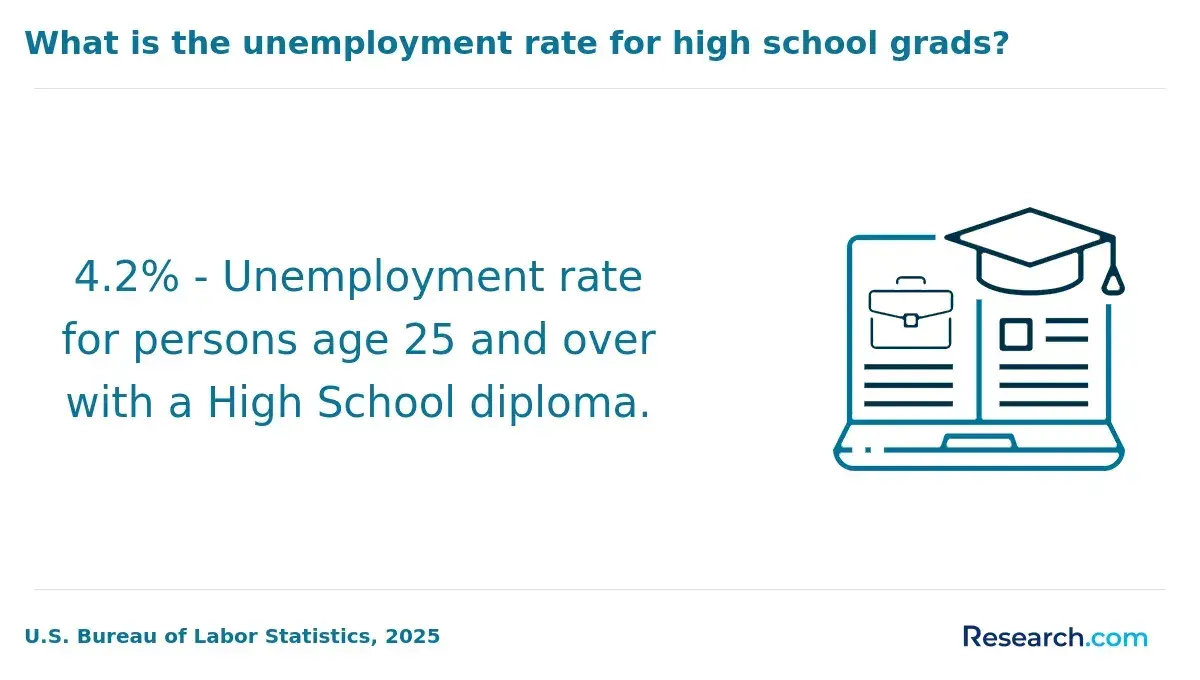
BLS 2024 labor-force data also shows that unemployment tends to be lower at higher education levels. That does not mean an advanced degree removes career risk, but it suggests that higher credentials can improve labor-market resilience when they align with in-demand skills and occupations.
A practical way to think about the career-long premium is to divide it into three stages. Each stage has a different question the student should answer before enrolling.
| Career stage | Bachelor's advantage | Master's advantage | Doctorate advantage |
| Early career | Fast workforce entry and earlier earnings | Access to specialized entry roles or licensure pathways | Limited unless the field requires doctoral training |
| Midcareer | Experience, portfolio, and employer results may matter more than degree level | Can support promotion into management, advanced practice, or higher salary bands | Can support research, faculty, clinical, or senior expert roles |
| Late career | May be sufficient when the worker has strong experience and certifications | Often useful for leadership credibility and career switching | Most useful when authority, tenure, grant leadership, or expert status matters |
The career premium is strongest when the degree creates a new option: a license, a promotion track, a higher-paying occupation, or a specialized employer category. If the degree only adds academic depth without changing the labor-market opportunity, the return may be weaker.
At the national median, a doctorate pays more than a master's degree. BLS 2024 earnings data shows doctoral degree holders had annualized median earnings of about $118,456, compared with about $95,680 for master's degree holders. The difference is substantial, but the return depends heavily on field, time to completion, funding, and the type of work the doctorate unlocks.
The table below compares the financial logic of a master's and doctorate. It is designed to show when the higher median pay of a doctorate may or may not offset the extra time required.
| Decision factor | Master's degree | Doctorate |
| Typical purpose | Specialization, licensure, management, career change | Research, academia, advanced clinical work, expert leadership |
| Time trade-off | Often shorter and easier to combine with work | Usually longer and may delay full-time earnings |
| Financial upside | Strong when tied to a specific promotion or licensed role | Strongest when doctoral credentials are required or highly valued |
| Financial risk | Moderate if tuition is high and pay gain is uncertain | Higher if unfunded, prolonged, or disconnected from target careers |
A doctorate usually makes more sense when the credential is the price of admission for the career you want. Examples include tenure-track faculty roles, some research scientist positions, clinical psychology, advanced policy research, and senior technical leadership in specialized fields.
If the goal is business leadership rather than research, a shorter graduate business pathway may offer a better time-to-return ratio. Some experienced managers compare doctoral study with a 1-year executive MBA online to see whether they can gain leadership mobility without pausing their career for several years.
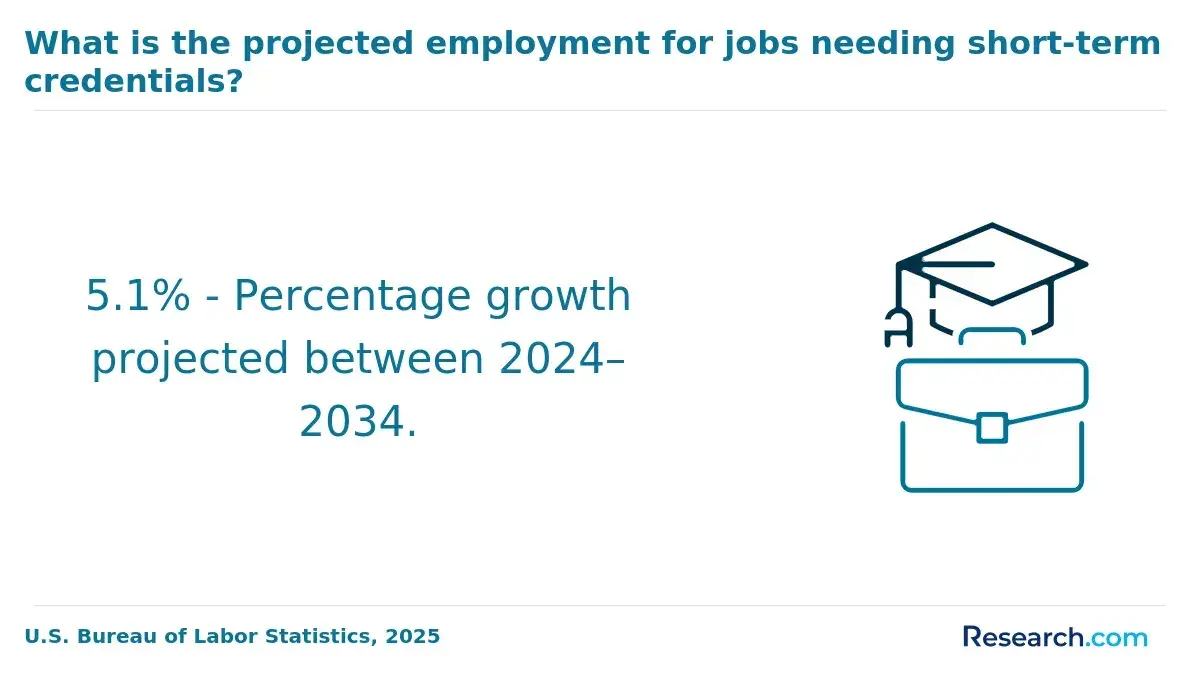
Some careers clearly require an advanced degree, while others reward skills, results, and experience more than formal education. The key is to identify whether the degree is legally required, commonly required by employers, or merely preferred.
The table below shows common career situations in which a bachelor's, master's, or doctorate may be the practical minimum. Requirements vary by state, employer, and licensing board, so students should verify rules before enrolling.
| Career goal | Common education expectation | Why the degree matters |
| Entry-level business, communications, operations, nonprofit, or public-sector analyst roles | Bachelor's degree | Employers often use the bachelor's degree as a baseline professional credential |
| School counselor, speech-language pathologist, social worker, occupational therapist, or many counseling roles | Master's degree | Graduate education is often tied to licensure, supervised practice, or certification eligibility |
| College professor, principal investigator, clinical psychologist, research director, or senior scientist | Doctorate | Doctoral training may be required for independent research, faculty hiring, or clinical authority |
| Senior manager, director, or executive | Varies | Experience and results may outweigh degree level unless the employer uses formal education screens |
Health and education fields are especially important to research carefully because licensure rules can determine whether a degree has market value. Students exploring clinical communication careers, for instance, often compare accredited online speech language pathology programs because a master's-level pathway is central to entering that licensed profession.
Before choosing an advanced degree, review job postings for your target role and count how often the degree is required, preferred, or absent. If most postings say "master's required," the credential may be necessary; if they say "or equivalent experience," certifications and work history may compete effectively.
The largest graduate-degree pay premiums usually appear where advanced education changes the worker's role, authority, or labor market. The premium is often smaller when a master's degree simply adds a general credential without producing specialized skills or eligibility for higher-paid work.
Graduate-degree premiums tend to be stronger in these areas because employers can connect the degree to measurable job responsibilities or regulated practice.
- Licensed health, therapy, and counseling fields where graduate education is part of eligibility for practice.
- Business, analytics, finance, and operations roles where a graduate degree combines with experience to support management or strategy work.
- Computer science, data science, engineering management, cybersecurity, and applied technology roles where advanced technical skills can affect project ownership and pay bands.
- Education leadership and higher education roles where master's or doctoral credentials may be built into promotion systems.
- Research, policy, and scientific organizations where grants, publications, methods training, or doctoral expertise affect hiring decisions.
By contrast, a graduate degree may produce a weaker premium in fields where portfolios, sales results, apprenticeships, licenses, or employer-specific experience dominate hiring. Creative fields, entrepreneurship, some technology roles, and many management paths can reward demonstrated output more than additional classroom time.
Industry also matters. A master's in management may be valued differently in consulting, healthcare administration, manufacturing, government, or nonprofit leadership. Students who need a faster business credential should compare curriculum depth, employer recognition, and total cost rather than choosing only by speed or brand name.
The education premium is often highest in locations and employer types where advanced credentials are tied to salary schedules, promotion gates, or specialized labor shortages. It can be lower in regions where wages are compressed or where employers value experience more than formal credentials.
Location affects degree value in two ways: salary potential and cost of living. A graduate degree that raises pay in a high-wage metro may still feel less valuable if housing, commuting, and taxes absorb the increase. Conversely, an online or hybrid program may improve ROI if it lets a student keep working in a lower-cost area while qualifying for higher-paying remote or regional roles.
Employer type is just as important. Public school systems, universities, hospitals, government agencies, and large corporations may use formal degree-based pay bands. Startups, small businesses, sales organizations, and portfolio-driven technical teams may care more about results, certifications, client impact, or specialized tools.
Use the following checks to estimate whether your location and employer market reward advanced education.
- Search job postings in your target city and remote market using the exact degree level you are considering.
- Compare postings from public, nonprofit, corporate, and government employers to see which ones require graduate credentials.
- Look for salary schedules, union contracts, or civil service classifications that explicitly reward master's or doctoral education.
- Ask alumni whether the degree changed their job title, salary band, licensure status, or employer access.
- Adjust the expected pay premium for relocation costs, commuting, state licensure rules, and cost of living.
The best location decision is not always "move to the highest-paying city." It is the market where your target degree produces a real role upgrade after accounting for living costs and career stability.
Experience, certifications, and licensure can outweigh an advanced degree when they are more directly tied to the job's requirements. This is especially true in technology, project management, skilled operations, sales, entrepreneurship, and some management roles where employers can evaluate measurable performance.
The main question is whether the alternative credential changes your employability faster or more cheaply than a degree. In some fields, a certification plus strong experience may beat a general master's; in others, no certification can substitute for the graduate degree required by a licensing board.
Consider these alternatives before committing to graduate study.
- Professional certifications in areas such as project management, cybersecurity, cloud computing, human resources, finance, analytics, or supply chain management.
- Licensure pathways where the required degree level is fixed by state law or professional boards.
- Employer-sponsored training, tuition assistance, apprenticeships, rotational programs, or internal leadership academies.
- Portfolio-building through projects, publications, open-source work, clinical hours, consulting results, or supervised practice.
- Shorter academic credentials such as certificates, graduate certificates, or stackable programs that can later apply toward a degree.
This is also relevant for older adults and experienced workers. Someone with decades of work history may not need the same credential strategy as a first-time student, which is why flexible pathways such as college degrees for seniors can be useful when the goal is targeted upskilling, personal fulfillment, or a career pivot rather than maximizing lifetime earnings from scratch.
A red flag is enrolling in a graduate program because it "seems safer" than testing the job market. If employers in your target field consistently hire candidates with certifications, portfolios, or experience, a degree may be slower and more expensive than the alternatives.
Salary data is useful, but it can mislead students when it is treated as a personal forecast. National medians combine people across occupations, ages, regions, industries, school types, and experience levels. A bachelor's graduate in a high-paying technical field may earn more than a doctoral graduate in a lower-paying academic or nonprofit role.
When interpreting education-premium data, use it as a starting point and then narrow the comparison to your target career. The following mistakes are common and can lead to poor ROI decisions.
- Comparing bachelor's, master's, and doctorate salaries without controlling for occupation, industry, region, and years of experience.
- Counting the salary premium but ignoring tuition, fees, interest, lost income, relocation, licensing exams, and unpaid internships or practicums.
- Assuming a median salary is a promised outcome rather than a midpoint for a broad group of workers.
- Using school marketing claims without asking for recent outcomes by job title, employer, and location.
- Pursuing a doctorate for prestige when the target role only requires a master's degree or equivalent experience.
A stronger approach is to build a personalized ROI estimate. Start with your current or expected bachelor's-level salary, identify the specific job you want after the advanced degree, and compare the realistic pay difference with the full cost of enrollment.
Students should ask schools direct questions before applying. Useful questions include the median debt of graduates, completion rates, placement rates in the target occupation, licensure pass rates where relevant, employer partners, internship availability, and whether online students receive the same career support as campus students.
The bottom line is that the national education premium favors higher degrees, but the best individual decision depends on fit. A bachelor's degree may be the right stopping point for fast workforce entry, a master's may offer the best balance of cost and salary gain, and a doctorate may be worth it when the desired career truly requires doctoral-level expertise.
A master's degree is often the "sweet spot" in the education premium because it can raise earnings without the long time commitment of a doctorate. However, the degree is only worth the cost when the added earnings, promotion access, or career switch justifies tuition, fees, time, and possible debt.
College Board's 2024 pricing data lists average published tuition and fees for public four-year in-state undergraduates at $11,610 and private nonprofit four-year institutions at $43,350 for the academic year. Graduate pricing varies widely by school and program, but this undergraduate benchmark is a useful reminder that institutional cost differences can overwhelm salary gains if students do not compare net price carefully.
Use this simple payback method before enrolling. It helps convert the master's premium into a practical financial test instead of relying on vague promises about "higher earning potential."
- Estimate the total direct cost of the master's program, including tuition, fees, books, required travel, technology, and exam costs.
- Add opportunity cost if you must reduce work hours or leave a job while enrolled.
- Estimate the realistic annual pay increase for the specific role you are targeting, using employer postings, alumni outcomes, and public salary data.
- Divide total cost by the annual pay increase to estimate simple payback time before taxes and interest.
- Stress-test the decision by asking whether the degree still makes sense if the raise is delayed, smaller than expected, or tied to relocation.
For example, using the BLS annualized master's premium of about $15,444, a $45,000 net program cost would have a simple payback period of just under three years before taxes, interest, and lost earnings. If the student leaves a $70,000 job for a full year, the payback calculation changes dramatically because lost income becomes part of the real cost.
Program quality also matters. Business students comparing flexible graduate options should consider whether the school's accreditation, employer network, and delivery format match their career plan; for example, some working professionals specifically look for an AACSB-accredited online MBA when the goal is career advancement without leaving the workforce.
Other Things You Should Know About General
Using BLS 2024 median weekly earnings, a master's degree was associated with about $15,444 more in annualized earnings than a bachelor's degree. The actual difference depends on field, employer, experience, and whether the master's qualifies you for a higher-paying role.
It can be worth it when the degree leads to licensure, promotion, a career change, or a clear salary increase that repays tuition and lost income within a reasonable period. It may not be worth it if the program is expensive and the target jobs do not require or reward the credential.
A master's is often required or strongly preferred in counseling, speech-language pathology, social work, education leadership, public administration, healthcare administration, and some analytics or management roles. Requirements vary, so verify job postings and licensing rules in your state.
National medians show higher earnings for doctoral degree holders, but a doctorate does not always produce a better return. It makes the most sense when the target career requires doctoral training, such as academia, advanced research, clinical psychology, or specialized scientific leadership.
- Master’s vs PhD: Which Degree Is Right for Your Career Goals? https://theredpen.in/blog/masters-vs-phd-everything-you-need-to-know/
- Master vs. PhD: Salary, Jobs & Time, The Big Differences https://www.applykite.com/blog/phd-guide-master-vs-phd
- Graduate degrees pay-but it’s complicated | Brookings https://www.brookings.edu/articles/graduate-degrees-pay-but-its-complicated/
- The Lowdown on Master's versus Ph.D. Degrees https://www.oedb.org/advice/masters-vs-phd-degrees-for-graduate-students/
- Balancing the Costs and Value of Graduate Programs https://www.arnoldventures.org/resources/balancing-the-costs-and-value-of-graduate-programs
- The Value of Foreign Degrees by Source Country https://cis.org/Report/Value-Foreign-Degrees-Source-Country
- How Long Does It Take to Get a PhD After a Master's Degree? https://streamlinedai.app/blog/how-long-phd-after-masters
- Is College Worth it? | Return on Investment Analysis of College Degree https://educationdata.org/college-degree-roi