2027 Utilization Review Nurse Careers: Skills, Education, Salary & Job Outlook

Co-Founder and Chief Data Scientist
Becoming a Utilization Review Nurse is a good fit for registered nurses who want to use clinical judgment without spending every shift at the bedside. The role sits between patient care, insurance coverage, quality review, and healthcare cost control. That combination can make the career appealing, but it also means the work is not simply “nursing from a desk.” It requires strong clinical experience, careful documentation, knowledge of payer rules, and the ability to make defensible decisions under deadlines.
This guide explains what Utilization Review Nurses do, what skills and credentials employers look for, how to enter the field, and what to expect from pay, work settings, advancement, and related careers. It is designed for nurses considering a transition into utilization review, students planning a nursing pathway, and healthcare professionals comparing administrative or case management roles.
Key Things You Should Know About Utilization Review Nurse Career
- Typical earning potential for a utilization review nurse ranges from $78,600 to $92,100 annually, with recent averages clustering near the $90,000 mark as of 2025.
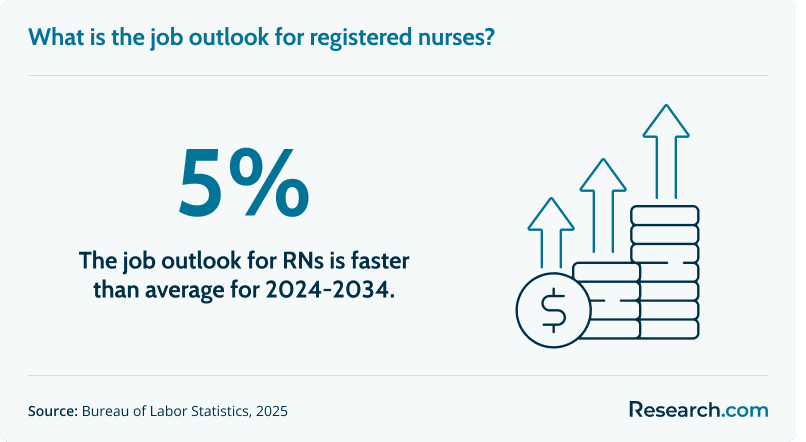
- The field shows steady growth with a 5% increase expected over the next decade, reflecting stable and ongoing demand aligned with overall nursing trends.
- A bachelor of science in nursing (BSN) and an active RN license are required to start, and additional certifications in case management or utilization review can enhance job prospects.
- Key skills include strong clinical knowledge, critical thinking, attention to detail, effective communication, analytical ability, and proficiency with health records and insurance guidelines.
- Career paths often lead to senior utilization review roles, management positions, case management leadership, or transitions into healthcare administration and insurance leadership.
What do Utilization Review Nurses do?
Utilization Review Nurses evaluate whether healthcare services are medically necessary, appropriate for the patient’s condition, and aligned with insurance, Medicare, Medicaid, or organizational guidelines. Their work helps determine whether a hospital stay, procedure, test, medication, transfer, or continued treatment meets established clinical criteria.
The role is not about replacing a physician’s judgment. Instead, Utilization Review Nurses apply nursing expertise to review documentation, identify gaps, compare treatment plans with evidence-based standards, and communicate findings to providers, case managers, and payers. When care is justified but documentation is incomplete, they may help clarify the clinical rationale. When care does not meet criteria, they may recommend alternatives, request additional information, or support an appeal process.
A day in the life of Utilization Review Nurses
A typical day is centered on records, criteria, communication, and deadlines. Utilization Review Nurses may review admissions, continued stays, discharge plans, prior authorization requests, or retrospective claims. They often work in hospitals, insurance companies, managed care organizations, or remote healthcare administration roles.
Common daily activities include reading clinical notes, checking lab results and treatment plans, comparing cases against utilization management criteria, documenting determinations, contacting physicians for clarification, and coordinating with case managers or insurance representatives. The pace can be fast because authorization decisions and length-of-stay reviews often affect patient flow, reimbursement, and discharge timing.
This career is best suited to nurses who enjoy clinical analysis, organized documentation, and systems-level problem-solving more than hands-on procedures or direct bedside care.
What are the key responsibilities of Utilization Review Nurses?
Utilization Review Nurses are responsible for making sure care is clinically appropriate, properly documented, and aligned with payer or regulatory requirements. Their work protects patients from unnecessary services while helping healthcare organizations avoid denials, delays, and inefficient resource use.
- Review patient records to determine whether admissions, treatments, procedures, tests, or continued stays meet medical necessity criteria.
- Compare treatment plans with clinical guidelines, payer rules, and internal utilization management standards.
- Identify missing or unclear documentation and request clarification from physicians or care teams.
- Collaborate with case managers, discharge planners, physicians, and insurers to support timely care decisions.
- Assist with discharge planning by helping confirm the appropriate level of care, such as home care, rehabilitation, skilled nursing, or continued inpatient care.
- Document utilization review findings clearly for reimbursement, compliance, quality improvement, and appeal support.
- Communicate clinical information to stakeholders, including healthcare teams, insurance representatives, patients, and families when appropriate.
The most challenging vs. the most rewarding tasks
The most challenging part of utilization review is often the tension between clinical need, payer criteria, and available documentation. A patient may appear to need care, but if the record does not support medical necessity according to the required standard, approval can be delayed or denied. That makes accuracy, diplomacy, and documentation discipline essential.
The most rewarding part is patient advocacy at the systems level. A strong Utilization Review Nurse can help prevent unnecessary care, reduce avoidable delays, support appropriate approvals, and strengthen appeals when the clinical evidence supports treatment. Nurses exploring early education options may also compare pathways such as the quickest associate degree programs as part of a broader plan toward nursing licensure and future specialization.
What are the key skills for Utilization Review Nurses?
Utilization Review Nurses need a combination of clinical judgment, insurance literacy, documentation accuracy, and professional communication. The role rewards nurses who can interpret complex records, apply criteria consistently, and explain decisions in a way that is clear, fair, and defensible.
Utilization review nurse competencies employers value most frequently include utilization management expertise, collaboration, documentation, and case management, according to recent job market analyses.
Hard skills
- Medical record review: Ability to evaluate progress notes, diagnostic results, medication records, care plans, and physician orders for clinical relevance and medical necessity.
- Utilization management: Knowledge of how to assess admissions, continued stays, procedures, discharge needs, and prior authorization requests against established criteria.
- Healthcare regulation and payer knowledge: Familiarity with Medicare, Medicaid, insurance policies, compliance requirements, and appeal processes.
- Clinical documentation: Skill in writing concise, accurate notes that explain the rationale for approvals, denials, escalations, or requests for more information.
- Case management awareness: Understanding how utilization review connects with discharge planning, transitions of care, readmission prevention, and care coordination.
Soft skills
- Analytical thinking: Ability to connect symptoms, diagnoses, test results, treatments, and guidelines into a sound clinical determination.
- Attention to detail: Precision when reviewing dates, orders, criteria, payer rules, documentation gaps, and authorization requirements.
- Communication skills: Clear written and verbal communication with physicians, case managers, payers, patients, and families.
- Collaboration: Willingness to work across clinical and administrative teams without losing focus on patient-centered care.
- Professional judgment: Ability to remain objective when cases are emotionally difficult, time-sensitive, or disputed.
The one overlooked skill that separates the good from the great
Advanced data interpretation often separates strong Utilization Review Nurses from those who only follow checklists. The best reviewers can synthesize clinical data, payer criteria, documentation patterns, length-of-stay trends, and care outcomes to spot problems early and support better decisions.
For example, a nurse who notices that a treatment plan lacks the documentation needed for approval can intervene before a denial occurs. Another may recognize that a patient no longer meets inpatient criteria but does need a safe transition to another level of care. These decisions require more than rule-following; they require clinical context, pattern recognition, and sound judgment.
For nurses interested in long-term academic or leadership growth, resources on easy doctorates may help compare advanced education options, though doctoral study is not required for most utilization review roles.
Utilization Review Nurse Careers: A Step-by-Step Guide to Getting Started
The path to becoming a Utilization Review Nurse usually begins with registered nursing education and bedside or direct clinical experience. Employers generally want reviewers who understand real patient care before they evaluate whether care is appropriate, necessary, and well documented.
Here are the steps to become a Utilization Review Nurse:
- Complete foundational nursing education through an approved nursing program that prepares you for registered nurse licensure.
- Pass the NCLEX-RN exam and meet state licensure requirements to practice as a registered nurse.
- Gain clinical nursing experience, ideally in acute care or another setting where you learn patient assessment, treatment planning, documentation, and interdisciplinary coordination.
- Build familiarity with case management, discharge planning, prior authorization, quality review, compliance, or insurance processes.
- Pursue relevant credentials in utilization review, case management, healthcare quality, or managed care when they match employer expectations and career goals.
- Apply for entry-level utilization review, clinical review, prior authorization, or case management roles and continue developing expertise through on-the-job training.
A common mistake is trying to move into utilization review before developing enough clinical judgment. The work may be administrative, but it depends heavily on understanding patient acuity, treatment progression, complications, and appropriate levels of care. Strong bedside or clinical experience makes a nurse more credible and effective in review decisions.
What education, training, or certifications are required?
Most employers prefer or require a Bachelor of Science in Nursing (BSN) for Utilization Review Nurse roles. Some may accept an Associate Degree in Nursing (ADN), especially when the nurse has strong clinical experience, but the BSN remains the more competitive credential for many hospital, insurance, and managed care positions.
The essential starting requirement is registered nurse licensure. Nurses must pass the NCLEX-RN licensing exam from the National Council of State Boards of Nursing and meet the licensing rules in the state where they practice. Because licensure requirements can vary, candidates should confirm current rules with their state board of nursing.
Specialized credentials can strengthen a candidate’s profile. Relevant options include the Case Management Nurse - Board Certified (CMGT-BC) or Health Care Quality & Management (HCQM) certifications. These credentials may be especially useful for nurses targeting case management, healthcare quality, managed care, or leadership roles.
On-the-job training is also important. A typical requirement is 2-3 years of clinical experience, ideally in acute care settings such as hospitals. Preparing for certification exams usually takes an additional 3-4 months.
Are advanced degrees or niche certifications worth the investment?
Advanced degrees, such as a Master of Science in Nursing (MSN), can improve competitiveness for leadership, quality management, education, informatics, or administrative roles. However, an MSN is not usually required for entry-level utilization review positions.
Certifications can be worth the investment when they align with the jobs you want. For example, a nurse pursuing insurance review may benefit from managed care or case management credentials, while a nurse moving toward compliance or quality improvement may benefit more from healthcare quality certification. Before paying for a credential, review job postings in your target region and note which certifications employers actually request.
Cost also matters. Nurses considering graduate study can compare options such as the cheapest online master degree programs to reduce the financial burden of advanced education. The best choice is the credential that supports your specific career goal, not the longest or most expensive option available.
What is the earning potential for Utilization Review Nurses?
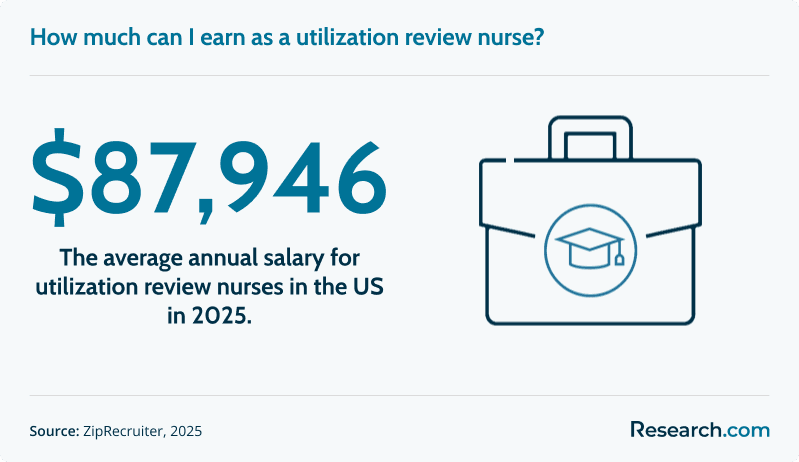
Utilization Review Nurse earning potential depends on experience, employer type, location, credentials, and whether the role includes leadership responsibilities. The median salary stands at $92,100 per year, which provides a useful midpoint for understanding typical earnings across the field.
The Utilization Review Nurse starting salary typically is about $81,900 annually. More senior nurses with specialized experience, stronger payer knowledge, or leadership responsibilities can expect to earn around $101,700 per year.
Pay can vary significantly by setting. Hospitals, insurance companies, government agencies, and managed care organizations may use different salary structures. Geographic differences also matter, with areas like California and New York often offering higher wages. Remote roles can be attractive, but candidates should check whether pay is based on the employer’s location, the nurse’s location, or an internal compensation band.
To improve earning potential, nurses can focus on high-value skills such as acute care experience, prior authorization knowledge, appeal support, Medicare and Medicaid familiarity, quality review, and leadership in utilization management workflows.
What is the job outlook for Utilization Review Nurses?
The demand for utilization review nurses is projected to grow between 6% and 12% from 2018 to 2028, which is slightly faster than the average growth rate of 4% for all occupations. The outlook is supported by the continued need to manage healthcare costs, document medical necessity, coordinate care efficiently, and reduce avoidable delays or denials.
The key factors shaping the future outlook
Several forces are driving demand. Rising healthcare costs make utilization management important for hospitals, insurers, and government programs. An aging population increases the number of patients with complex care needs, making careful review and care coordination more valuable. Value-based care also puts pressure on organizations to deliver appropriate services while avoiding unnecessary utilization.
Technology is changing the role as well. Electronic health records, analytics tools, and AI-supported review systems can make case review faster and more consistent. However, technology does not remove the need for clinical judgment. Nurses are still needed to interpret complex cases, identify documentation gaps, communicate with providers, and handle exceptions that do not fit neatly into automated criteria.
Nurses preparing for this career should choose education and training that build both clinical competence and comfort with digital systems. Those comparing flexible nursing or healthcare programs may find it useful to review top schools online while checking accreditation, licensure alignment, and clinical requirements carefully.
What is the typical work environment for Utilization Review Nurses?
The utilization review nurse work environment is usually administrative rather than bedside-based. Many Utilization Review Nurses work for hospitals, insurance companies, managed care organizations, healthcare systems, government agencies, or third-party review organizations. Employment statistics show that about 59% work in hospitals, 18% in ambulatory healthcare services, and 6% in nursing and residential care facilities.
Daily work commonly involves electronic health records, utilization criteria platforms, payer portals, email, phone calls, and virtual meetings. Collaboration is frequent, especially with physicians, case managers, discharge planners, billing teams, quality departments, and insurance representatives.
The typical utilization review nurse schedule centers on standard business hours, Monday through Friday, usually offering shifts of 8 to 10 hours with rare weekend or evening demands. Many roles now offer remote or hybrid work options, although requirements vary by employer. Remote positions may still require secure internet access, privacy protections, productivity tracking, scheduled availability, and occasional onsite meetings or training.
This environment can be a major benefit for nurses seeking a more predictable schedule or a transition away from physically demanding bedside work. However, the trade-off is more screen time, heavier documentation, and less direct patient interaction.
What are the pros and cons of Utilization Review Nurse careers?
Utilization review can be a strong career move for nurses who want to use clinical knowledge in a more structured, analytical, and often less physically demanding role. It is not the right fit for everyone, especially nurses who prefer hands-on care, frequent patient contact, or fast clinical procedures.
Pros
- More predictable schedules than many bedside nursing roles, often with standard weekday hours.
- Opportunities for remote or hybrid work, depending on the employer and case type.
- Less physical strain compared with direct bedside care.
- Ability to influence patient care quality, medical necessity decisions, and safe transitions.
- Strong use of clinical judgment, documentation, communication, and systems thinking.
- Career pathways into case management, quality improvement, compliance, insurance review, or leadership.
Cons
- Less direct patient interaction, which may feel limiting for nurses who value bedside relationships.
- Pressure from deadlines, high caseloads, payer rules, and documentation requirements.
- Difficult conversations when requested care does not meet coverage or medical necessity criteria.
- Potential conflict between provider preferences, patient expectations, and insurer guidelines.
- Repetitive administrative tasks and extensive screen-based work.
The best fit is usually a nurse who is detail-oriented, comfortable with policy, and able to communicate calmly in disputed cases. If you are still planning your nursing education, comparing options such as a cheapest online college bachelor degree may help you think through cost, flexibility, and long-term career goals.
What are the opportunities for advancement for Utilization Review Nurses?
Utilization Review Nurses can advance by developing deeper clinical review expertise, moving into leadership, or specializing in a related administrative area. Because the role connects care delivery, reimbursement, compliance, and quality, it can open several non-bedside career paths.
Clear steps in Utilization Review Nurse career advancement
- Start as an entry-level Utilization Review Nurse reviewing records, applying criteria, documenting decisions, and coordinating with care teams.
- Advance to a senior or lead Utilization Review Nurse role that handles complex cases, supports appeals, trains new staff, and improves review workflows.
- Move into management as a nurse manager, utilization management supervisor, or director responsible for teams, policies, performance metrics, and compliance.
- Transition into broader healthcare leadership, quality improvement, managed care operations, or clinical documentation improvement roles.
Exploring specialization options for Utilization Review Nurses
- Case management: Coordinating care plans, discharge needs, patient transitions, and resource use across settings.
- Insurance/managed care: Reviewing claims, prior authorizations, appeals, and payer compliance requirements.
- Quality assurance & compliance: Auditing records, monitoring regulatory adherence, and supporting process improvement.
- Clinical documentation improvement: Helping ensure records accurately support diagnoses, severity, treatment decisions, and reimbursement requirements.
- Specialty population review: Focusing on areas such as pediatrics, oncology, behavioral health, rehabilitation, or complex chronic disease management.
Advancement depends less on job title alone and more on the nurse’s ability to handle complexity. Nurses who understand payer rules, communicate well with physicians, support appeals, and improve review processes are often better positioned for leadership and specialized roles.
What other careers should you consider?
If utilization review interests you, several related careers may also fit your nursing background. These roles use many of the same strengths, including clinical judgment, documentation, coordination, compliance awareness, and data interpretation.
- Case Manager Nurse: Coordinates patient care across settings, supports discharge planning, and helps patients access appropriate services. This role usually involves more direct coordination with patients and families than utilization review.
- Insurance Nurse Auditor: Reviews medical records, claims, and billing documentation for accuracy, compliance, and cost-effectiveness. This path may be a good fit for nurses who enjoy detailed record analysis and payer rules.
- Clinical Research Nurse: Supports research studies by coordinating patient participation, following protocols, documenting outcomes, and maintaining regulatory compliance.
- Nurse Informaticist: Works with healthcare data, electronic health records, workflows, and technology systems to improve care quality and operational efficiency.
- Pre-Service/Clinical Review Coordinator: Reviews prior authorization requests and clinical documentation before services are delivered to determine whether medical necessity criteria are met.
When comparing these options, consider how much patient contact you want, how comfortable you are with insurance rules, whether you prefer data-heavy work, and how much responsibility you want for denials, appeals, or compliance decisions. The right choice should match both your clinical strengths and your preferred daily work style.
Here's What Professionals Say About Their Utilization Review Nurse Careers
- Rene: "I truly find purpose in knowing that my role as a Utilization Review Nurse helps ensure patients get the most appropriate care without unnecessary delays. Balancing clinical guidelines with insurance policies can be complex, but it feels rewarding to act as the bridge connecting physicians, patients, and payers. Every review I conduct is a chance to advocate for quality treatment while also safeguarding limited healthcare resources. This balance gives me a meaningful way to contribute to patient health beyond bedside care."
- Amina: "Some of the toughest decisions in my work involve denying approvals for treatments that don't meet strict criteria. It's hard not to feel like I'm disappointing patients or providers, but I've learned the importance of clear, compassionate communication and offering alternative recommendations when possible. When I support appeals backed by solid medical justification, it feels like I'm helping navigate a complicated system rather than just turning people down. Staying calm under pressure and relying on my clinical experience keeps me effective during these stressful moments."
- Gabriel: "The moments I cherish most are when my persistence helps overturn an initial denial so a patient can receive vital care. It is incredibly rewarding to know that careful review and advocacy on my part directly impact someone's health outcome, whether it's approval for a critical procedure or coverage of necessary services. These wins remind me why the challenging calls and long hours are worthwhile. Those successes continually reinforce my commitment to this demanding but meaningful role."
Key Findings
- Utilization Review Nurses use clinical judgment to determine whether care is medically necessary, properly documented, and aligned with payer or regulatory criteria.
- The usual pathway includes nursing education, RN licensure through the NCLEX-RN, clinical experience, and optional specialization in utilization management, case management, or healthcare quality.
- Most employers prefer a BSN, although some may accept an ADN when the nurse has strong experience. A typical requirement is 2-3 years of clinical experience, ideally in acute care settings such as hospitals.
- The median salary stands at $92,100 per year, with starting salary typically about $81,900 annually and senior roles around $101,700 per year.
- Demand is projected to grow between 6% and 12% from 2018 to 2028, slightly faster than the average growth rate of 4% for all occupations.
- The role often offers standard business hours and remote or hybrid options, but it also involves high documentation demands, payer rules, and difficult coverage conversations.
- Strong candidates are detail-oriented, analytical, comfortable with healthcare policy, and able to communicate clearly with providers, payers, patients, and care teams.
Other Things You Should Know About Utilization Review Nurse
The Certified Case Manager (CCM) and RN-BC credentials in nursing case management are widely recognized for utilization review roles. Employers also value UR-specific experience with InterQual or MCG criteria, because these tools are used to support medical necessity decisions and utilization management reviews.
In 2027, utilization review nurses can expect strong job prospects due to the increasing demand for cost-effective healthcare. Employment opportunities are projected to grow by 7% as healthcare organizations seek qualified professionals to manage and assess patient care efficiency and compliance.
References
- How to Become a Utilization Review Nurse | Remote Nurse Connection https://remotenurseconnection.com/become-a-utilization-review-nurse/
- Utilization review, are other companies better than this? - Case Management https://allnurses.com/utilization-review-companies-better-t745795/
- Utilization Review Nurse Job Description https://www.greatsampleresume.com/job-description/examples/nursing/utilization-review-nurse
- Utilization Review Nurse Salary, Hourly Rate (October 01, 2025) in the United States | Salary.com https://www.salary.com/research/salary/listing/utilization-review-nurse-salary
- Utilization Review Nurse Job Description Template https://hrblade.com/job-descriptions/utilization-review-nurse
- 4 Things to Consider Before Taking a Utilization Review Job https://www.coremedicalgroup.com/blog/utilization-review-job
- Top 10 Utilization Review Nurse Interview Questions and Answers (Updated 2025) https://www.cvowl.com/blog/utilization-review-nurse-interview-questions-answers
- Resume Skills for Utilization Review Nurse (+ Templates) - Updated for 2025 https://resumeworded.com/skills-and-keywords/utilization-review-nurse-skills
- 5 Utilization Review Nurse Interview Questions and Answers for 2025 | Himalayas https://himalayas.app/interview-questions/utilization-review-nurse
- Become a Utilization Review Nurse in 3 Steps https://www.incrediblehealth.com/blog/utilization-review-nurse/