2027 General Degree Recession Resilience Report: Which Career Paths Hold Up Best During Economic Downturns

Co-Founder and Chief Data Scientist
Choosing a career during economic uncertainty means asking which jobs can survive hiring freezes, budget cuts, and layoffs. BLS JOLTS data reported 7.6 million US job openings and 1.8 million layoffs and discharges in December 2024, showing that opportunity and risk can exist at the same time.
This guide is for general degree graduates comparing stable career paths, industries, and employer types. You will learn how recession resilience differs across healthcare, education, government, operations, finance, technology, and public-service roles so you can weigh job security, salary stability, and transferable skills more confidently.
Key Things You Should Know
- The strongest recession-resilient paths for general degree holders are usually healthcare administration and support, public-sector and education operations, accounting and compliance, insurance and claims, data and cybersecurity-adjacent roles, and essential-service management; none are completely recession-proof.
- Use labor-market signals together: BLS reported a 4.1% US unemployment rate in December 2024, but layoffs vary sharply by industry, employer funding, job function, and location.
- The safest strategy is not just choosing a "stable" job title; it is combining essential work, transferable skills, credible credentials, cash-flow-aware education choices, and employers with durable revenue or public funding.
- What Makes a General Degree Career Recession-Resistant?
- Which General Career Paths Offer the Strongest Job Stability During Downturns?
What Makes a General Degree Career Recession-Resistant?
A recession-resistant career is one that tends to maintain demand when households, companies, or governments cut spending. For general degree holders, this usually means the job supports essential services, regulatory compliance, revenue protection, public benefits, healthcare delivery, education, risk management, or core operations. It does not mean the job is immune to layoffs; even stable sectors can reduce staff when funding, contracts, enrollment, or local tax revenue falls.
A "general degree" can include general studies, liberal arts, interdisciplinary studies, business, communications, social sciences, humanities, or other broad programs that build transferable skills rather than training for one licensed occupation. That flexibility can be an advantage in downturns because graduates can pivot across industries, but it also means they may need targeted experience, certificates, internships, or graduate training to compete for more specialized roles.
The table below summarizes the main resilience factors readers should compare. Historical recession data is useful, but it has limits because each downturn affects industries differently; a housing-led recession, pandemic shock, banking crisis, or technology-led slowdown will not hit the same jobs equally.
| Resilience factor | What it means for a general degree holder | Why it matters during a downturn |
| Essential demand | The work supports healthcare, public safety, education, utilities, benefits, insurance, finance controls, or basic operations. | Employers are less able to pause these functions without creating legal, service, or safety problems. |
| Revenue or cost protection | The role helps collect revenue, reduce losses, manage budgets, retain customers, or prevent compliance penalties. | Jobs tied to measurable financial protection can be easier to defend when budgets tighten. |
| Public or regulated funding | The employer depends on government budgets, insurance reimbursement, tuition, grants, or mandated services. | Demand may be steadier, although public budgets can lag and later face cuts. |
| Transferable skill base | The worker can use communication, data, project coordination, writing, analysis, and client-service skills across sectors. | Transferability reduces dependence on a single industry or job title. |
| Credential fit | The role values a degree plus certificates, licenses, technical tools, or domain experience. | Targeted credentials can help a broad degree holder stand out without always requiring another full degree. |
One common mistake is assuming that a stable industry automatically means a stable job. A marketing role at a hospital may face different risks than a revenue-cycle or patient-access role at the same hospital. Similarly, a data analyst in a grant-funded nonprofit may face more uncertainty than a compliance analyst at an insurer with long-term contracts.
Which General Career Paths Offer the Strongest Job Stability During Downturns?
The most stable general-degree career paths are usually those that sit close to essential operations, regulation, service delivery, or financial continuity. The following comparison is designed for broad-degree graduates who may not have a specialized license but can add experience, certificates, or graduate training.
This table compares common career paths by recession resilience, typical responsibilities, and salary context. Salary figures are national medians or broad BLS-based context where available, so readers should adjust expectations by state, employer size, union coverage, and experience level.
| Career path | Typical responsibilities | Recession-resilience profile | Salary context |
| Healthcare administration and patient services | Scheduling, patient access, billing coordination, compliance support, operations, provider relations. | Strong because care demand continues, but risk varies by hospital finances, reimbursement, and department. | BLS May 2024 median pay for medical and health services managers was $117,960; entry support roles pay less but can lead upward. |
| Accounting, audit, and compliance support | Budget tracking, internal controls, reporting, documentation, vendor review, policy compliance. | Strong because organizations still need accurate books, audits, taxes, and risk controls in downturns. | BLS May 2024 median pay for accountants and auditors was $81,680. |
| Government program administration | Benefits processing, constituent service, grant coordination, procurement, case documentation. | Strong to moderate because demand for public services can rise, though hiring may slow when budgets tighten. | Pay varies widely by federal, state, local, and union rules. |
| Education administration and student support | Admissions support, advising, registrar operations, financial aid support, program coordination. | Moderate to strong because schools continue operating, but enrollment and public funding affect staffing. | More stable benefits may offset lower pay in some institutions. |
| Insurance claims and risk operations | Claims intake, documentation, policy review, fraud checks, customer communication, settlement support. | Moderate to strong because insured losses and policy administration continue across cycles. | Often offers structured training and advancement into underwriting, risk, or management. |
| Data, reporting, and cybersecurity-adjacent operations | Dashboarding, data quality checks, user access review, reporting, security awareness coordination. | Moderate to strong when tied to core operations, security, healthcare, finance, or government systems. | BLS May 2024 median pay for software developers was $133,080, but general graduates often enter through analyst, support, or operations roles first. |
| Sales, advertising, and recruiting | Pipeline development, client outreach, campaign support, candidate sourcing, account management. | Lower to moderate because these teams are often reduced when growth slows, especially in cyclical industries. | Pay can be high but may depend on commissions, bonuses, or hiring volume. |
Healthcare deserves special attention because it includes both accessible administrative roles and licensed clinical careers. A general degree holder interested in a more specialized healthcare path may eventually compare options such as online speech language pathology programs, but licensure, supervised clinical hours, state requirements, and graduate admissions standards should be reviewed carefully before committing.
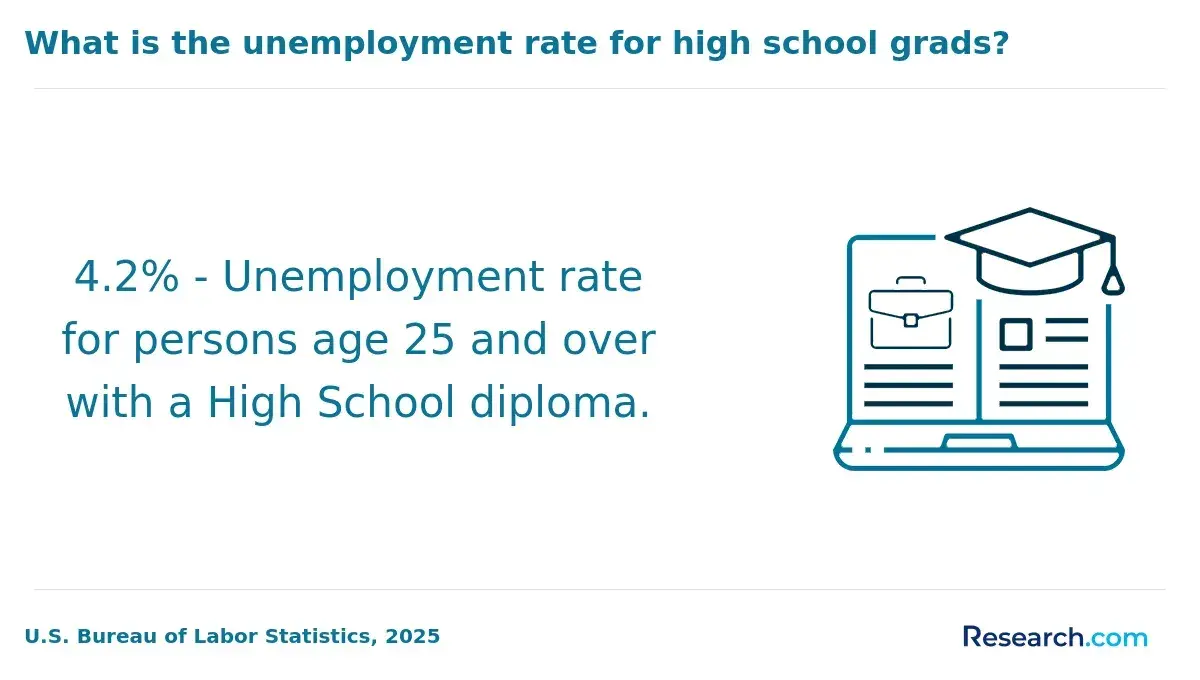
Industry choice can matter as much as job title. The same communications, data, HR, operations, or project role may be more stable in healthcare or government than in luxury retail, real estate, venture-backed technology, or advertising.
The table below ranks industries by typical recession resilience for general degree holders. These are not guarantees; they are practical patterns based on whether demand is essential, regulated, publicly funded, insured, or discretionary.
| Industry | Typical resilience | Good-fit general degree roles | Main trade-off |
| Healthcare and social assistance | High | Patient access, care coordination support, compliance, billing, operations, HR, data reporting. | Workload can be intense, and some providers face reimbursement pressure. |
| Government and public administration | High to moderate | Program specialist, procurement assistant, analyst, benefits coordinator, administrative officer. | Hiring can be slow, and budgets can tighten after revenue declines. |
| K-12 and higher education | Moderate to high | Student services, registrar, advising, operations, grants, financial aid, communications. | Enrollment trends, state funding, and institutional finances can affect stability. |
| Insurance and financial controls | Moderate to high | Claims, compliance, audit support, risk operations, customer service, documentation. | Sales-heavy financial roles can be more cyclical than control or compliance roles. |
| Utilities, logistics, and essential infrastructure | Moderate to high | Operations coordinator, customer operations, procurement, safety documentation, project support. | Some roles are location-dependent and may require shift or on-site work. |
| Technology services | Mixed | Business analyst, customer success, data analyst, cybersecurity support, implementation coordinator. | Core infrastructure and security can be durable, while growth teams may face cuts. |
| Hospitality, entertainment, real estate, luxury retail, and advertising | Lower | Operations, events, marketing, sales, client services. | Demand is more discretionary and often weakens quickly when consumers or businesses cut spending. |
BLS employment reports showed healthcare continuing to add jobs through 2024, including a reported 46,000-job gain in December 2024. For readers, the lesson is not that healthcare is risk-free; it is that essential demand can create more openings and internal mobility than sectors tied to optional consumer spending.
A mistake to avoid is choosing an industry only because it has a strong long-term growth forecast. Long-term growth can coexist with short-term layoffs if employers overhired, rely on unstable funding, or serve customers who cut spending quickly.
Lower layoff risk usually comes from being close to mandatory work: compliance, accounting, healthcare access, benefits administration, core IT support, safety, claims, and public services. Broader education also helps. BLS 2024 annual averages showed workers age 25 and older with a bachelor's degree had a 2.5% unemployment rate, which suggests that degree attainment can reduce risk, although it does not protect every occupation equally.
The following table highlights roles that often have lower layoff exposure for general degree holders. It focuses on practical access points rather than only advanced licensed occupations.
| Lower-risk role family | Why risk may be lower | Best-fit backgrounds | When risk rises |
| Compliance coordinator or analyst | Organizations must meet legal, safety, privacy, financial, and industry rules even when growth slows. | Business, public administration, criminal justice, social sciences, communications. | Risk rises in small employers with limited compliance budgets or in roles tied to one temporary project. |
| Accounting, payroll, and audit support | Payroll, tax, budgets, vendor payments, and audits are core functions. | Business, economics, math, general studies with accounting coursework. | Risk rises when work is highly clerical and easily outsourced or automated. |
| Healthcare operations support | Patients still need scheduling, authorization, intake, billing, records, and care coordination support. | Health administration, psychology, sociology, communications, general studies. | Risk rises in financially stressed facilities or departments dependent on elective procedures. |
| Public benefits and case administration | Demand for benefits, housing support, workforce services, and community programs can increase in downturns. | Public administration, social sciences, human services, liberal arts. | Risk rises when positions are grant-funded or politically vulnerable. |
| Core IT support and cybersecurity operations | Employers still need systems, access, user support, security controls, and incident documentation. | General degree plus IT certificates, help desk experience, data tools, or security fundamentals. | Risk rises in nonessential tech products or roles without current technical skills. |
Low unemployment in a field should not be read as a promise. It may reflect experienced workers, licensing barriers, public funding, or specialized skills that entry-level candidates do not yet have. A general graduate should ask whether they can realistically qualify for the role within the next hiring cycle.
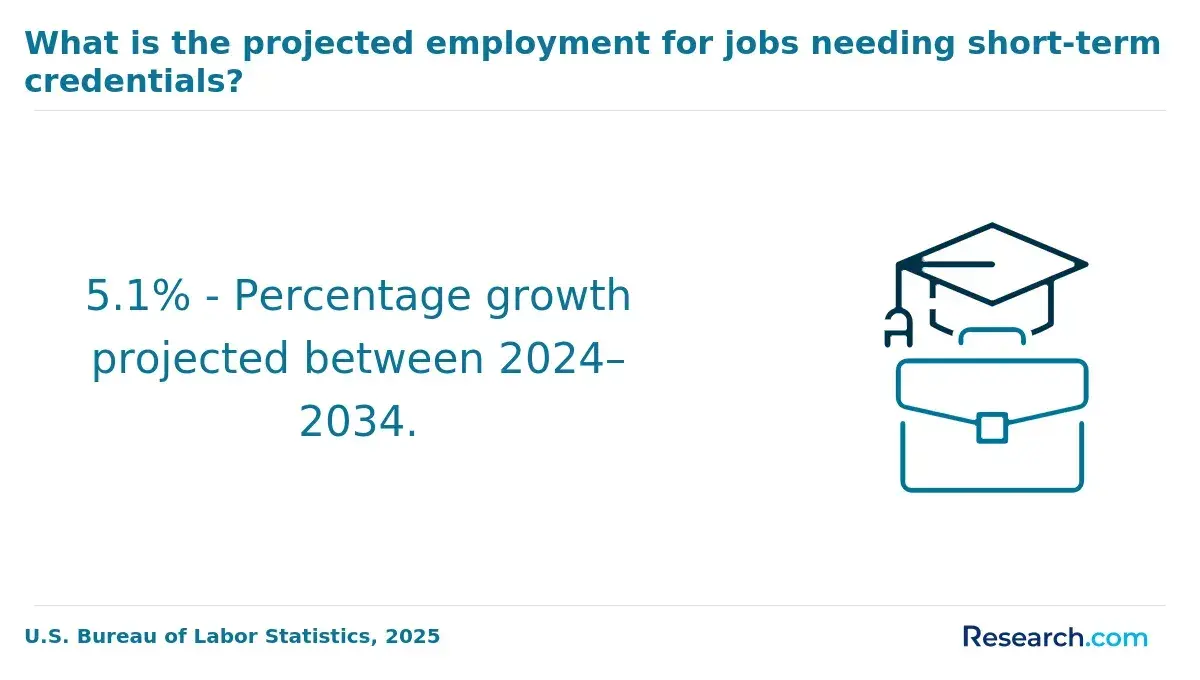
The best recession-resilient career is not always the highest-paid one. A role with slightly lower pay but stable benefits, predictable hours, tuition support, and low layoff exposure may be a better economic choice than a higher-paid job with commission risk or frequent restructuring.
This table compares roles that can balance salary stability with employment durability. Pay varies by region and seniority, but national medians help show which paths may offer both reasonable income and defensible demand.
| Career path | Security profile | Salary stability profile | Good fit for |
| Accounting and audit | Strong because reporting, tax, controls, and audits continue across cycles. | Relatively stable; the BLS May 2024 median pay for accountants and auditors was $81,680. | Detail-oriented graduates who like rules, numbers, documentation, and deadlines. |
| Healthcare administration | Strong when tied to patient access, billing, compliance, or operations. | Management pay can be strong; the BLS May 2024 median pay for medical and health services managers was $117,960. | Graduates who want essential-sector work without necessarily becoming clinicians. |
| HR benefits, employee relations, and payroll operations | Moderate because employers still need workforce administration, but recruiting is more cyclical. | More stable in benefits, compliance, and payroll than in talent acquisition. | Communicators who can manage confidential information and policy details. |
| Data analytics in essential industries | Moderate to strong when connected to cost control, operations, quality, finance, or patient outcomes. | Can be strong, especially with SQL, spreadsheet, dashboarding, and statistical skills. | General graduates who can turn broad business questions into measurable reports. |
| Compliance and risk management | Strong in regulated industries such as finance, healthcare, insurance, and utilities. | Often stable because the function reduces legal and financial exposure. | Graduates who are comfortable reading policies, documenting decisions, and communicating risk. |
For business-oriented graduates, an AACSB accredited online MBA may strengthen long-term mobility in management, finance, analytics, or operations. The recession-resilience value depends on choosing a program with reasonable cost, credible accreditation, relevant electives, and a clear link to target roles.
A useful rule is to separate "salary ceiling" from "salary floor." Sales, recruiting, and startup roles may offer a higher ceiling in expansion periods, while accounting, compliance, healthcare operations, and public administration may offer a stronger floor when employers cut discretionary spending.
Entry-level workers often face more risk than experienced employees because they have shorter tenure, fewer internal relationships, and less specialized knowledge. The best entry-level options for general graduates are roles that build durable skills while placing the worker inside essential or regulated functions.
The table below identifies practical starting roles and the skills they can build. These roles may not all pay the most at first, but they can create a stronger bridge into stable mid-career positions.
| Entry-level role | Why it can be resilient | Skills to build | Next-step roles |
| Patient access representative | Healthcare systems need intake, scheduling, insurance verification, and patient communication. | Medical terminology, privacy rules, customer service, scheduling systems, documentation. | Care coordinator, revenue cycle analyst, clinic operations supervisor. |
| Accounting or payroll assistant | Employers must process pay, invoices, reconciliations, and basic financial records. | Excel, accounting software, attention to detail, confidentiality, deadlines. | Staff accountant, payroll specialist, audit associate, budget analyst assistant. |
| Program assistant in government or nonprofit services | Public and community programs often continue or expand when households need support. | Case documentation, eligibility rules, public communication, grant tracking. | Program coordinator, benefits specialist, grants analyst. |
| Insurance claims assistant | Claims processing continues even when the broader economy slows. | Policy reading, documentation, investigation basics, customer communication. | Claims adjuster, underwriting assistant, risk analyst. |
| Help desk or IT support technician | Organizations still need functioning systems and user support. | Troubleshooting, ticketing systems, networking basics, security awareness. | Systems analyst, cybersecurity analyst, IT project coordinator. |
| Compliance or quality documentation assistant | Regulated employers need documentation for audits, safety, privacy, and quality standards. | Policy review, records management, process mapping, reporting. | Compliance analyst, quality coordinator, risk specialist. |
Entry-level candidates should be cautious about roles advertised as "fast growth" without clear training, stable supervision, or a defined business need. A lower-glamour job in billing, claims, or public administration can sometimes create more recession-proofing than a trendy title in an unstable department.
Location affects recession resilience because regional economies depend on different industries. A general degree holder in an area dominated by tourism, construction, oil and gas, real estate, or a single large employer may face different risks than someone near hospitals, universities, state agencies, military bases, logistics hubs, or diversified corporate offices.
Remote work can reduce location risk by widening the job market, but it also increases competition. BLS American Time Use Survey data for 2024 found that 35% of employed people did some or all of their work at home on days they worked. For job seekers, this means remote access is real, but not universal, and employers may reserve remote roles for experienced candidates with proven self-management skills.
Use location and remote-work factors together when evaluating job resilience. The following signs can help you compare offers more realistically:
- Stronger location signal: The region has multiple hospitals, public agencies, universities, insurers, logistics employers, utilities, or regulated companies rather than one dominant cyclical employer.
- Weaker location signal: The local economy depends heavily on discretionary consumer spending, seasonal tourism, construction cycles, or one employer with recent layoffs.
- Stronger remote signal: The role has clear deliverables, established digital workflows, security support, and a manager experienced with distributed teams.
- Weaker remote signal: The employer is uncertain about return-to-office rules, has poor onboarding, or describes the role as remote while expecting frequent unpaid travel or irregular availability.
A common mistake is assuming a remote job is automatically safer. Remote roles may be easier for employers to consolidate across states or countries, while some onsite roles in hospitals, utilities, public agencies, and schools can be harder to eliminate because the service must be delivered locally.
Transferable skills are the main recession advantage of a general degree. They allow graduates to move from a vulnerable sector into a more stable one without starting over completely. The strongest skills are those that employers need in both growth periods and cost-cutting periods.
Focus on skills that solve measurable problems. During downturns, employers tend to value workers who can improve accuracy, reduce delays, communicate clearly, protect revenue, support customers, and document work well.
- Data literacy: spreadsheet modeling, dashboards, basic statistics, SQL fundamentals, data cleaning, and the ability to explain what the numbers mean.
- Financial and operational fluency: budgeting, invoice tracking, procurement support, workflow improvement, and cost-awareness.
- Regulatory and documentation skill: policy interpretation, audit trails, privacy practices, records management, and quality assurance.
- Communication under pressure: clear writing, customer de-escalation, stakeholder updates, meeting summaries, and executive-ready briefings.
- Technology adaptability: learning new software quickly, using ticketing systems, understanding cybersecurity basics, and working with AI-assisted productivity tools responsibly.
- Project coordination: tracking deadlines, dependencies, risks, handoffs, and deliverables across teams.
AI and automation make transferable skills more important, not less. Routine writing, scheduling, data entry, and basic reporting can be automated, so general degree holders should show judgment: verifying outputs, protecting confidential data, interpreting results, and applying context that tools cannot reliably supply on their own.
The biggest mistake is becoming too specialized in a declining workflow without building portable proof of skill. A general graduate who can show dashboards, process maps, writing samples, compliance documentation, or project outcomes is often easier to redeploy than someone whose experience is tied only to one employer's internal system.
A recession-resilient career plan should reduce dependence on one employer, one industry, or one narrow skill. It should also balance education cost against realistic outcomes. College Board's 2024-25 pricing showed average published tuition and fees of $11,610 for in-state students at public four-year institutions and $43,350 at private nonprofit four-year institutions, so additional credentials should be chosen with ROI and debt risk in mind.
Use the following sequence to build a practical plan before the next downturn, not after layoffs begin:
- Rank your target roles by essential demand, not just interest or salary. Give priority to healthcare operations, compliance, accounting, public administration, education support, insurance, data, IT support, and essential infrastructure roles.
- Check the employer's funding model. Look for recurring revenue, public funding, insurance reimbursement, long-term contracts, mandated services, or compliance obligations.
- Build one technical skill cluster. Choose a stack such as Excel plus SQL plus dashboards, accounting software plus payroll, HRIS plus benefits administration, or help desk tools plus security fundamentals.
- Create proof of work. Save sanitized writing samples, dashboards, process documentation, project plans, case notes, or performance metrics that show how you solve problems.
- Strengthen your internal mobility. Volunteer for cross-functional projects, learn compliance language, document procedures, and build relationships outside your immediate team.
- Keep a recession-ready job search file. Maintain a current resume, references, target employer list, interview stories, and examples of measurable results.
- Avoid overpaying for credentials without a clear target. Compare accreditation, completion time, employer recognition, transfer credit, and total cost before enrolling.
Adults changing careers, retirees reentering the workforce, or older learners seeking lower-risk paths may want to compare flexible college degrees for seniors and certificate options carefully. The best choice is usually the one that connects directly to a stable role rather than a program selected only because it is convenient.
Watch for red flags when evaluating recession-resistant careers. Be cautious if a job depends mostly on new customer acquisition, has unclear funding, offers unusually high variable pay, lacks training, has repeated restructuring, or sits in a department described as "experimental." Also avoid assuming that a famous employer is safer than a smaller organization with stable contracts and disciplined finances.
The strongest plan combines a stable sector, a defensible role, portable skills, a manageable education cost, and a realistic backup path. That combination does not eliminate risk, but it gives general degree holders more control when the labor market weakens.
Employer type changes recession risk because organizations fund jobs differently. A general degree holder can improve stability by comparing how the employer earns revenue, whether demand is recurring, and how staffing decisions are made during downturns.
The table below compares common employer types for general graduates. It is especially useful when two offers have similar job titles but very different funding models.
| Employer type | Typical job security | Why it can be stable | What to watch |
| Federal, state, and local government | High to moderate | Public services continue, benefits demand may rise, and roles may have formal hiring and layoff rules. | Hiring can be slow; budget cuts, hiring freezes, or grant expirations can still occur. |
| Public schools, community colleges, and public universities | Moderate to high | Education remains necessary, and many roles are tied to ongoing student services. | Enrollment declines and state budget pressure can affect staffing. |
| Hospitals and large health systems | Moderate to high | Patient care, billing, compliance, staffing, and scheduling must continue. | Department-level cuts can happen if margins weaken. |
| Large regulated companies | Moderate | Insurance, banking, utilities, and healthcare companies need compliance, risk, and operations teams. | Large employers may still restructure to protect margins. |
| Small businesses | Mixed | Generalists can be valuable because they handle many functions. | Cash-flow pressure can make layoffs faster and less predictable. |
| Startups and venture-backed firms | Lower to mixed | High-growth firms can create rapid advancement when funding is strong. | Hiring depends heavily on capital markets, revenue growth, and investor expectations. |
Experienced professionals who want to move into more stable leadership roles sometimes pursue targeted management credentials, including a 1 year executive MBA online. That path can make sense when the program fits the person's budget, experience level, and target employers, but it should not be treated as a shortcut to guaranteed job security.
Before accepting an offer, ask how the position is funded. A permanent operations role in a public agency usually carries a different risk profile than a one-year grant-funded nonprofit role or a startup role tied to a new product launch.
Other Things You Should Know About General
Not automatically. A general degree can be an advantage if you can translate it into employer-ready skills such as analysis, writing, operations, customer service, documentation, and project coordination. It becomes a disadvantage when the resume is too broad and does not point to a clear role.
Graduate school can help if it leads to a specific credential, license, promotion path, or career pivot. It is risky if it adds debt without a clear target role. Compare total cost, accreditation, completion time, employer demand, and whether you can work while enrolled.
Certificates can help when they add practical, verifiable skills in areas like data analytics, accounting, HR, project management, IT support, compliance, or healthcare administration. They are most useful when paired with experience, projects, internships, or a role that lets you apply the skill.
Review your plan at least every few months if layoffs, hiring freezes, or budget cuts are increasing in your industry. Update your resume, track target employers, monitor job postings, and keep your skills aligned with roles that appear consistently in essential sectors.
- Secure Your Future: Top 7 Recession-Proof Degrees https://matchtocollege.com/blog/top-7-recession-proof-degrees-secure-your-future
- Career earnings by college major - The Hamilton Project https://www.hamiltonproject.org/data/career-earnings-by-college-major/
- What can we learn from past recessions? - Braven https://braven.org/2021/02/what-can-we-learn-from-past-recessions/
- Research Summary: Education and Lifetime Earnings https://www.ssa.gov/policy/docs/research-summaries/education-earnings.html
- The Labor Market for Recent College Graduates https://www.newyorkfed.org/research/college-labor-market
- Degrees of Job Security | Federal Reserve Bank of Minneapolis https://www.minneapolisfed.org/article/2010/degrees-of-job-security
- How does a college degree improve graduates’ employment and earnings potential? - APLU https://www.aplu.org/our-work/4-policy-and-advocacy/publicuvalues/employment-earnings/
- 3 types of recession-proof skills and how to develop them | edX https://www.edx.org/resources/how-to-future-proof-your-skills
- 4 Recession-Proof, Essential Job Skills to Learn https://www.straighterline.com/blog/essential-job-skills-during-recession
- Recession-Proof Jobs That Thrive During Downturns https://create.fit/recession-proof-jobs/