2027 General Degree Licensure Outcomes Report: Pass Rates, Barriers, and Career Impact

Co-Founder and Chief Data Scientist
Choosing a general degree is risky if your target job requires a professional license. The Bureau of Labor Statistics reports that about 1 in 5 US workers holds an occupational license, so licensing can affect access to jobs, pay, and mobility. This report is for students, career changers, and working adults comparing programs with licensure goals in mind. You will learn how pass rates are reported, which barriers delay licensing, and how to judge whether a general degree supports the career return you expect.
Key Things You Should Know
- A general degree usually does not lead to licensure by itself; students must verify that the program, accreditation, coursework, fieldwork, and state approval match the exact licensed occupation they want.
- First-time pass rates are more useful than overall pass rates because they show how well a program prepares graduates before retakes; overall rates can hide delays, extra costs, and remediation needs.
- Licensure can improve access to regulated jobs and advancement, but barriers such as exam failure, supervised-hour requirements, state-by-state rules, background checks, and retesting fees can change the real return on investment.
- Is Professional Licensure Required for General Degree Careers?
- How Do General Degree Graduates Qualify for Professional Licensure?
Is Professional Licensure Required for General Degree Careers?
A general degree can mean a broad liberal arts, interdisciplinary studies, general studies, business, health science, or social science program. These degrees can be valuable for flexible career paths, but they are rarely sufficient for licensed professions unless the curriculum is intentionally aligned with a licensing board's requirements.
Professional licensure is required when a state restricts who may legally use a title, provide a service, or practice independently. Common examples include nursing, teaching, social work, counseling, speech-language pathology, accounting, law, architecture, engineering, and many health professions. In these fields, graduating is only one step; licensure may also require board-approved coursework, supervised experience, an exam, background clearance, and fees.
For readers considering clinical communication careers, for example, online speech language pathology programs can be worth comparing only if they meet accreditation, clinical placement, and state licensure expectations. The delivery format matters less than whether the program is recognized by the relevant accreditor and licensing board.
The practical rule is simple: if your intended occupation is regulated, evaluate the degree by licensure eligibility first and by convenience, cost, or speed second. A low-cost general degree may still be a poor fit if it does not satisfy board rules.
This table summarizes how general degrees fit different career goals. It helps separate careers where licensure is mandatory from careers where a degree may help but a license is not usually the legal gatekeeper.
| Career goal | Is licensure usually required? | What the degree must prove | Decision risk |
| Independent clinical, healthcare, education, or legal practice | Yes, in most states | Board-approved coursework, supervised hours, exam eligibility, and accredited training | High risk if the degree is broad but not licensure-aligned |
| Business, administration, communications, nonprofit, or operations roles | Usually no | Relevant skills, internships, experience, and employer-recognized credentials | Moderate risk if the degree lacks a clear career focus |
| Public-sector or regulated technical roles | Sometimes | State-specific qualifications, civil service rules, exams, or certifications | Varies by agency and state |
| Graduate school preparation | Not immediately, but may be later | Prerequisites, GPA, field experience, and accreditation compatibility | High if prerequisites are missing |
How Do General Degree Graduates Qualify for Professional Licensure?
General degree graduates qualify for licensure only when their education maps to the licensing pathway for a specific profession. That pathway is controlled by state boards, national accreditors, and exam providers, not by the degree title alone.
The sequence below shows the typical path from degree selection to licensure. Use it before enrolling, not after graduation, because missing prerequisites can add semesters of coursework or make a graduate ineligible for the exam.
- Identify the exact licensed occupation and the state where you plan to work first.
- Find the state licensing board's education, exam, supervised-hour, background-check, and application rules.
- Confirm whether the program is accredited, state-approved, or explicitly designed to satisfy those rules.
- Ask the school for first-time pass rates, overall pass rates, cohort size, graduation rates, and job placement context.
- Estimate the full timeline, including degree completion, exam scheduling, retakes, supervised experience, and license processing.
- Check whether the license is portable if you may move to another state.
Students often confuse academic eligibility with professional eligibility. A college may be properly accredited to award degrees while still not offering a curriculum that meets a specific licensing board's requirements. That distinction is especially important for broad general studies programs, accelerated programs, transfer-heavy degrees, and online programs serving students in many states.
There are also cases where a general degree can be a stepping stone rather than the licensure degree itself. A bachelor's degree in psychology, human services, biology, or interdisciplinary studies may help a student enter a graduate program in counseling, occupational therapy, speech-language pathology, public health, or education. However, the later professional program, not the original general degree, is usually what determines licensure eligibility.
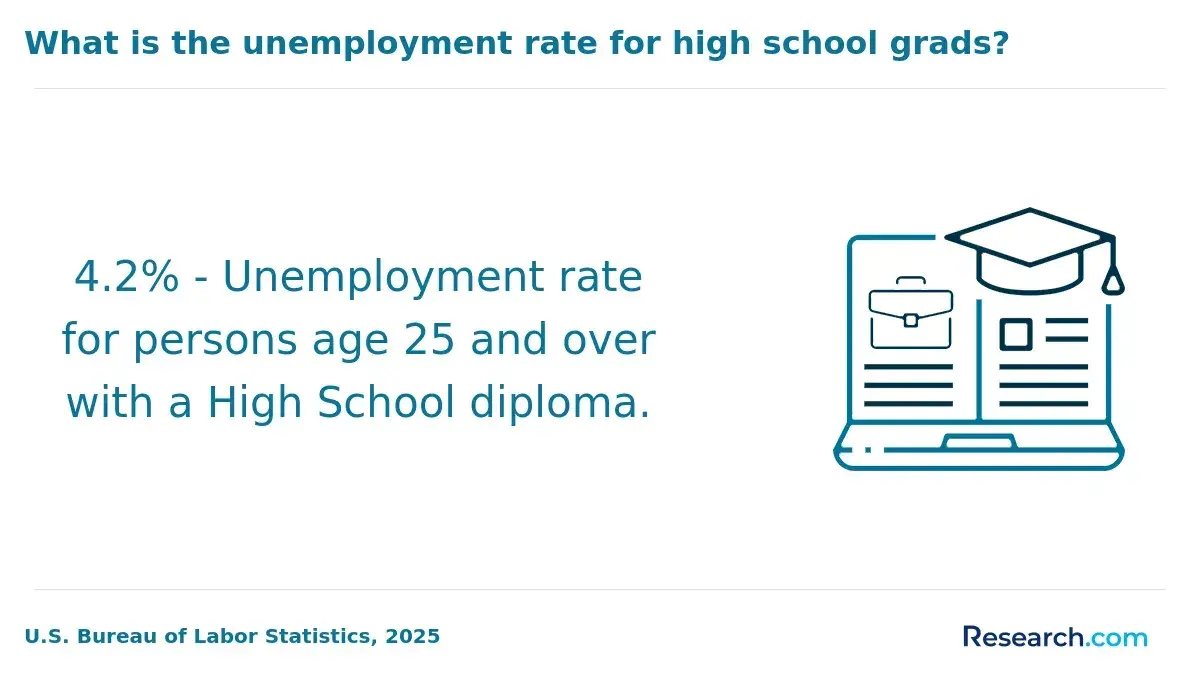
Licensure exam pass rates reveal how well a program prepares eligible graduates for the testing stage, but they do not tell the whole outcomes story. A strong pass rate is meaningful only when you know who was counted, when they tested, how many candidates were included, and whether the rate reflects first attempts or all attempts.
First-time pass rates are usually the cleanest preparation measure. For example, the National Council of State Boards of Nursing reported an 88.56% first-time NCLEX-RN pass rate for US-educated candidates in 2023. That figure gives nursing applicants a national benchmark, but students still need the program-level rate because individual schools can perform above or below the national result.
This table explains the most important pass-rate terms. Understanding these definitions helps you avoid comparing programs that are reporting different outcomes under the same label.
| Pass-rate measure | What it means | Why it matters | Common red flag |
| First-time pass rate | Share of candidates who pass on the first exam attempt | Best indicator of initial exam readiness | Program reports only an overall rate and avoids first-time results |
| Overall pass rate | Share of candidates who pass after one or more attempts during a reporting period | Shows eventual success but may hide delays and retesting | High overall rate paired with weak first-time performance |
| Repeat-candidate pass rate | Share of retakers who pass after failing previously | Shows whether remediation support works | No clear retake support or no data on retakers |
| Cohort size | Number of graduates or test takers included | Small groups can make rates unstable | A 100% pass rate based on only a few candidates |
| Reporting period | Year or multi-year window used for the result | Recent data better reflects current faculty, curriculum, and exam format | School highlights old results but not current outcomes |
Pass rates should be read alongside completion, attrition, and licensure completion. A program can have a high exam pass rate if only its strongest students reach the exam, so ask how many students started, graduated, sat for the exam, passed, and obtained the license.
The most common licensure barriers fall into two categories: eligibility barriers that prevent a graduate from taking the exam and completion barriers that delay or prevent licensing after graduation. Both can reduce the value of a degree if they add time, cost, or uncertainty.
This table identifies barriers that frequently affect general degree graduates pursuing regulated careers. It helps you estimate which risks are manageable and which should change your program choice.
| Barrier | How it affects licensure | Likely impact | How to reduce the risk |
| Non-aligned coursework | Graduate lacks required subjects or clock hours | Additional courses, delayed exam eligibility, or denial | Match the degree plan to board rules before enrolling |
| Missing programmatic accreditation | Board may not accept the degree for exam eligibility | High-risk barrier that can be difficult to fix | Verify accreditation with the board, not only the school |
| Low first-time exam pass rate | More students need retakes or remediation | Extra fees, delayed employment, and lower confidence | Ask for first-time and repeat pass rates by year |
| Supervised-hour shortage | Graduate cannot complete required field experience quickly | Months or years of delay in counseling, social work, psychology, and similar fields | Ask how placements or supervisors are secured |
| State mismatch | Program meets one state's rules but not another's | Relocation complications or added coursework | Confirm eligibility in your intended state before enrollment |
| Background or ethics issue | Board may require review before licensing | Uncertain timeline and possible denial | Contact the board early if you have a concern |
Several red flags deserve extra attention. Be cautious if a school cannot provide recent pass-rate data, reports only marketing-friendly outcomes, avoids state-by-state eligibility questions, or claims that graduation automatically leads to licensure. No legitimate program can guarantee a license because boards make the final decision.
Students should also consider personal barriers. Working full time, caring for family, limited transportation, unpaid clinical hours, testing anxiety, and relocation constraints can all affect whether a theoretically eligible graduate becomes licensed on schedule.
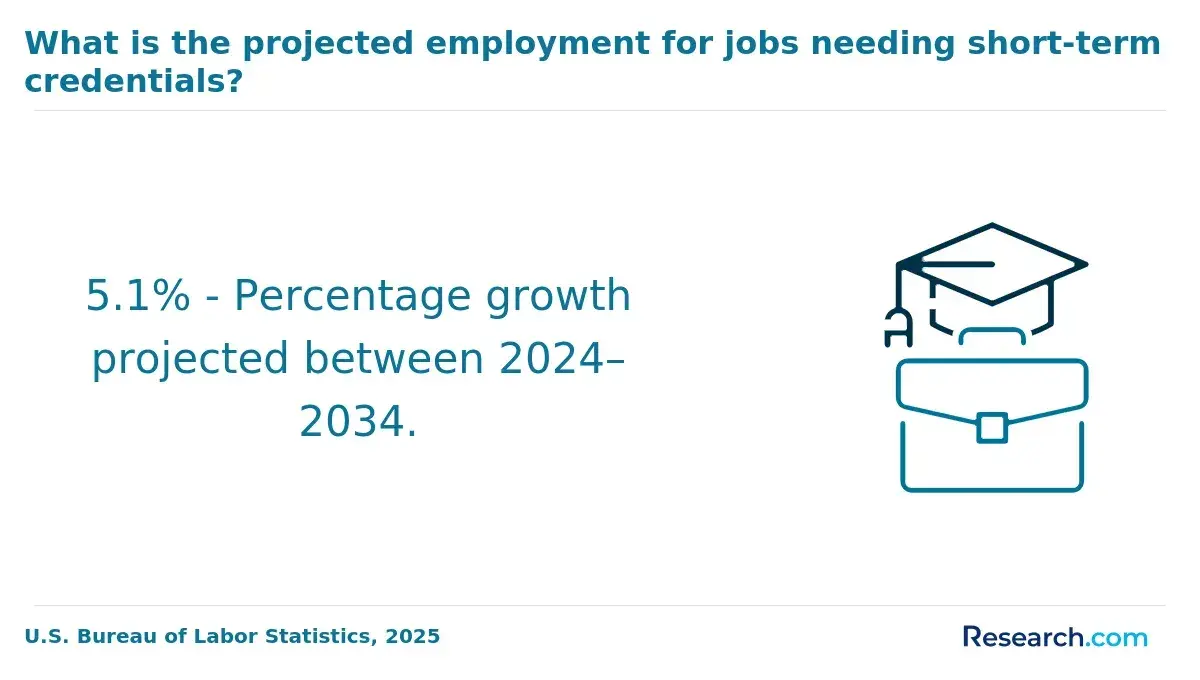
Licensing exams are high-stakes assessments, so preparation should begin before the final term. A good plan connects coursework, practice exams, remediation, application deadlines, and retake policies into one timeline.
The steps below are practical ways to reduce retake risk and avoid delays. They are most useful for students who are comparing programs now or approaching graduation.
- Ask the program for the exam blueprint and confirm which courses cover each tested domain.
- Use practice exams early enough to identify weak areas before the official test window.
- Build a study calendar that includes content review, question practice, simulation, and rest days.
- Confirm application deadlines, identification rules, testing accommodations, and score-reporting procedures.
- Learn the retake waiting period and fee rules before testing so a failed attempt does not create panic or missed employment dates.
- If you fail, request a diagnostic report, meet with faculty or a prep advisor, and use a targeted remediation plan rather than repeating the same study method.
Retakes are not only academic setbacks; they can affect income timing. In fields where employers require an active license before independent practice, a failed exam may delay a start date, limit duties, or keep the graduate in a lower-paid support role until the license is issued.
Current testing trends also matter. Many licensing exams now rely more heavily on computer-based testing, scenario-based questions, remote scheduling systems, and stricter identity verification. AI-enabled study tools can help with review, but students should use them carefully because licensing exams test applied judgment, ethics, and standards of practice that require authoritative preparation materials.
State requirements and reciprocity can be decisive for general degree graduates. Licensure is usually state-based, meaning a program that qualifies you in one state may not automatically qualify you in another. This is especially important for online students, military families, remote workers, and people planning to relocate.
Reciprocity, endorsement, and interstate compacts can make mobility easier, but they rarely eliminate all requirements. A state may still require a background check, jurisprudence exam, additional coursework, supervised hours, documentation, fees, or proof that the original license is in good standing.
The table below clarifies common portability terms. Knowing these differences helps you ask better questions before you choose a program or move across state lines.
| Term | Meaning | What to verify | Decision impact |
| Initial licensure | First license issued after education, exam, and application review | Whether your program meets that state's education rules | Most important if you know where you will start work |
| Licensure by endorsement | State grants a license based partly on an existing license elsewhere | Experience, exam, good-standing, and documentation requirements | Useful after you are already licensed |
| Reciprocity | State recognizes another state's license under defined conditions | Whether reciprocity is automatic or conditional | Can reduce barriers but may not remove them |
| Interstate compact | Agreement among states for eligible license holders | Which states participate and what privileges apply | Helpful for mobility, telehealth, and multi-state practice |
| Jurisprudence exam | State-specific exam on laws, rules, and ethics | Whether it is required before or after application | Can add time even when education is accepted |
The safest approach is to check the licensing board in every state where you may work. If a school serves online students nationally, ask for a written state authorization or professional licensure disclosure that identifies where the program does and does not meet educational requirements.
The cost of general licensure depends on the profession, state, exam provider, background checks, preparation materials, and supervised-experience requirements. The degree itself is usually the largest expense, but the post-graduation licensing stage can still create meaningful out-of-pocket costs and income delays.
These are common cost categories to budget for before enrolling. The exact amount varies by board and occupation, so students should verify current fees directly with the state licensing authority and exam provider.
- Exam registration can start at $200 for NCLEX-RN before state board, fingerprinting, background-check, or application fees are added.
- Retakes may require another exam fee, a waiting period, and additional preparation costs.
- Supervised experience can add months or years in fields that require post-degree practice hours before independent licensure.
- Licensing applications, renewals, continuing education, transcripts, background checks, and score transfers can create recurring costs after the first license.
The timeline also varies. Some graduates can test and become licensed shortly after graduation if all requirements are completed in the degree program. Others must complete supervised hours after graduation, which can extend the path substantially.
This table summarizes common time and cost drivers. It is not a fee schedule; it is a planning tool for identifying where licensure may become more expensive or slower than expected.
| Licensure stage | Main time driver | Main cost driver | Planning question |
| Degree completion | Program length, transfer credits, prerequisites, and course sequencing | Tuition, fees, books, technology, and commuting or residency costs | Will the fastest path still meet board rules? |
| Exam authorization | Graduation verification, transcripts, and board processing | Application fee and transcript fees | When can I apply for exam approval? |
| Exam preparation | Study schedule and remediation needs | Prep materials, tutoring, and practice exams | Does the program include exam prep or charge separately? |
| Retesting | Waiting period and seat availability | New exam fee and delayed job eligibility | What happens financially if I do not pass the first time? |
| Supervised practice | Required hours, supervisor availability, and employment setting | Lower earnings during provisional status or supervision fees | Are supervised placements available locally? |
A practical return-on-investment calculation should include tuition, living costs, debt, exam costs, retakes, unpaid or low-paid placements, and the income difference between licensed and unlicensed roles. The cheapest degree is not always the best value if it increases the risk of delayed licensure.
Licensure affects careers in three main ways: legal access, employer preference, and advancement potential. In regulated fields, the license is often the difference between assisting under supervision and practicing independently. In less regulated fields, optional certifications may still improve credibility, but they usually do not carry the same legal authority as a state license.
The Bureau of Labor Statistics has repeatedly found that workers with occupational licenses or certifications tend to have higher median earnings than workers without them, although the comparison reflects many factors, including education level, occupation, experience, and industry. For readers, the takeaway is not that licensure guarantees higher pay; it is that licensure often opens access to roles that unlicensed graduates cannot legally hold.
Career changers who already have professional experience may not need a license if their goal is leadership rather than regulated practice. For example, a 1 year executive MBA online may support management advancement without creating a state licensure pathway, which is a different ROI calculation from nursing, teaching, counseling, or clinical practice.
The table below compares licensed and unlicensed outcomes in practical terms. Use it to decide whether licensure is essential, optional, or unnecessary for your target role.
| Outcome factor | Licensed path | Unlicensed path | What it means for ROI |
| Job access | Required for protected titles or independent practice | Limited to roles that do not require a license | Licensure may be essential if the target job is regulated |
| Pay potential | May improve access to higher-responsibility roles | Depends more on employer, experience, skills, and industry | Compare occupation-specific salary data, not degree averages |
| Mobility | May require endorsement, reciprocity, or compact eligibility | Often easier across states, unless employer credentials are required | State rules can affect long-term flexibility |
| Advancement | Can be required for supervision, independent billing, or leadership in regulated settings | May require experience, graduate education, or employer certifications | License can be a gatekeeper, but not the only advancement factor |
| Risk | Exam failure, fees, renewals, and compliance obligations | Fewer legal requirements but possibly less access to regulated roles | Best choice depends on career goal, not prestige alone |
Licensure is most worthwhile when the desired occupation legally requires it, the program has transparent outcomes, and the student can realistically complete the full pathway. It may be less worthwhile when the target career does not require a license, the program lacks board alignment, or the added time and debt outweigh expected career benefits.
General graduates without a professional license still have many career options, especially when they combine the degree with experience, internships, technical skills, writing ability, data literacy, management training, or industry certifications. The key is to target jobs where a license is not the legal entry requirement.
These options can fit students who want flexibility, are still exploring careers, or prefer not to pursue regulated practice. They can also be useful backup paths for graduates who need time to complete licensing exams or supervised hours.
- Administrative and operations roles in healthcare, education, government, nonprofit, or corporate settings that do not involve licensed practice.
- Human resources, training, recruiting, and employee development roles where communication and organizational skills are valued.
- Sales, customer success, account management, and business development roles that reward industry knowledge and relationship-building.
- Community program coordination, case support, outreach, and social services roles that do not require independent clinical licensure.
- Communications, content, public relations, and research support roles that rely on writing, analysis, and project management.
- Graduate-school preparation roles or bridge jobs while completing prerequisites for a licensure-track program.
Older adults and career changers may also use flexible degree pathways to pivot without committing to a regulated profession immediately; resources on college degrees for seniors can help compare online formats, support services, and career-fit considerations for nontraditional learners.
The main mistake is treating an unlicensed path as a fallback with no strategy. A general degree works best when paired with a clear skills plan: choose electives that match a field, build a portfolio, complete internships, earn employer-recognized credentials when useful, and track job postings to see what qualifications employers actually request.
Accreditation and program quality directly affect licensure outcomes because many boards use accreditation as a shortcut for verifying curriculum, faculty qualifications, clinical training, assessment standards, and public accountability. For licensure-bound students, accreditation is not just a quality signal; it can determine whether they are allowed to sit for the exam.
Accreditation standards vary by field. In business, for instance, students comparing management pathways may look at AACSB accredited online MBA options because accreditation can affect employer perception and graduate-school signaling, even when the career itself is not licensed. In fields such as nursing, counseling, education, social work, engineering, and speech-language pathology, the accreditation question is more directly tied to licensure eligibility.
The comparison below shows how accreditation and state approval can change risk. It is especially useful for students comparing online, hybrid, accelerated, and transfer-friendly programs.
| Program feature | Licensure advantage | Possible limitation | Best question to ask |
| Programmatic accreditation | May satisfy board education standards and exam eligibility rules | Not every accreditor applies to every license | Which licensing boards recognize this accreditation? |
| State board approval | Confirms the program is accepted for licensure in at least one state | Approval may not transfer automatically to another state | Does approval cover the state where I plan to work? |
| Online or hybrid delivery | Can increase access for working adults and rural students | Clinical, practicum, student-teaching, or lab placements may be limited by location | Can the school place students in my state? |
| High transfer-credit acceptance | Can reduce time and tuition | Transferred courses may not meet board content rules | Will transferred courses count toward licensure prerequisites? |
| Strong exam support | Can improve readiness and retake planning | Support quality varies and may not be reflected in marketing claims | What remediation is required after a failed practice or licensing exam? |
One common mistake is choosing the fastest or cheapest program without confirming professional recognition. Another is assuming institutional accreditation is enough. For licensure careers, you should verify both institutional accreditation and the field-specific approval required by the board.
Other Things You Should Know About General
No. A general degree only supports licensure if its coursework, accreditation, fieldwork, and state approval match the rules for a specific licensed occupation. Always verify requirements with the licensing board before enrolling.
Start with the first-time pass rate because it shows how well graduates perform before retakes. Then review the overall pass rate, cohort size, reporting year, and remediation support to understand the full outcome.
Yes, but only when the online program meets the same accreditation, state approval, clinical, practicum, or supervised-experience rules required for licensure. Online format alone does not determine eligibility.
It is usually worth it when your target job legally requires a license or when the license unlocks meaningful advancement. It may not be worth it if your preferred roles are unlicensed and the added debt, exams, or supervised hours do not support your career goals.
- Investigating the Importance of Demographic Features for EDM-Predictions https://educationaldatamining.org/EDM2023/proceedings/2023.EDM-long-papers.11/index.html
- Improving Nursing Program Outcomes to Address the Shortage https://nursing.uworld.com/blog/improve-nursing-programs-outcomes-to-solve-shortage/
- Declining Pass Rates: It’s Not the Test, It’s the Candidates https://www.credentialinginsights.org/Article/declining-pass-rates-its-not-the-test-its-the-candidates
- Licensure Pass Rates: Undergraduate & Graduate Programs https://www.mc.edu/academics/departments/education/praxis-pass-rates