2027 General Degree Bachelor's-Level ROI Report: Best Career Returns Without Graduate School

Co-Founder and Chief Data Scientist
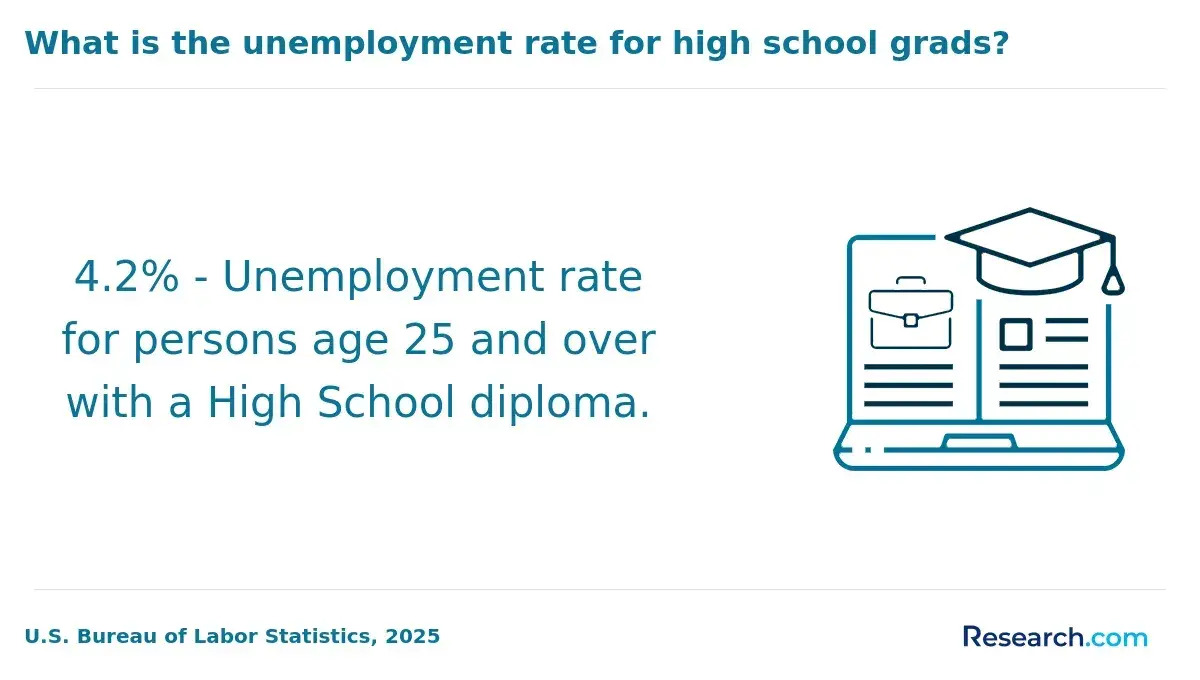
Choosing a broad bachelor's degree can feel risky if you are not planning on graduate school. The payoff depends less on the major name and more on the career path, industry, skills, debt, and location you choose afterward. BLS data shows bachelor's degree holders had lower unemployment than workers with only a high school diploma, making the credential valuable when paired with marketable skills. This report helps students, career changers, and families compare bachelor's-level options by ROI, salary growth, certifications, and when graduate school is-or is not-worth the added cost.
Key Things You Should Know
- The strongest bachelor's-level ROI usually comes from careers where a general degree can be paired with technical, analytical, sales, finance, operations, or compliance skills; BLS May 2024 wage data places several of these roles above the national median wage.
- Graduate school is not automatically the better financial move; it makes the most sense when it is required for licensure, strongly preferred for promotion, or clearly tied to a higher-paying role.
- ROI improves most when students limit debt, choose paid internships, target industries with advancement ladders, and add job-ready credentials such as project management, analytics, HR, cybersecurity, or cloud certifications.
- Which General Bachelor's Degree Careers Deliver the Highest ROI Without Graduate School?
- Which Industries Reward General Bachelor's Graduates the Most?
Which General Bachelor's Degree Careers Deliver the Highest ROI Without Graduate School?
A "general" bachelor's degree usually refers to a broad program such as business administration, communications, liberal studies, interdisciplinary studies, psychology, sociology, English, political science, economics, or general studies. These degrees often do not lead to one licensed occupation by themselves, so ROI depends on how well the student converts the degree into a career track with measurable labor-market demand.
The highest ROI paths without graduate school tend to have three traits: strong employer demand, clear promotion ladders, and skills that can be proven through portfolios, certifications, internships, or work results. The table below compares bachelor's-friendly roles where a broad degree can be competitive if paired with the right experience and skills.
| Career path | Typical bachelor's-level fit | Salary context from recent BLS wage data | Why ROI can be strong without graduate school |
| Software developer or technical product role | General degree plus coding, product, UX, or technical project experience | BLS May 2024 data places software developer median pay well above the national median wage | Skills-based hiring, portfolio proof, and advancement into senior or product roles can outweigh the exact major |
| Information security analyst | Business, policy, criminal justice, or general studies degree plus cybersecurity training | BLS May 2024 data reports six-figure median pay for information security analysts | Security, risk, and compliance needs create opportunities for graduates who build technical and governance skills |
| Financial analyst | Business, economics, math, or liberal arts degree with finance and Excel skills | BLS May 2024 data places financial analyst median pay above many general bachelor's roles | Advancement can come through performance, industry knowledge, and credentials rather than a required master's degree |
| Management analyst or operations consultant | Business, communications, social science, or interdisciplinary degree with data and process skills | BLS May 2024 data shows median pay above the national median wage | Employers reward problem-solving, client communication, and measurable operational improvements |
| Market research analyst | Communications, psychology, sociology, business, or economics degree with analytics tools | BLS May 2024 data places median pay above many entry-level office occupations | Growth comes from translating customer, product, and campaign data into business decisions |
The best bachelor's-level ROI is not limited to STEM majors, but the highest returns usually require a graduate to become more specialized after admission to the workforce. A communications graduate who learns analytics, a psychology graduate who moves into user research, or a general studies graduate who becomes a Salesforce administrator may outperform a more narrowly titled major with weaker job-market alignment.
One common mistake is assuming that a graduate degree is necessary because a bachelor's degree feels "too broad." That is true in some licensed fields, but not in many business, technology, sales, analytics, operations, and compliance roles. For example, clinical speech-language pathology generally requires advanced preparation and licensure, so students targeting that field should compare online speech language pathology programs rather than relying on a general bachelor's degree alone.
Which Industries Reward General Bachelor's Graduates the Most?
Industry choice can matter as much as job title. A graduate working in operations at a technology company, healthcare system, financial institution, or energy firm may see better pay and advancement than someone doing similar work in a lower-margin industry.
The table below shows industries that often reward broad bachelor's graduates because they need people who can analyze information, coordinate teams, communicate with clients, manage risk, and improve systems.
| Industry | High-ROI bachelor's-level functions | Why the industry can reward general graduates | Best fit for |
| Technology and software | Customer success, product operations, business analysis, sales operations, project coordination | Fast-moving companies often promote employees who can bridge business needs and technical teams | Graduates who can learn tools quickly and communicate clearly with technical stakeholders |
| Finance, insurance, and fintech | Financial analysis, compliance, underwriting, risk, client advisory support | Employers value quantitative judgment, regulatory awareness, and client trust | Students comfortable with data, documentation, and decision-making under rules |
| Healthcare administration | Revenue cycle, operations, care coordination administration, compliance, HR | Healthcare organizations need non-clinical professionals who can manage processes and regulations | Graduates who want mission-driven work without clinical licensure |
| Government contracting and defense-adjacent services | Program analysis, procurement support, logistics, security compliance, project control | Large contracts create demand for organized, cleared, and compliance-minded employees | Graduates who are detail-oriented and willing to navigate formal processes |
| Professional services and consulting | Research, client delivery, process improvement, change management, implementation support | Client-facing work can accelerate learning and promotion opportunities | Graduates with strong writing, presentation, and problem-solving skills |
Recent BLS industry wage data continues to show that professional, scientific, and technical services tend to pay above many service-sector fields. For a general bachelor's graduate, that means the same communication, research, or coordination skills may have a stronger ROI when applied in higher-paying sectors.
However, industry fit should not be based on pay alone. A high-paying industry with poor fit can lead to burnout or stalled performance. The better question is: "Where can my degree, personality, and skill set produce measurable value?"
The fastest financial return usually comes from roles that allow a graduate to earn marketable experience quickly, receive employer-paid training, and move into higher-responsibility work within one to three years. Starting salary matters, but it is not the only driver; a role with rapid promotion potential may beat a slightly higher starting offer with limited mobility.
The table below focuses on entry-level roles that can fit general bachelor's graduates and often build toward higher-ROI careers without requiring graduate school.
| Entry-level role | Common degree backgrounds | Fast-ROI advantage | Next-step career path |
| Business analyst associate | Business, economics, social science, communications, general studies | Builds data, stakeholder, and process skills that transfer across industries | Senior analyst, product analyst, operations manager, consultant |
| Sales development representative | Communications, business, psychology, liberal arts | Can produce strong earnings through commissions if the employer has a healthy sales model | Account executive, sales manager, customer success leader |
| HR coordinator or talent acquisition associate | Psychology, sociology, business, communications | Introduces employment law, recruiting systems, compensation, and workforce planning | HR generalist, recruiter, HR business partner, compensation analyst |
| Project coordinator | General studies, business, communications, interdisciplinary studies | Creates a track record in schedules, budgets, documentation, and cross-functional work | Project manager, program manager, operations lead |
| Compliance or risk analyst assistant | Criminal justice, political science, business, economics, general studies | Develops specialized knowledge that can be valuable in finance, healthcare, insurance, and tech | Compliance analyst, risk manager, internal audit specialist |
A practical way to evaluate fast ROI is to compare the first job's salary with its learning curve. If the role gives you exposure to systems, clients, revenue, budgets, regulations, or data, it is more likely to create a path to higher earnings than a role built mostly around routine administrative tasks.
Students should also avoid the mistake of accepting unpaid or low-learning work simply because it sounds aligned with their major. A paid internship, apprenticeship-style analyst role, rotational program, or employer-sponsored training track can produce a faster payoff than a prestige label with little skill development.
Location changes ROI because salaries, rent, taxes, commuting costs, and job density vary widely across the U.S. A higher salary in an expensive metro may not create more disposable income than a moderate salary in a lower-cost region, especially for graduates repaying student loans.
College Board data for the 2024-2025 academic year lists average published tuition and fees at public four-year in-state institutions at $11,610. That figure is only one part of ROI; housing, transportation, books, fees, and lost wages while studying can change the real cost of the degree substantially.
When comparing locations, students and graduates should look beyond the salary headline. The following steps make the comparison more realistic.
- Compare expected entry-level pay with local rent, transportation, taxes, and health insurance costs.
- Check whether the metro has multiple employers in your target field, not just one attractive company.
- Look for hybrid or remote-friendly roles that allow you to access higher-paying labor markets while controlling living costs.
- Estimate monthly student loan payments before accepting a job in a high-cost city.
- Consider state licensing or clearance requirements if your target field involves education, healthcare, government, finance, or regulated services.
The best ROI location is not always the city with the highest wages. It is the place where your target occupation has enough openings, your living costs are manageable, and your skills can compound through promotions or job changes.
A general bachelor's degree becomes more valuable when it is paired with skills employers can see, test, or measure. This is especially important as AI changes entry-level work: routine writing, summarizing, scheduling, and basic reporting are easier to automate, while judgment, data interpretation, client communication, and workflow design are harder to replace.
For most broad-degree graduates, the highest-ROI skills fall into a few practical categories. These are worth developing through coursework, internships, certificates, projects, and part-time work.
- Data literacy: Excel, SQL basics, dashboards, survey analysis, forecasting, and the ability to explain what numbers mean for a business decision.
- AI-assisted productivity: Using AI tools responsibly for research, drafting, process documentation, customer support, and analysis while checking accuracy and privacy rules.
- Business communication: Clear writing, presentations, meeting facilitation, executive summaries, and persuasive client or stakeholder updates.
- Project and operations skills: Scheduling, budgeting, risk tracking, workflow mapping, vendor coordination, and documentation.
- Commercial awareness: Understanding revenue, customer retention, pricing, compliance, cost control, and how the employer makes money.
- People and leadership skills: Coaching, conflict resolution, recruiting, training, performance feedback, and cross-functional collaboration.
The mistake to avoid is listing skills without proof. A resume that says "strong communicator" is less persuasive than one that shows a newsletter campaign, client presentation, policy memo, research brief, dashboard, or completed project with measurable results.
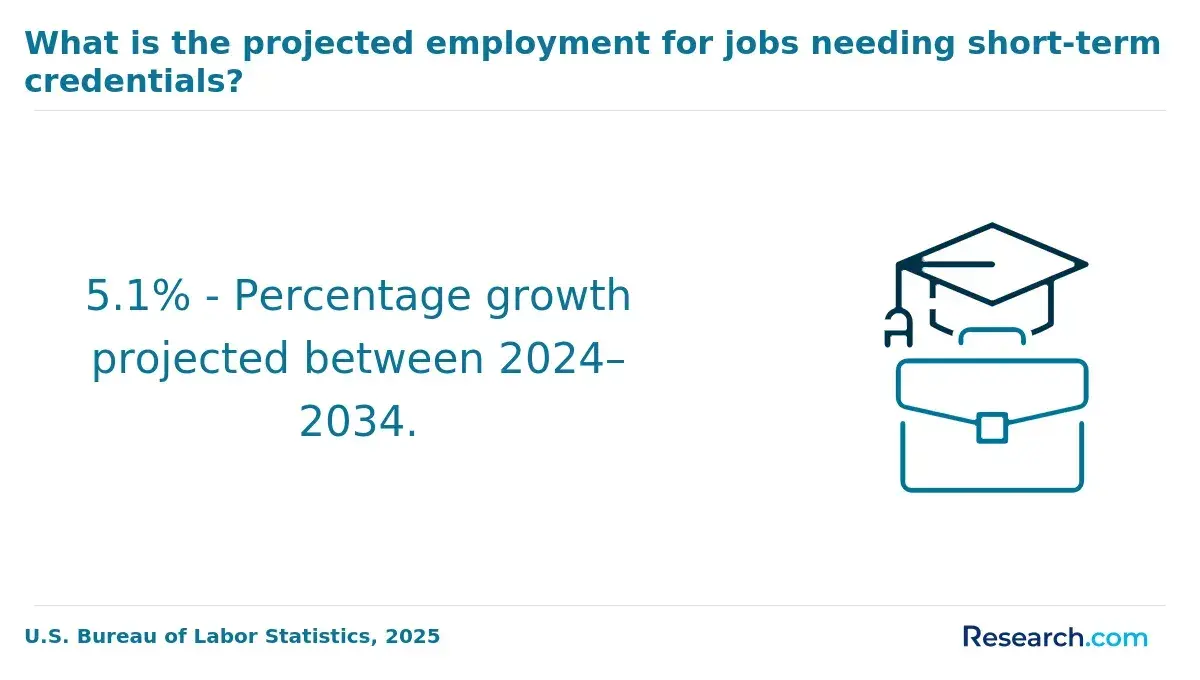
Certifications can improve ROI when they validate a skill employers already demand. They are less useful when they are disconnected from a target role or when the student collects credentials without experience.
The table below summarizes certifications and credential areas that often pair well with general bachelor's degrees. Requirements, costs, and employer recognition vary, so students should verify each credential against job postings in their target market.
| Credential area | Examples | Best for | ROI caution |
| Project management | CAPM, PMP for eligible professionals, Agile or Scrum credentials | Project coordinators, operations associates, implementation specialists | PMP usually requires documented experience, so early-career graduates may need a starter credential first |
| Data and analytics | Google Data Analytics, Microsoft Power BI, Tableau, SQL certificates | Analyst, marketing, operations, HR, and research roles | Portfolios and work samples matter as much as the certificate name |
| Cybersecurity and risk | CompTIA Security+, ISC2 Certified in Cybersecurity, GRC-focused training | Compliance, IT support, risk, security operations, audit support | Technical roles may still require hands-on labs, networking knowledge, or experience |
| Human resources | SHRM-CP, PHR for eligible professionals | HR coordinators, recruiters, talent operations, HR generalists | Eligibility rules differ by credential, and experience may be required |
| Sales and customer systems | Salesforce Administrator, HubSpot, customer success platforms | Sales operations, customer success, revenue operations, marketing operations | Employers usually want evidence that you can use the platform in real workflows |
For business graduates who later decide that management education is financially justified, accreditation can matter. Comparing an AACSB accredited online MBA may be more relevant for finance, consulting, or corporate leadership goals than adding unrelated certificates.
Employer type affects ROI through pay, benefits, promotion speed, training, job stability, and workload. Institution type alone does not determine outcomes; a large nonprofit hospital, a private technology company, a public agency, and a small consulting firm can all offer strong or weak ROI depending on the role and advancement path.
Large employers often provide structured career ladders, tuition assistance, formal training, and recognized job titles. Smaller employers may offer broader responsibilities and faster skill development, but promotions and compensation bands may be less predictable.
Use the following comparison when deciding whether an offer is likely to build long-term value.
- Large corporations: Strong for training, brand-name experience, internal mobility, and benefits, but entry-level roles may be narrow.
- Startups and small firms: Strong for broad responsibility and rapid learning, but compensation, stability, and management quality can vary widely.
- Public sector employers: Strong for stability, benefits, public service, and predictable pay scales, but salary growth may be slower than in some private-sector roles.
- Nonprofit organizations: Strong for mission alignment and early responsibility, but graduates should compare pay, workload, funding stability, and promotion options carefully.
- Government contractors: Strong for project, compliance, logistics, and analysis roles, especially where clearance or specialized domain knowledge adds value.
A red flag is an employer that cannot explain how entry-level employees advance. Before accepting an offer, ask what skills define promotion readiness, how raises are determined, whether internal transfers are common, and whether the company pays for certifications or continuing education.
Emerging career paths can be especially valuable for general bachelor's graduates because employers may not require one narrow major while job definitions are still evolving. The best opportunities are not "easy" alternatives; they require graduates to combine communication, judgment, technology, and domain knowledge.
Several paths are becoming more attractive as organizations adopt AI, automate routine work, and face more complex compliance and customer expectations.
- AI operations coordinator: Helps teams document workflows, test AI tools, manage prompts, check outputs, and maintain responsible-use policies.
- Revenue operations analyst: Connects sales, marketing, customer success, and data systems to improve pipeline visibility and retention.
- Customer success manager: Supports client adoption, renewal, training, and problem solving, especially in software and technology-enabled services.
- People analytics associate: Uses workforce data to support recruiting, retention, compensation, and employee engagement decisions.
- Sustainability and ESG reporting analyst: Helps organizations collect, verify, and communicate environmental or governance-related data where reporting expectations apply.
- Healthcare operations analyst: Improves scheduling, revenue cycle, patient access, staffing, and compliance processes in healthcare organizations.
The opportunity in these fields is that general graduates can enter through analyst, coordinator, associate, or support roles and then specialize. The risk is chasing trendy titles without understanding the underlying skills. A role is more likely to produce ROI if it builds transferable experience with data, systems, clients, regulations, or measurable process improvement.
Students should evaluate ROI as a decision, not a single salary number. The right question is whether the degree, total cost, timeline, experience, and target career path create a realistic route to earnings, stability, and advancement without taking on unnecessary graduate-school debt.
A practical ROI review should include both financial and career-fit factors. Follow these steps before choosing a program, changing majors, or deciding whether to delay work for graduate school.
- Estimate total degree cost, including tuition, fees, housing, transportation, books, interest, and lost wages if you reduce work hours.
- Identify three target careers that can be entered with a bachelor's degree and verify them through current job postings.
- Compare starting roles with long-term paths, not just first-year pay.
- Check whether graduate school is required, preferred, or optional for the roles you want.
- Look for programs with internships, career services, employer partnerships, transfer-credit policies, and flexible scheduling.
- Build a skills plan before graduation, including software tools, certifications, writing samples, projects, and interview stories.
- Limit debt where possible by using transfer credits, scholarships, employer tuition aid, community college pathways, or in-state options.
Older learners and career changers should also weigh opportunity cost differently from traditional-age students. If you are returning to school after years in the workforce, resources on college degrees for seniors can help you compare flexible formats, career relevance, and personal goals alongside financial ROI.
The biggest mistake is choosing graduate school out of uncertainty. A bachelor's degree is often enough when the target field values experience, certifications, portfolios, sales results, technical tools, or management potential. Graduate school makes stronger financial sense when it is required for licensure, unlocks a specific promotion, or is funded partly by an employer.
Salary growth is where broad degrees can become surprisingly powerful. Many general graduates start in support or coordinator roles, then increase earnings by moving into management, analysis, sales, product, compliance, or client-facing leadership.
Recent BLS Occupational Outlook Handbook data shows that management, computer, and business-financial occupations remain among the stronger wage categories for bachelor's-level workers. For readers, the key takeaway is that long-term ROI often depends on moving into a higher-value function rather than staying in the same entry-level job family.
The strongest salary-growth paths typically share a few patterns. Use this checklist when comparing offers or planning your first five years after graduation.
- Choose roles that connect to revenue, cost savings, risk reduction, customer retention, technology implementation, or regulatory compliance.
- Ask whether the employer has clear promotion levels, such as analyst I to analyst II, associate to senior associate, or coordinator to manager.
- Build proof of results, such as dashboards created, projects completed, clients retained, hiring targets met, or process time reduced.
- Learn tools used across industries, including Excel, SQL, Tableau, Power BI, Salesforce, Workday, Jira, ServiceNow, or major cloud platforms.
- Move laterally if needed; switching from a low-growth administrative track into operations, analytics, sales, HR systems, or project management can improve ROI.
Graduate school can still make sense later, especially if an employer pays part of the cost or the degree is needed for leadership. Mid-career professionals considering management education should compare program length, accreditation, opportunity cost, and employer reimbursement; in some cases, a 1 year executive MBA online may be more practical than leaving the workforce for a full-time program.
Other Things You Should Know About General
It can be worth it if you connect the degree to a career track with demand, advancement, and measurable skills. ROI is usually weaker when students graduate without internships, technical tools, certifications, or a clear target role.
There is no single best career for every graduate, but strong options often include business analyst, project coordinator, financial analyst, HR specialist, market research analyst, sales operations associate, compliance analyst, and customer success manager.
Working first often makes sense if graduate school is not required for your target job. It lets you test a field, build income, reduce debt risk, and identify whether an employer will help pay for a future degree.
Choose internships strategically, learn marketable tools, build a portfolio, target higher-paying industries, pursue relevant certifications, and apply for roles with clear promotion ladders rather than roles with limited growth.
- How does a college degree improve graduates’ employment and earnings potential? - APLU https://www.aplu.org/our-work/4-policy-and-advocacy/publicuvalues/employment-earnings/
- Best Paying Jobs Without a Degree: 24 High-Income Careers for 2026 - tripleten.com/blog https://tripleten.com/blog/posts/best-paying-jobs-without-a-degree
- Cost and Value https://gradsense.org/cost-and-value/
- Executive Search and Outplacement Services for the Engineering, Architecture, Construction, and Manufacturing Industries https://www.davron.net/100-best-high-paying-jobs-without-a-college-degree-in-2025-no-experience-needed-for-many/
- Is College Worth it? | Return on Investment Analysis of College Degree https://educationdata.org/college-degree-roi
- ROI Of College Majors By Early And Mid-Career Salaries | Bankrate https://www.bankrate.com/loans/student-loans/roi-mid-career-by-major/
- 20 Jobs You Don't Need Experience For: Learn While You Earn https://www.tafecourses.com.au/resources/jobs-that-require-no-experience/
- Career earnings by college major - The Hamilton Project https://www.hamiltonproject.org/data/career-earnings-by-college-major/
- Understanding Opportunity Cost of Attending College | University of Phoenix https://www.phoenix.edu/blog/understanding-opportunity-cost-of-attending-college.html
- Overeducated and underemployed: Why a diploma no longer guarantees success https://www.marketplace.org/story/2025/07/29/why-a-college-diploma-no-longer-guarantees-success