2027 General Degree Earnings by Sector Report: Which Industries Reward Graduates the Most

Co-Founder and Chief Data Scientist
Choosing an industry can matter as much as choosing a major. For general degree graduates, the best-paying path often depends on how broadly transferable skills are applied in technology, finance, consulting, healthcare administration, government, or education. BLS 2024 data shows bachelor's degree holders had median usual weekly earnings of $1,543, well above workers with only a high school diploma.
This report helps students, career changers, and recent graduates compare sectors by pay, demand, growth, credentials, and fit so they can choose a career direction with stronger long-term value.
Key Things You Should Know
- Technology, finance, consulting, healthcare administration, and energy-related employers tend to offer the strongest salary upside for general degree graduates because they attach broad communication, research, operations, and leadership skills to higher-wage business or technical functions.
- BLS 2024 wage data places the national median annual wage for all workers at $49,500, while management occupations reached a median annual wage of $122,090, showing why advancement path matters more than first job title alone.
- The strongest long-term choices are not always the highest starting salaries: BLS 2023-2033 projections identify healthcare support as one of the fastest-growing occupational groups at 15.2%, while data science and cybersecurity roles show especially strong demand for graduates who add technical skills.
- Which Industries Pay General Graduates the Highest Salaries?
- How Do Salary Levels Compare Across Industries for General Graduates?
Which Industries Pay General Graduates the Highest Salaries?
A general degree usually refers to a broad undergraduate program such as general studies, liberal studies, interdisciplinary studies, humanities, social sciences, or a flexible business-oriented degree. These programs do not always point to one licensed occupation, so earnings depend heavily on the industry, job function, employer, location, and specialized skills added after graduation.
The highest-paying sectors for general graduates are typically those that convert broad skills into revenue, risk reduction, operational efficiency, or regulatory value. In practical terms, a graduate who can write clearly, analyze information, manage projects, coordinate teams, and learn industry systems can earn more in sectors where those abilities support high-value products or complex organizations.
The table below uses national BLS May 2024 wage benchmarks for relevant occupational groups and roles. These figures are not a promise for every general degree graduate, but they show which sectors tend to connect broad degrees with higher-wage career ladders.
| Industry or sector | Why it can reward general graduates | Common roles for general graduates | Relevant BLS May 2024 wage signal |
| Technology and information services | Employers need people who can translate business needs, user behavior, product requirements, and customer feedback into decisions. | Product operations associate, business analyst, UX researcher, customer success manager, technical project coordinator | Computer and mathematical occupations had a median annual wage of $105,990. |
| Finance, insurance, and fintech | Compensation can be strong where communication, risk review, compliance, sales support, and data interpretation affect revenue or regulatory exposure. | Financial analyst assistant, compliance analyst, risk operations associate, client services analyst, operations manager | Business and financial operations occupations had a median annual wage of $80,920. |
| Consulting and professional services | Consulting firms value writing, research, client communication, presentation, workflow mapping, and problem-solving. | Management analyst, research associate, implementation consultant, project analyst, proposal coordinator | Management occupations had a median annual wage of $122,090, while many consulting roles create a pathway into management. |
| Healthcare administration and life sciences business | Healthcare organizations need nonclinical professionals who understand operations, compliance, patient access, staffing, and revenue-cycle workflows. | Practice administrator, healthcare operations analyst, patient access manager, program coordinator, quality improvement associate | Medical and health services managers had one of the stronger management wage profiles, with pay varying by facility type and responsibility level. |
| Energy, utilities, and infrastructure | These employers often reward operations, safety compliance, procurement, public affairs, and project coordination skills in capital-intensive environments. | Operations coordinator, regulatory affairs associate, procurement analyst, community relations specialist, project controls assistant | Management, business, and compliance-related wage tracks can rise significantly with experience and technical familiarity. |
For new graduates, technology and finance may offer the best salary acceleration when paired with analytics tools, CRM systems, financial modeling, or compliance knowledge. Consulting and healthcare administration may offer a more structured advancement path for graduates who prefer people, process, and organization-focused work over highly technical individual contributor roles.
How Do Salary Levels Compare Across Industries for General Graduates?
Salary comparisons are most useful when they separate starting pay, mid-career advancement, and leadership potential. A general graduate may begin in a modest coordinator role but later move into management, operations, analytics, human resources, compliance, or strategy if the sector has clear promotion ladders.
The table below compares broad salary levels using practical industry tiers rather than pretending that every general degree graduate follows the same path. Use it to identify which sectors tend to offer higher ceilings, steadier progression, or better non-salary value.
| Salary tier | Industries commonly in this tier | Typical advantage | Main trade-off |
| Highest upside | Technology, finance, insurance, fintech, consulting, energy, life sciences business | Faster movement into analyst, manager, product, operations, or client-facing roles with bonuses or equity at some employers | More competition, higher performance pressure, and stronger expectations for technical or quantitative skills |
| Moderate to strong | Healthcare administration, logistics, manufacturing headquarters, government contracting, higher education administration | Good balance of stability, specialization, and advancement into operations or program leadership | Salary growth may require industry-specific systems knowledge or a graduate credential |
| Stable but often lower cash pay | K-12 education support, nonprofits, local government, social services, arts and cultural organizations | Mission alignment, public service value, pension or benefits potential, and predictable schedules in some roles | Lower starting pay and slower promotion cycles unless the role moves into administration or fundraising leadership |
| Variable earnings | Media, communications, retail management, hospitality, real estate, sales-driven industries | Strong upside for persuasive communicators and relationship builders | Income may depend on commissions, market cycles, schedule demands, or employer size |
The most important lesson is that "average salary by industry" can hide large differences between functions. A communications graduate in technology sales operations may outearn a similar graduate in nonprofit outreach, while a general studies graduate in healthcare revenue-cycle management may have more upward mobility than one in a loosely defined administrative role.
One common mistake is choosing the highest-paying industry without checking whether the day-to-day work fits your strengths. High-wage sectors often reward speed, ambiguity tolerance, client pressure, technical learning, and measurable output. If those conditions do not match your work style, a slightly lower-paying sector with stronger stability or benefits may deliver better long-term value.
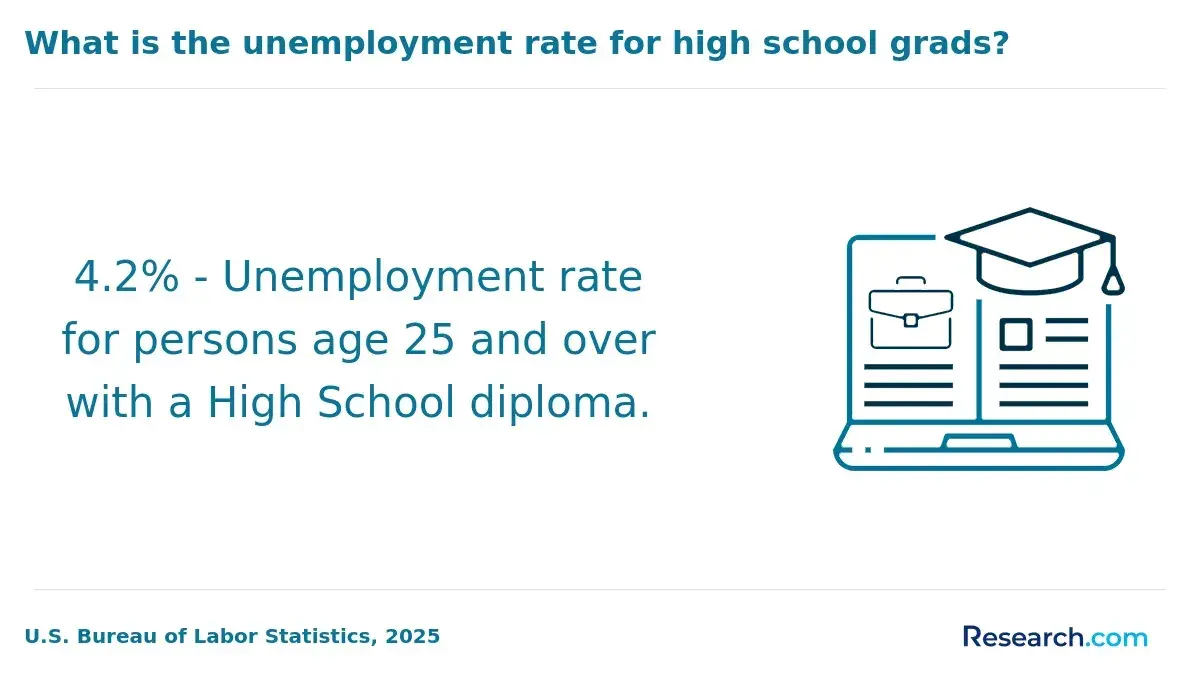
The biggest employers of general graduates are usually sectors with many coordination, communication, operations, customer, program, and administrative roles. These industries may not always pay the most at entry level, but they can provide the first professional experience needed to move into higher-paying functions.
BLS employment projections released in 2024 show total U.S. employment is expected to grow 4.0% from 2023 to 2033. For general graduates, that means the better question is not only "Which sector is growing?" but "Which sector has enough roles where my broad degree can become specialized experience?"
The industries below tend to hire general graduates at high volume because they need adaptable employees across departments:
- Healthcare and social assistance: hospitals, clinics, insurers, senior care organizations, and public health agencies hire program coordinators, patient access staff, operations analysts, HR assistants, and compliance support professionals.
- Professional and business services: consulting firms, staffing companies, marketing agencies, legal support firms, and corporate service providers hire research associates, account coordinators, project assistants, recruiters, and client operations staff.
- Education and government: schools, colleges, municipalities, state agencies, and federal contractors hire general graduates for advising, program administration, grants support, communications, policy support, and public-facing service roles.
- Finance, insurance, and real estate: banks, insurers, investment support firms, mortgage companies, and property organizations hire analysts, service representatives, compliance assistants, claims associates, and operations coordinators.
- Retail, hospitality, logistics, and consumer services: large employers in these sectors often hire general graduates into management trainee, workforce scheduling, procurement, customer experience, and branch operations roles.
High-volume hiring can be especially valuable for new graduates who need a first professional title. However, volume does not automatically equal strong earning potential. Before accepting a role, check whether the employer has a promotion path from coordinator to analyst, supervisor, manager, or specialist.
Industry salary rankings can change dramatically once location and cost of living are considered. A role paying more in a high-cost metro may offer less real spending power than a lower nominal salary in a mid-cost region, especially if housing, commuting, taxes, and childcare costs differ sharply.
Use the BLS May 2024 national median annual wage of $49,500 as a baseline, not as a target. If an entry-level offer is above that number, it may still be weak in an expensive city; if it is below that number, it may still be acceptable if the role provides training, benefits, and advancement in a lower-cost area.
When comparing offers across locations, evaluate the full economic picture before deciding:
- Compare the salary to local rent, transportation, taxes, insurance, and student loan payments rather than using national averages alone.
- Check whether the industry has multiple employers in the region, because a one-employer market can limit bargaining power and job mobility.
- Review hybrid or remote-work policies, since remote flexibility can improve effective compensation if it reduces commuting or relocation costs.
- Ask how raises are determined, including whether the employer uses cost-of-living adjustments, merit increases, promotion bands, or union contracts.
- Estimate the value of benefits such as retirement match, health coverage, tuition support, paid leave, and professional development funding.
Location can also affect which sectors are practical. Finance and media roles may cluster in major metros, energy and utilities roles may be stronger in certain regions, and healthcare administration roles are more widely distributed because hospitals and clinics operate in nearly every market.
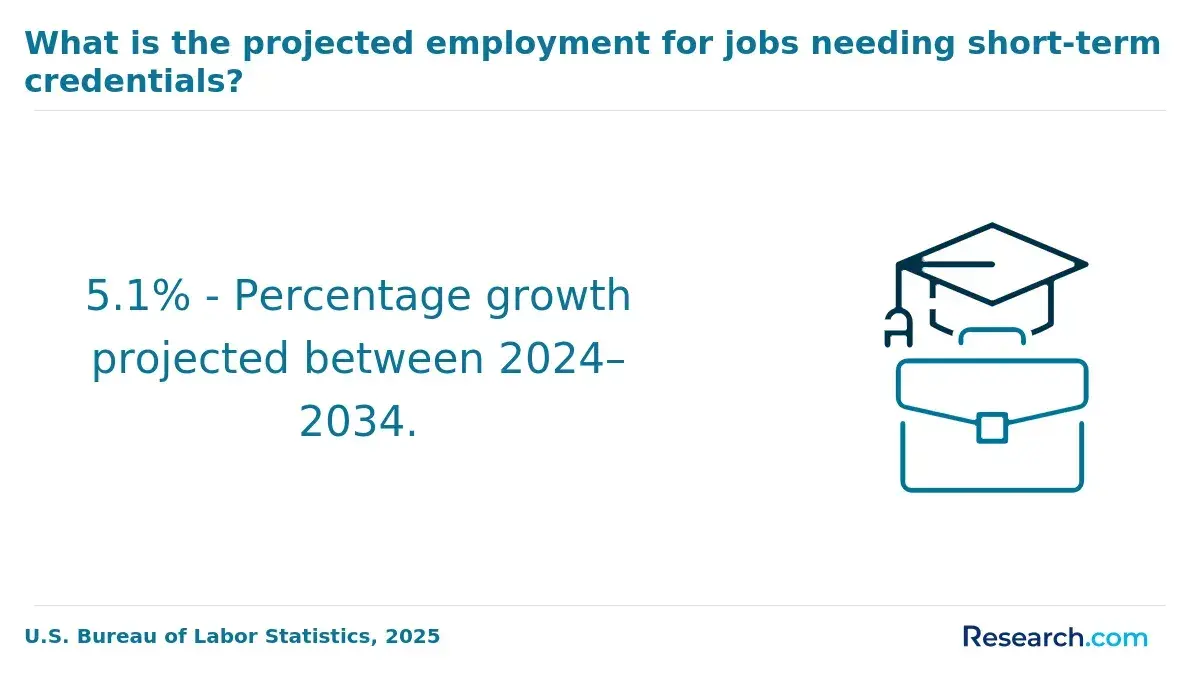
General graduates increase their earning power when they convert broad academic skills into employer-recognized capabilities. The most valuable skills are those that help an organization make decisions, improve operations, manage risk, serve customers, or grow revenue.
BLS May 2024 data shows computer and mathematical occupations had a median annual wage of $105,990, which helps explain why general graduates who add data, software, or systems skills often improve their salary prospects. Not every graduate needs to become a programmer, but technical fluency can make a broad degree more competitive.
The skill clusters below are especially useful across high-paying sectors:
- Data and analytical skills: spreadsheet modeling, dashboard tools, SQL basics, survey analysis, KPI reporting, and the ability to explain what numbers mean for business decisions.
- Project and operations skills: workflow mapping, scheduling, budgeting basics, vendor coordination, documentation, risk tracking, and process improvement.
- Communication and stakeholder management: executive summaries, presentations, client communication, interviewing, facilitation, and conflict resolution.
- Industry-specific systems knowledge: CRM platforms, HRIS tools, EHR systems, compliance databases, financial platforms, learning management systems, or ticketing systems.
- Leadership and people skills: coaching, supervision, performance feedback, cross-functional coordination, and ethical decision-making.
For graduates targeting management, finance, consulting, or operations leadership, structured business training can help fill gaps in accounting, strategy, analytics, and organizational behavior. One option for working adults is an AACSB accredited online MBA, especially when the goal is to move from broad early-career roles into higher-responsibility business positions.
The biggest mistake is listing soft skills without proof. Instead of saying you are "organized" or "a strong communicator," show evidence: reduced processing time, managed a student organization budget, built a dashboard, improved a volunteer program, coordinated an event, or wrote reports used by decision-makers.
Certifications can help general graduates signal job readiness, especially when their degree title is broad. The best credential depends on the industry: a project management certificate may help in operations, while a securities license may matter in finance and a healthcare administration credential may help in medical organizations.
The table below summarizes credentials that can improve credibility in different sectors. Requirements vary by employer, state, and role, so students should verify whether a credential is preferred, required, or only useful after gaining experience.
| Industry | Credentials that may help | Why they matter | Important limitation |
| Technology and analytics | Google Data Analytics Certificate, CompTIA certifications, cloud fundamentals, product management certificates | They show tool fluency and technical readiness for analyst, operations, or support roles. | Portfolios and work samples often matter as much as certificates. |
| Finance and insurance | SIE exam, Series licenses, insurance licenses, financial modeling certificates, anti-money laundering training | They can qualify graduates for regulated client, compliance, risk, or advisory support roles. | Some licenses require employer sponsorship or role-specific supervision. |
| Project management and operations | CAPM, PMP after experience, Lean Six Sigma, Agile or Scrum credentials | They help graduates show they can manage timelines, resources, stakeholders, and process improvements. | PMP eligibility requires professional project experience. |
| Healthcare administration | Healthcare compliance, revenue-cycle, medical coding, health information, or quality improvement credentials | They help nonclinical graduates understand regulated healthcare workflows. | Clinical roles may require a specific accredited degree, supervised hours, licensure, or state approval. |
| Human resources | SHRM-CP, PHR, HR analytics certificates, benefits administration training | They support roles in recruiting, employee relations, compensation, and workforce planning. | Some credentials are better after gaining HR experience. |
Some higher-paying paths are not accessible through a general degree alone because they require specialized graduate education and licensure. For example, students interested in communication disorders should compare accredited online speech language pathology programs and confirm state licensure requirements before assuming that a broad undergraduate degree is enough.
A useful rule is to choose credentials that employers repeatedly request in job postings for the roles you want. Avoid paying for certificates that are popular online but rarely mentioned by employers in your target industry.
Company size can strongly affect compensation, benefits, promotion speed, and job scope. Large organizations often have structured pay bands, formal training, tuition reimbursement, and clearer promotion ladders, while smaller employers may offer broader responsibilities, faster visibility, and more flexible roles.
BLS 2024 employee benefits data continues to show that access to major benefits such as retirement and health coverage is generally stronger in larger private establishments than in smaller ones. For general graduates, this means the highest salary offer is not always the best total compensation package.
The table below compares common employer types and how they tend to affect earnings and career development.
| Organization type | Typical earnings effect | Career advantage | Possible drawback |
| Large corporations | Often stronger salaries, bonuses, benefits, and internal mobility | Training programs, recognizable brand names, formal promotion paths | Roles may be narrow, competitive, or slower to change. |
| Startups and small firms | Cash pay can vary widely; equity may or may not become valuable | Broad responsibilities, faster learning, direct access to leaders | Less stability, fewer benefits, and unclear advancement paths |
| Government agencies | Salary growth may be structured and predictable | Stability, benefits, public service, pension potential in some systems | Hiring can be slow and pay ceilings may be lower than private-sector leadership roles. |
| Nonprofits | Often lower base pay, but mission alignment can be high | Program leadership, grant management, community impact, broad responsibility | Limited budgets can restrict raises and staffing support. |
| Universities and healthcare systems | Moderate pay with potential benefits and tuition support | Stable operations, internal mobility, specialized administrative paths | Promotion may require credentials or years of institutional experience. |
When evaluating an employer, ask about the level above your role, the skills needed to reach it, and the typical timeline for promotion. A general degree becomes more valuable when each job builds a clearer professional identity, such as operations analyst, compliance specialist, HR generalist, healthcare administrator, or product operations manager.
Emerging industries can be attractive for general graduates because they often need people who can learn quickly, coordinate across teams, explain complex ideas, and create structure in fast-changing environments. The best opportunities are usually not purely technical; they sit at the intersection of technology, regulation, customer adoption, operations, and communication.
BLS projections for 2023-2033 identify data scientists and information security analysts among the fastest-growing occupations, with projected growth of 36% and 33%, respectively. For general graduates, that does not mean every role must be technical, but it does show why data literacy and cybersecurity awareness can raise earning potential.
These emerging or expanding sectors may offer strong future earnings for adaptable graduates:
- Artificial intelligence operations and governance: roles may involve AI policy, workflow redesign, prompt evaluation, content quality, risk review, vendor management, and responsible-use documentation.
- Cybersecurity, privacy, and compliance: nontechnical roles include security awareness training, risk documentation, audit coordination, vendor review, privacy operations, and client communication.
- Healthcare technology and digital health: graduates can work in implementation, patient engagement, health IT support, quality improvement, product operations, and provider relations.
- Clean energy, utilities modernization, and infrastructure: opportunities include community engagement, permitting support, workforce coordination, procurement, safety documentation, and project administration.
- Workforce learning and education technology: employers need people who can design training, manage learning platforms, support users, analyze outcomes, and coordinate content development.
The best way to enter an emerging sector is to pair a broad degree with a targeted proof point: a portfolio, internship, certificate, industry project, relevant software skill, or volunteer experience. Employers are more likely to take a chance on a general graduate when the resume shows evidence of applied learning rather than interest alone.
The smartest industry choice balances salary, growth, fit, stability, benefits, and the type of work you want to do every day. A high-paying sector is not automatically the best choice if it requires tasks you dislike, work hours you cannot sustain, or technical expectations you are unwilling to build.
Use this decision process to compare industries before choosing a major concentration, internship, first job, or graduate program:
- Start with three target industries and collect current job postings for entry-level and early-career roles in each one.
- Identify repeated skills, tools, credentials, and responsibilities, then compare them with your current strengths and gaps.
- Check salary ranges, but also review benefits, promotion paths, remote-work options, and whether the sector is concentrated in expensive locations.
- Interview alumni, faculty, career services staff, or professionals in the field to learn what the work is actually like beyond job descriptions.
- Choose one near-term role that builds transferable experience, then define the next role you want within two to three years.
Students and adult learners should also consider life stage. For example, some learners comparing flexible pathways, career pivots, or enrichment-focused study may want to review college degrees for seniors to understand how online formats and career goals can align later in life.
Before making a final decision, watch for these common mistakes:
- Choosing an industry only because its average salary looks high, without checking entry-level roles or advancement requirements.
- Ignoring job stability, benefits, commute costs, and work-life balance when comparing compensation.
- Assuming a general degree is enough without building industry-specific skills, credentials, internships, or work samples.
- Staying in a low-growth administrative role too long without asking for projects that build marketable expertise.
- Using outdated salary information instead of current job postings, BLS data, employer pay ranges, and local market research.
A practical final test is to ask: "Will this industry help me become more specialized, more valuable, and more employable over time?" If the answer is yes, the sector may offer strong return on a general degree even if the first salary is not the highest available.
Long-term growth depends on whether an industry lets a general graduate become more specialized over time. The strongest career paths usually combine a broad degree with industry knowledge, measurable achievements, software fluency, and leadership responsibility.
The table below compares career-growth potential by sector. It focuses on advancement quality, not just starting salary, because many general graduates increase earnings by moving from support roles into management, analytics, compliance, sales leadership, or strategy.
| Industry | Long-term growth potential | Best fit for graduates who enjoy | Growth caution |
| Technology and information services | Very strong when graduates add product, data, customer success, or operations expertise | Learning new tools, solving ambiguous problems, working across technical and business teams | Skills can become outdated quickly, so continuous learning is essential. |
| Healthcare administration | Strong because healthcare organizations need managers for access, quality, staffing, compliance, and operations | Process improvement, people coordination, regulated environments, mission-driven work | Advancement may require healthcare-specific experience or graduate education. |
| Finance and insurance | Strong for graduates who move into risk, compliance, analysis, operations, or client management | Detail-oriented work, structured advancement, quantitative decision-making | Some roles require licensing, long hours, or sales pressure. |
| Consulting and professional services | Strong because project exposure can build transferable experience quickly | Client work, presentations, research, travel or varied assignments, fast feedback | Burnout risk can be higher if workloads and travel are intense. |
| Government and education administration | Moderate to strong, especially with supervisory, policy, grants, or institutional operations experience | Public service, stability, clear procedures, community impact | Promotion timelines may be slower than in private industry. |
Graduate education can matter more in sectors where leadership roles require stronger management, accounting, analytics, or strategic planning skills. For example, working professionals comparing business leadership pathways may look at a 1 year executive MBA online if they already have experience and want a faster route to senior management preparation.
A lower-paying industry can still be the smarter long-term choice when it offers strong supervision, recognized training, tuition support, stable benefits, or a clear path into leadership. The red flag is staying too long in a role that adds responsibilities without adding marketable skills, credentials, or advancement opportunities.
Other Things You Should Know About General
A general degree can be worth it when paired with marketable skills, internships, work experience, and a clear industry target. Earnings usually depend less on the degree title and more on the role, sector, location, employer, and advancement path.
Technology, finance, consulting, healthcare administration, and energy-related employers often offer the strongest salary upside. The best-paying route usually involves moving into analytics, operations, compliance, management, sales strategy, or product-related work.
Yes, but usually not immediately without experience. Many start in coordinator, analyst, assistant, customer success, HR, operations, or program roles and move into management after proving they can supervise people, manage projects, improve processes, and make decisions.
Choose the industry that offers the best mix of pay, growth, fit, and skill development. A fast-growing sector with clear promotion paths may produce better long-term value than a high-paying sector where you lack interest, credentials, or advancement opportunities.
- Career earnings by college major - The Hamilton Project https://www.hamiltonproject.org/data/career-earnings-by-college-major/
- What are the best paying jobs for graduates? https://targetjobs.co.uk/careers-advice/career-ideas/what-are-best-paying-jobs-graduates
- What job sectors pay the best graduate salaries? https://gradireland.com/careers-advice/career-ideas/what-job-sectors-pay-best-graduate-salaries
- 5 Highest Paying Industries in 2025 That Also Offer Career Growth https://www.careeros.com/resources/5-highest-paying-industries-in-2025-that-also-offer-career-growth
- New grads expect to earn over $100K right after college, on average-these are the top fields to achieve that https://www.cnbc.com/2025/04/23/career-fields-where-new-grads-can-command-a-100000-starting-salary.html
- 25 high-paying jobs that are projected to grow a lot over the next decade https://finance.yahoo.com/sectors/healthcare/articles/25-high-paying-jobs-projected-161527567.html
- 10 in-demand careers for the future https://www.vu.edu.au/about-vu/news-events/vu-blog/10-in-demand-careers-for-the-future
- College majors affect more than just average earnings | CEPR https://cepr.org/voxeu/columns/college-majors-affect-more-just-average-earnings
- Graduate Salaries, Current Graduate Salary Data | GRB https://www.grb.uk.com/career-advice/graduate-salaries/