2027 Psychology Degree Persistence Report: Retention, Stop-Out Risk, and Re-Enrollment Patterns

Co-Founder and Chief Data Scientist
Psychology is one of the most popular undergraduate fields, but staying enrolled through graduation is not automatic. NCES IPEDS data released in 2024 shows that about 78% of first-time, full-time students at 4-year institutions returned for a second year, making retention a practical quality signal for degree shoppers. This report is for prospective psychology students, transfers, adult learners, and families comparing programs. You will learn how retention, stop-out risk, learning format, support services, cost, and re-enrollment policies affect your odds of finishing.
Key Things You Should Know
- Use institution-level retention as a baseline: NCES IPEDS data released in 2024 places first-year retention for first-time, full-time students at 4-year institutions at about 78%, so psychology programs below their institutional peer group deserve closer review.
- Cost pressure is a major persistence risk: College Board data for 2024-25 lists average published tuition and fees at $11,610 for in-state public 4-year students, before housing, books, transportation, and lost income are considered.
- Persistence matters because many psychology careers require additional credentials: BLS May 2024 data places the median pay for psychologists at $94,310, but most psychologist roles require graduate education, supervised experience, and state licensure.
- What Do Retention Rates Reveal About Student Success in Psychology Degree Programs?
- Which Students Are Most at Risk of Stopping Out of a Psychology Degree Program?
What Do Retention Rates Reveal About Student Success in Psychology Degree Programs?
Retention rate measures whether students return after a defined period, usually from the first fall term to the next fall term. For psychology degree programs, retention is not a perfect measure of quality, but it is one of the clearest early indicators that students are receiving enough academic, financial, and advising support to keep moving toward graduation.
Psychology students should look at retention together with graduation rate, transfer outcomes, course availability, advising access, and the program's fit with their schedule. A high retention rate can suggest that students are satisfied and supported, but it does not prove that every student graduates on time. A lower rate may reflect affordability problems, weak advising, limited course sequencing, or a student population with more work and family obligations.
The table below explains the main persistence measures students should compare before enrolling. These metrics matter because each one answers a different question about whether a psychology program can help students make steady academic progress.
| Persistence measure | What it shows | How psychology students should use it |
| First-year retention rate | How many first-year students return for the next academic year | Use it as an early warning indicator of student support, advising quality, and academic fit |
| Graduation rate | How many students complete a credential within a defined time window | Compare it with retention to see whether students who stay enrolled are actually finishing |
| Stop-out pattern | Whether students pause enrollment temporarily rather than withdraw permanently | Ask whether the school has clear leave, re-entry, and academic renewal policies |
| Transfer-out rate | How many students leave to continue elsewhere | Distinguish negative attrition from students who transfer to a better-fitting psychology program |
| Credits earned toward degree | Whether students are completing required courses at a pace that supports graduation | Check whether key psychology methods, statistics, lab, and capstone courses are offered often enough |
NCES data released in 2024 also shows that 6-year completion for first-time, full-time students who began at 4-year institutions remains far from universal. For readers, the practical takeaway is simple: choose a psychology program that can show both strong early retention and a realistic pathway through required courses, especially research methods, statistics, practicum, and senior seminar requirements.
Which Students Are Most at Risk of Stopping Out of a Psychology Degree Program?
A stop-out happens when a student pauses enrollment with the possibility of returning later. It differs from dropping out because the student may still intend to complete the degree, but the interruption can affect financial aid, course sequencing, transfer credits, and graduation timing.
Psychology students are most at risk when academic demands, financial pressure, and life responsibilities rise at the same time. Introductory psychology courses may feel accessible, but the major often becomes more demanding when students reach statistics, research design, writing-intensive courses, and field experience requirements.
The table below summarizes common stop-out risk profiles. It is useful because risk is rarely caused by one problem; it usually grows when several barriers overlap.
| Student profile | Main persistence risk | Why it matters in psychology programs |
| First-generation students | Limited familiarity with advising, degree audits, financial aid rules, and academic policies | Psychology pathways can differ sharply depending on whether the student wants counseling, research, human services, business, education, or graduate study |
| Working adults | Schedule conflicts, fatigue, and inconsistent study time | Statistics labs, synchronous discussion courses, and field placements may be hard to fit around work shifts |
| Part-time students | Longer time to completion and greater exposure to life disruptions | Required courses may be offered only in certain terms, delaying progress if one course is missed |
| Transfer students | Lost credits or mismatched prerequisites | A course called developmental psychology, abnormal psychology, or research methods may not satisfy the same requirement at every school |
| Students with unmet financial need | Balance holds, reduced course loads, or work-hour increases | Even a short financial disruption can delay a course sequence and extend the degree timeline |
Common mistakes include assuming that psychology is an "easy" major, enrolling without a semester-by-semester plan, or waiting until midterm grades are poor before contacting an advisor. Students can reduce risk by confirming transfer credit early, building a realistic weekly study schedule, and asking whether the department monitors progress in gateway courses such as statistics and research methods.
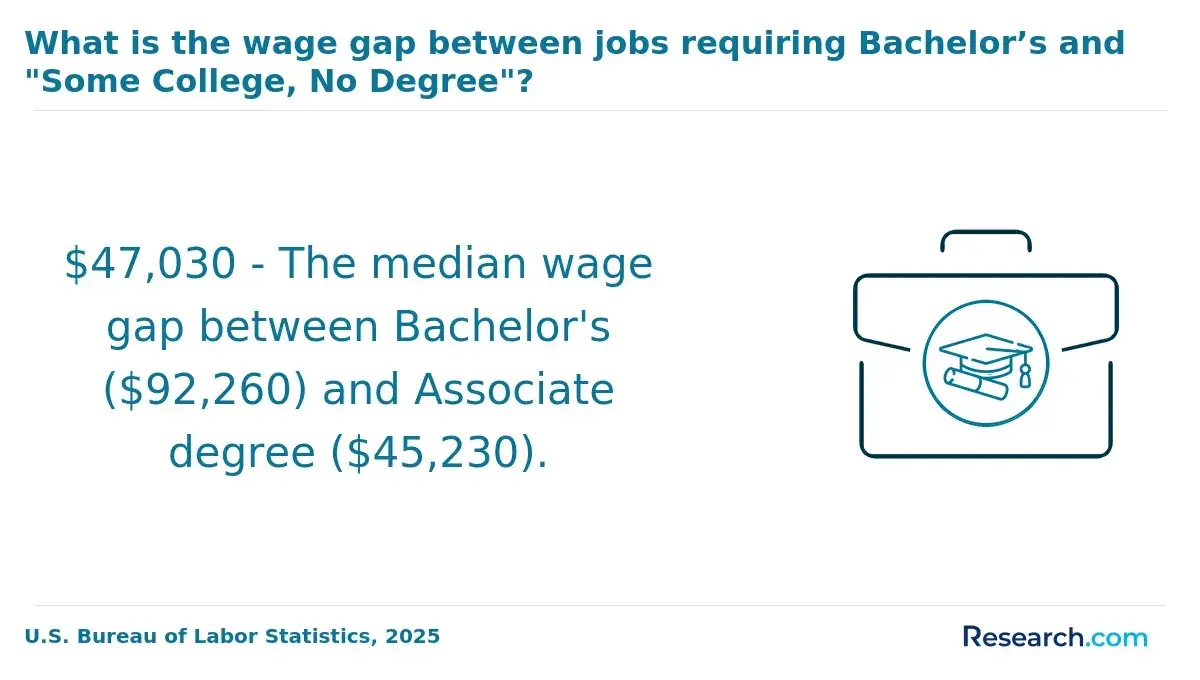
Psychology persistence often drops when students underestimate the academic structure of the major. A bachelor's program typically includes general education, introductory psychology, statistics, research methods, upper-division electives, writing-intensive assignments, and sometimes a capstone, practicum, or independent research project. Students considering other demanding healthcare paths, such as PharmD programs, will recognize a similar lesson: sequencing matters, and missing one required course can push later milestones out of reach.
Financial pressure is equally important. College Board's 2024-25 figures show average published tuition and fees of $11,610 for in-state students at public 4-year institutions, and that figure excludes housing, transportation, technology, books, and reduced work hours. For a psychology student, stopping out for one term may seem financially necessary, but it can also lead to additional costs if scholarships expire, courses must be repeated, or tuition rises before re-enrollment.
Before committing to a psychology program, students should pressure-test the academic and financial plan. The most important questions are not just "Can I get admitted?" but "Can I stay enrolled when the semester gets difficult?"
- Course sequencing: Ask whether statistics, research methods, and capstone courses are offered every term or only once per academic year.
- Financial aid continuity: Confirm how part-time enrollment, withdrawals, satisfactory academic progress, and leave of absence policies affect grants, loans, and scholarships.
- Balance holds: Ask whether unpaid balances block registration, transcript release, or re-enrollment.
- Academic recovery: Review tutoring, supplemental instruction, grade replacement, and academic probation policies before problems occur.
- Field experience requirements: If internships or practica are required, ask whether placements are flexible for students who work or care for family members.
A major red flag is a program that advertises affordability but cannot explain how students are supported after failing a gateway course or losing financial aid eligibility. Low tuition helps, but persistence depends on whether the school can help students solve problems quickly enough to avoid a stop-out.
Re-enrollment is possible for many psychology students, but returning is easier when the student leaves with a documented plan. The biggest risks are losing academic momentum, returning under a new catalog with different requirements, falling below satisfactory academic progress standards, or discovering that prior credits no longer apply cleanly.
The table below outlines common re-enrollment patterns. It is useful because the best return strategy depends on why the student stopped out and how long the break lasted.
| Re-enrollment pattern | Typical reason | Persistence implication |
| One-term pause | Short-term health, family, employment, or financial disruption | Often easier to recover if the student files a leave of absence and registers early for the next required course |
| Return after one academic year | Work schedule change, caregiving, relocation, or financial reset | May require a new degree audit and updated financial aid review |
| Transfer after stopping out | Need for a lower-cost, more flexible, or better-supported program | Can improve fit, but may delay graduation if upper-division psychology credits do not transfer |
| Adult learner return | Career advancement, unfinished degree completion, or graduate school preparation | Prior credits may help, but the student should verify current catalog, residency, and capstone requirements |
| Academic recovery return | Probation, failed courses, or low GPA | Requires a structured plan for tutoring, course repeats, reduced load, and GPA repair |
Students who may need to pause should take these steps before leaving. These actions reduce the chance that a temporary break becomes a permanent departure.
- Meet with an academic advisor and request a written degree audit showing completed, in-progress, and remaining psychology requirements.
- Ask whether a formal leave of absence is available and how it affects scholarships, loans, campus housing, and registration priority.
- Confirm whether catalog requirements can change during the break and whether completed credits will still apply.
- Resolve unpaid balances or create a payment plan so registration and transcript access are not blocked.
- Choose a target re-entry term and identify the exact course or courses needed when returning.
Transferring can make sense when a school is unaffordable, required courses are unavailable, or the program format no longer fits the student's life. It can delay graduation when credits transfer only as electives, when the new school requires additional residency credits, or when the student changes from a general psychology track to a specialized concentration with different prerequisites.
Strong psychology persistence usually reflects a connected support system rather than one isolated service. Students need early advising, faculty access, academic help in quantitative courses, career planning, financial aid counseling, and mental health support that is easy to use before a crisis occurs.
The table below summarizes support services that are especially relevant to psychology majors. It helps students distinguish ordinary campus resources from services that directly affect degree progress.
| Support service | Why it matters for psychology students | Quality signal to look for |
| Major-specific advising | Psychology pathways vary for counseling, research, human services, education, HR, and graduate study | Advisors can map courses by career goal and explain graduate school prerequisites |
| Statistics and research methods tutoring | Quantitative and methods courses are common stumbling blocks | Tutoring is available before exams and major assignments, not only after failing grades appear |
| Faculty mentoring | Mentoring helps students choose labs, internships, references, and graduate school options | Students can meet faculty outside class through research groups, office hours, or advising events |
| Career services for psychology majors | A bachelor's in psychology can lead to many fields, but career paths are not always obvious | Career staff can connect the major to roles in human services, research support, business, education, and healthcare administration |
| Financial aid counseling | Financial disruptions can trigger stop-outs quickly | Counselors explain satisfactory academic progress, emergency aid, loan limits, and part-time aid rules |
| Accessible mental health and wellness support | Stress, burnout, and personal crises affect persistence | Support is confidential, timely, and available through multiple access points |
When comparing schools, do not stop at "we offer advising." Ask how often psychology majors meet advisors, whether students are alerted after missed assignments or low early grades, and whether online students can access the same services as campus students. A strong program should be able to explain how it identifies students at risk and what happens next.
Persistence affects both time-to-degree and career planning. A student who completes credits consistently is more likely to reach internships, research experience, references, and graduate school applications on schedule. A student who stops out may still graduate, but the delay can affect financial aid eligibility, tuition exposure, and the timing of entry-level work or graduate study.
Career outcomes in psychology depend heavily on degree level. BLS May 2024 data reports a median pay of $94,310 for psychologists, but most psychologist roles require a doctoral degree, supervised clinical or professional experience, and state licensure. A bachelor's degree in psychology can still be valuable, but students should connect the degree to realistic roles such as case management support, behavioral health technician work, research assistance, HR, sales, customer insights, or graduate preparation.
Some students compare psychology with adjacent human movement, wellness, or behavioral science pathways, including the best kinesiology programs, because both fields can lead to people-focused careers. The key difference is that psychology students should plan early for whether they want a bachelor's-level job, a master's program, or doctoral/licensure preparation.
The table below shows how enrollment patterns can affect graduation timing. It is not a promise of completion time, but it helps students see why consistent credit momentum matters.
| Enrollment pattern | Likely effect on timeline | Career planning impact |
| Consistent full-time enrollment | Supports a traditional 4-year bachelor's timeline if courses are passed and available | Allows earlier planning for internships, research, graduate exams, and recommendation letters |
| Part-time enrollment every term | Extends time to degree but may be sustainable for working students | Requires long-range planning for internships and graduate application deadlines |
| One-term stop-out | May delay graduation if required courses are sequential or offered annually | Can shift internship, capstone, or graduate application timing |
| Repeated stop-outs | Can compound delays and increase the chance of requirement changes | May require career counseling to identify interim employment or credential options |
| Transfer after stop-out | Can shorten or lengthen the path depending on accepted credits | Requires careful alignment of new program requirements with career goals |
The practical rule is to protect momentum in courses that unlock later requirements. For psychology majors, that often means completing statistics and research methods as early as appropriate, maintaining relationships with faculty, and saving syllabi from prior courses in case transfer credit must be evaluated later.
The strongest psychology persistence outcomes usually appear in programs where institutional retention, major-level advising, flexible course access, and clear career pathways work together. Public datasets often report retention at the institution level rather than the psychology-major level, so students should avoid assuming that a school's overall retention rate perfectly represents the psychology department.
A strong psychology program does not have to be the most expensive or the most selective. It should show that students can get required courses, recover from academic difficulty, access faculty, and understand where the degree leads. Regional institutional accreditation is essential for credit transfer and graduate school recognition, while psychology-specific accreditation is generally more relevant at the doctoral, internship, and professional training levels than at the bachelor's level.
The table below identifies program features that are associated with stronger persistence. Use it to compare psychology programs side by side rather than relying on reputation alone.
| Program feature | Why it supports persistence | Red flag |
| Transparent retention and graduation data | Shows whether students are returning and completing at reasonable levels | The school will not explain retention, completion, or transfer outcomes |
| Reliable course rotation | Helps students complete prerequisites, methods, electives, and capstones without long delays | Required courses are offered rarely or conflict with common work schedules |
| Psychology-specific advising | Connects course planning with career and graduate school goals | Students receive only general advising with little major-specific guidance |
| Support for quantitative courses | Statistics and research methods often affect progression | Tutoring is generic or unavailable for psychology research assignments |
| Career and experiential learning options | Internships, labs, service learning, and projects help students see the purpose of staying enrolled | The program cannot explain how students gain experience before graduation |
| Clear re-enrollment policy | Helps students return after life or financial disruptions | Leave, readmission, catalog, and credit rules are difficult to find |
Students should ask programs for the most recent institution-level retention rate, psychology department course completion patterns if available, and the graduation rate for students in similar enrollment categories. If a school serves many part-time, transfer, or adult students, compare it with institutions serving similar populations rather than with highly residential colleges that enroll mostly full-time students.
Psychology student persistence is being shaped by several current trends: demand for flexible learning, rising costs, increased attention to mental health, more transfer mobility, and stronger pressure to connect majors with career outcomes. Students are asking not only whether they like psychology, but whether the program can support a realistic pathway to employment, graduate school, or a related field.
AI and data tools are also changing the field. Psychology students increasingly encounter research software, survey platforms, analytics, and ethical questions about technology in human behavior. Students interested in more technical pathways sometimes compare psychology with data-intensive options and related outcomes such as bioinformatics major jobs. That comparison can be useful if the student is deciding whether they want a people-centered behavioral science path, a quantitative research path, or a more computational career track.
Cost pressure remains a central trend. The 2024-25 published tuition figures from College Board make clear that even public in-state study requires planning beyond tuition alone. For persistence, the issue is not simply the total price of a degree; it is whether the student can afford the next term without reducing credits so much that completion becomes unlikely.
Students should expect more programs to expand online advising, early-alert systems, degree-planning dashboards, and short-term emergency aid. These tools can help, but they are not substitutes for human support. A strong persistence strategy combines technology with accessible advisors, faculty mentoring, and clear financial counseling.
The best way to evaluate psychology programs is to combine public data with program-specific questions. Retention matters, but it should not be the only factor. A program with moderate retention but excellent flexibility may be a better fit for a working adult than a highly residential program with stronger overall numbers but limited online or evening options.
Use the following steps when comparing psychology degree programs. They are designed to help you identify schools that can help you stay enrolled, overcome setbacks, and graduate with a usable plan.
- Check the institution's first-year retention rate, graduation rate, transfer-out rate, and net price through official college reporting tools.
- Ask whether the psychology department tracks course success in statistics, research methods, capstone, and other gateway requirements.
- Request a sample degree plan for your enrollment status, including full-time, part-time, online, transfer, or adult learner pathways.
- Confirm how often required psychology courses are offered and whether online students have equal access to advising, tutoring, and faculty support.
- Review financial aid rules for part-time enrollment, withdrawals, repeated courses, satisfactory academic progress, and leave of absence.
- Ask what happens when a student earns a low midterm grade, misses registration, or falls behind financially.
- Compare career support by asking where recent psychology graduates go, including employment, graduate school, internships, and service roles.
- Read re-enrollment policies before you need them, including catalog rights, readmission deadlines, transcript holds, and credit expiration rules.
Avoid common mistakes such as choosing based only on tuition, assuming all credits will transfer, ignoring course rotation, or waiting too long to ask for help. If you already know you will need to work substantial hours, care for family members, or attend part time, prioritize flexibility and advising over prestige alone.
The strongest choice is the program that fits your academic preparation, budget, schedule, career goal, and support needs. Retention data helps you ask better questions, but your personal persistence plan determines whether the program is realistic for you.
Psychology students often choose between online, hybrid, and campus programs, as well as full-time and part-time enrollment. The best format is not the same for everyone. A campus program may provide stronger in-person mentoring and research opportunities, while an online program may help working adults stay enrolled because travel time and scheduling barriers are lower.
Programs in other applied fields, including flexible LPN programs, show why format should be evaluated around real student constraints rather than convenience alone. Psychology students should ask whether the format supports advising, tutoring, group projects, instructor feedback, and access to experiential learning.
The table below compares persistence considerations by format and enrollment status. It helps clarify when a choice may support completion and when it may create hidden risks.
| Enrollment choice | Persistence advantage | Potential risk | Best fit |
| Full-time campus | Faster credit accumulation and easier access to faculty, labs, clubs, and peer networks | Higher term cost and less schedule flexibility | Students who can prioritize school and want research, honors, or graduate school preparation |
| Part-time campus | Lower course load and more time for work or family responsibilities | Longer time to degree and possible delays if required courses rotate infrequently | Students with stable local access and responsibilities that limit weekly study hours |
| Full-time online | Geographic flexibility and faster progress without relocation | Requires strong self-management and dependable technology | Motivated students who can protect study time and use virtual support services |
| Part-time online | Maximum flexibility for working adults and caregivers | Extended timeline, isolation, and greater chance of losing momentum | Students who need flexibility but can follow a long-term academic plan |
| Hybrid | Combines online convenience with some in-person support | Commuting requirements may still interfere with work schedules | Students near campus who want flexibility without losing face-to-face connection |
The most common mistake is assuming that online and campus psychology programs provide the same level of support. Before enrolling, students should test the advising system by asking how quickly online students receive help, whether tutoring is available outside business hours, and how research or internship experiences are handled remotely.
Other Things You Should Know About Psychology
Both matter. Retention shows whether students return early in the program, while graduation rate shows whether students eventually finish. A strong psychology program should have reasonable results on both measures and be able to explain support for students who fall behind.
No. Many students return after a temporary break, especially if they leave with a formal plan. Before stopping out, confirm leave policies, financial aid effects, catalog rules, remaining credits, and the exact term when you plan to re-enroll.
Not necessarily. Online programs can support persistence for working adults and caregivers, but only when advising, tutoring, faculty access, and course scheduling are strong. Students should ask whether online learners receive the same support as campus students.
A major red flag is lack of transparency. If a school cannot explain retention, graduation, course availability, advising access, transfer credit rules, or re-enrollment policies, students may face avoidable delays after enrolling.
See What Experts Have To Say About Studying Psychology
Read our interview with Psychology experts

Robin M. Kowalski. Ph.D.
Psychology Expert
Professor of Psychology
Clemson University

Elizabeth L. Jeglic Ph.D.
Psychology Expert
Professor of Psychology
City University of New York

Joann Farrell Quinn, Ph.D., MBA
Psychology Expert
Director at the College of Medicine Department of Medical Education
Morsani College of Medicine

- How many people drop out of college: Statistics analysis [2025] https://www.wooclap.com/en/blog/how-many-people-drop-out-of-college/
- 5 Strategies to Boost Student Retention in Higher Education https://moderncampus.com/blog/factors-affecting-student-retention.html
- 8 Overlooked Factors Affecting Student Persistence and Retention - Collegis Education https://collegiseducation.com/insights/student-persistence-and-retention/
- What Factors Impact Student Retention? https://www.quadc.io/blog/what-factors-impact-student-retention
- College Dropout Rate [2025]: by Year + Demographics https://educationdata.org/college-dropout-rates
- Students at Risk: sociodemographic variables and university dropout http://educa.fcc.org.br/scielo.php
- The Role of University Support Services in Addressing Mental ... https://journal.iistr.org/index.php/APSA/article/download/1133/773
- Strategies For Re-Enrolling Students With Some College https://www.trellisstrategies.org/unlocking-potential-strategies-for-re-enrolling-students-with-some-college-but-no-credential/
- Stop Out Students: Proven Re-enrollment Strategies (2025) - Campus Mind https://www.campusmind.org/stop-out-students-re-enrollment-strategies/
- College Counseling Utilization Up 30%: Meet the Demand https://faspsych.com/blog/a-new-era-of-help-seeking-why-college-students-are-more-open-to-counseling-than-ever/