2027 Psychology Degree Job Posting Analysis: Skills, Credentials, and Experience Employers Request Most Often

Co-Founder and Chief Data Scientist
Psychology graduates often face a practical question: which qualifications actually matter to employers? The answer depends on the role, setting, and level of responsibility. The U.S. Bureau of Labor Statistics reports a May 2024 median wage of $94,310 for psychologists and projected 7% growth from 2024 to 2034, signaling steady demand but also clear credential expectations.
This guide is for students, recent graduates, and career changers who want to compare psychology job postings, identify high-value skills, and choose coursework, internships, certifications, or graduate study more strategically.
Key Things You Should Know
- Psychology job postings most often reward a combination of human-service skills, documentation ability, ethics, assessment literacy, and direct experience with clients, patients, students, research participants, or community populations.
- Credential expectations vary sharply: bachelor's-level postings often target case management, behavioral technician, HR, research assistant, and social service roles, while counseling, school, clinical, and psychologist roles usually require graduate education, supervised hours, and state licensure.
- BLS data shows psychologists had a May 2024 median wage of $94,310 and projected 7% employment growth from 2024 to 2034, but many psychology degree holders enter adjacent roles where salaries, licensure rules, and advancement paths differ substantially.
- Which Industries Have the Highest Demand for Psychology Graduates?
- Which Job Titles Appear Most Frequently in Psychology Degree Job Postings?
Which Industries Have the Highest Demand for Psychology Graduates?
Psychology degree demand is broad because employers use psychological training in mental health, education, human services, research, operations, and workforce support. The highest-demand industries are typically those that need people who can understand behavior, document interactions, manage sensitive information, and work with vulnerable or complex populations.
The table below summarizes where psychology graduates most commonly find relevant job postings and what employers usually emphasize in each setting. Use it to decide whether your résumé should lead with counseling exposure, research methods, crisis response, data skills, or workplace communication.
| Industry or employer setting | Common psychology-related postings | What employers usually request | Best fit for students who want |
| Healthcare and behavioral health | Behavioral health technician, case manager, intake coordinator, mental health counselor, psychometrist | Client documentation, crisis de-escalation, HIPAA awareness, treatment team collaboration, supervised clinical experience | Direct care, clinical preparation, or graduate counseling pathways |
| Education and student services | School support specialist, academic advisor, student success coach, school psychologist assistant | Child development knowledge, communication with families, intervention tracking, special education familiarity | Work with children, adolescents, or college students |
| Government and community services | Probation support, victim advocate, social services specialist, community outreach coordinator | Case notes, resource referral, trauma-informed communication, policy compliance | Public service, advocacy, or community mental health |
| Business, HR, and organizational settings | HR coordinator, training specialist, employee relations assistant, people analytics assistant | Interviewing, conflict resolution, employee data handling, organizational behavior knowledge | Workplace psychology, talent development, or business roles |
| Research, technology, and user experience | Research assistant, UX researcher assistant, survey coordinator, behavioral data analyst | Research design, statistics, survey tools, qualitative interviewing, data visualization | Data-oriented, research-focused, or tech-adjacent careers |
Healthcare and behavioral health employers tend to post the clearest psychology-specific requirements because the work involves patient safety, documentation, and compliance. Students comparing direct patient-care routes may also look at LPN programs, but psychology graduates should recognize that behavioral health roles usually emphasize communication, observation, and psychosocial support more than medical procedures.
One common mistake is assuming that "psychology jobs" exist only in therapy offices. In practice, many bachelor's-level openings are in case management, student support, HR, research operations, and nonprofit services, while licensed therapy and independent assessment roles require more advanced credentials.
Which Job Titles Appear Most Frequently in Psychology Degree Job Postings?
Job titles matter because they signal the level of responsibility and the credentials an employer is likely to expect. A psychology bachelor's degree may qualify candidates for support and coordination roles, while titles involving diagnosis, psychotherapy, or independent assessment typically require graduate training and licensure.
The following table organizes common posting titles by likely credential level. This is useful when deciding whether to apply now, build experience first, or plan for graduate school.
| Job title category | Examples seen in psychology-related postings | Typical minimum education | What the role usually involves |
| Bachelor's-level human services | Case manager, behavioral health technician, residential counselor, intake specialist | Bachelor's degree often preferred or required | Client support, referrals, behavioral observation, documentation, safety monitoring |
| Research and academic support | Research assistant, lab coordinator, survey specialist, program evaluator assistant | Bachelor's degree; statistics coursework often preferred | Data collection, participant scheduling, literature reviews, coding, reporting |
| Education and student support | Student success coach, school support specialist, academic advisor | Bachelor's degree; master's sometimes preferred | Advising, intervention planning, student communication, records management |
| Clinical graduate-level roles | Mental health counselor, therapist, marriage and family therapist, clinical social work associate | Master's degree plus supervised licensure path | Assessment, treatment planning, counseling, progress notes, crisis response |
| Psychologist roles | Clinical psychologist, counseling psychologist, school psychologist, neuropsychologist | Doctoral or specialist-level education depending on state and role | Diagnosis, testing, psychotherapy, consultation, supervision, specialized assessment |
For students reviewing postings, the most important filter is not the word "psychology" in the title; it is whether the job includes regulated activities. If the posting mentions diagnosis, therapy, psychological testing, independent treatment planning, or licensure, a bachelor's degree alone is usually not enough.
For bachelor's graduates, the most realistic first roles often build experience rather than provide independent clinical authority. Those roles can still be valuable because graduate programs and employers often value documented exposure to clients, research, or community programs.
Employers rarely hire psychology graduates for theory knowledge alone. They look for evidence that candidates can communicate clearly, handle sensitive situations, document accurately, follow ethical procedures, and use basic data or software tools.
The table below separates frequently requested skills into practical categories. This helps you decide which skills to highlight in your résumé and which gaps to close through coursework, volunteer work, internships, or short training.
| Skill category | Skills commonly requested | Why employers value it | How candidates can show evidence |
| Client and interpersonal skills | Active listening, empathy, rapport building, conflict resolution, cultural sensitivity | Many psychology-related roles involve people under stress, transition, or crisis | Internship examples, service-learning, peer mentoring, crisis line training, supervisor feedback |
| Documentation and compliance | Case notes, progress notes, confidentiality, HIPAA awareness, mandated reporting awareness | Employers need accurate records and legally careful handling of private information | Documentation training, practicum logs, EHR exposure, compliance modules |
| Behavioral and clinical support | Behavior observation, de-escalation, treatment plan support, psychoeducation, risk screening support | Support roles often require safe, structured interaction with clients or patients | Behavioral technician work, residential care experience, supervised clinical exposure |
| Research and analytical skills | Statistics, survey design, SPSS, R, Excel, qualitative coding, literature review | Research and program roles need evidence-based reasoning and clean data handling | Research assistant work, methods courses, capstone projects, portfolio samples |
| Workplace and professional skills | Teamwork, time management, professionalism, written communication, problem-solving | Psychology graduates often coordinate with supervisors, clinicians, families, agencies, or HR teams | Project examples, recommendation letters, leadership roles, measurable outcomes |
Technical skills are most important in research, HR analytics, program evaluation, UX, and assessment-support roles. Soft skills are most important in direct service, behavioral health, education, and crisis-oriented settings. The strongest candidates usually combine both: they can work well with people and produce accurate, usable records.
A practical way to prioritize skills is to compare 10 to 15 postings for your target role and mark which requirements appear repeatedly. If "case documentation" appears in most postings and "SPSS" appears only in research postings, your next step should depend on whether you want client-service roles or data-heavy roles.
Experience expectations vary more by job function than by degree title. Entry-level support roles may accept classroom preparation plus volunteer work, while clinical, supervisory, research, or assessment-heavy positions often require documented experience with specific populations, tools, or regulated settings.
The table below shows how experience requirements usually differ by career stage. Use it to interpret postings realistically rather than treating every "preferred" requirement as a reason not to apply.
| Candidate level | Typical experience language in postings | What employers are trying to verify | Strong evidence to provide |
| Pre-graduation or internship level | Coursework, volunteer experience, practicum, interest in behavioral health or research | Reliability, basic professionalism, willingness to learn, comfort working with people | Internship hours, service-learning, research lab participation, campus leadership |
| Entry-level graduate | 0 to 2 years preferred, experience with clients, data, children, crisis settings, or documentation | Ability to transfer academic knowledge into workplace behavior | Capstone projects, case-note practice, supervised fieldwork, measurable project outcomes |
| Early career | 1 to 3 years in human services, education, research, HR, or behavioral health | Independent task management and familiarity with real-world systems | Performance metrics, supervisor references, software examples, population-specific experience |
| Licensed or advanced roles | Supervised clinical hours, post-degree experience, license eligibility, specialized assessment experience | Legal authority, ethical judgment, and ability to manage higher-risk responsibilities | Licensure status, supervision documentation, treatment populations, assessment instruments used |
BLS data for substance abuse, behavioral disorder, and mental health counselors shows a May 2024 median wage of $59,190 and much faster-than-average projected growth from 2024 to 2034. For students, the lesson is that demand is real, but many counseling roles require a graduate degree and supervised licensure rather than psychology coursework alone.
Do not wait until the final semester to build experience. Employers often treat internships, research assistantships, crisis-line volunteering, peer mentoring, residential care work, and community program roles as proof that you can handle the emotional, ethical, and administrative demands of psychology-related work.
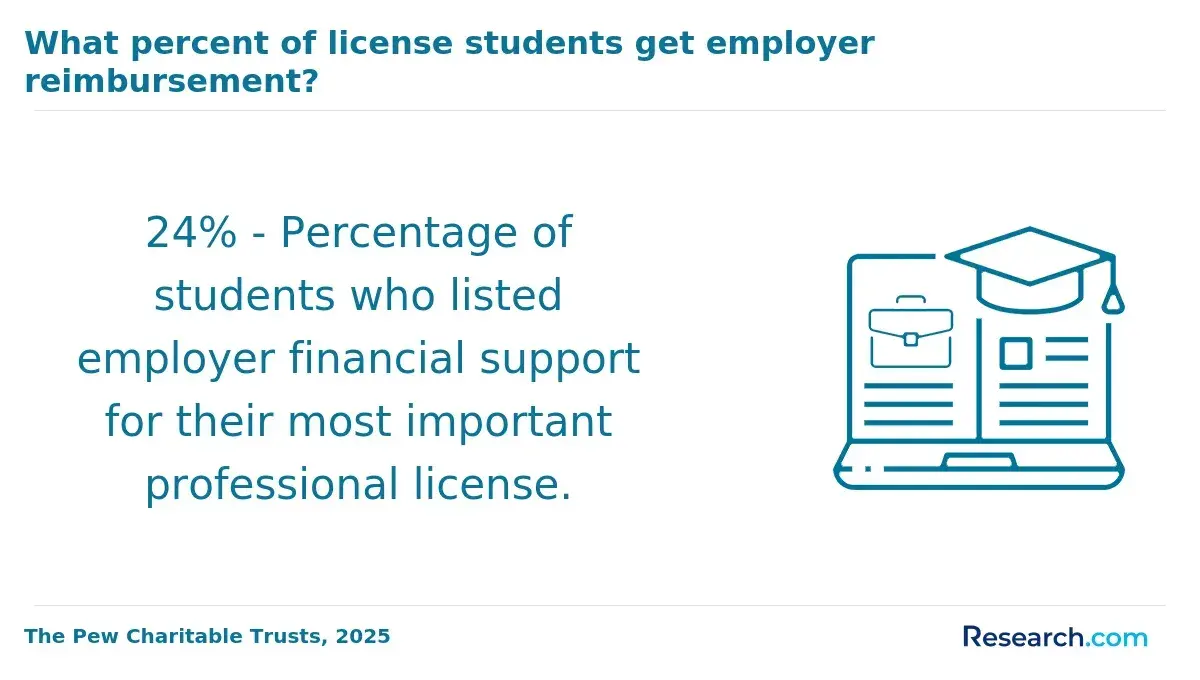
Certifications can help, but they should be chosen carefully. The best certification is one that appears in postings for your target role or directly supports regulated, safety-sensitive, or population-specific work.
The table below separates commonly useful credentials from credentials that are only valuable in certain paths. Always check employer requirements and state rules before paying for training.
| Certification or training area | Where it is most useful | How employers may view it | Important caution |
| CPR, First Aid, or Basic Life Support | Residential care, schools, hospitals, community programs | Often required for roles involving physical safety or vulnerable populations | Must be kept current through approved providers |
| Crisis prevention or de-escalation training | Behavioral health, youth services, inpatient or residential settings | Shows readiness for emotionally intense or safety-sensitive environments | Employer may require its own approved version |
| Registered Behavior Technician | Autism services, applied behavior analysis support roles | Can be a strong differentiator for ABA-focused postings | Useful mainly if you want behavior intervention work |
| Mental Health First Aid | Schools, nonprofits, community outreach, student support | Signals basic awareness of mental health response and referral | Not a substitute for counseling licensure |
| Human subjects research training | Research labs, universities, hospitals, program evaluation | Helpful for roles involving participants, consent, or research ethics | Often institution-specific and may need renewal |
| SHRM or HR-related credentials | Human resources, training, employee relations | May strengthen business psychology or organizational behavior applications | Less relevant for clinical or counseling paths |
Before choosing a certification, read postings for the exact role you want and separate "required," "preferred," and "nice to have" language. A certification is worth prioritizing when it repeatedly appears in required or preferred qualifications, helps satisfy safety rules, or gives you supervised practice with a population you want to serve.
A common red flag is collecting unrelated certificates without building experience. Employers are usually more persuaded by a smaller set of relevant credentials supported by internships, documentation practice, and supervisor references.
Employer expectations differ because psychology is not one labor market. A hospital, school district, HR department, university lab, and nonprofit may all value psychology training, but they define "qualified" in different ways.
The table below compares how postings change by setting. This can help you tailor your résumé instead of sending the same application to every psychology-related role.
| Posting type | Credentials emphasized | Skills emphasized | Experience emphasized |
| Clinical or behavioral health support | Psychology, social work, counseling, human services, or related degree | De-escalation, documentation, confidentiality, care team communication | Direct client contact, crisis settings, residential or outpatient exposure |
| School and youth services | Psychology, education, child development, counseling, or related field | Family communication, developmental knowledge, intervention tracking | Work with children, adolescents, special education, tutoring, mentoring |
| Research and evaluation | Psychology, statistics, neuroscience, public health, or social science degree | Data collection, statistical software, surveys, literature review | Lab work, thesis, research methods, IRB or human subjects exposure |
| HR and organizational roles | Psychology, business, HR, organizational behavior, or related field | Interviewing, employee communication, training coordination, data handling | Office work, leadership, HR internship, recruiting or training projects |
| Health, wellness, and performance settings | Psychology, health sciences, kinesiology, wellness, or related field | Behavior change, coaching communication, motivation, program support | Wellness programs, coaching, fitness or rehabilitation-adjacent exposure |
Students interested in behavior, wellness, motivation, and performance may compare psychology pathways with health-focused options such as the best kinesiology programs. The best choice depends on whether you want to focus more on mental processes, physical movement, rehabilitation support, coaching, or health behavior change.
Résumé tailoring is not keyword stuffing. It means showing the most relevant evidence first: clinical postings should see client safety and documentation; research postings should see methods and tools; HR postings should see communication, training, and workplace judgment.
Psychology-related hiring is being influenced by telehealth, electronic records, data-informed care, AI-enabled tools, and growing expectations around culturally responsive service. These trends do not replace core psychology skills, but they change how employers evaluate readiness.
The table below highlights emerging skills that are increasingly useful across psychology-adjacent roles. Treat these as differentiators unless a posting clearly lists them as required.
| Emerging skill area | Where it appears | Why it matters | Candidate evidence |
| Telehealth and virtual communication | Counseling support, intake, coaching, care coordination | Many services now involve remote screening, scheduling, follow-up, or support | Experience with secure video platforms, professional online communication, privacy awareness |
| Electronic health record familiarity | Behavioral health, hospitals, community clinics | Employers need accurate, timely, compliant documentation | Training modules, practicum documentation, exposure to EHR workflows |
| Measurement-based care awareness | Clinical support, counseling programs, program evaluation | Organizations increasingly track outcomes, screening tools, and progress indicators | Assessment coursework, survey tools, outcome-tracking projects |
| AI literacy and responsible tool use | Research, HR, administrative support, documentation workflows | Employers want candidates who can use technology without violating privacy or ethics | Clear examples of ethical AI use, data privacy training, human review practices |
| Data visualization and reporting | Research, HR analytics, nonprofit programs, UX research | Decision-makers need findings summarized clearly | Excel dashboards, R or Python projects, survey reports, program evaluation summaries |
AI literacy is especially important because psychology work often involves sensitive personal information. A strong candidate understands that AI tools may help organize ideas or analyze nonconfidential data, but they should not be used carelessly with private client, patient, student, or participant information.
Students drawn to data-heavy behavioral research may also explore adjacent analytics paths, including bioinformatics major jobs, to understand how statistical reasoning, research design, and ethical data handling can transfer into scientific and healthcare-adjacent labor markets.
The best way to become a stronger psychology candidate is to reverse-engineer the postings you actually want. Instead of guessing which skills matter, compare current openings by role, setting, and credential level.
Use the following process to turn job postings into a practical development plan. It helps you prioritize high-value qualifications without overinvesting in credentials that do not match your target path.
- Choose one target role category, such as case manager, research assistant, HR coordinator, behavioral health technician, school support specialist, or therapist trainee.
- Collect 10 to 15 current postings from the same role category and geographic region so you are comparing similar employer expectations.
- Mark each requirement as required, preferred, or differentiating, paying special attention to licensure, degree level, population experience, software, and documentation skills.
- Identify the top three repeated gaps in your background, such as client contact, statistics, crisis training, EHR familiarity, or child development experience.
- Choose one experience-building action, one skill-building action, and one résumé update rather than trying to improve everything at once.
- Recheck postings every few months because employer expectations can change with funding, regulation, technology, and local labor-market conditions.
For most students, experience should come before extra certifications unless a certification is repeatedly listed as required. A student with supervised client exposure, strong references, and accurate documentation practice is often more competitive for support roles than a student with several unrelated certificates and no practical experience.
Common mistakes include applying only to jobs with "psychology" in the title, ignoring preferred qualifications that appear repeatedly, using one generic résumé, and assuming graduate school is the only next step. Graduate study can be the right move for licensed practice, but for research, HR, student services, and community roles, targeted experience may be the better immediate investment.
Job posting trends should not dictate your entire career, but they can prevent costly mismatches. The goal is to choose a path where your interests, tolerance for additional schooling, desired work environment, and employer expectations align.
Before committing to a psychology pathway, ask questions that reveal whether the role fits your goals and constraints. These questions are especially important if you are deciding between entering the workforce, earning a certification, or applying to graduate school.
- Do I want direct client contact, research work, organizational problem-solving, education support, or data analysis?
- Does my target role require state licensure, supervised hours, a specific accredited program, or an exam?
- Can I build relevant experience before graduation through internships, research labs, crisis lines, peer support, or community agencies?
- Which skills appear repeatedly in postings for my preferred setting, and which are only occasional preferences?
- Am I willing to complete graduate training if independent counseling, testing, diagnosis, or psychologist licensure is my goal?
- What salary range and advancement path are realistic for the roles I am targeting, based on occupation-level labor data rather than assumptions about the major?
Salary context should be interpreted by occupation, not by degree name. A psychology graduate working as a research assistant, HR coordinator, case manager, mental health counselor, school psychologist, or licensed psychologist may face very different pay ranges, education requirements, and advancement timelines.
The most practical strategy is to choose a near-term role that builds evidence for your long-term path. If you want therapy licensure, prioritize supervised helping experience and graduate prerequisites. If you want research or UX, prioritize methods, statistics, and portfolio projects. If you want HR, prioritize workplace communication, employee data, training, and conflict-resolution examples.
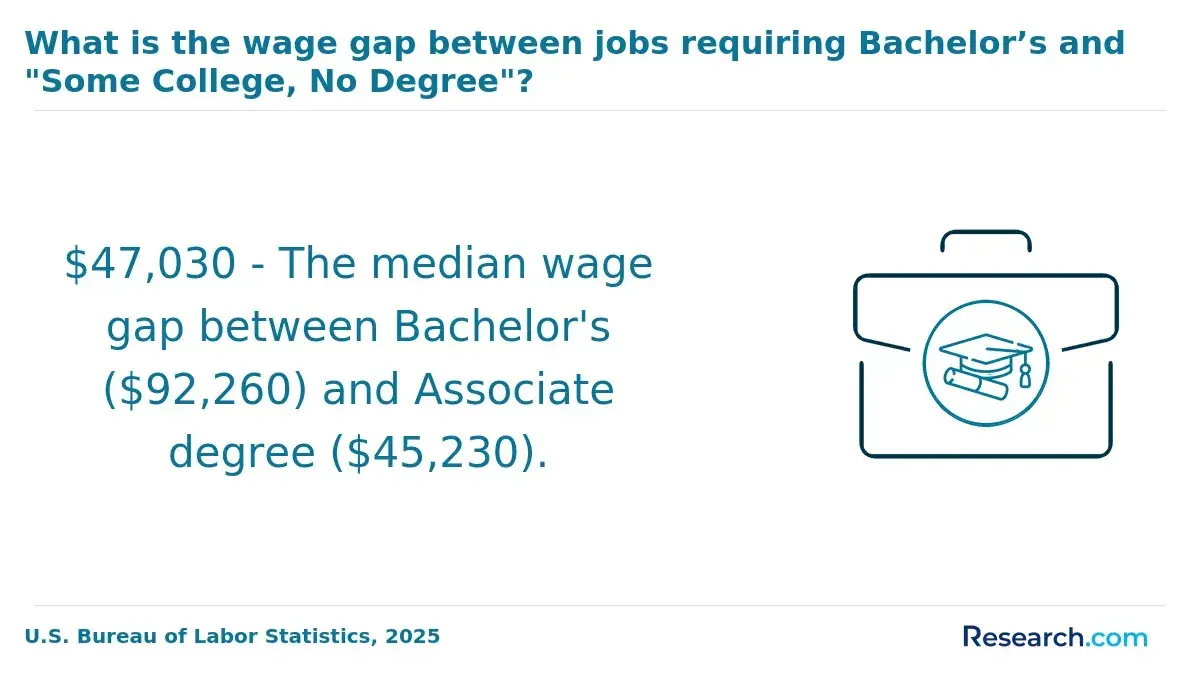
Educational expectations in psychology are tiered. A bachelor's degree opens doors to many entry-level support, research, education, nonprofit, and business roles, but graduate education is usually needed for counseling licensure, psychological testing, school psychology, and independent clinical practice.
The table below distinguishes common degree levels and how employers tend to use them in job postings. This distinction matters because applying to roles above your credential level can waste time, while ignoring adjacent roles can limit useful experience.
| Credential level | Common employer expectation | Roles it may support | Important limitation |
| Associate degree or college coursework | Accepted for some technician, support, or direct-care roles | Behavioral aide, residential support, psychiatric technician assistant | Advancement may be limited without a bachelor's degree |
| Bachelor's in psychology | Common minimum or preferred credential for entry-level human services, research, HR, and student support | Case manager, research assistant, intake coordinator, HR assistant, student success coach | Does not usually qualify for independent therapy or psychologist licensure |
| Master's degree | Often required for counselor, therapist, school counseling, I/O, or applied behavioral roles | Mental health counselor, therapist associate, behavior analyst pathway, organizational consultant | State licensure, supervised hours, and exam requirements may still apply |
| Specialist or doctoral degree | Expected for psychologist titles, advanced assessment, academic roles, or specialized clinical practice | Clinical psychologist, school psychologist, counseling psychologist, neuropsychology pathway | Training is longer and should be matched carefully to licensure goals |
Psychology students should treat licensure as a separate decision from degree completion. A master's or doctorate may be academically valuable, but the right program must also align with the state board, supervised-hour requirements, accreditation expectations, and the kind of work the student wants to do.
Graduate clinical psychology and counseling paths can involve long timelines, just as other regulated healthcare fields do. When comparing options such as PsyD, PhD, counseling master's, social work master's, or even healthcare routes like PharmD programs, students should compare licensure rules, supervised practice, tuition, opportunity cost, and the specific roles each credential legally permits.
Other Things You Should Know About Psychology
Yes, but usually not as an independent therapist or psychologist. Bachelor's-level psychology graduates commonly pursue case management, behavioral health support, research assistant, HR, student services, nonprofit, and community program roles.
Put the skills most repeated in your target postings first. For many roles, that means communication, documentation, confidentiality, crisis response, research methods, statistics, client support, or population-specific experience.
Some roles require certifications such as CPR, crisis prevention, or behavior technician credentials. Certifications are most worthwhile when they appear repeatedly in postings for the specific role you want.
Graduate school is usually necessary for licensed counseling, therapy, psychological testing, school psychology, and psychologist roles. It is not always required for entry-level human services, research, HR, education support, or program coordination jobs.
See What Experts Have To Say About Studying Psychology
Read our interview with Psychology experts

Robin M. Kowalski. Ph.D.
Psychology Expert
Professor of Psychology
Clemson University

Elizabeth L. Jeglic Ph.D.
Psychology Expert
Professor of Psychology
City University of New York

Catherine Caldwell-Harris, Ph.D.
Psychology Expert
Associate Professor of Psychology
Boston University

- Fastest Growing Careers In Psychology | Psychology.org https://www.psychology.org/resources/fastest-growing-careers-in-psychology/
- 10 Career Paths You Can Follow With a Psychology Degree https://www.dbu.edu/blog/10-career-paths-with-psychology-degree.html
- Industrial/Organizational Psychologists: When Should Employers Use Them https://www.berkshireassociates.com/blog/industrial/organizational-psychologists-when-should-employers-use-them
- Requirements on How to Become a Positive Psychologist https://www.counselingpsychology.org/psychology/careers/positive-psychologist/
- A Career in Psychology: 17 Paths | USAHS https://www.usa.edu/blog/career-path-in-psychology/
- Psychology Career Center https://www.psychologydegree411.com/careers/
- Why More Employers Are Looking for Candidates With Certifications and Specialized Skills https://paloaltou.edu/resources/translating-research-into-practice-blog/why-more-employers-are-looking-for-candidates-with-certifications-and-specialized-skills/