2027 Psychology Degree Payback Report: Which Programs Deliver the Best Cost-to-Salary Return

Co-Founder and Chief Data Scientist
A psychology degree can open doors in counseling, research, HR, user experience, education, and healthcare, but the payoff depends heavily on cost and career path. BLS data shows the median annual wage for psychologists was $94,310 in May 2024, while many bachelor's-level support roles pay much less.
This guide is for students comparing psychology programs, transfer options, online degrees, and graduate school. You will learn which paths tend to repay faster, what costs to watch, and how to choose a program that fits your salary goals without taking on unnecessary debt.
Key Things You Should Know
- The strongest psychology degree payback usually comes from low-cost public or transfer pathways paired with applied skills such as statistics, research methods, HR, UX research, data analysis, or a licensure-focused graduate plan.
- Tuition has a major effect on ROI: College Board's 2024 pricing report lists average 2024-25 published tuition and fees at $11,610 for in-state public four-year institutions and $43,350 for private nonprofit four-year institutions.
- Bachelor's-only psychology roles often have modest pay, while licensed psychologist, school psychology, counseling, I/O psychology, and analytics-related careers typically require graduate training or specialized experience before higher salaries are realistic.
- What Is the Return on Investment of a Psychology Degree?
- Which Psychology Programs Deliver the Best Cost-to-Salary Return?
What Is the Return on Investment of a Psychology Degree?
The return on investment of a psychology degree is the financial value you receive compared with what you spend to earn it. In practical terms, students should compare total net cost, debt, time out of the workforce, and expected earnings in the jobs they are actually targeting.
A psychology degree has uneven ROI because "psychology career" can mean very different things. A bachelor's graduate may work as a case manager, HR assistant, research coordinator, behavioral technician, or marketing associate. A licensed psychologist, however, usually needs a doctoral degree, supervised clinical experience, and state licensure. Those paths have very different costs, timelines, and salaries.
For payback analysis, use this simple formula: total net education cost divided by annual earnings gain. The result is the approximate number of working years needed to recover the cost of the degree. This is not a guarantee, but it gives you a disciplined way to compare programs before enrolling.
The table below summarizes how psychology degree levels usually differ in cost-to-salary return. Use it as a decision screen, not as a substitute for checking a school's actual net price, graduation rate, placement outcomes, and licensure alignment.
| Psychology path | Typical purpose | ROI pattern | Best fit |
| Associate degree or transfer pathway | Complete lower-division credits at lower cost before a bachelor's degree | Often improves ROI by reducing total tuition | Students planning to transfer to a public four-year program |
| Bachelor's in psychology | Entry into human services, business, research support, HR, or graduate school | Can be positive if debt is low and the student adds applied skills | Students who want broad career flexibility or plan graduate study |
| Master's in counseling, school psychology, I/O psychology, or applied psychology | Specialized professional preparation | Can improve ROI when it leads to licensure, technical roles, or employer-recognized specialization | Students with a defined career target |
| Doctorate in clinical, counseling, school, or research psychology | Psychologist licensure, academic research, assessment, or advanced clinical practice | Higher earning potential but longer payback because of time and cost | Students committed to psychologist licensure or research careers |
The key takeaway is that psychology ROI is not determined by the major alone. It is determined by the combination of price, credential level, specialization, supervised experience, state requirements, and the student's ability to turn psychology training into marketable work.
Which Psychology Programs Deliver the Best Cost-to-Salary Return?
The psychology programs that tend to deliver the best cost-to-salary return are not always the most prestigious or the most expensive. They are usually programs that keep net cost low, provide strong advising, build job-ready skills, and connect clearly to either employment or graduate school.
The table below compares common psychology program models by their likely payback strengths and risks. It helps you identify which format matches your goals before you focus on rankings or brand names.
| Program model | Why it can deliver strong payback | Main risk | Best financial use case |
| Community college to public university transfer | Lower-division credits may cost substantially less before completing the bachelor's degree | Credits may not transfer cleanly without careful planning | Students who want a bachelor's degree with less debt |
| In-state public bachelor's program | Often balances recognized credentials with lower tuition than many private options | Large programs may require students to seek out research and internship opportunities | Students targeting entry-level roles or graduate school |
| Online psychology bachelor's from an accredited nonprofit or public institution | Can allow working adults to keep income while studying | Weak ROI if the program lacks career support, transfer credit flexibility, or employer recognition | Adult learners and transfer students who need scheduling flexibility |
| Bachelor's plus applied minor or certificate | Psychology paired with data, business, UX, statistics, or health coursework can improve employability | Students may choose electives without a coherent career plan | Students seeking bachelor's-level employment rather than immediate graduate school |
| Licensure-aligned graduate program | Can qualify students for counseling, school psychology, or psychologist pathways when requirements are met | Licensure rules vary by state and can add time, exams, and supervised hours | Students with a specific licensed role in mind |
Students interested in human performance, health behavior, or wellness coaching may also compare psychology with the best kinesiology programs, especially if they want a more exercise science-oriented path. Psychology is usually stronger for behavior, assessment, counseling preparation, and research, while kinesiology may fit students focused on movement, rehabilitation support, fitness, or sports performance.
A high-payback psychology program should show evidence of outcomes, not just attractive course titles. Before enrolling, ask whether students complete internships, join faculty research labs, earn credit for prior learning, receive graduate school advising, and get support with resumes and employer connections.
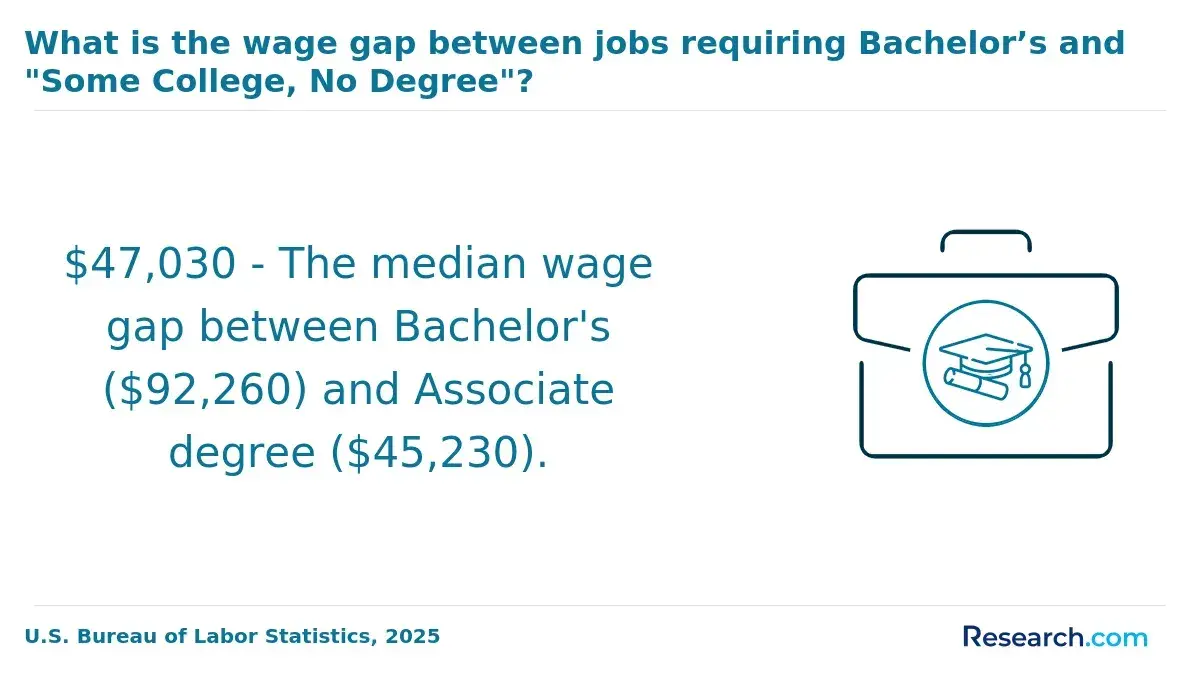
Tuition affects psychology degree payback more than many students expect because bachelor's-level salaries may not be high enough to absorb heavy debt quickly. The same psychology curriculum can produce very different ROI depending on whether a student pays in-state public tuition, transfers credits, receives grants, or attends a high-cost private program.
College Board's 2024 Trends in College Pricing and Student Aid report shows why price shopping matters. The table below lists average published tuition and fees for 2024-25, which is not the same as net price after grants but is a useful starting point for comparison.
| Institution type | Average published tuition and fees | ROI implication for psychology students |
| Public two-year, in-district | $4,050 | Can reduce total bachelor's cost when transfer planning is strong |
| Public four-year, in-state | $11,610 | Often a strong value baseline for psychology majors |
| Public four-year, out-of-state | $30,780 | May weaken ROI unless the program offers exceptional aid or a clear outcome advantage |
| Private nonprofit four-year | $43,350 | Can make sense with strong grants, but sticker price alone can create long payback periods |
Published tuition is only one part of the calculation. A student comparing programs should also include fees, books, housing, transportation, technology requirements, unpaid internship time, and interest on loans. For online programs, the big ROI advantage is often the ability to keep working, not necessarily lower tuition.
The most common cost mistake is choosing a school based on reputation without calculating net price. A better approach is to compare financial aid letters side by side and estimate the total cost to finish, not just the cost of the first year.
The break-even period for a psychology degree is the time it takes for added earnings to recover the net cost of education. There is no universal break-even timeline because psychology graduates enter different fields and pay very different prices for school.
Use the following examples as a calculation model rather than a prediction. Replace the sample numbers with your actual net cost and a realistic earnings difference between your likely job with and without the credential.
| Illustrative net education cost | Illustrative annual earnings gain | Approximate break-even period | Interpretation |
| $20,000 | $5,000 | 4 years | Low-cost programs can repay reasonably fast even with modest earnings improvement |
| $40,000 | $8,000 | 5 years | Moderate debt requires a clearer plan for employment or graduate progression |
| $80,000 | $10,000 | 8 years | High-cost bachelor's pathways can be risky without strong aid or a high-value career plan |
| $120,000 | $20,000 | 6 years | Graduate education may pay back if it leads to a higher-paid licensed or specialized role |
Break-even also depends on opportunity cost. A full-time student who leaves work for two years gives up income, while a part-time or online student may take longer to finish but keep earnings during school. The best option is not always the fastest program; it is the one with the best combination of completion likelihood, manageable debt, and credible career outcomes.
Students should also model a conservative scenario. If your plan only works when you assume immediate graduate admission, full-time employment, and top-quartile pay, the financial risk is probably higher than it looks.
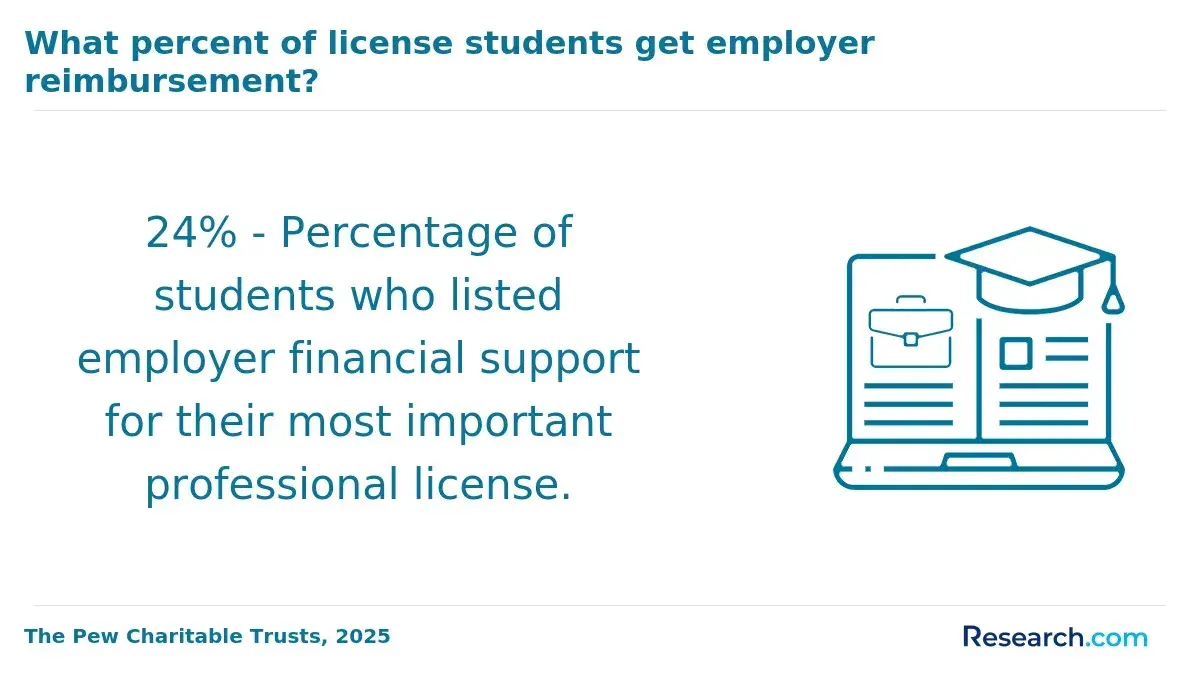
The biggest drivers of psychology degree ROI are program cost, credential level, specialization, work experience, and whether the degree matches a specific career outcome. Students who treat psychology as a general-interest major without building a career plan often see weaker returns.
When comparing programs, focus on the factors below because they directly affect employability, licensure eligibility, and debt management.
- Check institutional accreditation first, because transfer credit, graduate admission, employer recognition, and financial aid eligibility often depend on it.
- Confirm whether the program supports your target outcome, such as graduate school preparation, counseling licensure, research experience, HR, UX research, behavioral health, or data-focused roles.
- Compare total net cost to completion, including transfer credits, fees, living expenses, loan interest, and any unpaid internship or practicum requirements.
- Look for required research methods, statistics, writing, ethics, and applied experience, because these skills help psychology graduates compete outside traditional counseling paths.
- Ask for career outcome data by major or department, not just university-wide employment claims.
Common red flags include vague promises about "high-demand psychology careers," no clear internship process, poor transfer advising, limited faculty access, and programs that imply a bachelor's degree alone qualifies graduates to become licensed psychologists. A trustworthy program will explain what the degree can and cannot do.
Employer demand affects psychology degree value because the best ROI often comes from aligning psychology training with growing workforce needs. BLS employment projections for the period through 2033 show psychologists are projected to grow by 7%, faster than the average for all occupations, which suggests continued demand but not unlimited opportunity in every specialty or region.
Demand is especially strong where psychology overlaps with healthcare access, behavioral health, schools, workforce development, analytics, and user behavior. However, many of these roles require more than a general psychology degree; employers often want supervised experience, licensure progress, data skills, case documentation ability, or familiarity with regulated care settings.
AI and automation are also changing the value of psychology training. Routine screening, scheduling, survey analysis, and documentation tools may become more automated, but employers still need people who understand ethics, human behavior, assessment limits, cultural context, and evidence-based decision-making. Students who combine psychology with statistics, research software, or health data literacy may be better positioned for emerging roles.
The practical lesson is simple: psychology ROI improves when students prepare for a labor market need that employers can clearly identify. A transcript full of interesting electives is less powerful than a degree plan that includes research, writing, statistics, field experience, and a target role.
Students can maximize the financial value of a psychology degree by making cost, transfer, experience, and career alignment decisions early. The best time to improve ROI is before enrollment, not after graduation.
Use the steps below to compare programs and reduce the risk of overpaying for a degree that does not match your goals.
- Define your target role before choosing a school, because counseling, HR, research, school psychology, UX, and clinical practice require different preparation.
- Calculate total net price to graduation, including grants, scholarships, transfer credits, fees, housing, transportation, and expected borrowing.
- Choose the lowest-cost accredited route that still gives you the required prerequisites, advising, faculty access, and career support.
- Add marketable skills through statistics, research design, Excel, survey tools, data visualization, interviewing, writing, ethics, and case documentation.
- Get experience before graduation through internships, lab work, peer counseling programs, behavioral health support roles, HR projects, or community service tied to your career target.
- If graduate school is likely, verify prerequisites, GPA expectations, licensure alignment, supervised hour rules, and state board requirements before committing to a program.
- Ask each school for major-specific outcomes, including graduate school placement, internship sites, employer partners, and typical time to completion.
Online students should be especially careful about field placements. A program may be academically legitimate but still require in-person practicum hours, local supervision, or state-specific approvals. If your career path requires licensure, confirm requirements with the relevant state board, not only with admissions staff.
A smart psychology degree plan also includes an exit strategy at each level. For example, decide what job you could pursue after the bachelor's degree if you delay graduate school, and what debt level would still be manageable if your plans change.
Psychology students who like computational research, health data, or behavioral analytics may want to compare their options with bioinformatics major jobs. Bioinformatics is a more technical path, but the comparison can clarify whether you prefer human behavior and counseling-oriented work or data-intensive life science roles.
Psychology ROI looks different when compared with nearby fields because each discipline leads to different credentials, wage ceilings, and licensing rules. A psychology degree is flexible, but flexibility can be a weakness if the student does not build a specific employment plan.
The table below compares psychology with related education paths from an ROI perspective. It focuses on decision factors rather than declaring one field universally better.
| Field | Typical financial strength | Typical financial trade-off | Who may prefer it |
| Psychology | Broad applications in behavior, research, HR, counseling preparation, and user research | Higher-paying licensed roles usually require graduate education | Students interested in human behavior, assessment, mental health, or research |
| Social work | Clearer path to licensed clinical and community practice roles | Pay can vary widely by setting, and licensure requires supervised experience | Students focused on direct service, advocacy, and case management |
| Counseling | More direct alignment with therapist licensure in many states | Less broad than psychology for research or business roles | Students who already know they want counseling practice |
| Kinesiology or exercise science | Good fit for movement, wellness, fitness, and rehabilitation support interests | Some higher-paying clinical paths require additional graduate education | Students more interested in physical performance than mental processes |
| Healthcare professional degrees | Often lead to more defined licensed roles | May require intensive prerequisites, clinical training, and higher tuition | Students who want a regulated healthcare role with a clearer credential-to-job connection |
The best comparison is not "Which major pays more?" but "Which credential leads to the work I want at a cost I can manage?" Psychology can be a strong investment for students who use it intentionally, but other fields may produce clearer ROI for students who want a faster or more regulated path into healthcare.
A psychology degree is worth it when the program cost is manageable, the student has a clear career target, and the degree plan includes experience or graduate preparation that employers recognize. It is less likely to be worth it when a student pays a high price for a general degree without understanding the jobs it qualifies them for.
Psychology may be a strong fit if you enjoy understanding people, interpreting research, writing clearly, working with sensitive information, and thinking ethically about behavior. It is especially useful for students aiming for counseling, school psychology, I/O psychology, UX research, HR, behavioral health, academic research, or graduate study.
It may not be the best investment if you need the fastest possible route to a licensed healthcare job, dislike statistics or research writing, or are unwilling to pursue graduate education for clinical practice. Students who want a shorter healthcare pathway may also compare psychology with LPN programs, which are designed for a more direct practical nursing route.
Before deciding, answer these questions honestly. They will help you determine whether the degree is a strategic investment or simply an interesting subject.
- What specific job or graduate program am I preparing for?
- What is the total net cost to finish, not just the first-year price?
- Will I need a master's or doctorate to reach my target salary or title?
- Does the program offer internships, research experience, career advising, and strong transfer policies?
- What is my backup plan if I do not attend graduate school immediately?
The bottom line: psychology can deliver a solid cost-to-salary return when students keep debt low and connect the degree to an applied pathway. The weakest ROI usually comes from high-cost programs, unclear career goals, and assumptions that a bachelor's degree alone leads to licensed psychologist roles.
Psychology graduate earnings depend on job title, credential level, employer, geography, and whether the role requires licensure. A bachelor's degree in psychology can qualify students for many entry-level jobs, but the title "psychologist" generally requires graduate education and state licensure.
The table below uses BLS May 2024 wage data for common psychology-related roles. These figures describe occupations, not guaranteed outcomes for any one degree program.
| Role or occupation | Common education or preparation | Median annual wage | What it means for ROI |
| Social and human service assistants | Associate or bachelor's degree, depending on employer | $45,120 | Low-cost education is especially important because payback may be slower with high debt |
| Substance abuse, behavioral disorder, and mental health counselors | Requirements vary; many roles require a master's degree and licensure | $59,190 | ROI improves when the program directly supports licensure eligibility |
| Human resources specialists | Bachelor's degree plus business, communication, and analytics skills | $72,910 | Psychology can pay off when paired with organizational behavior and employment skills |
| Market research analysts | Bachelor's degree with statistics, survey, and data skills | $76,950 | Applied quantitative training can strengthen bachelor's-level ROI |
| Psychologists | Typically doctoral degree, supervised experience, and licensure for clinical roles | $94,310 | Higher salary potential must be weighed against longer education time and graduate cost |
Students should be cautious about using psychologist salaries to justify a bachelor's-only program. If the goal is licensed practice, the financial plan should include graduate tuition, supervised training, exam fees, and the time required to meet state requirements.
Students comparing psychology with pharmacy should look closely at cost, licensure, prerequisites, and time commitment before choosing between graduate routes such as psychology doctorates and PharmD programs. Pharmacy is more clinically and scientifically specialized, while psychology is centered on behavior, assessment, mental processes, and human development.
Other Things You Should Know About Psychology
It can be enough for entry-level roles in human services, HR, research support, marketing, behavioral health support, and case coordination. For stronger ROI, students should add applied skills such as statistics, writing, data analysis, interviewing, or business coursework.
Not always. Some students build good careers with a bachelor's degree, especially in business, HR, UX, research, or analytics-related roles. However, licensed counseling, school psychology, clinical psychology, and psychologist roles usually require graduate education and state-specific requirements.
An online psychology degree can be worth it if the school is accredited, affordable, transfer-friendly, and offers strong advising and career support. Students pursuing licensure should confirm that online coursework and field placements meet their state's requirements.
The biggest mistake is focusing on the major name or school brand without calculating total net cost and career outcomes. A lower-cost accredited program with internships, research experience, and clear graduate school preparation may deliver better ROI than a more expensive option with vague outcomes.
See What Experts Have To Say About Studying Psychology
Read our interview with Psychology experts

Joann Farrell Quinn, Ph.D., MBA
Psychology Expert
Director at the College of Medicine Department of Medical Education
Morsani College of Medicine

Elizabeth L. Jeglic Ph.D.
Psychology Expert
Professor of Psychology
City University of New York

Robin M. Kowalski. Ph.D.
Psychology Expert
Professor of Psychology
Clemson University

- What Can You Do With A Psychology Degree? | Psychology.org https://www.psychology.org/resources/alternative-careers-for-psychology-majors/
- ROI Of College Majors By Early And Mid-Career Salaries | Bankrate https://www.bankrate.com/loans/student-loans/roi-mid-career-by-major/
- How 6 Different Assets Can Affect Your FAFSA and Financial Aid Eligibility https://www.savingforcollege.com/article/how-7-different-assets-can-affect-your-financial-aid-eligibility
- How Long Does It Take To Earn a Psychology Degree? https://www.onlineu.com/degrees/psychology/psychology-degree-timeline
- How Student Loan Debt Impacts Your College ROI https://www.lendkey.com/blog/student-loans/how-student-loan-debt-impacts-your-college-roi/
- How Long Does It Take to Get a Psychology Degree? https://www.albany.edu/psychology/communications/how-long-to-get-a-psychology-degree
- Study Psychology in the USA: A Complete Guide for International Students https://www.applash.ai/study-psychology-usa-international-guide
- The Debt Paradox How Student Loans Simultaneously Enhance Earnings and Constrain Life Choices among College Graduates https://www.scirp.org/journal/paperinformation