2027 Psychology Degree Transfer Efficiency Report: Which Programs Reduce Time to Graduation the Most

Co-Founder and Chief Data Scientist
Transfer students often lose time because accepted credits do not always count toward the psychology major, general education, or residency requirements. That matters when the U. S. Bureau of Labor Statistics projects psychologist employment to grow 7% from 2023 to 2033, while most licensed psychology careers still require graduate education. This report is for students with prior college, community college, military, AP, CLEP, or work-based learning who want the fastest credible path to a psychology degree. You will learn how to compare programs, estimate time savings, avoid credit loss, and choose a transfer pathway with better ROI.
Key Things You Should Know
- Programs built as bachelor's degree-completion pathways often accept the most usable transfer credit, commonly up to about 90 credits toward a 120-credit bachelor's degree when credits match degree requirements.
- The fastest transfer route is usually an associate-to-bachelor's psychology pathway with a written articulation agreement, because it reduces elective credit loss and can leave about 60 upper-division or major credits to finish.
- Cost savings depend on usable credits, not just accepted credits; College Board's 2024 data lists average published tuition and fees at $4,050 for public two-year colleges and $11,610 for in-state public four-year colleges, making credit loss financially significant.
- Which Psychology Degree Programs Accept the Most Transfer Credits?
- How Much Can Transfer Credits Reduce the Time Needed to Complete a Psychology Degree?
Which Psychology Degree Programs Accept the Most Transfer Credits?
The psychology programs that accept the most transfer credits are usually not the most selective campus-based majors; they are programs designed for transfer students. The key distinction is accepted credit versus applied credit. Accepted credit appears on your transcript, but applied credit actually satisfies general education, psychology major, elective, or graduation requirements.
Use the table below to compare common psychology program models by how transfer-friendly they tend to be. The most efficient option is usually the one that applies the most credits to the exact degree plan, not simply the one advertising the highest transfer maximum.
| Psychology program model | Typical transfer-credit strength | Best fit | Main caution |
| Online bachelor's degree-completion psychology program | Often the highest maximum transfer allowance, sometimes up to about three-fourths of the degree | Adults with substantial prior college credit who need flexible scheduling | May still require a minimum number of upper-division psychology credits at the new school |
| Public community college to public university 2+2 pathway | Strong when backed by a statewide or institutional articulation agreement | Students starting at a community college or finishing an associate degree before transfer | Psychology prerequisites must match the receiving university's course equivalents |
| Traditional campus-based public university psychology major | Moderate to strong, especially for in-state transfers | Students who want campus research labs, honors options, or local graduate-school preparation | Major residency and upper-division requirements can limit how many credits apply |
| Private nonprofit psychology program | Varies widely by institution and mission | Students who value smaller classes, advising, or specialized tracks | Higher sticker prices can offset transfer savings unless aid and credit application are favorable |
| Highly structured BA/BS psychology program with research sequence | Often less flexible for major courses | Students planning competitive graduate study in psychology, counseling, neuroscience, or research | Statistics, research methods, and lab courses may need to be retaken if content does not align |
For most students, the best transfer target is a regionally or institutionally accredited bachelor's program that publishes clear equivalency guides, accepts an associate degree as a block where possible, and provides a written degree audit before enrollment. If a school says it accepts many credits but cannot show where they fit in the psychology degree plan, the advertised maximum is less useful.
Students should also look at the degree type. A Bachelor of Arts in Psychology may have more room for language or liberal arts electives, while a Bachelor of Science in Psychology may require more math, science, statistics, or lab coursework. Neither is automatically faster; the better choice is the one that matches the credits you already have.
How Much Can Transfer Credits Reduce the Time Needed to Complete a Psychology Degree?
Transfer credits reduce time to graduation only when they satisfy required categories. A 120-credit psychology bachelor's degree can often be finished in four academic years by first-time full-time students, but transfer students can shorten that timeline if their previous credits cover general education, lower-division psychology, electives, and prerequisites.
The table below shows realistic time-to-completion scenarios using a 120-credit bachelor's degree and a full-time pace of about 15 credits per term. These are planning estimates, not guarantees, because course sequencing, part-time enrollment, and major residency rules can change the timeline.
| Usable transfer credits | Credits remaining in a 120-credit degree | Estimated full-time time remaining | What this usually means |
| 0 to 15 | 105 to 120 | About 3.5 to 4 years | Most prior work does not apply or the student is effectively starting over |
| 30 | 90 | About 3 years | One year of general education or electives applies |
| 45 | 75 | About 2.5 years | Several lower-division requirements apply, but major sequencing still matters |
| 60 | 60 | About 2 years | A strong associate-to-bachelor's transfer position if requirements align |
| 75 to 90 | 30 to 45 | About 1 to 1.5 years | Most efficient for degree-completion programs, assuming upper-division psychology requirements remain available on schedule |
The most common transfer surprise is that a student may bring in 70 credits but still need two years because psychology major courses must be taken in sequence. For example, research methods may require statistics first, and advanced seminars may require both introductory psychology and methods. This is why a transfer credit total alone is not enough to estimate graduation time.
To estimate your own timeline, separate your credits into four categories before applying. This sequence helps you see whether you are saving real time or just accumulating elective credit.
- List all completed credits from accredited colleges, exams, military training, and other eligible sources.
- Mark which credits satisfy general education, psychology prerequisites, major requirements, free electives, or nothing in the target program.
- Identify required psychology courses that must be taken at the new institution, especially research methods, statistics, capstone, practicum, or upper-division seminars.
- Check whether those remaining courses are offered every term, once per year, online, on campus, or only during daytime hours.
- Ask the school for a written transfer evaluation and a term-by-term completion plan before you commit.
A transfer-friendly psychology program should make this estimate easy. If the school cannot show how your credits map to the degree, your risk of delayed graduation is higher.
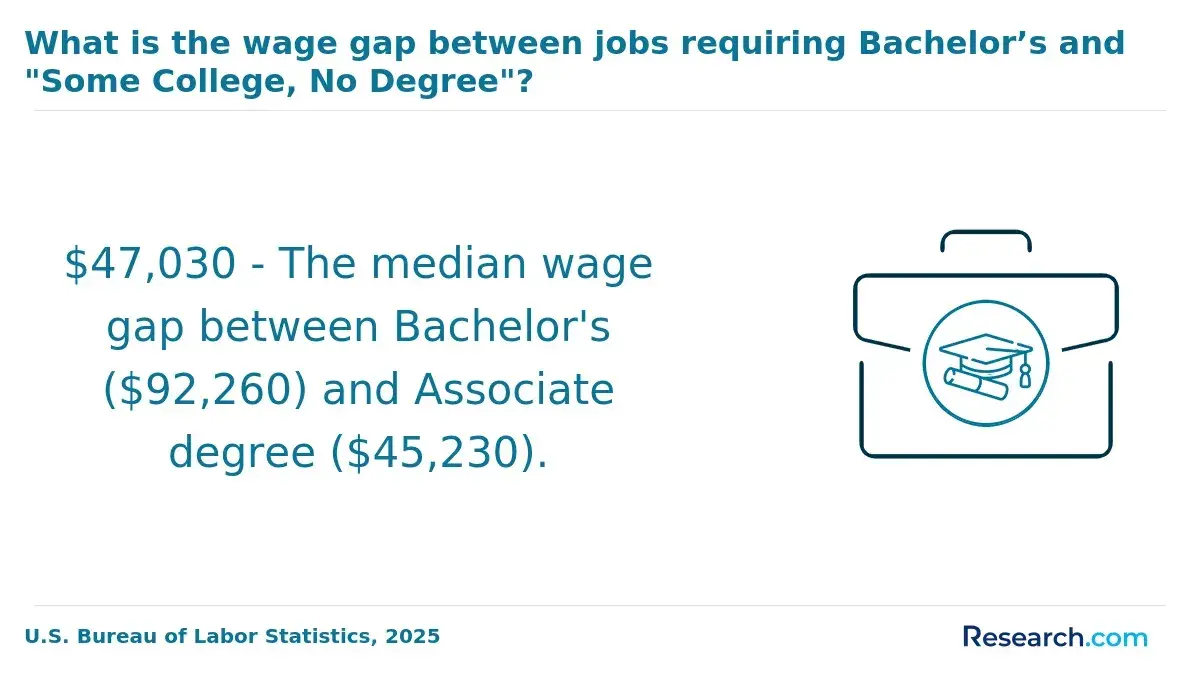
Credits transfer most easily when they come from accredited institutions, match common lower-division requirements, and have clear course descriptions. Psychology programs usually have less difficulty accepting general education and introductory courses than advanced major courses because upper-division psychology requirements are more school-specific.
The table below summarizes common credit sources and how they usually apply to a psychology degree. It helps you identify which credits are likely to save time and which may require additional documentation.
| Credit source | Transfer likelihood | Most common use in psychology degree | Documentation to prepare |
| Accredited college courses | Highest when grades and course levels meet policy | General education, electives, introductory psychology, statistics, lifespan development | Official transcripts and course descriptions |
| Associate degree coursework | Strong when covered by articulation or transfer compact | General education block, lower-division major preparation, electives | Final transcript showing degree awarded |
| AP or IB exams | Moderate to strong depending on score policy | General education or introductory psychology | Official score report |
| CLEP or DSST exams | Varies by school | General education, electives, sometimes introductory psychology | Official exam score report |
| Military training | Varies but often considered through ACE recommendations | Electives, leadership, communication, or applied learning categories | Joint Services Transcript or equivalent record |
| Work experience or portfolio credit | Limited and policy-dependent | Electives or prior learning assessment credit, rarely core psychology major requirements | Portfolio, employer verification, training records, certifications |
General psychology, sociology, English composition, college algebra, statistics, biology, public speaking, and humanities courses are often among the most portable. Advanced courses such as abnormal psychology, cognitive psychology, behavioral neuroscience, or research methods may transfer only if the receiving department agrees that the content, level, and learning outcomes match.
Students with health science, exercise science, or biology credits should check whether those courses satisfy science requirements in a psychology BA or BS. If you are comparing adjacent fields, reviewing best kinesiology programs can also help you understand how health-related credits may fit differently across behavioral science and movement science degrees.
The policies that reduce transfer credit loss are the ones that convert prior learning into degree-applicable requirements. A generous maximum transfer cap helps, but it is less important than block transfer, course equivalency transparency, major flexibility, and predictable course scheduling.
Look for these policies when comparing psychology programs. Each one can reduce the chance that you will repeat courses or add extra terms.
- Written articulation agreements: These specify how courses from a partner community college or institution apply to the psychology bachelor's degree.
- Associate degree block transfer: This can clear lower-division general education requirements as a package rather than course by course.
- Published course equivalency database: This lets you see how prior courses have historically transferred before you apply.
- High but realistic transfer maximum: A program that allows substantial transfer credit is useful only if enough credits apply to major, general education, or elective requirements.
- Flexible elective space: More elective room can help students with mixed prior credits avoid losing credits entirely.
- Clear residency requirement: The school should state how many credits must be completed through that institution and whether major courses are included.
- Frequent online course rotation: Transfer students lose time when required upper-division courses are offered only once per year or only on campus.
- Pre-enrollment degree audit: A written audit helps you compare programs using remaining credits, not marketing claims.
Public institutions often have stronger community college pathways because state systems may build transfer maps across campuses. Private nonprofit institutions can also be transfer-friendly, especially adult-serving programs, but students should compare net price, transfer application, and course rotation instead of assuming institution type determines value.
Online psychology programs can be efficient for transfer students because they frequently serve adults with prior credit. Still, online format alone does not guarantee faster completion. The best online options publish transfer policies, offer required psychology courses regularly, and provide advising that connects credit evaluation to a graduation plan.
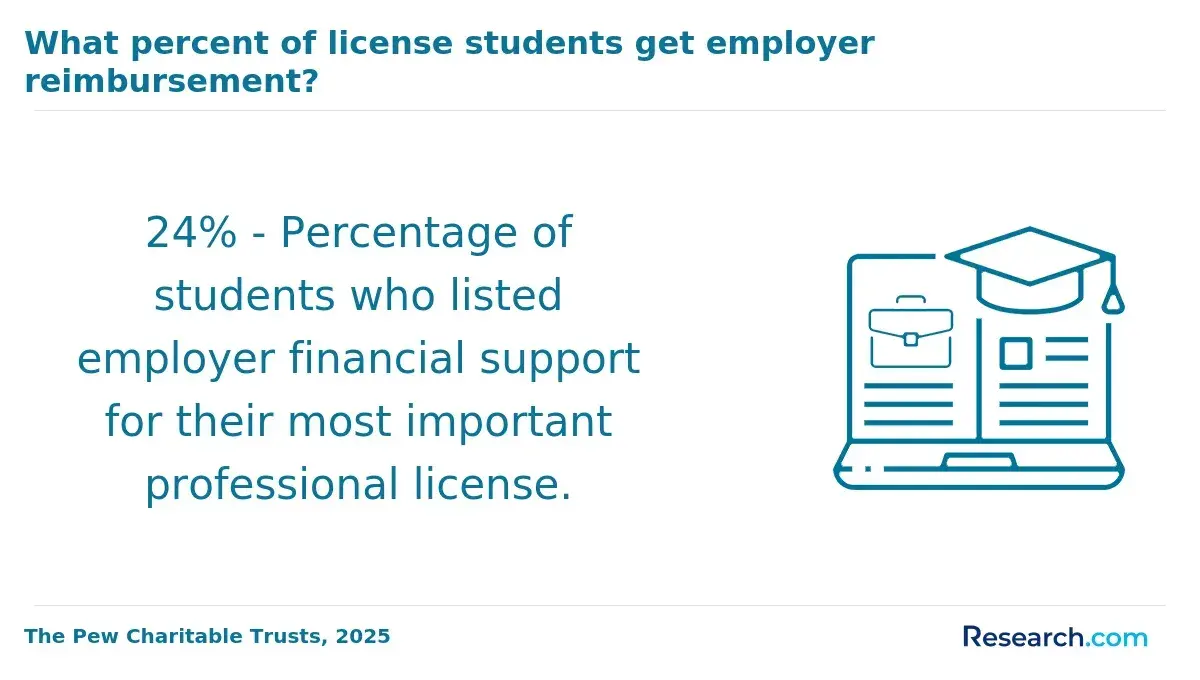
Prior learning, military training, and work experience may count toward a psychology degree, but they usually apply as electives rather than core psychology major requirements. Schools are cautious because psychology major courses must document academic learning outcomes in research design, statistics, ethics, human behavior, and scientific reasoning.
Prior learning credit is most useful for students who have professional training, military records, industry certifications, or substantial workplace learning. These are the main routes to ask about when speaking with a transfer advisor.
- Military credit: Many institutions review Joint Services Transcripts and may award credit based on American Council on Education recommendations.
- Standardized exams: CLEP, DSST, AP, and IB credits may satisfy general education or introductory requirements if scores meet school policy.
- Portfolio assessment: Some adult-focused colleges let students document college-level learning from work or training, though faculty review is usually required.
- Corporate or professional training: Employer-based training may count if the institution has an approved evaluation process.
- Licensure or certification credit: Health, human services, or public safety credentials may count as electives, but rarely replace psychology research or theory courses.
Students coming from healthcare training should be especially careful. For example, credits from LPN programs may support electives or related science requirements at some institutions, but they should not be assumed to satisfy psychology major courses unless the receiving school confirms it in writing.
Prior learning assessment can improve ROI when it reduces the number of credits you must pay for at the new institution. It can backfire if the school charges high assessment fees, caps the number of credits, or places the credits only in unused elective space. Ask whether prior learning credit counts toward residency, financial aid enrollment status, Latin honors, major GPA, or graduate-school prerequisites.
Transfer credits affect ROI by reducing tuition, fees, books, time out of the workforce, and borrowing. The financial benefit is strongest when credits replace required courses at the receiving institution. It is weaker when credits transfer only as excess electives or do not shorten the number of terms you must attend.
College Board's 2024 Trends in College Pricing data reported average published tuition and fees of $4,050 at public two-year colleges, $11,610 for in-state students at public four-year colleges, and $43,350 at private nonprofit four-year colleges for 2024-25. For transfer students, the practical lesson is clear: completing transferable lower-division coursework at a lower-cost institution can be valuable, but only if the receiving psychology program applies those credits efficiently.
The table below shows how transfer efficiency changes the cost logic. It does not estimate your exact bill; instead, it shows which cost factors to compare before deciding whether a program is worth it.
| Transfer scenario | Potential financial advantage | ROI risk | Best decision rule |
| Associate degree transfers as a block | May reduce lower-division tuition and simplify general education completion | Some major prerequisites may still be missing | Confirm remaining credits and course sequence before enrollment |
| Many credits accepted as electives | Can help meet total credit minimums | May not reduce required terms if major or general education courses remain | Compare applied credits, not total accepted credits |
| Higher-priced program accepts more usable credits | May be faster and reduce opportunity cost | Net tuition may still exceed a slower public option | Compare total remaining cost, not price per credit alone |
| Low-cost program accepts fewer major credits | Lower tuition rate | Extra terms can erase savings | Calculate total cost to graduation using the written degree audit |
| Online degree-completion program | May allow continued employment while studying | Fees, course availability, and residency rules vary | Check term schedule, transfer cap, and aid eligibility |
Career ROI also depends on your goal. A bachelor's in psychology can support roles in human services, case management, research assistance, HR, marketing, sales, behavioral health support, and graduate preparation, but independent psychologist licensure generally requires a doctoral degree and state licensure. BLS data published for May 2024 lists the median pay for psychologists at $94,310, but that figure usually reflects roles requiring graduate training, not entry-level bachelor's outcomes.
If you are comparing psychology with more regulated healthcare pathways, such as PharmD programs, remember that ROI calculations change because the credential level, licensure requirements, tuition structure, and job market are different. Psychology transfer efficiency is valuable, but it should be tied to the career path you actually plan to pursue.
Transfer delays usually happen because students focus on admission before confirming degree applicability. A school may admit you quickly and still require extra courses after the registrar or psychology department completes the official review.
These mistakes are common, but they are avoidable if you ask for written documentation and compare programs before enrolling.
- Assuming all credits transfer: Credits may be accepted by the institution but not applied to the psychology degree.
- Ignoring course equivalencies: A course with a similar title may not match the receiving school's learning outcomes.
- Skipping the written degree audit: Verbal estimates can change after official transcript review.
- Overlooking residency rules: Many schools require a minimum number of credits, upper-division credits, or major credits to be completed in-house.
- Transferring before completing an associate degree: Leaving early can be efficient in some cases, but it may also forfeit block-transfer benefits.
- Missing course age limits: Older statistics, research, or science courses may not satisfy current major requirements.
- Assuming exam or military credit is automatic: AP, CLEP, DSST, IB, and military credits depend on institutional policy and score or transcript review.
- Choosing based only on transfer maximum: A 90-credit maximum is less helpful if 30 credits land outside the degree plan.
- Forgetting graduate-school prerequisites: Fast completion should not come at the expense of research, statistics, lab, or faculty recommendation opportunities if graduate study is the goal.
A major red flag is a program that will not provide a written estimate of remaining requirements before you enroll. Another is a psychology curriculum with required courses offered infrequently, because even a strong transfer evaluation can be slowed by poor course availability.
Students should also avoid choosing the shortest route if it weakens their next step. If your goal is counseling, school psychology, clinical psychology, industrial-organizational psychology, or research, you may need strong grades in statistics and methods, faculty references, relevant experience, and graduate prerequisites. Transfer efficiency should support those goals, not replace them.
The most efficient psychology transfer pathways are programs that combine high usable credit acceptance with predictable upper-division completion. In practice, that usually means degree-completion programs, associate-to-bachelor's pathways, and institutions with strong transfer advising systems.
The table below ranks transfer pathway types by likely efficiency. Use it to identify the model that best matches your credit history, schedule, and career plans.
| Efficiency rank | Program pathway | Why it can reduce time to graduation | Who should consider it |
| 1 | Psychology bachelor's degree-completion program | Designed for students with significant prior credits and often offers flexible online upper-division coursework | Adults with 60 or more usable credits who need a fast, structured finish |
| 2 | Community college associate degree to psychology bachelor's pathway | Articulation agreements can preserve lower-division credits and reduce general education duplication | Students who can complete an associate degree before transfer |
| 3 | State university transfer pathway with published equivalencies | Transparent course mapping helps students plan prerequisites before transfer | In-state students seeking lower tuition and campus resources |
| 4 | Private nonprofit adult-serving psychology program | May offer generous transfer review and flexible schedules | Students who receive strong aid or need accelerated online terms |
| 5 | Research-intensive campus psychology major | Strong preparation for graduate school, labs, and faculty mentorship | Students prioritizing graduate-school competitiveness over shortest timeline |
A fast program is not automatically the best program. Students planning graduate study should check whether the psychology department offers statistics, research methods, lab experience, internship options, and faculty access. Students planning immediate employment should evaluate applied skills such as data literacy, communication, human behavior analysis, ethics, and experience in human services or organizational settings.
Some students discover that their previous credits align better with another field. If your transcript is heavy in biology, programming, statistics, or data analysis, comparing psychology with bioinformatics major jobs may clarify whether a behavioral science, health science, or computational path offers the stronger fit.
When deciding whether to transfer before or after an associate degree, use the receiving school's rules. Transferring early can be smart if you have already completed the exact prerequisites and the four-year school offers needed courses immediately. Completing the associate degree first can be better when it triggers block transfer, lower tuition, and a cleaner junior-standing pathway.
To compare psychology programs based on transfer efficiency, build a side-by-side graduation plan for each school. Do not rely on brochures, transfer maximums, or admissions promises alone. The best comparison uses remaining credits, remaining terms, total net cost, course availability, accreditation, and career fit.
Use this checklist when contacting schools. It turns a general transfer conversation into a decision-ready evaluation.
- Ask whether the institution is accredited and whether the psychology degree is offered as a BA, BS, online program, campus program, or degree-completion pathway.
- Request a preliminary review of unofficial transcripts before applying, then an official written evaluation after transcripts are submitted.
- Ask how many credits apply to general education, psychology major requirements, electives, prerequisites, and unused credit.
- Confirm the minimum grade required for transfer and whether psychology major courses have higher grade standards.
- Ask whether an associate degree transfers as a block or whether every course is evaluated separately.
- Check the residency requirement, including total institutional credits, upper-division credits, and psychology major credits.
- Request the next four-term rotation for remaining required psychology courses.
- Ask whether statistics, research methods, capstone, lab, internship, or practicum courses must be completed at the new school.
- Calculate total remaining tuition, fees, books, technology fees, travel, and expected borrowing after grants and scholarships.
- Compare how well each program supports your next step, whether that is employment, graduate school, counseling preparation, HR, research, or another field.
The strongest transfer choice is usually the program with the lowest total cost to complete a credible degree that supports your next goal. That may be the cheapest school, but not always. A slightly higher-priced program can be a better value if it applies more credits, offers required courses every term, lets you keep working, and provides a clear path to graduation.
Students should be cautious with any program that promises unusually fast completion without reviewing transcripts. Transfer efficiency is personal because it depends on your exact courses, grades, institution history, degree type, career goal, and schedule. The safest next step is to collect written degree audits from two or three programs and compare the number of remaining credits and terms before enrolling.
Psychology schools evaluate transfer credits through an academic review process, not just an admissions decision. Admissions may decide whether you can enter the institution, while the registrar, transfer office, or psychology department decides how your courses apply to the degree.
Most evaluations follow a similar sequence. Understanding this process helps you submit stronger documentation and avoid surprises after enrollment.
- The school verifies that each sending institution is properly accredited or otherwise eligible under institutional policy.
- The registrar reviews official transcripts for course title, credit amount, grade, level, and completion date.
- General education courses are matched against institutional requirements or statewide equivalency systems.
- Psychology courses are reviewed for content alignment, especially statistics, research methods, labs, and upper-division courses.
- Accepted credits are placed into degree categories such as major, general education, elective, prerequisite, or non-applicable credit.
- The student receives a degree audit showing remaining requirements, residency credits, GPA rules, and graduation conditions.
Grades matter. Many schools require at least a C for transfer, while some psychology major courses may require a higher grade to count toward the major. Course age can also matter. Statistics, research methods, neuroscience, and technology-related courses may face time limits if the department believes the content is no longer current.
Accreditation is another major filter. For U.S. transfer students, credits are most portable when they come from institutions recognized by accrediting agencies accepted by the U.S. Department of Education or the Council for Higher Education Accreditation. Professional psychology licensure is not granted by a bachelor's degree alone, but attending an accredited institution still matters for graduate admission, employer screening, financial aid eligibility, and future licensing pathways.
Students should request a preliminary evaluation early and a final written evaluation before enrolling. A verbal estimate from an admissions counselor is helpful, but it should not be the only basis for your decision because the final authority may rest with the registrar or academic department.
Other Things You Should Know About Psychology
Yes, many psychology programs accept transfer credits, especially general education, electives, introductory psychology, and statistics. The important question is whether those credits apply to the psychology degree requirements, not just whether the school accepts them.
It depends on the receiving school. Finishing an associate degree is often better when it activates block transfer or an articulation agreement. Transferring earlier may be better if the four-year school requires specific psychology prerequisites that your community college does not offer.
A bachelor's degree in psychology is usually not enough for independent psychologist licensure. Most psychologist roles require a doctoral degree, supervised experience, and state licensure. However, a transfer-friendly bachelor's program can still be a useful step toward graduate study or related bachelor's-level roles.
Ask for a written transfer credit evaluation, a list of remaining degree requirements, the residency requirement, course rotation details, total estimated cost to graduation, and confirmation of whether key courses such as statistics and research methods must be taken at the new school.
See What Experts Have To Say About Studying Psychology
Read our interview with Psychology experts

Robin M. Kowalski. Ph.D.
Psychology Expert
Professor of Psychology
Clemson University

Elizabeth L. Jeglic Ph.D.
Psychology Expert
Professor of Psychology
City University of New York

Joann Farrell Quinn, Ph.D., MBA
Psychology Expert
Director at the College of Medicine Department of Medical Education
Morsani College of Medicine

- Clinical Psychology Transfer Credit FAQ | Fuller Seminary https://fuller.edu/academics/school-of-psychology/clinical-psychology-transfer-credits-faqs/
- Articulation Agreements and Prior Learning Assessments - Center for American Progress https://www.americanprogress.org/article/articulation-agreements-and-prior-learning-assessments/
- Guide to Articulation Agreements: All You Need to Know https://www.ivywise.com/blog/articulation-agreements/
- The 50 Best Schools for Psychology: Undergraduate Edition https://www.bestpsychologydegrees.com/top-50-universities-to-earn-a-psychology-degree/
- Undergrad Application & Transfer Guide | Psychology.org https://www.psychology.org/resources/undergraduate-application-and-transfer-guide/
- What Is an Articulation Agreement? Transfer Guide 2026 https://www.edvisorly.com/student-guides/what-is-an-articulation-agreement
- Transfer Admission Rates for Top Schools | Command Education https://www.commandeducation.com/resource/college-transfer-admission-rates/
- Transferring Colleges: Top 30 Schools With High Transfer Acceptance Rates https://en.uhomes.com/blog/transferring-colleges