2027 Psychology Degree Career Mobility Report: Which Paths Create the Best Promotion and Leadership Potential

Co-Founder and Chief Data Scientist
Psychology graduates often face a hard choice: pursue clinical work, people analytics, HR, research, counseling, or operations leadership. That decision matters because advancement can vary sharply by credential, employer, and industry. The U. S. Bureau of Labor Statistics projects 17% growth for substance abuse, behavioral disorder, and mental health counselors from 2024 to 2034, but faster hiring does not always mean faster promotion.
This report helps students, career changers, and early-career professionals compare psychology paths by promotion potential, leadership access, pay growth, and barriers so they can choose a route with stronger long-term mobility.
Key Things You Should Know
- The strongest psychology-related promotion pipelines usually appear in industrial-organizational psychology, HR, people analytics, user research, behavioral health operations, and program management because these paths connect psychology skills to measurable business, workforce, or service-delivery outcomes.
- Clinical and counseling paths can offer strong professional authority, but leadership often requires graduate education, licensure, supervision hours, and a longer timeline than nonclinical business or operations tracks.
- Current BLS data shows why management-oriented paths matter: the May 2024 median wage for human resources managers was $140,030, while social and community service managers had a median wage of $78,240, showing how industry and leadership track can strongly affect pay growth.
- What Does Career Mobility Look Like for Psychology Degree Graduates?
- Which Entry-Level Psychology Degree Jobs Create the Strongest Promotion Pipeline?
What Does Career Mobility Look Like for Psychology Degree Graduates?
Career mobility means the ability to move into higher-responsibility roles over time. For psychology degree holders, that can mean a promotion from case aide to program coordinator, research assistant to UX researcher, HR coordinator to HR business partner, behavior technician to clinical supervisor, or therapist to clinic director.
Promotion potential is the likelihood that a role has a visible ladder, measurable performance criteria, and enough organizational demand to support advancement. Leadership pathways are the routes into supervising people, managing programs, owning budgets, shaping strategy, or leading departments. These concepts are related, but not identical: a specialist can earn more without managing people, while a manager may gain authority without deep clinical or research specialization.
The table below compares common psychology degree career tracks by how mobility usually works. Use it to separate roles that offer fast early promotions from roles that require longer credential-building before leadership becomes realistic.
| Career track | Typical entry point | Common promotion direction | Leadership potential | Main mobility constraint |
| Industrial-organizational psychology and people analytics | HR analyst, talent coordinator, people operations associate | Senior analyst, HR business partner, people analytics manager | High in medium and large employers | Often requires analytics, business fluency, and graduate training for advanced roles |
| Behavioral health and counseling support | Case manager, behavioral health technician, crisis support specialist | Lead case manager, program supervisor, clinical operations manager | Moderate to high, especially in growing provider networks | Licensure and graduate education limit advancement into independent clinical authority |
| Clinical psychology | Research assistant, psychometrist, graduate trainee | Licensed psychologist, clinical supervisor, director of clinical services | High after doctoral training and licensure | Long education timeline and state-specific licensing rules |
| UX research and consumer behavior | Research coordinator, UX research assistant, insights analyst | UX researcher, senior researcher, research manager | High in product-led organizations | Portfolio, mixed-methods research, and business impact evidence are critical |
| Education and student services | Student success coach, academic advisor, school support role | Lead advisor, student services manager, director | Moderate | Public-sector pay structures and credential requirements may slow pay growth |
| Research and academia | Lab coordinator, research assistant | Project manager, research scientist, principal investigator | High for those who complete advanced degrees | Competition, grant funding, and degree requirements |
The clearest takeaway is that psychology graduates advance fastest when their work is tied to measurable outcomes: employee retention, patient access, program quality, customer behavior, product usability, or research productivity. Roles with vague duties and no budget, data, or supervision exposure tend to have weaker mobility.
Which Entry-Level Psychology Degree Jobs Create the Strongest Promotion Pipeline?
Entry-level psychology jobs create different promotion pipelines because employers reward different things. A behavioral health employer may promote reliability, crisis judgment, and documentation accuracy, while a corporate employer may reward analytics, stakeholder management, and project ownership.
The strongest entry-level roles are not always the highest-paying first jobs. They are roles that build evidence you can use later: performance metrics, supervised leadership, client outcomes, research deliverables, or operational improvements.
The table below ranks common entry points by promotion pipeline strength, not by starting salary alone. This helps readers avoid a common mistake: choosing a first job that sounds relevant to psychology but offers no clear next role.
| Entry-level role | Promotion pipeline strength | Why it can lead upward | Best next move |
| HR coordinator or talent acquisition coordinator | Strong | Builds exposure to hiring, compliance, employee relations, and workforce planning | Move toward HR analyst, HR generalist, or HR business partner roles |
| Research assistant or lab coordinator | Strong if paired with methods training | Develops study design, data collection, analysis, and publication or project experience | Build statistics and project management skills, then move into research operations or graduate study |
| Behavioral health technician | Moderate to strong | Provides direct care exposure and crisis-response experience | Advance to lead technician, case manager, or graduate clinical training |
| Case manager | Moderate to strong | Builds client coordination, documentation, service planning, and community-resource knowledge | Move into program coordination, utilization review, or behavioral health operations |
| UX research assistant | Strong but competitive | Connects psychology, research methods, product decisions, and user behavior | Build a portfolio with interview, survey, usability, and synthesis examples |
| Psychiatric aide or residential counselor | Moderate | Builds patient-facing experience and resilience in high-need settings | Use the role as a bridge to care coordination, social services, nursing, or graduate training |
For most bachelor's-level psychology graduates, the best first job is one that provides both skill depth and organizational visibility. A role that lets you train new staff, report metrics, manage small projects, or coordinate across departments usually creates a better promotion story than a role limited to repetitive support tasks.
Before accepting an entry-level role, ask practical questions that reveal whether the job has real mobility:
- What title do high-performing employees usually move into after 12 to 24 months?
- Does the role include access to performance data, budgets, compliance work, supervision, or project ownership?
- Are promotions based on clear competencies or mostly on turnover and availability?
- Will the employer support licensure hours, graduate-school scheduling, certification costs, or internal training?
- Can the role lead to both specialist and management tracks, or only one narrow path?
The best route to management and executive leadership depends on whether the psychology graduate wants to lead clinical services, people systems, research teams, product insights, or community programs. The most mobile paths are usually those where psychology knowledge is paired with operations, data, finance, and people leadership.
Industrial-organizational psychology and HR leadership often provide the most direct route into management because the work is already connected to organizational performance. Professionals who understand selection, employee engagement, training, leadership assessment, and workforce analytics can move into HR business partner, talent development, organizational effectiveness, and people operations leadership roles.
Clinical and counseling psychology can also lead to strong leadership, but the route is slower. Clinical leaders usually need graduate education, supervised practice, licensure, and credibility with other providers before they supervise clinicians, manage service lines, or direct clinics. This track is best for people who want professional authority in mental health, not just a fast promotion.
UX research and behavioral insights can lead to research management, product strategy, and customer experience leadership. This path works well for psychology graduates who enjoy research but want to influence business decisions rather than work in traditional clinical or academic settings.
These management routes differ most in what they require before leadership becomes realistic:
- People and HR leadership: strongest for graduates who can connect psychology to hiring quality, retention, training, culture, and performance metrics.
- Clinical leadership: strongest for graduates willing to complete the education and licensure required to supervise care and carry clinical responsibility.
- Research and UX leadership: strongest for graduates who can design studies, synthesize evidence, communicate with nonresearchers, and influence product or policy decisions.
- Program and nonprofit leadership: strongest for graduates who can manage grants, staff, compliance, outcomes reporting, and partnerships.
- Healthcare operations leadership: strongest for graduates who combine behavioral health knowledge with access, quality, revenue cycle, and patient-experience work.
Executive leadership usually requires more than being good at psychology. The people who move highest typically learn budgeting, strategic planning, legal and ethical risk, technology systems, and change management. A psychology background becomes most powerful when it helps leaders understand behavior while making operational decisions.
Psychology graduates become more promotable when they can turn insight into action. Employers value empathy and communication, but leadership decisions usually depend on whether you can solve operational problems, use evidence, influence stakeholders, and manage risk.
AI and automation are changing this equation. Routine screening, scheduling, survey analysis, documentation support, and dashboard reporting are increasingly technology-assisted, so psychology professionals who can interpret data ethically and explain human implications have a stronger mobility advantage than those who only perform manual administrative tasks.
The most promotion-relevant skills fall into a few practical categories:
- Data literacy: understanding surveys, outcomes data, employee metrics, basic statistics, dashboards, and research limitations.
- Communication: translating findings for executives, clinicians, clients, parents, employees, or product teams without overclaiming the evidence.
- Project management: organizing timelines, coordinating stakeholders, managing documentation, and delivering improvements reliably.
- Ethical judgment: protecting confidentiality, avoiding biased decisions, and understanding boundaries in clinical, HR, and research settings.
- People leadership: coaching peers, training new staff, resolving conflict, and giving feedback before holding a formal manager title.
- Business and operations fluency: knowing how staffing, budgets, compliance, access, retention, and customer or patient outcomes affect decisions.
Psychology graduates who want analytics-heavy leadership should build comfort with data tools, not just theory. Those exploring data-centered health or science careers can review bioinformatics major jobs as a useful contrast because it shows how technical skill depth can reshape mobility and salary potential.
A common mistake is waiting for a promotion before practicing leadership. A better approach is to collect evidence early: lead a training session, improve a workflow, build a dashboard, help onboard new staff, present research findings, or document a service improvement. Promotion committees respond more strongly to demonstrated impact than to interest alone.
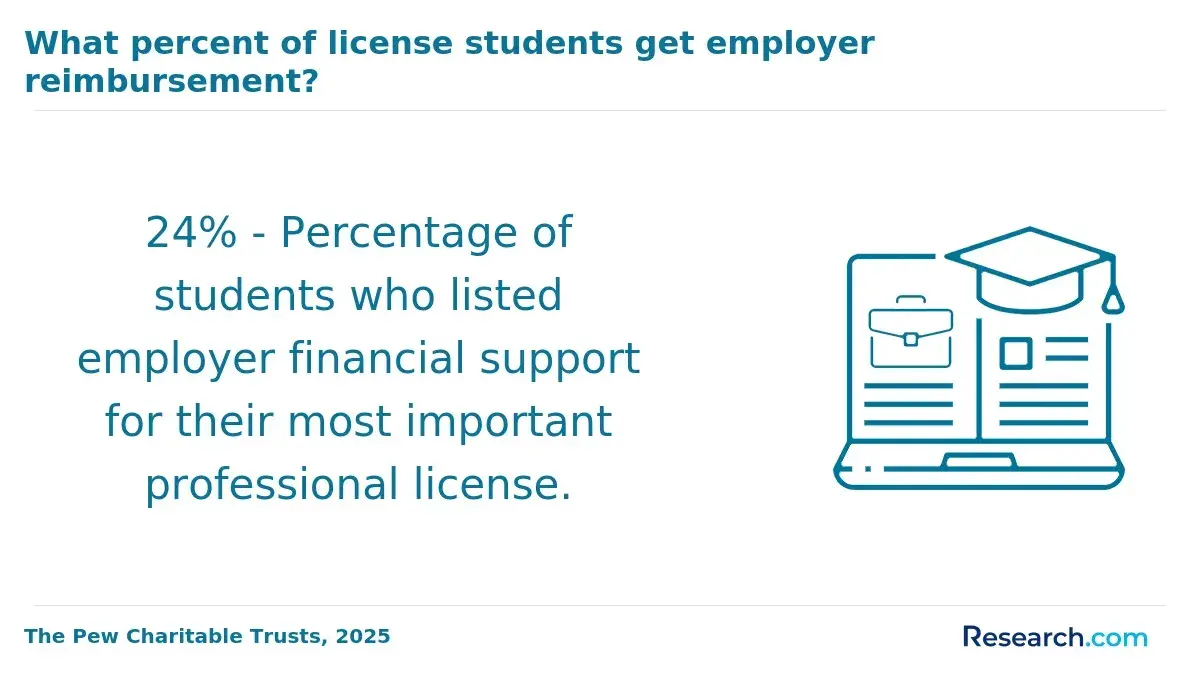
Advanced degrees and certifications can improve leadership potential, but only when they match the career track. A master's degree in counseling may be essential for clinical licensure, while a master's in industrial-organizational psychology, applied behavior analysis, public health, business administration, or data analytics may be more useful for management and operations roles.
The key question is not "Will another credential help?" but "Which promotion barrier does this credential remove?" Some barriers are legal, such as licensure requirements. Others are competitive, such as needing analytics depth for people analytics or research leadership.
The table below summarizes how common education and credential choices affect mobility. Use it to avoid paying for a credential that adds prestige but does not unlock the next role you actually want.
| Credential or degree | Best leadership use | When it is worth considering | Limitations |
| Master's in counseling, social work, or marriage and family therapy | Clinical practice, supervision, program leadership | When the goal is licensed client care or behavioral health leadership | Requirements vary by state and license type |
| Doctorate in clinical or counseling psychology | Independent practice, assessment leadership, clinical director roles | When the goal requires psychologist licensure or advanced assessment authority | Long time commitment and competitive admissions |
| Master's in industrial-organizational psychology | Talent strategy, organizational effectiveness, leadership assessment | When targeting HR leadership, consulting, or people analytics | Business and analytics skills still matter |
| Board Certified Behavior Analyst pathway | ABA supervision and clinical program leadership | When interested in autism services, behavior intervention, or ABA operations | Requires approved coursework, supervised fieldwork, and exam eligibility |
| Project management or HR certification | Operations, HR, training, and program management | When experience is strong but formal management signaling is weak | Usually supplements experience rather than replacing it |
| MBA, MHA, or MPH | Executive leadership, healthcare administration, population health programs | When moving from direct service into budgets, strategy, and systems leadership | Best value depends on employer recognition and career goals |
Licensure paths require careful state-by-state verification. Psychology, counseling, social work, behavior analysis, and school psychology requirements can differ in degree level, supervised hours, exams, continuing education, and title protection. Readers should confirm requirements with the relevant licensing board before enrolling.
Some students discover that their desired leadership role is actually outside psychology. If the goal is medication expertise, pharmacy operations, or clinical drug therapy rather than behavioral assessment or counseling, comparing PharmD programs may be more relevant than pursuing a psychology graduate degree.
The best mix of pay growth and promotion potential usually comes from paths where psychology skills influence high-stakes decisions. These include workforce strategy, product research, healthcare operations, organizational consulting, and licensed clinical leadership.
BLS May 2024 wage data shows that management track matters. Human resources managers had a median wage of $140,030, while psychologists in many clinical and applied settings require advanced credentials before reaching higher professional pay bands. This does not mean HR is automatically "better"; it means psychology graduates should compare both credential cost and leadership access before choosing a path.
The table below compares common psychology-related paths by pay-growth logic rather than by a single salary figure. This is more useful because actual pay varies by region, employer, degree level, licensure, and years of experience.
| Path | Pay-growth potential | Promotion potential | Best fit | Risk to watch |
| Industrial-organizational psychology and HR leadership | High | High | People who enjoy business, analytics, and organizational change | Promotion may stall without data and business credibility |
| UX research and behavioral insights | High | High in mature product organizations | Research-oriented graduates who want applied business impact | Competition and portfolio expectations can be intense |
| Licensed clinical psychology | High after advanced training | High for supervision, practice ownership, or clinical administration | People committed to doctoral-level clinical work | Long education timeline and licensure requirements |
| Behavioral health operations | Moderate to high | High in growing provider networks | Graduates interested in access, quality, staffing, and service delivery | Direct-service roles can be stressful and underpaid before management |
| Community and nonprofit program management | Moderate | Moderate to high | Mission-driven graduates who can manage grants and outcomes | Funding cycles can limit raises and staffing |
| School and student services | Moderate | Moderate | Graduates interested in education systems and student support | Advancement may require education credentials or administrative openings |
For many readers, the smartest route is not the path with the highest eventual salary. It is the path where the required education, time, licensing, stress level, and leadership style match the reader's goals. A person who wants to manage systems may be better served by HR analytics or healthcare operations, while a person who wants independent clinical authority should plan for graduate training and licensure.
Internal promotion and changing employers can both improve mobility, but they work best at different stages. Internal promotion is often better when the employer has clear ladders, tuition support, mentorship, and growing departments. Changing employers may be better when the current role has no next step, pay compression is severe, or leadership opportunities are blocked.
For psychology degree holders, internal mobility is especially valuable in healthcare systems, universities, government agencies, and large corporations because these employers may allow movement from direct service into coordination, compliance, HR, training, research operations, or management. However, staying too long in a flat role can make advancement harder if your responsibilities do not expand.
Use these signals to decide whether to stay and pursue promotion or look externally:
- Stay when: your manager can name the next role, promotion criteria are documented, you are receiving stretch assignments, and the organization is growing.
- Stay when: the employer funds licensure supervision, graduate tuition, certifications, conference attendance, or leadership training that directly supports your goals.
- Leave when: your title changes but your pay, authority, budget exposure, or decision-making scope does not improve.
- Leave when: the organization relies on you as a high performer but gives leadership opportunities only to people with credentials you are not pursuing.
- Leave when: you can move to an employer where your psychology experience is tied to stronger business, clinical, research, or operational outcomes.
Some psychology graduates also use employer changes to pivot into adjacent health careers with more structured role ladders. For example, someone who discovers they prefer hands-on patient care over counseling support might compare psychology roles with LPN programs, especially if they want a licensed clinical pathway with a clearer entry-level credential.
The biggest mistake is changing employers only for a slightly higher starting salary without checking the new promotion structure. A better move is to ask recruiters about internal fill rates, leadership-development programs, manager training, tuition benefits, and examples of employees promoted from the role you are considering.
Promotion barriers for psychology degree holders are often predictable. The most common problem is not the degree itself; it is a mismatch between the role, credential requirements, employer structure, and the graduate's leadership goal.
Clinical paths can be limited by licensure rules. Business paths can be limited by weak analytics or lack of financial fluency. Research paths can be limited by missing methods training or lack of publication, portfolio, or grant experience. Community-service paths can be limited by funding constraints and small organizational structures.
These red flags can help readers identify weak mobility before they invest years in a role:
- No visible next title: if supervisors cannot describe the promotion ladder, advancement may depend on turnover rather than performance.
- Credential ceiling: if the next role requires a license, master's degree, doctorate, or certification, experience alone may not be enough.
- Title inflation: a "manager" title without staff, budget, metrics, or decision authority may not translate well to future employers.
- Low data exposure: roles that never involve outcomes, reporting, analysis, or quality improvement can weaken the case for leadership.
- Flat employer structure: small programs may offer meaningful work but few openings above the front line.
- Burnout risk: high-caseload or crisis-heavy jobs can reduce the time and energy needed for graduate school, certification, or networking.
To avoid these barriers, psychology graduates should evaluate roles by responsibility growth, not just relevance to the major. A job that uses psychology language but offers no supervision, metrics, or development support may be less mobile than a role in HR, operations, research, or analytics that builds transferable leadership evidence.
Another common mistake is assuming executive roles are guaranteed after an advanced degree. Graduate education can open doors, but leadership still depends on performance, communication, judgment, organizational fit, and the availability of higher-level roles.
A five-year promotion plan should connect education, experience, skills, and employer choice. The goal is to build a record that makes the next promotion logical, not surprising.
The best plan starts with a target leadership identity. Decide whether you want to become a clinical supervisor, HR leader, research manager, UX research lead, behavioral health operations manager, nonprofit program director, or healthcare administrator. Each target requires different evidence.
Use this five-year sequence to turn a psychology degree into a stronger mobility strategy:
- Year 1: Choose a role with a ladder. Prioritize employers that can name the next title, promotion criteria, training options, and examples of internal advancement.
- Year 1: Track measurable wins. Document outcomes such as improved documentation quality, reduced wait times, stronger survey response, faster onboarding, better client follow-up, or completed research milestones.
- Year 2: Add one promotion skill. Build a concrete capability such as Excel, statistics, HR compliance, project management, motivational interviewing, grant reporting, UX methods, or quality improvement.
- Year 2 to 3: Seek leadership before the title. Train peers, coordinate a project, lead a meeting, manage a small process, or present findings to decision-makers.
- Year 3: Decide whether a credential is necessary. If the next role requires licensure, graduate school, certification, or supervised hours, plan the timeline and cost before hitting the ceiling.
- Year 3 to 4: Move into a role with broader scope. Look for senior coordinator, lead analyst, program supervisor, HR generalist, research associate, or operations roles that expand responsibility.
- Year 4 to 5: Choose specialist or manager deliberately. If you prefer deep expertise, pursue senior individual-contributor roles; if you want authority, build staff supervision, budgeting, and strategy experience.
Readers should also schedule career conversations before they feel stuck. Ask managers which skills separate promoted employees from strong performers, what credentials matter for leadership, and which departments are growing. Ask recruiters how they evaluate psychology graduates for management-track roles.
The strongest five-year plans remain flexible. A student may begin in behavioral health and move into operations, start in research and pivot to UX, or enter HR and specialize in people analytics. The common thread is deliberate skill stacking: psychology plus data, psychology plus operations, psychology plus licensure, or psychology plus business leadership.
Industry choice can matter as much as job title. A psychology graduate working in a large healthcare system, national behavioral health provider, technology company, insurance organization, or corporate HR department may see more internal ladders than someone in a small agency with flat staffing.
BLS 2024 to 2034 projections show especially strong demand in healthcare management, with medical and health services managers projected to grow much faster than the average for all occupations. For psychology graduates, this means behavioral health operations, patient access, care coordination, and quality improvement can become leadership bridges even for those who do not become licensed clinicians.
The table below compares employer types by advancement potential. Use it to evaluate not only where you can get hired, but where your responsibilities can grow.
| Employer or industry | Advancement potential | Best-fit psychology graduates | Trade-off |
| Large healthcare systems | High | Graduates interested in behavioral health operations, care coordination, quality, or patient experience | May require patience with bureaucracy and credential rules |
| Corporate HR and talent teams | High | Graduates interested in hiring, employee development, analytics, and organizational behavior | Business and data skills are often essential for promotion |
| Technology and product companies | High but competitive | Graduates with research methods, UX, experimentation, and communication skills | Hiring cycles can be volatile, and portfolios matter heavily |
| Community mental health agencies | Moderate to high | Graduates committed to direct service, program coordination, and mission-driven leadership | Pay growth may lag unless moving into supervision or administration |
| Schools, colleges, and student services | Moderate | Graduates interested in advising, student support, accessibility, or school psychology preparation | Advancement may depend on degrees, tenure, and institutional structure |
| Research universities and medical centers | Moderate to high | Graduates planning graduate study or research management careers | Long-term leadership often requires advanced credentials or grant experience |
Large employers often offer clearer ladders, formal leadership-development programs, tuition benefits, and internal transfers. Smaller organizations may offer faster responsibility because there are fewer layers, but they can also limit upward movement if there are only a few management seats.
Psychology graduates who are comparing adjacent health and wellness fields should also look at how promotion ladders differ outside psychology. For example, students drawn to performance, rehabilitation, coaching, or wellness leadership may compare psychology with the best kinesiology programs to see whether a movement-science path better matches their long-term goals.
Other Things You Should Know About Psychology
Industrial-organizational psychology, HR, people analytics, UX research, and behavioral health operations often provide the strongest promotion potential because they connect psychology skills to measurable organizational outcomes. Clinical psychology can also lead to strong leadership, but usually requires graduate education, supervised experience, and licensure.
Yes, especially in HR, research coordination, case management, program operations, student services, and customer or user research support. However, independent clinical practice, psychologist roles, and many supervisory clinical positions typically require advanced education and state licensure.
It depends on your strengths and goals. Specialists may do better in research, assessment, UX, analytics, or clinical practice, while managers need staffing, budgeting, conflict resolution, compliance, and strategy skills. The best choice is the path where you can build evidence of impact and stay motivated long term.
Large healthcare systems, behavioral health providers, corporate HR departments, technology companies, insurance organizations, universities, and research institutions often offer stronger mobility because they have larger teams, clearer ladders, and more cross-functional roles. Advancement still varies by employer structure, credentials, performance, and local labor market conditions.
See What Experts Have To Say About Studying Psychology
Read our interview with Psychology experts

Elizabeth L. Jeglic Ph.D.
Psychology Expert
Professor of Psychology
City University of New York

Robin M. Kowalski. Ph.D.
Psychology Expert
Professor of Psychology
Clemson University

Catherine Caldwell-Harris, Ph.D.
Psychology Expert
Associate Professor of Psychology
Boston University

- What Can You Do With A Psychology Degree? | Psychology.org https://www.psychology.org/resources/alternative-careers-for-psychology-majors/
- The Role of Mentorship in Career Development https://blogs.psico-smart.com/blog-the-role-of-mentorship-in-career-development-11389
- A Career in Psychology: 17 Paths | USAHS https://www.usa.edu/blog/career-path-in-psychology/
- The Benefits of Mentoring on Career Development https://www.mentoringcomplete.com/benefits-of-mentoring-career-development/
- 14 Exciting Psychology Careers in High Demand https://www.ucumberlands.edu/blog/14-exciting-psychology-careers-high-demand
- Benefits, Barriers, and Support for Board Certification as Early Career Psychologists - ABPP https://abpp.org/newsletter-post/benefits-barriers-and-support-for-board-certification-as-early-career-psychologists/
- A Taxonomy for Education and Training in Professional Psychology Health Service Specialties https://societyforpsychotherapy.org/taxonomy-education-training-professional-psychology-health-service-specialties/