2027 Psychology Degree Licensure Outcomes Report: Pass Rates, Barriers, and Career Impact

Co-Founder and Chief Data Scientist
A psychology degree can open meaningful careers, but graduation alone rarely equals permission to practice independently. Licensure determines whether you can diagnose, treat, supervise, bill insurers, or use protected titles. The stakes are high: the U. S. Bureau of Labor Statistics reports a median annual wage of $92,740 for psychologists and projects faster-than-average job growth. This guide is for students comparing psychology programs, career changers, and graduates planning next steps. You will learn how pass rates, accreditation, supervised hours, state rules, costs, and career outcomes affect the real value of a psychology degree.
Key Things You Should Know
- Psychology licensure outcomes should be evaluated separately from graduation outcomes because a graduate may complete the degree but still face exam, supervised-hour, accreditation, or state-eligibility barriers before practicing independently.
- For doctoral psychologist licensure, the Examination for Professional Practice in Psychology is commonly scored against a scaled passing standard of 500, so first-time pass rates, repeat-attempt outcomes, and cohort size matter more than a single advertised percentage.
- Licensure can expand access to clinical roles, insurance-reimbursable practice, supervision authority, and higher-responsibility jobs, while unlicensed psychology graduates often compete for research, case management, human services, HR, and behavioral support roles.
- Is Professional Licensure Required for Psychology Degree Careers?
- How Do Psychology Degree Graduates Qualify for Professional Licensure?
Is Professional Licensure Required for Psychology Degree Careers?
Professional licensure is required when a role involves regulated psychological practice, such as independent assessment, diagnosis, psychotherapy, clinical supervision, or use of protected titles like "licensed psychologist." A psychology degree can be valuable without a license, but the degree and the license are not the same credential.
The key decision is whether your target job legally requires independent practice authority. If your goal is clinical psychology, counseling psychology, school psychology, neuropsychological assessment, or private practice, licensure is usually central to the return on investment. If your goal is research support, behavioral health administration, user experience research, human resources, or social services, a license may be optional or unnecessary.
The table below separates common psychology-related career directions by the level of licensure typically involved. Use it to identify whether you are evaluating a degree for career entry, professional advancement, or a regulated clinical pathway.
| Career direction | Typical minimum education | Is a professional license usually required? | What licensure changes |
| Licensed psychologist | Doctoral degree, usually PhD or PsyD | Yes | Allows independent diagnosis, assessment, therapy, supervision, and private practice where permitted by state law |
| Licensed professional counselor or mental health counselor | Master's degree in counseling or closely related field | Yes for independent counseling practice | Allows regulated counseling practice after exams and supervised hours |
| School psychologist | Specialist-level or doctoral training, depending on state and setting | Often requires state credential, certification, or licensure | Allows practice in schools and, in some states, broader psychological services |
| Research assistant or lab coordinator | Bachelor's or master's degree | No | Licensure is usually not needed unless clinical services are provided |
| Behavioral health case manager or program coordinator | Bachelor's or master's degree | Not always | Licensure may improve advancement but is not always required for non-clinical coordination roles |
Psychology is not the only health-related field where licensure changes career access. Students comparing regulated clinical careers may also evaluate pathways such as PharmD programs, where the degree, exam, and license are all tied closely to the right to practice.
A common mistake is assuming that "psychology degree" means "licensed psychologist." In most states, independent psychologist licensure requires a doctoral degree, board-approved supervised experience, a licensing exam, and a state application. Bachelor's and many master's psychology graduates can build strong careers, but they generally cannot practice independently as psychologists.
How Do Psychology Degree Graduates Qualify for Professional Licensure?
Psychology licensure is a sequence, not a single event. Most candidates must complete the right degree, document supervised experience, pass required exams, satisfy jurisprudence or ethics requirements, and receive approval from a state licensing board before using a protected title or practicing independently.
The exact path depends on the license. Doctoral psychologist licensure is different from counseling licensure, marriage and family therapy licensure, school psychology credentialing, or behavior analyst certification. This is why students should start with the license they want, then choose the degree that meets that license's education rules.
The sequence below shows the typical order of steps for regulated psychology practice. Each step should be verified with the licensing board in the state where you plan to work.
- Identify the exact license or credential required for your target job, such as licensed psychologist, licensed professional counselor, school psychologist, or another behavioral health credential.
- Confirm that the degree level, curriculum, practicum, internship, and accreditation status match the state board's education rules.
- Complete required supervised experience, including practicum, internship, postdoctoral, or post-master's hours when applicable.
- Apply to the licensing board for exam authorization or credential review before scheduling required exams.
- Pass required exams, which may include the EPPP for psychologist licensure, a state jurisprudence exam, or role-specific tests for other credentials.
- Submit final documentation, background checks, fees, transcripts, supervision forms, and any required continuing education or ethics materials.
Online and hybrid programs can support licensure, but only if they meet the same state, accreditation, internship, and supervised-practice requirements as campus programs. Delivery format matters less than whether the program has approved clinical placements, transparent outcomes, and documented eligibility in the state where you intend to apply.
Licensure planning is common across healthcare careers. For example, students comparing psychology with nursing may review LPN programs because both fields require careful attention to state approval, supervised training, and exam eligibility before employment in regulated roles.
Before enrolling, ask the program for a written licensure disclosure for your state. A verbal statement from an admissions representative is not enough, especially if you plan to move, study online, transfer credits, or seek licensure in a state where the school has fewer placements.
Licensure exam pass rates are one of the clearest outcome signals available, but they are easy to misread. A pass rate should tell you who tested, when they tested, whether the rate reflects first-time attempts or repeat attempts, and how many graduates were included.
For psychologist licensure, the EPPP is the best-known national exam. Many jurisdictions use a scaled passing score of 500 for independent practice. That number is not a percentage correct; it is a scaled score used to create a consistent standard across exam forms. A program's first-time EPPP pass rate is especially important because it reflects how well graduates were prepared before remediation, retesting, or extended study.
The table below explains the most common pass-rate labels. It will help you avoid comparing outcome figures that look similar but measure different things.
| Pass-rate metric | What it measures | Why it matters | Common limitation |
| First-time pass rate | Percentage of candidates who pass the exam on their first attempt | Best quick indicator of program preparation and candidate readiness | Can look unstable if the cohort is very small |
| Overall pass rate | Percentage who eventually pass after one or more attempts | Shows whether graduates ultimately clear the exam barrier | Can hide first-attempt weakness and added retake costs |
| Recent-year pass rate | Performance during a specific reporting year or cycle | Shows current program performance | May be distorted by small numbers or unusual cohort characteristics |
| Multi-year pass rate | Aggregated performance across several years | Smooths out volatility and helps compare programs | May include older cohorts trained under different curriculum standards |
| Program-disclosed pass rate | Outcome reported by the school, accreditor, or licensing-related disclosure | Can be useful when definitions are clear | Must be checked for candidate definition, reporting period, and exclusions |
A high first-time pass rate can signal strong curriculum alignment, effective exam preparation, and adequate clinical training. However, it should not be used alone. A program with a high pass rate but low completion, weak internship placement, high debt, or limited state eligibility may still be a poor fit for your goals.
Use these questions when comparing psychology licensure exam outcomes. They help reveal whether the advertised number reflects a real advantage or a narrow slice of graduates.
- Does the rate include only first-time test-takers, or does it combine repeat attempts?
- How many graduates were included in the denominator?
- Which exam, license type, and reporting period does the rate cover?
- Were non-testers, delayed testers, or graduates who never applied for licensure excluded?
- How does the program support students who fail the first attempt?
- Does the pass-rate report align with accreditation disclosures and state board expectations?
The biggest red flag is a pass rate without context. A school that advertises a strong percentage but will not disclose cohort size, first-time performance, or exam type is making it difficult for you to evaluate risk.
The most common licensing barriers are not always academic. Many graduates struggle with timing, documentation, supervised-hour availability, exam preparation, state-specific requirements, and costs. These barriers can delay licensure even after the degree is complete.
The table below summarizes barriers that most often affect psychology licensure outcomes. It focuses on how each barrier affects time, cost, and career access.
| Licensure barrier | How it affects graduates | Potential career impact |
| Exam failure or delayed testing | Adds study time, retake fees, and uncertainty | Can delay independent practice, promotion, or employer credentialing |
| Insufficient supervised hours | Requires additional placements or employment under supervision | May keep graduates in associate, trainee, or lower-autonomy roles longer |
| Program not aligned with state rules | May require extra coursework or board review | Can delay or prevent licensure in the desired state |
| Weak documentation | Missing supervision logs, evaluations, or transcripts slow board approval | Can create avoidable administrative delays after graduation |
| Internship or practicum shortages | Students may wait longer for appropriate clinical placements | Can extend degree completion and postpone exam eligibility |
| Financial pressure | Exam fees, application fees, unpaid training, and debt can affect persistence | May push graduates toward immediate non-licensed employment instead of completing the pathway |
Several barriers are preventable if students investigate them before enrollment. The practical goal is to reduce the chance that you complete a degree but cannot use it for the license you intended.
- Ask whether the program meets education requirements in the exact state where you plan to apply for licensure.
- Request first-time and overall exam pass rates with cohort size and reporting year.
- Confirm whether internship, practicum, and supervision placements are guaranteed, arranged, or student-sourced.
- Check whether transfer credits could weaken licensure eligibility by replacing required courses or supervised experiences.
- Estimate the cost of exam preparation, retakes, applications, background checks, supervision, and lost income during training.
- Keep copies of syllabi, supervision logs, evaluations, practicum descriptions, and official program disclosures.
One red flag is a program that discusses career outcomes broadly but avoids direct answers about licensure eligibility. Another is a school that reports job placement but not licensing exam outcomes for students pursuing regulated practice.
Licensing exam preparation should begin before the final semester. Students who treat the exam as a separate hurdle after graduation may lose momentum, especially if they are also working, completing supervised hours, or managing loan repayment.
A strong preparation plan should combine content review, practice testing, feedback, and a retake strategy. The goal is not just to pass an exam, but to reduce the financial and career disruption caused by delayed licensure.
- Map the exam blueprint to your coursework so you can identify weak content areas early.
- Take a diagnostic practice test before intensive study to avoid spending equal time on areas you already know.
- Create a study calendar that accounts for work, supervision, internship, family responsibilities, and application deadlines.
- Use practice questions to build reasoning skills rather than memorizing isolated facts.
- Track scores by domain so remediation targets the areas most likely to affect your outcome.
- Confirm retake waiting periods, fees, and board approval rules before you test.
- If you do not pass, request feedback, revise your study plan, and avoid retesting before your weakest domains improve.
Programs with strong licensure outcomes often normalize exam preparation instead of leaving it to chance. They may provide review courses, faculty advising, practice exams, peer study groups, or remediation plans for students who underperform on mock assessments.
Students should also plan emotionally and financially for a possible retake. A first-attempt failure can be discouraging, but it does not necessarily end the licensure pathway. The key is to respond with structured remediation rather than repeating the same study method and hoping for a different result.
A practical mistake is scheduling the licensing exam too early because peers are testing. Readiness should be based on documented practice performance, exam authorization, and personal circumstances, not pressure to keep pace with a cohort.
Psychology licensure is state-based. This means a degree that supports licensure in one state may not automatically satisfy requirements in another. State boards can differ on coursework, supervised hours, internship standards, jurisprudence exams, background checks, postdoctoral experience, and continuing education.
License portability has improved in some areas, but it is not universal. Telehealth growth has made this issue more important because psychologists and other behavioral health professionals may serve clients across state lines only when allowed by the laws and compacts that apply to both the provider and the client location.
The table below shows portability issues that students should review before choosing a program or relocating after graduation. These factors can affect both career mobility and how quickly a graduate can begin work.
| Portability issue | Why it matters | What to check |
| State education rules | Course and degree requirements may differ by board | Whether the program meets the education rules in every state you are considering |
| Supervised experience | Hours, supervisor qualifications, and timing can vary | Whether predoctoral, postdoctoral, or post-master's hours will transfer |
| Jurisprudence exams | Some states test state laws and ethics rules separately | Whether an additional state exam is required after moving |
| Telehealth rules | Client location can trigger another state's licensing rules | Whether you need authorization in the client's state |
| Interstate compacts | Compacts may simplify cross-state practice for eligible licensees | Whether your profession, license type, and state participate |
| Endorsement or reciprocity | Experienced licensees may apply through a streamlined process | Whether years of practice, exam history, and disciplinary record meet the receiving state's rules |
Before enrolling in an out-of-state or online psychology program, take these steps. They are especially important if you may move for internship, postdoctoral training, military family reasons, or remote work.
- Check the licensing board website for the state where you want to practice, not only the state where the school is located.
- Ask the school for written confirmation of whether the program meets, does not meet, or has not determined eligibility in your state.
- Save course descriptions and syllabi in case a board later requests evidence of content coverage.
- Review whether telehealth, temporary practice, or compact participation affects your intended work model.
- Recheck requirements before graduation because board rules can change during a multi-year program.
Do not assume reciprocity means automatic transfer. In many cases, reciprocity or endorsement still requires an application, fees, background checks, verification of exam scores, proof of supervised experience, and a review of disciplinary history.
The cost of psychology licensure includes more than tuition. Students should budget for applications, exams, background checks, supervision, test preparation, transcript fees, travel, continuing education, and the opportunity cost of years spent in training before independent practice.
Time to licensure varies by pathway. A doctoral psychologist route commonly includes undergraduate study, doctoral coursework, practicum, internship, possible postdoctoral supervised experience, exams, and board review. Master's-level counseling or school psychology routes can be shorter, but they still require supervised practice and state credentialing.
The table below outlines common cost and timeline components. It is not a quote for any one state or program; it shows where expenses and delays usually appear so you can build your own estimate.
| Component | Where it appears in the pathway | How it affects ROI |
| Tuition and fees | During the degree | Largest upfront cost and a major driver of debt burden |
| Practicum and internship expenses | During clinical training | May require commuting, relocation, reduced work hours, or unpaid time |
| Exam fees and preparation | Before licensure approval | Can increase if retakes or commercial prep materials are needed |
| Application and background check fees | During board review | Usually unavoidable and may repeat when applying in another state |
| Supervised post-degree hours | After graduation for many licenses | May delay independent-practice earnings or limit job choices temporarily |
| Continuing education and renewal | After licensure | Creates ongoing professional maintenance costs |
For EPPP candidates, the exam fee has commonly been published at $600 before additional testing-center or jurisdiction-related fees. That figure matters because a retake is not just an academic setback; it can also mean another fee, more study time, delayed board approval, and postponed eligibility for roles requiring a full license.
Use this practical budgeting process before choosing a program. It helps compare a high-pass-rate program with a lower-cost program in a way that reflects total licensure risk.
- Estimate total degree cost after scholarships, assistantships, employer aid, and expected borrowing.
- Add known licensing costs, including exam, application, transcript, background check, renewal, and continuing education expenses.
- Estimate the income difference between trainee, associate, or unlicensed roles and the licensed roles you are targeting.
- Build in a delay scenario, such as one retake or one extra term of supervised placement.
- Compare the total cost against your intended work setting, geographic market, and willingness to complete supervised hours after graduation.
The right investment is not always the cheapest program or the highest advertised pass rate. It is the program that gives you a realistic path to the license you need, at a cost and timeline you can sustain.
Licensure affects career outcomes because it changes what you are legally allowed to do. Licensed professionals can often qualify for roles involving diagnosis, treatment planning, independent therapy, psychological testing, clinical supervision, private practice, and insurance billing. Unlicensed graduates may still find meaningful work, but usually with narrower scope and less autonomy.
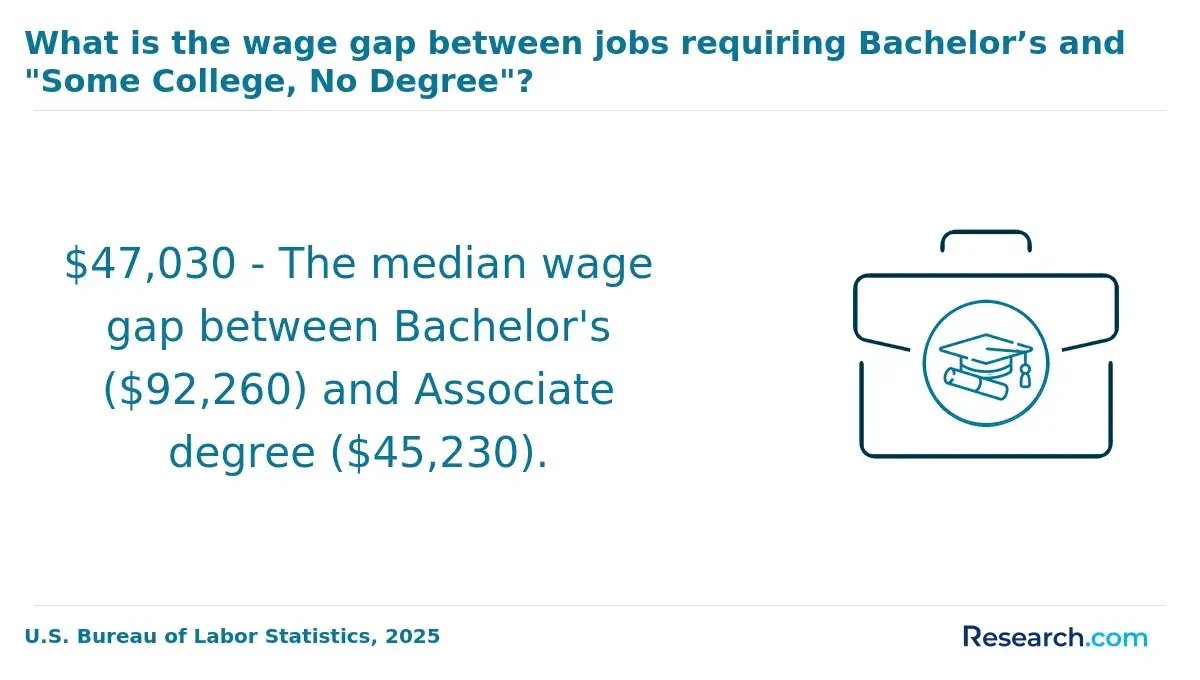
The U.S. Bureau of Labor Statistics reports a median annual wage of $92,740 for psychologists, with employment projected to grow 7% from 2023 to 2033. Those figures do not guarantee an individual outcome, but they show why many students evaluate licensure as a long-term investment rather than just a compliance requirement.
The table below compares licensed and unlicensed career access. It shows why licensure can influence pay potential, job stability, and advancement, even though outcomes still depend on location, employer, specialty, experience, and debt.
| Outcome factor | Licensed psychology professional | Psychology graduate without professional license |
| Scope of practice | May provide regulated services within state law | Cannot independently provide protected clinical services |
| Job eligibility | Eligible for many clinical, assessment, supervisory, and private-practice roles | Often limited to assistant, coordinator, research, support, or administrative roles |
| Billing and reimbursement | May qualify for insurance or organizational credentialing where permitted | Usually cannot bill independently for regulated psychological services |
| Advancement | Can move into supervision, specialty practice, leadership, or consulting | May need graduate education, certification, or a different credential for advancement |
| Mobility | Can pursue endorsement, compact options, or multi-state authorization when eligible | Mobility depends more on general skills and employer needs |
Licensure can also improve resilience in a changing labor market. Demand for mental health services, telehealth, integrated care, school-based services, and behavioral health support has increased employer interest in credentialed professionals. At the same time, technology and AI tools are changing documentation, screening, scheduling, and measurement-based care, which may reward graduates who combine clinical competence with data literacy and ethical technology use.
Psychology students who are drawn to data-heavy healthcare, computational biology, or research analytics may also compare clinical licensure with non-licensed STEM paths such as bioinformatics major jobs, where advancement is usually tied to technical skills, research experience, and graduate training rather than a clinical practice license.
The main ROI question is fit. If your goal is independent clinical practice, licensure is usually essential. If your goal is organizational research, people analytics, public health, product research, or nonprofit program leadership, a psychology degree may still be useful, but a clinical license may not be the most efficient route.
Not every psychology graduate becomes licensed, and not every psychology-related career requires licensure. A bachelor's or master's degree in psychology can support roles that use research, communication, behavioral analysis, data interpretation, program coordination, and human development knowledge.
The table below summarizes non-licensed options. These roles vary widely by employer and may require experience, certifications, graduate study, or specialized technical skills, but they do not typically require independent psychologist licensure.
| Career option | Typical psychology-related value | Possible next step for advancement |
| Research assistant or coordinator | Supports study design, participant management, data collection, and literature review | Graduate study, statistics training, or clinical research certification |
| Human resources or talent development | Applies knowledge of motivation, assessment, learning, and workplace behavior | HR certification, people analytics, or industrial-organizational psychology study |
| Case manager or behavioral health coordinator | Connects clients with services and supports treatment teams | Master's-level licensure pathway or healthcare administration training |
| User experience researcher | Uses behavioral research methods to understand users and improve products | Portfolio development, mixed-methods research skills, or analytics tools |
| Community program specialist | Designs, supports, or evaluates programs serving families, youth, or communities | Public health, social work, nonprofit leadership, or evaluation training |
| Behavioral support specialist | Assists with behavior plans under appropriate supervision | Applied behavior analysis training, education credentials, or graduate study |
Students should avoid treating the unlicensed path as a fallback without a plan. Non-licensed careers can be strong options, but they often require deliberate skill building in statistics, writing, project management, data tools, program evaluation, interviewing, or domain-specific experience.
If you are unsure whether to pursue licensure, compare both paths before committing to a costly graduate program. The following questions can clarify your decision.
- Do you want to provide therapy, assessment, diagnosis, or independent clinical services?
- Are you willing to complete supervised hours after graduation before full independent practice?
- Can you manage the debt and delayed earnings that may come with a doctoral or clinical pathway?
- Would a non-licensed role in research, HR, UX, public health, or program management meet your career goals faster?
- Does the program publish licensure outcomes, or only general employment outcomes?
- Will the degree remain useful if you decide not to pursue licensure after graduation?
A psychology degree is most worthwhile when the education level, licensure pathway, cost, and target job match. If those pieces do not align, students may spend years preparing for a credential they do not need or choose a program that does not qualify them for the license they want.
Accreditation is one of the strongest safeguards in a psychology licensure pathway. For doctoral psychologist training, graduating from a program accredited by the American Psychological Association is often preferred or required by employers, internships, postdoctoral sites, and some licensing pathways. State boards may also review whether coursework, practicum, internship, and supervision meet their rules.
Accreditation does not guarantee licensure, but it reduces avoidable risk. It signals that the program has been reviewed for curriculum, faculty qualifications, student support, clinical training, and outcome reporting. Non-accredited or poorly aligned programs can create delays when graduates discover that their internship, supervision, or coursework does not satisfy a board's rules.
The table below compares program-quality factors that most directly affect licensure readiness. These factors are more useful than relying only on brand recognition or tuition price.
| Quality factor | Why it affects licensure outcomes | What to verify before enrolling |
| Accreditation | Boards and employers may rely on it as evidence of acceptable training quality | Whether the exact program, not just the institution, is accredited for your pathway |
| Internship placement support | Clinical training delays can postpone graduation and licensure eligibility | Recent placement rates, approved sites, and whether placements are local or competitive |
| Faculty and supervision access | Students need qualified mentors for clinical skill development and documentation | Faculty credentials, supervisor availability, and advising loads |
| Exam preparation | Structured preparation can improve readiness and reduce retake risk | Whether preparation is embedded in the curriculum or left entirely to students |
| Licensure disclosures | Students must know whether the program meets state education rules | Written state-by-state eligibility disclosures for online, hybrid, and campus students |
| Graduate outcomes transparency | Licensure outcomes should be measurable, not anecdotal | First-time pass rates, overall pass rates, completion, attrition, and placement data |
Online psychology degrees require special scrutiny. A high-quality online program should still provide real practicum planning, qualified supervision, state-specific disclosures, and support for internship or fieldwork placement. If the school cannot explain how online students complete board-acceptable supervised experience, the licensure pathway may be risky.
Students interested in movement science, wellness, coaching, or non-clinical performance careers may also compare psychology with best kinesiology programs, where licensure expectations differ and the career payoff may depend more on certifications, graduate study, or employer requirements than on psychologist licensure.
A common mistake is choosing the cheapest program without checking whether graduates can actually become licensed in the intended state. Lower tuition can be attractive, but the savings may disappear if you need extra coursework, a different internship, delayed supervision, or a second degree to meet board requirements.
Other Things You Should Know About Psychology
No. A psychology degree may satisfy part of the education requirement, but licensure usually also requires supervised experience, exams, an application, fees, background checks, and board approval. Requirements vary by state and license type.
The first-time pass rate is usually the most useful exam-readiness measure because it shows how candidates perform before retakes. Overall pass rates are also helpful, but they can hide added costs, delays, and remediation needs.
Yes, but only if the program meets the licensing requirements in the state where you plan to practice. Check accreditation, clinical placement support, supervised experience rules, and written state licensure disclosures before enrolling.
It depends on your career goal. Licensure can help with clinical, supervisory, assessment, and healthcare roles even outside private practice. If you prefer research, HR, UX, administration, or program work, a non-licensed path may be more efficient.
See What Experts Have To Say About Studying Psychology
Read our interview with Psychology experts

Robin M. Kowalski. Ph.D.
Psychology Expert
Professor of Psychology
Clemson University

Elizabeth L. Jeglic Ph.D.
Psychology Expert
Professor of Psychology
City University of New York

Catherine Caldwell-Harris, Ph.D.
Psychology Expert
Associate Professor of Psychology
Boston University

- State Psychology Licensure Requirements: What to Know https://www.bestpsychologydegrees.com/state-licensing-requirements-for-psychologists/
- Fastest Growing Careers In Psychology | Psychology.org https://www.psychology.org/resources/fastest-growing-careers-in-psychology/
- Online Guide to Careers in Psychology https://www.counselingpsychology.org/psychology/careers/
- State licensure and certification information for psychologists https://www.apaservices.org/practice/ce/state/state-info
- Trends in Licensure Examination Success Among ... https://jippublication.com/index.php/jip/article/download/973/740
- National Behavioral Health Exam Pass Rates 2026 | Triad https://www.triadhq.com/research/national-pass-rates
- Benefits, Barriers, and Support for Board Certification as Early Career Psychologists - ABPP https://abpp.org/newsletter-post/benefits-barriers-and-support-for-board-certification-as-early-career-psychologists/
- The Psychology License Map: A State-by-State Guide https://www.onlinemastersdegrees.org/student-resources/psychology/licensure-by-state/