2027 Psychology Degree Underemployment Report: Which Graduates Are Most Likely to Work Below Their Education Level

Co-Founder and Chief Data Scientist
Many psychology graduates leave college with strong people skills but enter a labor market where entry-level "psychology" jobs often do not require a bachelor's degree. New York Fed major-level data updated in 2024 places recent psychology graduates' underemployment rate at 47.6%, meaning nearly half are in roles that may not fully use their education. This report is for psychology students, recent graduates, career changers, and parents comparing degree ROI. You will learn which graduates are most at risk, which roles use the degree better, and how to build a job-search strategy that avoids long-term low-credential work.
Key Things to Know About Underemployment in Psychology Industry
- Psychology is a higher-risk bachelor's major for underemployment because many clinically branded roles require graduate licensure, while many bachelor's-level openings are support, case management, HR, research, sales, or behavioral health technician roles.
- New York Fed data updated in 2024 reports a 47.6% underemployment rate for recent psychology graduates, so students should treat internships, statistics, research methods, and employer-facing experience as core career requirements rather than optional extras.
- The strongest protection against low-credential work is specialization: data analysis, applied research, HR analytics, ABA experience, crisis services, case documentation, grant support, or health program evaluation usually signals more job readiness than a general psychology transcript alone.
- How likely is it for Psychology graduates to become underemployed?
- Is the college curricula for Psychology keeping up with employer expectations?
How likely is it for Psychology graduates to become underemployed?
Psychology graduates are at meaningful risk of underemployment because the degree sits between two job markets. On one side are licensed clinical occupations that usually require a master's or doctorate. On the other are bachelor's-accessible jobs where employers may value psychology training but do not always require it. Underemployment, in this article, means working in a job that typically does not require a bachelor's degree, even if the work is socially useful or related to human services.
The best way to think about risk is not "Is psychology employable?" but "Does my psychology plan lead to a specific employer-defined role?" A student aiming for research assistant, HR coordinator, behavioral health case manager, UX researcher assistant, or victim advocate has a clearer route than a student who simply plans to "work with people."
The table below shows how underemployment risk differs by graduate profile. It is designed to help students identify whether their current degree plan points to a degree-level role or a low-credential fallback job.
| Graduate profile | Underemployment risk | Why this profile matters | Better target |
| General psychology major with no internship | High | Employers may see strong academic exposure but limited workplace evidence. | Case management aide with advancement plan, HR assistant, research coordinator trainee |
| Psychology major with statistics, research methods, and lab experience | Moderate | Quantitative and documentation skills can transfer to research, evaluation, and people analytics roles. | Research assistant, program evaluation assistant, survey analyst assistant |
| Psychology major with ABA, crisis line, or behavioral health practicum experience | Moderate | Direct service experience helps employers trust the graduate in client-facing settings. | Behavior technician, care coordinator, behavioral health case manager |
| Psychology major planning licensed therapy with no graduate-school plan | High | Therapist roles generally require graduate education and state licensure. | Master's preparation plus relevant supervised experience |
| Psychology major with HR, business, data, or health administration coursework | Lower | The graduate can compete outside the narrow clinical pipeline. | HR coordinator, training specialist assistant, patient experience analyst |
For most bachelor's graduates, the danger is not permanent unemployment. The bigger risk is accepting a job that is easy to get quickly but does not build the skills, references, or credentials needed for advancement.
Is the college curricula for Psychology keeping up with employer expectations?
Psychology curricula often build strong foundations in human behavior, research design, ethics, and statistics. Those are valuable, but many programs still leave a gap between what students study and what entry-level employers screen for: software fluency, documentation standards, supervised field experience, measurable outcomes, and role-specific terminology.
The mismatch is especially visible in clinical-adjacent careers. A bachelor's psychology curriculum may explain abnormal psychology, counseling theories, and lifespan development, but employers hiring for behavioral health, case management, or treatment support may expect experience with electronic health records, mandated reporting, crisis protocols, HIPAA-aware documentation, and interdisciplinary team communication.
The following table summarizes common curriculum strengths and gaps. Use it to audit whether a program is preparing students for actual job postings rather than only for academic progression.
| Curriculum area | What psychology programs often teach well | What employers may still expect | Underemployment risk if missing |
| Research methods | Experimental design, surveys, ethics, literature review | SPSS, R, Excel, Qualtrics, data cleaning, reporting dashboards | Graduates may lose research jobs to applicants with stronger technical proof. |
| Clinical concepts | Development, diagnosis overview, counseling theory | Supervised client exposure, safety planning, documentation, referral workflows | Graduates may be limited to aide or technician roles with narrow advancement. |
| Social psychology | Group behavior, bias, persuasion, motivation | Training design, HR metrics, organizational communication, compliance basics | Graduates may miss HR or organizational roles that require business language. |
| Statistics | Hypothesis testing, correlation, regression basics | Applied analytics, data visualization, reproducible reporting | Graduates may be seen as less prepared for analyst-adjacent work. |
| Capstone or thesis | Academic writing and independent inquiry | Portfolio-ready deliverables, employer problem framing, concise executive summaries | Graduates may struggle to translate coursework into resume evidence. |
Students comparing psychology with more regulated healthcare paths should notice how different employer expectations can be. Programs such as PharmD programs are built around professional licensure and defined clinical scope, while psychology bachelor's programs usually require students to create their own bridge into a specific job market.
The practical takeaway is simple: a psychology degree is strongest when paired with a marketable application area. Students should not wait until senior year to discover whether their coursework matches job descriptions.
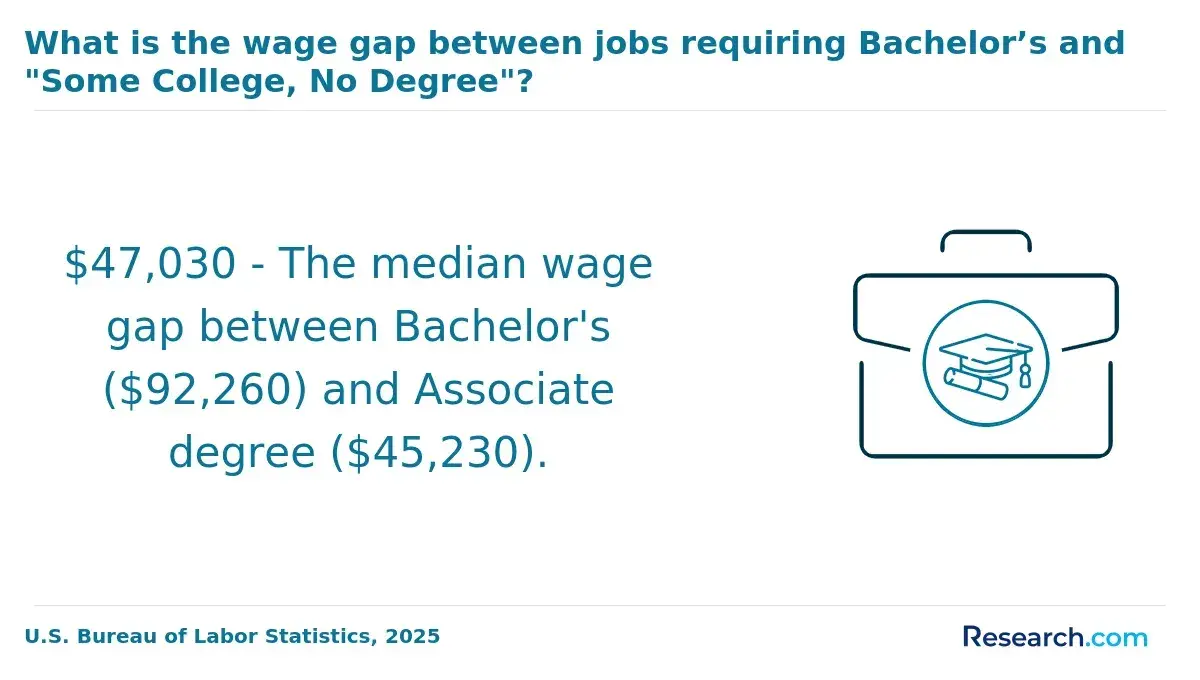
Psychology underemployment is not unusual among broad, non-licensure bachelor's majors, but it is higher than fields with clearer occupational pipelines. Majors tied to nursing, accounting, engineering, computer science, or teacher licensure often give employers a more direct signal about job readiness. Psychology can still lead to strong outcomes, but the route is less automatic.
New York Fed data updated in 2024 places recent psychology graduates' underemployment rate at 47.6%. That is above the broad recent-college-graduate benchmark, which has hovered around the low-40% range in recent labor-market updates. The difference matters because psychology graduates often compete not only with other psychology majors, but also with sociology, social work, business, public health, criminal justice, and human services graduates for the same entry-level roles.
The comparison below is not meant to rank majors by personal worth. It shows why degree structure and employer clarity affect underemployment risk.
| Major or field type | Typical labor-market signal | Relative underemployment pressure | What psychology students can learn from it |
| Psychology | Strong behavioral science foundation but broad occupational target | Elevated | Students need internships, specialization, and clear role targeting. |
| Nursing | Licensure-linked preparation for a defined occupation | Lower | Clear credentials reduce ambiguity for employers. |
| Computer science and data fields | Technical skills visible through projects, tools, and portfolios | Often lower for well-prepared graduates | Psychology students can borrow the portfolio model for analytics and research roles. |
| Biology | Strong science foundation but often graduate-school dependent | Can be elevated | Like psychology, outcomes improve when paired with lab, clinical, or data experience. |
| Business and HR-related majors | Closer match to corporate entry-level roles | Moderate | Psychology graduates targeting HR should learn business metrics and HR systems. |
One useful comparison is between psychology and technical interdisciplinary fields. Students exploring data-heavy behavioral science work may want to review how employers define bioinformatics major jobs, because those roles show how domain knowledge becomes more employable when paired with technical tools and measurable outputs.
The lesson is not that psychology is a poor choice. It is that psychology students must build proof of applied competence earlier than students in more occupation-specific majors.
Low-credential work can affect career growth when it delays skill accumulation. Employers hiring for degree-level psychology-adjacent roles usually want evidence that a graduate can handle confidential information, communicate professionally, use data, follow protocols, and work with vulnerable or complex populations. If the first job does not build those signals, the graduate may look "experienced" on paper but still not qualified for the next tier.
The impact depends on the role. A behavioral health technician job in a reputable treatment center can be a legitimate gateway if it includes supervision, crisis protocols, documentation, and advancement into care coordination. A generic customer service job may build communication skills but may not move a graduate closer to research, HR, social services, or clinical-adjacent work unless the graduate deliberately translates the experience.
AI and automation also change the entry-level landscape. Routine scheduling, screening, basic survey coding, and simple documentation tasks are increasingly supported by software. That does not eliminate psychology-related jobs, but it raises the value of judgment-heavy skills: interpreting behavior, documenting risk, analyzing data quality, communicating with teams, and making ethical decisions.
Graduates should watch for these red flags because they often signal a low-credential trap rather than a stepping-stone role:
- The job title sounds psychology-related, but the duties are mostly transport, monitoring, reception, or basic customer support
- The employer cannot explain how employees advance into coordinator, specialist, analyst, or supervisor roles
- The role offers no training in documentation, compliance, data systems, or client-care protocols
- The job requires emotional labor and irregular hours but provides little supervision or professional development
- The graduate accepts the role because it is available, not because it connects to a defined career path
Low-credential work does not ruin a psychology career, but passive low-credential work can slow it down. The key is to convert every job into evidence of higher-level responsibility.
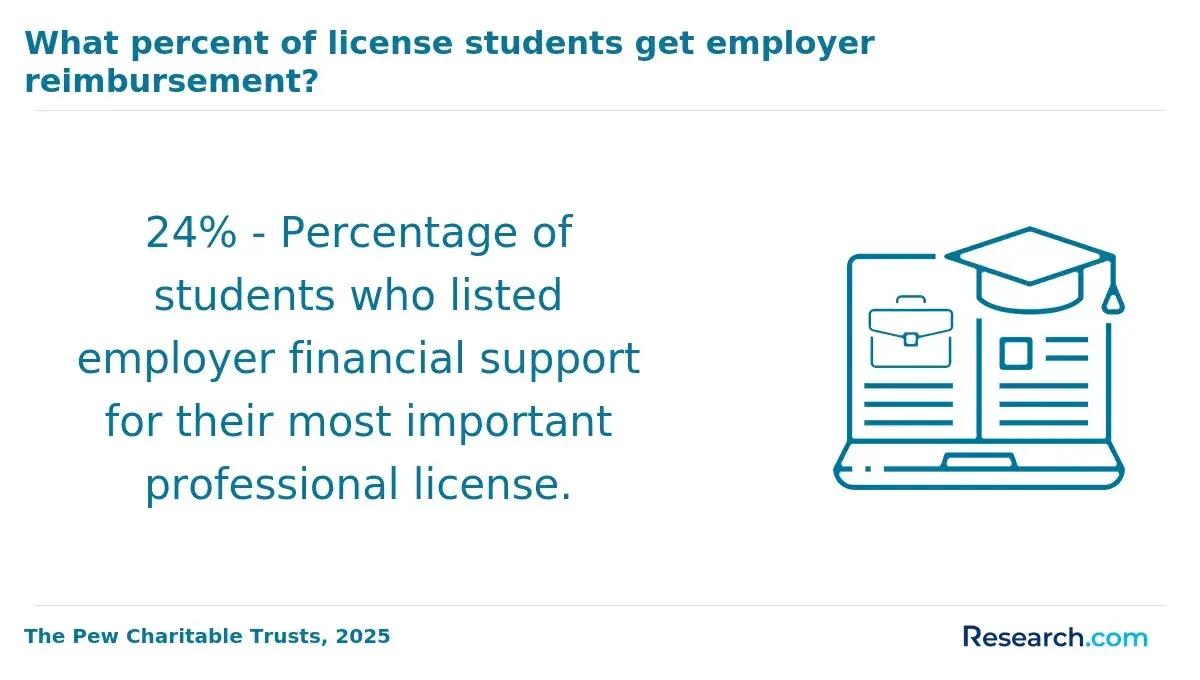
The salary gap between underemployed psychology graduates and those in degree-level jobs can be large enough to affect rent, graduate-school savings, and student loan repayment. BLS May 2024 wage data shows why role selection matters: social and human service assistants, a common helping-field role that may not require a bachelor's degree, had a median annual wage of $44,240, while substance abuse, behavioral disorder, and mental health counselors had a median annual wage of $59,190. That difference is $14,950 per year before considering benefits, overtime, location, or graduate education requirements.
The table below compares common psychology-adjacent pathways. It uses national BLS wage medians where available, so local salaries may differ significantly by state, metro area, employer type, union coverage, and licensure requirements.
| Role type | Typical credential signal | Median annual wage from BLS May 2024 | What the salary means for psychology graduates |
| Social and human service assistant | Often high school diploma or associate-level access | $44,240 | Can be mission-aligned but may underuse a bachelor's degree unless it leads to case management or program roles. |
| Substance abuse, behavioral disorder, and mental health counselor | Requirements vary; many roles require bachelor's or master's plus state rules | $59,190 | Better degree alignment, but graduates must check state licensing and employer credential rules. |
| Human resources specialist | Typically bachelor's degree | $72,910 | A strong option for psychology graduates who add business, HR systems, and employment-law basics. |
| Market research analyst | Typically bachelor's degree | $76,950 | Best suited for psychology graduates with statistics, survey research, and data visualization skills. |
| Psychologist | Usually doctoral degree and state licensure for clinical practice | $94,310 | High alignment with psychology, but not a typical immediate bachelor's-level outcome. |
Debt makes the gap more important. College Board's 2024 student aid reporting places average debt for bachelor's degree recipients who borrowed at about $29,300 for recent graduating cohorts. A graduate earning low-credential wages may still repay successfully, but the margin for housing, transportation, emergency savings, and graduate-school prerequisites is thinner.
Students should use salary data as a planning tool, not a promise. A lower-paying role may make sense if it provides supervised experience required for graduate school, but it should be evaluated against the opportunity cost of delaying a degree-level role.
Psychology graduates are often pushed into low-credential roles by a combination of market structure, unclear career planning, and employer screening practices. The most common barrier is that "psychology" is not a single bachelor's-level occupation. Without a target role, graduates may apply broadly and appear unfocused to employers.
These barriers are especially important because they are fixable while a student is still in college. The following table summarizes the barriers that most often create underemployment risk.
| Barrier | How it shows up | Why it leads to underemployment |
| No defined career track | The student says they want to help people but has no target job title. | Applications become too broad, and employers cannot see role readiness. |
| Insufficient field experience | The graduate has coursework but no internship, practicum, lab, or volunteer service. | Employers may choose applicants with proof of client, research, or administrative experience. |
| Weak quantitative evidence | The resume lists statistics courses but no tools, datasets, surveys, or reports. | Research and analyst roles require applied proof, not just class titles. |
| Licensure misunderstanding | The graduate applies for therapist or counselor roles without checking state rules. | Many clinical titles require graduate education, supervised hours, and licensure. |
| Geographic mismatch | The graduate lives in an area with limited behavioral health, HR, research, or nonprofit hiring. | Local job scarcity can push graduates into unrelated service work. |
| Late job-search start | The first serious applications are sent after graduation. | Internship pipelines, alumni referrals, and campus recruiting opportunities may already be gone. |
Common mistakes include assuming a bachelor's degree automatically qualifies someone for therapy roles, ignoring job descriptions until senior year, using the same resume for clinical support and HR jobs, and treating unpaid or low-paid experience as useful even when it provides no measurable skill growth.
A better approach is to reverse-engineer the job market. Students should collect 20 postings for roles they want, highlight repeated requirements, and then compare those requirements with their courses, projects, tools, and experience.
A psychology resume should translate academic knowledge into employer language. Instead of leading with broad claims such as "strong communication skills" or "passionate about mental health," graduates should show evidence: caseload exposure, survey design, data analysis, crisis response training, documentation accuracy, training facilitation, or measurable service outcomes.
The strongest resumes are tailored by career track. A research resume should look different from an HR resume, and both should look different from a behavioral health resume. Use the steps below to reposition a psychology background for degree-level roles.
- Choose one target track for each resume version, such as behavioral health coordination, HR, research, program evaluation, user research, student services, or nonprofit operations.
- Replace vague coursework lists with applied evidence, such as "analyzed survey responses in SPSS," "coded interview themes," or "prepared literature review for faculty research project."
- Add a skills section that includes tools and methods relevant to the role, such as Excel, SPSS, R, Qualtrics, REDCap, EHR exposure, motivational interviewing basics, or case documentation.
- Quantify experience where truthful, including number of clients supported, survey responses coded, training sessions delivered, records reviewed, or weekly service hours completed.
- Use job-description language ethically by matching real experience to employer terms, especially for ATS filters that screen for documentation, assessment, coordination, reporting, and compliance keywords.
- Move unrelated low-credential work lower on the resume unless it demonstrates leadership, scheduling, conflict resolution, confidentiality, or measurable customer outcomes.
- Include a short project section if internships are limited, especially for research posters, capstones, needs assessments, program evaluations, or data dashboards.
Graduates should also build a short career narrative for interviews. A strong version sounds like this: "My psychology training gave me a foundation in behavior and research, and I focused my experience on case documentation and behavioral health coordination so I can contribute in client support roles that require judgment and data accuracy."
The goal is not to hide low-credential experience. The goal is to show that the graduate has already been operating with degree-level thinking.
Certifications can help psychology graduates qualify for degree-level or near-degree-level roles, but they are not all equal. The best certifications are recognized in the target labor market, connected to supervised practice or technical tools, and specific enough to change how employers read the resume.
The table below highlights credentials that may improve job alignment for psychology graduates. Requirements vary by state, employer, and certifying body, so students should verify eligibility before paying for training.
| Certification or credential | Best fit | How it can reduce underemployment risk | Important limitation |
| Registered Behavior Technician | ABA, autism services, behavioral health support | Signals readiness for structured behavior-intervention environments. | Entry-level and supervised; advancement may require BCaBA, BCBA, or graduate study. |
| Mental Health First Aid | Student services, nonprofit, community programs, peer support | Shows awareness of crisis response and referral basics. | Usually not enough by itself for a degree-level job. |
| Certified Health Education Specialist eligibility preparation | Health promotion, community health, prevention programs | Can connect psychology training to public health and behavior-change roles. | Eligibility depends on coursework and exam requirements. |
| Human resources certification preparation | HR assistant, recruiting, training, employee engagement | Helps psychology graduates speak the language of employment practices and HR systems. | Some certifications require experience, so early graduates may need entry-level HR first. |
| Data and survey tool certificates | Research assistant, program evaluation, people analytics | Provides visible proof of applied technical ability. | Tool certificates matter most when paired with real projects. |
| Crisis counseling or victim advocacy training | Hotlines, shelters, victim services, community agencies | Demonstrates readiness for sensitive client-facing environments. | Training standards and role titles vary by organization and state. |
Certifications make the most sense when they shorten the path to a target job. They make less sense when students collect them randomly without knowing which employers ask for them.
Some students discover that they want direct patient care more than psychology research, HR, or case coordination. In that situation, comparing psychology outcomes with healthcare credential routes such as LPN programs can clarify whether a shorter clinical credential or a graduate psychology pathway offers the better fit.
A master's degree may be the better investment for licensed counseling, school psychology, industrial-organizational psychology, or advanced research roles. A certification may be the better first step when the graduate needs a faster, lower-cost way to qualify for a specific entry-level track.
Psychology students can reduce underemployment risk by treating career preparation as part of the degree, not as a task that begins after graduation. The most successful students usually build a target role, relevant experience, and proof of skills before they need a full-time job.
The following action plan helps students move from broad interest to degree-level employability.
- Pick a career lane by sophomore or early junior year, such as behavioral health, HR, research, user research, school support, nonprofit programs, public health, or graduate clinical preparation.
- Audit 20 job postings in that lane and create a checklist of repeated requirements, including tools, experience, certifications, documentation tasks, and preferred coursework.
- Meet with faculty, career services, and alumni to identify internships, labs, campus jobs, clinics, nonprofits, hospitals, HR departments, and research centers that hire students.
- Complete at least one experience that produces employer-readable evidence, such as a research poster, evaluation report, case documentation sample with confidential details removed, training plan, or data dashboard.
- Build technical fluency in Excel and at least one research or survey tool, then connect that skill to a project rather than listing it passively.
- Use electives strategically by adding coursework in statistics, business, public health, social work, criminal justice, data analytics, or human development based on the chosen lane.
- Start applications before the final semester and prioritize roles with supervision, advancement pathways, and skill-building responsibilities.
- Set an exit timeline for any low-credential job, including the exact skill, certification, reference, or graduate-school prerequisite it should help you gain.
Students interested in movement science, health behavior, coaching, rehabilitation support, or wellness programming may also compare psychology with adjacent fields such as the best kinesiology programs, especially if they want a career that blends behavior change with physical health and performance.
The smartest strategy is not always to avoid every low-credential role. Sometimes a lower-level job is the right first step if it provides supervised experience, relevant training, and a defined path forward. What students should avoid is drifting into work that does not compound into stronger qualifications.
Many psychology graduates do not stay permanently in low-credential work, but the first job matters more than students often realize. A 2024 Strada Institute and Burning Glass Institute report found that 52% of bachelor's graduates were underemployed one year after graduation, and 45% remained underemployed ten years after graduation. The report's most important message for psychology students is that early underemployment can become sticky if the role does not build degree-level skills.
For psychology graduates, "sticky" underemployment often happens when the first role is people-facing but not skill-building. Retail management, general customer service, front-desk medical office work, childcare support, and non-specialized aide roles may provide income and interpersonal experience, but they may not demonstrate research ability, case documentation, compliance judgment, data analysis, or clinical-adjacent competence.
A low-credential job can still be useful when it is chosen strategically. Before accepting one, graduates should check whether it includes the following career-building features:
- A written path into a degree-level role, such as case manager, coordinator, analyst, trainer, or supervisor
- Exposure to documentation, data systems, client records, quality metrics, or program reporting
- Supervision from licensed, credentialed, or degree-level professionals who can provide strong references
- Tuition assistance, paid training, certification support, or schedule flexibility for graduate school
- A timeline for moving up or moving out within 6 to 12 months if the role does not progress
The highest-risk choice is not taking a survival job. It is taking one without an exit strategy, then becoming too busy or financially pressured to build the credentials needed for the next step.
Other Things You Should Know About Psychology
Usually no. Independent therapy or counseling roles generally require a graduate degree, supervised clinical hours, and state licensure. A bachelor's degree can help you qualify for support roles while preparing for graduate school.
Not automatically. Employers usually care more about accreditation, experience, skills, internships, and role fit. Online students should be especially proactive about securing local field experience, research projects, and faculty references.
Strong options include statistics, data analytics, business, human resources, public health, social work, criminal justice, communications, and computer science. The best minor depends on the target role, not just the subject's popularity.
It can help if local hiring is limited. Larger metro areas, university towns, hospital systems, state agencies, research organizations, and corporate HR hubs often offer more psychology-adjacent roles, but relocation should be weighed against cost of living and support networks.
See What Experts Have To Say About Studying Psychology
Read our interview with Psychology experts

Elizabeth L. Jeglic Ph.D.
Psychology Expert
Professor of Psychology
City University of New York

Catherine Caldwell-Harris, Ph.D.
Psychology Expert
Associate Professor of Psychology
Boston University

Joann Farrell Quinn, Ph.D., MBA
Psychology Expert
Director at the College of Medicine Department of Medical Education
Morsani College of Medicine

- Unemployment rate for college graduates: Key statistics [2025] https://www.wooclap.com/en/blog/unemployment-rate-for-college-graduates/
- Underemployment and Its Long-Term Effects for College Graduates https://www.higheredtoday.org/2024/04/15/underemployment-and-its-long-term-effects-for-college-graduates/
- The Labor Market for Recent College Graduates https://www.newyorkfed.org/research/college-labor-market