2027 Psychology Degree Industry Demand Report: Which Sectors Are Expanding Hiring the Fastest

Co-Founder and Chief Data Scientist
Psychology students often face a practical question: which parts of the job market actually hire psychology graduates, and which ones are growing fastest? Labor projections published by the BLS show substance abuse, behavioral disorder, and mental health counselor employment growing 19% through 2033, far above the 4% average for all occupations.
This report explains where demand is expanding, which roles pay more, what credentials matter, and how students can choose coursework, internships, and career paths with stronger employment potential.
Key Things You Should Know
- Behavioral health is the fastest-expanding psychology-related sector, with BLS projections showing 19% growth for substance abuse, behavioral disorder, and mental health counselors through 2033.
- A psychology bachelor's degree can support entry into case management, HR, research, sales, UX support, and social services, but clinical practice usually requires graduate education and state licensure.
- Higher compensation is more likely in industrial-organizational psychology, analytics-heavy corporate roles, healthcare systems, government, and specialized clinical settings than in general entry-level human services roles.
- Will pursuing a Psychology degree lead directly to a job?
- What is the projected job growth rate for Psychology roles over the next decade?
Will pursuing a Psychology degree lead directly to a job?
A psychology degree can lead to a job, but not always through a single direct pipeline. The degree is broad: it builds knowledge of behavior, research methods, communication, data interpretation, and human development. Those skills are useful in many sectors, yet employers often want candidates to translate them into a specific function such as counseling support, recruiting, behavioral health intake, program coordination, user research, or workforce training.
The most important distinction is between psychology-informed jobs and licensed psychology jobs. A bachelor's graduate may qualify for roles such as behavioral health technician, case manager, HR assistant, research assistant, community outreach coordinator, or market research associate. A licensed psychologist, school psychologist, marriage and family therapist, or mental health counselor generally needs a graduate degree, supervised hours, and state approval.
Students who want the fastest route into paid work should compare the psychology path with adjacent healthcare credentials. For example, LPN programs may make more sense for learners who want direct patient-care employment sooner, while psychology is stronger for those interested in behavior, counseling pathways, research, human services, or people-focused corporate roles.
A psychology degree is most employable when students make targeted choices before graduation. The strongest candidates usually do the following:
- Choose a target sector early, such as behavioral health, schools, HR, research, UX, social services, or healthcare administration.
- Build relevant experience through internships, crisis line volunteering, research labs, applied statistics projects, or supervised behavioral health work.
- Add practical tools, such as Excel, SPSS, R, survey design, case documentation, motivational interviewing basics, or HR information systems.
- Check whether the desired role requires certification, licensure, a master's degree, or a doctorate before committing to a career path.
The biggest mistake is assuming the word "psychology" on a diploma automatically converts into a psychologist job. It does not. The degree is valuable, but the labor market rewards specialization, supervised experience, and clear evidence that the graduate can solve a workplace problem.
What is the projected job growth rate for Psychology roles over the next decade?
The strongest projected growth is in behavioral health and counseling-related occupations, especially roles tied to mental health treatment, substance use care, integrated healthcare, and school or community support. BLS employment projections published in 2024 show that several psychology-adjacent occupations are expected to grow faster than the 4% average for all U.S. occupations from 2023 to 2033.
The table below compares psychology-related roles by projected growth and typical education level. This helps students separate high-growth roles they can enter with a bachelor's degree from those that require graduate training or licensure.
| Psychology-related role | Projected employment growth through 2033 | Typical education or credential path | What the growth means for students |
| Substance abuse, behavioral disorder, and mental health counselors | 19% | Usually bachelor's or master's degree; licensure requirements vary by role and state | One of the strongest demand signals for students interested in behavioral health and counseling pathways |
| Marriage and family therapists | 16% | Master's degree and state licensure | Strong option for students willing to pursue graduate clinical training |
| Training and development specialists | 12% | Often bachelor's degree plus workplace learning experience | Good corporate route for psychology graduates interested in adult learning and organizational behavior |
| Market research analysts | 8% | Bachelor's degree; quantitative and survey skills improve competitiveness | Appealing for students who like consumer behavior, research methods, and data interpretation |
| Psychologists | 7% | Usually doctoral degree for licensed psychologist roles | Solid but longer pathway; best for students committed to advanced study and licensure |
These projections do not mean every psychology graduate will find work quickly. They show where employer demand is expanding. Students should use the growth data to select internships, electives, research projects, and credentials that align with the occupational category they actually want to enter.
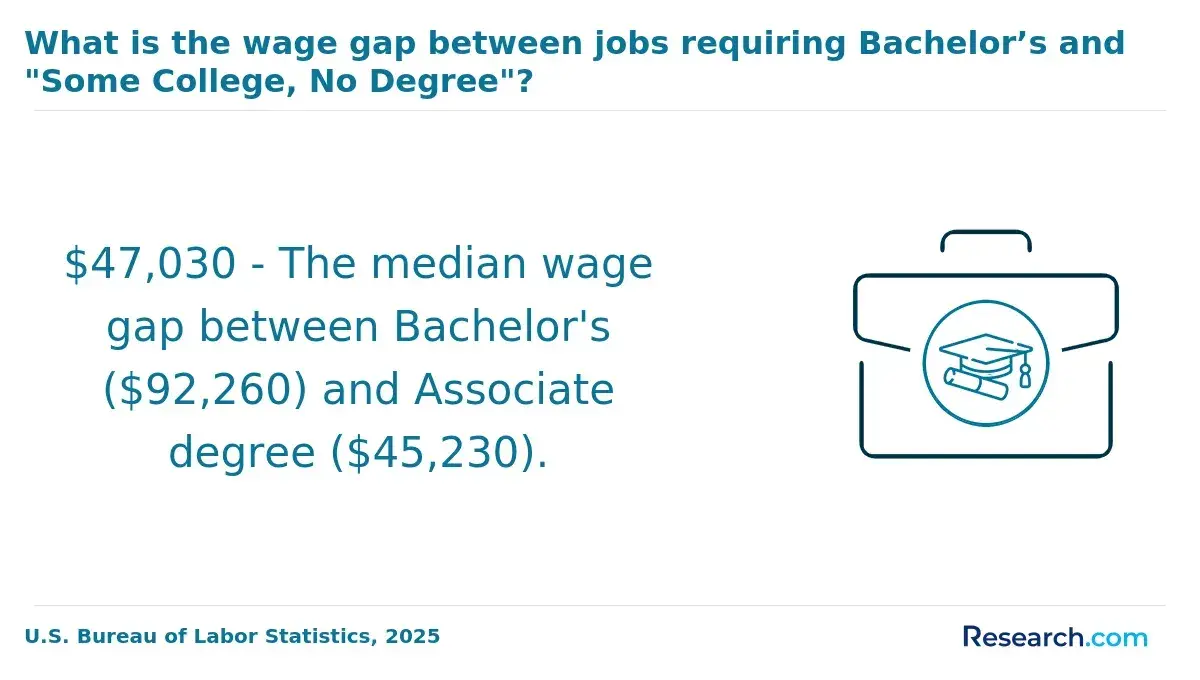
There is no single authoritative U.S. "psychology industry retention rate" because psychology graduates work across healthcare, schools, government, nonprofits, corporate HR, research, technology, and private practice. Retention also varies sharply by role: a case manager in community mental health faces a different workload, pay structure, and burnout profile than an HR analyst or university research coordinator.
A useful national benchmark is employee tenure. BLS data released in 2024 reported that the median tenure for U.S. wage and salary workers was 3.9 years in January 2024. For psychology students, that means retention should be evaluated at the occupation and employer level rather than assumed for the whole field.
Retention tends to be stronger when the employer offers manageable caseloads, supervision, clinical training, advancement ladders, documentation support, and predictable scheduling. It tends to be weaker in underfunded human services settings where emotional labor is high, pay is modest, and paperwork is heavy.
Before accepting a role, candidates should ask retention-focused questions that reveal whether the job is sustainable:
- What is the average caseload or client volume for this position?
- How often do supervisors meet with entry-level staff?
- What documentation system is used, and how much time is reserved for notes?
- What percentage of staff were promoted internally during the past year?
- Does the organization support licensure hours, continuing education, or tuition assistance?
A common red flag is a job posting that emphasizes "mission-driven work" but gives little detail about supervision, training, workload, pay range, or safety protocols. Passion matters in psychology-related work, but it should not substitute for a healthy employment structure.
The most in-demand psychology roles fall into two groups: roles that use psychology directly in care or support settings, and roles that apply behavioral science in organizations, research, or product environments. BLS projections show about 48,900 annual openings for substance abuse, behavioral disorder, and mental health counselors through 2033, which makes counseling-adjacent work one of the clearest demand areas.
The table below connects common roles with responsibilities and entry-level skill signals. It is useful because job titles vary by employer, but the underlying tasks are often similar.
| Role | Typical responsibilities | Skills employers look for | Typical entry barrier |
| Behavioral health technician | Support clients in treatment settings, document behavior, assist care teams, follow safety protocols | De-escalation, observation, documentation, empathy, boundaries | Often bachelor's degree or related experience; requirements vary by employer |
| Case manager | Coordinate services, track client needs, make referrals, maintain case records | Communication, documentation, local resource knowledge, organization | Bachelor's degree often preferred; some roles require social service experience |
| Research assistant | Collect data, manage participant communication, code responses, support studies | Research ethics, survey tools, statistics, Excel, SPSS, R, attention to detail | Research lab experience can be more important than the major alone |
| HR or recruiting coordinator | Screen candidates, schedule interviews, support onboarding, maintain HR records | Communication, confidentiality, applicant tracking systems, workplace professionalism | Bachelor's degree plus HR internship or office experience helps |
| Learning and development associate | Support training programs, create learning materials, evaluate employee development needs | Adult learning, presentation, writing, evaluation, basic analytics | Corporate experience or training portfolio improves competitiveness |
| UX research assistant | Support usability studies, interview users, synthesize findings, help product teams understand behavior | Interviewing, survey design, qualitative coding, usability testing, data storytelling | Portfolio evidence is usually expected, even for junior roles |
Students should not apply to every psychology-related job with the same resume. A behavioral health resume should emphasize client interaction, documentation, crisis response, and ethical judgment. A research or UX resume should emphasize methods, datasets, survey tools, writing samples, and project outcomes.
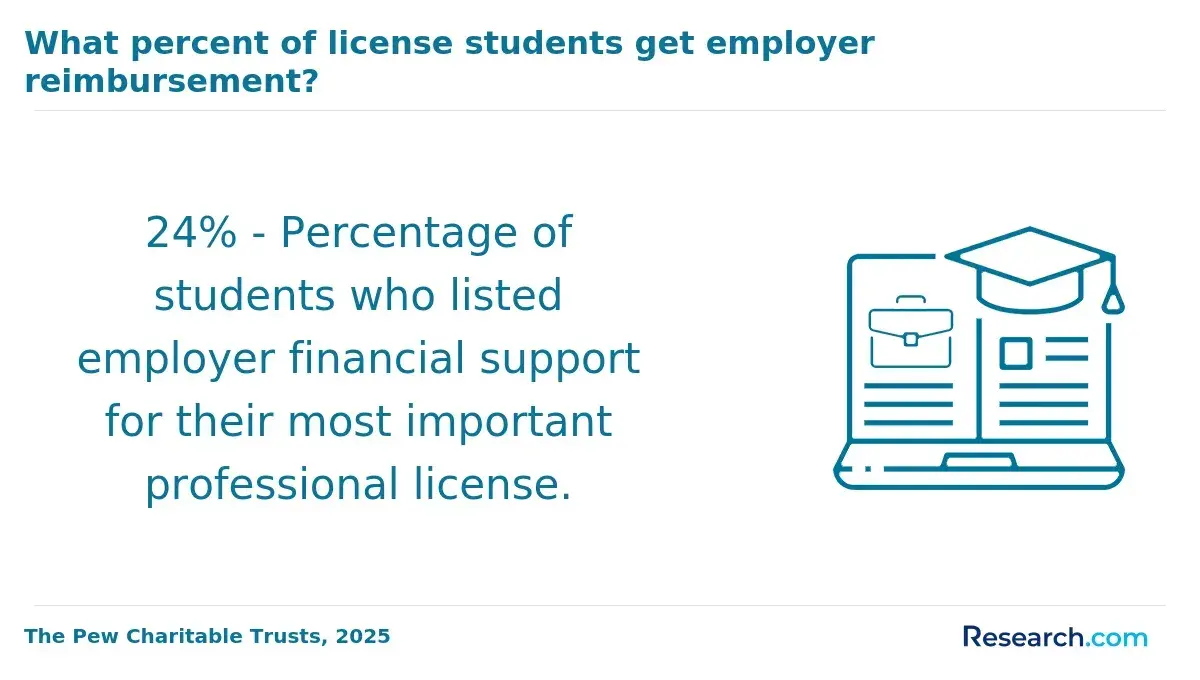
Yes, there are remote work opportunities for psychology degree holders, but they are unevenly distributed. Remote options are more common in research coordination, HR, recruiting, employee training, survey operations, telehealth administration, insurance care coordination, and UX research support. They are less common in entry-level inpatient behavioral health, school-based support, residential treatment, and crisis-response roles that require in-person contact.
Remote psychology-related work also depends on licensure and state rules. Licensed teletherapy roles may require the provider to be licensed where the client is located. Bachelor's-level remote roles usually avoid independent clinical care and focus instead on administration, coordination, data, outreach, scheduling, or research support.
BLS time-use data released in 2024 showed that 35% of employed people did some or all of their work at home on days they worked. For psychology graduates, the takeaway is not that most roles are fully remote; it is that hybrid and remote-capable work is now normal enough that students should build digital collaboration and documentation skills.
Remote-ready psychology candidates should prepare evidence for the following capabilities:
- Professional written communication for email, chat, case notes, and stakeholder updates
- Comfort with telehealth platforms, electronic health records, survey tools, or applicant tracking systems
- Ability to maintain confidentiality in a home or shared workspace
- Self-management habits, including time blocking, follow-up tracking, and accurate documentation
- Basic data skills for dashboards, spreadsheets, survey exports, or research logs
A common mistake is searching only for "remote psychology jobs." Better search terms include "remote research coordinator," "behavioral health care coordinator," "employee engagement analyst," "UX research assistant," "telehealth intake coordinator," and "remote recruiting coordinator."
The right credentials depend on whether the graduate wants clinical practice, behavioral health support, research, corporate work, or healthcare-adjacent roles. A bachelor's degree is often enough for entry-level support and coordination roles, but high-demand and higher-paying psychology careers frequently require additional proof of competence.
Students interested in health, movement, behavior change, or wellness coaching may also compare psychology with adjacent programs such as the best kinesiology programs, especially if they want to work in rehabilitation support, health promotion, exercise behavior, or performance settings.
The table below shows credentials and skill areas that can make psychology graduates more competitive. Requirements vary by state, employer, and job title, so students should confirm local rules before investing time or money.
| Credential or skill area | Best-fit roles | Why it matters | Important limitation |
| State counseling, therapy, or psychologist licensure | Licensed counselor, therapist, psychologist, school psychologist | Required for independent clinical practice and many reimbursable services | Usually requires graduate education, supervised hours, exams, and state approval |
| Registered Behavior Technician or applied behavior analysis experience | Behavior technician, autism services support, behavior intervention roles | Signals readiness for structured behavior support environments | Scope of practice is limited and supervised |
| Research methods and statistics | Research assistant, UX research assistant, survey analyst, program evaluator | Turns psychology coursework into measurable workplace skill | Employers may ask for software evidence or project examples |
| Motivational interviewing or crisis support training | Behavioral health, case management, hotline, outreach, care coordination | Improves client communication and de-escalation readiness | Training is not the same as independent clinical authority |
| HR, talent, or learning systems experience | Recruiting, employee engagement, training and development | Connects psychology to business functions employers understand | Business internships can matter as much as psychology coursework |
| Data, survey, and visualization tools | Market research, program evaluation, UX research, people analytics | Supports higher-demand analytical roles | Portfolio projects are often needed to stand out |
To qualify for stronger roles, psychology students should follow a focused sequence rather than collecting random certificates:
- Pick one target role family, such as behavioral health, HR, research, UX, or graduate clinical practice.
- Read job postings in that role family and list the repeated tools, credentials, and experience requirements.
- Choose coursework and internships that match those requirements, such as abnormal psychology for behavioral health or statistics for research roles.
- Create evidence of skill, including case documentation samples without client identifiers, research posters, survey reports, training materials, or UX study summaries.
- Verify licensure rules directly through the relevant state board if the role involves diagnosis, therapy, assessment, or independent clinical service.
The most expensive mistake is pursuing a graduate degree without confirming that it leads to the license, job title, or sector the student actually wants. Accreditation, supervised-hour rules, practicum structure, and state eligibility can affect whether the degree produces the intended outcome.
Entry-level psychology salaries vary widely because the degree feeds into many occupations. A bachelor's graduate entering social services may start far below a graduate entering a licensed clinical role or a corporate analytics role. Location, employer type, shift schedule, union coverage, licensure status, and experience all affect pay.
BLS wage data released for May 2024 gives useful salary anchors. The median annual wage for substance abuse, behavioral disorder, and mental health counselors was $59,190, while social and human service assistants had a lower median. For new graduates, this means early pay is often modest in direct-service roles, but advancement can improve with licensure, specialization, supervisory responsibility, or a move into healthcare systems, government, or corporate settings.
The table below gives practical salary context by pathway rather than promising exact starting pay. Students should use it to compare likely earning patterns and credential requirements.
| Entry pathway | Typical early roles | Salary context | Best strategy to improve earnings |
| Human services and community support | Case aide, program assistant, outreach coordinator | Often among the lower-paying psychology-related entry routes | Move toward case management, supervision, grants, public agencies, or graduate licensure |
| Behavioral health treatment support | Behavioral health technician, intake specialist, care coordinator | Can be stronger than general social services when linked to healthcare systems or specialized treatment programs | Build crisis response, documentation, and licensure-track experience |
| Research and academic labs | Research assistant, lab coordinator, survey assistant | Pay may be moderate, but experience can be valuable for graduate school or analytics roles | Add statistics, coding, data cleaning, and publication or poster experience |
| Corporate HR and training | Recruiting coordinator, HR assistant, learning associate | Often has stronger salary mobility than nonprofit entry roles | Learn HR systems, employment law basics, analytics, and training design |
| Market research and UX support | Research associate, survey analyst, UX research assistant | Can pay more when the candidate has data and portfolio evidence | Build a portfolio with surveys, interviews, usability findings, and clear business recommendations |
Students should avoid comparing only first salaries. A lower-paying behavioral health job may be worthwhile if it provides supervised hours for a future license. A higher-paying corporate role may be better for students who do not want graduate clinical training and prefer business advancement.
The highest compensation for psychology professionals usually appears where behavioral expertise is paired with advanced credentials, business impact, quantitative skill, or specialized healthcare need. Industrial-organizational psychology, licensed clinical specialties, healthcare systems, government, consulting, insurance, technology, and research-driven organizations can offer stronger compensation than general entry-level social services.
Students comparing psychology with other high-responsibility healthcare careers should note that prescribing and medication-focused routes are different from psychology. Those drawn to pharmacology, medication therapy, and clinical pharmacy may want to compare psychology with PharmD programs before deciding on a graduate path.
The table below summarizes compensation-friendly industries and the reason they tend to pay more. It does not replace local salary research, but it helps students identify where psychology skills are most financially valued.
| Industry or setting | Higher-paying psychology fit | Why compensation can be stronger | Who should consider it |
| Industrial-organizational consulting | I-O psychologist, talent assessment consultant, organizational effectiveness specialist | Work is tied to hiring quality, leadership, productivity, and retention outcomes | Students who like statistics, business, workplace behavior, and assessment |
| Healthcare systems and specialty clinics | Licensed psychologist, behavioral health clinician, integrated care specialist | Specialized credentials and clinical demand can support higher pay | Students willing to complete graduate training and licensure |
| Federal, state, and local government | Program evaluator, psychologist, correctional mental health professional, public health analyst | Structured pay scales, benefits, and specialized public-service roles can improve total compensation | Students who value stability, benefits, and public service |
| Technology and UX research | UX researcher, behavioral researcher, product insights specialist | Behavioral insights can influence product design, retention, accessibility, and customer experience | Students with portfolios, interview skills, statistics, and mixed-methods research experience |
| Insurance and managed care | Care coordinator, utilization review support, behavioral health operations analyst | Behavioral health expertise supports care navigation, risk management, and service coordination | Students interested in healthcare operations rather than direct therapy |
| Corporate learning and people analytics | Training specialist, employee engagement analyst, talent development associate | Psychology supports workforce development, retention, and performance improvement | Students who prefer business settings and measurable organizational outcomes |
The trade-off is clear: the best-paid psychology paths often require either advanced licensure or strong technical specialization. Students who stop at a general bachelor's degree may still find work, but they are less likely to access the highest-compensation sectors without targeted experience.
Recruitment in the psychology industry is becoming more skills-based, credential-sensitive, and technology-enabled. Employers still value the degree, but they increasingly screen for direct evidence: clinical exposure, documentation experience, data tools, supervised hours, certifications, software familiarity, and role-specific writing ability.
One important trend is the spread of behavioral science into nontraditional sectors. Psychology graduates are now competing for roles in people analytics, UX research, digital health, consumer insights, and workforce training. Students interested in data-heavy career alternatives can compare psychology pathways with fields covered in guides to bioinformatics major jobs, especially if they enjoy research, statistics, and technology-driven problem solving.
Graduates should understand the major recruitment trends before applying:
- Credential filtering is stronger in clinical roles: Employers may screen out applicants who lack required licensure, supervised-hour eligibility, or state-specific qualifications.
- Experience beats general interest: Internships, research labs, crisis support, ABA work, case documentation, or HR projects can matter more than a generic statement about helping people.
- AI-assisted screening rewards keyword alignment: Resumes should match the employer's language for tools, populations, documentation systems, and responsibilities without exaggerating qualifications.
- Hybrid work expands competition: Remote-capable roles often receive more applicants, so candidates need stronger portfolios, writing samples, and technical proof.
- Behavioral health hiring is active but demanding: High demand does not remove burnout risk, so applicants should evaluate supervision, caseloads, safety, and advancement.
- Corporate pathways require business translation: Psychology students must explain how their skills improve hiring, training, engagement, product design, or customer understanding.
The most effective job search is targeted rather than broad. Psychology graduates should build separate resumes for behavioral health, HR, research, and UX roles because each sector values different evidence.
A practical application plan looks like this:
- Select two target sectors instead of applying everywhere.
- Collect 20 job postings in each sector and identify repeated requirements.
- Revise the resume around those repeated requirements, using truthful role-specific language.
- Create proof of work, such as a research summary, training outline, anonymized case documentation sample, survey analysis, or UX study brief.
- Apply through sector-specific channels, including healthcare system career pages, university labs, government job portals, nonprofit networks, HR associations, and specialized research or UX boards.
- Track response rates and adjust the resume every two weeks based on which roles generate interviews.
Graduates should avoid the common mistake of relying only on large general job boards. Those boards are useful, but psychology-related hiring often happens through hospitals, community agencies, schools, universities, government systems, professional associations, and referrals from internships or supervisors.
The highest hiring volume for psychology degree holders is not limited to traditional psychologist offices. Many graduates are hired by large service systems that need people who understand behavior, communication, assessment, documentation, and client support.
The table below summarizes the sectors with the strongest combination of hiring volume, growth potential, and practical entry points for psychology graduates.
| Sector | Common entry points for psychology graduates | Why hiring demand is expanding | Best fit for students who want |
| Behavioral health and substance use treatment | Behavioral health technician, intake coordinator, case manager, counseling assistant | Rising demand for mental health and substance use services is increasing staffing needs in outpatient, residential, and community programs | A pathway toward counseling, therapy, or clinical graduate study |
| Hospitals and integrated healthcare systems | Patient navigator, behavioral health support specialist, care coordinator, research assistant | Healthcare systems increasingly connect behavioral health with primary care, chronic disease management, and patient engagement | Health-focused work without immediately becoming a licensed clinician |
| Schools and youth services | Student support aide, behavior intervention assistant, youth program coordinator | Schools and youth agencies need support for learning, behavior, social-emotional development, and family engagement | Work with children, adolescents, and families |
| Corporate HR and talent development | Recruiting coordinator, HR assistant, learning and development associate, employee engagement analyst | Employers need support for hiring, retention, training, workplace culture, and leadership development | A business career using psychology without clinical licensure |
| Research, UX, and consumer insights | Research assistant, survey coordinator, UX research assistant, market research associate | Organizations need behavioral insight to understand users, customers, employees, and patient populations | Data-informed work involving research design and human behavior |
| Public and nonprofit social services | Program assistant, benefits navigator, community outreach coordinator, victim advocate | Public agencies and nonprofits need staff for intake, referrals, documentation, crisis support, and community programs | Mission-driven work with broad client populations |
High-volume sectors are best for graduates who want more openings and faster entry into work. Specialized niche sectors, such as UX research or industrial-organizational psychology, may offer higher pay and stronger long-term mobility, but they usually require sharper technical evidence, such as a portfolio, statistics coursework, business internships, or graduate training.
Other Things You Should Know About Psychology
It can be worth it if the student chooses a clear career direction and builds relevant experience before graduation. The degree is strongest when paired with internships, research skills, behavioral health exposure, HR experience, data tools, or a plan for graduate licensure.
No, not for licensed psychologist roles. Most licensed psychologist positions require a doctoral degree, supervised clinical experience, exams, and state licensure. A bachelor's degree can support related entry-level roles, but it does not authorize independent practice as a psychologist.
Behavioral health is the clearest high-growth area. Counseling-related roles tied to mental health and substance use treatment have especially strong projected demand, although many higher-level roles require graduate education or licensure.
They should choose a target sector, complete at least one relevant internship or research experience, build role-specific skills, and verify credential requirements. A focused resume with evidence of applied skills is much stronger than a general psychology resume.
See What Experts Have To Say About Studying Psychology
Read our interview with Psychology experts

Catherine Caldwell-Harris, Ph.D.
Psychology Expert
Associate Professor of Psychology
Boston University

Robin M. Kowalski. Ph.D.
Psychology Expert
Professor of Psychology
Clemson University

Joann Farrell Quinn, Ph.D., MBA
Psychology Expert
Director at the College of Medicine Department of Medical Education
Morsani College of Medicine

- 14 Exciting Psychology Careers in High Demand https://www.ucumberlands.edu/blog/14-exciting-psychology-careers-high-demand
- High Demand for Psychology Graduates: Careers, Skills & Future Opportunities https://jguonline.edu.in/blog/why-psychology-graduates-are-in-high-demand
- The right track: Participation and progression in psychology career paths https://www.nuffieldtrust.org.uk/research/the-right-track-participation-and-progression-in-psychology-career-paths
- Fastest Growing Careers In Psychology | Psychology.org https://www.psychology.org/resources/fastest-growing-careers-in-psychology/
- Top 5 Highest-Paying Psychology Careers - Rivier Academics https://www.rivier.edu/academics/online/resources/program-resources/top-5-highest-paying-psychology-careers-rivier-university/