2027 Psychology Degree Automation Exposure Report: Which Career Paths Face the Most AI and Technology Disruption

Co-Founder and Chief Data Scientist
Psychology students now have to ask a harder question than "What can I do with this degree? " They also need to ask which paths will be reshaped by AI. BLS data published with May 2024 wages reported a $94,310 median annual wage for psychologists, but risk varies sharply by role. This guide is for students, career changers, and graduates comparing psychology careers. You will learn which jobs face the most technology disruption, which remain more resilient, and how to choose coursework, skills, and specializations that improve long-term value.
Key Things You Should Know
- Psychology roles built around routine screening, standardized reports, survey analysis, recruiting filters, and dashboard-based research face the highest AI exposure; roles requiring licensure, crisis judgment, therapeutic alliance, assessment interpretation, and ethical decision-making are generally more resilient.
- BLS data published for May 2024 reported a $94,310 median annual wage for psychologists, while employment projections for psychologists show 7% growth from 2023 to 2033, meaning the field is not disappearing but is changing unevenly by specialization.
- AI literacy is becoming a career advantage: the U.S. Census Bureau's 2024 Business Trends and Outlook Survey found that 5.4% of U.S. businesses were already using AI to produce goods or services, signaling that psychology graduates should learn to work with automated tools rather than avoid them.
- Which Psychology Career Paths Face the Greatest Risk of AI and Automation?
- Which Job Tasks Are Most Likely to Be Automated in Psychology Careers?
Which Psychology Career Paths Face the Greatest Risk of AI and Automation?
Automation exposure means the share of a job's tasks that can be digitized, predicted, generated, scored, summarized, or routed by software. It does not mean the whole occupation disappears. In psychology careers, the highest exposure usually appears where the work relies on repeatable data processing, standardized language, large volumes of records, or low-context decision rules.
The table below ranks common psychology degree career paths by practical AI exposure. Use it as a decision tool: a "higher" rating means you should build complementary skills, not necessarily avoid the path.
| Career path | Common education or credential | AI exposure | Why disruption risk is higher or lower | Best resilience strategy |
| Research assistant or lab coordinator | Bachelor's or master's degree | Higher | Literature screening, data cleaning, transcription, coding, and basic summaries are increasingly supported by AI tools. | Learn research design, statistics, reproducibility practices, and human-subjects ethics. |
| Market research or consumer insights analyst | Bachelor's or master's degree | Higher | Survey generation, sentiment analysis, customer segmentation, and report drafting are highly automatable. | Move toward experimental design, stakeholder consulting, causal inference, and strategy. |
| HR specialist or talent acquisition analyst | Bachelor's degree, HR credential helpful | Moderate to higher | Resume screening, skills matching, interview scheduling, and engagement analytics are commonly software-enabled. | Specialize in compliance, employee relations, assessment validation, and fair hiring practices. |
| UX researcher | Bachelor's or master's degree | Moderate | AI can summarize interviews and behavior logs, but product judgment and user empathy remain important. | Combine psychology with product analytics, accessibility, mixed-methods research, and experimentation. |
| Industrial-organizational psychologist | Master's or doctoral degree | Moderate | AI can automate surveys and workforce analytics, but leadership, organizational diagnosis, and legal defensibility need expert judgment. | Build strengths in analytics, change management, assessment design, and consulting. |
| Clinical or counseling psychologist | Doctoral degree and state licensure | Lower to moderate | AI may support documentation, screening, and measurement-based care, but diagnosis, risk assessment, and therapy require licensed judgment. | Develop evidence-based practice skills, supervision experience, ethics, and comfort with digital health tools. |
| School psychologist | Specialist-level or doctoral training, state credential | Lower to moderate | Automated tools can assist scoring and reporting, but student evaluation, IEP collaboration, crisis response, and family communication remain human-centered. | Strengthen assessment interpretation, consultation, special education law, and cultural competence. |
| Substance abuse or behavioral health counselor | Varies by state; often master's degree or supervised credential | Lower to moderate | Apps can support monitoring and reminders, but motivation, relapse prevention, crisis escalation, and trust-based counseling are harder to automate. | Pursue licensure-aligned training, trauma-informed care, and integrated care experience. |
| Neuropsychology or assessment-focused practice | Doctoral degree, licensure, specialized training | Lower | Test administration may become more digital, but interpretation, differential diagnosis, and clinical context are difficult to automate responsibly. | Invest in advanced assessment, medical collaboration, and ethics around AI-assisted testing. |
A common mistake is assuming that "psychology" has one automation risk profile. A bachelor's-level analytics job at a technology company may be more exposed than a licensed clinical role, while an AI-fluent I-O psychologist may become more valuable because employers need experts who can evaluate people-related tools responsibly.
Which Job Tasks Are Most Likely to Be Automated in Psychology Careers?
The tasks most likely to be automated in psychology careers are not usually the deeply relational parts of the work. They are the repeatable steps around intake, documentation, scoring, summarization, scheduling, triage, and pattern recognition.
The table below separates task-level automation exposure from job-level risk. This matters because two people with the same psychology degree may face very different disruption depending on what they actually do every day.
| Task category | Examples in psychology-related work | Automation exposure | What remains human-led |
| Administrative intake | Forms, appointment routing, eligibility checks, basic symptom questionnaires | High | Explaining care options, detecting nuance, and escalating risk-sensitive cases |
| Documentation support | Drafting notes, summarizing sessions, generating progress-report templates | High | Clinical accuracy, confidentiality decisions, legal responsibility, and final review |
| Survey and workforce analytics | Employee engagement dashboards, pulse surveys, text analysis, benchmarking | High | Interpreting organizational context and recommending defensible interventions |
| Psychological test scoring | Automated scoring, norm comparisons, report shells | Moderate to high | Validity judgment, differential diagnosis, accommodations, and integrated interpretation |
| Recruiting and selection support | Resume parsing, candidate ranking, skills inference, interview scheduling | Moderate to high | Bias audits, legal compliance, structured interview design, and final hiring judgment |
| Therapy and counseling delivery | Chatbots, psychoeducation, mood tracking, homework reminders | Moderate | Alliance, crisis response, diagnosis, trauma work, ethics, and treatment adaptation |
| Crisis intervention | Risk flags, hotline routing, safety-plan prompts | Lower | Immediate judgment, empathy, mandated reporting, and coordination with emergency support |
Students can estimate task risk before choosing a career path by looking at job descriptions, internship duties, and software used by employers. Focus on whether the role rewards judgment or mostly requires processing information.
- Highlight every task in a target job posting that involves scoring, summarizing, scheduling, sorting, reporting, or generating standard content.
- Mark tasks that require licensure, direct accountability, ethical decisions, conflict management, or sensitive human interaction.
- Ask whether AI would replace the task, speed it up, or simply create more work for humans to verify.
- Choose electives, internships, and projects that move you toward interpretation, design, consultation, and accountability.
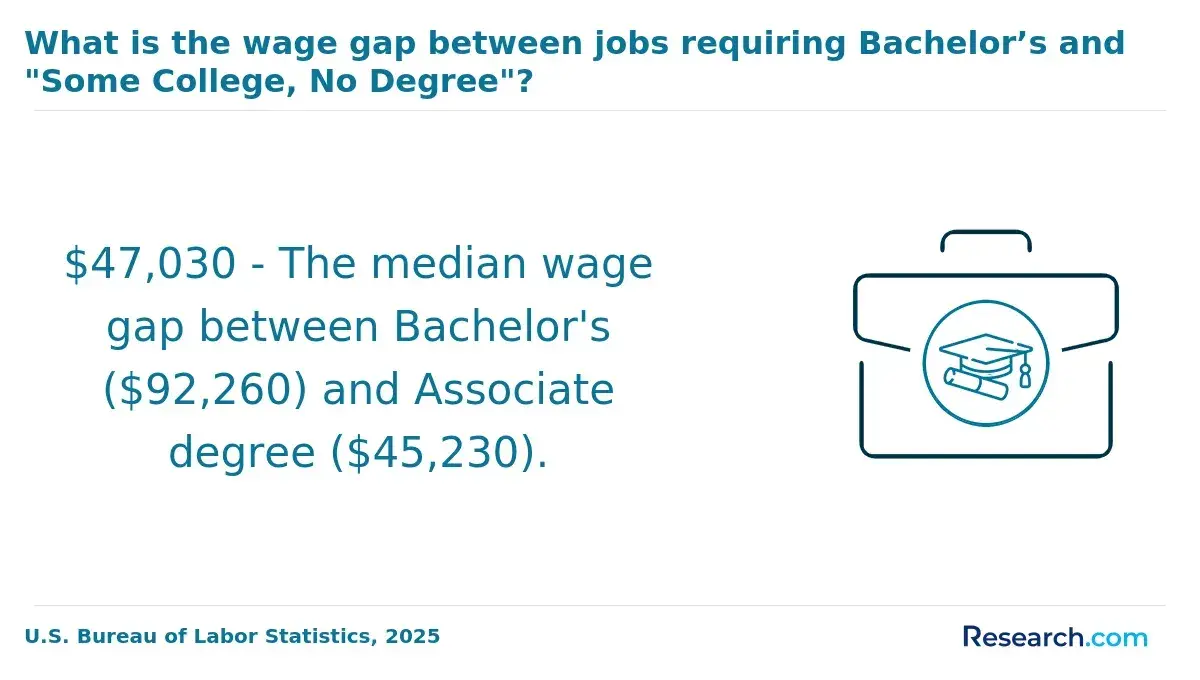
AI adoption is fastest where organizations handle large volumes of data, repeatable workflows, staffing decisions, customer behavior, or health records. The U.S. Census Bureau's 2024 Business Trends and Outlook Survey reported that 5.4% of U.S. businesses were using AI to produce goods or services; that number may sound modest, but adoption is concentrated in industries where psychology graduates often work.
The table below shows where psychology graduates are most likely to encounter AI at work and how that changes career planning.
| Industry | Psychology-related roles | How AI is being used | Career impact |
| Healthcare and behavioral health | Behavioral health coordinator, clinical assistant, counselor, psychologist | Intake triage, documentation support, risk flags, measurement-based care dashboards | Lower replacement risk for licensed work, higher need for privacy, ethics, and digital care literacy |
| Technology and product companies | UX researcher, behavioral researcher, trust and safety analyst | User analytics, interview summaries, A/B testing, content moderation support | Higher pressure to combine psychology with data, product, and AI evaluation skills |
| Human resources and consulting | Talent analyst, I-O consultant, learning and development specialist | Recruiting automation, employee listening platforms, performance analytics | Strong opportunities for graduates who understand bias, assessment validity, and organizational behavior |
| Education | School psychologist, student support specialist, learning researcher | Early-warning systems, adaptive learning tools, automated scoring | Human interpretation and compliance knowledge remain central, especially in special education |
| Marketing and consumer research | Consumer insights analyst, survey researcher, behavioral strategist | Segmentation, sentiment analysis, synthetic personas, report generation | Routine research tasks face pressure; strategic interpretation becomes more valuable |
| Government and public services | Program evaluator, case manager, research analyst | Benefits screening, risk scoring, service routing, population analytics | Ethics, equity, and auditability matter because automated decisions can affect access to services |
Healthcare is a useful comparison point because it combines automation with regulated human responsibility. Students comparing psychology with other patient-care paths may also review PharmD programs to understand how different health professions balance technology, licensure, and direct accountability.
The most resilient psychology graduates build a skill stack that combines human-centered judgment with technical fluency. The goal is not to become a software engineer unless that fits your interests; it is to understand enough about data and AI to supervise, question, and improve automated tools.
The table below compares skills that reduce automation risk and shows how each one helps in real psychology-related careers.
| Skill area | Why it improves resilience | Where it helps most |
| Clinical or applied judgment | AI can flag patterns, but humans must weigh context, risk, ethics, and consequences. | Clinical psychology, counseling, school psychology, assessment, crisis work |
| Research design | Tools can analyze data, but humans must ask valid questions and choose defensible methods. | UX research, program evaluation, I-O psychology, graduate research |
| Statistics and data interpretation | Graduates who can verify outputs are less likely to be replaced by automated reports. | People analytics, psychometrics, market research, behavioral data roles |
| Ethics and privacy | AI use in mental health, education, and hiring creates legal and reputational risk. | Healthcare, HR, schools, public agencies, assessment vendors |
| Communication and consultation | Organizations need people who can turn behavioral evidence into decisions. | I-O consulting, counseling, management, student support, client-facing research |
| Cultural competence | Automated tools may perform unevenly across groups, making human review essential. | Clinical care, school services, hiring, social programs, UX research |
| AI literacy | Knowing tool limits helps graduates use automation without overtrusting it. | Nearly all psychology-related workplaces using digital systems |
Students can make these skills concrete by choosing projects that show evidence, not just interest. A practical development plan may look like this:
- Take statistics, research methods, abnormal psychology, ethics, and at least one course involving applied data or measurement.
- Complete a project that uses survey data, behavioral observation, interviews, or program outcomes to answer a real question.
- Learn to use common tools such as spreadsheet software, survey platforms, qualitative coding tools, and basic data visualization.
- Practice documenting how you checked an AI-generated output for accuracy, bias, missing context, and confidentiality concerns.
- Seek internships where you can observe decision-making in clinical, school, HR, research, or community-service settings.
The most stable psychology specializations are usually those with regulated practice, complex human interaction, high accountability, and work that depends on context. However, "stable" does not mean immune to change. Even low-exposure specializations will use AI for documentation, screening, training, and outcome tracking.
The table below compares psychology specializations by long-term stability, not just current popularity. It can help students decide whether to pursue graduate school, applied research, healthcare, education, or organizational work.
| Specialization | Stability outlook | Why it may be resilient | Main trade-off |
| Clinical psychology | High | Requires licensure, diagnosis, treatment planning, ethics, and risk-sensitive judgment. | Long education timeline and competitive doctoral admissions. |
| School psychology | High | Combines assessment, legal compliance, family communication, and student support. | Workload and school funding can vary by district and state. |
| Neuropsychology | High | Advanced assessment interpretation and medical collaboration are difficult to automate responsibly. | Requires extensive doctoral and postdoctoral specialization. |
| Counseling and behavioral health | High to moderate | Human trust, motivation, trauma-informed care, and crisis response remain central. | Licensure rules, supervision hours, and salaries vary by state and setting. |
| Industrial-organizational psychology | Moderate to high | Organizations need expertise in fairness, leadership, assessment, and change management. | Routine survey analytics and reporting are increasingly automated. |
| UX and human factors psychology | Moderate | Human behavior expertise is valuable in product design, accessibility, and AI evaluation. | Competition can be strong, and employers often expect analytics or product skills. |
| Experimental or academic psychology | Moderate | Research design and theory remain human-led, but routine analysis and writing support are automated. | Academic hiring can be competitive and grant-dependent. |
Health-focused students who like movement, rehabilitation, wellness, or behavior change may also compare psychology tracks with the best kinesiology programs, especially if they want a career that connects physical health, behavior, coaching, and human performance.
A common mistake is choosing a specialization only because it sounds AI-resistant. The better question is whether you are willing to complete the required education, supervised experience, licensing exams, and continuing education needed to practice in that area.
AI can affect salaries in two opposite ways. It may reduce demand for routine entry-level tasks, but it can increase the value of professionals who supervise tools, interpret complex cases, manage risk, or connect behavioral evidence to business and care decisions.
BLS May 2024 wage data gives useful salary context, but it should not be treated as a promise. Pay depends on education level, license, employer type, location, experience, and whether the role is clinical, analytical, educational, or business-focused.
| Occupation or role family | Recent U.S. salary context | AI exposure | Career advancement implication |
| Psychologists overall | BLS reported a $94,310 median annual wage in May 2024. | Lower to moderate | Licensed judgment and specialization can support long-term value, especially when paired with digital care competence. |
| Industrial-organizational psychologists | BLS reported a $147,420 median annual wage in May 2024. | Moderate | High upside exists for professionals who combine assessment, analytics, leadership consulting, and AI governance. |
| School psychologists | BLS reported a $84,940 median annual wage in May 2024. | Lower to moderate | Stability is supported by school-based assessment and compliance needs, though pay varies by district. |
| Market research analysts | BLS reported a $76,950 median annual wage in May 2024. | Higher | Advancement depends on moving beyond report production into strategy, experimentation, and business decision support. |
| Human resources specialists | BLS reported a $72,910 median annual wage in May 2024. | Moderate to higher | AI may automate screening tasks, while compliance, employee relations, and talent strategy remain advancement paths. |
| Substance abuse, behavioral disorder, and mental health counselors | BLS reported a $59,190 median annual wage in May 2024. | Lower to moderate | Demand for human care remains important, but salary growth often depends on licensure, setting, and specialization. |
The best long-term value is often found in roles where AI increases productivity without removing human accountability. For example, a clinician who uses AI to reduce documentation time may have more capacity for care, while an analyst who only produces standard reports may face stronger wage pressure unless they move into interpretation and strategy.
AI is not only a threat to psychology graduates; it is also creating new roles where human behavior expertise is essential. Many of these jobs sit between psychology, data science, product design, healthcare, compliance, and ethics.
The opportunities below are especially relevant for students who like psychology but do not want a traditional therapy path. They usually require evidence of projects, technical comfort, and the ability to explain behavioral risk clearly.
- AI mental health product evaluator: Reviews whether digital mental health tools are safe, usable, evidence-informed, and appropriate for intended users.
- Behavioral data analyst: Uses surveys, experiments, and product data to understand decision-making, motivation, engagement, or behavior change.
- AI hiring assessment specialist: Helps employers evaluate whether automated screening or assessment tools are valid, fair, and legally defensible.
- UX researcher for AI products: Studies how users understand, trust, misuse, or benefit from AI-enabled products.
- Digital therapeutics coordinator: Supports implementation of app-based or platform-based behavioral health interventions under appropriate clinical oversight.
- Psychometrics and assessment analyst: Works on test design, validation, scoring models, and responsible interpretation of assessment data.
- Trust, safety, and well-being analyst: Applies behavioral science to online harms, content policy, user safety, and platform design.
Students who enjoy the intersection of behavior, biology, and computation may also explore adjacent science-and-data pathways such as bioinformatics major jobs, which show how analytical skills can expand career options beyond traditional psychology roles.
Preparing for AI-driven workplace change starts with choosing the right education path for your goal. A bachelor's degree in psychology can lead to entry-level roles in research, HR, social services, marketing, and operations, while most independent clinical roles require graduate education, supervised experience, exams, and state licensure.
Use the steps below to build a psychology pathway that remains adaptable even as software changes. The strongest plan combines credentials, experience, and evidence of applied skill.
- Clarify whether your target role requires a license, graduate degree, certification, or supervised hours; requirements vary by state, employer, and job title.
- Choose accredited programs carefully, especially for clinical, counseling, and school psychology pathways where licensure eligibility may depend on program recognition and practicum structure.
- Ask schools how AI, data ethics, telehealth, assessment technology, and digital documentation are integrated into coursework and field placements.
- Build a portfolio with research projects, case conceptualization exercises, program evaluations, survey analysis, UX studies, or HR analytics projects.
- Learn enough statistics and data visualization to question automated outputs rather than simply accept them.
- Seek internships in settings that expose you to real decision-making, such as clinics, schools, HR departments, research labs, community agencies, or product teams.
- Practice using AI tools under clear rules: protect confidentiality, verify claims, document assumptions, and never submit machine output as professional judgment.
Cost and timeline should be part of the decision. A bachelor's degree usually takes about four years of full-time study, master's programs often take two to three years, and doctoral psychology training can take substantially longer when internship and supervised practice are included. Students who want faster entry into direct patient care may compare psychology with shorter healthcare routes such as LPN programs, while remembering that scope of practice, licensing, and career ladders differ significantly.
Students should evaluate psychology careers by combining automation risk with salary, education cost, licensure requirements, job growth, personal fit, and adaptability. A high-paying career with high automation exposure can still be worthwhile if you are willing to specialize in strategy, ethics, analytics, or leadership. A lower-exposure career may be a poor fit if the education timeline or emotional demands do not match your goals.
The table below summarizes how different student priorities point toward different psychology-related paths. It is not a ranking of "best" jobs; it is a way to match risk, reward, and fit.
| If your priority is... | Consider paths such as... | Watch out for... | Best decision rule |
| Maximum human-centered stability | Clinical psychology, school psychology, counseling, neuropsychology | Long training, licensure requirements, emotional intensity, supervision costs | Choose this route if you want direct service and are prepared for regulated practice. |
| Higher salary upside with technology exposure | I-O psychology, people analytics, UX research, behavioral strategy | Automation of routine analytics and strong competition for business-facing roles | Choose this route if you can pair psychology with data, consulting, and communication skills. |
| Fastest entry after a bachelor's degree | Research assistant, HR coordinator, case management, behavioral technician, customer insights assistant | More routine tasks and limited advancement without specialization or graduate study | Use early roles to build experience, then move toward licensure, analytics, or program leadership. |
| AI-enabled emerging work | AI product evaluation, digital mental health, trust and safety, psychometrics, behavioral data science | Less standardized job titles and unclear credential expectations | Build a portfolio that proves both behavioral science knowledge and technical fluency. |
| Lower education cost and broad flexibility | Bachelor's-level roles in HR, social services, operations, research support, or marketing | Lower ceiling in some roles and higher exposure to task automation | Choose flexible roles only if you have a plan to keep upgrading skills. |
Several mistakes can weaken a psychology career plan in the AI era. Avoid making decisions based only on sensational headlines, current salary, or the assumption that every job in a field faces the same risk.
- Do not assume AI will replace whole professions. It is more accurate to evaluate which tasks will be automated and which responsibilities still require human accountability.
- Do not ignore licensure. For clinical, counseling, school, and assessment roles, state rules may determine what you can legally do.
- Do not choose salary without considering exposure. Some better-paid analyst roles may face more pressure if the work is mostly routine reporting.
- Do not avoid AI entirely. Graduates who understand AI limitations are better positioned than those who refuse to use relevant tools.
- Do not overlook soft skills. Communication, trust, ethics, leadership, and cultural competence become more important when automated systems create decisions people must explain.
A strong choice is usually one where the opportunity created by AI outweighs the disruption. That happens when technology removes low-value tasks while your role still depends on interpretation, relationship-building, accountability, and decisions that affect real people.
Employers are increasingly looking for psychology graduates who can translate human behavior into decisions while using technology responsibly. The strongest candidates are not simply "good with people" or "good with data"; they can connect both.
For entry-level roles, AI is changing expectations in several practical ways. These expectations are especially important for bachelor's-level psychology graduates, who often compete for jobs in HR, research, operations, customer experience, social services, and analytics.
- Data comfort is becoming baseline. Graduates should be able to work with spreadsheets, survey platforms, dashboards, and basic statistical outputs instead of relying only on qualitative observation.
- AI tool judgment matters. Employers may expect candidates to use generative AI for drafts or summaries, but also to check accuracy, protect confidential information, and avoid biased outputs.
- Communication is more valuable, not less. As AI produces more analysis, humans still need to explain findings to managers, clients, families, patients, or school teams.
- Ethics is a differentiator. Psychology graduates can stand out by understanding informed consent, privacy, bias, accessibility, and the limits of automated decision-making.
- Project experience beats vague familiarity. A portfolio with survey analysis, program evaluation, UX research, assessment validation, or behavioral intervention work is more convincing than listing "AI skills" without evidence.
A red flag is treating AI as a shortcut for professional judgment. In psychology-related work, a tool-generated summary, assessment report, or candidate ranking can still be wrong, biased, incomplete, or inappropriate for the context. Employers value graduates who can use tools efficiently while knowing when human review is required.
Other Things You Should Know About Psychology
Psychology can still be a strong degree choice, but safety depends on the path. Licensed clinical, school, counseling, and assessment roles are generally more resilient than routine research, recruiting, or reporting roles. Students should pair psychology with data literacy, ethics, and applied experience.
The most exposed jobs are those centered on standardized reports, survey analysis, candidate screening, transcription, basic coding, and dashboard summaries. Research assistants, market research analysts, HR analytics roles, and some entry-level UX research tasks may be reshaped significantly.
AI may support therapy through scheduling, documentation, screening, psychoeducation, and symptom tracking, but it is unlikely to replace licensed professionals in risk assessment, diagnosis, treatment planning, crisis response, and ethical decision-making. State licensure and professional accountability still matter.
Students should learn research methods, statistics, ethical AI use, privacy practices, assessment basics, communication, and cultural competence. They should also complete internships or projects that show they can interpret human behavior in real clinical, educational, organizational, or product settings.
See What Experts Have To Say About Studying Psychology
Read our interview with Psychology experts

Joann Farrell Quinn, Ph.D., MBA
Psychology Expert
Director at the College of Medicine Department of Medical Education
Morsani College of Medicine

Elizabeth L. Jeglic Ph.D.
Psychology Expert
Professor of Psychology
City University of New York

Catherine Caldwell-Harris, Ph.D.
Psychology Expert
Associate Professor of Psychology
Boston University

- How will Artificial Intelligence Affect Jobs 2025-2030 | Nexford University https://www.nexford.edu/insights/how-will-ai-affect-jobs
- Machines can do most of a psychologist’s job. The industry must prepare for disruption https://theconversation.com/machines-can-do-most-of-a-psychologists-job-the-industry-must-prepare-for-disruption-154064
- Labor market impacts of AI: A new measure and early evidence https://www.anthropic.com/research/labor-market-impacts
- Is Psychology An AI-Safe Field? Experts Weigh In | Psychology.org https://www.psychology.org/resources/is-psychology-an-ai-safe-field/
- Chief Transformation Officer Exchange Fall https://www.processexcellencenetwork.com/events-chief-transformation-officer-exchange-fall/blog/overcoming-automation-anxiety-future-of-work-insights
- How to Future-Proof Your Career against Automation and AI Displacement | The Résumé Clinic https://www.theresumeclinic.com/how-to-future-proof-your-career-against-automation-and-ai-displacement/
- AI Skills for Life and Work: Labour market and skills projections https://www.gov.uk/government/publications/ai-skills-for-life-and-work-labour-market-and-skills-projections/ai-skills-for-life-and-work-labour-market-and-skills-projections
- Innovating at the Intersection of Psychology and Technology | Palo Alto University https://paloaltou.edu/resources/blog/psychology-and-technology-careers
- How AI may reshape career pathways to better jobs | Brookings https://www.brookings.edu/articles/how-ai-may-reshape-career-pathways-to-better-jobs/
- What Is Industrial and Organizational Psychology? https://www.webmd.com/mental-health/what-is-industrial-organizational-psychology