Interview With Psychology Experts: Answering Student’s Questions About Psychology Trends

Co-Founder and Chief Data Scientist
Since 2011, the National Center for Education Statistics (NCES) has recorded more than 100,000 conferred bachelor’s degrees in psychology. That number has since climbed to 129,609 in 2022 (NCES, 2023). As a career planner for over a decade, I’ve witnessed how students take psychology courses not only as general education requirements but also as foundations for careers.
More often than not, I’ve observed that students become riddled with questions as they begin to take psychology degrees. From trying to understand how technology shapes the discipline to figuring out essential workplace skills or researching trends in psychology, the array of uncertainties can be overwhelming.
Our team at Research.com reached out to four experts and interviewed them to address these qualms and answer students’ most pressing questions about psychology degrees and careers. Furthermore, they offer advice on exploring specializations and employment options to guide students in becoming competent psychologists and professionals in industries beyond this field.
Experts We Interviewed:
- Robin Kowalski, Ph.D.: Professor of Psychology, Clemson University
- Catherine Caldwell-Harris, Ph.D.: Associate Professor of Psychology, Boston University
- Elizabeth Jeglic, Ph.D.: Professor of Psychology, John Jay College of Criminal Justice
- Joann Farrell Quinn, Ph.D., M.B.A.: Associate Professor, Morsani College of Medicine & Muma College of Business, University of South Florida
- What advice would industry professionals give to a student considering a degree in psychology but unsure about what specific area to focus on?
- Beyond academic knowledge, what other skills do industry experts think students must develop to succeed in the field of psychology?
- What are the emerging trends in psychology that students should be aware of? How do these trends affect career opportunities?
- How is technology changing the practice of psychology, and what should students do to stay ahead in this evolving landscape?
- What are some less conventional career paths for psychology graduates that students might not initially consider?
- Should I Consider an Accelerated Psychology Degree Online?
- How Do I Select an Accredited Online Psychology Program?
- Can Pursuing a Dual Degree Enhance a Psychology Career?
- Can a Complementary College Major Enhance a Psychology Career?
- What Are the Cost-Effective and Accessible Options for Psychology Education?
- Can a 1-Year Master's Program Accelerate My Career in Psychology?
- Is a Bachelor's Degree in Psychology a Path to High Earnings?
- Other Skills that Psychology Students Should Develop
- Most Common Psychology Specializations
- How to Choose a Psychology Specialization
What advice would industry professionals give to a student considering a degree in psychology but unsure about what specific area to focus on?
Psychology teaches students about the human mind and the intricacies of behaviors, mental health, and emotional issues. As a vast and growing discipline, it offers opportunities for graduates to explore traditional and new jobs. However, this can be a drawback, pushing students into a research rabbit hole and information overload.
Worry not, we’ve got you covered. What better way to help you figure out a track to pursue than to hear from an expert in the field? Here, we’ve gathered the best advice our four experts have to say about this age-old question among aspiring psychology students.
- Dr. Kowalski: “Students interested in psychology should spend time looking at all of the different divisions of psychology on the American Psychological Association website. They will see the wide array of specialties that psychologists can go into. Students should also take as many classes in psychology as they can.”
- Dr. Caldwell-Harris: “Read widely about psychology; browse bookstore psychology sections; get familiar with the “BF” section of the library; read online blogs like those sponsored by Psychology Today; watch documentaries about discoveries in psychology. As you immerse yourself, you will begin to learn what areas most interest you.”
- Dr. Jeglic: “Generally, an undergraduate degree in psychology is broad, and you get to sample all of the areas. So in taking those core courses, you can see which ones you find most interesting… I think the best way to find out what you do like is by trying various things and seeing what you don’t like.”
- Dr. Quinn: “I would ask them to consider what they are most passionate about. Read a broad scope of different articles and see what inspires them. Also—to look at the very different perspectives of traditional psychology vs. positive psychology.”
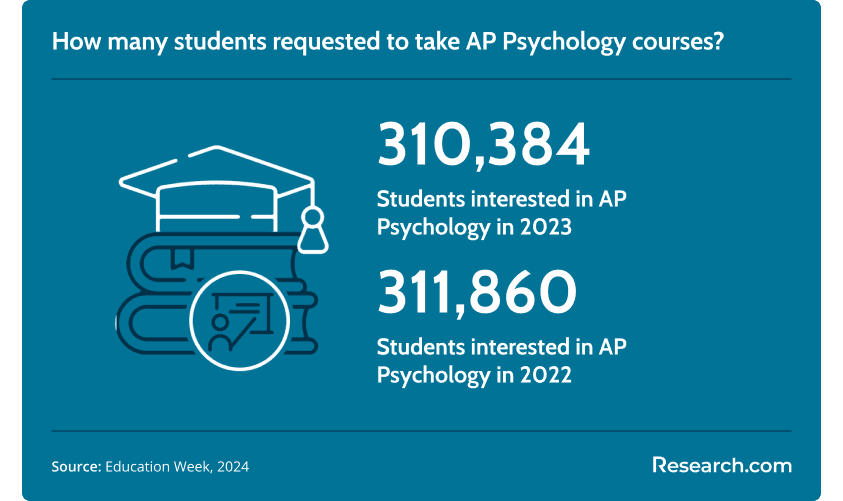
As you’ve noticed, a common tip they pointed out is to immerse yourself in resources that provide background information on the areas of specialization. If you’re still in high school, consider taking Advanced Placement (AP) courses to familiarize yourself with the most basic principles of psychology. In 2023, an Education Week report concluded that AP Psychology was one of the most requested courses, with 310,384 course takers, indicating its popularity among secondary education students.
Beyond academic knowledge, what other skills do industry experts think students must develop to succeed in the field of psychology?
Becoming a psychologist requires a specific set of hard skills that enable you to fulfill your duties and responsibilities competently. You will learn most of these in your undergraduate studies but as you complete your online master's degree in psychology, you’ll need to continue improving them to handle complex tasks once you’re on the job.
Here’s what our experts have to say about a psychology student’s must-have skills:
- Dr. Kowalski: “[P]erhaps, most importantly, get involved in research at their university… [I]t’s critically important that students get involved in research as quickly as they can in their undergraduate career. Not only does this help them develop expertise in an area, but it teaches them critical thinking skills that they will take with them in whatever area they decide to go into. They will also learn data analysis and statistics, skills that will also help them regardless of the field they decide to pursue. Finally, they will develop their writing and presenting skills.”
- Dr. Caldwell-Harris: “Be alert to whether you are more interested in basic science of the mind and behavior, in applied topics in behavioral sciences, in clinical and abnormal psychology, or in a specific population, such as young children or adolescents. If your interests are in basic questions of the mind, sharpen your critical thinking and inquiry skills; learn related disciplines such as statistics and data science. If your interests are in therapy; start volunteering at a hospital or clinic.”
- Dr. Jeglic: “The two biggest are critical thinking and research skills. Psychology is a science, and thus you have to be able to, at a minimum, consume scientific research. That also requires critical thinking as you have to question the methods and the conclusions. Whichever subdiscipline you decide to embark upon those two skills are key. The third most important skill is communication. That can involve speaking, writing, and social media. Communicating ideas in a logical and coherent way is a very important foundational skill.”
- Dr. Quinn: “Curiosity, self-awareness, motivation (resilience) to begin with.”
The experts emphasize the importance of research skills and rightly so. Psychology deals with quite a lot of qualitative and quantitative data, and being adept in searching for the right sources, extracting valuable information, and articulating your interpretations can help you understand various content and develop other skills.
Furthermore, critical thinking, in tandem with research skills, is a key ability that psychology students must develop. This skill enables learners to question methods, analyze data, and interpret results. With this, you enhance your analytical thinking skills, thus helping you solve problems, evaluate situations from different viewpoints, and determine the next steps confidently.
With all this information, you must also be able to express your insights in both formal and informal written communication, use proper grammar and punctuation, and form cohesive sentence structures. These skills are vital not only for a career in psychology but also in other disciplines. Moreover, they will prove useful beyond research since you can utilize them when creating professional reports, academic papers, training materials, or lectures.
What are the emerging trends in psychology that students should be aware of? How do these trends affect career opportunities?
Our behaviors as a society and as human beings continue to evolve and become influenced by various factors. As these happen, psychologists must step up to address possible challenges and adapt their skills and practices to new societal dynamics. The experts we interviewed suggested to keep an eye on the following trends:
- Dr. Kowalski: “There are so many applied areas of psychology, other than clinical, such as sports psychology, forensic psychology, health psychology, human factors, and industrial/organizational psychology. Increasingly over the past several years, more and more graduate programs are being developed in these areas as the need for psychologists with these skills has become evident.”
- Dr. Caldwell-Harris: “Employment practices are changing, given that humans want rewarding, meaningful work. Higher education is changing. Psychologists can help [with] this change but also advise people trying to navigate changes in education. Many parts of the world, such as North America, are increasingly multicultural. How do people with different cultural backgrounds benefit from diversity? Culturally aware experts are needed in every field.”
- Dr. Jeglic: “I believe that AI will impact everything that we do. While the impact of AI on psychology is still being explored, it will likely have huge implications for the field.”
In addition, the APA lists other trends that require a close watch. For instance, the demand for more healthcare providers rises (APA, 2024) as the stigma around mental health slowly breaks down. In this case, an affordable online bachelor's degree in psychology may not be enough since professionals must be educated at the doctoral level. In fact, according to the U.S. Bureau of Labor Statistics (BLS, 2024a), the U.S. needs around 6% of all types of psychologists from 2022 to 2023 to meet this demand. This further urges psychology students to train extensively and gain specialized knowledge to provide high-quality care.
Lastly, the need for psychologists to help understand and face pressing issues across the nation and the world is more crucial than ever. From lobbying for diversity, equality, and inclusion in the workplace and schools to addressing the impact of climate change on future generations or helping the aging population, a new breed of psychologists must emerge. They need not only maintain the skills they possess but also gain new ones that can positively affect lifespans.
How is technology changing the practice of psychology, and what should students do to stay ahead in this evolving landscape?
As innovations in technology slowly grow, so do psychologists in the way they gather information, interpret data, and deliver results. Change is evident, so psychologists must learn how to interact with these technologies ethically. Additionally, here’s what the experts we interviewed have to say:
- Dr. Caldwell-Harris: “Computer tools change how basic research is conducted. AI agents can contribute to psychotherapy. People have concerns about how to interact with AI agents (e.g. should one treat AI agents ethically). Experts are needed to advise on navigating these and related issues.”
- Dr. Jeglic: “Take courses on technology, coding, AI. Learn how social media can be harnessed to conduct research and communicate ideas.”
- Dr. Quinn: “We now have access to physiological data that can interface with psychological data, and the use of AI opens the field to more ways to analyze data.”
There is no denying that AI and other emerging technological changes can be helpful for patients and mental health professionals. However, more work is needed to understand this relationship, and psychologists are at the forefront of this study.
This is why, according to the APA (Abrams, 2024), psychologists are working to bridge the gap between humans and our interactions with technologies, especially since discoveries tend to lean on technology. Therefore, similar to other professions, psychologists must leverage their skills to craft guidelines on utilizing technology in every aspect of their jobs.
What are some less conventional career paths for psychology graduates that students might not initially consider?
It is easy to think that the profession is confined to a few types of psychologists. However, psychology graduates can be found in various industries. Furthermore, the experts we consulted clarified that students can explore other fields within psychology.
- Dr. Kowalski: “So many students who decide to major in psychology immediately think of clinical or counseling psychology… The truth is that people with a psychology degree can be found in all fields. So many people are hesitant to get a degree in psychology because they are afraid they won’t be able to get a job. But, the critical thinking skills that students learn when they major in psychology, particularly if they become involved in research, are invaluable in any field, even nontraditional fields.”
- Dr. Caldwell-Harris: “Think bigger than the traditional list of school psychologists or human resources personnel. Why? The main problems facing humanity are problems caused by human behavior and human choices. The implication is that psychologists are needed in almost every area of human endeavor. Think of environmental challenges, such as climate change and species loss, but also healthy conditions, such as obesity and heart disease. Our world is wracked by violence and conflict. Humans fight back when attacked, perpetuating the cycle of violence. These diverse areas need visionary thinkers who keep human psychology at the forefront of their conceptualizations as they work to improve living conditions so that all humans can thrive and reach their potential.”
- Dr. Jeglic: “Psychology is broadly the study of behavior—but psychological principles are applied in every field. I think people generally think of psychology as focused on therapy—but there are so many applications of psychological principles if you think outside of the box. It is, in essence, limitless.”
Aside from traditional positions, like clinical, counseling, or school psychologists, graduates can become health services managers, market research specialists, genetic counselors, outreach program coordinators, or data scientists.
In addition, baccalaureate graduates can move on to study online MBA programs in human resources and apply their psychological skills and knowledge in developing employee talents, creating training materials, or improving professional development frameworks. This is especially useful as companies experiment with remote or hybrid work schedules and understand how Gen Zers are shaking up the workplace (De Witte, 2024). As Dr. Jeglic puts it, the possibilities are limitless. With the right resources, support, and information, graduates can explore various pathways.
In the table below, I compared the possible annual averages that traditional job roles in psychology can offer.
Should I Consider an Accelerated Psychology Degree Online?
Accelerated psychology programs are designed to condense core curricula and prerequisite coursework into a shorter timeframe, allowing students to quickly gain the competencies required in today’s competitive job market. Such programs typically emphasize a rigorous, focused learning experience that blends theory with practical applications, preparing graduates for diverse roles in research, clinical settings, or interdisciplinary fields. Moreover, accreditation and structured support systems are key factors in ensuring that this intensive path meets established academic and professional standards. Explore more details on reputable options, such as an accelerated psychology degree online, to determine if this fast-track approach aligns with your long-term career objectives.
How Do I Select an Accredited Online Psychology Program?
Evaluating an online psychology program requires verifying its accreditation status, reviewing curriculum quality, and ensuring that the learning platform supports interactive, real-time feedback. Consider whether the program meets industry standards and provides robust student services while fostering opportunities for networking with professionals. Additionally, assess flexibility factors—including course scheduling, credit transfer options, and tuition structures—to find a program that aligns with your academic and career goals. For a list of institutions offering flexible admissions, explore online colleges with open enrollment.
Can Pursuing a Dual Degree Enhance a Psychology Career?
Leveraging an interdisciplinary academic track that integrates psychology with complementary fields can set candidates apart in today’s competitive job market. Dual degree programs offer a structured curriculum that pairs in‐depth psychological theory with practical expertise in areas such as business, data science, or public health. This approach not only broadens the analytical and problem-solving toolkit but also opens doors to cross-sector opportunities and networking channels. Prospective students should evaluate the benefits of pursuing online dual degrees to determine if this pathway aligns with their long-term career goals.
Can a Complementary College Major Enhance a Psychology Career?
Integrating a complementary academic discipline with psychology can broaden career opportunities and deepen analytical expertise. Pursuing interdisciplinary courses—such as data science, public health, or business management—provides unique perspectives and enhances critical problem-solving skills needed in today’s complex work environment. Students are encouraged to explore additional programs and resources to determine how combining fields can refine their professional profile. For further guidance on synergistic academic paths, consider reviewing college majors that complement a psychology degree.
What Are the Cost-Effective and Accessible Options for Psychology Education?
Evaluating financial investment is essential when selecting a psychology program. Students should assess tuition affordability, transparent fee structures, and available financial aid options to ensure that their education investment aligns with their long-term career goals. In this regard, exploring accredited institutions that feature flexible enrollment processes and reduced application barriers can offer significant advantages. For instance, many prospective students benefit from programs offered by online colleges with open enrollment and no application fee, which provide streamlined admissions alongside quality curricula. Additionally, conducting a thorough analysis of scholarship opportunities, grant programs, and transfer agreements can further optimize the cost-to-value ratio of your educational journey.
Can a 1-Year Master's Program Accelerate My Career in Psychology?
Integrating an accelerated master’s program into your educational journey can streamline your transition into advanced roles. Focused, intensive curricula provide opportunities to gain specialized expertise and practical skills in a condensed timeframe. This approach not only enhances technical and leadership competencies but also positions graduates to access immediate career advancement. For professionals assessing flexible, short-term academic formats, exploring 1 year masters programs can be a strategic move that aligns with industry demands and evolving workplace trends.
Is a Bachelor's Degree in Psychology a Path to High Earnings?
While a bachelor’s degree in psychology is often seen as a stepping stone to advanced studies, it also serves as the foundation for lucrative career paths. Industry professionals indicate that combining core psychological knowledge with targeted skill development can lead to positions in diverse fields such as market research, human resources, data analysis, and healthcare administration. Graduates who proactively supplement their academic credentials with additional technical or managerial expertise tend to secure opportunities that offer competitive compensation. For instance, exploring options like bachelor degrees that pay well can provide insights into career tracks where entry-level roles yield strong financial prospects. This strategy allows graduates to align their academic background with market demands, ultimately positioning themselves to navigate competitive job markets effectively.
Other Skills that Psychology Students Should Develop
As you complete your cheap online psychology degree, you might wonder if you really need to possess and develop these skills or if they are relevant at all. Acquiring them may be easy, but maintaining and honing them for the future of work may be a challenge, especially if you have not yet decided on a specialty.
The abilities that the four experts mentioned are also consistent with the APA’s “The Skillful Psychology Student” (Naufel et al., 2018) and reports from the Bureau of Labor Statistics (BLS), proving that they are indeed important to graduates as budding professionals because these help them adapt to any role and prepare for emerging trends that continue to shape the world. In addition to the skills above, gaining the following abilities allows you to be more competent:
- Technological Skills: Psychology students must know how to operate computer systems, digital platforms, and software programs. This goes beyond keeping up with innovations. Future professionals must know how to adapt and utilize technology in conducting research, conducting telehealth consultations, safekeeping documents, managing projects, performing analyses, managing budgets, or presenting findings.
- Project Management: As you deal with various aspects of the job, you must organize your thoughts, resources, cases, and tasks to adhere to deadlines. You must also be able to juggle multiple projects while keeping track of their progress or staying on top of your other responsibilities.
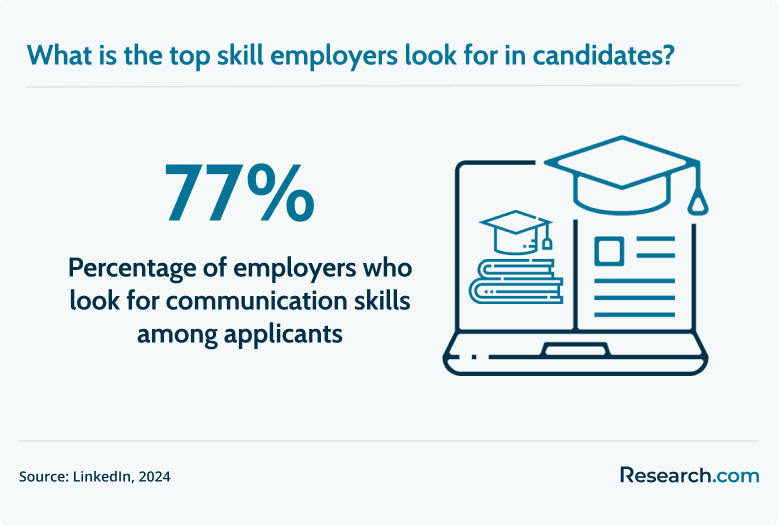
- Oral Communication: Vital to a psychologist’s role, having strong communication skills means you listen actively and respond with evidence-based feedback. It also suggests that you should be empathetic, patient, and open-minded. Furthermore, considering that being a strong communicator is what 77% of employers look for in candidates (LinkedIn, 2024), you can benefit greatly from developing this skill.
- Self-awareness and Curiosity: Dr. Quinn stresses that this skill is crucial as you begin your education in psychology. Naturally curious and self-aware psychologists can develop empathy toward their patients or the people they work with. Moreover, those who possess these skills can easily work on getting back up after encountering an obstacle.
- Leadership: Psychology students must learn how to guide their patients through the ups and downs of their journeys. In addition, graduates must know how to delegate tasks, encourage others, and ensure that the people they lead can shine individually.
Most Common Psychology Specializations
Selecting an undergraduate major is in itself a daunting task, and choosing a psychology specialization is just as nerve-wracking. For many high schoolers preparing for college, the first thing that probably comes to mind when considering a psychology career is becoming a licensed clinical or counseling psychologist. This is not surprising, especially since there are around 71,730 clinical and counseling psychologists in the U.S. in 2023, according to the BLS (2024b).
While this is undoubtedly true, there are also several areas of psychology where you can apply your skills. To guide aspiring students, the American Psychological Association (APA) lists a total of 19 subspecialties within the field of psychology. Some of these are the following:
- Cognitive and Perceptual Psychologists: They study how people think, reason, judge, and remember things. They also focus on how people develop memories or perceive reality.
- Community Psychologists: They work with various individuals and communities to help people attain their needs. They study social systems and how these and other factors affect access to resources or social injustices.
- Engineering Psychologists: These professionals specialize in improving the designs of machines, systems, and other materials to enhance user experience or safety. They are also called human factors specialists.
- Environmental Psychologists: They study the relationship between people’s interactions with various settings. They also research how environments affect human stress or effectiveness.
- Forensic Psychologists: Students who take up online forensic psychology masters use their knowledge to evaluate people involved in legal issues, provide expert testimony in court, or work with the police or judicial systems.
- Quantitative and Measurement Psychologists: They design and develop methods, strategies, frameworks, and mathematical models to understand psychological data. In addition, they help improve the effectiveness of various assessments.
- Rehabilitation Psychologists: They work with public health and other healthcare professionals to assist patients with mental and developmental disabilities. They are also qualified to become expert witnesses in cases of violence or substance abuse that may cause these disabilities.
- Sport Psychologists: They mainly collaborate with athletes, their coaches, and families to ensure they are in the best mental shape to join competitions.
How to Choose a Psychology Specialization
Perhaps a point of quick relief is that you need not worry about choosing a specialization until you take your master’s or online doctoral programs in psychology. Many baccalaureate psychology programs cover foundational courses that introduce you to the specialties and branches of psychology, thus giving you ample time to explore your options.
You also need to ask yourself some introspective questions to identify which psychology career is best for you:
- Which of APA’s career guide descriptions pique my interest?
- How do these jobs help me see myself as a psychologist?
- Which field am I most likely to enhance my current skills and talents?
- What kind of work environment do I see myself thriving in?
- What type of patient, population, cause, or group am I interested in helping?
- Which of these jobs aligns with my long-term goals as a professional?
In addition, you can apply for entry-level jobs before you enroll for graduate studies, which can further expose you to a field you want to specialize in. If you’re a fresh college graduate, you can use this time to consider practical aspects, such as time, effort, money, and other resources, that can influence your decision-making process. To gain mastery, licensure, better opportunities, or advanced job titles, you typically need higher-level degrees. Therefore, you need to assess if you can commit to this.
This can also help you determine which employer type, industry, or location you’d like to invest in before you specialize. To reiterate Dr. Jeglic’s advice, it is best to get hands-on experiences, such as internships, entry-level jobs, apprenticeships, or volunteer work, to get a sense of what psychologists do in real situations.
Although these are simple guidelines, they can help you gain a clearer picture of what being a psychologist means to you, which in turn can help you narrow down your choices when choosing an area of expertise. Moreover, the four experts we interviewed greatly stress the importance of going through APA’s career list and the latest Guidelines for the Undergraduate Psychology Major Version 3.0 (2023) to gain a better understanding of selecting a focus area and the competencies you need to develop.
In the chart below, I’ve also compiled the latest statistics on select psychology careers to give you a better perspective on their employment in the U.S. Take note that other specific types of psychologists are not differentiated and are often clustered generally as “psychologists” or “psychologists, all other”.
Build a Career as a Psychologist
Studying psychology takes years of mastery and practice. It also demands students' patience in perfecting the skills they need to be part of the workforce. However, the payoff—in income, opportunities, and experiences—is bountiful.
This is why psychology is a constant discipline in higher education. Students take it to meet basic college requirements. They learn about its fundamental principles as part of the general education curriculum. More importantly, though, it is an excellent starting point for future psychologists within the field and a great training ground for multi-skilled professionals in nontraditional disciplines.
More Information About The Experts We Interviewed:
Robin Kowalski, Ph.D.
Since 2003, Dr. Kowalski has taught several courses at Clemson University, including Women and Psychology, Advanced Experimental Design, and Health Psychology. She obtained her doctorate in Social Psychology from the University of North Carolina at Greensboro. Among her achievements are earning the Provost Award for Excellence in Teaching (2021), becoming a reviewer in several psychology journals, and being Chair of Clemson University’s Institutional Review Board (2018–present). Her research interests include aversive interpersonal behaviors with a focus on cyberbullying.
Catherine Caldwell-Harris, Ph.D.

Having published several academic papers, Dr. Caldwell-Harris describes her research interests as diverse, covering topics like language processing, second language acquisition, and word recognition. She supervises undergraduate and graduate students, teaching them several courses like cognitive science, psycholinguistics, and developmental psychology. She also teaches a course in the area of cross-cultural psychology where she also co-originated the Personality-Culture Clash hypothesis. She earned her Ph.D. in Cognitive Science and Psychology from the University of California, San Diego.
Elizabeth Jeglic, Ph.D.

Renowned as an expert and professional speaker in sexual violence prevention, Dr. Jeglic has written several books and academic papers on the topic. In addition, she has been an expert witness for several cases and provides professional training and consulting to various organizations, schools and colleges, and community and parenting groups. She also contributes to Psychology Today and provides her insights on several podcasts. She earned her Ph.D. in Clinical Psychology from Binghamton University and completed a postdoctoral research fellowship at the University of Pennsylvania.
Joann Farrell Quinn, Ph.D., M.B.A.

Apart from establishing her own consulting firm, Dr. Quinn serves as the Director of the SELECT Competency Assessment program (USF) and the Academic Director at the TGH-USF People Development Institute. As an educator and researcher, she helps physicians become better leaders and develops professionals’ organizational decision-making skills. Her research interests include emotional intelligence, leadership, and identity. She received her Ph.D. in Management Studies from Case Western Reserve University and her M.B.A. in Organization and Management from Syracuse University.
References:
- Abrams, Z. (2024, January 1). What psychologists need to know about the evolution of generative AI. Emerging Trends. https://www.apa.org/monitor/2024/01/trends-generative-ai-evolution-psychology
- American Psychological Association. (2023, August). APA guidelines for the undergraduate psychology major version 3.0: Empowering people to make a difference in their lives and communities. https://www.apa.org/about/policy/undergraduate-psychology-major.pdf
- American Psychological Association. (2024, January). 12 emerging trends for 2024: What’s ahead for psychologists in the coming year? https://www.apa.org/monitor/2024/01/trends-report
- LinkedIn. (2024). The future of recruiting 2024. https://business.linkedin.com/talent-solutions/resources/future-of-recruiting
- National Center for Education Statistics. (2023, September). Bachelor's degrees conferred by postsecondary institutions, by field of study: Selected academic years, 1970-71 through 2021-22. Digest of Education Statistics. https://nces.ed.gov/programs/digest/d23/tables/dt23_322.10.asp
- Naufel, K. Z., Appleby, D. C., Young, J., Van Kirk, J. F., Spencer, S. M., Rudmann, J., …Richmond, A. S. (2018). The skillful psychology student: Prepared for success in the 21st century workplace. Retrieved from: https://www.apa.org/careers/resources/guides/transferable-skills.pdf
- U.S. Bureau of Labor Statistics. (2024a, April 17). Psychologists. Occupational Outlook Handbook. https://www.bls.gov/ooh/life-physical-and-social-science/psychologists.htm
- U.S. Bureau of Labor Statistics. (2024b, April 3). May 2023 national occupational employment and wage estimates - United States. Occupational Employment and Wage Statistics. https://www.bls.gov/oes/current/oes_nat.htm