Interview with Human Resources Experts: Answering Students’ Questions About HR Trends

Co-Founder and Chief Data Scientist
According to a study by the World Economic Forum, digital jobs are expected to reach 73 million worldwide in 2024; these jobs are projected to rise to 92 million by 2030. Occupations must evolve rapidly not only to keep up with technological advancements but also to address changing role expectations. With this, human resource (HR) departments must proactively shape the future of employees and the workplace.
Aspiring HR professionals can expect to handle more than just traditional employee relations. Instead, they will become strategic partners who leverage digital tools to drive organizations forward. More importantly, they will be crucial in creating work environments that promote inclusivity, foster continuous learning, and enhance employee well-being.
To further shed light on this career path, we consulted with top experts to answer the most frequently asked questions from prospective HR students. This guide explores essential skills, emerging trends, potential challenges, and job prospects and provides valuable advice to help you launch a career in HR.
Experts We Interviewed
- Chester Spell, Ph.D. - Professor of Management, School of Business & Interim Area Head, Human Resources/Organizational Behavior, Rutgers University-Camden
- Thomas Kochan, Ph.D. - George Maverick Bunker Professor of Management, Sloan School of Management & Co-Director, Sloan Institute for Work and Employment Research, Massachusetts Institute of Technology
- Rick Hackett, Ph.D. - Professor, Human Resources and Management, DeGroote School of Business & Canada Research Chair in Organizational Behavior and Human Performance, McMaster University
- Peter Cappelli, Ph.D. - George W. Taylor Professor of Management & Director at the Center for Human Resources, The Wharton School, University of Pennsylvania
- Cornelia Gamlem, S.P.H.R., M.A. - Author; President, GEMS Group
- What are the key skills and competencies that employers are looking for in HR professionals today?
- How important are internships and co-op programs for HR students, and what should they look for in these opportunities?
- What are the most significant trends currently shaping the field of human resources, and how can students prepare to address these trends?
- How important is it for HR professionals to have a global perspective, and what can students do to gain international experience or understanding?
- How important is it for HR students to gain hands-on experience during their studies, and what types of experiences would you recommend?
- What are some of the most valuable resources (books, courses, journals, etc.) that you recommend to HR students to supplement their classroom learning?
- How can working adults access affordable HR education?
- Can an online accelerated bachelor's degree fast-track your HR career?
- What are the biggest challenges faced by HR professionals?
- How can digital certifications advance your HR career?
- How Can Continuous Learning Through Affordable Education Impact Your HR Career?
- What are the highest-paying jobs in human resources?
- How can I successfully transition into a strategic HR role?
- What is the job outlook for HR professionals?
- What additional qualifications can set HR professionals apart?
- How can HR professionals stay current with rapid digital advancements?
What are the key skills and competencies that employers are looking for in HR professionals today?
Employers seek HR professionals who possess a diverse set of skills and abilities. Understanding these key competencies can help you cultivate and develop them as you prepare for a career in this field. Here’s what the experts we interviewed have to say:
- Dr. Spell: “For this one, I think a lot depends on level. My business contacts tell me consistently, for entry-level HR positions, the key would be reliability and the ability to communicate. Punctuality, following senior management directives, making deadlines, and writing skills are what they see as the must-haves. On a content-specific side, knowledge about employment law, recruitment, promotion, retention, compensation, talent management, and engagement. People skills-wise, [they should have] competencies related to diversity and inclusion, conflict management and negotiation, emotional intelligence, and business communication are critical (of course true at any level).”
- Dr. Kochan: “Employers need HR professionals to have a well-rounded combination of deep analytical skills, a broad-based understanding of how work and the workforce are changing, and the ability to engage the heightened expectations the labor force brings to their work today. And, perhaps the one skill that HR professionals need to develop more than any other (since it’s in high demand and short supply) is to help organizations design and use advancing technologies, like AI, effectively. This, in turn, requires HR professionals to engage both IT and other tech specialists and the workforce that is using these advancing tools. They all need to work together to get the results these technologies promise to deliver but all too often fail to realize.”
- Dr. Hackett: “Strong analytical and communication skills, a strategic mindset [or] understanding links between HR functions and achievement of organizational strategic objectives, general knowledge of the HR field, including recruitment, assessment, selection, onboarding, training and development, occupational health and safety, and performance management. [Other skills include] an appreciation of, and ideally working capabilities, in people analytics, working with data analysts on descriptive, prescriptive, and predictive statistical models; and an appreciation of the increasing role of AI in all functions of the HR field. A high degree of general and emotional intelligence, a growth learning mindset, [and] knowledge of fundamentals of business [like] HR, marketing, finance, accounting, operations research, and information systems.”
- Dr. Cappelli: “In big companies, they are looking for functional skills in specific areas—‘employee relations’ requires legal knowledge, ‘compensation’ requires knowledge of how those plans operate, and so forth. What they should be looking for is also skills in data analysis given that HR generates as much or more data than any other function. It would also be difficult to be good at an HR job without some background in psychology. Some of these competencies can be demonstrated by certificates from organizations like Certified Employee Benefit Plans and the Society for Human Resource Management.”
- Gamlem: “There are many studies out today discussing HR competencies. The key skills and competencies that stand out as being most important are 1) Analytical skills. HR professionals must have the ability to use and interpret data in order to present positions and make credible decisions. Data is used throughout the employment relationship, such as in workforce and succession planning and to analyze trends such as attrition or employee engagement. 2) Communication skills. Working with people requires excellent communication skills including listening skills, speaking and presentation skills, and writing skills. 3) Technology skills. Technology touches every aspect of human resources, and it is ever-changing. HR professionals must have an understanding of how to use technology in their day-to-day roles, and this includes social media, data management, privacy, security, and artificial intelligence. 4) Adaptability to change. HR professionals are often called upon to be change champions; for example, when new policies, programs, or benefits are introduced; or when external conditions, such as the pandemic of 2020, impact operations. Change happens at such a rapid pace, and good communication and analytical skills are critical. 5) Compliance Management. Being able to understand external forces, most importantly regulatory guidelines, and manage processes and situations against the constraints of such forces and guidelines. 6) Strategic thinking. Finally, and most importantly, the ability to take an intentional and rational thought process that focuses on the analysis of critical factors and variables when making a decision. For example, in making decisions about employees, asking why a policy was implemented—what was its purpose; looking at the circumstances and constraints around a certain situation and analyzing each on its merits; and understanding precedent and past practices—how similar situations were handled.”
The experts raise several points in this section. Naturally, professionals are expected to know the fundamentals of both HR and business, such as recruitment, compensation, talent management, accounting, finance, and the like. All these can be learned through undergraduate or online masters in human resources studies.
However, the experts also point out other competencies that are usually mastered throughout your career. For instance, communication skills are needed in various HR functions, such as conveying complex information and engaging with diverse stakeholders.
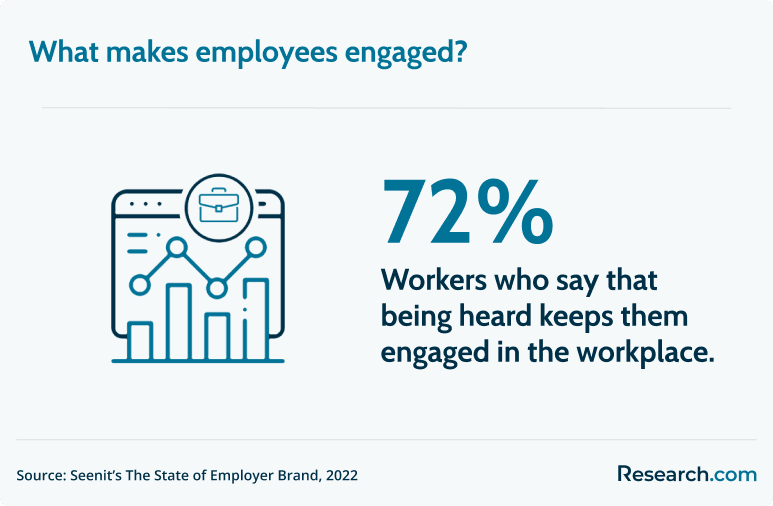
This coincides with emotional intelligence and interpersonal skills. These enable professionals to understand and manage their own emotions and those of others, making them relevant for resolving conflicts, empathizing with colleagues, hearing out workplace concerns, and enhancing employee engagement. With 72% of employees saying that being heard gets them engaged in the workplace, these skills will become increasingly important (Seenit, 2022).
Lastly, they underscore the importance of analytical skills and technical proficiency, especially when it comes to handling AI or workplace data. These skills are needed to interpret complex information, develop predictive models, and make data-driven decisions that enhance HR strategies or ensure organizations remain competitive.
How important are internships and co-op programs for HR students, and what should they look for in these opportunities?
Aside from coursework, hands-on experiences—like internships and co-op programs—play a crucial role in the education and career development of HR students. They provide invaluable opportunities to apply theoretical knowledge in real-world settings. Here’s what the experts think about this:
- Dr. Spell: “Very important as this is the way to secure a future job. What they should look for is the potential for their growth and learning. Opportunities to learn are very important with quickly developing technology. Folks who have no opportunities or do not want to learn will fall behind. The opportunity to use and negotiate with AI would be extremely useful because if it isn’t at a particular workplace yet, it will be soon enough!”
- Dr. Kochan: “Internships and co-op programs are very valuable conduits into the professional HR labor market and should be made available to all HR students. But these need to be paid internships. Too many still remain unpaid.”
- Dr. Hackett: “Experiential education, the ‘hands-on’ application of knowledge, is keenly important for skill development and building contextually rich experiences. Students should look for placements that provide challenging developmental opportunities that enable them to apply the knowledge for their educational programs, ideally in areas where they prefer to develop specialized expertise. Avoid placements where they are doing mundane administrative work that can be performed by people with no HR background. This is a common pitfall of many student placements.”
- Dr. Cappelli: “They are super important for all students. I don’t think they can be very picky with their options, but bigger organizations tend to have more sophisticated practices.”
- Gamlem: “Internships, like any other hands-on work experience, certainly prepare students for the world of work. I’ve had the opportunity to work with three interns in two distinctly different circumstances. The first was in a purely operational setting. I was able to give her a peek into the day-to-day operational experiences in an HR department. To the extent I could, I allowed her to shadow me, for example, when I conducted interviews and did intakes of worker’s compensation claims. I gave her job requisitions and resumes to review and had her develop interview questions in order to give her some hands-on experience. I met up with her years later at a conference, and she was enjoying a very successful HR career. The second experience was more programmatic since the role of the department was more strategic. One of the summer interns was working with us on our college recruitment program. She performed research and analysis for our business units to determine the effectiveness of their efforts. The second assisted in developing a training manual for a corporate-wide compliance program. This included researching government regulations and report writing. After college, she went on to work for an organization engaged in workplace research.”
One thing is clear from the experts’ responses: Internships and co-op programs are important aspects of students’ learning experiences. Usually, HR degrees or organizational management majors from MBA programs under 10k feature this type of learning as part of the curricula.
The experts also emphasize that completing an internship is crucial for securing future employment since it connects you with potential employers, mentors, and industry professionals who can guide you to job opportunities and career growth.
Additionally, these experiences allow you to develop practical skills. However, the experts recommend selecting programs that go beyond traditional HR routines. Instead, choose projects that focus on emerging HR technologies, as these will likely be the tools you’ll use in your career.
Finally, aim for internships that can lead to specialization in areas like recruitment, training and development, compensation and benefits, and labor and employee relations. Doing so can deepen your expertise in specific HR functions and increase your chances of getting employed.
What are the most significant trends currently shaping the field of human resources, and how can students prepare to address these trends?
Aspiring HR students must also familiarize themselves with the most impactful trends currently transforming the field. Exploring these can help them prepare for changes or address concerns in the workforce once they enter it. The experts identify some of these trends.
- Dr. Spell: “Again, quickly learning is a key trend to stay in the job and be marketable. Skills like knowledge of AI products to optimize job productivity are very important, and, as I indicated above, will be increasingly so.”
- Dr. Kochan: “Increased worker activism requires current and future HR professionals to learn how to negotiate with and lead collective groups of workers. There is a gap in knowledge and skills among the generation of HR professionals that has experienced a docile labor force for so many years.”
- Dr. Hackett: “AI and people analytics. I strongly urge students to take one or more courses in people analytics/data analytics and the application of AI to HR. Rich knowledge of Diversity, Equity, and Inclusion (DEI) programs; key elements of such programs, how to audit them, develop and monitor evaluation metrics. Knowledge of managing 1) workplace mental health/well-being, 2) hybrid/remote work and other flexible work practices, 3) the rapid increase in robotics in the workplace—people [and] robots working seamlessly together.”
- Dr. Cappelli: “HR right now is overwhelmingly driven by vendors providing solutions to many of the HR tasks—applicant tracking systems, for example—so understanding vendor management is crucial. ‘Talent acquisition’ or hiring certainly gets most all of the attention.”
- Gamlem: “Trends in the HR field shift and change over time, and those changes often occur rapidly. However, among them, executives often see common themes. Some of the current trends include 1) Artificial Intelligence. It’s no secret that the use of AI is growing at lightning speed, and AI has many useful applications for human resources. However, AI depends on algorithms, and algorithms can be faulty. It is important for human decision-making to remain in the loop to ensure fairness and accountability. How can students prepare to address this trend? While the younger generation of students entering the workforce are certainly tech savvy, they need to understand the pros and cons of using AI and where its use can be problematic. Research areas where the use of AI needs to be augmented by human judgment, such as when making selection decisions. 2) Data and Analytics. Organizations need reliable data to make good decisions, especially those that involve people. HR needs to use analytics and data to drive everything related to employees ... For example, in a post-pandemic world, employers are analyzing badge data in hybrid workplaces to determine the percentage of employees working on-site and when to make decisions about real estate needs going forward. How can students prepare to address this trend? HR curricula should include coursework on data and analytics. Additionally, courses in statistics are growing in importance. Finally, becoming familiar with and getting comfortable with statistical tools, starting with Excel is a must. 3) Compensation and Compensation Transparency. Wage or pay transparency is the evolving practice of allowing disclosure about pay in the workplace ranging from internal, where only employees of the organization have access, to external, where the information is made available to the public; or information about pay ranges being available. The purpose is to ensure pay equity which has been a growing concern. How can students prepare to address this trend? This is another area where data and analytics are so important. Students should understand the basics of conducting a pay equity audit and, more importantly, understand how to interpret the results and determine the magnitude of any difference... 4) Employee Engagement. Keeping employees motivated and engaged is an ongoing process in any organization. When people feel they belong at an organization that cares about them as a human being and not just as employees, it can make a difference not just for the employee, but for the organization. It contributes to productivity and reduces turnover. How can students prepare to address this trend? Much of employee engagement is tied to organizational culture which starts at the top. Students can begin by understanding and researching the elements of positive organizational cultures. Many organizations measure employee engagement not only by looking at turnover, which involves statistical analysis but also by conducting employee surveys. Understanding how surveys are developed and how their results are interpreted and used, is an excellent way to begin. Survey skills, which are often incorporated into statistics or comparable courses, will be most useful for students when they enter the workforce. 5) Employee Wellness. ...Investing in employees’ physical, mental, and emotional health has been proven to effectively boost the well-being of the organization as well, primarily productivity and profitability. This investment can prevent employee burnout and significantly decrease absenteeism and the use of paid time off for illness. How can students prepare to address this trend? As organizations are recognizing the importance of high-value offerings to attract and retain talent and add value—offerings such as mental health benefits or virtual wellness benefits—they are conducting cost-benefit analyses, so they can make a compelling case for implementing them. This is yet another area where data and analytics play a crucial role, and students would be well served to master this area.”
Building on the experts’ insights on technology, HR students should focus on developing a robust understanding of AI applications and data analytics in the workplace. According to a Randstad study (2024), workers expressed a desire to enhance their knowledge of AI (29%) and IT and tech literacy (29%).
Gaining expertise in AI can help streamline workflows, automate repetitive or manual tasks, and provide data-driven insights to boost employee performance. However, students should be aware that staying current with these technologies requires quick learning due to the fast-paced nature of advancements.
Moreover, completing courses from related fields, like affordable online public relations degree programs, can broaden your understanding of communications and public relations, which are increasingly important in HR roles.
Gamlem underscores the relevance of staying informed about current trends in employee relations, engagement, and wellness. The workers of today are different from the employees of the past, and knowing their needs can help curb high turnover rates.
On the same note, Dr. Kochan and Dr. Hackett highlight the importance of understanding the insights of the modern worker. The popularity of remote work and the rise of the Gen Z workforce are influencing employees’ preferences for work environments and what companies should do to enhance employee well-being.
According to the same Randstad report, 83% of employees consider mental health support and annual leave as crucial factors in their job decisions, and 41% would reject a job offer that does not offer flexible working hours.
The experts’ insights are also echoed in the Society for Human Resource Management (SHRM) 2025 trends report (Agovino, n.d.). Therefore, aspiring HR students must try to align themselves with these points, especially if they wish to reform work strategies.
The chart below provides further details on the most desired skills among global workers, according to Randstad's survey.
How important is it for HR professionals to have a global perspective, and what can students do to gain international experience or understanding?
As organizations expand across borders and diverse workforces become the norm, understanding international practices and cultural nuances can enhance an HR professional’s effectiveness. Consider the insights of the experts we interviewed:
- Dr. Spell: “Extremely important as it allows for more tolerance to ambiguity or uncertainty which are a determining characteristic of a workforce. What they can do is seek courses that provide global experiences (many universities have centers that run these programs and some even require them). A group of CEOs (alumni of our school) told me recently that they look specifically for candidates who have such experience, or, failing that, just working a job—any job—in another country. It is surprising how much a difference in perspective that can make.”
- Dr. Kochan: “Global perspectives are very valuable and global experiences in working in different cultural and institutional settings can be put to good use as HR professionals advance in their careers.”
- Dr. Hackett: “A global perspective is important for students aspiring to work for global companies in a senior HR strategic role. Students can look for international co-op/internship placements. Separately, I encourage students to participate in international exchange programs within their schools, to become familiar with different cultures.”
- Dr. Cappelli: “HR is probably the field where the idea of a global perspective is the least important because HR practices are so very different country-by-country, governed by local employment laws. So it is country-by-country knowledge: knowing how Mexico operates isn’t much guidance as to how Japan works.”
- Gamlem: “In recent decades, the business climate has experienced rapid globalization requiring HR to shift perspectives in many areas: recruiting globally which has been magnified since the pandemic; managing across cultures—including recognition and rewards; performance management systems—which have different nuances in different countries; different laws and regulations in the global environment, such as privacy laws; pay practices and compensating employees in a global environment; and labor relations… Students should seek out HR courses that incorporate global issues, especially in global compensation and labor relations. Courses in global business management and diversity in global business would also be helpful. Beyond that, keeping up with international news and issues—read publications such as International Herald Tribune, New York Times, Washington Post, The Economist, and Harvard Business Review for starters. Find professional groups with which to network—many are open to student members. Through networking, you will discover colleagues with global experiences who can serve as mentors and advisors.”
Dr. Kochan and Dr. Hackett agree that maintaining a global perspective is beneficial for advancing HR careers. Dr. Spell adds that this perspective helps professionals handle unpredictable situations and navigate diverse cultural contexts. So, what does this mean for you?
Adopting a global perspective can provide valuable insights into how different companies and countries approach workforce management. Additionally, international experiences can enhance your appeal to employers by showcasing the unique skills and perspectives you’ve gained. Pursuing a cheap project management degree online with a global focus can also strengthen your marketability.
This global viewpoint can also improve an organization’s culture and branding. Going back to what Dr. Kochan mentioned, there is a growing worker activism—especially now as Gen Z redefines workplace expectations.
According to the Edelman Trust Barometer (2023), younger employees significantly influence aspects like work-life balance, tech adoption, career success, fair compensation, and employer involvement in societal issues. Furthermore, as companies expand their talent recruitment efforts to include global workers, they must implement comprehensive DEI initiatives. In fact, 70% of employees consider companies with robust DEI programs to be more appealing (Seenit, 2022).
Without diverse and adaptable policies, companies may struggle to attract and retain talent. Therefore, HR professionals must embrace a global perspective to remain inclusive and effectively address the needs of a diverse workforce.
However, Gamlem and Dr. Cappelli emphasize another important point by stressing the significance of context and location. Each country has its own regulatory environment, cultural norms, and business practices, which means HR strategies must be tailored to fit these specific conditions. Understanding local office nuances can ensure graduates can be culturally sensitive and adapt to any type of workplace wherever they are in the world.
The chart below illustrates the influence of Gen Z professionals on their coworkers, as reported in the Edelman Trust Barometer.
How important is it for HR students to gain hands-on experience during their studies, and what types of experiences would you recommend?
To reiterate, hands-on experience is crucial for HR students to bridge the gap between theoretical knowledge and practical application. Here, the experts recommend which opportunities students can take to utilize this.
- Dr. Spell: “Many courses now are structured to include final projects or consulting tasks to provide hands-on experience. Some courses are offered to directly work with local companies as part of the course curriculum.”
- Dr. Kochan: “Hands-on experience is needed in negotiating with employees and learning how to engage workers who are expecting to have a voice at work. It is hard to teach this in the classroom. That’s why hands-on, real-world exposure and experience are so important for building these skills.”
- Dr. Hackett: “Such experiences are very important for students to acquire—co-op, internship, part-time work. Students should develop skills working with HR platforms and a working knowledge of basic descriptive and predictive statistics (which will help prepare them for the people analytics demands of HR positions). HR courses should provide courses that are heavily experiential based—case studies, simulations, role-playing, and industry projects/partnerships.”
- Dr. Cappelli: “Other than internships, it is difficult to get anything hands-on, but this is a work context where simply shadowing some HR manager gives you a lot of insight: Arguably most of HR’s time is spent with individual employee issues—complaints, problems, and so forth—that can’t be turned over to an intern.”
- Gamlem: “Beyond gaining experience through internship and co-op programs, don’t dismiss the importance of skills gained through other employment. For example, customer service skills are very transferrable to the field of HR where you are dealing with people—managers and employees who need advice and guidance. Working in sales at any level provides the opportunity to develop the skills and confidence to pitch ideas and make persuasive arguments, which are necessary skills for HR professionals. Many individuals start their HR careers in recruiting which involves selling the organization to candidates. Working with community service organizations and/or campus organizations provides the opportunity to develop and enhance people and leadership skills.”
Many institutions incorporate hands-on learning into their curricula through collaborative coursework, capstone projects, internships, or co-op programs, offering students a practical glimpse into the role of an HR professional.
For instance, this is where students can tackle issues like barriers to job qualification or the application process. An Indeed report (2024) highlights that candidates are likely to abandon applications due to the following reasons:
- Job postings lack salary ranges (38%)
- The application is difficult to fill out (33%)
- The listing contains grammatical or spelling errors (30%)
- The application asks excessive questions (29%)
- The posting requires certain qualifications (28%)
Fieldwork helps HR students observe how their supervisors handle such issues and learn from their approaches in real time. Comprehensive internships may even include training, similar to those offered in the cheapest online teaching degree, to prepare new HR professionals for practical challenges. As Dr. Kochan emphasizes, these experiences are crucial, as they prepare students for real-world scenarios that go beyond the classroom setting.
What are some of the most valuable resources (books, courses, journals, etc.) that you recommend to HR students to supplement their classroom learning?
In the quest to gain a competitive edge, you must seek resources beyond the classroom. Integrating information or data from these resources can fortify your understanding of human resources and help you stay abreast of industry trends. Here’s what the experts recommend:
- Dr. Spell: “Read daily the Wall Street Journal and the New York Times. The SHRM.org also has a lot of useful materials.”
- Dr. Kochan: “I recommend every HR student read and discuss “The rise of the ‘union curious’: Support for unionization among America’s frontline workers” (Ahlquist, Grumbach, & Kochan, 2024) from the Economic Policy Institute and “The Shared Power Advantage: How to build a thriving company where workers have a seat at the table” from the Aspen Institute and Charter. For a broader analysis of the future of work see the book, Shaping the Future of Work: A Handbook for Change and a New Social Contract (Kochan & Dyer, 2021) from Routledge.”
- Dr. Hackett: “SHRM, Human Resources Professionals Association (HRPA), Human Resource Management Journal, Harvard Business Review, Human Resource Management Review, and Wall Street Journal (often have topical HR-related articles).”
- Dr. Cappelli: “The [SHRM] certification programs noted above give some insight into the context of problems and arrangements for solving them where HR leaders spend their time.”
- Gamlem: “[M]y coauthor and I have written a number of books that are helpful and being used as resources in colleges and universities. They include 1) The Big Book of HR. Managing people is complex and challenging, and it’s not getting any easier. The Big Book of HR provides any HR professional, manager, or business owner the information needed – from everyday advice to strategic and emerging HR-related issues. It’s been hailed as an essential and core instructional reference manual, one that should be on every HR professional’s bookshelf. 2) The Decisive Manager. A compliment to The Big Book of HR that poses questions and dilemmas that managers and HR Professionals face. It provides examples of typical situations that managers and HR encounter and advice on how to handle them. 3) They Did What? A look inside the types of employee relations issues that HR professionals encounter on a routine basis. Because someone once asked, “How do you learn employee relations?”, we took a compilation of actual stories collected from HR and business leaders and wove them into a narrative showcasing the challenges HR professionals face daily. You learn employee relations through experience, and this book draws on a vast number of experiences. Other resources include the HR Certification Institute, which offers courses, weekly webinars, and other learning opportunities; newsletters, such as HR Dive and HR Executive as a start, to stay up-to-date on emerging issues and trends; finally, research and listen to HR-related podcasts and webinars. The list of those is endless, so choose carefully, and good luck.”
How can working adults access affordable HR education?
With the evolution of workplace demands, many working adults seek programs that combine flexibility with quality. These education pathways not only accommodate busy schedules but also leverage innovative digital platforms to facilitate real-world skill development. Institutions are increasingly designing curricula that focus on contemporary HR strategies and leadership in a digital environment while allowing part-time attendance or asynchronous course delivery. Prospective students should consider programs that emphasize applied learning, practical case studies, and industry partnerships, ensuring that coursework remains relevant to current workplace challenges. For a curated list of options, review the best online colleges for working adults.
Can an online accelerated bachelor's degree fast-track your HR career?
An online accelerated bachelor's degree program offers specialized coursework that equips graduates with both foundational and advanced digital tools necessary for modern HR roles. This targeted approach integrates relevant business, analytical, and technological skills, ensuring that students are well-prepared for immediate challenges in strategic workforce management. Choosing an efficient, comprehensive curriculum can empower aspiring HR professionals to quickly adapt to evolving industry demands and thrive in competitive environments. For more details on such programs, consider an accelerated bachelor's degree online.
What are the biggest challenges faced by HR professionals?
HR professionals face a variety of challenges in today’s workplace. Beyond the well-known issues that we’ve discussed above, like AI adoption, DEI promotion, employee attraction and retention, upskilling and training, and accommodating flexible work preferences, there are additional significant challenges. Understanding these areas will help you prepare for and navigate the complexities of the HR landscape. Here, we outline other critical concerns to provide a comprehensive view of the hurdles HR professionals must address.
- Meeting Salary and Benefits Expectations: A PWC report (2024) reveals that 52% of workers experience financial stress, managing to cover monthly bills but left with minimal funds for savings or personal/leisure expenses. As job seekers prioritize salary and benefits in their job choices, HR professionals must stay updated on industry salary trends, be receptive to salary negotiations, and regularly assess organizational compensation structures to align with employees’ needs and expectations.
- Engaging Employees: HR professionals must implement effective communication strategies, foster a positive work culture, and provide opportunities for professional growth. With these in place, employees are more likely to contribute to organizational goals and exhibit higher levels of commitment.
- Promoting Mental Health: HR professionals still struggle with creating effective mental health programs. As employees increasingly seek work-life balance, HR and company leaders must work to cultivate a supportive work environment, offer accessible resources, and develop policies that address these needs.
- Transforming Health and Safety: HR professionals must enhance safety protocols, manage workplace accidents, and comply with evolving health and safety regulations. As new risks emerge, ongoing evaluation and adjustment of safety practices are essential. For HR professionals looking to deepen their expertise, pursuing the cheapest online healthcare management degree could provide valuable insights into handling these complex challenges effectively.
How can digital certifications advance your HR career?
As digital transformation reshapes HR functions, advanced certifications offer professionals a pathway to demonstrate expertise in emerging technologies and strategic workforce planning. Earning industry-recognized digital credentials verifies proficiency in areas like data analytics and AI-enabled HR solutions, ensuring professionals remain competitive and responsive to evolving organizational needs. Pursuing online certificate programs that pay well equips HR experts with the innovative skills necessary to drive efficiency, support advanced decision-making, and foster a forward-thinking workplace culture.
How Can Continuous Learning Through Affordable Education Impact Your HR Career?
Continuous learning is essential for HR professionals aiming to stay competitive in a rapidly evolving field. Advancing your expertise through affordable educational programs can bridge the gap between traditional HR fundamentals and emerging digital competencies. Leveraging innovative online courses offers flexibility to build both technical skills and refined interpersonal abilities, which are crucial for strategic workforce management. Integrating accredited industry certifications and supplemental academic credentials fosters a culture of lifelong learning and adaptability. For professionals looking to establish a solid educational base cost-effectively, exploring an associate degree online cheap can be a strategic starting point that enhances career progression and supports the achievement of transformative HR initiatives.
What are the highest-paying jobs in human resources?
The highest-paying jobs in human resources are typically those that involve strategic decision-making, leadership, and specialized expertise. These roles require a deep understanding of HR principles and demand strong business acumen, leadership skills, and the ability to manage complex organizational challenges. Below are some of the top-paying positions in the field, as well as their average wages indicated in the accompanying chart:
- HR Manager: Oversees the HR department, implements strategies to meet organizational goals, and ensures compliance with labor laws.
- Vice President of Talent Acquisition: Leads the recruitment strategy, focusing on attracting and retaining top talent, and works with senior management to align hiring practices with the company’s objectives.
- Compensation and Benefits Manager: Designs employee compensation and benefits programs and analyzes market trends and employee feedback to optimize salary packages.
- Labor Relations Specialist: Handles negotiations and conflict resolution between the company and its employees or unions and ensures fair labor practices while fostering positive working relationships.
- Training and Development Manager: Creates training programs to enhance employee skills and career growth and assesses organizational needs to address skill gaps.
- HR Consultant: Provides expert advice to organizations on a range of HR issues, including policy development, employee relations, and compliance.
- Management Analyst: Assesses organizational processes and performance to identify areas for improvement and provides recommendations on efficiency and overall business operations.
The chart below outlines the average salaries of human resource professionals in the United States.
How can I successfully transition into a strategic HR role?
For professionals switching from other fields, a well-planned transition into HR leadership involves actively identifying and leveraging transferable skills while engaging in specialized education. Focus on targeted training that addresses strategic decision-making and the practical nuances of digital HR management. Cultivate professional networks with industry experts and participate in mentorship opportunities that align with modern HR challenges. Additionally, consider advanced academic options, such as pursuing a master's degree career change, to solidify expertise and enhance strategic positioning in a dynamic work environment.
What is the job outlook for HR professionals?
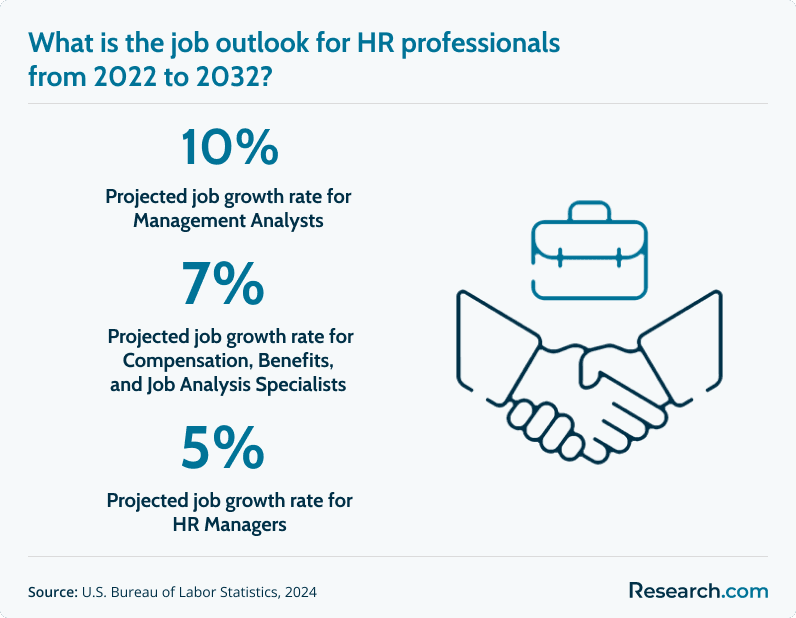
According to various data from the U.S. Bureau of Labor Statistics, management analysts enjoy the highest job outlook at 10%, while usual HR positions have a projected growth rate between 2% and 7% from 2022 to 2032. However, HR professionals who specialize in other areas can anticipate even higher employment growth.
For instance, operations research analysts are expected to see a 23% increase in job opportunities, financial managers will experience a 16% rise, and market research analysts can look forward to a 13% growth in employment.
Overall, the job outlook for HR professionals is promising. This is driven by a combination of evolving workforce needs, technological advancements, and an increasing emphasis on employee well-being and organizational culture. As organizations recognize the critical role that human resources play in driving business success, the demand for skilled HR professionals is expected to grow steadily over the coming years.
Embrace Changes to Build Better Workplaces
Digital transformation will continue to remold industries, bringing new scopes of work and evolving expectations. This shift will also continue to influence how companies and HR leaders adapt to meet workers’ needs for growth and satisfaction.
Our discussion, enriched by the experts’ insightful advice, helps aspiring HR professionals grasp challenges, global benchmarks, diverse perspectives, and advanced strategies. By embracing these insights, you can position yourself as a strategic partner within your potential organization.
Furthermore, with a comprehensive HR degree, you train yourself to become a human resource professional who not only manages employee relations but also fosters a work culture that thrives on innovation, promotes good and inclusive practices, and commits to lifelong development.
What additional qualifications can set HR professionals apart?
Advancing an HR career often hinges on obtaining specialized credentials that validate your expertise and signal a commitment to ongoing professional growth. Pursuing industry-recognized certifications—such as those offered by SHRM or HRCI—can enhance your strategic decision-making capabilities and reinforce your leadership profile in complex organizational environments. Moreover, targeted short courses in areas like change management, legal compliance, and digital HR technologies equip professionals with niche skills that differentiate them in competitive markets. For those seeking accelerated academic credentials, consider exploring the quickest masters degree online to rapidly broaden your operational and strategic expertise.
How can HR professionals stay current with rapid digital advancements?
HR professionals must proactively integrate emerging digital tools into their everyday practices. Regular engagement with specialized training, industry webinars, and online workshops ensures that advanced HR software and analytical methods remain integral to everyday operations. Embracing targeted programs, such as quick degrees online that pay well, allows for continuous skill enhancement while reinforcing a strategic approach to technology adoption. Moreover, setting up peer reviews and consultation sessions with tech-focused professionals can help refine usability strategies and maintain an agile response to evolving digital trends.
More Information About the Experts We Interviewed
Chester Spell, Ph.D.

As a renowned professor and lecturer, Dr. Spell provides his expertise on behavioral health and well-being within organizational settings, particularly psychological health. His extensive research and scholarly work, which have been featured in different esteemed journals, delve into organizational justice, employee mental health, and the relationship between group social structures and health. At Rutgers, Dr. Spell teaches several human resources and organizational management courses to both undergraduate and MBA students. Additionally, he developed a course, Employee Health and Well-being, as part of the Business Leader Development Program. He earned his Ph.D. in Management (Organizational Behavior) from the Georgia Institute of Technology.
Thomas Kochan, Ph.D.

Dr. Kochan is a professor of work and employment and a member of distinguished national and international associations for human resources and industrial relations. Focusing on behavioral and policy sciences, he highlights the need for significant improvements in the quality of employee and labor-management relations. In addition, his research underscores the importance of updating America’s work and employment policies. Dr. Kochan’s work is featured in several publications, news articles, and magazines; his most recent book (mentioned above) outlines a comprehensive guide for the roles workers and leaders must assume to achieve prosperity. He has an M.S. and a Ph.D. in Industrial Relations from the University of Wisconsin.
Rick Hackett, Ph.D.

Dr. Hackett is a Fellow of the Canadian Psychological Association and has served as President of the Canadian Society for Industrial and Organizational Psychology, Associate Editor of the Journal of Business & Psychology, and Editor-in-Chief of the Canadian Journal of Administrative Sciences. He specializes in executive and managerial assessment, leadership, HR recruitment, testing and selection, work attitudes, absenteeism, and performance assessment. Over the past 30 years, Dr. Hackett has provided consulting services to numerous companies. He has also led global executive workshops on effective team leadership, HR management best practices, and HR resource planning and utilization. He earned his Ph.D. in Industrial and Organizational Psychology from Bowling Green State University. He is a senior author of “Recruitment and Selection in Canada”, now in its 8th edition.
Peter Cappelli, Ph.D.

A fellow of the National Academy of Human Resources, Dr. Cappelli was named by HR Magazine as one of the top five most influential management thinkers and as one of the 50 leading figures in the field of aging by NPR. He is also a Research Associate at the National Bureau of Economic Research and has provided advisory services to the Kingdom of Bahrain and Singapore’s Ministry of Manpower. Dr. Cappelli is a regular contributor to The Wall Street Journal, writes a monthly column for HR Executive magazine, and has published recent research on performance management, agile systems, and hiring practices in the Harvard Business Review. He holds a Ph.D. in Labor Economics from Oxford University and an honorary doctorate from Liege University, Belgium.
Cornelia Gamlem, S.P.H.R., M.A.

Cornelia Gamlem is dedicated to helping organizations cultivate respectful and inclusive workplaces. Drawing on her extensive HR experience from a Fortune 500 IT services company and a management consulting firm, she has provided expertise in employee relations, workplace diversity, and HR strategies. In 2012, she co-authored The Big Book of HR with Barbara Mitchell, marking the beginning of a successful collaboration that has produced six additional books, including the award-winning The Manager's Answer Book. As the president of GEMS Group, a management consulting firm, Gamlem focuses on strategic HR initiatives to support businesses in addressing people-related challenges. She holds an MA in Human Resource Management from Marymount University and is certified as a Senior Professional in Human Resources (SPHR) by the Human Resources Certification Institute (HRCI).
References:
- Edelman. (2023). Trust barometer special report: Trust at work. https://www.edelman.com/trust/2023/trust-barometer/special-report-trust-at-work
- Indeed. (2024). 2024 workforce insights report. https://www.indeed.com/job-search-services/workforce-insights-report
- Randstad. (2024). Workmonitor: The voice of talent in 2024. https://www.randstad.com/workmonitor
- Seenit. (2022). The state of employer brand 2022. https://www.seenit.io/reports-ebooks/the-state-of-employer-brand-2022
- World Economic Forum. (2024, January 9). The rise of global digital jobs. https://www.weforum.org/publications/the-rise-of-global-digital-jobs