Interview with a Healthcare Management Expert: Answering Students' Questions

Co-Founder and Chief Data Scientist
Managing healthcare facilities comes with plenty of moving parts, with healthcare managers overseeing operations, finances, staff, and patient care to ensure that all systems run efficiently. Many of the 509,500 healthcare administrators in the United States perform their responsibilities well, but there is a lot of room for growth.
One of the foremost growth areas is the use of data and optimizing operations. By employing a data-driven approach, healthcare managers can help facilities enhance operational efficiency, shorten process times, lower costs, and improve patient outcomes.
To obtain first-hand information regarding systematic improvement in healthcare management, I reached out to a seasoned expert in the field of total quality management and data analytics, Jay Arthur. Author of Lean Six Sigma Demystified and founder of KnowWare International, Inc., Arthur weighs in on various aspects of management and technology in healthcare.
- What are the most critical skills that healthcare management students should focus on developing during their studies to succeed in the current job market?
- What current trends in the healthcare management industry should students be aware of, and how can they leverage these trends to their advantage?
- How is technology transforming the healthcare management sector, and what tech skills should students focus on acquiring?
- What role do internships and practical experiences play in the education of a healthcare management student, and how can students maximize these opportunities?
- What advice would you give to healthcare management students about preparing for the transition from academia to the professional world?
- What books, courses, or resources would you recommend to healthcare management students to enhance their learning and exposure?
- How can an accelerated healthcare management degree online boost my career prospects?
- How does a student choose the best healthcare management program?
- What are the most significant challenges facing healthcare managers today?
- What professional certifications can accelerate a healthcare manager’s career?
- Is an affordable entry-level degree beneficial for a healthcare management career?
- What strategies can healthcare managers adopt for effective change management?
- Can a Bachelor's Degree Provide a Strong Foundation for Healthcare Management Success?
- How much do healthcare managers earn?
- What is the job outlook for healthcare managers?
- What career advantages do 1 year master's programs online offer for healthcare management?
What are the most critical skills that healthcare management students should focus on developing during their studies to succeed in the current job market?
For healthcare management students, including those taking up the cheapest MHA programs, to effectively run medical facilities, they need to develop diverse competencies, including leadership, healthcare operations, strategic planning, financial skills, and communication skills. These are a given, so Arthur opted to focus on a sometimes overlooked area—data-driven practice to manage outcomes.
- Arthur: "While there are many skills, a key requirement [to learn] will be using empirical outcomes charts (e.g., control charts, histograms, and Pareto charts) for Evidence-based Practice (EBP). This is key for Magnet certification. Dr. Don Berwick has been imploring attendees to the Institute for Healthcare Improvement (IHI) to pledge allegiance to science and evidence (control charts, histograms, and Pareto charts). So far, not much has changed in 20 years. Process improvement to reduce costs will continue to be essential. According to the IHI, the U.S. healthcare wastes one trillion dollars a year. IHI’s goal [sic] is to cut that by $500 Billion by 2025. Not much progress has been made."
Arthur stresses that dedication to evidence-based practice maximizes the resources, with healthcare systems optimized to yield desired outcomes with the least friction possible.
The chart below indicates the most common skills indicated on the resumes of healthcare managers in the US.
What current trends in the healthcare management industry should students be aware of, and how can they leverage these trends to their advantage?
Many of the trends surrounding healthcare involve technology, as solutions like AI, machine learning, and AR are being leveraged by more and more facilities. Such trends support the more efficient education of students in healthcare courses, including cheap online medical billing and coding courses.
Arthur goes deeper and presents the Lean Six Sigma methodology as a way to manage tech solutions and healthcare operations.
- Arthur: "Virginia Mason has used Lean methods to increase nurse time with patients from 30% to 90%. Lean Six Sigma methods and tools can turn any healthcare facility into a money-making, not a money-losing, facility that serves more patients more effectively and efficiently."
In addition, the use of Lean Six Sigma in its coronary operations has led Stanford Hospital to reduce costs by 40% and mortality rates by 3.4%. Similarly, the Charleston Area Medical Center applied the methodology to its surgical supply chain, resulting in savings of about $1 million.
How is technology transforming the healthcare management sector, and what tech skills should students focus on acquiring?
The use of automation in management solutions is not only prevalent in retail and manufacturing; the trend has reached the healthcare sector, helping various healthcare facilities streamline their operations. Arthur doubles down on this movement, saying, "[The] automation of almost everything will continue, freeing clinicians to spend more time with patients. AI will automate diagnosis, treatment, and follow-up. Telemedicine continues to expand."
A 2023 survey discovered that 74% of hospitals in the United States actively automate their revenue cycles while 78% have used some form of automation on their revenue cycle operations. Another survey found that the adoption of hospital revenue cycle automation has increased by 12%. This is only one area of healthcare.
The use of automation and health informatics is also seeing far-reaching benefits in other areas, as the chart below indicates.
What role do internships and practical experiences play in the education of a healthcare management student, and how can students maximize these opportunities?
By actively pursuing internships and practical experiences, healthcare management students, including students of the cheapest online MHA programs, can greatly improve their education, acquire essential skills, and prepare for successful careers. As Arthur points out, these opportunities also help students confirm their chosen field of study.
- Arthur: "Book learning only goes so far. Working in healthcare facilities is essential. Our grandson was thinking of a career in medicine. His other grandfather, a cardiologist, got him into an operating room. Jake decided medicine wasn’t a path he wanted to take."
Moreover, practical experiences help students develop the skills they would need to excel in the field since these activities simulate some of the work done by healthcare administrators.
According to 2024 data from Zippia, the most common skills of healthcare administrators based on their appearance on professionals' resumes are patients (26.3%), patient care (8.5%), healthcare services (6.4%), home health (6%), mental health (5.7%), vital signs (3.6%), and HIPAA (3.3%).
What advice would you give to healthcare management students about preparing for the transition from academia to the professional world?
Transitioning from the classroom to the workplace can be a challenge since jobs are more about completing tasks and less about ruminating on theories and principles. Not all employers are comprehensive with onboarding and some incorporate lengthy and complex systems that newcomers will have to adjust to.
- Arthur: "You want to help people, but it takes a lot of administrative crap [sic] to get that done. Find ways to simplify, streamline, and optimize every aspect of the work. Expect resistance. Healthcare changes slowly, glacially. Estimates are it takes 17 years for evidence-based practice to be adopted."
Arthur underscores the importance of optimizing healthcare management workflows amid headwinds that one may face. Automation has been gaining ground in healthcare management and other industries since, according to research, optimizing 50% to 70% of one's tasks can result in annual run rate cost efficiencies of around 20% to 35%. This is why healthcare management students and learners from affordable online public health degree programs should learn about the latest software solutions for healthcare.
What books, courses, or resources would you recommend to healthcare management students to enhance their learning and exposure?
Ideally, students of healthcare management and online DNP programs should expand their skills and knowledge by consuming various media outside their classes. They do not need to look any further than our distinguished guest, who is an author of a Lean Six Sigma publication and is a total quality management expert.
- Arthur: "Students have found my book, Lean Six Sigma for Hospitals (2nd) to be useful. Students can download my free ebook, Agile Process Innovation from QIMacros. Students can take my free Lean Six Sigma Yellowbelt training."
Besides these, students can read books on healthcare management and healthcare financial management, pursue certifications like Fellow of the American College of Health Care Executives (FACHE) or Certification in Health Care Quality Management (CHCQM) to boost their qualifications, listen to podcasts related to healthcare, and join professional associations.
In doing so, they can advance their skill sets and potentially fast-track their career growth when they graduate. Interestingly, the knowledge about Lean Six Sigma is also applicable to students of 12 month MBA online programs and other major disciplines.
How can an accelerated healthcare management degree online boost my career prospects?
Pursuing an accelerated healthcare management degree online can fast-track advancement by condensing intensive coursework into a shorter time frame while emphasizing pragmatic skill development. This approach equips professionals with up-to-date management techniques and technological proficiencies that meet the evolving demands of the healthcare industry, thereby enhancing immediate practical application and leadership readiness in dynamic work environments.
How does a student choose the best healthcare management program?
When choosing a healthcare management or administration degree, students should evaluate the program's accreditation status, curriculum, learning formats, and the expertise of its faculty. In doing so, they can enroll in a program that will yield the desired outcomes.
Let us go through each major consideration:
- Accreditation: Accreditation ensures a healthcare administration program meets industry standards and is essential for one to become a licensed professional. Look for programs accredited by reputable bodies like CAHME and regional accrediting organizations.
- Curriculum and Specialization: A strong program covers core healthcare management subjects such as law, ethics, finance, and management. If you have a specific interest, like healthcare informatics or policy, seek programs offering specialized courses or electives.
- Faculty Expertise: The program's faculty should possess strong academic credentials and industry experience. Their knowledge and connections can significantly enhance your learning.
- Learning Format: Consider your lifestyle when choosing between on-campus, online, or hybrid programs. Online options offer flexibility, while on-campus programs provide more in-person interaction.
What are the most significant challenges facing healthcare managers today?
Healthcare managers confront multifaceted challenges including meeting stringent regulatory standards, managing escalating operational costs, and integrating evolving digital technologies into existing workflows. Balancing administrative duties with the need for continuous innovation often requires rapid adaptation and strategic investment in workforce training. In addressing these issues, targeted educational opportunities—such as those provided by cheap online schools that accept financial aid—can serve as a practical resource for acquiring the specialized skills necessary to navigate an increasingly complex healthcare environment.
What professional certifications can accelerate a healthcare manager’s career?
Healthcare managers aiming to stand out in a competitive market should consider targeted certifications that validate expertise in areas such as data analytics, operational efficiency, and regulatory compliance. These credentials not only enhance professional credibility but often open the door to advanced opportunities and improved compensation packages. Additionally, specialized certifications equip professionals with evolving skills that align with the digital transformation of healthcare management. For further insights on career-enhancing certifications, explore what certificates make the most money.
Is an affordable entry-level degree beneficial for a healthcare management career?
Pursuing an accessible, quality entry-level degree can establish a strong foundation in healthcare administration without incurring excessive costs. Many aspiring healthcare managers start with programs that deliver essential coursework in health systems, operational processes, and regulatory standards. Such programs not only provide fundamental industry knowledge but also facilitate smoother transitions into advanced studies and professional certifications. For example, obtaining a cheap associate degree online can serve as a cost-effective stepping stone toward more comprehensive degrees, equipping graduates with practical skills and early exposure to the healthcare landscape.
What strategies can healthcare managers adopt for effective change management?
Healthcare managers can implement structured change management frameworks to navigate evolving operational landscapes. Emphasizing clear communication, stakeholder engagement, and data-supported progress monitoring helps mitigate resistance to change and ensures sustainable improvements. In addition, leveraging cross-departmental collaboration and digital solutions allows for timely adjustments and process optimization. Investing in specialized training and certifications can further enhance these capabilities, as seen with programs offered by top online degrees that pay well.
Can a Bachelor's Degree Provide a Strong Foundation for Healthcare Management Success?
An undergraduate program in healthcare management can offer targeted instruction in operational efficiency, financial oversight, and strategic communication, delivering a practical grounding for future leadership roles. Focused bachelor's curricula often integrate core management principles with emerging digital competencies, ensuring graduates are prepared to navigate evolving healthcare landscapes. In many cases, programs designed for streamlined entry and success, such as easy bachelor degrees, provide a focused pathway that complements advanced studies and professional certifications without redundancy.
How much do healthcare managers earn?
According to 2024 data from the United States Bureau of Labor Statistics (BLS), the average annual salary of healthcare managers in the country is $134,440 while their median annual salary is $110,680. These figures go even higher if these professionals work in high-demand industries.
The top-paying industries for healthcare managers, based on average annual salary, are wholesale trade agents and brokers ($254,660), merchant wholesalers ($233,160), pharmaceutical and medical manufacturing companies ($231,070), scientific research and development services ($228,170), and navigational, measuring, and electromedical instruments manufacturing companies ($218,900).
What is the job outlook for healthcare managers?
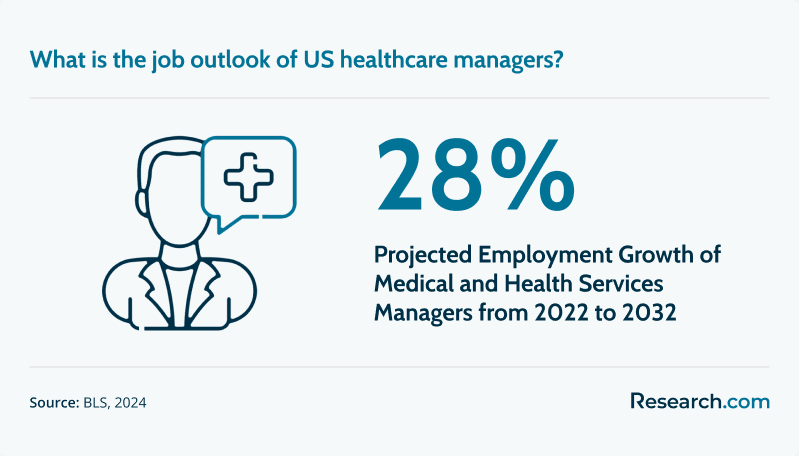
According to data from the BLS, the employment growth of health and medical services managers from 2022 to 2032 is a staggering 28%, dwarfing the national average of 3%. This shows that healthcare managers enjoy high demand in the professional realm.
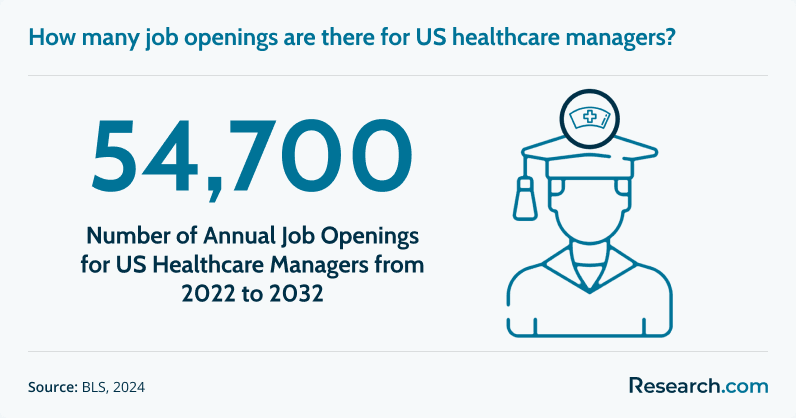
Graduates can find jobs from the 54,700 annual openings for healthcare managers in the given period. There are 509,500 health and medical services in the United States, as of 2022, and this will increase to 654,200 by 2032. Pursuing certifications and mastering Lean Six Sigma, which Arthur advocates, will help graduates land prestigious, high-paying roles.
The Digitalization of Healthcare Management
As healthcare management continues to evolve, the integration of technology, particularly in areas like automation and health informatics, is reshaping the industry. The ability to leverage these advancements effectively will differentiate successful healthcare managers from their peers. Today's healthcare management demands that professionals not only master traditional skills such as leadership, strategic planning, and financial management but also embrace emerging trends like data-driven decision-making and technological innovation.
The expertise of our invited guest, Jay Arthur, highlights the critical role of evidence-based practices and Lean Six Sigma methodologies in optimizing healthcare operations. These tools enable healthcare managers to streamline processes, reduce costs, and enhance patient outcomes, all of which are essential in a healthcare landscape that is becoming increasingly complex and data-centric. In embracing the shift to data-driven technological solutions, healthcare managers will be better equipped to lead healthcare facilities in delivering high-quality care while adapting to the ongoing changes in the industry.
What career advantages do 1 year master's programs online offer for healthcare management?
Pursuing an accelerated master’s program can equip healthcare management professionals with concentrated learning that aligns with the fast-changing demands of the industry. A 1-year format enables students to rapidly assimilate advanced concepts such as strategic planning, digital transformation, and operational efficiency, positioning them to meet the dynamic challenges of healthcare administration. This model minimizes time-to-degree and opportunity costs while delivering up-to-date, practice-oriented skills that can immediately contribute to the optimization of healthcare facilities. Additionally, the targeted curriculum offered in 1 year master's programs online helps instill leadership competencies and a proactive approach toward technological integration, giving graduates a competitive edge in a market characterized by robust growth and innovation.
More Information About The Expert We Interviewed:
Jay Arthur

Jay Arthur, founder of KnowWare International, Inc., is a seasoned expert in Lean Six Sigma, total quality management (TQM), data analysis, and data visualization. He is widely recognized for his ability to simplify complex processes, teaching organizations how to solve operational issues like delays, defects, and deviations using Excel and the Magnificent Seven Tools of Lean Six Sigma. Arthur has authored several influential books, including Lean Six Sigma Demystified, and developed the QI Macros software, which enhances Excel's capabilities for statistical process control (SPC).
References:
- BLS (2024, April 3). 11-9111 Medical and Health Services Managers. BLS
- BLS (2024, April 17). Medical and Health Services Managers. BLS
- LaPointe, J. (2023, December 27). 74% of Hospitals Use Some Revenue Cycle Automation. TechTarget
- Mittal, M. (2020). RPA: A New Paradigm of Increased ROI & Saved Costs. SG Analytics
- Northeastern University (2023, July 26). The Impact of Health Informatics on Patient Outcomes. Northeastern University
- University of Massachusetts Amherst (2023, April 11). Six Sigma in Healthcare: Concepts, Benefits and Examples. University of Massachusetts Amherst
- Zippia (2024, June 25). Health Care Administrator skills for your resume and career. Zippia