Interview with Data Science Experts: Answering Students' Questions About Data Science Trends

Co-Founder and Chief Data Scientist
The volume of data generated globally is growing exponentially. This much data holds immense potential, but it requires skilled professionals to extract valuable insights and translate them into actionable strategies. Data scientists are the key to unlocking this potential. Based on the American Statistical Association data, the number of bachelor’s degrees in data science jumped to 897 in 2022, from 165 in 2021.
For this article, I have interviewed two authorities in the field of data science. Both are carving their unique mark in the field of data science. Amidst the dizzying influx of generative AI capabilities, these data scientists are keeping a tight grip on their belief that it is possible to explore the possibilities of AI while staying within clearly defined boundaries.
These scientists believe they have a sacred responsibility to use AI tools as instruments in promoting social good. They refuse to be blinded by the AI sparkle. Instead, these data scientists are on a mission to promote the responsible use of AI and have it deliver value.
Experts We Interviewed
- Karla Saldana Ochoa, Ph.D.: Assistant Professor, School of Architecture, Director at SHARE Lab, University of Florida
- Michael L. Brodie, Ph.D.: DASLab, School of Engineering and Applied Sciences, Harvard University
- What core skills do you believe are essential for a successful career in data science, and how should students go about acquiring them?
- What types of internships, projects, or real-world experiences would you recommend students seek out during their studies?
- How important is it for data science students to have knowledge in fields outside of data science, such as business or social sciences?
- What emerging trends and technologies should data science students be aware of to stay ahead in the field?
- What advice would you give to computer science students about preparing for the transition from academia to the professional world?
- What resources (such as galleries, workshops, or community groups) should data science students take advantage of to enhance their learning and exposure?
- What challenges do data science students face and how can they overcome them?
- Can data science certifications accelerate career growth?
- Is an advanced degree essential for success in data science?
- What are the most common data science specializations?
- Can alternative education paths support a thriving data science career?
- Can accelerated academic programs fast-track your data science career?
- Is an Accelerated Bachelor's Program the Right Choice to Launch Your Data Science Career?
- How to choose a data science specialization?
- How to build a career in data science?
- Is pursuing a doctoral degree essential for career advancement in data science?
What core skills do you believe are essential for a successful career in data science, and how should students go about acquiring them?
Data science today is considered one of the highest paying bachelor degrees. Navigating the fascinating field of data science depends on you having the correct skill set. Here, data science experts share the core skills you will need to succeed in this field and offer guidance on how to acquire these essential skills.
- Dr. Brodie: Data science is as broad a field as science. Success in data science, as in science, requires understanding data science principles and their application in disciplines. Students should select a discipline, such as biology, that they are passionate about and develop discipline-specific knowledge with which understand data science problem-solving. Students should seek get guidance on such plans from data science and domain experts.
Statistics provides the framework for understanding data, while coding equips you with the tools to manipulate, analyze, and extract meaningful insights from that data. As Dr. Ochoa emphasized:
- Dr. Saldana Ochoa: When it comes to core skills for a successful career in data science, statistics and coding are paramount. These two skills form the foundation of data science and are essential for students to focus on and acquire.
These foundational skills are the building blocks for success in any data science endeavor.
Acquiring the essential skills to become effective data scientists requires self-discipline. Consistency is crucial. The Data Science Skills Survey Report 2024 reported that 55.7% of data science professionals spend a significant amount of time weekly to upskill, while others take the accelerated computer science degree.
What types of internships, projects, or real-world experiences would you recommend students seek out during their studies?
Data science students should actively seek out internships, projects, and real-world experiences for several compelling reasons. One study conducted at the University of Southern California in 2022, which investigated data science students, found that 52% had a hard time understanding problems to be solved during internships. This is the reason why students should take advantage of real-world opportunities.
These experiences bridge the gap between theoretical knowledge and practical application. Textbooks and lectures provide a solid foundation, but real-world data is messy, complex, and requires different approaches. This is what our experts emphasized when asked about the importance of practical learning experiences.
- Dr. Brodie: There is no theory with which to understand data science. It must be learned by understanding its nature and workflow and applications of that knowledge in practice, solving toy problems first then real, practical problems. Start by establishing relationships with real-world data science projects, not just as a potential intern but as a data science student seeking real-world knowledge.
- Dr. Saldana Ochoa: Starting with a small project based on personal interests is valuable. It allows students to learn from mistakes, invest more time, and not feel pressured to get it right the first time. This approach fosters a deeper understanding and a more enjoyable learning experience.
While classrooms primarily focus on theoretical concepts, real-world experiences expose students to messy, real-world data. Through hands-on and practical experiences, students learn to apply theoretical knowledge to practical problems.
Internships and projects expose students to this real-world data, allowing them to hone their technical skills in a practical setting. These experiences help students build a strong portfolio that showcases their capabilities to potential employers. Aside from pursuing the cheapest data science masters, internships and projects can provide valuable networking opportunities, allowing students to connect with professionals in the field and gain valuable insights into potential career paths.
How important is it for data science students to have knowledge in fields outside of data science, such as business or social sciences?
Data science students should not limit themselves solely to technical skills, such as those offered by an affordable cyber security degree online. A broader knowledge base can be advantageous because data does not exist in a vacuum.
For instance, business knowledge helps students grasp the bigger picture – the goals, challenges, and specific needs of an organization. Dr. Brodie and Dr. Ochoa underscore that data science projects rarely exist in isolation. Data scientists often collaborate with teams from marketing, finance, or product development.
- Dr. Brodie: Knowledge and expertise in fields outside data science are essential in learning and understanding this particular field. This suggests two career choices—a career in a discipline with data science expertise, or a career in data science with expertise in one or more disciplines. In a data-driven world, having a data science background equips you to understand and leverage data effectively. This provides you with a competitive edge in a job market where data literacy is becoming increasingly important.
Data storytelling is a core skill in data science. You learn to present complex findings in a clear, concise, and compelling way, using visualizations to make your point. This translates well to any field because communication is important. As Dr. Ochoa advised students:
- Dr. Saldana Ochoa: Knowing more about their chosen field is of great importance because they will know what questions to ask and propose data visualization methods that will have a greater impact on the community they are working with.
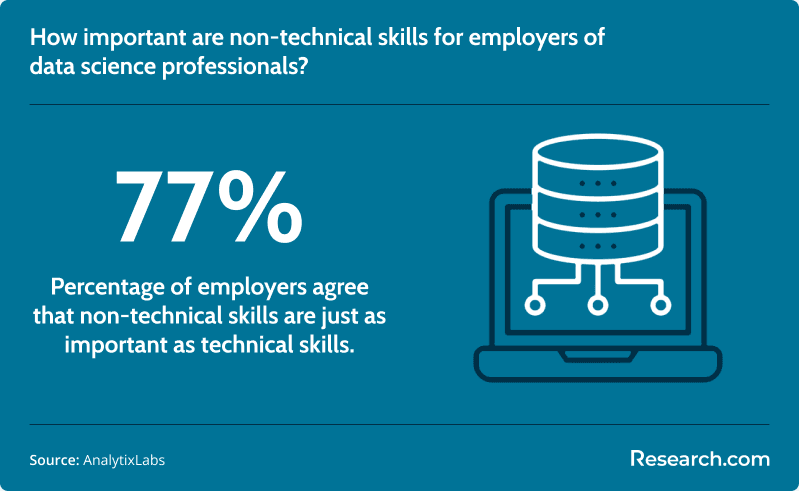
The beauty of data science lies in its diverse applications. By understanding other fields, students can identify innovative ways to use data science to solve problems they might not have otherwise considered. Still, consider that 77% of employers agree that nontechnical skills are just as important as technical skills as reflected in the survey 12 Key Data Scientist Skills in 2021. This broader knowledge opens doors to exciting and unexpected career paths aside from the typical college majors.
What emerging trends and technologies should data science students be aware of to stay ahead in the field?
The ability to adapt and learn new things is crucial for any successful data scientist. By familiarizing themselves with emerging trends, students develop the agility to embrace new technologies and integrate them into their existing skills. For this particular topic, Dr. Brodie emphasized the importance of having clearly defined career objectives, while Dr. Ochoa cited two crucial skills every data scientist should possess to stay ahead in the field.
- Dr. Brodie: Success as a data science researcher or practitioner requires investing considerable resources to keep up with developments relevant to their work and plans. Students must learn enough about data science to define an initial focus and pursue it passionately. It is impossible to cover everything. They have to develop research methods to discover and understand emerging trends and technologies.
Data visualization allows students to translate complex data insights into clear and concise visuals, while machine learning can uncover hidden patterns and relationships within complex datasets. Dr. Saldana Ochoa believes that "Two core technologies are machine learning and data visualization." Both are complementary skills that empower data science students to tackle complex problems, extract valuable insights, and communicate their findings with clarity and impact.
Employers value data scientists who are not only technically skilled but also possess a forward-thinking mindset. Demonstrating awareness of emerging trends showcases a student's proactive approach and positions them as valuable assets for companies seeking innovation.
The ability to adapt and learn new things is crucial. A Comprehensive Market Study of Most In-Demand Skills in 2024 revealed that among hiring managers, 80% believe that domain knowledge is crucial for data science professionals. By familiarizing themselves with emerging trends, students develop the agility to embrace new technologies and integrate them into their existing skills.
What advice would you give to computer science students about preparing for the transition from academia to the professional world?
While a computer science degree, including the affordable online software engineering degree, equips you with a strong foundation, the academic and professional realms of computer science function quite differently.
Academia emphasizes theoretical knowledge and deep dives into specific problems. The professional world prioritizes practical application, solving real-world problems efficiently, and meeting deadlines. Both Dr. Brodie and Dr. Ochoa agree that keeping one’s curiosity and hunger for learning is crucial, as well as having the right mentors.
- Dr. Brodie: These transitions require a research method to identify and understand opportunities, in this case in the professional world. Students facing this type of transition should identify and understand those that appeal to them most, then gain direct experience and knowledge from real-world opportunities. It helps to set professional career objectives to focus your education and internships. Taking these into account, they have to explore and evaluate multiple career paths based on what they are good at and their passion.
In addition to being intentional in gaining experience, our experts also suggest that students seek mentors. Also, they should strive to learn as much as they can from their professors. As for Dr. Saldana Ochoa, she reminds every student that "You can learn from your mentors on computing science and all the professors you meet during your studies."
Professors and mentors can equip data science students with a well-rounded skillset that bridges the theoretical foundation of academia with the practical demands of the professional world. By integrating real-world case studies and projects into the curriculum, professors expose students to the types of problems and messy data they will encounter in a professional setting.
Universities primarily focus on technical skills. However, professional success hinges on strong soft skills like communication, teamwork, problem-solving under pressure, and the ability to explain complex technical concepts to non-technical audiences. Among the core challenges faced by employers is the lack of soft skills as identified by 68.4% of companies as reported by Analytix Labs in 2024.
What resources should data science students take advantage of to enhance their learning and exposure?
The field of data science is constantly evolving with new tools, techniques, and best practices emerging all the time. Data scientists should not stop learning after graduation or landing their first job. Workshops and communities provide opportunities to learn from experts and peers, ensuring data scientists stay current in this rapidly changing landscape.
Here is what our experts suggest:
Dr. Brodie: Data science is a broad field with diverse applications. Choosing resources focused on specific industry applications or areas of interest helps students develop a targeted skillset for their desired career path. Identifying and selecting learning resources requires research such as defining your goals and what you need to learn to reach them. I have often used free tutorials by data science technology leaders including Microsoft, Google, Amazon, Anthropic, and OpenAI.
Dr. Saldana Ochoa believes that by actively engaging with podcasts and conferences, data science students can significantly enhance their learning experience. This will broaden their exposure to the field, and gain valuable knowledge and connections that will prove instrumental in their data science journey.
Listening to passionate data scientists discuss their work and experiences can be highly motivating for students. Many data science podcasts have active online communities where students can connect with other learners, ask questions, and share their own experiences.
Dr. Brodie further reminds students to check all the available resources and only choose those that provide value. He adds, “I have observed the phenomenon of overnight data science experts. Most companies that offer AI products and services offer online tutorials on topics related to their product. Such tutorials are free but are intended to market their products.”
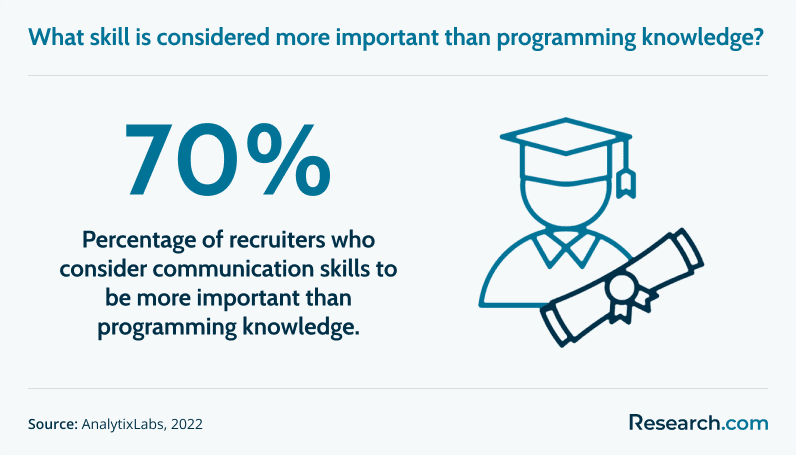
Among recruiters, Analytix Labs reported that 70% consider communication skills to be more important than programming knowledge. Thus aside from enhancing technical skills, data scientists should also ensure that their professional development touches upon every crucial skill.
What challenges do data science students face and how can they overcome them?
Data science education presents unique challenges beyond mastering technical skills. Students often struggle with keeping pace with rapidly evolving technologies while balancing theoretical knowledge with real-world applications. Further, the absence of structured guidance and mentorship can hinder progress. Integrating interdisciplinary studies, such as data protection and network security, can bridge these gaps. Pursuing complementary educational opportunities—for example, an affordable cyber security degree online—can equip future data scientists with critical security insights and broaden their skillset. Adopting a proactive learning approach, engaging in collaborative problem-solving communities, and leveraging targeted certification programs are key strategies to overcome these challenges and build a resilient career in data science.
Can data science certifications accelerate career growth?
Data science certifications can demonstrate specialized expertise beyond academic credentials, validate practical skills, and differentiate professionals in a competitive job market. Earning industry-recognized certifications shows a commitment to ongoing learning and adaptability, helping data scientists quickly align with evolving technologies and best practices. With targeted programs designed for measurable outcomes, individuals can transition efficiently into roles that require niche competencies and increased trust from employers looking for professionals ready to contribute immediately to innovative projects. Additionally, pursuing high paying certificate jobs through focused certification programs creates further opportunities for career advancement and higher earnings.
Is an advanced degree essential for success in data science?
Advanced education in data science can accelerate career progression by offering in‐depth theoretical frameworks and specialized practical skills. Pursuing a master’s degree often provides exposure to complex algorithms, large-scale data modeling, and cutting-edge AI methodologies that complement real-world experience. Such programs not only enhance technical proficiency but also facilitate research opportunities and industry-aligned projects, positioning professionals as competitive candidates in a rapidly evolving market. Evaluating an advanced degree involves aligning long-term career objectives with the academic rigor and innovative curriculum offered by focused programs such as the easiest online masters programs to get into.
What are the most common data science specializations?
The data science field offers a vast array of specializations, each focusing on a specific aspect of the data lifecycle. Today, the focus on generative AI augmenting human creativity is emerging. Some of the most sought-after specializations in data science include:
Data Engineering and Warehousing: These specialists are the backbone of data science, building and maintaining the infrastructure that stores, processes, and manages massive datasets. They ensure the data is clean, accessible, and secure for analysis.
Machine Learning and Deep Learning: This specialization delves into building and deploying algorithms that can learn from data and make predictions. Machine learning engineers focus on traditional algorithms, while deep learning engineers leverage powerful artificial neural networks.
Natural Language Processing (NLP): Experts in this area bridge the gap between computers and human language. They develop techniques for machines to understand, interpret, and process human language, enabling applications like chatbots, sentiment analysis, and machine translation.
Data Visualization: Data visualization specialists transform complex data into clear and compelling visuals, like charts, graphs, and dashboards. They help communicate data insights to both technical and non-technical audiences.
Business Intelligence (BI): These specialists focus on using data to inform business decisions. They gather data, analyze it to identify trends and patterns, and create reports and dashboards to communicate insights to stakeholders.
Can alternative education paths support a thriving data science career?
Alternative education paths such as bootcamps, vocational programs, and targeted certifications can offer practical, industry-focused training that complements traditional academic routes. Focused programs emphasize gaining hands-on experience with cutting-edge tools and real-world projects, which are essential for immediate application in data science roles. Furthermore, nontraditional learners often combine their flexible learning with professional networking and industry certifications to bridge any skills gap. For example, professionals coming from vocational backgrounds may find that understanding factors like trade school graduate salary can guide their career decisions. These alternative approaches, when strategically chosen, can result in competitive career outcomes and align well with the evolving demands of the industry.
Can accelerated academic programs fast-track your data science career?
In today's dynamic job market, pursuing nontraditional, condensed educational credentials has emerged as a strategic option for aspiring data scientists. Innovative academic models, such as accelerated associate degree programs, focus on delivering practical, industry-relevant skills in a fraction of the time required by conventional degrees. These programs emphasize hands-on learning and real-world applications, enabling students to quickly develop technical proficiencies aligned with immediate workforce needs. By streamlining fundamental coursework and combining it with targeted professional training, accelerated programs offer a flexible pathway that complements advanced degrees and certifications, thereby equipping individuals with the agility to thrive in the rapidly evolving landscape of data science.
Is an Accelerated Bachelor's Program the Right Choice to Launch Your Data Science Career?
Evaluating the value of an accelerated bachelor's degree is critical for aspiring data scientists. An accelerated program offers a streamlined curriculum that blends core technical foundations with real-world applications in a condensed timeframe, enabling students to quickly develop essential competencies. Such programs often incorporate emerging trends and practical skills that align with evolving industry demands, allowing graduates to enter the job market with a competitive edge. For program comparisons and further details, explore our guide to accelerated bachelor's programs online.
How to choose a data science specialization?
Choosing a data science specialization is an important step that can shape your career trajectory. Take into account these factors in choosing your specialization:
Interests and Strengths: What aspects of data science excite you the most? Are you drawn to the intricate algorithms of machine learning, the challenge of wrangling big data, or the art of creating impactful data visualizations? Identify your natural strengths and areas where you are eager to learn and grow.
Industry Demand and Job Market Trends: Research current and projected job market trends in data science. While pursuing your passion is important, aligning your skills with in-demand specializations can increase your employability.
Long-term Career Goals: Consider where you see yourself in the next five to 10 years. Do you envision yourself leading data science teams, specializing in a particular industry, or focusing on research? Choosing a specialization that aligns with your long-term goals will ensure a fulfilling career path.
Emerging Technologies: Explore emerging specializations like artificial intelligence for robotics, natural language processing for healthcare applications, or quantum computing for complex data analysis. Staying ahead of the curve can position you for exciting future opportunities.
How to build a career in data science?
Building a career in data science involves a combination of education, practical experience, and continuous learning.
Foundational Knowledge
While a formal degree (Bachelor's in Data Science, Statistics, Computer Science, or related fields) is a common path, it is not the only one. Online courses, bootcamps, and self-learning resources can equip you with the necessary skills. Develop a strong foundation in mathematics, statistics, programming (Python, R, SQL), and data analysis techniques. Familiarity with data visualization tools is also valuable.
Practical Experience
Build a portfolio of data science projects. You can find publicly available datasets or choose topics that interest you. Seek internships to gain hands-on experience in a professional setting. Contributing to open-source data science projects allows you to collaborate with others, learn from experienced developers, and showcase your skills on a public platform.
Continuous Learning
The data science field is ever-evolving. Dedicate time to staying updated on the latest trends, technologies, and tools. Take advantage of online courses, tutorials, and communities to continuously expand your knowledge and refine your skills. Participating in industry events allows you to network with professionals, learn from experts, and stay abreast of the latest advancements.
Building Your Brand
Create a strong online portfolio showcasing your projects and accomplishments. Actively network with other data science professionals through online communities, meetups, or conferences. Build connections and establish yourself within the data science community. As advised by Dr. Ochoa, part of building your brand is "developing AI applications that underscore the significance of both artificial and human intelligence, recognizing that the two are mutually reinforcing, with AI enhancing human intellectual and physical capabilities." In addition, Dr. Brodie reminds every data science student to "honor the time, commitment, and challenges in developing a successful data science career."
Seed Greater Innovation Through Data Science
The rise of new technologies like AI, machine learning, and big data analytics has created a growing demand for data science expertise. These technologies require skilled professionals to develop, implement, and manage them effectively. Data scientists bridge the gap between technology and business, ensuring these advancements are utilized for maximum benefit.
A developer survey by Jet Brains in 2023 showed that 33% of data science professionals typically analyze transactional data, with 46% using data visualization. Among data science interns surveyed by Wensheng Wu of the University of Southern California, data cleaning, transformation, analytics and visualization are among the most important data science skills for the internships.
The applications of data science are expanding across various sectors like healthcare, retail, environmental science, and social sciences. This broad applicability opens up exciting career paths for individuals with a passion for using data to solve real-world problems. But as advocated by Dr. Brodie and Dr. Ochoa, making a positive impact should be the main goal of every data scientist.
Is pursuing a doctoral degree essential for career advancement in data science?
Advanced education at the doctoral level can equip professionals with the rigorous research skills and theoretical foundation required to tackle emerging challenges in data science. Doctorate programs foster innovation through deep dives into specialized topics, offering unique opportunities for interdisciplinary collaboration and breakthrough research. For those seeking to blend academic inquiry with practical applications in a rapidly evolving industry, considering online doctorate degrees can be a strategic move that enhances credibility, nurtures leadership potential, and broadens the scope of future career opportunities.
More Information About the Experts We Interviewed
Dr. Michael L. Brodie, Ph.D.

Dr. Michael L. Brodie has over 45 years of experience in industrial and research settings, with a focus on databases, artificial intelligence, data science, and multidisciplinary problem-solving. Dr. Brodie is currently a Visiting Scholar at the School of Engineering and Applied Sciences, Harvard University, where he currently works in the DASlab. He served as a Research Scientist in the MIT Data Systems Group from 2013 to 2019. Dr. Brodie is a Canadian-American who has earned a Ph.D. in databases and AI from the University of Toronto and a Doctor of Science (honoris causa) from the National University of Ireland. His primary objective is to apply his expertise to significant opportunities and challenges that have both immediate and philosophical implications.
Dr. Karla Saldana Ochoa. Ph.D.

Dr. Karla Saldana Ochoa is an Ecuadorian architect and programmer who holds a Master of Advanced Studies in Landscape Architecture and a Ph.D. in Technology in Architecture from ETH Zurich. She currently holds the position of Tenured Track Assistant Professor in the School of Architecture at the University of Florida. Additionally, she is affiliated with the AI2 Center, the Center of Latin American Studies, and FIBER. Dr. Ochoa serves as the director of SHARE Lab, a research organization dedicated to creating initiatives that utilize the synergy of artificial intellect and human intellect. She specializes in studying the interaction between artificial intelligence and human intelligence in architectural practices, specifically in the context of building and urban scale.
References:
- Analytics India Magazine (2022). Data Science Skills Survey 2022 by AIM and Great Learning.
- Analytix Labs (2024). Data Science Skills Survey Report 2024: A Comprehensive Market Study of Most In-Demand Skills.
- Burtch Works (2021). 12 Key Data Scientist Skills in 2021.
- MIT Sloan Management Review (2024). Five Key Trends in AI and Data Science for 2024.
- Rexer Analytics (2023). Data Science Survey.
- Wu, W. (2022). University of Southern California: Investigating Internship Experiences of Data Science Students for Curriculum Enhancement.