2027 Psychology Degree Bachelor's-Level ROI Report: Best Career Returns Without Graduate School

Co-Founder and Chief Data Scientist
A psychology bachelor's degree can pay off, but the best returns usually come from business, analytics, HR, training, social services management, and behavioral health support roles rather than licensed therapy jobs. BLS May 2024 wage data show market research analysts and marketing specialists had a $76,950 median wage, making them one of the strongest bachelor's-level paths for psychology graduates. This guide helps students, recent graduates, and career changers compare careers, industries, skills, certifications, and location choices so they can decide whether to work now, upskill, or pursue graduate school later.
Key Things You Should Know
- The highest bachelor's-level ROI for psychology graduates often comes from market research, HR, training, UX research support, sales operations, and people analytics roles where psychology knowledge is paired with data, communication, and business skills.
- BLS May 2024 median wages show several psychology-adjacent roles above many direct-service entry roles, including $76,950 for market research analysts and marketing specialists, $72,910 for HR specialists, and $65,850 for training and development specialists.
- Graduate school is usually necessary for licensed psychologist, counselor, and therapist roles, but it is not always necessary for strong earnings if the student targets high-demand industries, builds technical skills, controls debt, and chooses employers with advancement paths.
- Which Psychology Bachelor's Degree Careers Deliver the Highest ROI Without Graduate School?
- Which Industries Reward Psychology Bachelor's Graduates the Most?
Which Psychology Bachelor's Degree Careers Deliver the Highest ROI Without Graduate School?
The best ROI careers for psychology bachelor's graduates are roles where employers pay for behavioral insight, communication, research literacy, and problem-solving without requiring clinical licensure. ROI means more than salary: it includes tuition paid, debt, time to employment, promotion potential, benefit value, and the opportunity cost of delaying full-time work.
The table below compares practical bachelor's-level options. The salary figures use BLS May 2024 median annual wage data where a close occupational match is available; actual pay varies by city, employer, experience, and whether the role is sales-, analytics-, or compliance-heavy.
| Career path | Why psychology fits | May 2024 median wage | ROI interpretation without graduate school |
| Market research analyst or marketing specialist | Uses survey design, consumer behavior, statistics, and decision psychology | $76,950 | Often one of the strongest returns if the graduate adds Excel, SQL, visualization, and research-methods skills |
| Human resources specialist | Applies motivation, assessment, interviewing, conflict resolution, and organizational behavior | $72,910 | Strong ROI for students who want stable corporate work and can grow into compensation, recruiting, HRIS, or employee relations |
| Training and development specialist | Uses learning theory, behavior change, coaching, and performance feedback | $65,850 | Good ROI when paired with instructional design tools, facilitation experience, and industry knowledge |
| Probation officer or correctional treatment specialist | Uses assessment, case planning, interviewing, behavior monitoring, and community resource coordination | $64,520 | Can provide stable public-sector benefits, but hiring standards, risk exposure, and state requirements matter |
| Substance abuse, behavioral disorder, or mental health counselor roles where a bachelor's is accepted | Uses helping skills, case documentation, group support, and crisis awareness | $59,190 | Can be meaningful work, but full clinical licensure generally requires graduate education and supervised hours |
| Social and human service assistant | Uses client communication, referral coordination, documentation, and advocacy | $44,240 | Fast entry but lower early ROI unless it leads to program coordination, grant support, compliance, or management |
The clearest bachelor's-level ROI pattern is that psychology graduates earn more when they move from "helping only" roles into roles that combine people skills with business operations, data, compliance, or technology. Direct mental health support can be a strong mission fit, but students should not confuse it with becoming a licensed psychologist or therapist; those credentials normally require graduate education, supervised practice, and state licensure.
A common mistake is choosing a psychology major because it "keeps options open" and then graduating without a target role. The stronger strategy is to choose a career cluster by junior year, complete related internships, and build a small portfolio: a research report for market research, a recruiting dashboard for HR, a training module for learning and development, or a case-documentation sample for human services.
Which Industries Reward Psychology Bachelor's Graduates the Most?
Industry choice can change ROI as much as job title. The same psychology graduate may earn very different pay in a nonprofit casework role, a corporate HR role, a healthcare operations role, or a technology-adjacent research role.
The table below shows industries and work settings that commonly reward bachelor's-level psychology skills. Use it to compare where your degree is most likely to translate into higher pay, faster advancement, or stronger benefits.
| Industry or setting | Psychology skills employers value | Best-fit bachelor's roles | ROI notes |
| Technology and digital products | User behavior, survey design, research operations, communication | UX research coordinator, customer insights associate, trust and safety analyst | High upside, but entry is competitive and usually requires a portfolio or analytics skills |
| Healthcare administration and behavioral health organizations | Patient communication, care coordination, documentation, compliance awareness | Care coordinator, behavioral health technician, patient experience analyst | Stable demand, but clinical advancement may require credentials beyond the bachelor's degree |
| Corporate HR and talent management | Interviewing, motivation, assessment, training, conflict resolution | HR specialist, recruiter, learning specialist, employee engagement coordinator | Good ROI when the graduate moves into HRIS, compensation, analytics, or management |
| Market research, advertising, and consumer insights | Research methods, statistics, persuasion, consumer behavior | Market research analyst, marketing specialist, survey analyst | Strong pay potential for graduates who can analyze data and explain findings clearly |
| Government and public safety | Assessment, documentation, interviewing, case planning | Probation officer, program analyst, correctional treatment specialist | Benefits and job stability may improve total ROI even when salary growth is moderate |
| Nonprofit and community services | Advocacy, crisis response, referral coordination, grant support | Case manager, program coordinator, outreach specialist | Mission fit can be high, but ROI improves most when the role includes supervisory, grant, or operations duties |
Students who want the best financial return should compare industries before comparing job titles. For example, "research assistant" in a consumer insights firm may lead to analytics or product research, while a similar-sounding role in a small nonprofit may offer less salary growth but more direct service experience.
The red flag is assuming that psychology-related work must mean therapy or counseling. Many of the best bachelor's-level returns come from applying psychology outside clinical care: improving employee performance, understanding customers, reducing user friction, supporting compliance, or designing better training.
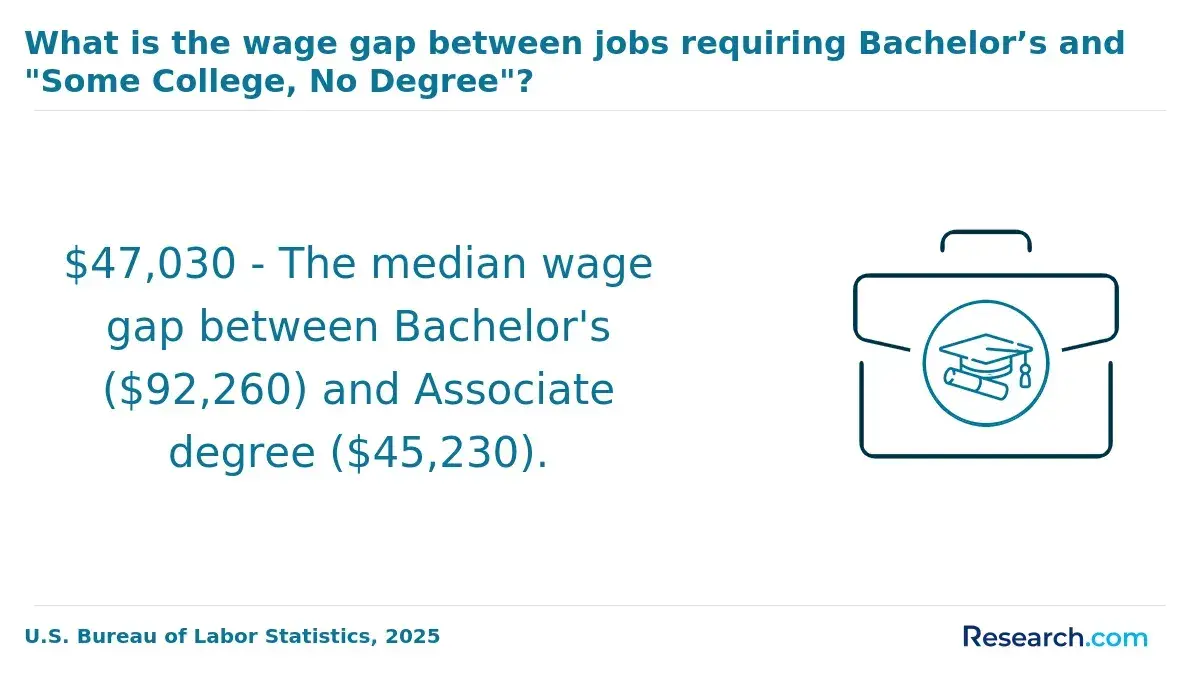
Fast financial return usually means a role that has low additional training costs, hires bachelor's graduates directly, and offers full-time wages soon after graduation. These jobs may not always have the highest long-term ceiling, but they can help graduates start earning, avoid additional debt, and test a field before committing to graduate school.
These entry-level routes are worth comparing because they balance speed, accessibility, and promotion potential differently:
- Recruiting coordinator or HR assistant: A practical option for psychology graduates who understand interviewing, motivation, and workplace behavior; ROI improves quickly if the role leads to recruiter, HR specialist, HRIS, or employee relations work.
- Market research or consumer insights assistant: A strong fast-return path for students who completed statistics, research methods, surveys, or a data project; the best candidates can turn class research into a portfolio sample.
- Behavioral health technician or psychiatric technician: A direct service path for graduates interested in mental health settings; it can build experience, but students should confirm whether the employer requires specific training, background checks, or state-recognized credentials.
- Case manager or social services coordinator: A mission-driven route with quick hiring in community agencies, healthcare organizations, and nonprofits; salary growth improves when the role expands into program coordination, compliance, or supervision.
- Sales development or customer success associate: A business path that rewards persuasion, empathy, and problem-solving; it can produce faster income growth, especially when compensation includes performance incentives.
Students comparing psychology with faster healthcare workforce routes should be honest about timeline and credential requirements. For example, LPN programs are a different kind of investment because they prepare students for a licensed practical nursing pathway, while a psychology bachelor's degree is broader and usually depends on how the graduate packages skills for a specific employer.
The biggest mistake in fast-return planning is accepting the first helping role without checking advancement. Before taking a lower-paid entry job, ask whether the employer promotes bachelor's graduates, pays for certifications, offers tuition support, or has clear internal paths into analyst, coordinator, supervisor, or specialist roles.
Location affects ROI in two ways: what you pay for the degree and what you keep after rent, transportation, taxes, and loan payments. A high salary in an expensive city may not beat a moderate salary in a lower-cost region, especially for graduates with debt.
College Board's 2024 pricing data show average published tuition and fees of $11,610 for in-state public four-year students and $43,350 for private nonprofit four-year students. That gap matters because psychology bachelor's-level salaries vary widely by occupation, so keeping undergraduate costs low can improve ROI even before the first job offer.
The table below shows how location and cost choices can change the financial value of the same psychology degree. Use it as a decision checklist rather than a prediction of exact outcomes.
| Decision factor | Higher-ROI choice often looks like | Lower-ROI risk | How to evaluate it |
| Tuition | In-state public, strong transfer pathway, scholarships, employer tuition support | High-cost program with no clear career plan | Compare total net price, not just sticker price |
| Housing | Living at home, commuting, resident assistant role, lower-cost city | Borrowing heavily for housing in a high-rent market | Estimate monthly rent against expected entry-level take-home pay |
| Job market | Metro areas with HR, healthcare, government, research, or corporate employers | Graduating in a region with few target employers | Search postings before senior year and track required skills |
| Remote and hybrid work | Roles in HR operations, research coordination, customer insights, training support | Assuming all psychology-related jobs are remote-friendly | Check whether entry-level roles require on-site client, patient, or team work |
| Licensure and state rules | Understanding requirements before choosing clinical support roles | Assuming a bachelor's degree permits independent counseling | Verify state and employer requirements for direct service positions |
For many students, the best ROI decision is not moving to the highest-paying city immediately. It may be graduating with less debt, taking a role in a stable regional employer, building portable skills, and moving later when the salary premium outweighs the cost-of-living increase.
A psychology degree becomes more valuable when it is paired with skills employers can immediately use. The strongest bachelor's-level candidates can translate human behavior into measurable business, service, research, or operational outcomes.
These skill clusters tend to raise ROI because they make psychology graduates competitive for higher-paying roles outside traditional direct-service work:
- Data analysis: Excel, basic statistics, SQL, survey analysis, dashboards, and the ability to explain what a dataset means for a decision.
- Research execution: Literature reviews, survey design, interview protocols, usability testing support, consent procedures, and clear research summaries.
- Business communication: Writing concise reports, presenting findings, documenting decisions, and adapting language for managers, clients, and frontline teams.
- HR and organizational skills: Structured interviewing, onboarding, employee engagement, training evaluation, conflict documentation, and HR systems familiarity.
- Technology fluency: CRM tools, HRIS platforms, learning management systems, survey tools, visualization software, and responsible use of AI tools for drafting, analysis, and workflow support.
- Ethical judgment: Privacy awareness, bias reduction, confidentiality, trauma-informed communication, and knowing when a task exceeds bachelor's-level scope.
Psychology students who enjoy statistics and research may also benefit from looking at data-heavy career examples outside psychology, such as bioinformatics major jobs, because they show how combining domain knowledge with analytics can raise career flexibility and earning potential.
AI is changing the value of these skills, not eliminating them. Employers may automate basic reporting or screening tasks, but they still need workers who can ask better questions, interpret human behavior, evaluate bias, protect sensitive information, and turn findings into practical decisions.
Certifications can improve ROI when they are tied to a target job, recognized by employers, and less expensive than graduate school. They are weakest when students collect credentials without work experience, a portfolio, or a clear career direction.
The certifications below can be useful for psychology bachelor's graduates, depending on the path. Requirements change, so students should verify eligibility, exam rules, renewal costs, and whether local employers actually request the credential.
| Certification or credential | Best-fit path | How it may improve ROI | Important limitation |
| SHRM-CP or PHR | Human resources, recruiting, employee relations | Signals HR knowledge and may support movement from assistant roles into specialist roles | Eligibility rules and experience expectations vary by credential |
| Registered Behavior Technician | Behavioral health, autism services, applied behavior analysis support | Can help bachelor's graduates qualify for structured behavioral support roles | It does not make someone a licensed psychologist or independent clinician |
| Certified Associate in Project Management | Program coordination, operations, research coordination | Helps graduates demonstrate scheduling, documentation, and stakeholder-management skills | Most valuable when paired with real project experience |
| Google Analytics or marketing analytics certificates | Market research, digital marketing, consumer insights | Can help psychology graduates show measurable data and campaign-analysis skills | Certificates alone rarely replace a portfolio or internship |
| Instructional design or e-learning certificates | Training and development, onboarding, corporate learning | Supports transition into training specialist or learning coordinator roles | Employers may want samples of modules, assessments, or learning outcomes |
The practical rule is simple: choose a certification only after reviewing job postings for your target role. If the same credential appears repeatedly and the cost is manageable, it may raise ROI; if postings emphasize experience, tools, or portfolios instead, spend your effort there first.
Employer type and company size affect pay, benefits, promotion speed, workload, and job security. A psychology graduate should evaluate total compensation, not just salary, because benefits, tuition reimbursement, retirement contributions, overtime rules, and promotion pathways can change the true return of a job.
The table below compares common employer types for psychology bachelor's graduates. It is most useful when paired with actual job postings and informational interviews in your region.
| Employer type | Common bachelor's-level roles | Potential ROI advantage | Potential trade-off |
| Large corporations | HR specialist, recruiting coordinator, training coordinator, customer insights associate | Structured promotion ladders, benefits, internal mobility, tuition support | Competitive hiring and less role flexibility early on |
| Startups and growth companies | People operations associate, customer success associate, research operations assistant | Fast responsibility growth and exposure to multiple functions | Less stability, fewer formal training programs, possible workload volatility |
| Hospitals and healthcare systems | Care coordinator, patient experience assistant, behavioral health technician | Stable demand, benefits, exposure to healthcare operations | Clinical advancement may require additional credentials or degrees |
| Government agencies | Probation officer, program assistant, workforce services specialist | Benefits, retirement plans, predictable salary bands, public-service stability | Slower hiring timelines and structured pay progression |
| Nonprofits and community agencies | Case manager, outreach coordinator, program assistant | Mission alignment and early responsibility | Lower salary ceilings unless the role moves into grants, compliance, or management |
BLS May 2024 wage data show HR specialists at a $72,910 median wage, which helps explain why large employers with dedicated HR departments can be financially attractive for psychology graduates. The trade-off is that candidates often need internships, HR software exposure, or recruiting experience to stand out.
A red flag is choosing a small mission-driven employer without asking how people advance. A nonprofit or clinic can be an excellent starting point, but ROI improves when the organization has supervisors, program managers, analysts, grant writers, or compliance roles that bachelor's graduates can realistically move into.
Emerging psychology-adjacent careers are increasing the future value of the degree for students who combine behavioral science with technology, data, and health behavior. These paths are not always labeled "psychology jobs," so students should search by skill and function instead of major name.
These career directions are especially worth watching because they use psychology in growing business, health, and technology contexts:
- People analytics: Uses employee data, survey results, retention patterns, and workforce metrics to improve hiring, engagement, and performance decisions.
- UX research operations: Supports user interviews, usability testing, participant recruiting, research documentation, and product-team communication.
- Digital mental health operations: Supports care navigation, patient engagement, quality monitoring, and nonclinical operations in telehealth and behavioral health companies.
- Trust and safety: Applies behavioral judgment, policy interpretation, risk assessment, and documentation to online platforms and digital communities.
- Behavior change and wellness programs: Uses motivation, habit formation, coaching support, and program evaluation in employers, insurers, community health, and fitness-related organizations.
- AI evaluation and human factors support: Helps assess whether AI tools are understandable, fair, safe, and useful for real users.
Students interested in the health, wellness, and human performance side of psychology may also compare adjacent fields such as the best kinesiology programs, especially if they want careers focused on exercise behavior, rehabilitation support, coaching, or performance improvement rather than mental health services.
The future ROI lesson is that psychology graduates should not rely on the degree title alone. The strongest candidates show evidence: a dashboard, a research brief, an interview protocol, a training module, a user study, a behavior-change plan, or an internship that proves they can apply psychology to real organizational problems.
Students should evaluate psychology bachelor's degree ROI by comparing cost, target occupation, required credentials, time to earnings, and long-term advancement. The right answer is different for a student aiming at HR analytics than for one aiming to become a licensed clinical psychologist.
Use this step-by-step process before deciding whether to stop at the bachelor's degree, work first, or pursue graduate school:
- Pick three target job titles before graduation and collect real postings from your preferred cities or remote markets.
- Record the salary range, required tools, preferred certifications, internship expectations, and whether graduate education is required or merely preferred.
- Calculate total net degree cost, including tuition, fees, housing, commuting, books, and interest on any loans.
- Compare expected first-year income with monthly debt payments and local living costs instead of relying only on national median salary data.
- Identify whether the role has a promotion ladder into specialist, analyst, supervisor, manager, or operations positions.
- Choose two ROI boosters before senior year, such as an internship plus SQL, HR certification plus recruiting experience, or a research portfolio plus survey software.
- Delay graduate school unless it is required for the specific licensed or advanced role you want and the expected earnings justify tuition plus lost work time.
Graduate school can make financial sense for licensed psychology, counseling, social work, school psychology, industrial-organizational psychology, or advanced research roles, but it should be tied to a defined credential and career outcome. Students comparing high-cost professional degrees in other healthcare fields can review options such as PharmD programs to see how tuition, credential requirements, and occupational licensing change ROI calculations.
The most common ROI mistakes are assuming graduate school is always necessary, choosing a job based only on starting salary, ignoring debt, overlooking certifications, and relying on broad "psychology graduate salary" averages. A bachelor's degree is enough when the target job values applied behavioral knowledge and does not require licensure; graduate school becomes more compelling when the career legally requires it or when the advanced credential creates a realistic earnings and advancement advantage.
Some psychology bachelor's careers start modestly but grow well because they lead into specialist, analyst, or management tracks. This is where long-term ROI can beat starting salary: a lower first offer may be acceptable if the role builds scarce skills and has a clear promotion ladder.
The table below highlights bachelor's-level paths with meaningful salary growth potential. The goal is not to predict anyone's earnings, but to show which paths tend to reward experience, technical skill, and responsibility over time.
| Path | Typical early role | Growth role without necessarily needing graduate school | What drives salary growth |
| People analytics | HR coordinator, recruiting operations assistant | People analyst, HRIS analyst, workforce planning analyst | Excel, SQL, HR systems, dashboarding, labor metrics, clear business writing |
| Market and consumer research | Research assistant, survey coordinator | Market research analyst, insights manager, product research specialist | Quantitative methods, survey tools, visualization, storytelling with data |
| Learning and development | Training coordinator, onboarding assistant | Instructional designer, training specialist, learning manager | Adult learning theory, facilitation, e-learning tools, performance measurement |
| Human services operations | Case manager, outreach coordinator | Program coordinator, compliance specialist, social services manager | Documentation quality, grant reporting, supervision, budgeting, community partnerships |
| Customer experience and user research support | Customer success associate, UX research operations assistant | Customer insights analyst, UX research operations specialist, product operations associate | User interviews, usability testing support, CRM data, product communication |
BLS May 2024 data show social and community service managers had a $78,240 median wage, which illustrates why management progression matters for ROI. A psychology graduate may begin in direct service, but the stronger financial return often appears when the role expands into supervising staff, managing programs, controlling budgets, or reporting outcomes.
Students should avoid judging a career only by first-year pay. A $45,000 entry role with a two-year path into analytics or management may outperform a slightly higher starting job with no promotion ladder, no transferable tools, and limited employer training.
Other Things You Should Know About Psychology
Yes, but the strongest pay usually comes from psychology-adjacent roles rather than licensed clinical roles. Market research, HR, training, people analytics, sales operations, UX research support, and program management can offer better bachelor's-level ROI than many entry-level direct-service jobs.
In most cases, yes. Independent therapy, counseling, psychology practice, and many clinical titles require graduate education, supervised experience, exams, and state licensure. A bachelor's degree can help you enter support roles, but it usually does not qualify you for independent clinical practice.
Working first often makes sense if you are unsure about a licensed career, want to reduce debt, or can enter a strong bachelor's-level path. Going straight to graduate school makes more sense when you have a specific licensed or advanced role in mind and have verified the cost, requirements, and likely payoff.
Pair the degree with marketable proof of skill. Internships, research projects, data analysis, HR tools, survey design, training modules, case documentation, and certifications tied to real job postings can make the degree much more valuable than coursework alone.
See What Experts Have To Say About Studying Psychology
Read our interview with Psychology experts

Robin M. Kowalski. Ph.D.
Psychology Expert
Professor of Psychology
Clemson University

Elizabeth L. Jeglic Ph.D.
Psychology Expert
Professor of Psychology
City University of New York

Joann Farrell Quinn, Ph.D., MBA
Psychology Expert
Director at the College of Medicine Department of Medical Education
Morsani College of Medicine

- Work Experience and Field of Study Matter for Graduates’ Earnings - Public Policy Institute of California https://www.ppic.org/blog/work-experience-and-field-of-study-matter-for-graduates-earnings/
- The Best States For Psychologists | Psychology.org https://www.psychology.org/states/best-states-for-psychologists/
- Research Summary: Education and Lifetime Earnings https://www.ssa.gov/policy/docs/research-summaries/education-earnings.html
- What Do Psychologists Earn? Highest Paying Psychology Jobs | Walbrook https://www.walbrook.ac.uk/subjects/psychology/psychologist-salaries-highest-paying-jobs/
- The 25 Most Lucrative Careers in Psychology https://www.bestpsychologydegrees.com/25-most-lucrative-careers-in-psychology/
- Top 5 Highest-Paying Psychology Careers - Rivier Academics https://www.rivier.edu/academics/online/resources/program-resources/top-5-highest-paying-psychology-careers-rivier-university/
- What Can You Do With a Bachelor's in Psychology? Top Careers & Skills to Build Your Future https://www.umassglobal.edu/blog-news/can-you-do-a-bachelors-psychology-top-careers-skills-build-your-future
- The 7 Most Lucrative Careers for Psychology Majors | Psychology Degree Guide https://psychologydegreeguide.org/rankings/highest-paying-careers-in-psychology/
- What skills do you gain from studying psychology? https://www.law.ac.uk/resources/blog/what-skills-do-you-gain-from-studying-psychology/
- 10 High-Paying Jobs with a BS in Psychology | University of Bridgeport https://www.bridgeport.edu/news/high-paying-jobs-with-a-bachelors-in-psychology-degree/