2027 Evaluating a Population Health Nurse Job: Workload, Performance Measures, Schedule, and Support
Audited and Verified:
Our Editorial and Data Verification Process
Research.com uses government datasets, official education statistics and primary institutional information to support its career and degree guides. Our review process checks factual accuracy, occupational definitions, source dates and the requirements associated with the credentials discussed.
How This Article Was Fact-Checked
Our editorial team verifies salary estimates, employment projections, education requirements and program information against original data providers and official organizations. Salary figures are checked against the relevant occupational definitions and reporting periods. Information about licensure, accreditation and required in-person training is reviewed separately.
Fact-checked and verified on:

Co-Founder and Chief Data Scientist
A population health nursing offer can sound predictable until you learn how many patients you must contact, what counts as a successful outcome, and who helps when a patient needs urgent care. For RNs considering a move from bedside, ambulatory, or community practice, those details matter more than the job title. This guide explains the work, qualifications, schedules, performance measures, and pay context, then shows you what to ask before accepting an offer or paying for additional education.
Key Things You Should Know
- Compare assigned patients and active work: a panel size alone does not reveal outreach volume, acuity, documentation time, or coverage during absences.
- Ask for measure definitions and denominators. A 30-day follow-up target, for example, means little until you know which patients qualify, what counts as completed follow-up, and which barriers the nurse can control.
- Most RN population health jobs depend on an active RN license and relevant experience, not a new graduate degree. Judge an offer on orientation, escalation support, schedule expectations, and actual compensation before enrolling in more school.
What Does a Population Health Nurse Do?
A population health nurse helps a defined group of patients receive appropriate preventive care, follow-up, and support across settings. The group might be a primary care practice's patients, people covered by a health plan, or residents served by a community program. Unlike a bedside assignment, the work often starts with a registry, referral, or risk list rather than a unit census.
Depending on the employer, an RN may review records, contact patients after discharge, identify gaps in care, assess barriers such as transportation or medication access, provide education within RN scope, coordinate with clinicians and community services, and document whether a concern was resolved or escalated. Some positions include home visits or clinics; others are primarily telephone-based. Ask whether you will personally provide clinical assessment or mainly coordinate services.
Read the duties, not just the title. Population health RN, care manager, community health nurse, and quality outreach nurse can describe overlapping but materially different jobs. A role centered on diagnosing and prescribing is an advanced practice role, not simply a population health RN role. Even short-format family NP certificates for graduate nurses address a separate preparation pathway; they do not change the scope of an RN position.
What Education and Licensure Does a Population Health Nurse Need?
For an RN-designated job, expect the employer to require an active RN license in the jurisdiction where the nurse practices and whatever experience the posting specifies. Employers may prefer a BSN and background in primary care, chronic disease management, discharge planning, behavioral health, or community nursing. Requirements vary: neither a particular graduate degree nor a specialty certificate is a universal prerequisite for population health nursing.
Look closely at how the employer defines independent work. A nurse new to the setting needs training in its assessment protocols, EHR, referral network, privacy rules, and escalation procedures - even with years of bedside experience. A new graduate should ask whether the employer offers a supervised entry route rather than assuming a classroom course establishes readiness for an autonomous caseload.
An ADN-prepared RN may qualify for positions that accept that credential; an RN-to-BSN program can be useful when a desired employer requires a BSN. A population health MSN may support leadership or program-design goals, but a non-APRN MSN does not authorize NP practice. Likewise, comparing faster PMHNP certificate pathways is relevant only if your goal is a separately regulated psychiatric advanced practice role. Verify that pathway's education, certification, and state requirements independently.
How Workload and Schedules Vary in Population Health Nursing
A weekday schedule is common in some office-based positions, but "remote" or "business hours" does not settle the workload question. Outreach may extend into evenings to reach patients; community programs may require events or travel; and hospital-connected teams may cover discharges on weekends. Ask about scheduled hours, after-hours messages, travel territory, and who covers your panel when you are away.
The table separates two numbers employers often combine: everyone assigned to a nurse and the subset requiring work now. Neither number is a safe staffing benchmark by itself.
| Workload feature | What it tells you | What to clarify |
| Assigned panel | Total patients attributed to the nurse or team | How many are active, and how often is the panel refreshed? |
| Active caseload | Patients needing current follow-up or coordination | What are their acuity and contact frequencies? |
| Daily queue | Calls, referrals, alerts, and documentation awaiting action | How are urgent items prioritized and reassigned? |
| Noncontact work | Chart review, meetings, referrals, and reporting | Is protected time built into productivity expectations? |
During an interview, request a sample week and ask what happened when the team was short-staffed. If you are weighing this job against a rapid return to school, compare the real weekly commitments of both options. An accelerated track such as exploring 12-month FNP study pathways serves a different career goal and may add clinical placement and study time rather than solve dissatisfaction with an RN schedule.
Measures commonly concern outreach, timely follow-up, screening or preventive-care gaps, transitions after discharge, documentation, and patient engagement. A team might also monitor utilization or quality outcomes. These are not interchangeable measures of an individual nurse's performance: access to appointments, patient preferences, data delays, and actions by other clinicians affect results.
Before accepting a target, ask for its numerator, denominator, time window, and data source. For example, "follow-up within 30 days" could mean a call attempted, a patient reached, an appointment booked, or a visit completed. Those definitions produce different workloads and give the nurse different levels of control.
Also ask how the organization handles unreachable patients, refusals, inaccurate contact information, language access, and referrals that cannot be scheduled. A fair system distinguishes documented effort and appropriate escalation from outcomes outside the nurse's control. If performance affects a bonus or corrective action, request the policy in writing and ask whether targets change when panel acuity or staffing changes.
Do not assume an NP track is needed because a team tracks clinical quality. Short-format PMHNP master's options prepare for a different role; clarify whether a posting expects RN coordination or an NP's assessment and treatment responsibilities before comparing credentials.
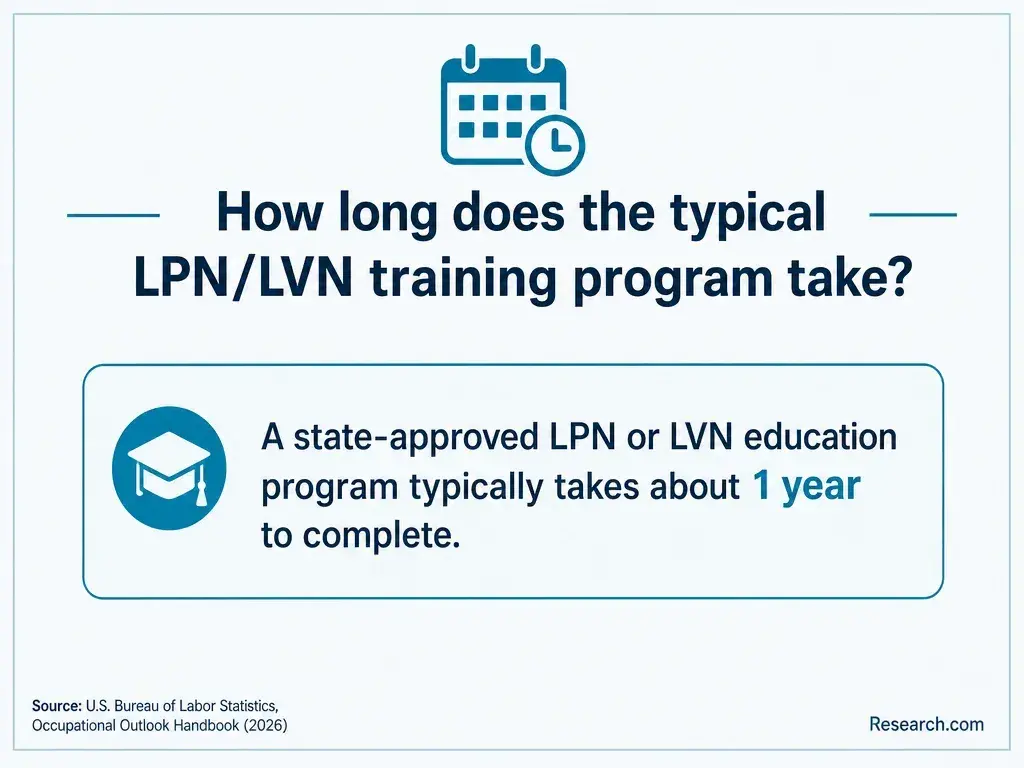
Start with the qualification gap in the specific posting. An experienced licensed RN may need employer orientation and focused continuing education more than another degree. Someone entering nursing needs a prelicensure program, eligibility for the NCLEX-RN, and an RN license before taking an RN-designated job.
The following routes address different gaps; none guarantees employment or replaces the employer's competency assessment.
| Starting point | Potentially useful route | Decision point |
| Licensed RN with relevant experience | Role-specific orientation and training in care coordination, data workflows, and community resources | Will the employer hire and train without another degree? |
| ADN-prepared RN | RN-to-BSN if the target employer requires or strongly prefers a BSN | Is the degree needed for this job or a later promotion? |
| RN seeking program leadership | Relevant non-APRN MSN or other graduate study | Do leadership postings require the degree and the experience you can obtain? |
| Person without an RN license | Board-eligible prelicensure nursing education, followed by RN licensure | Does the program prepare graduates for initial licensure in the intended state? |
Some ADN-prepared nurses consider MSN pathways that accept ADN-prepared nurses. Compare the actual award, admission rules, cost, and employer requirement before choosing a bridge over an RN-to-BSN or targeted training. Graduate study makes more sense when it serves a defined next role, not merely because a job title contains "population health."
Relevant BSN and graduate coursework may cover community assessment, epidemiology, prevention, health equity, evidence appraisal, quality improvement, informatics, care coordination, and evaluation of services. Programs differ in depth and in whether learning includes supervised practice, a project, or both. Ask what you will actually do with a patient panel or community partner, not just which topics appear in a course description.
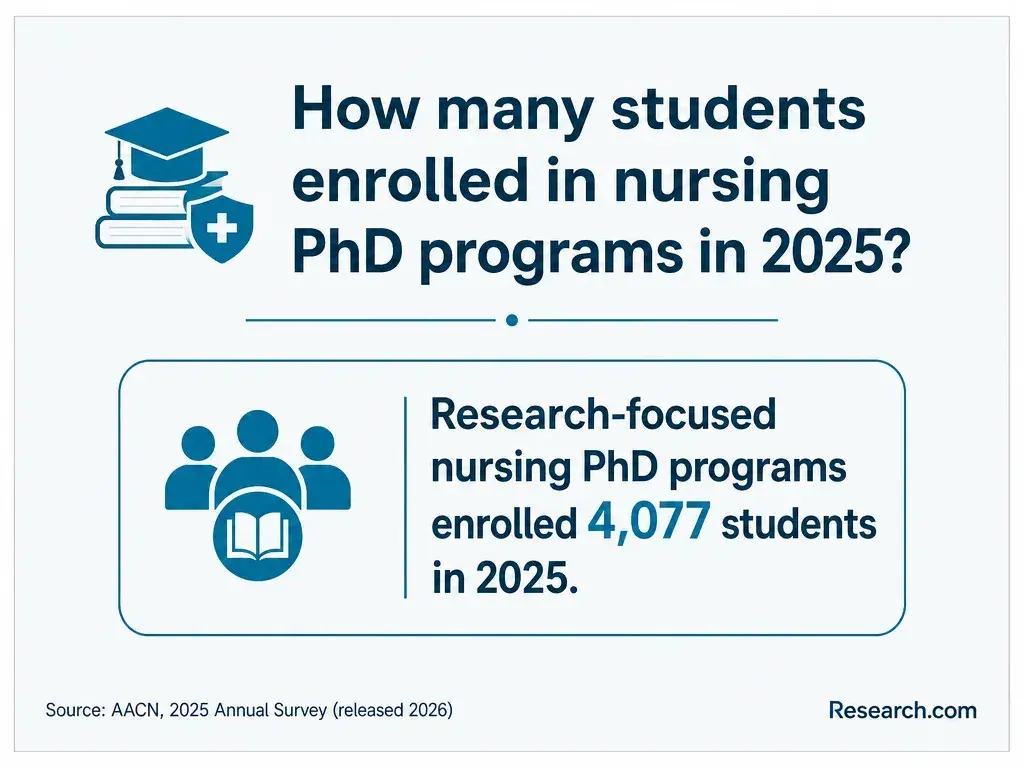
For a working RN, the most useful learning often fills a concrete gap: interpreting registry data, communicating across care settings, evaluating an outreach intervention, or working ethically with patient information. Coursework does not itself demonstrate independent competence in an employer's EHR or protocols. A DNP project may focus on practice improvement, while a PhD typically emphasizes research; neither is the default entry requirement for an RN population health job. If doctoral study is a separate goal, review doctoral nursing application requirements compared alongside the work you want to do after graduation.
Online study can help an employed RN learn without relocating, but it does not automatically make a program self-paced. Check live-session times, group work, campus visits, project access, and any required supervised experiences before committing. If you work rotating shifts or have caregiving responsibilities, request a sample term schedule rather than relying on the word "flexible."
Online RN-to-BSN study may be sufficient for a nurse whose goal is a BSN-required population health posting; whether a program includes clinical learning or community projects is program-specific. Understanding clinical expectations in BSN completion can help frame that comparison. Verify what the school requires, who arranges any site-based experience, and whether your employer will support it. Do not treat an online program's availability as proof that it meets licensing or enrollment requirements in your state.
There is no single US Bureau of Labor Statistics wage category for "population health nurse." Registered nurse wage data provide a broad reference point, but they combine many settings, shifts, locations, and experience levels; they are not a population health offer or a promised salary for a particular degree. Use the most recent BLS registered nurse figures for general market context, then compare local postings with similar duties.
Evaluate total compensation against the actual schedule: base pay, overtime eligibility, bonuses and their conditions, benefits, mileage or travel reimbursement, equipment, and employer education support. A lower hourly rate may still suit someone leaving rotating shifts; a higher salary may be less attractive if evening outreach, travel, or uncompensated documentation expands the working week. Request the pay range and the basis for placement within it.
Do not buy a graduate degree solely on an assumed salary increase. A BSN-to-MSN program affordability guide can help compare education costs, but the relevant return depends on whether your target employer requires the credential, offers tuition assistance, or has a defined promotion path.
Population health experience can support movement into care management, ambulatory or community nursing, quality improvement, program management, and related leadership roles. Progression depends on demonstrated results, clinical judgment, data skills, and openings - not the population health title alone. An RN who enjoys patient contact may prefer a role with direct outreach; one interested in program design should seek opportunities to evaluate services and work across teams.
BLS projections for registered nurses offer context for the broader occupation, not a forecast for population health openings. Local demand also depends on the employer's contracts, funding, staffing model, and service area. Ask why the position is open, whether the team is expanding, and what advancement has looked like for current staff.
If your intended destination is psychiatric advanced practice rather than RN care coordination, compare that separately - including supervised clinical requirements and full costs. Online psychiatric NP programs by cost address that different investment; they are not a necessary step toward a population health RN career.
How Can You Choose an Accredited Population Health Nursing Program?
First decide whether a program is necessary for the job you want. If it is, confirm the exact degree and track, the institution's accreditation, applicable nursing program accreditation, and - especially for initial RN preparation - state board approval and licensure eligibility. These are separate checks. Confirm enrollment authorization where you live and obtain written details about required site-based work and who secures placements.
Use the prospective employer's posting as a filter: compare curriculum with required duties, ask how working RNs complete projects or supervised learning, and calculate tuition plus fees, travel, and time away from work. Request outcomes for the specific program rather than assuming an institution-wide claim applies to your track.
Placement support matters most when a pathway actually requires placements. A guide to family NP clinical placement support concerns advanced practice education, not a requirement for every population health RN course. Before enrolling in either type of program, get the school's placement responsibilities and your employer's credential requirements in writing.
Other Things You Should Know About Nursing
Often, if both employers' scheduling and conflict-of-interest policies allow it. Check how a second job affects fatigue, benefits, and your ability to meet outreach deadlines.
Not necessarily. The employer may limit work locations, and nursing practice across state lines can involve licensure rules tied to where patients are located. Confirm both requirements before relocating.
Follow the employer's policy for documenting the refusal, assessing any immediate concern within your scope, and notifying the appropriate team member when indicated. A refusal is not permission to ignore a safety concern.
Yes, if the employer permits it. Observing a typical workflow can reveal call volume, interruptions, documentation demands, and access to supervisors that a job description cannot show.
- Types of Health Care Quality Measures | Agency for Healthcare Research and Quality https://www.ahrq.gov/talkingquality/measures/types.html
- Electronic Health Records and Their Benefits | ONC https://healthit.gov/health-it-basics/benefits-ehrs/
- Workplace Stress - Guidance and Tips for Employers | Occupational Safety and Health Administration http://www.osha.gov/workplace-stress/employer-guidance
- Nursing workload, nurse staffing methodologies and tools - PMC https://pmc.ncbi.nlm.nih.gov/articles/PMC7086229/
- Mental health at work | who.int https://www.who.int/news-room/fact-sheets/detail/mental-health-at-work
- Quality Measurement and Quality Improvement | cms.gov https://www.cms.gov/medicare/quality-initiatives-patient-assessment-instruments/mms/quality-measure-and-quality-improvement-
- The Role of Nurses in Improving Health Equity - NCBI - NIH https://www.ncbi.nlm.nih.gov/books/NBK573898/
- Workplace Mental Health & Well-Being | hhs.gov https://www.hhs.gov/surgeongeneral/reports-and-publications/workplace-well-being/index.html