
2027 How to Get Into CRNA School: Nurse Anesthetist Degree Requirements & Timeline

Co-Founder and Chief Data Scientist
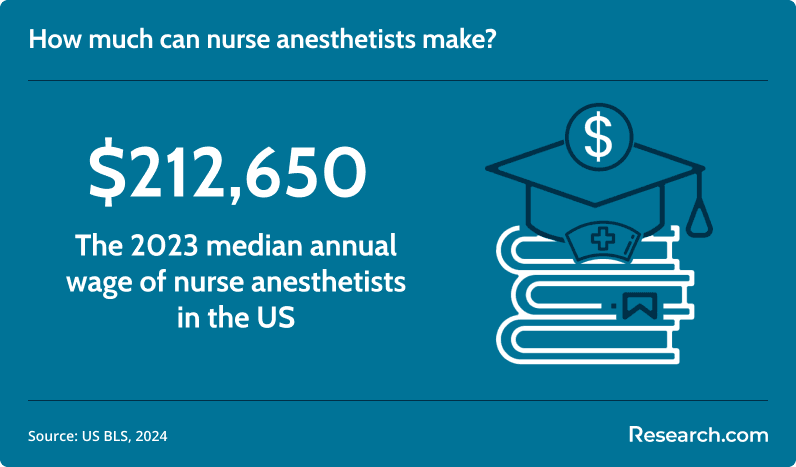
Choosing a nurse anesthetist degree program is a high-stakes decision because the path is long, academically demanding, clinically intensive, and expensive. For registered nurses who want advanced practice authority, deeper critical care expertise, and access to one of nursing’s strongest salary profiles, becoming a Certified Registered Nurse Anesthetist can be a compelling goal. Nurse anesthetists may be the highest-paid nursing professionals in the United States, with a 2023 median annual wage of $212,650 [US Bureau of Labor Statistics (BLS), 2024].
This guide explains how to get into CRNA school, what degree options exist, how long the process usually takes, what applicants need before applying, how to evaluate accredited nurse anesthetist programs, and what financial, clinical, and career factors should shape your decision. It is designed for RNs, BSN students, critical care nurses, and career changers comparing routes into advanced anesthesia practice.
Quick Answer: How Do You Become a Nurse Anesthetist?
To become a nurse anesthetist, you typically need a BSN, an active RN license, critical care nursing experience, completion of an accredited graduate nurse anesthesia program, and national certification eligibility. The full path usually takes 7 to 8 years after high school, including undergraduate nursing education, RN licensure, critical care experience, and graduate-level anesthesia training.
Why should you consider applying for CRNA school?
- CRNA programs combine advanced classroom learning, supervised anesthesia practice, simulation training, and clinical networking that can help nurses move into specialized advanced practice roles.
- The income potential is substantial. Nurse anesthetists may be the highest-paid nursing professionals in the US, with a 2023 median annual wage of $212,650 (US BLS, 2024).
- The labor market outlook is favorable. Employment for nurse anesthetists has been projected to grow by 9% between 2022 and 2032 (US BLS, 2024).
- List of Nurse Anesthetist Degree Programs for 2027
- Why choose a career as a nurse anesthetist?
- How long does it take to become a nurse anesthetist?
- What are the application requirements for a nurse anesthetist program?
- What degree do you need to become a nurse anesthetist?
- What is the curriculum like in a nurse anesthetist program?
- Student Life and Support in CRNA Programs
- Are there online nurse anesthetist programs?
- What certifications are needed before applying to a nurse anesthetist program?
- Why is accreditation important for nurse anesthetist programs?
- How do I choose the best nurse anesthetist program?
- How can pursuing dual master’s degrees enhance my nurse anesthetist career?
- What are the tuition costs and additional expenses for nurse anesthetist programs?
- Can a post-master's certificate enhance my nurse anesthetist career?
- Can non-nurses transition into nurse anesthesia through accelerated pathways?
- What is the return on investment of nurse anesthetist programs?
- What challenges do nurse anesthetist students face and how can they overcome them?
- How do nurse anesthetist programs integrate simulation training and emerging technologies?
- How do nurse anesthetist programs prepare students for certification success?
- Can dual specialization enhance my nurse anesthetist career?
- Do RN to BSN Online Programs Adequately Prepare You for a Nurse Anesthetist Career?
- How do nurse anesthetist programs bolster career placement and networking opportunities?
- What financial aid options are available for nurse anesthetist students?
- Can you work while attending a nurse anesthetist program?
- How to Prepare for Clinical Rotations in a Nurse Anesthetist Program
- What are the key interpersonal skills required to excel in a nurse anesthetist program?
- What are the alternative routes to a career in anesthesia and healthcare certifications?
List of Nurse Anesthetist Degree Programs for 2027
How do we rank schools?
Program quality matters in nurse anesthesia because graduates must be prepared for complex clinical decisions, intensive patient monitoring, and certification requirements. This list highlights accredited nurse anesthetist degree programs in the US using the Research.com methodology, which draws from recent information collected and reviewed from the IPEDS database, Peterson's database, the College Scorecard database, and the National Center for Education Statistics.
Program Comparison at a Glance
| School | Program Options | Length | Cost Information | Accreditation Listed |
| University of Pittsburgh | DNP Nurse Anesthesia; BSN to DNP Nurse Anesthesia; MSN to DNP Nurse Anesthesia | BSN to DNP: Nine Terms (3 Years); MSN to DNP: About Four Terms (1.5 Years) | Resident: $15,145 per term; Non-resident: $18,086 per term | COA; MSCHE |
| Baylor University—US Army Graduate Program in Anesthesia Nursing | DNP Nurse Anesthetist | 3 Years | Fully Funded | COA; SACSCOC |
| University of Iowa | DNP Nurse Anesthesia | 3 Years | $1,191 per credit | COA; CCNE; HLC |
| Baylor College of Medicine | BSN to DNP Nurse Anesthesia; MSN to DNP Nurse Anesthetist | BSN to DNP: 3 Years; MSN to DNP: 2 Years | BSN to DNP: $84,330; MSN to DNP: $27,318, excluding other direct and indirect fees | COA; SACSCOC |
| Uniformed Services University of Health | Graduate-level nurse anesthetist degree programs | 3 Years | Contact the university for current tuition information. | COA; CCNE; MSCHE |
1. University of Pittsburgh
The University of Pittsburgh provides doctoral-level pathways for nurses pursuing anesthesia practice. Students may enter through the Doctor of Nursing Practice (DNP) Nurse Anesthesia program, the Bachelor of Science in Nursing (BSN) to DNP Nurse Anesthesia program, or the Master of Science in Nursing (MSN) to DNP Nurse Anesthesia program. BSN to DNP students complete required campus-based lectures, while MSN to DNP students may take coursework on campus or online depending on prior nursing preparation.
- Program Length:
- BSN to DNP Nurse Anesthesia Program: Nine Terms (3 Years)
- MSN to DNP Nurse Anesthesia Program: About Four Terms (1.5 Years)
- Cost per Term:
- Resident: $15,145
- Non-resident: $18,086
- Required Credits to Graduate:
- BSN to DNP Nurse Anesthesia Program: 84.5 Credits
- MSN to DNP Nurse Anesthesia Program: 36 Credits
- Accreditation: Council on Accreditation of Nurse Anesthesia Educational Programs (COA); Middle States Commission on Higher Education (MSCHE)
2. Baylor University—US Army Graduate Program in Anesthesia Nursing
Baylor University’s US Army Graduate Program in Anesthesia Nursing (USAGPAN) prepares students for nurse anesthesia practice within military healthcare. The Louise Herrington School of Nursing awards the DNP Nurse Anesthetist degree after 3 years of advanced instruction and specialized clinical preparation. The program is fully funded, students receive salaries as US Army Officers, and graduates have guaranteed job placement in an Army healthcare facility.
- Program Length: 3 Years
- Cost per Credit: Fully Funded
- Required Credits to Graduate: 122 Credits
- Accreditation: COA; Southern Association of Colleges and Schools Commission on Colleges (SACSCOC)
3. University of Iowa
The University of Iowa offers a DNP Nurse Anesthesia program sponsored by the university and the Roy J. and Lucille A. Carver College of Medicine. The program is approved by the Iowa Board of Nursing and is designed for RNs who already hold a BSN. The university received Commission on Collegiate Nursing Education (CCNE) approval for the DNP program in 2009, making it one of the first institutions to do so.
- Program Length: 3 Years
- Cost per Credit: $1,191
- Required Credits to Graduate: Contact the university for curriculum information.
- Accreditation: COA; CCNE; Higher Learning Commission (HLC)
4. Baylor College of Medicine
The Baylor College of Medicine offers both a BSN to DNP Nurse Anesthesia program and an MSN to DNP Nurse Anesthetist program. The BSN to DNP pathway is structured around two 18-month phases: didactic preparation followed by clinical practicum. The MSN to DNP option is built for working nurses, with most coursework available online.
- Program Length:
- BSN to DNP: 3 Years
- MSN to DNP: 2 Years
- Tuition (Excluding Other Direct & Indirect Fees):
- BSN to DNP: $84,330
- MSN to DNP: $27,318
- Required Credits to Graduate:
- BSN to DNP: 120 Credits
- MSN to DNP: 90 Credits
- Accreditation: COA; SACSCOC
5. Uniformed Services University of Health
The Uniformed Services University of Health, through the Daniel K. Inouye Graduate School of Nursing, offers graduate nurse anesthesia education for active-duty uniformed personnel who hold a BSN. Admissions priority is given to nurses serving in the Army, Navy, Air Force, or Public Health Service.
- Program Length: 3 Years
- Cost per Credit: Contact the university for current tuition information.
- Required Credits to Graduate: Contact the university for curriculum information.
- Accreditation: COA; CCNE; MSCHE
What Graduates Commonly Report About CRNA Programs
- Many graduates describe nurse anesthesia school as a turning point that moved them into higher-acuity surgical and procedural settings with greater responsibility for patient safety.
- Graduates often emphasize that the training is difficult but professionally rewarding because it combines advanced science, clinical judgment, and hands-on technical skill.
- Common post-graduation themes include broader career options, stronger clinical confidence, and a clearer role within multidisciplinary anesthesia and surgical teams.
Key Findings
- The typical route to nurse anesthesia practice requires about 7 to 8 years of education and clinical experience after high school.
- In the academic year 2021–2022, US institutions conferred 1,084 doctoral nurse anesthetist degrees (NCES, 2023).
- Nurse anesthetists affect patient outcomes directly because they help deliver safe, effective anesthesia care before, during, and after procedures.
- Graduate nurse anesthesia coursework commonly includes Advanced Physiology and Pathophysiology, Principles of Anesthesia, and Anesthesia Equipment and Technology.
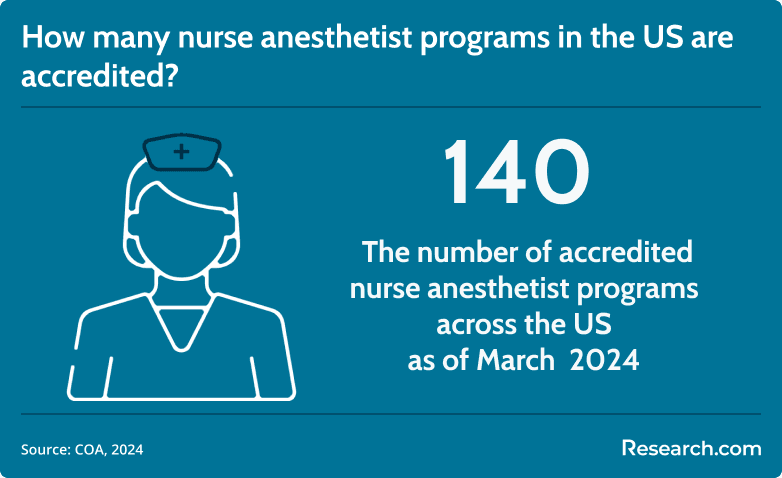
- As of March 2024, the Council on Accreditation of Nurse Anesthesia Educational Programs (COA) accredited 140 nurse anesthetist degree programs.
Why choose a career as a nurse anesthetist?
For nurses who want advanced clinical responsibility, nurse anesthesia can be one of the most attractive APRN options. Nursing is already represented among 4 year degrees that pay well, but graduate preparation for advanced practice can significantly change a nurse’s scope of work, decision-making authority, and earning potential.
| Reason to Consider CRNA School | Why It Matters | What to Think About Before Committing |
| High earning potential | Nurse anesthetists had a 2023 median annual wage of $212,650 (US BLS, 2024). | Salary varies by employer, region, experience, call schedule, and practice setting; outcomes are not guaranteed. |
| Advanced clinical autonomy | CRNAs often make complex anesthesia-related decisions and participate closely in surgical and procedural care. | Autonomy also brings significant accountability and requires strong clinical judgment under pressure. |
| Direct patient impact | Anesthesia care affects pain control, safety, airway management, hemodynamic stability, and recovery. | The work can be intense, especially in emergencies, high-acuity cases, and long procedures. |
| Career mobility | CRNAs work in surgical departments, hospitals, outpatient settings, military healthcare, and other procedural environments. | Applicants should compare state practice rules, employer expectations, and clinical placement strength. |
- Income potential can be strong. Nurse anesthetists earn substantially more than many nursing roles. For context, the average pay for a traveling nurse was around $83,200 yearly as of April 2024, while nurse anesthetists had a 2023 median annual wage of $212,650 (US BLS, 2024). CRNA earnings also exceed many neonatal nurses salary ranges, which run from $90k to more than $100k/year. You can also compare APRN earnings using the average nurse practitioner salary by state.
- The role carries professional responsibility. Nurse anesthetists are trusted members of anesthesia and surgical teams. Their work requires independent thinking, rapid assessment, and careful coordination with surgeons, anesthesiologists, nurses, and other clinicians.
- The patient care role is meaningful. CRNAs help patients move safely through procedures that may involve fear, pain, medical risk, and vulnerability. The ability to explain anesthesia, monitor patients closely, and respond to complications is central to the profession.
How long does it take to become a nurse anesthetist?
Most students should plan for about 7 to 8 years after high school. A BSN commonly takes 4 years. After earning the BSN and becoming licensed as an RN, applicants usually need at least 1 year of critical care experience, although many CRNA programs prefer 2 to 3 years. Completing an MSN or DNP nurse anesthetist program generally adds another 3 to 4 years.
| Stage | Typical Requirement | Decision Point |
| Undergraduate nursing education | Complete a BSN, often in 4 years. | Choose an accredited nursing program with strong clinical preparation. |
| RN licensure | Earn and maintain an active RN license. | Confirm licensure requirements in the state where you plan to practice. |
| Critical care experience | Gain at least 1 year of full-time critical care experience; many programs prefer 2 to 3 years. | ICU experience is especially valuable because CRNA school requires comfort with unstable patients and complex monitoring. |
| Graduate nurse anesthesia education | Complete an MSN or DNP nurse anesthetist degree program in about 3 to 4 years. | Compare accreditation, clinical placement sites, certification support, cost, and format. |
If now is not the right time for a full nurse anesthesia program, a related 1 year masters degree may support broader healthcare leadership, education, or preparation goals. However, it should not be treated as a substitute for an accredited nurse anesthesia program if your goal is CRNA eligibility.
What are the application requirements for a nurse anesthetist program?
CRNA admissions committees look for evidence that applicants can handle doctoral-level science, high-pressure clinical decision-making, and the time demands of anesthesia training. Requirements vary by school, but the following are common.
- Bachelor of Science in Nursing (BSN). Applicants generally need a BSN from an accredited college or university. This degree confirms that the candidate has completed foundational nursing coursework and clinical training.
- Registered Nurse (RN) Licensure. Programs typically require a current, unencumbered RN license. This shows that the applicant has met legal and professional standards for nursing practice.
- Critical Care Experience. Most programs require at least 1 year of full-time critical care nursing, often in settings such as an ICU. This background matters because nurse anesthesia training builds on complex assessment, ventilator management, hemodynamic monitoring, and rapid response skills.
- Graduate Record Examination (GRE). Some programs ask for GRE scores, especially when an applicant’s GPA is below a stated threshold. Applicants should verify whether the GRE is required, optional, or waived.
- Letters of Recommendation. Many schools request three professional references from supervisors, faculty members, or healthcare colleagues who can speak to clinical competence, reliability, leadership potential, and readiness for graduate study.
Common CRNA Application Mistakes
| Mistake | Why It Can Hurt Your Application | Better Approach |
| Applying with minimal critical care exposure | Programs want evidence that you can care for unstable patients before entering anesthesia training. | Build strong ICU or comparable critical care experience before applying. |
| Choosing programs only by prestige | A recognizable name does not guarantee the best fit for your clinical goals, location, budget, or support needs. | Compare accreditation, clinical cases, faculty access, cost, and certification preparation. |
| Ignoring prerequisite details | Missing coursework, expired certifications, or unclear license status can delay or weaken an application. | Create a school-by-school requirements checklist before submitting materials. |
| Underestimating the interview | CRNA interviews may assess judgment, pharmacology knowledge, emotional maturity, and clinical reasoning. | Practice explaining critical care cases, patient priorities, and your motivation for anesthesia practice. |
What degree do you need to become a nurse anesthetist?
The CRNA pathway begins with undergraduate nursing preparation and continues into graduate-level anesthesia education. The degree you need depends on your current nursing background and the program structure you choose.
- Bachelor of Science in Nursing (BSN). A BSN provides the core nursing foundation needed for RN licensure and later graduate admission. In the academic year 2021–2022, 152,040 bachelor’s degrees for nursing were conferred in the US [National Center for Education Statistics (NCES), 2023].
- Master of Science in Nurse Anesthesia (MSNA). The MSNA is a graduate degree focused on anesthesia science, clinical practice, and preparation for certification. Students comparing graduate pathways may also encounter options such as an accelerated NP program or accelerated MBA programs with healthcare management or administration coursework, but these are not the same as nurse anesthesia preparation. In the academic year 2021–2022, 561 MSNA degrees were conferred across the country (NCES, 2023).
- Doctor of Nursing Practice (DNP) with a focus on Anesthesia Nursing. Many current nurse anesthesia programs are structured at the doctoral level, emphasizing advanced practice, clinical leadership, evidence-based care, and anesthesia-specific training. In the academic year 2021–2022, 1,084 nurse anesthetist degree programs at the doctoral level were conferred in the US (NCES, 2023).
The chart below shows BSN, MSN, and DNP nurse anesthesia degree completions in the US during the academic year 2021–2022, based on 2023 NCES data.
What is the curriculum like in a nurse anesthetist program?
Nurse anesthetist programs are built around advanced biomedical science, anesthesia principles, technical skill development, simulation, and supervised clinical practice. The goal is to prepare students to assess patients, plan anesthetic care, administer anesthesia, monitor physiologic responses, and manage complications.
- Advanced Physiology and Pathophysiology. Students examine normal body systems and disease-related changes that influence anesthesia planning, medication response, airway management, and perioperative risk.
- Pharmacology for Anesthesia. This coursework focuses on anesthetic agents, drug mechanisms, effects, interactions, dosing considerations, and patient-specific risks.
- Principles of Anesthesia. Students learn core anesthesia concepts, including types of anesthesia, patient assessment, anesthesia delivery methods, and applications across different surgical and procedural cases.
- Anesthesia Equipment and Technology. Programs train students to use and troubleshoot anesthesia machines, monitoring systems, airway devices, and related equipment that support patient safety.
- Clinical Practicum. Supervised practice allows students to apply classroom and simulation learning in real healthcare settings while gradually building confidence and competence.
What Skills Should You Build Before CRNA School?
| Skill Area | Why It Matters in CRNA Training | How to Strengthen It |
| Critical care assessment | Students must interpret unstable patient conditions quickly. | Seek ICU experience and learn to connect vital signs, labs, medications, and clinical changes. |
| Pharmacology | Anesthesia practice depends on precise medication selection and monitoring. | Review high-risk medications used in critical care and understand mechanisms, effects, and contraindications. |
| Airway and ventilation awareness | Airway management is central to anesthesia safety. | Learn from respiratory therapists, intensivists, CRNAs, and preceptors whenever appropriate. |
| Professional communication | CRNAs work with patients, surgeons, anesthesiologists, nurses, and families. | Practice concise handoffs, closed-loop communication, and calm explanations under stress. |
Student Life and Support in CRNA Programs
CRNA school is not simply another nursing degree. Students must manage heavy science coursework, long clinical days, simulation performance, exam preparation, and professional expectations. Strong support systems can make the difference between surviving the program and developing into a confident anesthesia provider.
- Demanding coursework and clinical expectations: Students study advanced anatomy, physiology, pharmacology, and anesthesia principles while completing clinical rotations that require preparation, documentation, patient care, and reflective learning.
- Faculty and mentor access: Effective programs connect students with experienced instructors, clinical preceptors, and mentors who can clarify difficult content, evaluate performance, and guide career planning.
- Peer and professional networks: Cohort relationships, alumni contacts, and professional groups such as the American Association of Nurse Anesthetists (AANA) can provide academic encouragement, job leads, and long-term professional connection.
- Well-being and stress support: Because CRNA programs are intense, counseling, wellness resources, stress-management tools, and realistic workload planning are important parts of student success.
- Financial planning resources: Students should ask early about scholarships, grants, loan options, employer support, and repayment expectations before enrolling.
- Clinical practice sites and simulation labs: Hospital partnerships and high-quality simulation environments help students practice anesthesia care, crisis response, and procedural decision-making before and during real clinical rotations.
Career changers who do not yet have a nursing background may need to start with entry-level or bridge nursing education. For example, some learners explore online ADN programs for non nurses as an early step toward eventual RN licensure and advanced nursing goals.
Are there online nurse anesthetist programs?
Some schools offer nurse anesthetist coursework through online or hybrid formats, and many nurses also compare accelerated degree programs online when planning earlier education steps. Budget-conscious students may also review cheap accelerated bachelor's degree options before entering the nursing pipeline. Institutions offering online or hybrid nurse anesthesia-related pathways include Ohio State University, the University of Arizona, the University of Pittsburgh, the University of Maryland, and the University of Cincinnati.
However, “online CRNA program” does not mean fully remote clinical training. Nurse anesthesia education requires in-person clinical placements, supervised procedural experience, and often campus-based intensives. Online delivery may make didactic coursework more flexible, but students should still plan for hands-on requirements. To verify accredited programs, review the COA’s list of accredited programs by the COA.
Online, Hybrid, and Campus CRNA Programs: What to Compare
| Format | Best For | Watch For |
| Campus-based | Students who want direct access to faculty, labs, classmates, and nearby clinical sites. | Relocation, commuting, and reduced work flexibility may increase total cost. |
| Hybrid | Students who can complete some coursework online but attend required intensives and clinicals in person. | Travel requirements, campus visit schedules, and clinical site availability must be clear before enrollment. |
| Online coursework with in-person clinicals | Working nurses who need more flexibility for didactic learning. | No reputable nurse anesthesia pathway can avoid in-person clinical training. |
What certifications are needed before applying to a nurse anesthetist program?
Before applying, candidates should confirm that their licenses and life-support credentials are current. Requirements differ by program, but the following are frequently expected.
- Registered Nurse (RN) License. A valid RN license confirms that the applicant has met nursing practice requirements and is legally permitted to work as a nurse.
- Basic Life Support (BLS) Certification. BLS confirms competency in foundational emergency response skills, including CPR, that are essential in healthcare settings.
- Advanced Cardiac Life Support (ACLS) Certification. ACLS demonstrates readiness to respond to cardiac emergencies such as cardiac arrest and arrhythmias, which are highly relevant in critical care and anesthesia practice.
Why is accreditation important for nurse anesthetist programs?
Accreditation is one of the first things applicants should verify. It indicates that a nurse anesthetist program has been evaluated against professional standards for curriculum, faculty qualifications, clinical training, governance, and student outcomes. For CRNA candidates, accreditation is not just a quality marker; it is tied to certification and licensure eligibility.
In March 2024, 140 nurse anesthetist degree programs were accredited by the Council on Accreditation of Nurse Anesthesia Educational Programs (COA). Graduating from a COA-accredited program is essential for certification and licensure eligibility. Accreditation also helps students, employers, and clinical partners understand that the program meets recognized professional expectations.
How to Check Accreditation Before You Apply
- Search the program directly through the COA rather than relying only on a school marketing page.
- Confirm both programmatic accreditation and institutional accreditation.
- Ask whether the accreditation status applies to your specific campus, track, or delivery format.
- Verify that the program’s clinical placements support certification preparation.
- Keep documentation of accreditation status for your records before making an enrollment deposit.
How do I choose the best nurse anesthetist program?
The best CRNA program is not automatically the cheapest, most famous, or closest option. It is the accredited program that fits your academic profile, clinical goals, financial limits, preferred learning format, and ability to complete intensive rotations. Start with accreditation, then compare curriculum, clinical case exposure, faculty support, certification preparation, tuition, fees, location, and student outcomes. If you are still comparing broader nursing graduate pathways, understanding the types of MSN degrees can help you separate anesthesia-specific preparation from other advanced nursing routes.
| Question to Ask | Why It Matters |
| Is the program COA-accredited? | Accreditation affects certification and licensure eligibility. |
| Where will I complete clinical rotations? | Clinical site quality influences the range and depth of anesthesia cases you experience. |
| What support exists for certification preparation? | Structured review, performance feedback, and faculty guidance can strengthen exam readiness. |
| Can I realistically afford the total cost? | Tuition is only part of the cost; fees, equipment, travel, and reduced work hours also matter. |
| Does the format match my life situation? | Hybrid and online coursework may help, but clinical training remains in person. |
How can pursuing dual master’s degrees enhance my nurse anesthetist career?
Dual-degree study can make sense for nurses who want anesthesia expertise plus preparation in leadership, public health, research, or healthcare administration. The benefit is not simply having another credential; it is gaining a broader toolkit for roles that may involve management, policy, quality improvement, education, or organizational strategy. Some schools structure dual master's degrees so students can complete complementary graduate study without greatly extending the overall timeline.
This route is most useful for nurses who already know they want responsibilities beyond bedside anesthesia practice. If your immediate priority is CRNA eligibility, make sure the nurse anesthesia component remains accredited and clinically robust.
What are the tuition costs and additional expenses for nurse anesthetist programs?
Nurse anesthetist program costs vary by school, residency status, delivery format, degree level, and clinical placement requirements. Applicants should look beyond posted tuition and build a full budget that includes fees, books, clinical supplies, equipment, certification-related costs, travel, housing changes, and potential lost income if working becomes unrealistic. Comparing this investment with other healthcare education costs, such as LPN programs cost, can help you understand how different healthcare pathways differ in time, scope, and expense.
| Cost Category | What to Confirm Before Enrolling |
| Tuition | Ask whether rates are charged by credit, term, year, or full program. |
| University fees | Confirm technology, lab, simulation, registration, and graduation fees. |
| Clinical expenses | Budget for travel, parking, housing, background checks, immunizations, and required documentation. |
| Equipment and materials | Ask about required devices, clinical tools, textbooks, software, and uniforms. |
| Certification and exam costs | Verify what is included in tuition and what students pay separately. |
| Reduced work capacity | Plan for the possibility that full-time employment may not be feasible during intensive coursework and rotations. |
Can a post-master's certificate enhance my nurse anesthetist career?
A post-master’s certificate can be useful for experienced nurses who want focused education in a complementary area, updated clinical knowledge, or leadership development. It is not a replacement for an accredited nurse anesthesia program if you are seeking CRNA eligibility. For nurses who already have advanced preparation, certificate programs may support a broader practice profile or a transition into related specialties. One example of a flexible advanced nursing credential is a post masters FNP program online, though applicants should carefully compare scope, licensure implications, and career goals before enrolling.
Can non-nurses transition into nurse anesthesia through accelerated pathways?
Non-nurses cannot skip the nursing foundation required for nurse anesthesia. They must first become nurses, earn RN licensure, build critical care experience, and then apply to an accredited nurse anesthetist program. Accelerated pathways can shorten the early nursing transition for qualified career changers, but they do not eliminate the need for licensure, critical care competence, and graduate anesthesia education.
Some prospective students explore direct entry online MSN programs as a way to enter graduate nursing from a non-nursing background. These programs may help motivated learners move into nursing more efficiently, but students should verify whether the pathway leads to RN licensure, what clinical requirements apply, and whether it positions them for later CRNA admission.
What is the return on investment of nurse anesthetist programs?
Return on investment depends on total program cost, financing choices, years out of full-time work, local job opportunities, salary after graduation, and how long you plan to practice. The median wage figure is strong, but applicants should avoid assuming that every graduate earns the median immediately or in every location. A careful ROI review compares what you will pay with what the program can reasonably help you achieve.
- Compare tuition and fees against expected borrowing.
- Ask programs for certification outcomes and employment support information.
- Review whether clinical placements align with your preferred practice settings.
- Estimate living expenses and reduced work income during school.
- Explore lower-cost options, including affordable online DNP programs, while confirming that any nurse anesthesia program you choose is properly accredited.
What challenges do nurse anesthetist students face and how can they overcome them?
CRNA students often deal with dense science content, long clinical expectations, high performance pressure, financial strain, and limited personal time. Success usually requires disciplined scheduling, early help-seeking, strong peer support, and realistic financial planning. Students should use faculty office hours, simulation feedback, study groups, counseling resources, and mentorship rather than waiting until they are overwhelmed.
Cost comparison can also reduce stress. Looking at other advanced nursing options, such as cheapest psych NP programs, may help you understand how tuition structures and financing strategies differ across graduate nursing fields.
Common Challenges and Practical Responses
| Challenge | Practical Response |
| Heavy academic load | Use weekly study blocks, active recall, and early tutoring or faculty support. |
| Clinical fatigue | Protect sleep when possible, prepare cases ahead of time, and clarify expectations with preceptors. |
| Financial pressure | Apply early for aid, compare total costs, and plan for reduced working hours. |
| Performance anxiety | Use simulation practice, feedback sessions, and peer review to improve under pressure. |
| Work-life strain | Set expectations with family, employers, and support networks before the program begins. |
How do nurse anesthetist programs integrate simulation training and emerging technologies?
Simulation is central to nurse anesthesia education because it lets students practice high-risk decisions before managing live patients. Programs may use high-fidelity mannequins, anesthesia machines, monitoring systems, crisis scenarios, and structured feedback to teach airway management, medication response, emergency communication, and operating room workflow.
This hands-on emphasis differs from many remote-heavy healthcare programs. For example, direct entry nurse practitioner programs for non-nurses online may rely more heavily on online coursework, while nurse anesthesia education must include substantial in-person clinical and procedural learning.
How do nurse anesthetist programs prepare students for certification success?
Strong programs build certification preparation into the curriculum instead of treating it as a final add-on. Students may encounter cumulative review, simulation scenarios, practice exams, faculty coaching, performance analytics, and peer study groups. These supports help identify weak areas while there is still time to improve.
Students entering from accelerated nursing routes, such as the cheapest ABSN program for non nurses, should pay special attention to strengthening core nursing science and critical care reasoning before applying to CRNA school.
Can dual specialization enhance my nurse anesthetist career?
Dual specialization can be useful when it supports a specific career goal, such as broader advanced practice work, leadership in a specialized service line, education, or interdisciplinary care. It should not distract from the intensive anesthesia preparation required for CRNA practice. Nurses interested in complementary women’s health expertise, for example, may compare affordable WHNP online programs with their long-term clinical and licensure plans.
Do RN to BSN Online Programs Adequately Prepare You for a Nurse Anesthetist Career?
An RN to BSN program can strengthen the academic foundation needed for later CRNA admission, especially for nurses who began with an associate degree or diploma route. A good RN to BSN program can reinforce evidence-based practice, leadership, community health, assessment, and professional communication. However, it does not replace critical care experience or graduate anesthesia training.
Before enrolling, confirm whether the program is rigorous enough to support graduate school goals. If you are unsure what to expect, review Are RN to BSN online programs hard? for more context on workload and preparation.
How do nurse anesthetist programs bolster career placement and networking opportunities?
Career support can affect how smoothly students move from training to practice. Useful services include resume help, interview preparation, alumni connections, clinical partner relationships, job search advising, and networking events with anesthesia professionals. Applicants should ask how programs connect students with employers and whether graduates commonly find roles in the settings they prefer.
Students still completing the nursing education ladder may also compare routes such as online RN to BSN programs without clinical requirements when planning how to strengthen their academic record before graduate study.
What financial aid options are available for nurse anesthetist students?
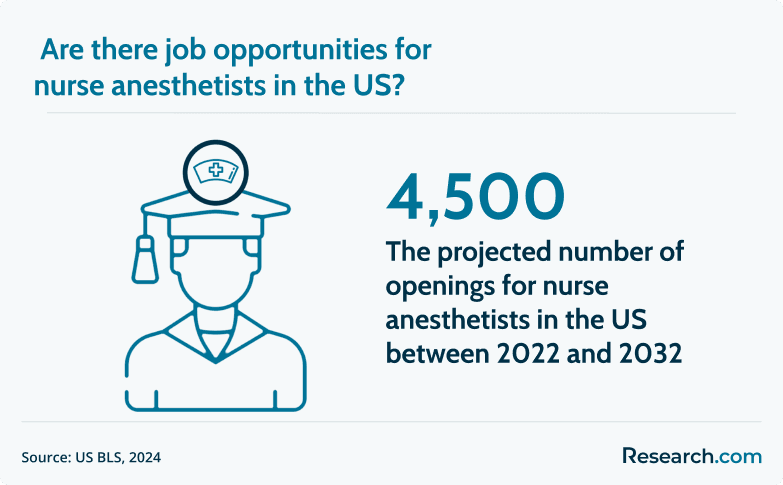
Nurse anesthetist education can be costly, but financial planning is part of responsible program selection. Completing an accredited program is also necessary for those seeking eligibility in a field with 4,500 projected job openings for nurse anesthetists in the US between 2022 and 2032 (US BLS, 2024). Students should compare aid options early and avoid borrowing based only on projected salary.
- Federal Student Loans. Federal options may include Direct Unsubsidized Loans and Direct PLUS Loans, often with repayment structures that differ from private loans.
- Scholarships. Schools, professional associations, foundations, and private organizations may offer scholarships based on academic achievement, financial need, service, or professional goals.
- Grants. Grants generally do not require repayment and may come from federal, state, institutional, or private sources for eligible students.
- Employer Tuition Reimbursement. Some healthcare employers help pay educational costs in exchange for a work commitment or continued employment after graduation.
- Work-Study Programs. Eligible students may use part-time work opportunities to offset some costs, although CRNA program intensity may limit the practicality of working.
Can you work while attending a nurse anesthetist program?
Working during a nurse anesthetist program is difficult and may not be recommended by some schools. Coursework, simulation, exams, preparation time, and clinical rotations can create a full-time or more-than-full-time workload. Students who must work should ask each program directly about employment policies and realistic expectations.
Some students manage limited, flexible employment, especially early in the program or in related healthcare roles. Still, the priority must be patient safety, academic progression, and clinical performance. Before enrolling, build a budget that does not depend on maintaining full-time work unless the program clearly supports that possibility.
After completing a nurse anesthetist degree program, graduates may also be positioned for broader healthcare opportunities. Related careers and projected job outlook between 2022 and 2032 (US BLS, 2024) include:
- Medical and Health Services Manager: 28%
- Nurse Practitioner: 45%
- Nurse Midwife: 6%
The chart below compares the job outlook for anesthesia nursing-related professions between 2022 and 2032, using 2024 US BLS data.
How to Prepare for Clinical Rotations in a Nurse Anesthetist Program
Clinical rotations are where nurse anesthesia students turn theory into supervised practice. Preparation should begin before the first clinical day because rotations test knowledge, professionalism, time management, technical skills, and emotional control.
- Revisit core science: Review anatomy, physiology, pharmacology, pathophysiology, and anesthesia principles so you can connect clinical observations with patient care decisions.
- Plan your calendar carefully: Clinicals can be time-consuming and unpredictable, so map out study time, travel, documentation, and recovery time.
- Prepare required materials: Keep scrubs, stethoscope, documentation tools, identification, and program-required forms organized and ready.
- Practice prioritization: Rotations require balancing patient care, charting, team communication, preceptor feedback, and case preparation.
- Use prior clinical experience: If you completed a paramedic to RN bridge program online or another hands-on healthcare pathway, connect that experience to assessment, emergency response, and patient communication.
- Find mentors early: Instructors, preceptors, and practicing nurse anesthetists can help you understand expectations and improve clinical judgment.
- Respond well to feedback: Constructive criticism is part of clinical growth. Track recurring feedback themes and make visible improvements.
What are the key interpersonal skills required to excel in a nurse anesthetist program?
Technical competence is essential, but CRNA students also need strong interpersonal skills. Anesthesia care depends on trust, precise communication, teamwork, emotional regulation, and professional presence during stressful procedures.
- Communication Skills: Nurse anesthetists must explain care clearly to patients and communicate efficiently with surgical and anesthesia teams, especially when conditions change quickly.
- Empathy and Compassion: Patients may feel anxious before anesthesia. A calm, respectful approach can reduce fear and improve the patient experience.
- Stress Management: CRNAs must stay composed during emergencies, unexpected physiologic changes, and high-pressure clinical decisions.
- Attention to Detail: Safe anesthesia practice requires careful monitoring, accurate dosing, precise documentation, and constant awareness of patient status.
- Team Collaboration: Nurse anesthetists work closely with surgeons, anesthesiologists, nurses, and other clinicians. Effective teamwork supports safer and smoother procedures.
- Adaptability and Flexibility: Clinical plans can change quickly. Students must adjust to new protocols, technologies, patient needs, and preceptor expectations.
What are the alternative routes to a career in anesthesia and healthcare certifications?
The direct CRNA route requires nursing education, RN licensure, critical care experience, and graduate nurse anesthesia preparation. Still, students who are not ready for that full commitment may explore shorter healthcare roles or stepping-stone credentials that build patient care exposure and clarify long-term goals.
1. Quick Medical Certifications That Pay Well
Shorter healthcare certifications can help students enter patient care sooner and build familiarity with clinical environments. Roles such as Certified Nursing Assistant (CNA), Medical Assistant (MA), or Phlebotomist may provide useful exposure while a student considers longer nursing pathways. Some certifications can be completed in just a few months. Review quick medical certifications that pay well to compare healthcare options that may lead to faster entry-level employment.
2. Anesthesia Technician
Anesthesia technician training can be a shorter way to work near the anesthesia field. These professionals help prepare equipment, support anesthesia teams, and maintain readiness for surgical or procedural cases. Many anesthesia technician programs can be completed in about a year, offering exposure to anesthesia workflows without the full CRNA education pathway.
3. Registered Nurse to Nurse Anesthetist Pathway
The standard CRNA route begins with becoming an RN and building strong experience in a critical care environment such as an ICU or ER. High-quality critical care experience can strengthen a CRNA application because it shows readiness for complex monitoring, rapid assessment, and high-acuity patient care.
4. Work While You Study
Some healthcare roles, including medical assistant or phlebotomy positions, may allow students to earn income while completing prerequisite education. This can be useful for learners who need clinical exposure and financial stability before committing to nursing or graduate school.
5. Medical Office Jobs with Anesthesia Exposure
Work in pain management clinics, procedural centers, or medical offices connected to anesthesia services may help students learn terminology, observe workflows, and network with professionals. These roles do not replace nursing requirements, but they can clarify whether anesthesia-related work is a good long-term fit.
References
- Council on Accreditation. (2024, March 27). List of Accredited Programs. https://www.coacrna.org/programs-fellowships/list-of-accredited-programs
- National Center for Education Statistics. (2023). Table 318.30. Bachelor's, master's, and doctor's degrees conferred by postsecondary institutions, by sex of student and field of study: Academic year 2021-22. Digest of Education Statistics. https://nces.ed.gov/programs/digest/d23/tables/dt23_318.30.asp
- US Bureau of Labor Statistics. (2024, April 17). Medical and Health Services Manager. Occupational Outlook Handbook. https://www.bls.gov/ooh/management/medical-and-health-services-managers.htm
- US Bureau of Labor Statistics. (2024, April 17). Nurse Anesthetists, Nurse Midwives, and Nurse Practitioners. Occupational Outlook Handbook. https://www.bls.gov/ooh/healthcare/nurse-anesthetists-nurse-midwives-and-nurse-practitioners.htm#tab-5
Key Insights
- CRNA school is best suited for RNs who are comfortable with advanced science, critical care intensity, high accountability, and several years of additional education.
- The usual timeline is about 7 to 8 years after high school, including BSN completion, RN licensure, critical care experience, and graduate nurse anesthesia education.
- Accreditation should be non-negotiable. In March 2024, 140 nurse anesthetist degree programs were COA-accredited, and accreditation is essential for certification and licensure eligibility.
- Online or hybrid coursework can improve flexibility, but nurse anesthesia training always requires in-person clinical experience and hands-on skill development.
- Do not compare programs by tuition alone. Include fees, clinical travel, equipment, certification costs, and lost income if you cannot work during the program.
- The salary outlook is a major advantage, with a 2023 median annual wage of $212,650, but individual earnings depend on employer, geography, experience, schedule, and practice setting.
- The strongest applicants usually bring solid critical care experience, current certifications, strong recommendations, clear motivation, and the ability to communicate well under pressure.
Other Things You Should Know About Nurse Anesthetist Degree Programs
Prospective CRNA students in 2027 should focus on maintaining a high GPA, obtaining critical care nursing experience, and earning a strong GRE score if required. Additionally, students should secure professional references and highlight leadership skills in their applications to stand out.
To enter a CRNA program in 2027, applicants typically need a Bachelor of Science in Nursing (BSN), an active RN license, at least one year of critical care experience, and strong GRE scores. Additionally, meeting program-specific prerequisites and having a solid GPA are crucial for a competitive application.


