2027 Environmental Science Degree Time-to-Completion Report: How Long Students Actually Take to Finish

Co-Founder and Chief Data Scientist
Choosing an environmental science degree is partly a career decision and partly a time-management decision. NCES reported in 2024 that only 64% of first-time, full-time bachelor's students at four-year institutions completed within six years at their starting school, which shows why the "four-year degree" label can be misleading. This guide is for students comparing bachelor's, associate, and master's pathways who want a realistic graduation timeline. You will learn what delays completion, which formats save time, and how to choose a program that fits your schedule, budget, and career goals.
Key Things You Should Know
- Most environmental science bachelor's programs are designed for four years, but a realistic completion range is often four to six years for full-time students and five to eight years for part-time students, depending on prerequisites, fieldwork, course sequencing, and transfer credits.
- Transfer credits can save one semester to two years when they apply directly to general education, lab science, math, statistics, GIS, or major requirements, but unused electives may not shorten the timeline.
- Completion time affects ROI because extra semesters can add tuition, fees, housing, and delayed earnings; BLS reported a $78,980 median pay for environmental scientists and specialists in its 2024 occupational data, but outcomes vary by role, location, experience, and degree level.
- What Is the Actual Time to Complete a Environmental Science Degree?
- Which Factors Have the Greatest Impact on Environmental Science Degree Completion Time?
What Is the Actual Time to Complete a Environmental Science Degree?
An environmental science degree studies natural systems, environmental policy, ecology, geology, chemistry, climate science, statistics, field methods, and data analysis. The actual time to complete the degree depends on the credential level, how many credits you take per term, whether required courses are available when you need them, and whether you enter with college credit.
Published program length is the best-case plan, not the average student experience. Environmental science can take longer than some majors because science courses often have lab components, math prerequisites, fieldwork windows, and sequential courses that must be taken in order.
The table below shows practical completion ranges for common environmental science degree pathways. Use it as a planning baseline, then verify each school's actual graduation data, course rotation, and credit-transfer rules.
| Degree pathway | Typical designed length | Realistic completion range | Why timing varies |
| Associate degree in environmental science | 2 years full time | 2 to 3 years | Developmental math, lab scheduling, part-time enrollment, and transfer planning can extend the timeline. |
| Bachelor's degree in environmental science | 4 years full time | 4 to 6 years | Prerequisites, chemistry and biology sequences, field courses, internships, and course availability often determine pace. |
| Bachelor's completion program | 2 years after transfer | 2 to 4 years | Time saved depends on how many prior credits satisfy major and general education requirements. |
| Master's degree in environmental science | 1.5 to 2 years full time | 2 to 3 years full time or 3 to 5 years part time | Thesis, capstone, research, employer schedules, and prerequisite gaps can add time. |
For most students, the right question is not "How fast can I finish?" but "What is the shortest realistic path I can sustain without increasing my risk of stopping out, failing prerequisites, or taking excess credits?" A student with strong transfer credits and flexible work hours may finish faster than the published average, while a working parent may create better long-term value by taking fewer credits consistently.
Which Factors Have the Greatest Impact on Environmental Science Degree Completion Time?
The largest drivers of environmental science degree completion time are credit load, course sequencing, transfer-credit acceptance, lab and field requirements, and life obligations. Because environmental science sits at the intersection of biology, chemistry, earth science, data analysis, and policy, a missed prerequisite can delay several later courses.
Students should pay close attention to the factors below because they tend to create the biggest timeline differences between the catalog plan and the actual graduation date.
- Prerequisite chains: General chemistry, biology, statistics, calculus, GIS, and ecology may need to be taken in sequence, so delaying one course can push back multiple major requirements.
- Course rotation: Some upper-division environmental science electives, field courses, or capstone courses are offered only once per year, which can add a semester or more if missed.
- Lab and field scheduling: Courses with labs, weekend fieldwork, summer field stations, or research hours can be harder to fit around work than lecture-only classes.
- Transfer-credit fit: Credits save time only when they satisfy specific degree requirements; credits that transfer as general electives may help total-credit count but not major progression.
- Advising quality: Students who do not meet regularly with an advisor are more likely to take unnecessary electives or miss hidden prerequisites.
One common mistake is treating all credits as equal. In environmental science, a three-credit elective may not move you closer to graduation if the degree audit still requires chemistry, statistics, GIS, or a capstone. Before enrolling, ask the school for a term-by-term plan showing exactly when each required course is offered.
Students comparing program structures across disciplines can learn from other online professional pathways as well; for example, Research.com's guide to SLP online programs shows how clinical, practicum, and sequence requirements can shape real completion time even when a program is labeled "online." The same principle applies to environmental science fieldwork and lab requirements.
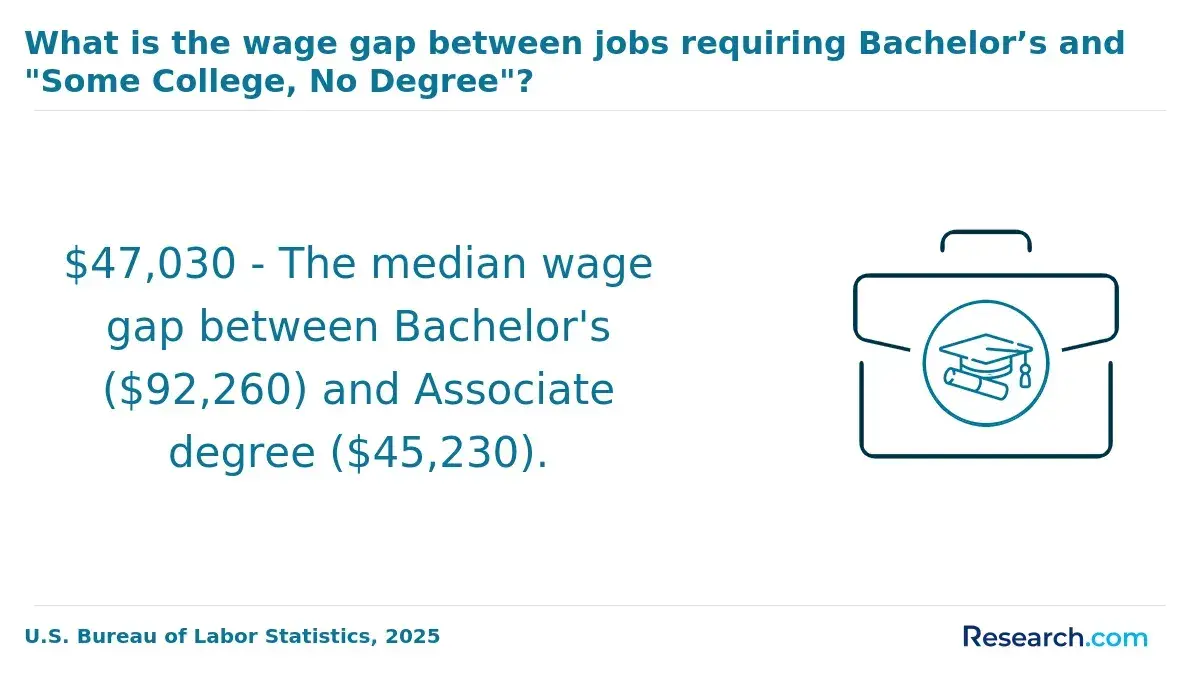
Enrollment status is often the single most controllable factor in completion time. A full-time environmental science student usually takes 12 to 15 credits per term, while a part-time student may take 6 to 9 credits. That difference affects not only graduation speed but also financial aid eligibility, workload, and course availability.
The table below compares common enrollment and learning formats. It focuses on how each option affects time to completion, not whether one format is universally better.
| Enrollment or format | Common pace | Time-to-completion impact | Best fit |
| Full-time campus program | 12 to 15 credits per term | Fastest traditional path when courses are offered on schedule | Students who can prioritize school and attend labs or fieldwork in person |
| Part-time campus program | 6 to 9 credits per term | Often extends a bachelor's degree to five or more years | Working adults, caregivers, and students managing financial constraints |
| Online or hybrid program | Varies by school | Can reduce commuting barriers but may not shorten lab, field, or capstone requirements | Students who need schedule flexibility and can complete in-person requirements when required |
| Cohort-based program | Fixed sequence | Can keep students on track but may create delays if a course is failed or skipped | Students who benefit from structure and predictable scheduling |
| Self-paced or competency-based components | Variable | May accelerate general education or elective credits but is less common for lab-intensive major courses | Students with strong prior knowledge and disciplined study habits |
Online learning can help students finish if the barrier is commuting, work shifts, or access to a nearby campus. However, it does not automatically make an environmental science degree faster. If a program still requires in-person labs, fieldwork, or internships, the actual timeline depends on when those experiences are available and whether you can attend them.
If you are weighing online education broadly, it can be useful to compare how different fields handle required experiences. Research.com's guide to a marriage and family therapist degree illustrates how supervised practice requirements can affect pacing; environmental science students should apply the same scrutiny to field, lab, internship, and capstone requirements.
Accelerated environmental science programs can shorten graduation timelines, but they are not automatically the best choice. Acceleration usually comes from shorter academic terms, heavier credit loads, summer enrollment, combined bachelor's-to-master's pathways, or generous transfer-credit policies. The trade-off is intensity.
The table below compares traditional and accelerated pacing so students can see where time savings usually come from and what risks to evaluate.
| Program model | How it can shorten time | Main risk | When it makes sense |
| Traditional semester program | Follows standard fall and spring terms | May take longer if required courses are missed | Students who need a manageable workload or rely on campus labs and advising |
| Year-round enrollment | Adds summer or winter credits | Less recovery time and possible financial-aid complexity | Students who can study continuously and want to avoid course gaps |
| Accelerated 7- or 8-week terms | Compresses courses into shorter sessions | Heavy weekly workload, especially for science courses | Students with strong time management and fewer outside obligations |
| Combined bachelor's-to-master's pathway | Allows graduate credits to count toward both degrees | May require early commitment and strong academic performance | Students planning advanced roles in consulting, research, policy, or management |
Acceleration works best when the program is designed for it, not when students simply overload themselves. Taking chemistry, ecology, statistics, and GIS in the same compressed term may create more risk than value if it leads to withdrawal, a failed prerequisite, or a lower GPA for graduate-school applications.
A practical approach is to accelerate selectively. Students often gain time safely by taking general education, writing, policy, or elective courses in summer or winter terms while keeping lab-heavy science courses in a standard term.
Students comparing accelerated options in other fields may find similar trade-offs in Research.com's guide to the easiest online MBA programs, where flexibility and workload matter as much as advertised speed. For environmental science, the key is whether acceleration supports learning in lab, field, and data-heavy courses.
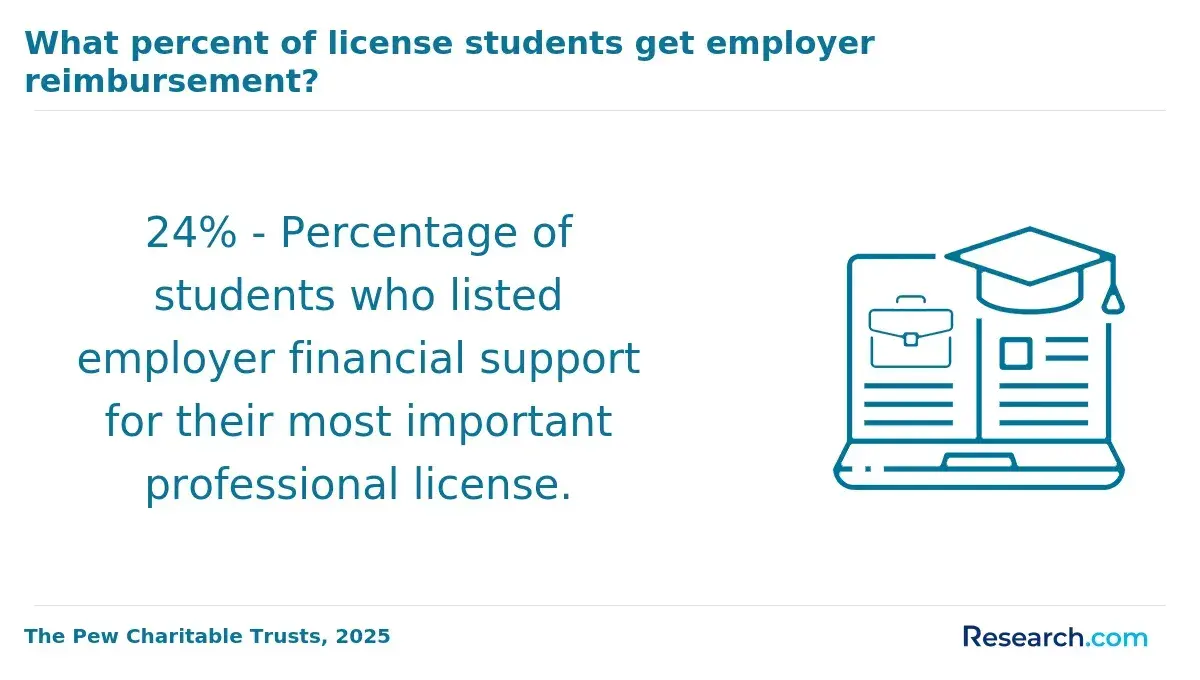
Work, family, transportation, health, military service, caregiving, and financial pressure can all extend environmental science degree completion. These responsibilities do not mean a student is less capable; they change the realistic number of credits a student can complete consistently.
The most sustainable timeline is usually the one a student can repeat term after term. If your schedule is unpredictable, a slightly slower plan may reduce the risk of stopping out, which often delays graduation more than planned part-time enrollment.
Students with major outside responsibilities should use the following steps to build a realistic completion plan.
- Calculate weekly study time before choosing a credit load; many lab science courses require time beyond scheduled class meetings.
- Identify fixed obligations, including work shifts, childcare, commuting, military duties, and fieldwork availability.
- Ask whether required labs, field courses, internships, or capstones are offered evenings, weekends, summers, or online.
- Plan the next two years of prerequisites rather than only the next semester.
- Build a backup schedule in case a course is full, canceled, or offered at a time you cannot attend.
A common mistake is reducing course load late in the term without checking downstream effects. Dropping a prerequisite may be the right decision for academic health, but students should immediately ask an advisor how it affects the next term, financial aid status, and expected graduation date.
Taking longer can make sense when it protects GPA, mental health, income, or family stability. The goal is not to finish at any cost; it is to complete the degree in a timeframe that supports your life and career rather than creating avoidable academic or financial setbacks.
Completion time affects the cost and ROI of an environmental science degree because each extra term can add tuition, fees, books, transportation, housing, and delayed full-time earnings. College Board's 2024 pricing data reported average published tuition and fees of $11,610 for in-state students at public four-year institutions for the 2024-2025 academic year, which means even one additional year can be financially meaningful before living costs are considered.
ROI should be evaluated as a combination of total cost, debt, time out of the labor market, credential value, and career fit. Graduating faster may improve ROI if quality and completion probability remain high, but rushing can backfire if it causes withdrawals, repeated courses, or a weaker academic record.
The table below shows how timeline choices can affect cost and ROI considerations. It is meant to support comparison, not to predict a specific student's total cost.
| Timeline choice | Cost effect | ROI consideration | Key caution |
| Finish in the designed full-time timeline | Limits extra tuition terms | May allow earlier entry into environmental roles | Requires steady course access and manageable workload |
| Take one extra year | Adds another year of education-related expenses | May be worth it if it prevents stop-out or supports stronger performance | Can increase borrowing or delay earnings |
| Enroll part time while working | May reduce borrowing per term | Can preserve income and benefits while progressing | Longer timeline may increase total fees and delay career transition |
| Use transfer credits | Can reduce required semesters | Often improves value when credits apply directly to requirements | Poorly aligned credits may not shorten the degree |
| Choose accelerated terms | May reduce time in school | Can improve value for students who can handle intensity | Repeating failed or withdrawn courses can erase savings |
Career ROI also depends on the type of environmental role you pursue. BLS reported in its 2024 Occupational Outlook Handbook that environmental scientists and specialists had a median pay of $78,980, but entry-level roles, technician positions, nonprofit work, consulting jobs, and government roles can differ substantially. A bachelor's degree may qualify students for many entry-level environmental science roles, while research-intensive or leadership roles may prefer a master's degree or specialized experience.
When comparing schools, ask for the total estimated program cost at your expected pace, not just annual tuition. A lower annual price may not be the lowest-cost path if course bottlenecks, limited transfer acceptance, or infrequent field requirements add extra semesters.
Graduation timing influences career outcomes because environmental science hiring often depends on both credentials and experience. Finishing sooner can help students enter the workforce earlier, but graduating with relevant internships, GIS skills, field sampling experience, lab competence, and regulatory knowledge may matter more than finishing a few months faster.
BLS projected 7% employment growth for environmental scientists and specialists from 2023 to 2033 in its 2024 outlook, which is faster than the average for all occupations. For students, this suggests steady opportunity, but not automatic placement; employers still evaluate practical skills, location, industry experience, and the match between coursework and job duties.
Environmental science graduates may pursue roles in consulting, environmental compliance, conservation, sustainability, water quality, climate adaptation, environmental health and safety, GIS analysis, natural resource management, or public agencies. Students interested in faster employment should build experience before graduation, not wait until the final semester.
The most useful career-timing strategy is to align graduation planning with employability milestones. Before finishing the degree, students should aim to complete the following.
- One applied experience: Internship, field assistantship, lab role, agency placement, undergraduate research, or community environmental project.
- One technical skill set: GIS, environmental sampling, statistics, R or Python basics, remote sensing, environmental impact assessment, or data visualization.
- One career document package: Resume, project portfolio, references, and a list of target employers by region and sector.
- One advising conversation about next steps: Discuss whether entry-level work, graduate school, certification, or a specialized master's program fits your goals.
Delaying graduation by one term can be reasonable if it lets you complete a strong internship or capstone that improves job readiness. Delaying without a plan is different. The strongest timeline is one that combines steady academic progress with evidence of hands-on environmental problem-solving.
Environmental science degree timelines are changing because student schedules, employer expectations, and program delivery models are changing. More schools now offer hybrid courses, online general education, summer options, credit for prior learning, and structured transfer pathways. These features can help students move faster, but they do not remove the need for labs, fieldwork, and advanced science sequencing.
At the same time, the labor market is pushing programs to add more applied and technical content. Environmental science students increasingly benefit from coursework in GIS, data analysis, climate risk, environmental regulation, sustainability reporting, and remote sensing. These additions can improve career readiness, but they may also create more required competencies to fit into the degree plan.
AI and automation are also changing the skill mix. Students are not being replaced by software, but they are increasingly expected to use digital tools for mapping, data cleaning, environmental monitoring, literature review, and reporting. Programs that integrate these tools clearly may provide better value than programs that simply add electives without a coherent skills pathway.
The most important trend for time-to-completion planning is transparency. Students should look for schools that publish clear degree maps, show course rotation patterns, provide proactive advising, and explain how internships or capstones fit into the calendar. A flexible program is valuable only if students can see how that flexibility leads to graduation.
Students should choose an environmental science degree program by comparing the shortest realistic completion pathway, not the shortest advertised timeline. The best program is the one that accepts the right credits, offers required courses frequently, fits your work and family schedule, supports field or lab requirements, and leads to the environmental roles you want.
Before applying or enrolling, use these questions to evaluate whether a program is likely to help you finish on time.
- What is the typical time to completion for students in my exact pathway, including transfer, part-time, online, or adult-learner students?
- Which required courses are offered every term, once per year, or only in specific seasons?
- Are labs, fieldwork, internships, and capstones available in formats that fit my schedule?
- How will my transfer credits apply to specific degree requirements, not just total credits?
- Can I see a term-by-term plan from enrollment through graduation?
- What happens if I fail, withdraw from, or cannot register for a prerequisite course?
- Does the program include career-relevant skills such as GIS, environmental sampling, statistics, regulatory analysis, or sustainability reporting?
- Is the institution properly accredited, and does the program meet any employer, graduate-school, or state-specific expectations relevant to my goals?
Students should also watch for red flags. Be cautious if a school promotes a fast timeline but will not provide course-rotation details, delays transfer evaluation until after enrollment, offers limited advising, or treats online delivery as a substitute for planning around field and lab requirements.
The same comparison method works across online degrees. For example, students researching an affordable online master's degree in communications still need to compare pacing, transfer rules, capstones, workload, and career fit rather than choosing by tuition or speed alone. Environmental science students should be just as systematic because missed prerequisites and field requirements can create hidden delays.
A practical final decision rule is this: choose the program that gives you the clearest written path to graduation under your real-life conditions. If two programs look similar, the stronger choice is usually the one with better advising, more frequent required-course availability, stronger transfer alignment, and clearer career-connected experiences.
Transfer credits can be the fastest legitimate way to shorten an environmental science degree, especially for students who completed general education, biology, chemistry, math, or statistics before entering the program. The time saved depends less on the number of credits transferred and more on how those credits apply to the degree audit.
The table below shows how transfer credits commonly affect bachelor's degree timelines. These are planning estimates, not guarantees, because each institution controls transfer evaluation and major-equivalency rules.
| Transfer-credit situation | Potential time saved | What to verify before enrolling |
| 15 credits accepted toward requirements | About one semester | Confirm whether credits meet general education or major prerequisites. |
| 30 credits accepted toward requirements | About one academic year | Check whether science and math courses transfer with lab or prerequisite equivalency. |
| 60 credits from an aligned associate degree | Up to two academic years | Confirm junior standing and remaining upper-division major requirements. |
| Many credits accepted only as electives | Limited time savings | Ask whether elective credits reduce remaining requirements or only increase total credits earned. |
The best transfer strategy is to request an official or preliminary transfer evaluation before committing to a school. A student who transfers 45 credits but still needs first-year chemistry, biology, and statistics may not graduate much faster than a student with fewer but better-aligned credits.
To avoid transfer-related delays, students should follow a short verification process before enrollment.
- Ask for a written degree audit showing which credits satisfy general education, major, lab, math, and elective requirements.
- Confirm whether prior science courses include the required lab components.
- Ask whether upper-division environmental science courses require prerequisites that your transfer credits do not cover.
- Review the school's maximum transfer-credit limit and minimum residency requirement.
- Get clarification on whether AP, IB, CLEP, military, workplace, or prior-learning credits can apply to your specific degree plan.
The biggest red flag is a school that gives only a total number of accepted credits without showing exactly where they apply. For time-to-completion planning, "60 credits accepted" is less useful than "60 credits accepted, including chemistry, biology, statistics, and all lower-division general education."
Other Things You Should Know About Environmental Science
Most programs are designed for four years of full-time study, but many students take four to six years depending on credit load, prerequisites, transfer credits, course availability, and outside responsibilities.
Sometimes, but not always. Online courses can reduce commuting and scheduling barriers, but labs, fieldwork, internships, and capstones may still require fixed dates or in-person participation.
No. Transfer credits shorten the timeline only when they apply to specific requirements such as general education, chemistry, biology, math, statistics, GIS, or major electives. Credits accepted only as electives may not reduce time to graduation.
It can be worth it for students with strong time management, flexible schedules, and few prerequisite gaps. It may not be worth it if compressed science courses increase the risk of withdrawal, repeated classes, or weaker preparation for internships, graduate school, or technical roles.
- On the rise in America: Bachelor's degrees in environmental science https://archive-share.america.gov/on-the-rise-bachelor-s-degrees-in-environmental-science/index.html
- Factors Influencing Students’ Choice of Elective Science Courses A Case Study from the American University of Sharjah https://www.scirp.org/journal/paperinformation
- Rising Popularity of Environmental Programs https://www.keg.com/news/rising-popularity-of-environmental-programs
- Geography & Environmental Science Degrees | Emeris https://www.emeris.ac.za/study-areas/geography-and-environmental-science
- Measuring the Health Outcomes of Social, Economic, and Environmental Policies https://www.americanprogress.org/article/measuring-the-health-outcomes-of-social-economic-and-environmental-policies/
- Environmental Science https://natur.cuni.cz/en/admissions/study-programmes/doctoral-studies/environmental-science
- Environmental Sciences https://programmap.cuesta.edu/program/environmental-sciences/