2027 Environmental Science Degree Earnings by Sector Report: Which Industries Reward Graduates the Most

Co-Founder and Chief Data Scientist
Environmental science graduates face a real trade-off: the highest-paying industries are not always the ones with the most openings, strongest mission fit, or best work-life balance. The U. S. Bureau of Labor Statistics reported a May 2024 median annual wage of $80,060 for environmental scientists and specialists, making sector choice a major factor in degree ROI.
This guide is for students, career changers, and early-career professionals comparing industries. You will learn where environmental science pays best, where hiring is strongest, and how to choose a sector that fits your salary goals, skills, and long-term career plan.
Key Things You Should Know
- The strongest earnings are usually found in federal agencies, energy, engineering, specialized consulting, and corporate sustainability roles, while state and local government roles often trade lower salaries for stability and public-service benefits.
- BLS data places the May 2024 median wage for environmental scientists and specialists at $80,060, but industry, location, employer size, and technical specialization can move compensation significantly above or below that midpoint.
- Long-term value depends on more than starting pay: sectors tied to PFAS regulation, climate risk, water quality, environmental compliance, and geospatial analytics may offer stronger advancement paths than generalist roles.
- Which Industries Pay Environmental Science Graduates the Highest Salaries?
- How Do Salary Levels Compare Across Industries for Environmental Science Graduates?
Which Industries Pay Environmental Science Graduates the Highest Salaries?
The highest-paying industries for environmental science graduates tend to be sectors where environmental decisions affect legal exposure, permitting timelines, operational risk, energy assets, public health, or large capital projects. In practical terms, employers pay more when environmental science knowledge helps them avoid fines, secure permits, manage contaminated sites, model climate risks, or keep infrastructure projects moving.
The BLS median wage of $80,060 for environmental scientists and specialists is a useful national benchmark, but it should not be treated as a ceiling or a guaranteed outcome. It combines multiple industries, experience levels, regions, and job duties, so the most useful salary comparison is by sector and role type.
The table below summarizes the sectors that most often reward environmental science graduates with stronger pay potential. It uses current U.S. labor-market patterns and the BLS occupational framework to help you compare earning potential without assuming that every employer in a sector pays the same.
| Industry sector | Typical higher-paying roles | Why pay can be stronger | Best fit for graduates who want |
| Federal government | Environmental protection specialist, natural resource specialist, climate analyst, regulatory scientist | Specialized regulatory work, national programs, security-sensitive projects, and structured pay ladders | Stability, benefits, policy impact, and advancement through defined grades |
| Energy and utilities | Environmental compliance manager, air quality specialist, environmental risk analyst, water resources specialist | High regulatory exposure, expensive infrastructure, permitting risk, and operational continuity needs | Higher pay potential with applied compliance and field-to-management growth |
| Engineering and environmental consulting | Remediation consultant, environmental project manager, environmental due diligence specialist | Client-billable expertise, project deadlines, technical specialization, and private-sector margins | Fast skill growth, varied projects, and advancement into project leadership |
| Corporate sustainability and ESG | Sustainability analyst, climate risk analyst, environmental reporting manager | Investor, customer, supply-chain, and regulatory pressure around environmental performance | Business-facing roles, data work, and cross-functional leadership |
| Waste management and remediation | Hazardous materials specialist, site remediation manager, environmental health and safety specialist | Technical risk, safety requirements, liability management, and emergency-response needs | Hands-on technical work with strong demand for compliance expertise |
For new graduates, consulting and remediation can be attractive because they build marketable skills quickly. For experienced professionals, federal agencies, utilities, corporate sustainability departments, and energy employers may offer stronger total compensation through benefits, retirement plans, bonuses, or management tracks.
How Do Salary Levels Compare Across Industries for Environmental Science Graduates?
Salary differences across environmental science sectors usually come from four forces: how much technical risk the job carries, how much revenue the work protects, how difficult the skills are to hire, and how much public funding supports the employer. A field biologist at a nonprofit and an environmental compliance manager at a utility may both use environmental science, but their compensation models are very different.
The table below compares common industry salary positions against the national median rather than presenting one-size-fits-all pay claims. This is more useful for decision-making because environmental science salaries vary widely by state, employer, specialization, and experience.
| Sector | Salary position compared with the national median | Common entry route | Compensation trade-off |
| Federal government | Often above median for qualified technical and regulatory roles | Internships, Pathways programs, graduate degrees, veterans' preference, or specialized science experience | Strong benefits and stability, but hiring can be slow and competitive |
| Energy, utilities, and infrastructure | Often above median, especially in compliance and management | Environmental compliance, permitting, field monitoring, or EHS experience | Higher pay may come with emergency response, travel, or high accountability |
| Engineering and consulting firms | Can range from entry-level modest pay to strong senior project-manager compensation | Field technician, staff scientist, GIS analyst, or environmental planner roles | Fast learning curve, but billable-hour pressure and travel can be demanding |
| State and local government | Often near or below private-sector pay, depending on location and role | Environmental inspector, water quality analyst, conservation planner, permit reviewer | Lower base pay may be offset by pension, health benefits, and work-life balance |
| Nonprofits and conservation organizations | Often below median for early-career roles | Field research, restoration, outreach, conservation program support | Mission alignment can be high, but salary growth may be slower |
| Corporate sustainability | Can exceed median when tied to reporting, risk, finance, or operations | Sustainability analyst, carbon accounting analyst, environmental reporting support | Business skills matter as much as environmental science knowledge |
A useful rule is to compare the job function, not only the industry label. "Environmental analyst" can mean sample collection in one organization, regulatory strategy in another, and climate-risk modeling in a third. The third role is more likely to command a premium because it combines environmental knowledge with data, finance, and executive decision support.
Students who are comparing environmental science with other people-centered or health-related graduate paths may also find it useful to review fields such as SLP online programs, where licensing requirements and compensation drivers differ sharply from environmental-sector hiring.
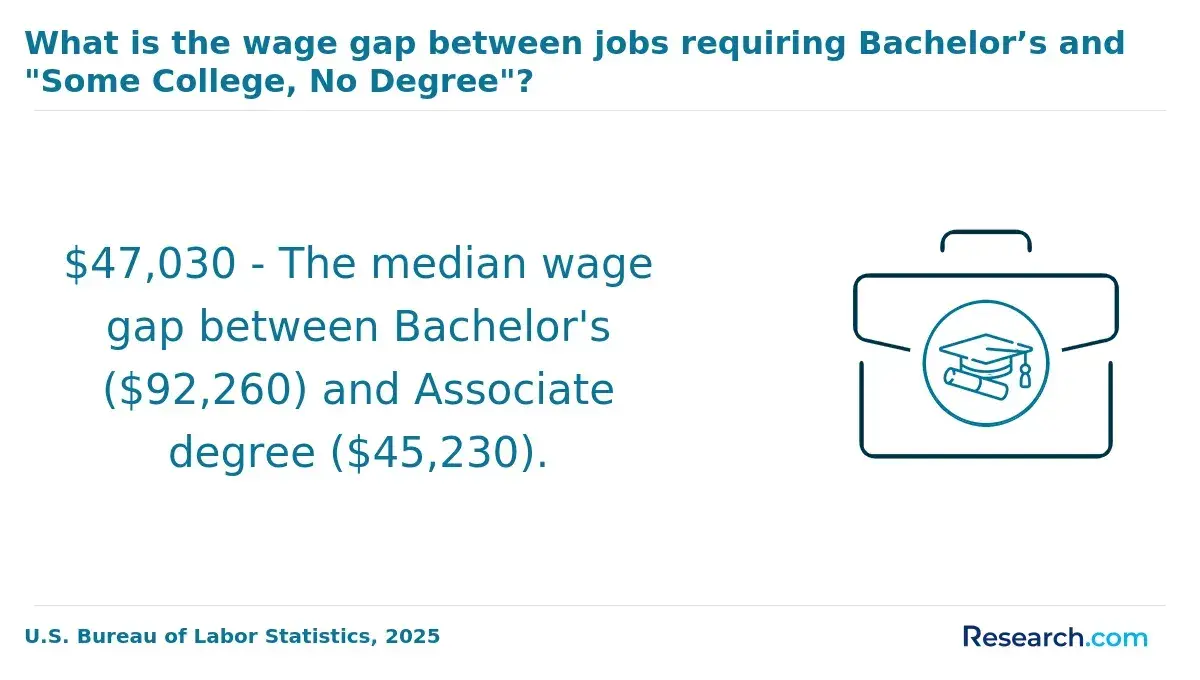
The industries that hire the most environmental science graduates are not always the highest-paying ones. High-volume hiring tends to occur where employers need recurring monitoring, permitting, inspections, environmental impact documentation, compliance reporting, and site assessment work.
The BLS employment outlook for environmental scientists and specialists points to continued need for professionals who can help organizations respond to environmental hazards, land-use decisions, resource management, and public health concerns. For students, this means the safest job-search strategy is usually to target sectors with both recurring compliance needs and transferable technical skills.
The table below separates high-hiring sectors from sectors that may have fewer openings but stronger pay potential. This helps readers avoid the common mistake of chasing only the highest-paying industry without checking whether entry-level opportunities are realistic.
| Industry | Hiring volume outlook | Common jobs for graduates | Why employers hire |
| Environmental consulting | High | Staff scientist, field technician, environmental planner, GIS analyst | Clients need permitting, site assessment, compliance support, and remediation planning |
| State and local government | High to moderate | Environmental inspector, water quality specialist, conservation planner | Agencies need monitoring, enforcement, public health protection, and land-use review |
| Waste management and remediation | Moderate to high | Hazardous materials specialist, remediation technician, environmental health and safety associate | Contaminated sites, industrial waste, and hazardous materials require trained staff |
| Engineering services | Moderate | Environmental scientist, permitting specialist, impact assessment analyst | Infrastructure and development projects need environmental review and compliance |
| Federal government | Moderate but competitive | Environmental protection specialist, resource management specialist, policy analyst | Federal agencies manage national environmental programs and regulatory oversight |
| Nonprofits and research organizations | Selective | Conservation associate, research assistant, outreach coordinator | Grant-funded projects need field, research, and community engagement support |
For a first job, consulting often provides the broadest exposure because graduates may work on wetlands, stormwater, soil sampling, environmental impact assessments, and regulatory reports in the same year. Government roles may offer better stability, but hiring cycles are often longer and job descriptions may require familiarity with specific statutes, public procurement, or civil-service rules.
Environmental science salaries are highly location-sensitive because the work is tied to local ecosystems, development pressure, industrial activity, state regulations, and public budgets. A salary that looks strong in a low-cost region may feel tight in a coastal metro with high housing costs, while a lower government salary may be more valuable if it includes strong health insurance, retirement contributions, and predictable hours.
Location also changes which industries are available. Energy-producing states may offer more environmental compliance and air-quality roles. Coastal states may have more climate resilience, wetlands, water quality, and environmental planning jobs. Large metro areas may offer corporate sustainability and consulting roles, while rural areas may have more conservation, agriculture, natural resources, or public-agency positions.
Before accepting an offer or choosing a sector, compare compensation using a total-value approach. The following steps help make the comparison more realistic:
- Compare the base salary with the BLS national median for environmental scientists and specialists, but adjust expectations for your region and experience level.
- Estimate housing, transportation, field travel, and commuting costs because environmental jobs may require site visits outside normal office locations.
- Review benefits, including health insurance, retirement contributions, paid leave, tuition support, overtime rules, and remote-work flexibility.
- Check whether the role builds transferable skills such as GIS, permitting, data analysis, environmental sampling, stakeholder communication, or project management.
- Ask how promotions work because a lower starting salary may be acceptable if the employer has transparent advancement steps.
The biggest mistake is comparing only annual salary. A $75,000 public-sector role with strong benefits and predictable hours may be a better fit than a higher-paying consulting role if the consulting job requires constant travel, unpaid overtime expectations, or limited promotion visibility. The opposite may be true for graduates who want rapid learning, client exposure, and faster movement into project management.
Higher earnings usually follow skills that make an environmental science graduate more useful in decisions, not just data collection. Employers reward professionals who can interpret environmental data, connect it to regulations, communicate risk, manage projects, and use technology to improve accuracy or efficiency.
Technical skill requirements are also changing. AI-assisted data screening, remote sensing, drone-based monitoring, automated sensors, and geospatial platforms are making routine data collection more efficient. That does not eliminate the need for environmental scientists, but it raises the value of people who can verify data quality, interpret results, understand field conditions, and explain findings to regulators, clients, or executives.
The skills below tend to improve earning potential across multiple sectors because they are transferable and tied to higher-responsibility work:
- GIS and spatial analysis: Useful in consulting, conservation, utilities, climate resilience, transportation, land-use planning, and natural resource management.
- Regulatory knowledge: Familiarity with environmental permitting, NEPA, Clean Water Act, Clean Air Act, RCRA, CERCLA, and state-level rules can move graduates into compliance and advisory roles.
- Data analysis: Skills in Excel, SQL, Python, R, statistics, and visualization help graduates move beyond fieldwork into modeling, reporting, and decision support.
- Environmental sampling and QA/QC: Employers value professionals who can collect defensible data and understand chain of custody, lab methods, and quality control.
- Project management: Budgeting, scheduling, client communication, subcontractor coordination, and report delivery often separate senior roles from entry-level roles.
- Business communication: The ability to explain environmental risk to nontechnical audiences is especially valuable in consulting, corporate sustainability, and government leadership.
Communication-heavy roles are becoming more important as organizations translate technical environmental findings into public reports, community meetings, and executive decisions. Graduates who want to strengthen that side of their profile may compare environmental science career development with an affordable online master's degree in communications, especially if they are interested in sustainability reporting, public engagement, or environmental policy communication.
Certifications do not automatically raise pay, but they can improve access to higher-responsibility roles, especially in consulting, safety, remediation, compliance, and project management. The most valuable credential depends on the industry you are targeting and the type of risk the employer manages.
Use certifications strategically. A credential is worth more when it matches a job family, is recognized by employers in your region, and builds on experience you already have or are actively gaining.
| Credential or certification | Best-fit industries | How it can support earnings | Important limitation |
| GIS certificate | Consulting, government, conservation, utilities, climate resilience | Supports analyst roles that combine environmental science with spatial decision-making | Portfolio quality and software fluency matter as much as the certificate |
| HAZWOPER training | Remediation, hazardous waste, emergency response, industrial compliance | May be required for field roles involving hazardous substances or contaminated sites | Training requirements vary by role and employer |
| Certified Environmental Professional-style credentials | Consulting, compliance, environmental management | Can strengthen credibility for experienced professionals moving into senior advisory roles | Many require experience, references, or exams; they are not usually entry-level shortcuts |
| Project Management Professional or project management certificate | Consulting, engineering, utilities, corporate sustainability | Supports movement into project manager, program manager, or team lead roles | Most valuable after you already manage budgets, timelines, or cross-functional work |
| LEED credential | Green building, sustainability, planning, real estate, facilities | Helpful for roles tied to sustainable design, buildings, and facilities strategy | Less useful for field ecology, remediation, or laboratory-heavy roles |
| EHS-related credentials | Manufacturing, energy, utilities, waste management, corporate compliance | Can support advancement into environmental health and safety leadership | Some safety credentials require specific experience or education backgrounds |
For students, the smartest sequence is usually degree first, skill portfolio second, targeted credential third. For example, a graduate aiming for remediation should prioritize field methods, HAZWOPER, and report writing. A graduate aiming for climate analytics should prioritize GIS, statistics, carbon accounting concepts, and data visualization.
Company size and organization type can matter as much as industry. A large utility, federal agency, or multinational consulting firm may have formal pay bands, benefits, training, and promotion systems. A small nonprofit or boutique consultancy may offer broader responsibilities sooner but less predictable pay progression.
The table below compares organization types by compensation structure and career-development trade-offs. This is important because two environmental science graduates in the same city can have very different earnings trajectories depending on employer type.
| Organization type | Earnings pattern | Career advantages | Potential drawback |
| Large consulting firm | Structured entry salaries with stronger upside for project managers and technical leads | Training, major clients, varied projects, recognizable experience | Billable-hour pressure, travel, and workload spikes |
| Small consulting firm | Highly variable; may reward versatile employees quickly | Early responsibility, close mentorship, broad exposure | Fewer formal promotion steps and less specialization support |
| Federal agency | Structured pay scales and benefits | Stability, mission impact, policy exposure, retirement benefits | Competitive hiring and slower onboarding |
| State or local agency | Often modest base pay with strong benefits | Community impact, predictable schedules, public-service experience | Budget constraints may slow raises or hiring |
| Large corporation | Potentially strong pay when sustainability is tied to risk, operations, or reporting | Cross-functional influence, bonuses in some roles, advancement into management | Environmental work may compete with business priorities |
| Nonprofit or research organization | Often lower and grant-dependent | Mission alignment, field research, public education, conservation impact | Limited salary growth and funding uncertainty |
Graduates who want management responsibility may eventually need business, finance, or operations knowledge in addition to environmental science. Some professionals build that skill set through employer training, while others compare broader management pathways such as the easiest online MBA programs when they want to move from technical roles into leadership.
Emerging environmental science careers are growing where regulation, technology, infrastructure, and climate risk overlap. These areas may not always have the largest number of entry-level openings yet, but they can offer strong future earnings for graduates who build specialized skills early.
One major example is PFAS. The EPA finalized the first national drinking water regulation for several PFAS chemicals in 2024, increasing the need for monitoring, treatment planning, compliance support, and risk communication. For environmental science graduates, this creates opportunities in water utilities, consulting, laboratories, engineering firms, and public agencies.
The emerging sectors below are worth watching because they connect environmental science with high-stakes operational or regulatory decisions:
- PFAS testing, treatment, and remediation: Strong fit for graduates interested in water quality, toxicology, analytical chemistry, environmental health, or remediation consulting.
- Climate risk and resilience: Strong fit for graduates with GIS, hydrology, planning, hazard modeling, and infrastructure adaptation skills.
- Carbon accounting and sustainability reporting: Strong fit for graduates who can combine environmental data, business reporting, emissions factors, and audit-ready documentation.
- Renewable energy permitting: Strong fit for graduates who understand wildlife, wetlands, land use, community impacts, and environmental review.
- Water reuse and stormwater management: Strong fit for graduates interested in urban planning, engineering collaboration, watershed science, and regulatory compliance.
- Environmental data technology: Strong fit for graduates who can work with sensors, remote sensing, dashboards, quality assurance, and automated monitoring systems.
The best strategy is not to chase every trend. Pick one technical theme, such as water quality or climate analytics, and pair it with a durable skill set like GIS, statistics, permitting, project management, or stakeholder communication. That combination is more resilient than a narrow tool-specific skill that may become outdated.
The best-paying environmental science sector is not automatically the best choice for every graduate. A strong decision balances earnings, employability, mission fit, lifestyle, advancement, and the skills you want to use every day. Students should think in terms of career direction, not just first salary.
A practical way to choose is to rank industries based on both financial and nonfinancial returns. The following framework helps compare options without overvaluing one salary number:
- Start with the role you want, not the industry name. Decide whether you prefer fieldwork, lab work, policy, data analysis, consulting, compliance, conservation, or business-facing sustainability.
- Use the BLS median as a benchmark. Compare offers or target roles with the $80,060 May 2024 median for environmental scientists and specialists, but adjust for region and experience.
- Check advancement paths. Ask whether the sector leads to senior scientist, project manager, compliance manager, program director, policy specialist, or sustainability leadership roles.
- Evaluate total compensation. Include benefits, retirement, bonuses, overtime, travel demands, tuition support, and remote or hybrid flexibility.
- Look for skill compounding. Favor roles that build GIS, regulatory writing, data analysis, project management, and stakeholder communication.
- Consider education ROI. If a master's degree is required for your preferred path, compare tuition, time out of the workforce, assistantships, employer reimbursement, and federal graduate loan limits such as the $20,500 annual unsubsidized loan limit.
- Avoid locking in too early. Choose a first job that builds transferable skills even if you later move from consulting to government, from fieldwork to analytics, or from compliance to sustainability.
Common mistakes include choosing an industry based only on average salary, ignoring cost of living, assuming all government jobs have the same benefits, underestimating consulting travel, and overlooking lower-paying roles that build rare technical expertise. A lower-paying first job can make sense if it gives you field methods, GIS, regulatory writing, or project exposure that leads to better roles within a few years.
For students still comparing environmental science against other graduate options, it can help to map each path by licensure, time to completion, debt, and earnings structure. Environmental science is typically more flexible across industries, while many clinical, education, and communication fields have more defined credential pathways.
Long-term career growth depends on whether a sector lets you move from task execution to judgment, project ownership, regulatory interpretation, budget responsibility, and people management. In environmental science, the best growth paths are usually those that turn scientific training into decisions that affect money, compliance, public safety, or infrastructure.
The BLS projects employment for environmental scientists and specialists to grow 4% from 2024 to 2034. That points to steady demand rather than explosive growth, so graduates should build skills that allow them to compete for the higher-value roles inside the field.
These sectors can offer strong long-term growth when paired with the right skills and credentials:
- Environmental consulting: Strong for professionals who want to progress from field scientist to project manager, client manager, principal consultant, or practice lead.
- Energy and utilities: Strong for graduates who want to combine environmental compliance, operations, permitting, water quality, air quality, and risk management.
- Federal government: Strong for those who value defined advancement ladders, policy specialization, and public-sector benefits.
- Corporate sustainability: Strong for professionals who can translate emissions, water, waste, and climate data into business decisions and external reporting.
- Remediation and hazardous materials: Strong for graduates comfortable with technical risk, field conditions, safety protocols, and specialized compliance work.
Growth is slower when a role remains narrowly task-based for too long. For example, repeated sample collection without progression into data interpretation, client communication, regulatory reporting, or project planning can limit salary growth. Students who enjoy applied science but want a more counseling-oriented career path may compare environmental science with a marriage and family therapist degree, where advancement depends more on licensure, supervised hours, and clinical specialization.
Other Things You Should Know About Environmental Science
Federal government, energy, utilities, engineering consulting, and corporate sustainability often offer the strongest earning potential. The best-paying option depends on specialization, location, experience, and whether the role involves compliance, risk, project management, or technical leadership.
Yes, environmental consulting can be a strong first job because it builds field, reporting, permitting, GIS, client communication, and project skills quickly. The trade-off is that travel, deadlines, and billable-hour expectations can be demanding.
Not always. A master's degree may help for research, policy, federal, management, or specialized technical roles, but many graduates increase earnings through experience, GIS skills, regulatory expertise, certifications, and project management.
Not automatically. A higher salary may come with more travel, emergency response, long hours, or higher liability. Compare salary with benefits, location costs, promotion paths, skill development, and the type of environmental work you actually want to do.
- Top 7 Highest Paying Environmental Careers https://unity.edu/career-corner/top-7-highest-paying-environmental-careers/
- Agriculture and Environmental Science Degree Careers and Salary in Europe - StudyinEurope.eu https://www.studyineurope.eu/agriculture-environment/agriculture-environment-degree-careers-salary-europe/
- 20 Highest-Paying Environmental Science Jobs in 2025 https://internshala.com/blog/highest-paying-environmental-science-jobs/
- Data show today's environmental science grads have more diverse job prospects https://www.onlineu.com/magazine/environmental-science-majors-career-outcomes
- Environmental Job Market Trends | ECO Canada https://eco.ca/research-and-resources/environmental-job-market-trends/
- 12 Types of Jobs You Can Get as a Natural Resources Professional https://www.nrep.org/blog/natural-resources-jobs