2027 Environmental Science Degree Concentration Outlook Report: Which Tracks Are Growing Faster, Paying More, and Hiring More Consistently

Co-Founder and Chief Data Scientist
Choosing an environmental science concentration is also a choice about institution type, cost, credibility, flexibility, and long-term return. The U.S. Bureau of Labor Statistics projects environmental scientists and specialists to grow 7% through 2033, faster than the average for all occupations, making program selection more important.
This guide is for students comparing public, private nonprofit, private for-profit, campus, and online options. You will learn which tracks are growing, paying well, hiring consistently, and offering the best value after tuition, aid, transfer credit, and career fit are considered.
Key Things You Should Know
- Fastest growth is strongest in environmental health and safety, climate resilience, environmental compliance, water resources, and environmental engineering-adjacent tracks, with BLS-published projections showing several related occupations growing faster than the labor-market average through 2033.
- Highest salary potential usually comes from concentrations that build quantitative, technical, or regulated-industry skills, especially environmental engineering support, geoscience, hydrology, GIS, compliance, and occupational or environmental health.
- Best degree value depends less on whether a school is public, private, nonprofit, for-profit, campus-based, or online and more on net price, accreditation, transfer credit, completion likelihood, fieldwork access, employer recognition, and borrowing needed to finish.
- How Do the Major Environmental Science Degree Concentrations Compare?
- Which Environmental Science Degree Concentrations Are Growing the Fastest?
How Do the Major Environmental Science Degree Concentrations Compare?
Environmental science is an interdisciplinary field that combines biology, chemistry, geology, data analysis, policy, and field methods to solve problems involving air, water, soil, ecosystems, climate, and human health. A concentration is the focused part of the degree that signals to employers what kind of environmental work you are prepared to do.
The table below compares common concentrations by career focus, skill intensity, and degree value. Use it to separate broad-interest tracks from technical tracks that may require more math, lab work, coding, field training, or regulatory knowledge.
| Concentration | Best Fit | Typical Roles | Value Consideration |
| Environmental policy and management | Students interested in regulation, permitting, sustainability programs, and public-sector work | Environmental compliance assistant, policy analyst, sustainability coordinator | Strong fit at public universities and nonprofit institutions with government, nonprofit, or internship pipelines |
| Environmental health and safety | Students who want practical, employer-facing work in workplaces, utilities, manufacturing, energy, and construction | EHS coordinator, safety specialist, compliance technician | Often offers strong entry-level access because many employers need continuous compliance support |
| Water resources and hydrology | Students who like fieldwork, data, chemistry, geology, and public infrastructure problems | Water quality technician, hydrology assistant, watershed specialist | Best when the program includes field sampling, GIS, and relationships with agencies or utilities |
| Climate science and resilience | Students interested in adaptation planning, climate risk, carbon accounting, and resilience projects | Climate analyst assistant, resilience coordinator, sustainability analyst | Higher value when paired with GIS, statistics, data visualization, or policy skills |
| GIS and environmental data science | Students who want technical, computer-based environmental work | GIS technician, remote sensing assistant, environmental data analyst | Can improve employability across many sectors, including remote and hybrid roles |
| Conservation biology and ecology | Students motivated by wildlife, habitat, biodiversity, and land management | Biological science technician, conservation technician, field ecologist assistant | Rewarding but often competitive; paid internships and field experience matter heavily |
| Environmental chemistry and toxicology | Students comfortable with lab science, contamination, sampling, and risk assessment | Lab analyst, environmental sampling technician, remediation technician | Can be valuable when the curriculum includes analytical chemistry, QA/QC, and hazardous-materials procedures |
Institution type changes the real value of each track. Public universities may have lower in-state tuition and strong agency ties; private nonprofits may offer smaller classes, stronger advising, or better internship support; private for-profit programs can be flexible but require careful checks on accreditation, cost, and outcomes; online programs can work well for adults if they include credible labs, field experiences, and career services.
College Board's 2024 pricing data put average published tuition and fees for full-time students at $11,610 for in-state public four-year institutions and $43,350 for private nonprofit four-year institutions. That gap does not automatically decide value, because scholarships, grants, transfer credits, housing costs, commuting, and time to completion can change the actual net price.
Which Environmental Science Degree Concentrations Are Growing the Fastest?
The fastest-growing concentrations tend to connect environmental science with regulation, infrastructure, health, climate adaptation, and technical analysis. Growth is not the same as easy hiring, but it indicates where employers are expected to need more workers over time.
The table below uses recent BLS occupational outlook data for closely related U.S. occupations. Because concentrations do not map perfectly to one job title, treat the figures as directional labor-market signals rather than promises for any specific graduate.
| Growth Tier | Concentration | Related Labor-Market Signal | Why It Is Growing |
| Very strong | Environmental health and safety | Occupational health and safety specialist roles are projected to grow faster than average through 2033 | Employers need ongoing support for workplace safety, environmental compliance, reporting, inspections, and risk reduction |
| Strong | Environmental science and compliance | Environmental scientists and specialists are projected to grow 7% through 2033 | Demand is supported by remediation, permitting, development review, corporate compliance, and environmental monitoring |
| Strong | Environmental engineering support | Environmental engineers are projected to grow 7% through 2033 | Infrastructure upgrades, waste treatment, water systems, and pollution-control projects create technical demand |
| Moderate to strong | Water resources and hydrology | Hydrologist employment is projected to grow 6% through 2033 | Water scarcity, flooding, stormwater management, and groundwater protection require specialized analysis |
| Moderate | Geoscience and environmental geology | Geoscientist employment is projected to grow 5% through 2033 | Energy transition, site assessment, groundwater, mining review, and hazard analysis support demand |
| Competitive but stable | Conservation biology and ecology | Wildlife and conservation-related roles grow more slowly and are often field-experience dependent | Public land, habitat, restoration, and nonprofit work continue, but funding can be grant-based or seasonal |
Students who want the highest-growth pathway should not choose a concentration based on the label alone. A climate resilience track with no GIS, statistics, planning, or internship component may be less marketable than a general environmental science track with strong technical electives and a practicum.
- Choose environmental health and safety if you want steady employer demand and are comfortable with regulations, inspections, documentation, and workplace risk.
- Choose water resources if you like science-heavy fieldwork and want to work with utilities, consulting firms, agencies, or watershed organizations.
- Choose GIS or environmental data if you want a concentration that can support hybrid, remote, consulting, and cross-sector roles.
- Choose conservation biology if mission fit matters most and you are willing to build experience through field seasons, internships, and possibly graduate study.
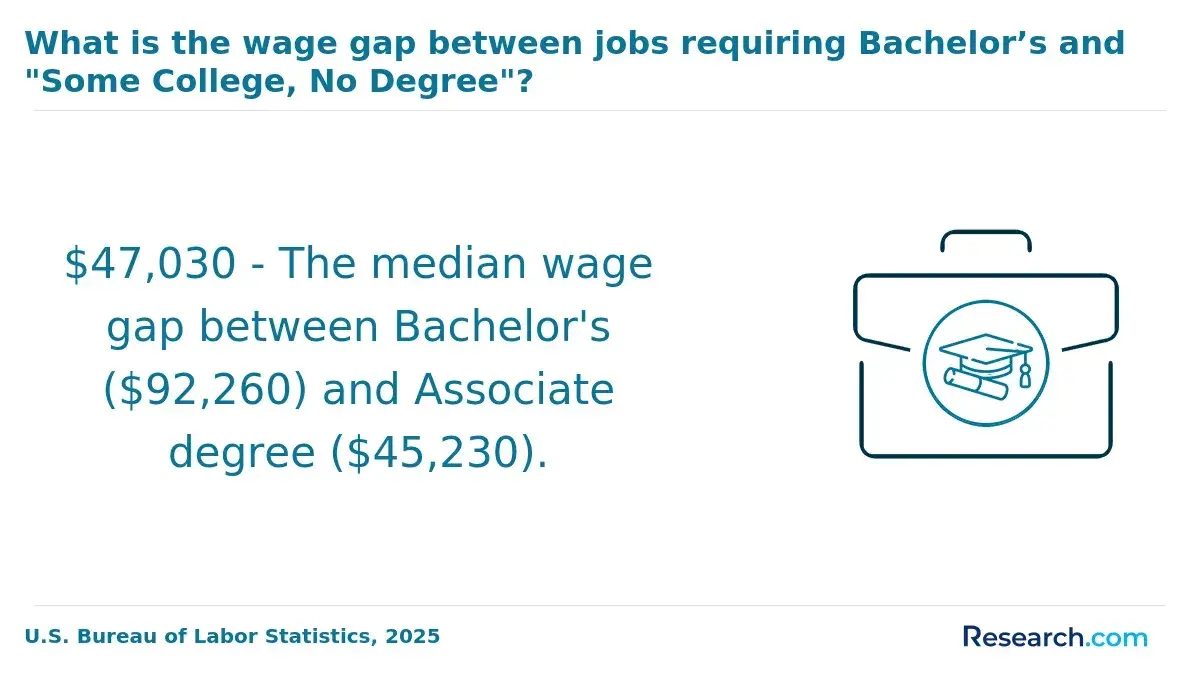
Salary potential is usually highest when a concentration gives students scarce technical skills, access to regulated industries, or preparation for graduate-level professional roles. Environmental science salaries vary by occupation, employer, location, degree level, and experience, so medians should be used as planning benchmarks rather than guarantees.
The table below compares salary-linked concentrations using BLS-published occupational wage data where the match is reasonably close. It highlights the career direction each concentration can support, not a guaranteed outcome for every degree holder.
| Concentration | Related Occupation | Recent Median Pay Signal | Salary Interpretation |
| Environmental engineering support | Environmental engineers | About $104,000 at the median in recent BLS wage reporting | Highest potential when students add calculus, physics, engineering design, water treatment, or graduate engineering pathways |
| Geoscience and environmental geology | Geoscientists | About $95,000 at the median in recent BLS wage reporting | Strong for students interested in groundwater, subsurface investigation, hazards, energy, mining review, or consulting |
| Water resources and hydrology | Hydrologists | About $90,000 at the median in recent BLS wage reporting | Often rewards students who combine field sampling, modeling, chemistry, GIS, and graduate-level specialization |
| Environmental health and safety | Occupational health and safety specialists | About $81,000 at the median in recent BLS wage reporting | Practical path for students who want applied compliance work in private industry, construction, utilities, or government |
| Environmental science and compliance | Environmental scientists and specialists | About $80,000 at the median in recent BLS wage reporting | Broad and flexible, but higher pay often requires technical depth, consulting experience, or regulatory specialization |
| Conservation biology and ecology | Zoologists, wildlife biologists, conservation roles | Typically lower than engineering, hydrology, and geoscience signals | Best for mission-driven students who understand the trade-off between public-interest work and salary ceiling |
Program cost should be evaluated against the salary range of the concentration. A high-tuition private nonprofit program may make sense if it provides substantial aid, strong placement into consulting or technical roles, and a high probability of graduating on time; the same price may be harder to justify for a lower-paid conservation pathway without scholarships or a low-debt plan.
Online delivery can be respected by employers when the institution is accredited and the program includes rigorous labs, field methods, GIS projects, and internship options. However, students should avoid programs that are convenient but weak in hands-on experiences, because environmental employers often expect evidence of sampling, reporting, mapping, lab, or compliance skills.
The best entry-level concentrations are those that help students prove they can do real environmental work before they graduate. Employers hiring for technician, coordinator, analyst, and assistant roles often look for field sampling, lab methods, GIS, regulatory writing, data cleaning, safety awareness, and internship experience.
The table below shows which tracks tend to translate most directly into first jobs. It also explains what students should build into the degree so the concentration becomes more than a line on a transcript.
| Concentration | Entry-Level Accessibility | Common First Roles | Experience That Improves Readiness |
| Environmental compliance | Strong | Compliance technician, environmental technician, permitting assistant | Regulatory writing, site visits, inspection reports, environmental law basics |
| Water quality | Strong | Water quality technician, lab assistant, sampling technician | Field sampling, chain of custody, chemistry labs, QA/QC, wastewater or stormwater exposure |
| GIS and environmental data | Strong | GIS technician, mapping assistant, data technician | GIS portfolio, Python or R basics, remote sensing, spatial statistics, dashboard projects |
| Environmental health and safety | Strong | EHS assistant, safety coordinator, compliance associate | OSHA awareness, incident documentation, hazardous communication, audit support |
| Conservation biology | Moderate | Field technician, restoration assistant, biological science technician | Seasonal fieldwork, species identification, GPS use, survey methods, physical field readiness |
| Climate and sustainability | Moderate | Sustainability assistant, climate program coordinator, ESG data assistant | Carbon accounting exposure, spreadsheet modeling, climate risk basics, communications skills |
Students comparing institution types should ask how each school turns coursework into work samples. Public universities may offer agency research and lower-cost field stations; private nonprofits may offer closer advising and alumni networks; online programs may be best for working adults if they include local field placements or intensive labs.
If your main goal is a health-focused helping profession rather than environmental fieldwork, compare environmental health tracks with adjacent online graduate options such as SLP online programs. That comparison can clarify whether you want public health, clinical practice, environmental compliance, or community-based science.
Environmental science graduates are hired across government, consulting, infrastructure, energy, manufacturing, nonprofits, education, laboratories, and corporate sustainability teams. The broad employer base is one reason a well-designed environmental science degree can be flexible, but students need to align their concentration with the employers they actually want.
The table below connects major employer groups with the concentrations they most often value. This helps students avoid choosing a track that sounds interesting but does not match their preferred work setting.
| Employer Group | Concentrations Often Valued | Work Environment | Hiring Notes |
| Environmental consulting firms | Compliance, water resources, GIS, environmental chemistry, geology | Client projects, site visits, reports, sampling, permitting | Often a strong entry point, but workloads and travel can vary |
| Federal, state, and local agencies | Policy, water, conservation, environmental science, GIS | Regulation, monitoring, planning, enforcement, public programs | Hiring can be stable but may depend on civil-service rules and budgets |
| Utilities and public works | Water quality, hydrology, EHS, compliance, GIS | Water, wastewater, stormwater, infrastructure, asset management | Good fit for practical students who want essential-service work |
| Manufacturing, energy, and construction | EHS, compliance, waste management, environmental chemistry | Facilities, audits, permits, safety systems, environmental reporting | Can offer strong pay for students comfortable with regulated operations |
| Nonprofits and land trusts | Conservation biology, ecology, restoration, policy, climate resilience | Habitat work, outreach, grants, field projects, community engagement | Mission fit is high, but salaries and funding may be more variable |
| Corporate sustainability teams | Climate, ESG data, communications, policy, environmental management | Reporting, supplier data, emissions tracking, stakeholder communication | Often favors candidates with data, business, and communication skills |
Students who like environmental topics but prefer communication-heavy work should consider whether sustainability reporting, public outreach, or science communication is a better fit than field science. In that case, an affordable online master's degree in communications may be a useful alternative or later complement to an environmental science background.
Institution type can influence access to these employers. Regional public universities may have strong local government ties; private nonprofits may have alumni connections with consulting or corporate sustainability teams; online programs may help working adults change careers, but they should be evaluated for internship coordination in the student's region.
The best U.S. job markets for environmental science concentrations are usually places with dense regulation, infrastructure investment, coastal or water-risk issues, energy development, public land management, consulting activity, or major corporate headquarters. Remote opportunities exist, but they are more common in GIS, data analysis, sustainability reporting, climate risk, and environmental project coordination than in field sampling or lab work.
The table below summarizes how geography and work format interact with each concentration. It is not a ranking of cities; it is a practical guide to where each track tends to travel well.
| Concentration | Strong Job-Market Conditions | Remote or Hybrid Potential | Geographic Limitation |
| GIS and environmental data | Regions with consulting, utilities, planning, climate risk, and infrastructure mapping | High compared with field-heavy tracks | Portfolio quality can matter more than location, but local datasets help |
| Water resources | Coastal areas, drought-prone regions, flood-prone regions, growing metros, agricultural regions | Moderate; analysis may be hybrid, sampling is site-based | State water law and regional hydrology knowledge can matter |
| Environmental compliance | Industrial corridors, fast-growing metros, energy regions, construction-heavy markets | Moderate; reporting may be hybrid, inspections are site-based | Regulations and permitting processes vary by state and locality |
| EHS | Manufacturing, logistics, construction, healthcare, energy, and university-dense regions | Moderate to low for entry-level roles, higher for management or audit support | Facility-based experience is often important early in the career |
| Conservation and ecology | Public-land states, coastal habitats, restoration markets, research stations, nonprofit networks | Low for field roles, moderate for data or program roles | Seasonality and relocation are common early-career constraints |
| Climate and sustainability | Large metros, corporate headquarters, public planning agencies, coastal and resilience-focused regions | Moderate to high depending on data and reporting duties | Entry-level roles may require business, policy, or analytics skills beyond environmental coursework |
Students choosing an online environmental science program should remember that online is a delivery format, not an institution type. An online degree can come from a public university, private nonprofit, or private for-profit institution, and its value depends on accreditation, faculty quality, labs, fieldwork arrangements, career support, and employer recognition.
- Search job postings in your preferred state using the exact concentration terms: water quality, EHS, GIS, compliance, sustainability, restoration, hydrology, or environmental technician.
- Check whether postings ask for field sampling, GIS software, OSHA training, laboratory methods, statistics, or regulatory writing, then compare those requirements with the curriculum.
- Ask online programs how students complete labs, field hours, internships, and capstone projects if they do not live near campus.
- Favor programs with regional employer partnerships if you plan to stay in one state after graduation.
Skills and certifications can raise the value of an environmental science concentration because employers often hire for applied readiness. A transcript matters, but a portfolio, field log, GIS map series, lab competency, internship report, or safety credential can make a candidate easier to evaluate.
The table below shows high-value skill areas by concentration. Students should use it to identify gaps before they choose electives, internships, or certificate add-ons.
| Skill or Credential Area | Most Relevant Concentrations | Why It Adds Value | Typical Evidence |
| GIS and remote sensing | GIS, water, conservation, climate, planning, compliance | Spatial analysis is used across permitting, habitat, utilities, resilience, and risk mapping | Map portfolio, ArcGIS or QGIS projects, remote-sensing analysis |
| Statistics and data tools | Climate, GIS, hydrology, ecology, sustainability | Environmental employers increasingly expect data cleaning, visualization, and defensible analysis | R or Python projects, dashboards, regression or modeling assignments |
| Field sampling and QA/QC | Water, chemistry, compliance, ecology, geology | Sampling errors can undermine regulatory and scientific work | Field notebooks, lab reports, chain-of-custody practice, methods training |
| Regulatory writing | Compliance, policy, EHS, consulting, water | Many jobs require reports that are accurate, concise, and defensible | Permit memos, inspection reports, environmental assessment excerpts |
| OSHA, HAZWOPER, and safety awareness | EHS, remediation, consulting, environmental chemistry | Some field and hazardous-site roles require safety preparation before site access | Documented training from recognized providers, employer-required refreshers where applicable |
| Carbon accounting and sustainability reporting | Climate, sustainability, policy, corporate environmental management | Organizations need credible emissions data and reporting support | Greenhouse-gas inventory project, reporting template, spreadsheet model |
Certifications vary by state, employer, and role, so students should not pay for every credential they see advertised. The best approach is to collect five to ten local job postings, identify repeated requirements, and choose credentials that appear often enough to justify the cost.
- Confirm institutional accreditation through a recognized accreditor before comparing tuition.
- Ask whether the program includes field methods, labs, internships, and employer-reviewed projects.
- Compare total cost after grants, scholarships, transfer credits, fees, housing, commuting, and lost work time.
- Match electives to job postings in your target region instead of choosing only the most interesting course titles.
- Build a portfolio with maps, reports, lab outputs, data visualizations, or policy briefs before graduation.
Students interested in counseling, family systems, or community mental health should not force an environmental science degree to fit a different career goal. A marriage and family therapist degree serves a very different licensure path and should be compared separately if the desired outcome is clinical practice.
The best return on investment usually comes from the lowest net-cost accredited program that still gives students the concentration, applied experiences, and employer access needed for their target role. ROI is not simply the highest salary; it is the relationship among total cost, debt, completion time, career alignment, and realistic earnings potential.
The table below compares institution and delivery models. Public, private nonprofit, private for-profit, and online categories can overlap, so students should evaluate both institutional control and delivery format together.
| Model | Potential ROI Strength | Main Risk | Best Fit |
| In-state public university | Often strong because published tuition is lower and state agency ties can be useful | Large classes, limited advising, or restricted access to high-demand labs can slow progress | Traditional students seeking lower cost, field access, and broad employer recognition |
| Out-of-state public university | Can be strong if the concentration is rare or highly respected | Out-of-state tuition can reduce value unless aid is substantial | Students targeting a specialized track, region, or employer network not available in-state |
| Private nonprofit institution | Can be strong when grants, advising, internships, and graduation support offset higher sticker price | High published tuition can lead to excessive borrowing if aid is weak | Students who benefit from smaller programs, close faculty access, or strong alumni networks |
| Private for-profit institution | May offer flexibility for adults and accelerated scheduling | Requires careful review of accreditation, transferability, completion outcomes, and employer recognition | Working adults who need scheduling flexibility and can verify outcomes before enrolling |
| Online accredited program | Can be strong when it reduces relocation, commuting, and lost income | Weak fieldwork, lab access, or internship support can hurt career readiness | Working professionals, military students, caregivers, and career changers who need flexibility |
| Community college transfer pathway | Often excellent for cost control when credits transfer cleanly | Poor advising or non-transferable science credits can extend time to degree | Cost-sensitive students who plan early with both the two-year and four-year institution |
A common mistake is comparing advertised tuition instead of total net cost. Students should include fees, lab supplies, field-trip costs, software, housing, transportation, summer field courses, lost wages, transfer-credit loss, and the cost of taking longer than planned to graduate.
Use this ROI sequence before committing to a program:
- Start with the career target, such as EHS coordinator, GIS technician, water quality technician, sustainability analyst, or conservation field technician.
- Identify the concentration and skills most commonly requested in regional job postings.
- Compare accredited programs by net price, not sticker price, using financial aid offers and transfer evaluations.
- Check whether the program has required labs, fieldwork, internships, GIS access, and career support.
- Estimate debt against realistic entry-level and median salary signals for the related occupation.
- Choose the least expensive option that does not weaken completion odds or career readiness.
Students aiming for environmental management, sustainability leadership, or corporate operations may eventually compare science graduate study with business pathways such as the easiest online MBA programs. That route can make sense after gaining technical experience, but it is usually not a substitute for entry-level environmental science skills.
Long-term job security is strongest in concentrations tied to essential services, legal compliance, infrastructure, public health, water, risk management, and transferable technical skills. It is weaker when a track depends heavily on seasonal grants, narrow research funding, or a small number of local employers.
The table below ranks long-term security factors rather than short-term excitement. It helps students choose a concentration that can adapt as regulations, climate risks, technology, and employer needs change.
| Concentration | Long-Term Security | Why It Holds Up | Best Protection Against Career Risk |
| Environmental health and safety | Very strong | Employers must manage workplace hazards, audits, documentation, and compliance continuously | Add OSHA-related training, incident analysis, and facility experience |
| Water resources and water quality | Very strong | Water supply, wastewater, stormwater, flooding, and contamination are persistent public needs | Add hydrology, chemistry, GIS, and data analysis |
| Environmental compliance | Strong | Permitting, inspections, reporting, and remediation continue across economic cycles | Learn federal, state, and local regulatory frameworks and technical writing |
| GIS and environmental data | Strong | Spatial and data skills transfer across environment, planning, utilities, insurance, and climate-risk work | Build a portfolio and keep software skills current |
| Climate and sustainability | Moderate to strong | Risk disclosure, resilience, energy transition, and emissions tracking are growing concerns | Pair climate coursework with analytics, finance, policy, or engineering context |
| Conservation biology | Moderate | Biodiversity, habitat, and restoration remain important, but funding can fluctuate | Develop GIS, statistics, permitting, grant writing, and restoration project experience |
AI and automation are changing environmental work, but they are more likely to reshape tasks than eliminate the need for trained professionals. Routine data cleaning, mapping, report drafting, and monitoring may become more automated, while field judgment, regulatory interpretation, stakeholder communication, and defensible scientific reasoning remain valuable.
The safest academic strategy is to combine a mission-focused concentration with durable technical skills. A conservation student with GIS and statistics has more options than a conservation student with only species-interest coursework; a policy student with data visualization and regulatory writing has more options than a policy student with only theory.
Consistent hiring demand is different from fast growth. A concentration can grow quickly but still have relatively few openings, while another may grow moderately but hire steadily because every city, utility, manufacturer, consulting firm, construction company, and public agency needs compliance or monitoring support.
The table below summarizes hiring consistency by employer diversity, recurring regulatory need, and entry-level job availability. These factors matter because steady hiring can reduce the risk of depending on a narrow or grant-funded job market.
| Concentration | Hiring Consistency | Common Employers | Main Reason Demand Repeats |
| Environmental compliance and permitting | High | Consulting firms, state agencies, local governments, energy firms, developers | Permits, inspections, impact reviews, and reporting are recurring obligations |
| Environmental health and safety | High | Manufacturing, construction, utilities, hospitals, universities, logistics employers | Workplace safety and environmental compliance require ongoing staff attention |
| Water quality and water resources | High | Utilities, environmental labs, engineering firms, watershed districts, public works departments | Drinking water, wastewater, stormwater, and groundwater systems need continuous monitoring |
| GIS and environmental data | Moderate to high | Consulting firms, government agencies, insurers, climate firms, planning departments | Spatial analysis supports permitting, risk mapping, conservation, utilities, and resilience planning |
| Climate and sustainability | Moderate | Corporations, universities, cities, nonprofits, consulting firms | Demand is rising, but job titles and budgets vary by employer and economic cycle |
| Conservation and wildlife | Moderate to competitive | Federal and state agencies, nonprofits, parks, restoration firms, research groups | Demand exists, but hiring may be seasonal, grant-funded, or geographically limited |
The most reliable hiring strategy is to choose a concentration that leads to more than one employer type. For example, water resources can connect to utilities, consulting, public works, labs, and watershed groups, while a narrowly designed wildlife track may depend more heavily on seasonal fieldwork and competitive agency openings.
- Prioritize concentrations with regulated work, because laws and permits create recurring staffing needs.
- Look for programs with employer-connected internships, not just classroom coursework.
- Ask whether recent graduates entered consulting, public agencies, utilities, labs, nonprofits, or graduate school.
- Compare job boards in your target state before enrolling, because environmental hiring is highly regional.
Other Things You Should Know About Environmental Science
For many students, environmental compliance, water resources, environmental health and safety, and GIS offer the best balance of growth, hiring consistency, and transferable skills. The best choice depends on whether you prefer fieldwork, data, regulation, lab work, policy, or employer-facing operations.
It can be, if the school is properly accredited and the program includes credible labs, fieldwork, GIS projects, internships, and career support. Employers are usually more concerned with skills, experience, accreditation, and work samples than with online delivery alone.
No. In-state public programs often have a cost advantage, but a private nonprofit with strong aid, better advising, faster completion, or stronger internship access may offer better value for some students. Compare net price, not sticker price.
Ask whether the program is accredited, how labs and fieldwork are completed, what employers recruit students, how transfer credits apply, what recent graduates do, and how much debt students typically need to finish. Also ask whether the concentration matches real job postings in your target region.
- What Can You Do With an Environmental Science Degree? https://willamette.edu/academics/college/environmental-science/career-options
- Data show today's environmental science grads have more diverse job prospects https://www.onlineu.com/magazine/environmental-science-majors-career-outcomes
- 10 careers you can have with an environmental science degree - SMWC https://www.smwc.edu/10-careers-you-can-have-with-an-environmental-science-degree-blog-july-20/
- 16 Innovative Environmental Science Careers https://www.collegeadvisor.com/resources/environmental-science-careers/
- Environmental Consulting Jobs: Career Guide for Science Grads | Extern https://www.extern.com/post/environmental-consulting-jobs-career-guide
- How to Find Entry Level Jobs with an Environmental Science Degree https://facs.com/blog/how-to-find-entry-level-jobs-with-an-environmental-science-degree/
- Agriculture and Environmental Science Degree Careers and Salary in Europe - StudyinEurope.eu https://www.studyineurope.eu/agriculture-environment/agriculture-environment-degree-careers-salary-europe/