2027 Environmental Science Degree Internship Outcomes Report: Paid Experience, Placement Rates, and Career Impact

Co-Founder and Chief Data Scientist
Environmental Science students face a practical question: which internship will actually improve job prospects, pay, and career direction? The stakes are higher as entry-level roles increasingly expect GIS, field sampling, compliance, and data skills before graduation. The U. S. Bureau of Labor Statistics reports a $80,060 median annual wage for environmental scientists and specialists in May 2024, with projected growth faster than average.
This guide helps students, parents, and career changers evaluate paid opportunities, conversion potential, salary impact, and smart placement strategies before committing to an Environmental Science internship.
Key Things to Know About Internship Outcomes in Environmental Science Industry
- Paid Environmental Science internships are available, especially in consulting, utilities, energy, government contractors, and corporate sustainability; NACE's 2024 internship research places average bachelor's-level intern pay at about $23.67 per hour across majors, making unpaid offers worth extra scrutiny.
- Full-time conversion is strongest when the internship includes measurable project ownership, supervisor feedback, and hiring-team exposure; employer-wide NACE conversion benchmarks sit around the low-to-mid 50% range, but Environmental Science outcomes vary by employer type, region, and funding cycle. The highest-ROI internships usually build evidence of technical skill: GIS maps, field logs, compliance reports, environmental impact summaries, water or soil sampling protocols, R/Python analysis, or sustainability metrics that can be shown in a portfolio.
- How important are internships for Environmental Science degree students?
- How early should a Environmental Science student look for internship opportunities?
How important are internships for Environmental Science degree students?
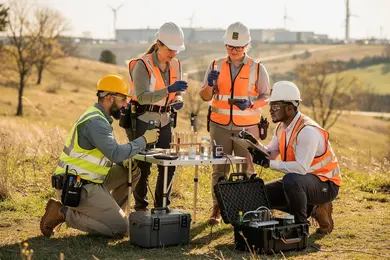
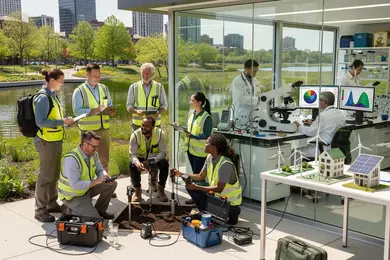
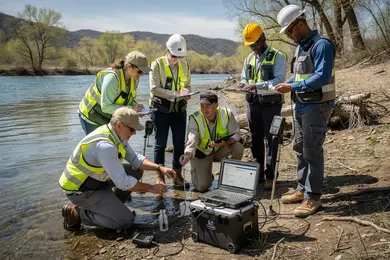
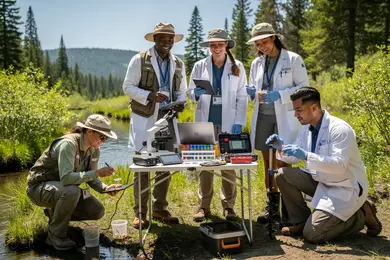
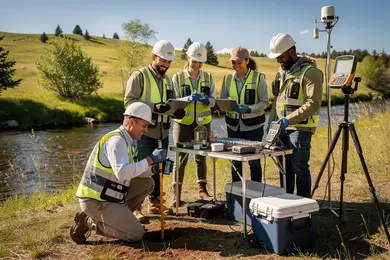
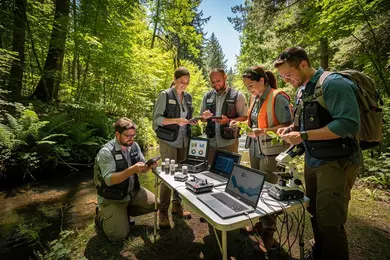
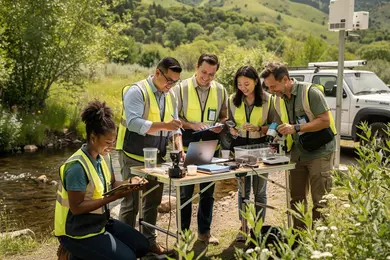
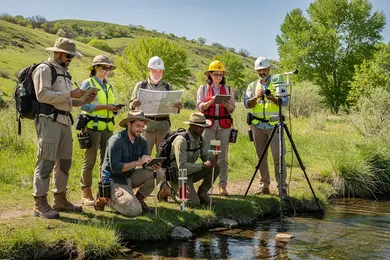
Internships are often the bridge between an Environmental Science degree and a first job because many entry-level postings ask for applied experience with fieldwork, environmental regulations, data collection, or geospatial tools. Coursework proves academic preparation; internships show employers that a student can work safely in the field, document findings, communicate with project teams, and follow real compliance standards.
For Environmental Science majors, "internship outcome" usually means more than a summer job. It includes paid experience, practical skill development, professional references, portfolio evidence, and sometimes a return offer or referral into a full-time role. The value is highest when the work aligns with a target career path such as environmental consulting, conservation science, water quality, environmental health and safety, sustainability analysis, remediation, or permitting.
The table below summarizes how internship outcomes typically differ by employer setting. It helps students compare options based on likely experience, career signal, and long-term placement value rather than choosing only by brand name or hourly pay.
| Internship setting | Typical work exposure | Career value | Watch-outs |
| Environmental consulting firms | Site assessments, sampling, permitting support, client reports | Strong for entry-level environmental scientist, consultant, or field technician roles | Travel, seasonal workload, and strict documentation expectations |
| Government agencies | Water quality monitoring, habitat surveys, regulatory support, public data work | Strong for public-sector and policy-adjacent careers | Hiring may depend on budgets, eligibility rules, and civil service timelines |
| Utilities, energy, and infrastructure | Compliance monitoring, environmental impact documentation, safety coordination | Strong for stable employer pipelines and compliance careers | May require site access, background checks, or safety training |
| Nonprofits and conservation organizations | Restoration, outreach, species monitoring, community projects | Strong for mission-driven experience and graduate school narratives | Paid roles may be limited; mentorship quality varies |
| Corporate sustainability teams | Carbon accounting support, ESG data, waste audits, reporting dashboards | Strong for sustainability analyst and operations roles | May be more data- and reporting-heavy than field-based |
A common mistake is treating any "green" internship as equally useful. A campus recycling outreach role, for example, may be valuable for sustainability communications but less relevant for a student targeting wetland delineation, environmental compliance, or remediation fieldwork.
How early should a Environmental Science student look for internship opportunities?
Environmental Science students should begin searching earlier than many expect because paid summer roles at larger employers, utilities, engineering firms, and government contractors often open in the fall or early winter. Waiting until spring can still work, especially for local nonprofits, field stations, and small consulting firms, but competition may be higher for paid roles with structured training.
A practical timeline helps students avoid the most common timing error: building a resume only after applications are already closing. The sequence below is useful because Environmental Science internships often require more preparation than a general office internship, including safety awareness, lab familiarity, GIS samples, field availability, and sometimes a driver's license or physical fieldwork capacity.
- First year: join an environmental club, volunteer for a campus lab or restoration project, complete introductory biology, chemistry, geology, or environmental systems coursework, and start a simple project portfolio.
- Sophomore year: apply for local field assistant, lab assistant, parks, conservation, water testing, or GIS support roles, even if they are part-time or short-term.
- Junior fall: target structured paid internships, consulting firms, utilities, agencies, and corporate sustainability teams; tailor resumes by role type rather than sending one generic version.
- Junior spring: pursue smaller employers, faculty referrals, municipal agencies, and research placements; ask directly whether strong interns are considered for full-time openings.
- Senior year: prioritize internships, co-ops, or part-time roles that can convert quickly into environmental technician, staff scientist, compliance assistant, or sustainability analyst positions.
Students who discover late that their interests are more communication-focused than field-based can still use environmental experience to pivot into policy, outreach, science writing, or public affairs. For students evaluating broader graduate options, an affordable online master's degree in communications may be relevant if they want to combine environmental knowledge with public engagement, advocacy, or organizational messaging.
The trade-off is clear: applying early gives access to more structured and often better-paid internships, while applying later may allow students to use newer coursework or faculty relationships to secure a niche local placement. The best strategy is not either-or; build a fall target list, then keep a spring backup list for municipal, nonprofit, and research opportunities.
The best internship depends on the student's target outcome. A student aiming for environmental consulting should prioritize field sampling, Phase I environmental site assessments, permitting, and client report support. A student aiming for sustainability should look for emissions inventory, waste audits, procurement data, and reporting systems. A student interested in conservation should focus on habitat monitoring, restoration, species surveys, and geospatial documentation.
The table below compares internship formats that Environmental Science students commonly encounter. It is designed to help readers match the format to their goals, not to rank one model as universally best.
| Program type | Best fit | Likely outcome strength | When it may not make sense |
| Structured corporate or consulting internship | Students seeking paid experience and possible return offers | High when the employer has a defined early-career hiring pipeline | Less ideal if the role is mostly administrative and not technical |
| Government agency internship | Students interested in regulation, public lands, water, air quality, or environmental planning | Strong for credibility and public-sector applications | Conversion may be slower because public hiring follows formal processes |
| Faculty-led research placement | Students considering graduate school, lab work, ecology, climate research, or data analysis | Strong for academic references and research skills | May not provide direct employer exposure outside the university |
| Field station or conservation internship | Students seeking ecology, wildlife, restoration, or natural resource experience | Strong for hands-on field competence | Pay, housing, and transportation support can vary widely |
| Project-based micro-internship | Students needing a portfolio item quickly | Moderate, especially for GIS, data cleaning, or sustainability reporting samples | Usually weaker for mentorship and full-time conversion |
An unpaid internship may be worth considering only when it offers rare access, strong supervision, clear deliverables, and manageable costs. If the role requires commuting, field gear, or temporary housing, students should calculate the real cost before accepting; the 2025 IRS standard mileage rate of $0.70 per mile shows how quickly transportation alone can reduce the value of an unpaid placement.
Students who realize they are more motivated by counseling, community resilience, or family systems than technical environmental work should step back before accepting a low-fit internship. In that case, comparing a marriage and family therapist degree may be more useful than forcing an Environmental Science pathway that does not match long-term interests.
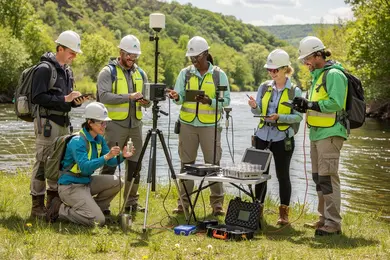
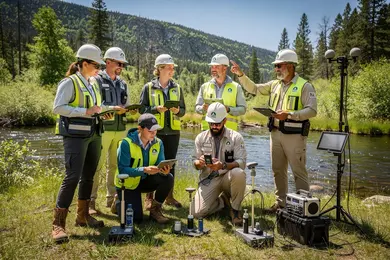
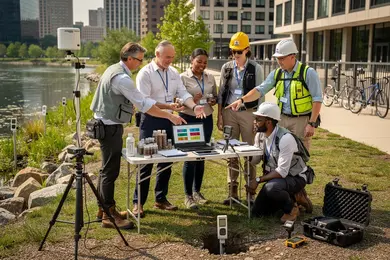
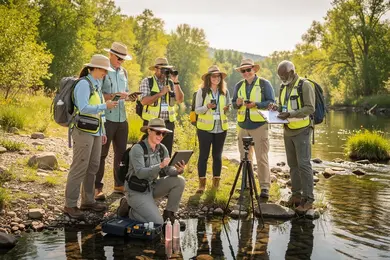
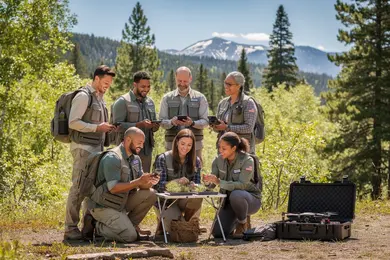
A strong Environmental Science internship should teach students how environmental work is performed outside the classroom. That includes the discipline of documenting conditions accurately, following protocols, using software correctly, communicating limitations, and understanding how scientific findings influence permitting, compliance, restoration, or business decisions.
The skill mix varies by role, but the table below shows the most common technical and professional experiences that help internship outcomes translate into stronger job applications.
| Internship role focus | Skills students may build | Useful portfolio evidence |
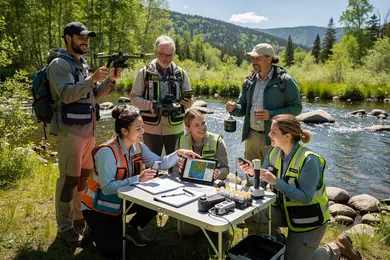
| Water quality or field sampling | Sample collection, chain-of-custody documentation, instrument calibration, field notes | Field log template, sampling summary, quality control explanation |
| GIS and remote sensing | ArcGIS or QGIS mapping, spatial analysis, land-use interpretation, data layers | Map package, methodology note, before-and-after analysis |
| Environmental compliance | Permit tracking, inspection support, regulatory documentation, incident reporting | Compliance checklist, anonymized reporting sample, audit support summary |
| Sustainability analysis | Waste audits, emissions data, supplier information, dashboard reporting | Metrics dashboard, data dictionary, recommendations memo |
| Ecology or conservation | Species monitoring, habitat assessment, restoration tracking, GPS data collection | Monitoring report, restoration photo log, habitat map |
AI and automation are changing what "entry-level" means in this field. Interns may use AI-assisted literature review, automated data cleaning, drone imagery, sensor datasets, or GIS plugins, but employers still need humans who can verify field conditions, understand data limitations, and avoid unsupported environmental claims.
Students should leave an internship with at least one concrete artifact they can discuss in an interview. If confidentiality rules prevent sharing the work directly, they can create a generalized version that explains the method, tools used, and decision impact without exposing private site or client information.
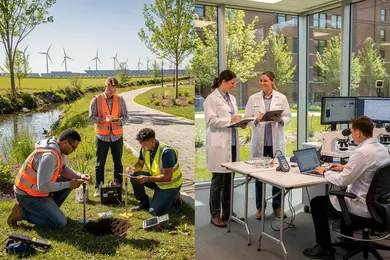
Remote Environmental Science internships can be valuable, but they are not interchangeable with field-based placements. In-person internships are usually stronger for sampling, site assessment, environmental health and safety, restoration, and field team coordination. Remote internships can be strong for GIS, sustainability reporting, environmental data analysis, policy research, climate risk summaries, and compliance documentation.
The table below compares remote, hybrid, and in-person formats. Students should use it to evaluate learning quality and conversion potential, not simply convenience.
| Format | Best strengths | Career limitations | Good fit for |
| In-person | Fieldwork, lab work, safety training, supervisor visibility, team integration | May require commuting, relocation, field gear, or irregular hours | Consulting, remediation, conservation, water quality, environmental health and safety |
| Hybrid | Combines field exposure with reporting, mapping, or analysis time | Requires good scheduling and clear communication | Compliance, sustainability, GIS-supported field programs, agency work |
| Remote | Data analysis, GIS, research, documentation, sustainability metrics | Weaker for hands-on field credibility unless paired with other experience | Students with transportation limits, data-focused goals, or existing field experience |
Remote internships make the most sense when the employer has structured check-ins, defined outputs, software access, and a supervisor who reviews work regularly. A remote role with no feedback can be weaker than a local volunteer field project because it may not produce credible references or applied skill evidence.
The smartest path for many students is hybrid sequencing: gain at least one field or lab experience, then add a remote data, GIS, or sustainability project. That combination shows employers both practical environmental exposure and modern analytical capability.
Yes, paid Environmental Science internships are available, but access depends heavily on employer type, location, funding, and the technical nature of the work. Paid roles are more common in environmental consulting, utilities, energy, manufacturing, infrastructure, government contractors, and larger corporate sustainability teams. Unpaid or stipend-based roles are more common in small nonprofits, some conservation programs, and certain research settings.
NACE's 2024 internship compensation data reported average bachelor's-level intern wages around $23.67 per hour across fields. Environmental Science students should not treat that as a guaranteed rate, but it is a useful benchmark when evaluating whether an offer is competitive, especially if the role requires field travel, specialized skills, or prior coursework.
Before accepting an unpaid or low-paid internship, students should compare the opportunity cost with the career value. The following questions help clarify whether the role is worth it.
- Will the internship produce a named supervisor who can provide a detailed reference?
- Does the role include technical tasks such as GIS, sampling, compliance documentation, data analysis, or environmental reporting?
- Are transportation, housing, field equipment, background checks, or safety training costs covered?
- Will the employer define the final deliverable before the internship starts?
- Does the experience clearly support the student's target role after graduation?
A paid internship with poor supervision may still be less valuable than a modest stipend role with excellent field training and strong references. However, students should be cautious about unpaid roles that replace regular staff work, require major out-of-pocket spending, or cannot explain what the intern will learn.
There is no single national conversion rate for Environmental Science internships because outcomes vary by consulting market, agency hiring rules, employer size, and funding cycle. Still, employer-wide internship research from NACE provides a useful planning benchmark: many organizations convert a substantial share of interns into full-time hires, commonly around the low-to-mid 50% range across participating employers. Environmental Science students should use that as a general labor-market signal, not a promise.
Conversion is more likely when the internship resembles the employer's entry-level job. For example, a consulting intern who performs supervised site visits, prepares field notes, supports report drafts, and interacts with project managers is easier to evaluate for a staff scientist or environmental technician role than an intern who only observes meetings.
Students can increase conversion odds by managing the internship like a long interview. These actions matter because return offers usually depend on reliability, coachability, documentation quality, and team fit as much as technical knowledge.
- Ask during the first week what strong intern performance looks like and how it will be evaluated.
- Keep a weekly record of projects, tools used, field hours, deliverables, and feedback received.
- Request a midpoint check-in early enough to correct problems before final evaluations.
- Volunteer for visible but appropriate tasks, such as summarizing field data or improving a tracking spreadsheet.
- Ask near the end whether the employer hires interns into full-time roles and what timeline they follow.
Students should not assume silence means rejection. Environmental employers, especially agencies and consulting firms tied to project contracts, may not know hiring needs until budgets, grants, or client work are confirmed. Maintaining contact with supervisors and project leads after the internship can turn a non-converting internship into a later referral.
The long-term value of an Environmental Science internship comes from reducing career uncertainty and proving job readiness. Students often enter the major with broad interests in climate, conservation, sustainability, or policy, but internships reveal the actual working conditions: field travel, data quality control, permitting deadlines, public meetings, lab routines, or client-driven consulting work.
BLS employment projections show environmental scientists and specialists growing 7% from 2023 to 2033, faster than the average for all occupations. For students, that suggests a healthy but competitive market where applied skills can matter as much as the degree title, especially for entry-level roles that receive applicants from biology, geology, chemistry, public health, engineering, and geography programs.
Internships also help students decide whether to specialize. A water quality placement may point toward hydrology or environmental engineering support. A remediation internship may lead to hazardous materials, brownfield redevelopment, or environmental due diligence. A sustainability internship may lead to carbon accounting, corporate reporting, supply chain analysis, or facilities operations.
Some students use an Environmental Science internship to confirm that they want a different service-oriented profession with stronger patient or client interaction. If that happens, comparing adjacent professional paths such as SLP online programs can be a rational decision rather than a setback, especially for students who discovered they prefer direct human services over field or compliance work.
The strongest long-term outcomes usually come from stacking experiences: one field or lab role, one analytical or GIS project, and one employer-facing or compliance-related experience. That combination gives graduates flexibility across consulting, agencies, nonprofits, sustainability teams, and graduate study.
Internships can affect starting salary indirectly by helping graduates qualify for stronger entry-level roles, negotiate from evidence, and avoid taking unrelated jobs due to lack of experience. The internship itself does not guarantee higher pay, but paid technical experience can make a candidate more competitive for staff scientist, environmental analyst, GIS technician, compliance coordinator, or environmental health and safety assistant roles.
The BLS May 2024 median annual wage of $80,060 for environmental scientists and specialists represents the broader occupation, not a guaranteed starting salary for new graduates. Entry-level compensation often falls below the median and varies by region, employer type, field travel requirements, billable consulting expectations, and whether the role requires specialized technical skills.
Students should evaluate salary impact by looking at the skill premium the internship creates. The following experiences are more likely to support better early-career offers because they reduce training time for employers.
- Documented GIS or remote sensing work tied to environmental decision-making
- Field sampling experience with clear safety and quality control practices
- Compliance reporting, permitting support, or audit preparation
- Quantitative analysis using Excel, R, Python, or environmental databases
- Client, agency, or stakeholder communication under supervisor guidance
When comparing offers, students should look beyond hourly wage or salary alone. A slightly lower-paid role with safety certifications, field training, mentorship, and conversion potential may have better long-term value than a higher-paid role with little technical development. Conversely, unpaid internships with major costs should be accepted only when the experience is unusually strong and financially manageable.
Competitive Environmental Science internships usually go to students who prove they can contribute quickly. Employers are not only screening for passion for the environment; they are looking for reliable field behavior, accurate documentation, technical tools, safety awareness, and the ability to communicate findings without overclaiming results.
The most effective application strategy is to build evidence before the application opens. These steps help students move from "interested applicant" to "low-risk hire" in the eyes of environmental employers.
- Choose one target track, such as consulting, conservation, water quality, sustainability, environmental health and safety, or GIS, and tailor the resume headline and projects around that track.
- Create a small portfolio with two to four work samples, such as a GIS map, field observation log, lab summary, R or Python analysis, environmental policy memo, or sustainability dashboard.
- Translate coursework into employer language by naming techniques, tools, and outputs, not just course titles.
- Ask faculty, lab supervisors, alumni, and local agency contacts for referrals before submitting online applications.
- Prepare interview stories around safety, data accuracy, teamwork in field conditions, and how you handled uncertainty or incomplete data.
- When comparing offers, ask about supervision, project deliverables, software access, field hours, safety training, and whether interns are considered for return roles.
Environmental Science students often undersell transferable leadership and business skills, especially if they want consulting or corporate sustainability roles. Those considering future management, operations, or environmental project leadership can compare pathways such as the easiest online MBA programs, but an MBA is usually more useful after gaining technical work experience rather than before the first environmental role.
Red flags include vague job descriptions, unpaid roles with full-time expectations, no named supervisor, no safety procedures for fieldwork, and internships that promise "exposure" but cannot identify actual deliverables. Students should ask clarifying questions before accepting because a low-structure internship can consume a summer without producing references, skills, or portfolio evidence.
Other Things You Should Know About Environmental Science
A long co-op is often better for deep technical training, project ownership, and conversion potential. Multiple short internships can be better for students still choosing between conservation, consulting, sustainability, GIS, or policy. The best choice depends on whether the student already has a clear target role.
Only if the role offers strong supervision, relevant technical experience, clear deliverables, and manageable costs. Students should be cautious if the employer cannot explain what they will learn, who will supervise them, or how the work connects to a real career path.
Useful portfolio items include GIS maps, field logs, lab summaries, data analysis notebooks, sustainability dashboards, policy memos, restoration monitoring summaries, or anonymized compliance checklists. Each item should explain the goal, tools used, method, and result.
Most undergraduate internships do not require certifications, but some field or safety-sensitive roles may prefer OSHA safety awareness, first aid, GIS training, lab safety, or hazardous materials familiarity. Requirements vary by employer, state, site conditions, and job duties.
- SEEDS Summer 2026 Internships | TREES DLA https://www.trees-dla.ac.uk/seeds-summer-2026-internships
- Environmental Science Internships | Intern Abroad HQ https://www.internhq.com/industries/environmental-sciences/
- What Skills Do I Need for Environmental Science? https://cypressei.com/landscape-design/what-skills-do-i-need-for-environmental-science/
- Environmental Studies & Sustainability Internships | IES Abroad https://www.iesabroad.org/intern-abroad/fields/environmental-studies-sustainability
- EDF internship program https://www.edf.org/environmental-careers/internships
- EU GREEN Internships https://eugreenalliance.eu/oportunities/eu-green-internhips/
- Ecology/Environmental Placements/Internships | Gradcracker - Careers for STEM Students https://www.gradcracker.com/search/science/ecology-environmental-work-placements-internships
- Unlocking the financial value of internships: long-term and short-term gains - Making Waves Academy https://makingwavesacademy.org/career-development-unlocking-financial-value-of-internships-long-term-short-term-benefits/
- Environmental Internships - Online & In-Person | The Intern Group https://theinterngroup.com/career-fields/environmental-internships-abroad
- Benefits of Obtaining an Environmental Industry Internship https://www.webuildstaffing.com/internships-in-environmental-profession-paving-the-way-to-a-greener-future/