2027 Environmental Science Degree Education Premium Report: How Pay Changes From Bachelor's to Master's to Doctorate

Co-Founder and Chief Data Scientist
Choosing between a bachelor's, master's, and doctorate in Environmental Science is really a salary, time, and career-access decision. The U.S. Bureau of Labor Statistics reports a 2024 median pay of $80,060 for environmental scientists and specialists, with employment projected to grow faster than average.
This report helps students, working professionals, and career changers compare degree-level pay signals, costs, promotion paths, and risk factors so they can decide whether entering the workforce sooner or investing in graduate study is the better move.
Key Things You Should Know
- The clearest national benchmark shows a broad education premium: BLS 2024 median annualized earnings were about $80,236 for bachelor's degree holders, $95,680 for master's degree holders, and $118,456 for doctoral degree holders across all fields.
- For most Environmental Science careers, the master's degree usually offers the strongest balance of added pay, specialization, and time commitment; the doctorate is most valuable for research leadership, academia, and high-level technical roles.
- The real premium depends on job function: environmental consulting, GIS, climate analytics, remediation, and regulatory compliance may reward graduate training, while field technician, permitting, and coordinator roles may value experience and certifications more.
- How Much More Do Environmental Science Degree Holders Earn With a Bachelor's, Master's, or Doctorate?
- How Do Entry-Level Salaries Compare for Environmental Science Bachelor's, Master's, and Doctoral Graduates?
How Much More Do Environmental Science Degree Holders Earn With a Bachelor's, Master's, or Doctorate?
The short answer is that Environmental Science pay rises with education, but the increase is not automatic. A bachelor's degree is enough for many environmental scientist, compliance, field, and lab roles. A master's degree can raise earning power when it adds technical depth, quantitative skills, or regulatory expertise. A doctorate can pay more than a master's, but mostly when the job specifically rewards original research, advanced modeling, grant leadership, or university-level teaching.
The table below uses the 2024 BLS "education pays" median earnings benchmark to show the broad U.S. labor-market premium by degree level. It is not limited to Environmental Science, so readers should use it as a baseline and then adjust for occupation, employer, region, and experience.
| Highest degree | 2024 median weekly earnings benchmark | Annualized benchmark | Approximate premium versus prior degree | How to interpret it for Environmental Science |
| Bachelor's degree | $1,543 | $80,236 | Baseline | Often enough for environmental scientist I, compliance associate, field scientist, GIS technician, and lab-based roles. |
| Master's degree | $1,840 | $95,680 | $15,444 over bachelor's | Most useful when it supports specialization in climate science, hydrology, toxicology, geospatial analysis, policy, or remediation. |
| Doctoral degree | $2,278 | $118,456 | $22,776 over master's | Best aligned with research scientist, principal investigator, postsecondary faculty, and high-level technical advisory roles. |
For Environmental Science specifically, BLS reported a 2024 median salary of $80,060 for environmental scientists and specialists. That figure sits very close to the broad bachelor's benchmark, which is one reason many students should not assume a graduate degree is required for a stable career entry point.
The practical takeaway is simple: the master's premium is most defensible when the degree changes the type of work you can do, not merely the credential on your resume. The doctorate has the highest broad earnings benchmark, but it also has the longest time cost and the narrowest set of roles where the credential is clearly necessary.
How Do Entry-Level Salaries Compare for Environmental Science Bachelor's, Master's, and Doctoral Graduates?
At the entry level, Environmental Science salary differences are often smaller than degree-level averages suggest. Employers usually pay new graduates based on role, billable skills, field readiness, software ability, and location. A new master's graduate may receive a higher starting offer than a bachelor's graduate, but the gap can disappear if both are hired into the same technician, coordinator, or junior analyst job classification.
The table below compares how each degree level typically enters the labor market. It focuses on realistic job-entry patterns rather than treating national median earnings as guaranteed first-year salaries.
| Degree level | Common entry point | Typical early responsibilities | Where the education premium may appear | Main risk |
| Bachelor's | Environmental scientist I, field technician, compliance assistant, GIS technician | Sampling, monitoring, reporting, site visits, data entry, basic permitting support | After 2 to 5 years of experience, especially with strong regulatory or technical skills | Starting in a low-paid field role without a path to project responsibility |
| Master's | Environmental analyst, remediation specialist, climate or water resources analyst, policy analyst | Technical reporting, modeling support, impact assessment, project analysis, client or agency documentation | When the job requires specialized methods, graduate-level science, or advanced data tools | Paying for graduate school before confirming that target employers reward the degree |
| Doctorate | Research scientist, postdoctoral researcher, faculty-track candidate, senior technical specialist | Original research, publication, grant work, advanced modeling, method development, teaching or supervision | In research-intensive employers, universities, federal labs, and technical leadership tracks | Spending years in doctoral training for jobs that only require a master's or experience |
For a bachelor's graduate, the best early-career strategy is often to choose a role with upward mobility rather than the highest initial offer. Field-heavy jobs can be valuable if they lead to project management, permitting, environmental impact review, or compliance responsibility.
For a master's graduate, the strongest starting advantage usually comes from a practical specialization. Examples include geospatial analysis, environmental statistics, hydrologic modeling, risk assessment, environmental health, sustainability reporting, or National Environmental Policy Act documentation.
For a doctoral graduate, entry-level pay can be misleading because the "first job" may be a postdoctoral or faculty-track role with a delayed payoff. The doctorate makes the most financial sense when the long-term target is research authority, not simply a higher version of an analyst job.
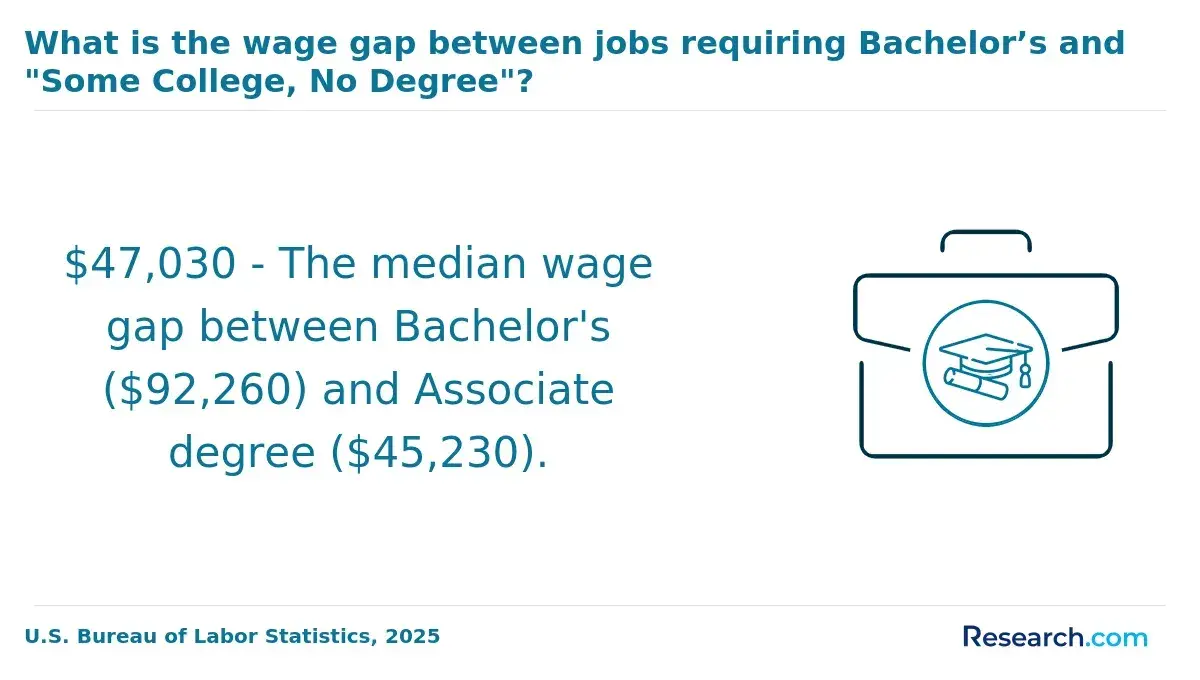
The Environmental Science education premium often grows across a career because advanced degrees can accelerate movement into specialized, supervisory, and advisory roles. However, experience still matters heavily. A bachelor's graduate with strong project history, regulatory knowledge, and client-facing experience can out-earn a master's graduate who remains in junior technical work.
Career-stage comparisons are useful because the value of a degree changes over time. The table below shows how the premium may evolve from entry-level work to senior leadership.
| Career stage | Bachelor's degree pattern | Master's degree pattern | Doctorate pattern | Decision point for readers |
| Entry level | Fastest route into paid work and field experience | May enter with stronger technical specialization | Usually still in training or research apprenticeship | Compare starting salary against tuition and lost earnings |
| Mid-career | Can advance through project delivery, compliance, and management | Often competitive for senior analyst, specialist, and project manager roles | Can move into research leadership or senior technical expert roles | Check whether promotions require the credential or only prefer it |
| Senior level | Strong outcomes possible with experience, certifications, and management skill | Useful for principal consultant, program manager, agency specialist, or policy leadership | Most valuable for faculty, principal scientist, lab leadership, and advanced research roles | Choose the degree that matches the authority level your target role requires |
BLS projects employment for environmental scientists and specialists to grow 7% from 2024 to 2034. That matters because a growing field can create more promotion openings, but it does not mean every degree level receives the same premium. The best opportunities are likely to go to candidates who combine environmental science knowledge with data analysis, regulation, communication, and project execution.
One current trend is the growing use of remote sensing, AI-assisted environmental monitoring, automated data collection, and climate-risk analytics. These tools do not eliminate the need for environmental scientists, but they raise the value of people who can interpret data, validate field conditions, and explain risk to agencies, employers, and the public.
A doctorate can pay more than a master's degree, but the answer depends strongly on career direction. The broad BLS 2024 earnings benchmark shows doctoral degree holders earning more than master's degree holders across the labor market. In Environmental Science, however, the doctorate premium is concentrated in research-heavy jobs, university faculty roles, advanced modeling, federal labs, technical consulting leadership, and scientific management.
The table below summarizes when the doctorate adds value and when a master's may be the better financial choice.
| Comparison point | Master's degree | Doctorate | Better financial fit |
| Time to complete | Often 1 to 3 years depending on format and enrollment status | Often several additional years, especially for research-based programs | Master's for faster workforce return |
| Typical career target | Senior analyst, project manager, specialist, policy or consulting role | Research scientist, professor, principal investigator, senior technical expert | Depends on whether research authority is required |
| Salary upside | Strong when tied to technical specialization or promotion | Higher ceiling in research-intensive paths | Doctorate only when the target role rewards it |
| Financial risk | Tuition and loan cost | Longer training time and delayed full-time earnings | Master's if doctorate funding is weak |
A funded doctorate can make financial sense because tuition waivers and stipends reduce the cost of training. An unfunded doctorate is much riskier unless the student has a clear path to a role where the credential is necessary.
Environmental Science differs from some fields where graduate study is a direct licensure gateway. For example, SLP online programs are commonly evaluated in relation to professional credentialing, while an Environmental Science doctorate is usually evaluated in relation to research fit, funding, publications, and long-term role requirements.
Choose the doctorate if you want to produce original research, lead scientific programs, teach at the university level, or become a recognized technical authority. Choose the master's if your goal is faster advancement in consulting, government, sustainability, compliance, or environmental analysis.
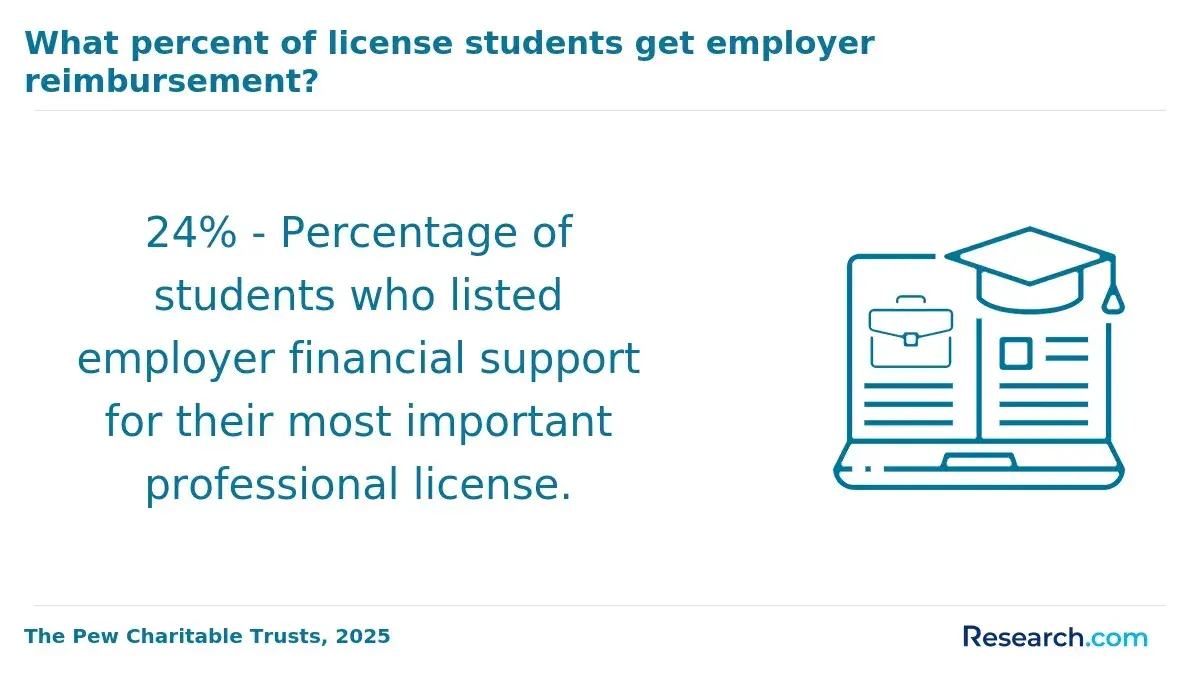
Advanced degrees are not required for every Environmental Science promotion, but they can become important when roles shift from field execution to technical interpretation, regulatory strategy, research design, or program leadership. The key question is whether the target job requires the degree, prefers it, or merely lists it as one of several ways to qualify.
The table below shows common Environmental Science roles and how education requirements typically appear in the labor market. Requirements vary by employer, state, contract, and specialization.
| Career path | Bachelor's usually enough? | Master's often helpful? | Doctorate commonly needed? | Why the degree matters |
| Environmental field scientist | Yes | Sometimes | No | Employers often prioritize sampling experience, safety training, and field reliability. |
| Environmental compliance specialist | Yes | Sometimes | No | Regulatory knowledge and documentation skill can matter more than degree level. |
| GIS or environmental data analyst | Yes | Yes | Rarely | Advanced coursework can help with spatial analysis, modeling, and data workflows. |
| Hydrology, climate, or risk modeling specialist | Sometimes | Yes | Sometimes | Graduate training may be important for quantitative methods and model interpretation. |
| Principal consultant or project director | Sometimes | Yes | Rarely | Clients may value advanced expertise, but experience and business development also matter. |
| Research scientist or postsecondary faculty | No | Sometimes | Yes | Original research, publications, grants, and teaching expectations often require doctoral preparation. |
Unlike a credential-gated path such as a marriage and family therapist degree, Environmental Science advancement is usually less uniform. One employer may require a master's for a senior specialist role, while another may promote a bachelor's graduate with strong project experience.
Before enrolling in graduate school for advancement, take these steps:
- Collect 10 to 20 job postings for the roles you want, not the roles you already qualify for.
- Mark each posting as "requires," "prefers," or "does not mention" a graduate degree.
- Compare the salary range for roles requiring a master's against roles requiring only a bachelor's plus experience.
- Ask supervisors or recruiters whether a graduate degree affects promotion eligibility, pay grade, or only interview competitiveness.
- Choose a program only if its curriculum maps directly to the skills and credentials that appear repeatedly.
The largest graduate-degree pay premium usually appears where Environmental Science overlaps with high-stakes technical decisions, regulation, infrastructure, climate risk, energy, water, health, and data. In these areas, employers may pay more for workers who can interpret complex evidence and defend decisions to clients, regulators, courts, or the public.
The table below compares specializations where a master's or doctorate may have stronger value than a general Environmental Science credential.
| Specialization or industry | Why graduate education may pay off | Degree level with strongest fit | Skills that raise value |
| Climate risk and resilience | Employers need people who can assess exposure, adaptation options, and long-term risk | Master's or doctorate | Climate modeling, statistics, GIS, policy analysis, communication |
| Environmental consulting | Technical credibility can support higher billing rates and project leadership | Master's | Remediation, permitting, NEPA review, client communication, project management |
| Water resources and hydrology | Quantitative analysis and modeling often require deeper technical preparation | Master's or doctorate | Hydrologic modeling, watershed analysis, programming, field methods |
| Environmental health and toxicology | Risk assessment can require advanced science and regulatory interpretation | Master's or doctorate | Toxicology, epidemiology, exposure assessment, statistical reasoning |
| Geospatial and remote sensing | Automation increases demand for people who can validate and interpret data | Master's | GIS, remote sensing, Python or R, data visualization, quality control |
| Academic and federal research | Original research and grant-funded work often require doctoral-level preparation | Doctorate | Research design, publication, grant writing, advanced analytics, teaching |
Current technology trends make specialization more important. AI tools can help process satellite imagery, sensor data, and environmental records, but employers still need professionals who understand sampling limits, uncertainty, regulation, and real-world site conditions.
A common mistake is choosing a broad graduate program without building a marketable technical profile. A better approach is to select coursework, internships, thesis projects, or capstones around a job cluster, such as water quality modeling, environmental impact assessment, sustainability reporting, or remediation project management.
The Environmental Science education premium is highest where employers pay for advanced technical judgment, regulatory complexity, and project risk. Location also matters because environmental salaries vary by state, metropolitan area, cost of living, and employer type. A master's degree may produce a strong return in one region and a weak return in another if local employers classify both bachelor's and master's graduates into the same salary band.
The table below summarizes where advanced education is most likely to create a pay advantage. Readers should verify the pattern using local job postings and BLS state or metropolitan wage data before making a school decision.
| Location or employer type | Where the premium may be stronger | Reason | What to check before enrolling |
| Federal agencies and national laboratories | Research, technical analysis, program science, environmental monitoring | Advanced credentials can align with scientific grade levels and research duties | Whether the role requires a graduate degree or accepts equivalent experience |
| State environmental agencies | Specialist, policy, permitting, and program management roles | Graduate training can help with complex regulation and technical review | Public salary schedules and promotion rules |
| Environmental consulting firms | Senior technical, project management, and client advisory roles | Specialized expertise can support higher responsibility and billable work | Whether the firm rewards degrees, licenses, certifications, or project revenue more |
| Energy, utilities, and infrastructure employers | Compliance, remediation, risk, sustainability, and environmental planning | Environmental decisions can involve high compliance and operational risk | Salary bands for environmental managers and technical specialists |
| High-cost coastal and urban markets | Climate adaptation, environmental planning, coastal resilience, impact analysis | Complex development, regulation, and climate exposure can increase demand | Whether higher pay offsets housing and commuting costs |
Employer type can matter as much as geography. Government roles may offer transparent pay schedules and stability, while consulting and private industry may offer higher upside for people who combine science, business development, and project leadership.
When comparing locations, do not focus only on salary. Adjust for cost of living, commuting, licensing or certification expectations, fieldwork demands, travel, and whether the region has enough employers in your specialization to support long-term mobility.
Yes, experience, certifications, and licensure can outweigh an advanced Environmental Science degree in some career paths. This is especially true in consulting, compliance, environmental health and safety, hazardous materials, GIS, and project management roles where employers need proof that a candidate can execute work safely, accurately, and on schedule.
The following credentials and experience signals can strengthen earning power without necessarily requiring a graduate degree:
- GIS certificates or demonstrated geospatial project portfolios for mapping, remote sensing, and spatial analysis roles.
- OSHA HAZWOPER training for hazardous waste operations, remediation, and field safety assignments.
- Certified Hazardous Materials Manager or similar environmental health and safety credentials for compliance-heavy roles.
- Project Management Professional or comparable project leadership training for consulting and program management tracks.
- Engineer-in-Training or Professional Engineer licensure for workers whose path is actually environmental engineering rather than Environmental Science.
- Strong field records, technical writing samples, regulatory reports, and client-ready deliverables.
Professionals who want to move from technical work into operations, sustainability leadership, or management may also compare environmental graduate programs with business-focused options. For example, guides to the easiest online MBA programs can help readers think through flexibility and management training, although an MBA is not a substitute for scientific expertise.
A common red flag is enrolling in a graduate program because "more education should mean more pay" without checking job requirements. In many Environmental Science roles, a bachelor's degree plus five years of relevant experience can be more valuable than a new master's degree with no field, compliance, or project background.
The best approach is to compare three pathways side by side: graduate degree, certification plus experience, and employer-funded education. If an employer will pay for part of a master's degree while you keep earning, the ROI can improve dramatically.
Environmental Science salary data should be interpreted carefully because no single national dataset perfectly isolates degree-level pay for Environmental Science graduates doing the same job with the same experience in the same region. The most responsible approach is to combine broad education-premium data, occupation-specific wage data, job postings, school outcomes, and employer salary bands.
Use this framework to avoid overreading salary statistics:
- Start with occupation-specific wage data for environmental scientists, hydrologists, environmental engineers, conservation scientists, or related roles rather than relying only on degree title.
- Separate entry-level, mid-career, and senior salaries because graduate degrees often matter more after specialization begins.
- Control for geography, employer type, and industry before comparing salary outcomes.
- Include tuition, fees, interest, living costs, and lost earnings when estimating ROI.
- Treat median earnings as a midpoint, not a promise of what an individual graduate will earn.
- Ask schools for program-specific outcomes, including job titles, employers, salary ranges, internship access, assistantship funding, and debt levels.
Several limitations matter. First, broad BLS education earnings data includes all majors, not only Environmental Science. Second, occupational wage data includes workers with different degrees and years of experience. Third, school-reported outcomes can vary in methodology and may not capture all graduates. Fourth, job postings can overstate requirements by listing a master's degree as preferred even when equivalent experience is accepted.
The most useful decision is not "which degree pays the most?" but "which degree gets me into the role I want at a cost I can recover?" For many readers, the bachelor's degree is enough to start. The master's degree is the strongest upgrade when it is targeted and affordable. The doctorate is a specialized investment for research-intensive careers, not a universal salary booster.
A master's degree in Environmental Science is worth the cost when the expected salary gain, promotion access, and job mobility outweigh tuition, fees, interest, and any income you give up while enrolled. It is usually the best graduate-degree value for professionals who already know which specialization or employer type they are targeting.
Use a simple payback calculation before enrolling. The goal is not to predict the future perfectly, but to avoid choosing a program whose cost is out of proportion to the realistic salary gain.
- Estimate the total net cost of attendance after grants, employer tuition support, assistantships, and scholarships.
- Add opportunity cost if you must reduce work hours or leave the workforce while enrolled.
- Estimate the annual salary increase using job postings, employer salary bands, alumni outcomes, and BLS benchmarks.
- Divide total cost by expected annual salary gain to estimate payback time.
- Stress-test the result using a lower salary gain, because the master's premium depends on role and location.
For example, if a master's degree costs $30,000 after aid and leads to a $10,000 annual raise, the simple payback period is about three years before taxes and loan interest. If the same degree costs $70,000 and produces only a $5,000 raise, the payback period becomes much harder to justify.
Debt cost matters. Federal Direct Unsubsidized Loans for graduate students first disbursed in the 2025-26 award year carried a 7.94% fixed interest rate, which means a low-return graduate program can become expensive if the salary premium is modest. Readers comparing graduate programs in any field can also look at how other ROI-focused guides evaluate affordability, such as an affordable online master's degree in communications, and apply the same cost-versus-outcome mindset to Environmental Science.
A master's degree is most likely to be worth it if you need it for senior analyst roles, specialized technical work, environmental policy leadership, climate-risk roles, or consulting advancement. It is less likely to be worth it if you are unsure about your specialization, plan to take on large debt, or would be applying for the same jobs available to bachelor's graduates.
Other Things You Should Know About Environmental Science
The broad 2024 BLS education benchmark shows master's degree holders earning about $15,444 more per year than bachelor's degree holders across all fields. In Environmental Science, the actual premium depends on whether the master's leads to a higher-level role, specialization, or promotion.
It can be worth it if the program is affordable, tied to a clear specialization, and improves access to higher-paying roles such as senior analyst, project manager, climate specialist, hydrology analyst, or policy lead. It is less compelling if it leads to the same jobs available with a bachelor's degree.
A doctorate is commonly expected for university faculty roles, principal research scientist positions, advanced research leadership, and some federal lab or high-level technical advisory roles. It is usually not required for many consulting, compliance, field science, or environmental management jobs.
Often, yes. Employers may value field experience, regulatory knowledge, GIS ability, project management, safety training, and technical writing as much as or more than an advanced degree, especially in applied consulting and compliance roles.
- 20 Highest-Paying Environmental Science Jobs in 2025 https://internshala.com/blog/highest-paying-environmental-science-jobs/
- Environmental Science Jobs https://unity.edu/careers/environmental-science-jobs/
- What Can You Do With an Environmental Science Degree? https://willamette.edu/academics/college/environmental-science/career-options
- Agriculture and Environmental Science Degree Careers and Salary in Europe - StudyinEurope.eu https://www.studyineurope.eu/agriculture-environment/agriculture-environment-degree-careers-salary-europe/