2027 Environmental Science Degree Recruiter Preference Report: What Employers Value Most in New Graduates

Co-Founder and Chief Data Scientist
Environmental science hiring increasingly favors applicants who can prove field readiness, GIS fluency, and regulatory judgment before the first interview. The U.S. Bureau of Labor Statistics projects environmental scientist and specialist employment to grow 7% from 2023 to 2033, faster than average, with about 8,500 openings annually.
That demand still comes with screening pressure: employers expect graduates to show usable skills, not just coursework. This guide is for entry-level candidates who want to understand recruiter preferences, required tools, interview benchmarks, resume standards, and practical ways to turn academic experience into job offers.
Key Things to Know About Recruiter Preferences in the Environmental Science Industry
- Recruiters usually treat a bachelor's degree in environmental science, biology, geology, chemistry, environmental engineering, or a related field as the default baseline for environmental scientist, compliance, consulting, and field technician roles; skills-based hiring helps most when paired with field sampling, GIS, lab, or regulatory evidence.
- The strongest entry-level applicants show hands-on proof: internships, capstones, Phase I environmental site assessment exposure, water or soil sampling, ArcGIS/QGIS mapping, basic statistics, technical writing, and safety awareness. BLS projects 7% employment growth for environmental scientists and specialists from 2023 to 2033, so competition is more about readiness than lack of demand.
- Certifications are usually job accelerators, not degree replacements. OSHA 40-hour HAZWOPER, GIS credentials, wetland delineation training, and CPR/First Aid can improve screening fit for specific roles, while GPA matters most for internships, government pathways, and highly technical analyst jobs.
- Do Environmental Science jobs require a degree?
- What are the top qualities employers look for in Environmental Science graduates today?
Do Environmental Science jobs require a degree?
For most professional environmental science roles, recruiters expect at least a bachelor's degree because the work involves scientific methods, regulatory interpretation, technical documentation, and defensible data collection. The degree is not just a credential; it signals that you have studied ecology, chemistry, geology, hydrology, statistics, and environmental policy well enough to make field and lab decisions safely.
That said, the requirement varies by role. Field technician, environmental sampling assistant, sustainability coordinator, and laboratory support jobs may be more open to applicants with an associate degree, military environmental training, certificates, or strong hands-on experience.
Environmental consultant, environmental scientist, NEPA analyst, remediation specialist, and regulatory compliance roles are more likely to filter for a four-year degree.
This comparison shows how recruiters typically view formal education versus alternative pathways. Use it to decide whether you should apply now, add a certificate, or pursue more education before targeting a specific role:
| Target role type | Typical recruiter expectation | When an alternative path can work | Hiring edge recruiters notice |
| Environmental field technician | Associate or bachelor's degree preferred | Works if you have sampling, safety, construction, utility, military, or lab experience | HAZWOPER, clean driving record, field logs, chain-of-custody knowledge |
| Environmental scientist or specialist | Bachelor's degree commonly expected | Alternative paths are less competitive without several years of related experience | Internship, GIS maps, technical reports, statistics, regulatory coursework |
| Environmental compliance coordinator | Bachelor's degree often preferred | Works with industry experience in manufacturing, utilities, waste, or safety | Permit tracking, inspection readiness, audit documentation |
| GIS or environmental data analyst | Degree preferred, skill evidence heavily weighted | Works if portfolio proves mapping, database, and analysis ability | ArcGIS/QGIS projects, Python or R, dashboards, metadata discipline |
| Government environmental role | Degree requirements are often formalized | Some technician pathways accept equivalent experience | Transcript alignment, USAJOBS-style resume, clear eligibility documentation |
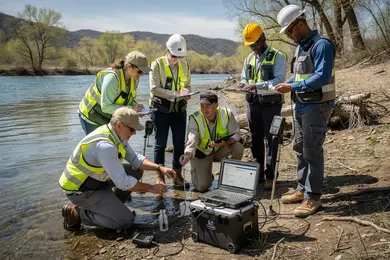
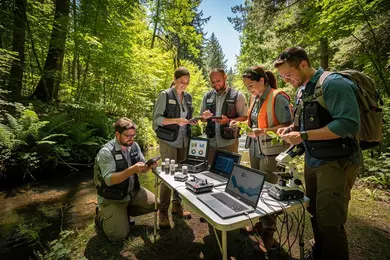
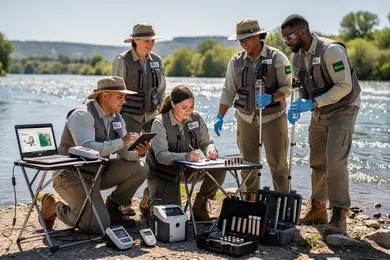
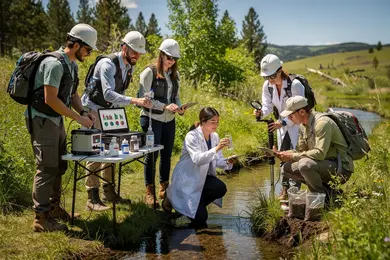
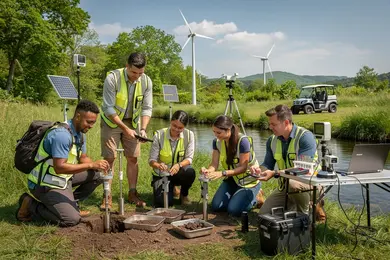
Fresh graduates should not assume that a degree alone is enough. Employers want to see whether you can conduct fieldwork, document conditions accurately, communicate risk, and follow protocols under real constraints.
If you are comparing environmental science with other people-centered professional paths, it may help to note how credentialing differs from fields such as SLP online programs, where licensure-linked graduate education is usually much more rigid.
If you do not yet meet the degree requirement, focus on roles where applied skills can be evaluated directly. A practical sequence can help you avoid spending time or money on credentials that do not match your target job:
- Identify five entry-level job postings in your target region and highlight the degree, tools, field tasks, and certifications that appear repeatedly.
- Separate "required" from "preferred" qualifications; apply when you meet most required items and can prove at least two preferred skills.
- Build one portfolio artifact for each major skill gap, such as a GIS map, field sampling plan, lab QA/QC summary, or compliance checklist.
- If postings consistently reject non-degree candidates, consider completing the degree or targeting technician roles that build qualifying experience.
What are the top qualities employers look for in Environmental Science graduates today?
Recruiters look for more than enthusiasm for sustainability. Entry-level environmental work is often performed in the field, under deadlines, and within regulated procedures, so employers favor candidates who can be careful, trainable, and clear when conditions change.
Many employers now use skills-first language in postings, but that does not mean soft skills are vague. The strongest candidates provide evidence of judgment, documentation quality, and collaboration.
The table below summarizes the qualities recruiters most often try to verify during screening and interviews:
| Employer-valued quality | Why it matters in entry-level work | Evidence that makes it credible |
| Field reliability | Sampling windows, client sites, and weather conditions leave little room for missed protocols | Internships, field camp, outdoor research, safety training, supervisor references |
| Technical writing | Reports, permits, memos, and logs must be defensible and understandable | Capstone reports, lab reports, inspection summaries, edited writing samples |
| Data accuracy | Small documentation errors can affect compliance, remediation decisions, and client trust | QA/QC notes, spreadsheet checks, chain-of-custody examples, metadata use |
| Regulatory awareness | Entry-level staff often support work tied to EPA, state agency, OSHA, or local rules | Coursework, permit matrices, compliance projects, NEPA or Clean Water Act exposure |
| Client and team communication | Consulting, government, and industry roles require translating science for non-specialists | Presentation experience, public outreach, stakeholder meeting notes, group projects |
The current labor market also rewards adaptability. AI-assisted document review, remote collaboration, mobile field-data collection, and cloud GIS systems are changing daily workflows, so recruiters prefer graduates who can learn tools quickly while still checking outputs against scientific standards.
To demonstrate these qualities, avoid simply listing them as adjectives. Recruiters respond better when each quality is tied to a task, tool, and result.
- Replace "detail-oriented" with a line showing how you maintained field logs, verified sample labels, or caught a data-entry issue before reporting.
- Replace "strong communicator" with a technical report, stakeholder presentation, or outreach material written for a nontechnical audience.
- Replace "team player" with a capstone, field crew, or lab project where your role and deliverable are clearly defined.
- Replace "passionate about the environment" with evidence of applied work, such as wetland mapping, water-quality testing, waste audits, or compliance tracking.
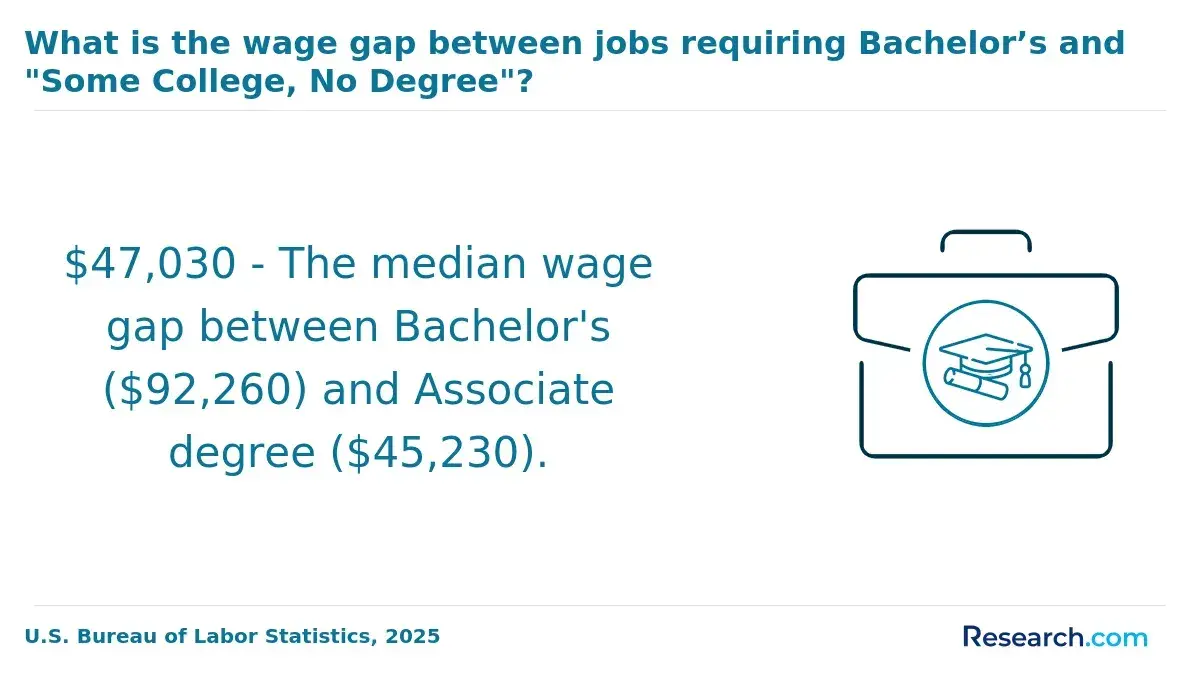
Technical skills are the main way recruiters distinguish job-ready graduates from applicants who only completed general coursework. For many entry-level roles, the most valuable skills fall into four areas: field sampling, spatial analysis, environmental regulations, and data interpretation.
The BLS reported a median annual wage of about $80,060 for environmental scientists and specialists in May 2024, but entry-level pay varies widely by region, employer, travel expectations, and role type.
For candidates, the practical lesson is that higher-responsibility roles usually require stronger technical evidence, not just broader interest in sustainability.
This table connects common entry-level roles with the skills recruiters are most likely to scan for. It is meant to help you prioritize the skills that match your target job family:
| Entry-level role | High-value technical skills | Common proof recruiters accept |
| Environmental field technician | Soil, groundwater, stormwater, and air sampling; field instrumentation; safety protocols | Sampling logs, calibration notes, internship tasks, HAZWOPER |
| Environmental consultant | Phase I ESA support, site reconnaissance, regulatory research, report drafting | Mock ESA, property research, writing sample, ASTM awareness |
| Water-quality technician | Water chemistry, sample preservation, flow measurement, turbidity and pH testing | Lab reports, field sheets, sensor calibration, chain-of-custody examples |
| GIS analyst assistant | Spatial data cleaning, map production, geodatabases, remote sensing basics | Map portfolio, ArcGIS/QGIS files, metadata, Python or R scripts |
| Compliance associate | Permit tracking, inspection documentation, waste classification, audit support | Compliance matrix, inspection checklist, regulatory memo, internship experience |
When deciding what to learn first, start with the tools and skills that appear across several postings in your region. A field technician in environmental consulting may need different evidence than a sustainability analyst in a corporate office:
- Choose one target role family instead of trying to qualify for every environmental job at once.
- Collect 10 job postings and mark repeated verbs such as sample, map, analyze, inspect, document, permit, and report.
- Build a small project that proves each repeated skill, such as a water-quality dataset analysis or a GIS map with a short technical memo.
- Add the project to your resume with tools, methods, and deliverables, not just the course name.
Certifications are usually not mandatory for every entry-level environmental science job, but they can move an applicant from "interesting" to "ready to interview" when the credential matches the role. Recruiters use certifications as evidence that you understand safety, mapping, compliance, or field procedures before the employer spends time training you.
The best certification depends on the job you want. Paying for a credential without checking local postings can produce weak return on investment, especially because provider fees and employer preferences vary. This is different from highly structured counseling pathways such as a marriage and family therapist degree, where state licensure requirements are typically central to the career path.
The table below summarizes how recruiters often view common environmental credentials. It is not a universal requirement list because state rules, site hazards, and employer contracts can change what is expected:
| Credential or training | Best fit for | Recruiter value | Entry-level caution |
| OSHA 40-hour HAZWOPER | Hazardous waste, remediation, emergency response, contaminated sites | Signals safety readiness for field roles involving hazardous substances | Most useful when postings mention hazardous sites or remediation |
| GIS certificate or Esri training | GIS assistant, environmental analyst, planning support | Shows mapping skills beyond a single introductory course | A portfolio may matter more than the certificate name alone |
| Wetland delineation training | Ecology, consulting, natural resources, permitting | Helpful for roles tied to Section 404 permitting or habitat assessment | Field practice and regional plant knowledge are still essential |
| CPR/First Aid | Field crews, remote sites, outdoor research | Supports safety profile for field assignments | Usually a supporting credential, not a differentiator by itself |
| LEED Green Associate | Sustainability, built environment, corporate ESG support | Signals familiarity with green building concepts | Less relevant for sampling-heavy environmental science roles |
Use certifications strategically rather than collecting them. A good decision process keeps cost, timing, and job relevance in balance:
- Review postings first and choose a certification only if it appears repeatedly in required or preferred qualifications.
- Ask employers, alumni, or career advisors whether the credential is valued in your region and target sector.
- Prioritize safety credentials for field and remediation roles, GIS credentials for mapping roles, and wetland training for ecology and permitting roles.
- Delay expensive or advanced credentials if they require work experience or if your immediate gap is a missing internship or portfolio.
GPA matters, but it is rarely the only deciding factor for entry-level environmental science roles. Recruiters use it as a quick academic signal, especially for internships, government pathways, research-heavy jobs, and graduate development programs. For field technician, consulting, and compliance roles, practical evidence often carries more weight.
A high GPA can help you pass early screening, but a lower GPA can often be offset by internships, fieldwork, certifications, software projects, and strong references. Academic honors are most useful when they reinforce job-relevant strengths, such as quantitative analysis, research writing, or leadership in a field project.
This matrix shows how recruiters may weigh common early-career signals. It is a practical guide, not a fixed scoring system:
| Candidate signal | Typical recruiter weight | Where it matters most | How to strengthen it |
| Overall GPA | Moderate | Internships, federal pathways, graduate programs, analyst roles | List it if strong or requested; otherwise emphasize technical achievements |
| Major GPA | Moderate to high | Roles requiring science depth | Use major GPA if it is stronger and clearly label it |
| Academic honors | Low to moderate | Competitive internships, research roles, campus recruiting | Connect honors to research, leadership, or technical excellence |
| Internship or field experience | High | Consulting, field technician, compliance, government | Describe sites, methods, tools, deliverables, and safety practices |
| Portfolio or project evidence | High for skill-based roles | GIS, data analysis, sustainability, consulting support | Show maps, memos, data analysis, and report excerpts |
If your GPA is not a strength, do not hide from the issue, but do not lead with it either. Recruiters are more interested in whether you can do the work reliably.
- Omit GPA if it is not requested and does not help your case, unless an application form requires it.
- Use a "Relevant Projects" or "Technical Experience" section to move attention toward applied skills.
- Prepare a brief, honest explanation if asked, then pivot to improved performance, field experience, or technical work.
- Ask references to speak to reliability, learning speed, and field judgment if your transcript is uneven.
Environmental science employers recruit through a mix of campus pipelines, public-sector portals, professional networks, staffing firms, and direct applications. The best channel depends on the employer type: consulting firms often move quickly through referrals and job boards, while government agencies may use formal application systems with strict documentation rules.
According to BLS occupational projections, environmental scientists and specialists are expected to see about 8,500 openings annually from 2023 to 2033. That does not mean every applicant receives responses; it means candidates should target channels where entry-level environmental hiring actually occurs.
The table below outlines where early-career candidates are most likely to find legitimate opportunities and what each channel is best for:
| Recruiting channel | Common employer types | Best-fit roles | What recruiters look for first |
| Campus career fairs and university job boards | Consulting firms, agencies, utilities, labs | Internships, field technician, analyst trainee | Major fit, graduation date, field availability, internship interest |
| State and local government portals | Environmental agencies, public works, water districts | Environmental specialist, inspector trainee, technician | Minimum qualifications, transcripts, eligibility, application completeness |
| Federal job portals | EPA, USGS, USDA, NOAA, Army Corps support roles | Pathways internships, scientist trainee, technician | Degree alignment, detailed resume, citizenship or eligibility requirements |
| Professional associations and conferences | Consulting, ecology, water, sustainability networks | Specialized entry roles and referrals | Networking follow-up, technical interest, regional commitment |
| Direct employer applications | Engineering consultancies, environmental labs, energy, waste firms | Field, compliance, sampling, GIS support | Keyword match, certifications, location, travel readiness |
Graduates should not rely only on large job boards. Environmental hiring is often local and project-driven, so direct outreach to branch offices, alumni, and project managers can produce better conversations than mass applications.
If you are considering environmental outreach, sustainability communications, or public engagement roles, an affordable online master's degree in communications can be relevant later, but it is not usually the first credential needed for technical environmental roles.
A focused outreach plan works better than sending the same resume everywhere. Use a weekly rhythm that combines applications with relationship-building:
- Build a target list of 25 employers in your preferred region, including consulting firms, agencies, utilities, labs, and nonprofits.
- Set job alerts using role titles such as environmental field technician, environmental scientist I, GIS technician, compliance associate, and water-quality technician.
- Contact alumni or early-career employees with one specific question about tools, field expectations, or hiring timelines.
- Apply within the first week of a posting when possible, then follow up with a concise message that highlights your strongest role match.
Environmental science interviews are usually designed to test judgment, communication, and practical readiness rather than memorization alone. Recruiters want to know whether you can collect reliable data, follow safety rules, write clearly, and respond professionally when a field condition does not match the plan.
Assessment formats vary by employer, but entry-level candidates commonly encounter a combination of behavioral questions, technical scenarios, writing exercises, and tool-based tasks. The table below summarizes what each format is trying to reveal:
| Assessment or interview format | What it tests | Typical entry-level example | What strong performance shows |
| Behavioral interview | Reliability, teamwork, communication | Describe a time you worked in difficult field or lab conditions | You can explain context, action, result, and lessons learned clearly |
| Technical scenario | Scientific judgment and protocol awareness | What would you do if a water sample label did not match the field log? | You prioritize data integrity, documentation, and supervisor escalation |
| Writing exercise | Report clarity and professional tone | Summarize field observations for a client memo | You write accurately without overstating conclusions |
| GIS or data task | Tool fluency and interpretation | Create a simple map or clean a small dataset | You can produce usable output and explain assumptions |
| Panel interview | Fit across technical, safety, and client-facing teams | Meet with project manager, recruiter, and field lead | You can adapt answers to different stakeholders |
Preparation should be practical. Instead of rereading every textbook chapter, rehearse how you would handle common field, lab, and reporting situations:
- Prepare three fieldwork stories: one about safety, one about teamwork, and one about solving an unexpected problem.
- Review basic sampling concepts, including contamination prevention, labeling, preservation, calibration, and chain of custody.
- Practice explaining a GIS map or dataset in plain language, including what the data can and cannot prove.
- Bring or be ready to share a writing sample, portfolio link, or project summary if the employer asks for evidence.
- Ask interviewers what tools, travel schedule, training plan, and report responsibilities are typical in the first six months.
Most rejections happen before the interview because the application does not prove fit quickly enough. Automated applicant tracking systems may filter for degree terms, certifications, tools, and role titles, while human recruiters look for evidence that the candidate understands the realities of field, lab, consulting, or compliance work.
Common red flags are usually fixable. The table below pairs screening problems with better alternatives so you can audit your application before sending it:
| Recruiter red flag | Why it hurts screening | Better alternative |
| Generic resume with no role keywords | ATS and recruiters cannot quickly match you to the posting | Mirror relevant terms such as GIS, sampling, HAZWOPER, compliance, wetlands, or technical writing when accurate |
| Course list with no applied evidence | Coursework alone does not show field or tool readiness | Convert courses into projects with methods, tools, and deliverables |
| Unclear availability for fieldwork or travel | Many entry-level roles require early mornings, site travel, or outdoor work | State valid driver's license, travel readiness, field schedule experience, or relocation interest when applicable |
| Inflated software claims | Interviewers may test tools you list | Use honest proficiency levels and link each tool to a project |
| Sloppy formatting or errors | Environmental work depends on documentation accuracy | Use clean formatting, consistent dates, proofreading, and PDF submission unless told otherwise |
| No safety awareness | Field and lab roles carry real risk | Mention safety training, PPE use, lab protocols, or supervised field experience |
Recruiters also notice mismatched motivation. Saying you want "any environmental job" can sound unfocused, while naming the specific work you want to learn makes you easier to place.
Before applying, run a quick rejection-risk check. This step can improve your response rate without changing your entire background:
- Compare your resume against the posting and confirm the top required skills appear in your resume if you truly have them.
- Check that your most relevant experience appears in the top half of the resume, not buried under unrelated work.
- Remove unsupported claims such as "expert in GIS" unless your portfolio and experience can defend them.
- Proofread sample labels, units, dates, and acronyms because documentation mistakes are especially damaging in this field.
- Write a short cover note only when it adds useful context, such as regional interest, field availability, or a direct match to project work.
A strong environmental science resume is not a biography. It is a screening document that helps recruiters see your role fit in seconds. The best entry-level resumes combine degree alignment, technical tools, field or lab methods, certifications, and deliverables in a format that ATS software and human readers can both understand.
Start with the job posting, then tailor the resume around evidence. If a posting asks for groundwater sampling, ArcGIS, technical reports, and HAZWOPER, those terms should appear only if you can explain where and how you used them.
Later in your career, management education such as the easiest online MBA programs may support leadership goals, but entry-level environmental screening is usually driven by technical fit and field readiness first.
The table below shows how recruiters interpret key resume sections. Use it to decide what to emphasize, compress, or remove:
| Resume or profile section | Recruiter purpose | What to include |
| Headline or summary | Quick role match | Target role, degree, strongest tools, field or compliance focus |
| Education | Minimum qualification check | Degree, major, graduation date, relevant coursework only if needed |
| Technical skills | ATS and interview targeting | GIS, sampling, lab methods, statistics, software, regulations, safety training |
| Projects | Proof of applied ability | Capstones, maps, datasets, reports, sampling plans, research posters |
| Experience | Evidence of work habits and deliverables | Internships, fieldwork, lab work, outdoor roles, customer-facing work with transferable value |
| Online profile | Consistency and discoverability | Matching role title, portfolio link, project descriptions, location preferences |
To pass screening, write bullet points that connect action, method, tool, and outcome. Avoid vague statements that could apply to any science major:
- Use role-specific titles near the top, such as "Environmental Science Graduate | GIS and Water-Quality Field Experience" if accurate.
- Group technical skills by category so recruiters can quickly find GIS, sampling, lab, statistics, software, and regulatory terms.
- Turn academic work into experience bullets by naming the environmental question, method, tool, and final deliverable.
- Keep formatting simple: standard headings, readable fonts, consistent dates, and no graphics that could confuse ATS parsing.
- Match your LinkedIn profile to your resume so recruiters see the same tools, projects, certifications, and target roles.
- Add a portfolio link only if it is organized, professional, and free of confidential or copyrighted employer materials.
A useful entry-level resume formula is: "Used [method/tool] to analyze or document [environmental issue] and produced [deliverable]." This structure gives recruiters what they need most: proof that your education can translate into job tasks.
Recruiters rarely expect entry-level graduates to master every environmental tool, but they do expect comfort with the systems used to collect, analyze, map, and report environmental data. The biggest mistake is listing software without showing what you used it to produce.
The tool expectations below vary by employer, but they reflect the platforms and categories most useful across consulting, government, nonprofit, utilities, and private industry roles. Use the table to decide where to invest portfolio time:
| Tool category | Examples recruiters recognize | Why employers value it | Best entry-level evidence |
| GIS and mapping | ArcGIS Pro, ArcGIS Online, QGIS | Environmental decisions often depend on location, land use, hydrology, and exposure pathways | Map portfolio with data sources, symbology, metadata, and brief interpretation |
| Spreadsheets and data cleaning | Excel, Google Sheets | Field and lab data often arrive in messy formats that must be checked before reporting | Cleaned dataset, pivot table, QA/QC notes, chart with interpretation |
| Statistical analysis | R, Python, SPSS, JMP | Employers need graduates who can analyze trends without overstating conclusions | Short analysis script, reproducible chart, explanation of limitations |
| Field data collection | Survey123, Field Maps, GPS units, mobile forms | Digital field workflows reduce transcription errors and improve real-time project tracking | Mock field form, geotagged observations, exported dataset |
| Reporting and documentation | Word, Adobe Acrobat, SharePoint, Teams | Environmental work depends on clear records, version control, and client-ready deliverables | Technical memo, report excerpt, inspection summary |
AI tools are becoming common for drafting outlines, summarizing regulations, and organizing notes, but recruiters do not want unverified AI output. Treat AI as a productivity aid, then verify citations, calculations, maps, and regulatory interpretations yourself.
A strong beginner portfolio does not need to be large. It should show that you can move from raw information to a defensible deliverable:
- Create one GIS map that answers a real environmental question, such as proximity of facilities to wetlands, flood zones, or disadvantaged communities.
- Analyze one public environmental dataset and write a short memo explaining trends, uncertainty, and what you would investigate next.
- Prepare one field-style document, such as a sampling plan, safety checklist, or chain-of-custody example.
- Include screenshots or PDFs in a clean online portfolio, but never share confidential internship or employer data.
Other Things You Should Know About Environmental Science
Yes, if you meet the required qualifications and can prove several preferred skills. Do not self-reject just because you lack every preferred item. Tailor your resume to the strongest matches and use a brief cover note to explain relevant field, lab, GIS, or compliance experience.
It can be, but entry-level options may be narrower. Look for GIS, environmental data, sustainability reporting, compliance documentation, environmental education, or policy support roles. Even office-based employers often value some field literacy because it helps you interpret environmental data realistically.
It depends on the role. Environmental engineering is often preferred for design, remediation systems, wastewater infrastructure, and engineering consulting. Environmental science is a strong fit for field investigation, compliance, ecology, GIS, sampling, sustainability, and environmental assessment roles.
Timing varies by region, season, employer budgets, and how targeted your applications are. Field and consulting hiring often increases around project needs, while government hiring can move slowly. A focused strategy with tailored resumes, networking, and portfolio proof usually works better than high-volume generic applications.
- Career Prospects for Environmental Science Majors and Job Opportunities - Universitas Negeri Semarang https://unnes.ac.id/career-prospects-for-environmental-science-majors-and-job-opportunities/
- Guide to Environmental Internships | Higherin https://higherin.com/career-guides/science-research/environmental-internships
- Green skills as a foundation for employability among young graduates https://www.emerging.fr/post/green-skills-as-a-foundation-for-employability-among-young-graduates
- The Rise of Sustainability Careers: India’s Hottest Jobs Right Now https://www.bvuniversity.edu.in/blogs/the-sustainability-jobs-boom:-india%E2%80%99s-most-wanted-professionals-right-now/48
- Explore Environmental Career Profiles | ECO Canada https://eco.ca/career-profiles-index/
- 20 Highest-Paying Environmental Science Jobs in 2025 https://internshala.com/blog/highest-paying-environmental-science-jobs/