2027 Environmental Science Degree Clinical Placement Report: Hours, Site Access, and Completion Bottlenecks

Co-Founder and Chief Data Scientist
Environmental science students often discover that the hardest part of finishing a degree is not the lecture coursework; it is securing and completing supervised field experience. The U.S. Bureau of Labor Statistics projects 4% employment growth for environmental scientists and specialists from 2024 to 2034, so applied training matters for students entering a competitive, skills-based market.
This guide explains placement hours, site access, supervision, costs, delays, and program-selection questions so prospective and current students can choose a program that supports timely completion and career-ready experience.
Key Things You Should Know
- Environmental science "clinical placement" usually means a supervised field placement, internship, practicum, cooperative education experience, research placement, or agency-based capstone rather than patient-care clinical training.
- Some bachelor's programs require no formal placement, while internship- or practicum-based programs commonly expect about 120 to 300+ supervised hours depending on credit load and institutional policy.
- Placement support should influence program choice because site shortages, seasonal fieldwork, background checks, transportation, and supervisor availability can delay graduation even when classroom requirements are complete.
- What Clinical Placement Requirements Do Environmental Science Degree Programs Have?
- How Are Clinical Placement Sites Assigned in Environmental Science Degree Programs?
What Clinical Placement Requirements Do Environmental Science Degree Programs Have?
In environmental science degrees, the phrase "clinical placement" is best understood as structured, supervised experiential learning. Unlike nursing, speech-language pathology, or counseling, environmental science usually does not have a single national clinical-hour rule for all students.
Instead, requirements are set by the school, department, internship office, accreditation expectations where applicable, employer partners, and sometimes state or federal agencies hosting students.
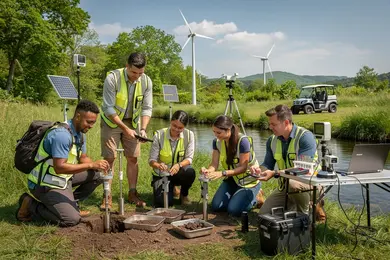
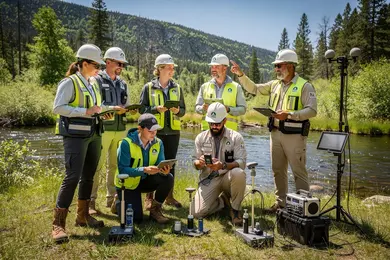
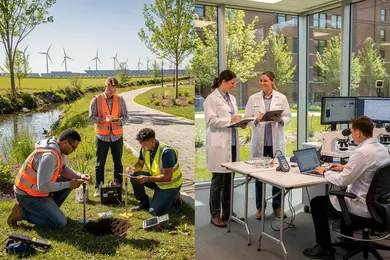
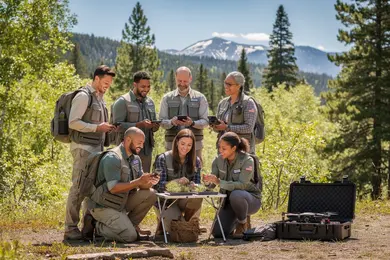
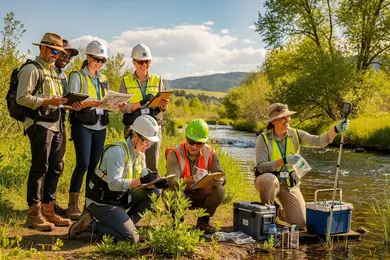
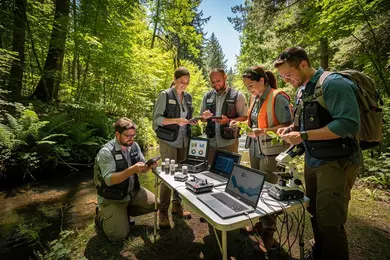
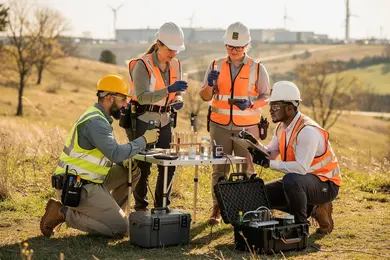
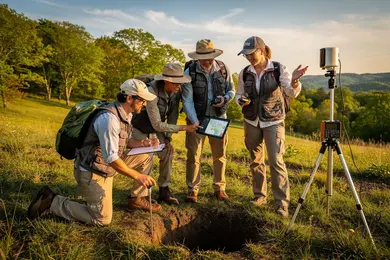
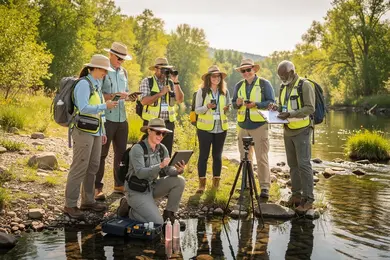
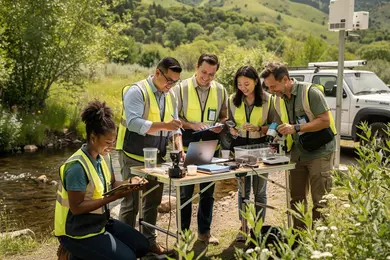
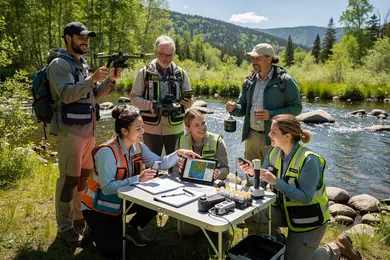
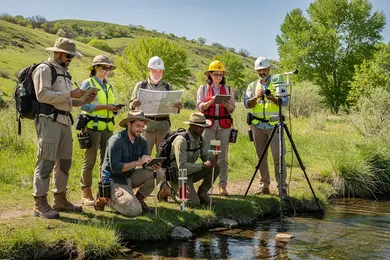
Students may encounter several types of applied requirements. A bachelor's degree may include a field methods course, an internship, a research practicum, a senior capstone, or a community-based environmental project.
A master's program may require a professional internship, consulting-style project, thesis fieldwork, laboratory rotation, or agency placement. Certificate programs may focus on shorter site-based projects tied to environmental compliance, GIS, water quality, conservation, occupational health, or sustainability work.
The table below summarizes common placement models. It should be used as a planning guide, not as a universal rule, because individual programs may define credits and hours differently.
| Program type | Common applied requirement | Typical hour range | What students usually do |
| Bachelor's degree with optional internship | Elective internship or field experience | 0 to 150 hours | Assist with sampling, data entry, GIS mapping, outreach, habitat surveys, or environmental education |
| Bachelor's degree with required practicum | Required internship, practicum, or capstone | 120 to 300+ hours | Complete supervised fieldwork, site reports, compliance documentation, or applied research tasks |
| Professional master's degree | Internship, consulting project, or agency placement | 150 to 400+ hours | Work on environmental assessment, policy analysis, remediation support, sustainability reporting, or program evaluation |
| Research-based master's degree | Thesis fieldwork or lab-based research | Varies by project | Collect and analyze environmental data under faculty or research-site supervision |
| Graduate certificate | Short applied project or employer-based assignment | Often fewer than degree programs | Apply specialized skills such as GIS, environmental health, compliance, or climate-risk analysis |
One important distinction is that environmental science placements are less standardized than the supervised clinical hours in programs such as SLP online programs. That flexibility can help students customize experience, but it also means they must verify exactly what the program requires before enrolling.
How Are Clinical Placement Sites Assigned in Environmental Science Degree Programs?
Environmental science placements are usually assigned in one of three ways: the school arranges the site, the student finds the site with school approval, or the student completes an employer-based project that the program evaluates. The best model depends on the student's location, work schedule, career goals, and comfort level with networking.
The comparison below shows how each placement-assignment model affects access, responsibility, and risk. Students should ask schools which model applies before assuming that a placement will be available near home.
| Placement model | Who finds the site? | Best fit | Main risk |
| School-arranged placement | Program coordinator, internship office, or faculty member | Students who want structure, vetted partners, and clearer deadlines | Limited site inventory may restrict location, schedule, or specialization |
| Student-arranged placement | Student, with program approval | Students with local contacts, strong networking skills, or specific career targets | Graduation can be delayed if the site is not approved on time |
| Hybrid placement support | Both student and school | Online, transfer, adult, and rural students who need flexibility plus advising | Responsibilities can be unclear unless the program documents each step |
| Employer-based placement | Student uses current workplace if approved | Working professionals in environmental consulting, public works, utilities, or compliance roles | Regular job duties may not count unless they meet learning objectives and supervision rules |
A strong placement process normally begins well before the term in which hours are completed. Schools may require students to attend an internship orientation, submit a resume, identify learning objectives, complete an agreement form, and obtain approval from both a faculty supervisor and site supervisor.
Students can reduce assignment problems by following a sequence rather than waiting until registration opens. These steps are especially important for online or commuter students who may not live near the main campus:
- Ask the program for a written placement policy before enrolling, including who is responsible for finding the site.
- Confirm whether the school has active site partners in your region or whether placements are concentrated near campus.
- Request examples of recent placement sites, not just broad categories such as "government agencies" or "nonprofits."
- Clarify how many months before the placement term you must submit paperwork.
- Ask what happens if a site cancels, a supervisor leaves, or required fieldwork is seasonal.
Placement bottlenecks happen when students are academically ready but cannot start or finish the required field experience. In environmental science, these delays often stem from site availability, seasonal conditions, safety requirements, transportation, and the limited number of qualified supervisors who can oversee students.
The table below identifies common bottlenecks and how they can affect completion. It is useful for comparing programs because a school with clear contingency plans can reduce the risk of delayed graduation.
| Bottleneck | Why it happens | Possible completion impact |
| Seasonal fieldwork | Wildlife surveys, water sampling, restoration work, and monitoring projects may occur only during certain months | Students who miss the season may need to wait for the next cycle |
| Limited local sites | Rural areas or smaller cities may have fewer agencies, labs, consulting firms, or conservation organizations | Students may need to travel, relocate temporarily, or accept a less specialized placement |
| Supervisor shortages | Site staff may not have time or authorization to supervise students | Approved sites may cap the number of students they accept |
| Onboarding delays | Background checks, safety training, site access badges, or agency paperwork may take time | Students may lose weeks of placement time if documents are late |
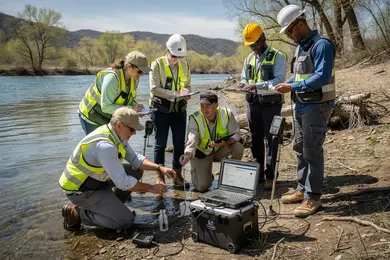
| Safety and field-readiness rules | Sites may require training for hazardous materials, boats, remote fieldwork, lab procedures, or construction zones | Students may be blocked from certain tasks until training is complete |
| Schedule mismatch | Environmental work often occurs during weekday business hours or weather-dependent windows | Students working full time may struggle to accumulate hours quickly |
The most common mistake is assuming that "internship required" means "internship guaranteed." A program may require experiential learning while still expecting students to compete for sites, submit applications, or travel to approved locations.
Students should look for practical red flags during admissions conversations. If a school cannot explain how many students are placed each term, how far students typically travel, or what happens when a site falls through, placement risk is higher. A responsive program should be able to describe its process without promising outcomes it cannot control.
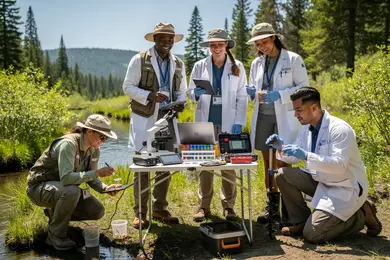
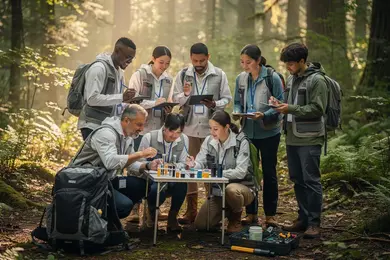
Supervision standards vary, but most environmental science placements require both a site supervisor and an academic supervisor. The site supervisor oversees day-to-day work, safety, attendance, and professional conduct. The academic supervisor or internship coordinator evaluates whether the experience meets program learning outcomes.
Environmental science supervision usually focuses on professional competence rather than clinical patient-care skills. Evaluation may include field notes, lab documentation, reflective journals, technical reports, supervisor ratings, presentations, project deliverables, or a final portfolio.
The table below outlines common supervision and evaluation elements. Students should ask whether these standards are documented in a handbook, syllabus, or learning agreement.
| Standard | What it usually covers | Why it matters |
| Learning agreement | Hours, schedule, tasks, supervision plan, and learning objectives | Prevents confusion about what counts toward degree requirements |
| Qualified supervisor | Professional experience in environmental science, policy, compliance, conservation, lab work, GIS, or a related area | Ensures students receive relevant feedback and safe task assignment |
| Safety expectations | Field safety, lab protocols, vehicle rules, PPE, hazardous materials, or site-specific training | Protects students and may determine whether they can participate in certain activities |
| Hour documentation | Signed timesheets, digital logs, progress forms, or supervisor verification | Creates proof that the student completed the required experience |
| Performance evaluation | Professionalism, communication, technical skills, reliability, ethics, and final deliverables | Connects the placement to academic credit and career readiness |
Students comparing environmental science with health programs should understand that the structure is different. In many health fields, supervised clinical standards are more prescriptive; environmental science placements are often more flexible but may require more initiative from the student.
A common mistake is focusing only on the site name. A prestigious agency or firm is useful only if the student receives meaningful tasks, consistent supervision, and feedback. A smaller municipal department, watershed group, or local consulting office may provide stronger hands-on learning if the supervisor is engaged.
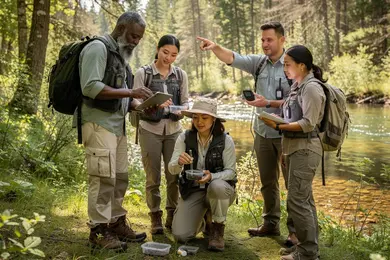
Many environmental science students can complete placements part-time, and some can complete them near home, but fully online completion is uncommon when the degree requires field, lab, or site-based work. Online courses may reduce campus attendance, yet applied environmental work often still requires in-person participation for sampling, inspections, mapping, restoration, or laboratory procedures.
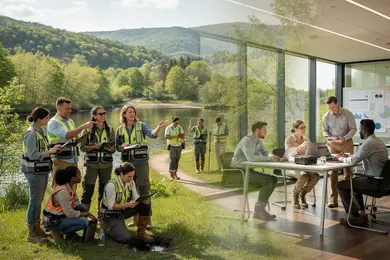
Online and hybrid students should pay close attention to local-site approval rules. Some programs allow students to propose nearby agencies, nonprofits, labs, parks, utilities, school districts, or employers. Others require students to use preapproved partners, which may be easier near campus but harder for out-of-state students.
Scheduling flexibility is one of the most important questions for working adults. The table below compares common formats and the trade-offs students should expect.
| Placement format | Typical schedule | Works best for | Potential drawback |
| Full-time block placement | Several concentrated weeks or a summer term | Students who can pause work or use summer availability | Hard for students with full-time jobs or caregiving responsibilities |
| Part-time semester placement | One to three days per week across a term | Students balancing coursework, work, and commuting | May take longer to complete higher hour requirements |
| Weekend or evening work | Limited, site-dependent schedule | Students seeking environmental education, outreach, or some monitoring roles | Many agencies and labs operate mainly during weekday hours |
| Employer-based project | Integrated with current job schedule if approved | Working professionals in related roles | Routine job duties may not satisfy academic learning objectives |
| Remote data or policy project | Online analysis, reporting, mapping, or research tasks | Students focused on GIS, policy, sustainability reporting, or data analysis | May not meet field-methods requirements if hands-on work is required |
Students exploring online degrees in other practice-based fields, such as a marriage and family therapist degree, will see a similar pattern: coursework can be online, but supervised practice requirements usually remain location-sensitive. Environmental science students should apply the same caution and verify placement rules before choosing an online program.
Placement costs are often overlooked because they may not appear as a separate tuition line. Students may pay regular tuition for internship credits while also covering transportation, gear, background checks, medical documentation if required by a site, insurance, software, parking, or temporary housing.
College Board's 2024 pricing data reported average published tuition and fees of $11,610 for in-state public four-year students, $30,780 for out-of-state public four-year students, and $43,350 for private nonprofit four-year students for the 2024-25 academic year. Because placement credits may be billed like other credits, students should calculate the total cost of the placement term rather than assuming the internship itself is free.
The table below highlights cost categories students should ask about before accepting a placement. Costs vary by school, site, location, and whether the placement is paid or unpaid.
| Cost category | What may be included | Why students should verify it |
| Tuition and fees | Internship credits, practicum credits, registration fees, technology fees, or continuation fees | Required placements may still carry credit-hour charges |
| Transportation | Fuel, public transit, tolls, parking, vehicle wear, or rideshare costs | Field sites may be far from campus or public transit |
| Field and safety gear | Boots, weather-appropriate clothing, PPE, notebooks, sampling supplies, or safety equipment | Some sites require students to arrive prepared before fieldwork begins |
| Screening and onboarding | Background checks, drug screening, health forms, safety courses, or site badges | Costs and timelines may fall on the student |
| Housing or relocation | Short-term housing for remote research stations, parks, coastal sites, or summer field programs | High-value placements may be geographically inconvenient |
| Lost wages | Reduced paid work hours during daytime field schedules | Unpaid placements can create cash-flow pressure |
Students who need maximum flexibility may want to compare environmental science with programs that have fewer site-based requirements, such as an affordable online master's degree in communications. That does not make one path better than the other; it simply changes the cost, scheduling, and career-preparation trade-off.
Before enrolling, ask the financial aid office whether placement credits are aid-eligible, whether summer placements affect aid packaging, and whether unpaid internships qualify for emergency grants, travel awards, departmental scholarships, or work-based funding.
Clinical placements can make environmental science graduates more career-ready because employers often value evidence that students can work safely, collect reliable data, communicate with stakeholders, and complete real projects. A transcript shows coursework; a strong placement adds proof of applied skills.
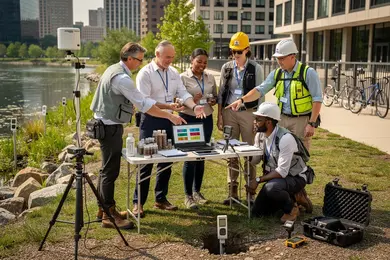
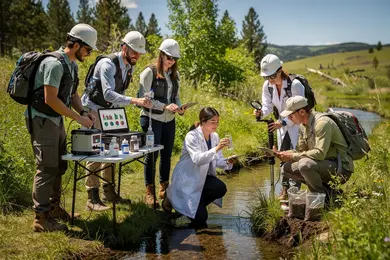
Common placement settings include government agencies, environmental consulting firms, conservation nonprofits, water and wastewater utilities, laboratories, parks, sustainability offices, public health departments, and research centers. Each setting builds different competencies, so the "best" placement depends on the student's career target.
The table below connects placement settings to the kinds of learning experiences students may gain. It can help students choose placements aligned with their preferred role.
| Placement setting | Typical learning experience | Career relevance |
| Environmental consulting firm | Site assessments, compliance support, report drafting, sampling coordination, client communication | Useful for consulting, remediation, environmental compliance, and private-sector roles |
| Government environmental agency | Permitting, inspections, monitoring, public records, environmental policy implementation | Useful for regulatory, public-sector, and environmental protection careers |
| Conservation nonprofit | Habitat restoration, community outreach, biodiversity monitoring, volunteer coordination | Useful for conservation, education, restoration, and nonprofit program roles |
| Water utility or watershed organization | Water-quality sampling, watershed planning, stormwater projects, data reporting | Useful for water resources, municipal environmental work, and hydrology-related roles |
| Research lab or field station | Experimental design, lab methods, field sampling, data analysis, scientific communication | Useful for graduate study, research assistance, laboratory work, and technical roles |
| Corporate sustainability office | Emissions tracking, sustainability reporting, waste reduction, supplier data, internal education | Useful for ESG, sustainability coordination, climate-risk, and corporate environmental roles |
Students should also use placements to build a portfolio. Strong artifacts may include maps, field reports, sampling plans, data visualizations, environmental education materials, compliance memos, restoration plans, or a public presentation. When confidential work is involved, students can ask supervisors what may be shared in a redacted or generalized format.
The strongest career-readiness placements usually share three features: the student performs work beyond observation, the supervisor gives regular feedback, and the final deliverable can be discussed clearly in interviews. A paid placement can be valuable, but pay alone does not determine learning quality.
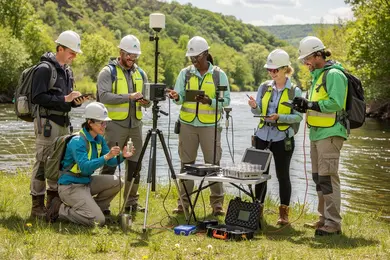
Environmental science placements are changing as employers and agencies adopt more data-heavy, technology-supported workflows. Field skills still matter, but students are increasingly expected to work with GIS, remote sensing outputs, dashboards, environmental sensors, compliance databases, and climate-risk information.
AI and automation are also changing entry-level expectations. Students may not need to be software engineers, but they should be prepared to check data quality, interpret model outputs, document methods, and explain findings to nontechnical audiences. A placement that combines field exposure with data analysis can be especially useful.
Several trends are reshaping placement access and quality. Students should consider these trends when comparing programs and choosing electives:
- Hybrid work has expanded some remote tasks, such as GIS mapping, literature review, policy analysis, and sustainability reporting, but it has not replaced the need for field and lab experience.
- Climate adaptation, resilience planning, and extreme-weather preparation are creating more project-based opportunities with local governments, utilities, and regional planning organizations.
- Environmental justice and community-engaged research are increasing demand for students who can communicate respectfully with residents, agencies, and advocacy groups.
- Employers are placing more value on documented technical skills, including GIS, statistical analysis, environmental sampling, database management, and clear technical writing.
- Competition for high-profile internships can be strong, so students may need to consider smaller local organizations that offer deeper hands-on responsibility.
The practical takeaway is that students should not evaluate placements only by title. A "research assistant" role that includes data cleaning, field sampling, and a final report may provide stronger preparation than a more recognizable organization where the student mostly observes meetings.
Students should compare environmental science degree programs based on placement quality as carefully as they compare tuition, rankings, and online flexibility. A program with strong placement systems can reduce uncertainty, while a program with weak support may shift most of the burden to the student.
A useful comparison starts with documentation. Strong programs publish or provide clear policies on eligibility, required hours, site approval, supervision, evaluation, insurance, safety training, and what happens when a placement changes unexpectedly.
Use the following questions when speaking with admissions counselors, department chairs, internship coordinators, or current students. These questions turn vague promises into decision-ready information:
- Is the placement required, optional, or one option among capstone choices?
- How many hours are required, and how are hours verified?
- Does the school arrange sites, approve student-found sites, or use a hybrid model?
- How early must students begin the placement process?
- Are there approved sites near my location, or would I need to travel?
- Can working students complete hours part-time, in summer, or across more than one term?
- What background checks, safety training, health forms, insurance, or onboarding steps are required?
- What percentage of recent students completed placements on schedule, if the school tracks that information?
- Who helps if a site cancels, a supervisor leaves, or the placement no longer meets learning objectives?
- Can the program share examples of recent student projects and employers?
Students comparing flexible graduate options may also look at programs outside environmental science, including the easiest online MBA programs, but the comparison should be honest.
Business programs may offer more scheduling convenience, while environmental science placements may provide direct technical experience for environmental roles. The best choice is usually the program that matches your career goal and life constraints.
If you want environmental consulting, compliance, conservation, water resources, or field research, a more demanding placement may be worth the effort. If you cannot travel, work daytime hours, or handle unpaid field time, prioritize programs with local partnerships, employer-based options, part-time formats, or remote data-focused alternatives.
Clinical or field-hour requirements can affect degree completion in two ways: they add a time commitment outside regular coursework, and they may depend on external organizations whose schedules do not match the academic calendar. A student who finishes every course but lacks approved hours may still be unable to graduate until the placement requirement is completed and evaluated.
For planning purposes, students should translate required hours into weekly commitments. A 120-hour placement can be manageable across a semester if completed at roughly 8 to 10 hours per week. A 300-hour placement may feel closer to a part-time job, especially if travel time, training, and reporting are included.
The U.S. Bureau of Labor Statistics reported a May 2024 median annual wage of $80,060 for environmental scientists and specialists, including health. That figure does not mean a degree or placement automatically leads to that salary, but it shows why students should treat placement quality as career preparation rather than a box-checking requirement.
Students who need to protect their graduation timeline should manage the placement as a project with deadlines. The following actions reduce preventable delays:
- Map required hours against the academic calendar before registering for the placement term.
- Build in extra weeks for bad weather, site closures, illness, holidays, or supervisor travel.
- Complete background checks, safety modules, immunization forms if required, and agency onboarding as soon as the portal opens.
- Keep a weekly hour log and ask the supervisor to confirm it regularly instead of waiting until the end.
- Tell the faculty coordinator early if tasks do not match the approved learning objectives.
- Maintain a backup list of possible sites if the program allows student-arranged placements.
The key decision is not whether clinical hours are "good" or "bad." The real question is whether the program's required hours are feasible for your schedule and valuable enough to support your target role.
Other Things You Should Know About Environmental Science Clinical Placement
No. Many environmental science programs use internships, field courses, research projects, or capstones instead of formal clinical placements. Some require supervised hours, while others make experiential learning optional. Always verify the requirement in the catalog and internship handbook.
Sometimes, but not always. Remote projects may work for GIS, policy, sustainability reporting, or data analysis. Field methods, sampling, lab work, restoration, and inspections usually require in-person participation.
The biggest preventable delays usually come from late paperwork, unclear site approval, seasonal field schedules, and limited supervisor availability. Starting the placement process months ahead of time is the safest strategy.
It may be worth considering if the program has verified site partnerships, clear timelines, strong advising, and backup procedures. However, compare the total cost against your location, schedule, career goal, and whether lower-cost programs offer comparable support.
- Accreditation process https://univab.org/accreditation-process/
- Clinical Placement https://www.vaia.com/en-us/explanations/nursing/clinical-placement/
- Explore UM | University of Manitoba - Environmental Science (BEnvSC) https://umanitoba.ca/explore/programs-of-study/environmental-science-benvsc
- Do campus and city locations shape adult nursing students’ studies? | Student Voice AI https://www.studentvoice.ai/blog/student-perspectives-on-studying-adult-nursing-campus-and-city-considerations/