2027 Environmental Science Degree Payback Report: Which Programs Deliver the Best Cost-to-Salary Return

Co-Founder and Chief Data Scientist
An environmental science degree can lead to meaningful work, but the financial payoff depends heavily on tuition, field experience, location, and the job path you choose. The U. S. Bureau of Labor Statistics reports a median annual wage of $80,060 for environmental scientists and specialists, which makes the degree potentially valuable when costs are controlled.
This guide is for students comparing programs, parents reviewing college value, and working adults considering a career change. You will learn how to estimate payback time, compare program types, avoid costly mistakes, and choose a degree path that fits your career goals.
Key Things You Should Know
- The strongest cost-to-salary return usually comes from accredited in-state public programs, community college transfer pathways, and online degree-completion options that include internships, GIS, lab, or regulatory field experience.
- The BLS reports a $80,060 median annual wage for environmental scientists and specialists, but entry-level pay can be lower and advanced roles often require specialized skills, graduate study, or industry experience.
- Published tuition and fees at public four-year colleges are far lower for in-state students than for private or out-of-state options, so net price, debt, and transfer credits often affect ROI more than school prestige alone.
- What Is the Return on Investment of an Environmental Science Degree?
- Which Environmental Science Programs Deliver the Best Cost-to-Salary Return?
What Is the Return on Investment of an Environmental Science Degree?
The return on investment of an environmental science degree is the relationship between what you pay for the credential and the earnings, career mobility, and job access it helps create. In practical terms, ROI answers this question: how much time and money will it take before the degree begins to pay for itself?
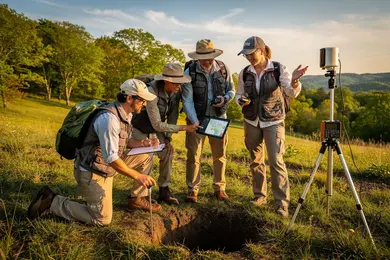
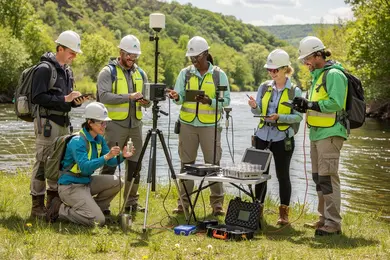
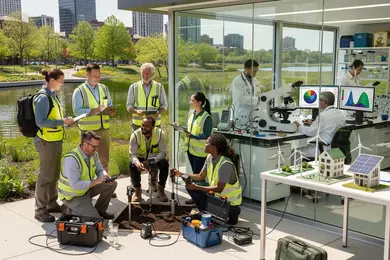
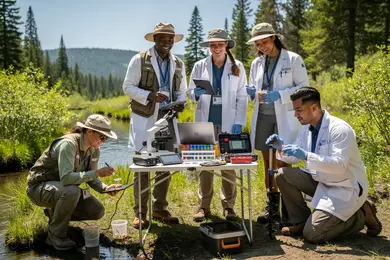
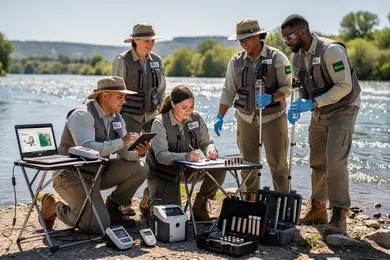
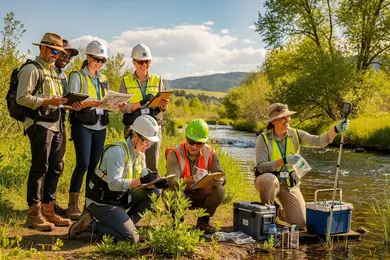
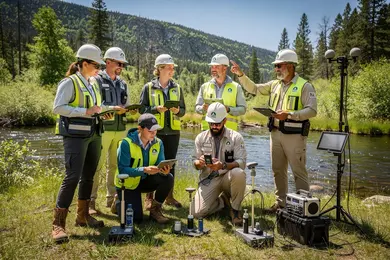
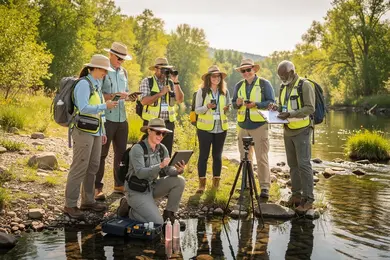
For environmental science programs, ROI is rarely determined by the degree name alone. Two students can graduate with the same major but have very different outcomes if one completes fieldwork, GIS mapping, data analysis, hydrology, or regulatory compliance internships while the other finishes with limited applied experience. Employers often hire for proof that graduates can collect samples, analyze environmental data, write technical reports, follow permitting rules, and work safely in field conditions.
A useful ROI estimate should include three numbers: total net cost, expected salary range for the target role, and the income you could have earned without the degree or with a less expensive credential. The degree tends to produce stronger payback when it leads directly into roles such as environmental scientist, environmental compliance specialist, sustainability analyst, remediation project coordinator, water quality technician, or conservation scientist.
The BLS projects employment for environmental scientists and specialists to grow by 7% from 2023 to 2033, faster than the average for all occupations. That growth does not make the degree risk-free, but it suggests continuing demand tied to environmental regulation, climate adaptation, land use, water quality, energy transition, and corporate sustainability reporting.
Use this framework to interpret ROI by degree level. The table summarizes how different environmental science credentials usually function in the labor market and where each may deliver the best value.
| Credential | Typical Time | Best Fit | ROI Consideration |
| Associate degree or transfer pathway | About 2 years before transfer or technician work | Students who want lower upfront cost or entry into environmental technician roles | Can improve ROI if credits transfer cleanly into a bachelor's program |
| Bachelor's degree | Usually 4 years | Students seeking environmental scientist, compliance, sustainability, or field analyst roles | Often the baseline credential for professional environmental jobs |
| Master's degree | Usually 1 to 3 years | Students targeting consulting, research, policy, hydrology, climate analysis, or leadership roles | Best value when tied to a clear promotion, specialization, or employer tuition support |
| Graduate certificate | Several months to 1 year | Working professionals adding GIS, environmental policy, sustainability, or compliance skills | Can offer targeted ROI when a full graduate degree is unnecessary |
Which Environmental Science Programs Deliver the Best Cost-to-Salary Return?
The best cost-to-salary return usually comes from programs that combine low net cost with strong career alignment. Instead of asking which school sounds most prestigious, students should ask which program gives them the most direct route to paid environmental work with the least unnecessary debt.
Because tuition discounts, residency status, scholarships, and transfer credits vary widely, a universal ranking would be misleading. A better approach is to compare program models by the features that directly affect employability and payback.
| Program Type | Why It Can Deliver Strong ROI | Watch For |
| In-state public bachelor's program | Lower published tuition, access to state agencies, local field sites, and regional employer networks | Limited course options in specialized areas such as GIS, hydrology, or environmental health |
| Community college to public university transfer pathway | Reduces the cost of general education credits before completing upper-division science courses | Credits that do not transfer or delay graduation |
| Online bachelor's completion program | Useful for working adults with prior credits who need flexibility and a recognized credential | Insufficient lab, field, internship, or local placement support |
| Applied environmental science program with internships | Builds job-ready experience in sampling, permitting, compliance, and technical writing | Programs that market sustainability broadly but lack measurable career preparation |
| Research-focused or highly selective program | May help students aiming for graduate school, policy research, or technical specialization | Higher cost may be harder to justify without funded research, scholarships, or a clear advanced path |
For most students, the highest-ROI choice is a reasonably priced accredited program with hands-on learning, not necessarily the most expensive environmental science department. Look for required internships, field methods courses, GIS or statistics training, environmental law or policy coursework, and evidence that graduates move into relevant jobs.
Before applying, ask each school for concrete outcomes. Important questions include the share of students completing internships, common employers, graduate school placement, average debt among completers, and whether online students receive the same career support as campus students.
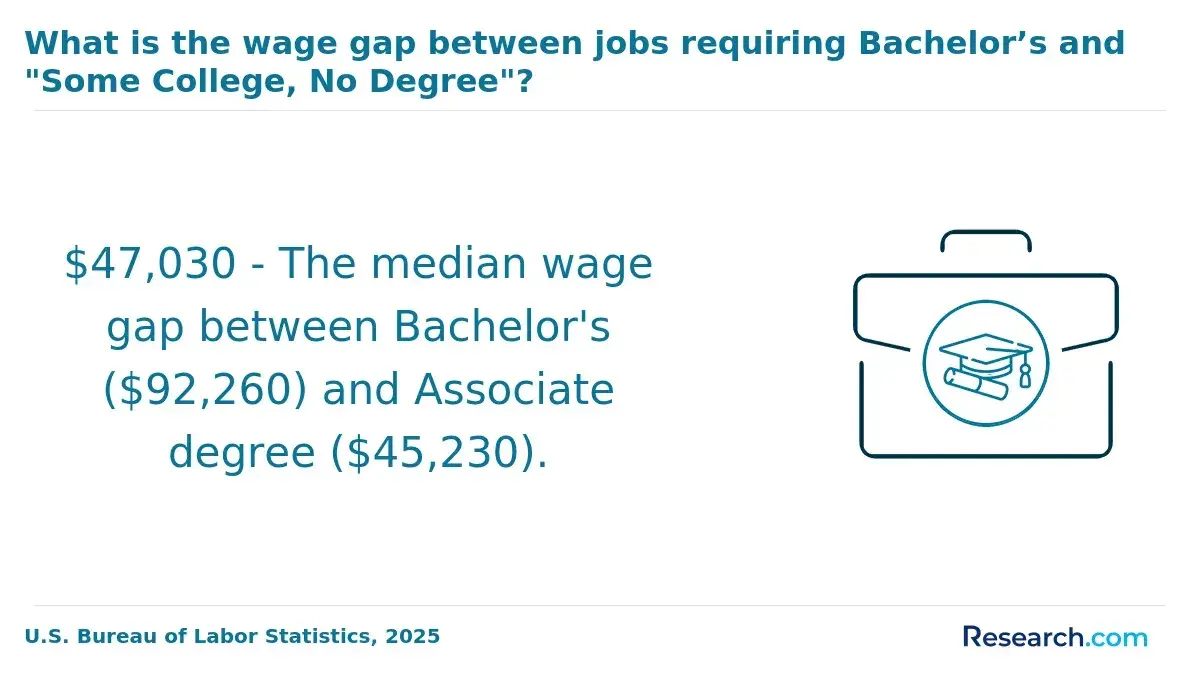
Tuition has a direct effect on payback because environmental science salaries can vary widely by region and role. A student who pays a low net price can break even much faster than a student who borrows heavily for the same entry-level job market.
College Board data for the 2024-2025 academic year reports average published tuition and fees of $11,610 for in-state students at public four-year institutions, compared with $30,780 for out-of-state public students and $43,350 for private nonprofit institutions. Those are sticker prices, not final net prices, but they show why residency status and institutional aid can dramatically change the financial outcome.
Use the next table to understand the cost factors that matter most when comparing offers. This is not a ranking of school types; it is a way to identify which costs are most likely to extend or shorten your payback period.
| Cost Factor | How It Affects ROI | What to Verify |
| Net price after grants and scholarships | Lower net price reduces the salary premium needed to break even | Use the school's net price calculator and compare aid renewal rules |
| Transfer credit acceptance | Accepted credits can reduce both tuition and time out of the workforce | Get a written transfer evaluation before enrolling |
| Program length | Extra semesters add tuition, fees, and opportunity cost | Ask about average time to completion, not just catalog length |
| Required field or lab fees | Environmental programs may include travel, equipment, lab, or course-specific expenses | Request a full cost estimate beyond tuition |
| Borrowing cost | Interest increases the true cost of the degree | Compare federal loan rates, repayment terms, and total estimated repayment |
Borrowing deserves special attention. Federal undergraduate Direct Loan interest rates for 2024-2025 were set at 6.53%, which means students who finance a large share of the degree may pay substantially more than the original tuition amount over time. This does not mean borrowing is always wrong, but it does mean the target job path should be clear before taking on debt.
A common mistake is comparing schools only by annual tuition. A lower-tuition program can still cost more if credits do not transfer, required courses are unavailable, or students need extra semesters to graduate. The better comparison is total net cost to completion.
Break-even time is the point at which the financial benefit of the degree equals what you spent to earn it. For environmental science students, the timeline can be short when net cost is low and the graduate moves quickly into a relevant role, or much longer when debt is high and the first job is only loosely related to the field.
The simplest calculation is: total net cost divided by annual earnings gain. Total net cost should include tuition, fees, books, required travel or field equipment, loan interest, and any lost income if you reduce work hours while enrolled. Annual earnings gain is the difference between your likely post-degree income and your realistic alternative without the credential.
Here is a practical way to estimate your own break-even point before committing to a program:
- Request a full cost-to-completion estimate from each school, not just first-year tuition.
- Subtract grants, scholarships, employer tuition support, and savings you can use without high-interest debt.
- Estimate your likely starting role using local job postings, not only national salary medians.
- Compare that likely income with what you could earn through your current path or a lower-cost credential.
- Divide the remaining net cost by the annual earnings difference and test best-case, expected-case, and cautious-case scenarios.
For example, using College Board's published in-state public tuition figure of $11,610 per year, four years of tuition alone equals $46,440 before grants, fees, living costs, or interest. If your actual net cost is much lower because of scholarships or transfer credits, payback can improve; if you borrow for out-of-state or private tuition, the break-even period can lengthen substantially.
Students should also consider non-salary payback. Some environmental science graduates value mission-driven work, public service, outdoor fieldwork, climate resilience, or regulatory impact. Those benefits matter, but they should be weighed honestly against debt and opportunity cost.
The biggest ROI drivers are the ones that connect education spending to employability. A low-cost program without career preparation can still underperform, while a moderately priced program with strong internships and technical training may create better long-term value.
These factors deserve the closest attention when comparing programs because they affect both your first job and your ability to advance:
- Accreditation and institutional quality: Choose a regionally accredited institution, and check whether specialized coursework aligns with your target career path.
- Applied experience: Internships, fieldwork, research projects, and capstones help employers see proof of job readiness.
- Technical skill stack: GIS, statistics, data visualization, environmental sampling, remote sensing, and regulatory writing can improve employability.
- Location and employer access: Programs near state agencies, consulting firms, water districts, energy companies, or conservation organizations may offer stronger networking.
- Debt level: High borrowing can weaken ROI even when the degree leads to relevant employment.
- Career target: A student aiming for environmental compliance may need different coursework than one pursuing ecology research or sustainability reporting.
Technology is also changing the ROI equation. Environmental employers increasingly use drones, satellite imagery, GIS platforms, automated sensors, and data dashboards. Students do not need to become software engineers, but they should graduate comfortable working with environmental data and digital tools.
If your long-term goal is leadership in sustainability, consulting, or environmental operations, compare whether a technical environmental science degree or a business-oriented credential is the better next step. Some professionals eventually evaluate management-focused options such as the easiest online MBA programs, especially when they already have environmental experience and want to move into budgeting, strategy, or operations leadership.
Employer demand improves degree value when it creates stable entry points and advancement opportunities. Environmental science is supported by several durable demand drivers: federal and state regulation, infrastructure projects, climate risk planning, water quality concerns, land development, environmental remediation, and corporate sustainability requirements.
The BLS 7% projected growth for environmental scientists and specialists from 2023 to 2033 indicates a favorable national outlook compared with many occupations. For students, the key takeaway is not that every graduate will easily find a job, but that the field has multiple hiring channels across government, consulting, energy, utilities, manufacturing, construction, and nonprofit conservation.
Employer expectations are becoming more skills-based. Job postings often favor candidates who can combine environmental knowledge with data handling, field safety, regulatory documentation, and communication. Graduates who can write clear reports, explain findings to nontechnical audiences, and work with multidisciplinary teams are often better positioned than those with classroom knowledge alone.
Environmental science also overlaps with public health, land use, counseling communities after disasters, and organizational change. If your interests lean more toward human services than field or regulatory work, comparing a related path such as a marriage and family therapist degree can help clarify whether you want to work primarily with ecosystems, organizations, data, or people.
A common red flag is choosing a program that advertises broad "green careers" without showing employer partnerships or role-specific outcomes. Ask which organizations hire graduates, what job titles recent alumni hold, and whether career services understand environmental hiring cycles.
Students can improve ROI by treating the degree as a career-building project, not just a set of courses. The smartest strategy is to reduce avoidable cost while building evidence that employers can recognize quickly.
Use these steps before and during enrollment to improve the degree's financial value:
- Start with the job title you want, then map backward to required coursework, field experience, and technical skills.
- Choose the lowest net-cost accredited program that still offers labs, fieldwork, internships, and career support.
- Complete transferable general education credits before entering an expensive four-year program, if transfer rules are clear.
- Add marketable tools such as GIS, statistics, environmental permitting, technical writing, or data visualization.
- Seek paid internships with consulting firms, government agencies, utilities, conservation groups, or environmental labs.
- Keep a portfolio of field reports, maps, data projects, lab summaries, and compliance writing samples.
- Apply early for scholarships, assistantships, work-study, and employer tuition support to reduce borrowing.
Communication is a major ROI multiplier. Environmental professionals often need to translate technical findings into reports, permit documents, public presentations, grant narratives, or sustainability updates. Students who enjoy that bridge between science and messaging may also compare an affordable online master's degree in communications later in their career, especially if they move toward environmental outreach, policy, or corporate sustainability communication.
Avoid three common mistakes: assuming a degree alone is enough, ignoring total cost to completion, and choosing electives that do not support a target role. Environmental science is broad, so students should use electives strategically rather than collecting unrelated courses.
Environmental science can offer strong value for students who want applied science, policy, fieldwork, and sustainability-related careers. However, it is not always the highest-earning science-adjacent option, and it may not be the best fit for students who prefer clinical practice, engineering design, business management, or laboratory specialization.
The comparison below helps students decide whether environmental science or a nearby field better matches their financial and career goals.
| Field | Best Fit | ROI Strength | Trade-Off |
| Environmental science | Students interested in ecosystems, compliance, climate, water, remediation, or sustainability | Strong when tuition is controlled and the program includes applied technical skills | Entry-level roles can be competitive without internships or field experience |
| Environmental engineering | Students strong in math, physics, and engineering design | Can lead to higher technical salary potential | More intensive prerequisites and engineering accreditation considerations |
| Geology or hydrology | Students interested in earth systems, water, minerals, hazards, or site assessment | Good for specialized consulting, water, and resource roles | Some roles may prefer graduate study or state-specific licensure |
| Public policy or urban planning | Students interested in regulation, land use, transportation, housing, or climate planning | Good when paired with data, economics, or planning internships | Less science-intensive and may require a graduate credential for advancement |
| Health or therapy-related fields | Students who want direct client care, diagnosis, or treatment roles | Can offer structured licensure pathways in some fields | Often requires graduate education, supervised hours, and state licensure |
Students who like science but want a more clinical and licensure-based path may compare environmental science with health-related options such as SLP online programs. The better ROI depends on your tolerance for graduate school, licensure requirements, patient-facing work, and the type of daily tasks you want.
Environmental science is usually the better fit if you want to work with environmental data, field sites, regulations, natural systems, or sustainability projects. A different field may be better if you want a clearly licensed clinical role, engineering design authority, or business leadership as your primary career identity.
An environmental science degree is worth it when the program is affordable, accredited, applied, and connected to a realistic job target. It is less likely to pay off when students borrow heavily, avoid technical coursework, skip internships, or choose the major mainly because they care about the environment but have not explored actual job duties.
This degree is a strong match if you enjoy science, outdoor or site-based work, data interpretation, environmental problem-solving, and technical writing. It can also fit students who want to work in climate resilience, conservation, permitting, remediation, water quality, sustainability, or environmental health and safety.
You may want a different path if you dislike lab and field methods, want guaranteed remote work, prefer direct counseling or clinical roles, or are not comfortable with math, statistics, and technical documentation. For example, students drawn to advocacy, communication, or human behavior may find that a public policy, communications, public health, or counseling-related degree fits better than environmental science.
Before enrolling, take these final decision steps:
- Identify three target job titles and read current postings in your preferred region.
- Check whether the program's required courses match those job postings.
- Compare total net cost across at least three schools, including transfer and online options.
- Ask for graduate outcome data, internship partners, and examples of recent student projects.
- Estimate break-even time using cautious salary assumptions and realistic borrowing costs.
- Confirm whether your target role requires graduate study, certification, or state-specific licensing.
If you are still deciding between environmental work and other people-centered careers, compare daily responsibilities before comparing tuition alone. A lower-cost degree is not a good investment if it points toward work you do not want to do for the next decade.
Environmental science earnings depend on job title, location, industry, technical skill level, and degree level. The BLS median annual wage of $80,060 for environmental scientists and specialists is a useful national benchmark, but it should not be treated as an entry-level promise. New graduates may start in technician, field assistant, compliance support, or lab roles before moving into higher-responsibility positions.
The table below shows common paths connected to environmental science training. It focuses on role fit and advancement logic rather than promising fixed salaries, because employers classify environmental jobs differently across consulting firms, government agencies, utilities, nonprofits, and energy companies.
| Career Path | Typical Responsibilities | Degree Fit | ROI Signal |
| Environmental scientist or specialist | Collect and interpret environmental data, prepare reports, assess contamination, support compliance | Bachelor's degree is commonly expected; master's may help for specialized roles | Strong fit when the program includes field methods, statistics, GIS, and writing |
| Environmental compliance specialist | Help organizations follow environmental laws, permits, reporting rules, and safety procedures | Bachelor's degree plus regulatory knowledge | Good ROI when paired with internships in industry, utilities, or government |
| Environmental science technician | Take samples, maintain equipment, record field data, support lab or site investigations | Associate or bachelor's degree depending on employer | Can be a lower-cost entry point, but advancement may require a bachelor's |
| Sustainability analyst | Track emissions, resource use, waste, reporting metrics, or corporate sustainability goals | Bachelor's degree with data, business, or policy coursework | Higher value when combined with analytics and communication skills |
| Conservation or natural resources specialist | Support habitat, land, wildlife, forestry, or watershed projects | Bachelor's degree; some roles prefer specialized ecology or natural resources coursework | ROI may depend heavily on geography and public-sector hiring cycles |
Students who want higher earnings should plan beyond the major title. Skills in GIS, Python or R, environmental permitting, wetland delineation, remote sensing, water quality analysis, OSHA safety, technical writing, and project management can make graduates more competitive for roles with better pay progression.
Other Things You Should Know About Environmental Science
It can lead to solid earnings, especially in environmental consulting, compliance, energy, utilities, and technical specialist roles. However, pay varies by location, employer, experience, and skill set, so students should not rely on national medians as guaranteed starting salaries.
A bachelor's degree is enough for many entry-level environmental scientist, technician, compliance, and sustainability roles. A master's degree may help for research, hydrology, policy analysis, senior consulting, or specialized technical positions.
Online programs can be worth it for working adults or transfer students if they are accredited and provide credible lab, field, internship, or local experiential options. Be cautious with programs that offer flexibility but little hands-on preparation.
Look for accreditation, total net cost, transfer policies, internships, field courses, GIS or data training, faculty expertise, employer connections, and graduate outcomes. The best program is the one that fits your target role at a cost you can reasonably repay.
- Major decisions: Graduates' earnings growth and debt repayment - The Hamilton Project https://www.hamiltonproject.org/publication/paper/major-decisions-graduates-earnings-growth-and-debt-repayment/
- 2025 Most Affordable Online Environmental Science Degrees https://www.onlineu.com/most-affordable-colleges/environmental-science-degrees
- Exploring the Demand for Environmental Science Professionals https://www.webuildstaffing.com/exploring-the-demand-for-environmental-science-professionals/
- Average Time to Pay Off Student Loans [2025]: Data Analysis https://educationdata.org/average-time-to-repay-student-loans
- NEHA/AAS Environmental Health Scholarships https://www.neha.org/scholarships
- Sustainability Scholarships for Graduate Students https://leadthechange.bard.edu/blog/sustainability-scholarships-for-graduate-students
- Going Green: Scholarships for the Environmentally Friendly https://www.mefa.org/article/going-green-scholarships-for-the-environmentally-friendly/
- Agriculture and Environmental Science Degree Careers and Salary in Europe - StudyinEurope.eu https://www.studyineurope.eu/agriculture-environment/agriculture-environment-degree-careers-salary-europe/