2027 Environmental Science Degree Industry Demand Report: Which Sectors Are Expanding Hiring the Fastest

Co-Founder and Chief Data Scientist
Environmental science students face a practical question: which employers are actually expanding hiring, and which paths offer the strongest return on a degree? The U. S. Bureau of Labor Statistics projects environmental scientists and specialists to grow 7% from 2023 to 2033, faster than the average for all occupations.
This report explains where demand is strongest, how salaries vary by sector, what entry-level roles look like, and which technical skills make graduates more competitive so students can choose coursework, internships, certifications, and job targets strategically.
Key Things You Should Know
- BLS projects about 8,500 openings per year for environmental scientists and specialists from 2023 to 2033, with growth driven by consulting, infrastructure, regulation, remediation, and climate resilience work.
- The median annual wage for environmental scientists and specialists was about $80,060 in May 2024, but entry-level pay varies sharply by sector, region, fieldwork intensity, and technical skill level.
- The fastest-expanding opportunities are not limited to traditional conservation roles; environmental consulting, energy transition, water management, ESG reporting, environmental health and safety, and geospatial analysis are increasingly important hiring channels.
- Will pursuing a Environmental Science degree lead directly to a job?
- What is the projected job growth rate for Environmental Science roles over the next decade?
Will pursuing a Environmental Science degree lead directly to a job?
An environmental science degree can lead to a job, but it usually does not work like a single-license career where the degree alone maps directly to one occupation. It is better understood as a flexible applied science credential that can feed into environmental consulting, government compliance, remediation, sustainability, natural resources, water quality, environmental health and safety, and geospatial analysis roles.
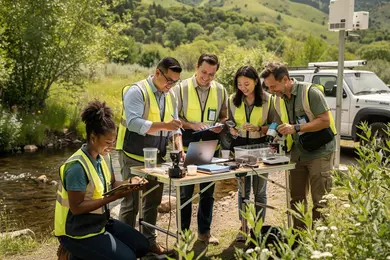
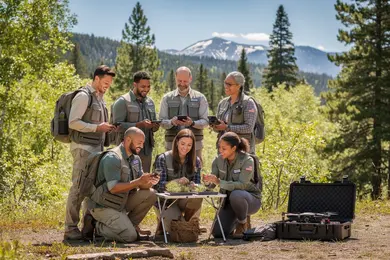
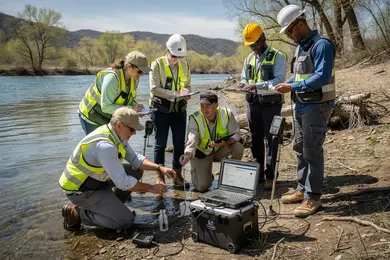
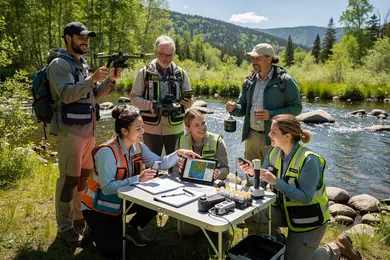
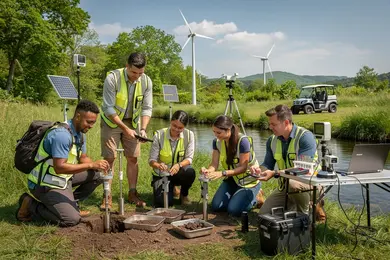
The strongest job outcomes usually come from combining the degree with field experience, data skills, regulatory knowledge, and a clear sector target. A student who graduates with only broad coursework may be competing for general technician roles, while a student with GIS projects, water sampling experience, OSHA training, internship hours, and report-writing samples can look more job-ready for consulting, utilities, municipalities, or engineering firms.
This distinction matters when comparing environmental science with more direct professional pipelines. For example, some health and therapy pathways, such as SLP online programs, are commonly tied to specific licensure steps and defined clinical roles. Environmental science is broader, so students need to build a career direction before graduation rather than assuming the major itself will determine the job.
For most students, the degree makes the most sense when they are willing to pursue at least one of these practical entry routes after or during college:
- Start in field technician, environmental sampling, lab assistant, or compliance support roles to build applied experience.
- Use GIS, statistics, Python, R, remote sensing, or database skills to qualify for analyst-oriented environmental jobs.
- Target government, utility, engineering, or consulting employers that regularly hire bachelor's-level environmental staff.
- Add certifications such as OSHA HAZWOPER, GIS credentials, stormwater training, or hazardous materials awareness when relevant to the role.
A degree alone is less likely to be enough for specialized jobs in hydrogeology, environmental engineering, toxicology, advanced climate modeling, or senior policy analysis. Those roles often require a master's degree, professional licensure, engineering credentials, or several years of technical experience.
What is the projected job growth rate for Environmental Science roles over the next decade?
The clearest national benchmark comes from the U.S. Bureau of Labor Statistics, which projects employment for environmental scientists and specialists to grow 7% from 2023 to 2033. That is a favorable signal for students because it reflects demand from regulatory compliance, pollution control, climate adaptation, land development review, environmental impact assessment, and cleanup work.
However, the headline growth rate should not be read as a guarantee of easy entry. Environmental science is a competitive field because many students are drawn to sustainability, conservation, and climate-related work. The best opportunities often go to graduates who can combine environmental knowledge with technical execution: collecting defensible samples, interpreting regulations, mapping sites, analyzing datasets, writing reports, and communicating findings to clients or agencies.
The table below summarizes how major demand drivers connect to actual job opportunities. This helps students separate broad interest in the environment from the specific labor-market needs employers are hiring for.
| Demand driver | What is creating hiring need | Roles commonly affected | Student strategy |
| Infrastructure and land development | Projects need permitting, environmental review, wetland assessment, stormwater planning, and impact documentation. | Environmental consultant, permitting specialist, field scientist, NEPA support analyst | Take coursework in environmental policy, ecology, hydrology, GIS, and technical writing. |
| Water quality and water scarcity | Utilities, municipalities, and regulators need staff for monitoring, watershed planning, treatment support, and compliance. | Water quality technician, watershed analyst, environmental compliance specialist | Build sampling, lab, statistics, and state water regulation experience. |
| Climate resilience | Communities and firms need risk analysis for flooding, heat, wildfire, coastal hazards, and adaptation planning. | Climate resilience analyst, GIS analyst, sustainability analyst | Develop GIS, remote sensing, climate data interpretation, and risk communication skills. |
| Environmental remediation | Brownfields, industrial sites, spills, and contaminated properties require assessment and cleanup support. | Remediation technician, environmental scientist, hazardous materials field specialist | Consider OSHA HAZWOPER and internships with consulting or remediation firms. |
| Corporate sustainability and ESG | Companies need emissions tracking, environmental reporting, supply chain data, and compliance documentation. | Sustainability analyst, ESG data associate, environmental reporting coordinator | Pair environmental science with Excel, data visualization, carbon accounting, and business communication. |
The practical takeaway is that growth is strongest where environmental science supports required decisions: permits, compliance, risk management, infrastructure, cleanup, and measurable sustainability reporting.
There is no single official U.S. retention rate for "the environmental science industry" because environmental science graduates work across government, consulting, utilities, energy, engineering, nonprofits, laboratories, and corporate sustainability teams. Retention depends heavily on sector, work conditions, travel expectations, pay progression, and whether the role is field-heavy or analyst-heavy.
Still, retention patterns are predictable. Government, utilities, and large public agencies often offer more stability, clearer benefits, and slower but steadier promotion paths. Consulting can offer faster learning and broader project exposure, but early-career turnover may be higher when employees face long field days, travel, billable-hour pressure, seasonal workloads, or limited mentoring.
The table below shows how retention risk usually differs by employer type. Use it to evaluate whether a role matches your work style, not just your environmental interests.
| Employer type | Typical retention strengths | Common turnover risks | Best fit for |
| Federal, state, and local government | Stable benefits, mission-driven work, structured advancement, public-service protections | Slower hiring, lower early salary growth in some locations, bureaucratic processes | Graduates who value stability, public policy, inspections, regulation, or long-term benefits |
| Environmental consulting | Fast skill development, diverse projects, strong early exposure to clients and fieldwork | Travel, demanding deadlines, field fatigue, billable-hour expectations | Graduates who want rapid learning and are comfortable with changing project sites |
| Utilities and water agencies | Operational stability, essential-service demand, applied technical work | Shift schedules, certification requirements, location constraints | Students interested in water quality, treatment, compliance, and public infrastructure |
| Corporate sustainability | Business exposure, cross-functional work, growing reporting needs | Role ambiguity, shifting corporate priorities, competition from business and data majors | Graduates with strong data, communication, and reporting skills |
| Nonprofits and conservation organizations | Mission alignment, community impact, field-based conservation work | Grant-funded positions, lower pay in some roles, seasonal hiring | Graduates prioritizing ecology, advocacy, restoration, or public outreach |
A good retention strategy is to ask interviewers about travel frequency, field-to-office ratio, overtime, training budgets, certification support, and promotion timelines. These factors often predict long-term satisfaction better than the job title alone.
The most in-demand roles for environmental science graduates are the ones that connect science to operational decisions. Employers want graduates who can collect reliable data, interpret environmental rules, use mapping tools, communicate risk, and produce documentation that can stand up to regulatory or client review.
The table below summarizes common roles, what they do, and what entry-level candidates should bring. It can help students choose internships and electives that match the jobs they want most.
| Role | Typical responsibilities | High-value entry-level skills | Best sector fit |
| Environmental scientist | Conduct site investigations, collect samples, evaluate environmental conditions, prepare technical reports | Field sampling, technical writing, GIS, environmental regulations, data QA/QC | Consulting, government, engineering |
| Environmental compliance specialist | Help employers meet air, water, waste, stormwater, and hazardous materials requirements | Regulatory research, inspection readiness, documentation, Excel, communication | Manufacturing, utilities, government, energy |
| GIS analyst or technician | Create maps, analyze spatial data, support site selection, habitat analysis, risk mapping, and infrastructure planning | ArcGIS Pro, QGIS, spatial analysis, remote sensing basics, database management | Consulting, planning, utilities, conservation |
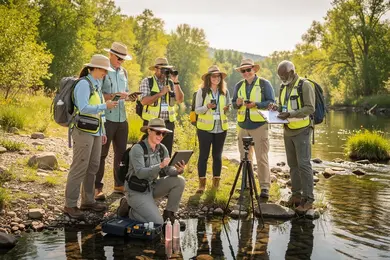
| Water quality technician | Collect water samples, monitor parameters, support watershed or treatment programs, prepare compliance records | Sampling protocols, lab methods, hydrology, statistics, safety procedures | Utilities, municipalities, state agencies |
| Sustainability analyst | Track emissions, waste, energy, water, and supplier data; prepare reports and improvement recommendations | Excel, data visualization, carbon accounting basics, business writing, stakeholder communication | Corporate sustainability, higher education, healthcare, manufacturing |
| Environmental health and safety specialist | Support workplace safety, hazardous materials procedures, incident reporting, audits, and training | OSHA knowledge, risk assessment, incident documentation, training communication | Manufacturing, energy, laboratories, construction |
| Environmental planner | Support environmental impact documents, permitting, public review, and land-use decisions | NEPA familiarity, policy writing, GIS, community engagement, project coordination | Government, engineering, infrastructure |
For a bachelor's graduate, the fastest route is often to target roles with "technician," "associate," "assistant," "coordinator," or "entry-level scientist" in the title. Senior scientist, project manager, hydrogeologist, toxicologist, and environmental engineer roles usually require advanced training, licensure, or several years of experience.
Remote work exists in environmental science, but it is uneven. Many entry-level jobs require field sampling, site visits, inspections, lab work, construction monitoring, wetland delineation, or community engagement, so fully remote roles are less common than hybrid roles. The best remote-friendly paths are usually GIS, environmental data analysis, climate risk analysis, sustainability reporting, permitting documentation, and ESG data work.
A useful national context is that the BLS American Time Use Survey has continued to show substantial work-from-home activity across the broader U.S. labor market, but environmental science graduates should not assume that general remote-work trends apply equally to field-based science roles. In this field, location flexibility usually increases after you build technical expertise and can work independently with data, reports, or regulatory documentation.
The following role categories are the most realistic for graduates who want hybrid or remote options:
- GIS and remote sensing roles, especially those involving spatial analysis, land-use mapping, hazard mapping, or environmental planning support.
- Sustainability and ESG reporting roles that rely on emissions data, supplier documentation, dashboards, and written reporting.
- Environmental permitting and compliance documentation roles where site data is gathered by field staff but reports are prepared by analysts.
- Climate risk and resilience analysis roles that use public datasets, scenario planning, mapping tools, and written recommendations.
- Environmental communication, outreach, and grant-support roles where employers need technical information translated for communities or stakeholders.
Students who want remote flexibility should intentionally build a digital portfolio. Include GIS maps, data dashboards, writing samples, regulatory memos, Python or R notebooks, and sustainability reporting examples. If you are more interested in public-facing communication than field science, an affordable online master's degree in communications can also support environmental outreach, science communication, public information, or sustainability communications roles.
The main mistake to avoid is applying only to remote sustainability jobs without evidence of data skills. These roles are attractive and competitive, so candidates need proof that they can work with messy datasets, explain assumptions, and produce usable reports.
High-demand environmental science roles usually require more than environmental awareness. Employers look for graduates who can work safely, handle data accurately, understand regulations, communicate clearly, and contribute to billable or compliance-driven work soon after hiring.
The most useful credentials depend on the sector. A student targeting remediation may need different preparation than a student targeting ESG reporting or water quality. The table below shows common credentials and where they fit best.
| Credential or skill area | Most relevant roles | Why it matters | Important limitation |
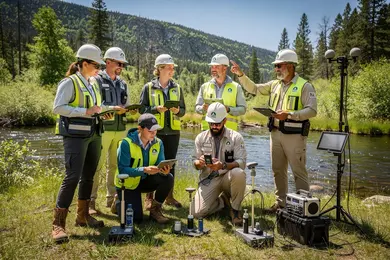
| OSHA 40-hour HAZWOPER | Remediation technician, environmental field scientist, hazardous materials support | Many contaminated-site and hazardous-waste projects require safety training before field deployment. | Requirements vary by employer and site; training alone does not replace experience. |
| GIS training | GIS technician, environmental planner, climate analyst, watershed analyst | Mapping is central to site assessment, planning, conservation, utilities, and risk analysis. | Employers usually want portfolio evidence, not just a course title. |
| Water or wastewater operator certification | Water quality technician, utility compliance assistant, treatment plant support | Utilities and municipalities often value candidates who understand treatment operations and compliance monitoring. | Licensing rules vary by state and role. |
| Wetland delineation training | Environmental consultant, ecologist, permitting assistant | Wetland work is tied to permitting, infrastructure, mitigation, and land development review. | Field judgment takes practice; training is strongest when paired with supervised fieldwork. |
| Data analysis tools | Sustainability analyst, climate analyst, environmental data associate | Employers increasingly expect Excel, statistics, visualization, and sometimes R or Python. | Software skills must be connected to environmental questions, not learned in isolation. |
| Technical writing | Environmental scientist, compliance specialist, planner, consultant | Reports, permits, memos, inspection notes, and client deliverables are central to the job. | Strong writing requires practice with real environmental documents and feedback. |
Students can strengthen employability by following a focused sequence rather than collecting random certificates. A practical plan looks like this:
- Choose a target sector first, such as consulting, water, GIS, sustainability, government, or remediation.
- Select two technical skills that match that sector, such as GIS plus field sampling or Excel plus carbon accounting.
- Complete at least one applied project that produces a portfolio artifact, such as a map, report, dashboard, or sampling plan.
- Pursue one recognized credential only if it is repeatedly requested in job postings for your target role.
- Use internships, research assistantships, volunteering, or part-time technician work to show real-world exposure.
Common mistakes include assuming passion for sustainability is enough, applying without writing samples, ignoring safety training for field jobs, and waiting until after graduation to learn GIS. The strongest candidates show evidence of execution, not just interest.
Entry-level environmental science salaries vary because graduates enter different kinds of jobs. A field technician at a small consulting firm may start lower than a compliance analyst at a utility or an environmental data associate in a large corporation. Geography also matters; salaries in high-cost coastal, energy, and federal markets can look very different from salaries in rural conservation or nonprofit roles.
As a national reference point, BLS reports the median annual wage for environmental scientists and specialists at about $80,060 in May 2024. Entry-level graduates should not treat that figure as a starting salary, because the median includes experienced professionals. A more realistic early-career expectation is to compare job postings for assistant, technician, associate, and entry-level scientist roles in the region where you plan to work.
The table below gives a practical salary-context view by sector. It avoids promising exact starting pay, because employer size, location, overtime, travel, and credentials can shift offers materially.
| Entry sector | Typical early-career compensation position | What can raise starting pay | What can limit starting pay |
| Environmental consulting | Often moderate at entry level, with faster growth as billable skills improve | HAZWOPER, GIS, field sampling, wetland experience, strong report writing | Small firms, seasonal work, limited field experience |
| Government agencies | Often structured by pay grade and location | Veterans preference where applicable, internships, civil-service alignment, technical credentials | Slow hiring timelines, fixed entry grades |
| Utilities and water agencies | Often competitive when roles are tied to essential operations | Operator certifications, water sampling, lab methods, compliance knowledge | Shift requirements, local licensing rules, limited openings in a given region |
| Corporate sustainability | Can be competitive but highly variable | Excel, dashboards, emissions accounting, business writing, internship experience | Competition from business, analytics, and finance candidates |
| Nonprofit conservation | Often lower at entry level, especially in seasonal or grant-funded roles | Field leadership, grant writing, GIS, restoration experience | Grant cycles, seasonal hiring, smaller budgets |
Students should evaluate salary by total career path, not only the first offer. A consulting job with heavy fieldwork may start modestly but build marketable skills quickly. A government job may start at a fixed grade but offer stability and benefits. A corporate role may pay more but require stronger data and business fluency.
The highest compensation for environmental science professionals is often found where environmental expertise protects high-value assets, reduces legal risk, supports regulated operations, or contributes to major infrastructure and energy decisions. Pay is typically stronger in federal government, energy, utilities, management and technical consulting, engineering services, and corporate environmental health and safety than in many seasonal conservation or small nonprofit roles.
Compensation also rises when the work becomes more specialized. Professionals who can manage compliance programs, lead remediation projects, interpret complex permits, supervise field teams, or translate environmental risk for executives often move beyond entry-level scientist pay.
The table below compares higher-compensation industries with the capabilities that typically support stronger offers. This helps students decide whether they should pursue a technical, regulatory, or corporate track.
| Industry | Why compensation can be higher | Roles to target | Preparation that improves competitiveness |
| Federal government | Large regulatory, land management, energy, defense, and public health responsibilities require experienced environmental staff. | Environmental protection specialist, natural resource specialist, compliance analyst | Federal internships, policy writing, environmental law, GIS, agency-specific application experience |
| Energy and renewables | Projects face permitting, land, wildlife, water, emissions, and community-risk issues. | Environmental compliance specialist, siting analyst, field coordinator | Permitting, NEPA, wildlife monitoring, GIS, stakeholder documentation |
| Utilities and water infrastructure | Water, wastewater, and energy systems must meet strict compliance and operational standards. | Water quality analyst, environmental compliance coordinator, watershed specialist | Water regulations, sampling, treatment operations, operator certification where relevant |
| Engineering and infrastructure services | Environmental review is built into transportation, construction, energy, and public works projects. | Environmental planner, permitting specialist, GIS analyst | Technical writing, NEPA, stormwater, GIS, interdisciplinary project experience |
| Corporate EHS and sustainability | Companies pay for risk reduction, audit readiness, reporting, and operational compliance. | EHS specialist, sustainability analyst, ESG reporting associate | OSHA knowledge, Excel, emissions accounting, audit documentation, business communication |
| Environmental consulting project management | Experienced staff generate revenue by leading client projects and managing deliverables. | Project scientist, project manager, remediation lead | Field credibility, report review, budgeting, client communication, regulatory strategy |
Students who want the highest long-term compensation should not ignore business skills. Budgeting, client communication, project management, and leadership can become as important as field knowledge after the first few years. Graduates who eventually want management roles may compare environmental career progression with broader business pathways such as the easiest online MBA programs, especially if they plan to move into sustainability leadership, consulting management, or corporate EHS strategy.
Recruitment in the environmental science industry is becoming more skills-based, project-based, and evidence-driven. Employers still value the degree, but they increasingly look for proof that candidates can contribute to fieldwork, compliance documentation, data analysis, or client deliverables without extensive hand-holding.
Several trends should shape how graduates apply. The most important is that environmental hiring is spread across many employer categories, so using only broad job boards can cause students to miss strong openings. Consulting firms, state agencies, municipalities, utilities, engineering firms, and federal employers often use different timelines and application systems.
Graduates should pay attention to these recruitment trends before applying:
- Skills-based screening is rising: postings often mention GIS, Excel, sampling, HAZWOPER, NEPA, stormwater, EHS, or data visualization even when the job title is broad.
- Internships matter more than generic coursework: employers use internships, research projects, field camps, and assistantships as signals that a candidate understands real environmental work.
- Government hiring requires patience and precision: public-sector applications often need keyword alignment, transcripts, eligibility documentation, and careful responses to qualification questions.
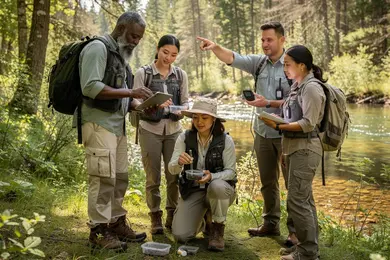
- Consulting firms hire for availability and field readiness: a willingness to travel, work outdoors, follow safety protocols, and write clear field notes can influence early-career hiring.
- AI and automation are changing the workflow: tools can speed mapping, document review, data cleaning, and report drafting, but employers still need professionals who understand assumptions, field conditions, regulations, and quality control.
- Sustainability roles are becoming more data-heavy: candidates should expect employers to test spreadsheet ability, emissions-data logic, dashboarding, or reporting judgment.
A strong application strategy should be targeted rather than high-volume. Use the following sequence to improve response rates:
- Pick two target sectors instead of applying to every job with "environmental" in the title.
- Translate each job posting into a skills checklist, then revise your resume around the repeated technical requirements.
- Create a small portfolio with one map, one technical writing sample, one data project, and one field or lab experience summary.
- Apply through sector-specific channels, including government portals, utility career pages, consulting firm websites, university employer networks, professional associations, and local agency boards.
- Prepare interview stories about safety, field problem-solving, data quality, teamwork, and explaining technical information to non-specialists.
Common red flags include applying only to climate or conservation jobs in highly competitive cities, using a resume that lists courses but no applied outputs, ignoring state-specific rules, and assuming a bachelor's degree guarantees immediate professional-level placement. The smarter approach is to build a narrow first target, enter through a realistic role, and use the first two years to accumulate technical credibility.
The highest hiring volume for environmental science degree holders tends to come from sectors where environmental work is legally required, operationally necessary, or financially tied to risk management. That means students should look beyond parks, wildlife, and conservation organizations if their priority is employment volume.
The following comparison highlights major hiring sectors and the kinds of jobs they typically offer. It is designed to help students decide whether they should pursue a high-volume generalist sector or a more specialized niche.
| Sector | Hiring volume outlook | Common entry roles | Why demand exists | Trade-off |
| Environmental consulting | High | Field scientist, environmental technician, permitting assistant, remediation support specialist | Clients need site assessments, permitting, compliance, monitoring, and cleanup support. | Excellent experience, but may involve travel, irregular field schedules, and deadline pressure. |
| Government and public agencies | High | Environmental compliance specialist, inspector, natural resource technician, water quality associate | Agencies enforce environmental rules, review permits, monitor public resources, and manage programs. | Stable but often slower to hire; applications may require careful alignment with civil-service criteria. |
| Utilities and water management | Moderate to high | Water quality technician, wastewater compliance assistant, watershed analyst | Water systems need monitoring, reporting, treatment support, and regulatory compliance. | Strong applied path, but some roles require operator certifications or local availability. |
| Engineering and infrastructure firms | Moderate to high | Environmental planner, NEPA assistant, GIS technician, permitting coordinator | Infrastructure and construction projects require environmental review and mitigation planning. | Best for students comfortable working with engineers, planners, and technical documentation. |
| Energy and renewables | Moderate | Siting analyst, environmental compliance technician, wildlife monitoring technician | Energy projects require land, wildlife, water, cultural resource, and permitting review. | Can be specialized and location-dependent; project cycles may affect hiring. |
| Corporate sustainability and ESG | Growing but competitive | Sustainability coordinator, ESG data associate, environmental reporting analyst | Companies need emissions, waste, water, and supply chain data for reporting and risk management. | Attractive office-based path, but candidates compete with business, analytics, and communications graduates. |
High-volume sectors make sense if your first goal is to enter the field quickly and build experience. Specialized niches such as wildlife biology, marine conservation, climate modeling, or environmental justice research may be more mission-aligned, but they can require graduate study, grant-funded experience, or geographic flexibility.
Students comparing environmental science with people-centered helping professions may also want to review alternatives such as a marriage and family therapist degree, where the career pathway is more closely tied to licensure and clinical practice rather than multi-sector environmental hiring.
Other Things You Should Know About Environmental Science
It can be worth it if you pair the degree with applied skills such as GIS, field sampling, regulatory knowledge, technical writing, or environmental data analysis. The degree is less effective when students graduate without internships, projects, or a clear target sector.
Common entry points include environmental field technician, water quality technician, lab assistant, GIS technician, sustainability coordinator, and environmental compliance assistant. "Easiest" depends on your region, but roles with fieldwork and sampling responsibilities often have more entry-level openings than specialized research jobs.
Not always. Many consulting, government, utility, GIS, compliance, and field roles are available with a bachelor's degree plus relevant skills. A master's degree is more useful for specialized research, advanced policy analysis, climate modeling, hydrogeology, toxicology, or competitive leadership tracks.
Environmental consulting, utilities, government compliance, infrastructure planning, energy, and corporate sustainability can all support long-term growth. Consulting is often best for rapid early skill development, government for stability, utilities for essential-service work, and corporate sustainability for data-focused business roles.
- What skills do you need to succeed in environmental careers? | ECO Canada https://eco.ca/blog/essential-skills-for-environmental-jobs/
- Environmental Career Profiles Australia https://environmentaljobs.com.au/resources/environmental-sustainability-careers
- Data show today's environmental science grads have more diverse job prospects https://www.onlineu.com/magazine/environmental-science-majors-career-outcomes
- Agriculture and Environmental Science Degree Careers and Salary in Europe - StudyinEurope.eu https://www.studyineurope.eu/agriculture-environment/agriculture-environment-degree-careers-salary-europe/
- Bridging Science & Advocacy: How Environmental Scientists Influence Public Policy https://www.nrep.org/blog/how-environmental-science-influences-policy
- So much for saving the planet. Climate careers, and many others, evaporate for class of 2025 https://hechingerreport.org/so-much-for-saving-the-planet-climate-careers-and-many-others-evaporate-for-class-of-2025/
- Exploring the Demand for Environmental Science Professionals https://www.webuildstaffing.com/exploring-the-demand-for-environmental-science-professionals/
- Top Jobs in Environmental Science | Build a Sustainable Career https://bootcampgis.com/jobs-in-environmental-science/
- How Many Jobs Are Being Created in the Green Economy? LinkedIn’s New Report Has The Answers | Earth Day https://www.earthday.org/how-many-jobs-are-being-created-in-the-green-economy-linkedins-new-report-has-the-answers/
- Estimates of green jobs, UK: July 2025 https://www.ons.gov.uk/economy/environmentalaccounts/bulletins/experimentalestimatesofgreenjobsuk/july2025