2027 Environmental Science Degree Persistence Report: Retention, Stop-Out Risk, and Re-Enrollment Patterns

Co-Founder and Chief Data Scientist
Choosing an environmental science degree is not just about curriculum; it is about whether the program helps you finish. NCES data released in 2024 shows that first-time, full-time students at four-year institutions had a 78% first-year retention rate, while two-year institutions reported 62%.
That gap matters for students balancing lab courses, fieldwork, math requirements, jobs, and family responsibilities. This guide is for prospective and returning students who want to compare programs by persistence, stop-out risk, re-enrollment options, cost pressure, and career payoff before committing time and money.
Key Things You Should Know
- Retention is an early signal, not a guarantee. NCES reported a 78% first-year retention rate at four-year institutions and 62% at two-year institutions in data released in 2024, but environmental science students should also review graduation rates, transfer outcomes, advising access, and fieldwork support.
- Stop-out risk is highest when academic load, finances, and scheduling conflict; environmental science can add pressure because students often need sequential science courses, labs, GIS or statistics work, internships, and sometimes transportation to field sites.
- The strongest programs for persistence usually combine transparent student-success data, flexible course sequencing, proactive advising, tutoring in quantitative courses, financial aid counseling, undergraduate research access, and clear re-enrollment policies for students who need to pause.
- What Do Retention Rates Reveal About Student Success in Environmental Science Degree Programs?
- Which Students Are Most at Risk of Stopping Out of a Environmental Science Degree Program?
What Do Retention Rates Reveal About Student Success in Environmental Science Degree Programs?
Retention rates show how many students return after starting a program, usually from the first fall term to the next fall term. In environmental science, this metric is useful because the first year often determines whether students can handle biology, chemistry, geology, statistics, writing-intensive policy courses, and lab or field requirements at the same time.
A high retention rate can indicate that students are receiving enough academic, financial, and advising support to continue. However, it does not prove that all students graduate on time, that environmental science majors specifically are retained at the same rate as the whole institution, or that the program fits every student's schedule and career goals.
The table below explains the main persistence metrics students should ask about. These measures are often reported at the institutional level, so applicants should request major-level or school-of-science data whenever possible.
| Metric | What it measures | Why it matters for environmental science students | How to use it in program comparison |
| First-year retention rate | Share of students who return after the first year | Shows whether students are supported through gateway science, math, and writing courses | Compare the institution's rate with schools of similar type and ask if science majors differ |
| Persistence rate | Share of students who continue at the same or another institution | Captures students who transfer rather than leave higher education entirely | Useful when comparing community college transfer pathways with direct-entry bachelor's programs |
| Graduation rate | Share of students completing within a defined time window | Shows longer-term completion outcomes beyond the first year | Review both four-year and six-year rates for bachelor's programs |
| Stop-out rate | Share of students who pause enrollment without completing | Helps identify whether students are leaving because of scheduling, financial, or academic barriers | Ask how many stop-outs return and what support is available during re-entry |
| Course completion in gateway classes | Pass or completion rates in foundational courses | Environmental science often depends on sequential prerequisites | Ask about support for chemistry, statistics, biology, GIS, and lab-based courses |
Retention should matter in your decision, but it should not be the only number you trust. A program with a moderate retention rate but strong transfer agreements, low net price, and excellent advising may fit some students better than a more selective program that offers fewer schedule options.
One common mistake is comparing a community college, regional public university, and private research university as if they serve the same student population. Retention rates are shaped by admissions selectivity, student age, part-time enrollment, financial need, and transfer patterns, so context is essential.
Which Students Are Most at Risk of Stopping Out of a Environmental Science Degree Program?
Students most at risk of stopping out are usually not less capable; they are often carrying more academic, financial, work, or family pressure than the program design can absorb. In environmental science, risk can increase when students enter without recent math or lab science preparation, need to work many hours, or cannot attend required in-person labs and field experiences.
Risk is also cumulative. A student who struggles in chemistry, loses transportation to campus, and waits to meet an adviser is in a very different position from a student who has one temporary scheduling conflict and a clear make-up plan.
The table below summarizes common stop-out risk patterns. It is not a diagnostic tool, but it can help students and advisers identify issues early enough to intervene.
| Student situation | Why stop-out risk may rise | Persistence-focused question to ask the school |
| First-generation college student | May have less familiarity with course sequencing, financial aid rules, or when to seek help | Does the program offer structured advising, mentoring, or first-year science learning communities? |
| Working adult or caregiver | Labs, field trips, and daytime course blocks may conflict with work or family responsibilities | Are evening, hybrid, weekend, summer, or accelerated course options available? |
| Transfer student | Credits may not apply cleanly to major prerequisites, delaying progress | Will the department complete a course-by-course transfer audit before enrollment? |
| Student with high unmet financial need | Small unpaid balances, textbook costs, transportation, and field supplies can interrupt enrollment | Are emergency grants, paid research roles, or textbook support available? |
| Student underprepared in quantitative courses | Statistics, chemistry, GIS, and data analysis may become bottlenecks | Is tutoring embedded in gateway courses, or must students find help on their own? |
Students can reduce risk by treating persistence as a planning issue before the first semester begins. The most useful steps are specific and time-bound rather than general promises to "work harder."
- Ask the department to map every required course by term, including prerequisites, labs, and field requirements.
- Build a weekly schedule that includes work hours, commute time, study blocks, lab preparation, and recovery time.
- Meet with financial aid before enrollment to estimate net cost, not just tuition.
- Identify the first person to contact if you fail an exam, miss a lab, lose childcare, or cannot pay a balance.
- Check whether stopping out affects scholarships, housing, health insurance, loan status, or visa status if applicable.
A major red flag is a program that tells students to "just talk to advising" but cannot explain who tracks progress, how often advisers meet with majors, or what happens when a student fails a required sequence course. Persistence improves when support is proactive, not when students must navigate every problem alone.
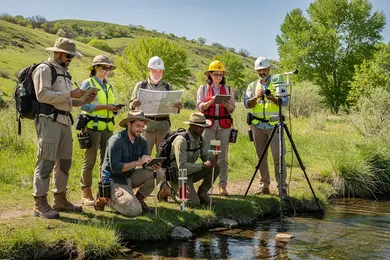
Environmental science degrees can be academically demanding because they blend natural science, social science, policy, data analysis, and hands-on field learning. Students may take biology, chemistry, hydrology, ecology, environmental law, statistics, geospatial technology, and technical writing, often in a sequence where one course unlocks the next.
Financial pressure can be just as important as academic pressure. College Board's 2024 pricing report listed average published tuition and fees for 2024-25 at $11,610 for in-state students at public four-year institutions and $43,350 at private nonprofit four-year institutions. Those figures do not include the full cost of attendance, so students should compare net price after grants and scholarships rather than sticker price alone.
The table below shows how academic and financial challenges can affect persistence. Use it to identify which barriers are most relevant to your own situation before comparing schools.
| Challenge | How it affects persistence | What to look for in a program |
| Sequential science prerequisites | Failing or delaying one course can push back several future courses | Clear degree maps, summer retake options, and early alerts for gateway courses |
| Lab and field schedules | Required in-person blocks may conflict with work, caregiving, or commuting | Multiple lab sections, fieldwork calendars published early, and make-up policies |
| Quantitative skill gaps | Statistics, chemistry, and GIS can slow progress if students lack preparation | Placement support, tutoring, supplemental instruction, and scaffolded data courses |
| Hidden costs | Field gear, transportation, software, lab fees, and unpaid internships can strain budgets | Transparent fee lists, equipment lending, paid research roles, and emergency aid |
| Unclear career pathway | Students may disengage if they cannot connect coursework to jobs | Career advising tied to environmental consulting, government, conservation, GIS, and sustainability roles |
Cost should be evaluated alongside completion probability. A lower-tuition program may become more expensive if course bottlenecks add extra semesters, while a higher-cost program may be worth considering if it offers better scheduling, advising, research access, and paid experiential learning that help students finish sooner.
Students comparing online or flexible degrees in other fields, such as an affordable online master's degree in communications, will notice that environmental science has a different persistence challenge: some learning outcomes require lab, field, or site-based work. That makes scheduling transparency more important than in programs that can be delivered fully online.
Stopping out means pausing enrollment without completing the degree. It is different from formally transferring, graduating, or taking an approved leave of absence. A stop-out can be temporary, but it becomes harder to return when students leave without a written academic, financial, and re-enrollment plan.
Environmental science students often return after resolving work schedules, finances, health issues, caregiving demands, or academic setbacks. The biggest re-entry challenges are expired credits, changed degree requirements, lost financial aid eligibility, and courses that are not offered every term.
The table below explains common re-enrollment patterns and the risks students should review before leaving. It can help students decide whether to pause, reduce course load, transfer, or continue with support.
| Return pattern | What usually happens | Main persistence concern | What to confirm before stopping out |
| Short leave of absence | Student pauses for a term with school approval | Some courses may not be available immediately upon return | Leave policy, scholarship rules, course rotation, and return deadline |
| Informal stop-out | Student does not enroll and later seeks readmission | Degree requirements and financial aid status may change | Readmission process, catalog year, GPA requirements, and balance holds |
| Reduced course load | Student stays enrolled part time instead of fully pausing | Progress slows, but connection to the institution remains | Minimum enrollment for aid, prerequisites, and expected graduation date |
| Transfer after stop-out | Student returns through another college or university | Credits may not transfer cleanly into environmental science requirements | Transfer equivalencies, lab credit acceptance, and upper-division residency rules |
| Return through adult degree completion | Student re-enters after a longer break, sometimes in a more flexible program | Science credits may be considered outdated by some departments | Credit age limits, prior learning policies, and required in-person components |
Before stopping out, students should complete a practical exit plan. This plan should protect completed credits and make returning easier.
- Meet with the academic adviser and ask for a written remaining-degree plan.
- Confirm whether your catalog year will remain active when you return.
- Ask financial aid how the break affects grants, scholarships, loans, satisfactory academic progress, and repayment timing.
- Resolve unpaid balances or learn whether they will block transcripts and registration.
- Identify the exact semester when key prerequisites, labs, or field courses will be offered again.
- Request re-enrollment instructions before you leave, including deadlines and required forms.
A common mistake is assuming a one-semester break will automatically delay graduation by only one semester. In environmental science, if a required fall-only course is missed, the delay can be longer unless the department offers substitutions, summer options, or an approved transfer course.
Institutional support services improve persistence when they address the problems that most often interrupt enrollment: academic difficulty, unclear degree planning, money gaps, isolation, and lack of career direction. The best support systems are not passive; they identify problems early and connect students to help before withdrawal becomes the easiest option.
For environmental science majors, support should include both general student services and discipline-specific resources. A tutoring center is helpful, but students also need help with lab reports, data analysis, GIS software, research methods, internships, and field safety expectations.
The table below connects support services with the persistence problems they are designed to reduce. When comparing programs, ask whether each service is available to environmental science majors, online students, transfer students, and part-time students.
| Support service | Persistence problem it addresses | What strong implementation looks like |
| Proactive academic advising | Missed prerequisites, poor sequencing, and delayed graduation | Degree maps, required check-ins, early alerts, and major-specific advisers |
| Gateway course tutoring | Low performance in chemistry, biology, statistics, GIS, or writing-intensive courses | Embedded tutoring, supplemental instruction, and targeted help before midterms |
| Financial aid counseling | Unexpected balances, aid loss, or inability to afford materials | Net-price planning, emergency grants, scholarship guidance, and satisfactory academic progress support |
| Faculty mentoring | Low belonging and unclear career direction | Research opportunities, office-hour expectations, and connections to internships or field projects |
| Career services for environmental pathways | Uncertainty about job options and skills employers want | Resume support for consulting, government, conservation, sustainability, GIS, and graduate school tracks |
| Transfer and re-entry advising | Credit loss and confusion after stopping out or changing schools | Pre-transfer audits, readmission planning, and credit applicability reviews |
Students should not wait until they are failing a course to use support services. Persistence is usually stronger when students treat advising, tutoring, faculty office hours, and financial aid counseling as normal parts of the degree plan.
Support expectations can vary by field. For example, students comparing a marriage and family therapist degree often look closely at supervision and practicum support; environmental science students should apply a similar standard to labs, field placements, internships, and research mentoring.
Red flags include no assigned adviser, unclear lab make-up policies, limited tutoring for science majors, few paid experiential learning options, and career services that cannot name common environmental science employers in the region.
Persistence affects graduation time because environmental science programs often rely on course sequences. Delays in chemistry, biology, statistics, GIS, or field methods can push back upper-division courses, internships, and capstone projects. The longer a student remains enrolled without completing, the more they may face added tuition, fees, living expenses, and opportunity costs.
Career outcomes also depend on completion level and skill development. According to BLS occupational data released in 2024, environmental scientists and specialists had a median annual wage of $80,060 in the U.S. labor market. That figure is not a promise for every graduate, but it shows why completing the degree and building job-ready skills can matter financially.
The table below shows how different enrollment paths may affect time-to-degree. Exact timelines vary by transfer credits, course availability, academic performance, and whether the student pauses enrollment.
| Enrollment path | Typical completion pattern | Persistence implication | Career preparation concern |
| Four-year full-time bachelor's pathway | Designed around a standard eight-semester sequence | Works best when students can maintain course load and pass prerequisites on schedule | Students should use summers for research, internships, or field experience |
| Part-time bachelor's pathway | Often extends beyond the standard timeline | Can improve short-term manageability but requires careful sequencing | Students may need extra planning to fit internships and upper-division labs |
| Two-year transfer plus bachelor's completion | Can reduce cost if credits align well | Strong option when articulation agreements are clear | Students should verify science labs and math prerequisites before transfer |
| Stop-out and return | Timeline depends on break length and course rotation | Risk rises if return is informal or unplanned | Students may need to refresh technical skills or update software knowledge |
| Accelerated or summer-heavy pathway | May shorten calendar time for prepared students | Can increase burnout risk if lab and field demands are compressed | Students should ensure the pace still allows meaningful experience-building |
Environmental science career paths include environmental scientist, sustainability analyst, conservation technician, environmental compliance specialist, GIS technician, water quality technician, environmental educator, and graduate-school preparation for specialized roles. Many employers value field methods, data interpretation, regulatory familiarity, technical writing, GIS, and teamwork, not just the degree title.
Students considering adjacent flexible graduate options, such as an affordable online master's degree in communications, should think carefully about the skill signal they need. Environmental science roles usually require technical and scientific evidence of readiness, while communications-focused pathways may serve students aiming for outreach, science communication, advocacy, or sustainability messaging.
The practical takeaway is simple: persistence is part of return on investment. A program that helps you finish with relevant skills, experience, and a manageable debt load may be more valuable than one that looks appealing on paper but leaves students navigating obstacles alone.
The environmental science programs with the strongest persistence outcomes are usually the ones that publish clear student-success data, support students through gateway science courses, and make experiential learning manageable. Because major-specific retention data is not always public, students should evaluate both institutional metrics and department-level evidence.
No single ranking can prove that a program will help every student persist. A selective research university may have strong graduation outcomes but less schedule flexibility, while a regional public university or community college transfer pathway may offer better access, lower cost, and closer advising for some students.
The table below outlines program characteristics that commonly support persistence. Use it as a comparison framework when reviewing schools, not as a substitute for asking direct questions.
| Program feature | Why it supports persistence | Evidence to request |
| Institutional accreditation | Helps ensure the school meets recognized academic and administrative standards | Accreditor name, current status, and any recent sanctions or warnings |
| Major-specific advising | Reduces sequencing mistakes in science-heavy curricula | Adviser-to-student structure and sample four-year or transfer degree maps |
| Transparent course rotation | Helps students avoid delays from fall-only or spring-only requirements | Two-year course rotation for required labs, field methods, and capstones |
| Strong gateway support | Helps students pass foundational courses that unlock the major | Tutoring availability, supplemental instruction, and withdrawal support policies |
| Paid or credit-bearing experiential learning | Connects coursework to careers and improves engagement | Internship partners, undergraduate research options, and field project access |
| Transfer-friendly policies | Protects credits and reduces unnecessary repeats | Articulation agreements, lab credit rules, and pre-enrollment transfer audits |
When reviewing programs, students should prioritize fit over prestige. A program is stronger for you if its schedule, cost, academic support, fieldwork model, and re-enrollment policies match your real life.
Ask schools for concrete persistence evidence. Useful questions include whether environmental science majors are retained at the same rate as other STEM students, how many students change majors after gateway courses, how often required courses are canceled, and what support is available after a failed prerequisite.
Student persistence patterns are changing as more learners combine school with work, compare online and hybrid options, and expect clearer returns from college programs. Environmental science programs are responding by adding GIS, climate resilience, sustainability, data analysis, environmental justice, and applied project work to help students connect coursework with careers.
Labor market demand is part of the persistence story. BLS projections released in 2024 indicate that employment for environmental scientists and specialists is expected to grow 7% from 2023 to 2033, faster than the average for all occupations. For students, that means persistence can be more compelling when the program builds skills tied to compliance, remediation, climate adaptation, water quality, and sustainability work.
AI and automation are also changing expectations. Students may use AI-supported tools for literature review, coding assistance, mapping workflows, and data cleaning, but environmental science still requires scientific judgment, ethical data use, field observation, and accurate interpretation of environmental systems.
Current persistence-related trends include several practical shifts that students should watch when comparing programs.
- More hybrid science courses are separating lecture content from in-person lab or field experiences to improve schedule flexibility.
- GIS, remote sensing, and environmental data tools are becoming more important for employability and may increase the technical load of the degree.
- Students are asking for clearer net-price estimates, emergency aid, and paid experiential learning because unpaid internships can increase stop-out risk.
- Transfer pathways are becoming more important as students try to control costs, but credit alignment remains a major completion issue.
- Career-connected advising is gaining importance because students want to understand how coursework leads to environmental consulting, public agencies, conservation, sustainability, or graduate study.
Students comparing flexible education options across fields, including resources on the easiest online MBA programs, should remember that "easy" is not the same as "persistent." In environmental science, the better question is whether the format is realistic, well-supported, and aligned with technical learning outcomes.
A red flag is a program that advertises flexibility without explaining how science labs, field methods, internships, and research expectations work. Flexibility should reduce barriers, not hide requirements until after enrollment.
Students should evaluate environmental science programs by combining persistence data, cost, academic fit, schedule fit, and career preparation. Retention is important, but the best decision comes from understanding why students stay, why they leave, and what the program does when students struggle.
Use a step-by-step comparison process rather than relying on one headline number. This approach helps you avoid choosing a program that looks affordable, prestigious, or convenient but does not support your path to completion.
- Check institutional retention and graduation rates, then ask whether environmental science or STEM-specific outcomes are available.
- Review the full degree map, including prerequisites, labs, field experiences, internships, and capstone requirements.
- Compare net price after grants and scholarships, not just published tuition.
- Ask how often required courses are offered and whether missed prerequisites can be recovered in summer or online formats.
- Confirm whether tutoring is available for chemistry, statistics, biology, GIS, and scientific writing.
- Ask how the program supports transfer students, working adults, online learners, and students returning after a stop-out.
- Review career outcomes carefully, including internship access, employer partners, graduate school placement, and alumni pathways.
Should retention or graduation rate matter more? Retention is useful for judging early student support, while graduation rate is better for understanding long-term completion. For environmental science, course sequencing and experiential requirements make both numbers important.
Should you pay more for a program with stronger support? Sometimes, but only after comparing net cost, debt, time-to-degree risk, and the quality of support. A higher-cost program may be worthwhile if it prevents extra semesters and provides paid research or internship access, but higher price alone does not prove better persistence.
When does transferring make sense? Transferring can be smart if your current program lacks required support, does not offer the specialization you need, or has scheduling barriers you cannot overcome. It can delay graduation if credits do not apply to major requirements, lab courses are rejected, or upper-division course sequences restart at the new school.
Before committing, ask admissions, the department, financial aid, and career services the same persistence-focused questions. Strong programs will answer with specifics; weaker programs may respond with general promises.
Learning format and enrollment status strongly affect persistence because they shape how students access labs, fieldwork, faculty, classmates, and support services. Environmental science can be offered on campus, online, hybrid, or through transfer pathways, but not all formats provide the same level of structure.
Online and hybrid programs can help working adults persist when they reduce commuting and allow asynchronous study. The trade-off is that students must confirm how the program handles labs, field experiences, research projects, proctored exams, internships, and local site requirements.
The table below compares common formats and enrollment patterns. It is designed to help students choose the format that best matches their responsibilities, not to label one format as universally better.
| Option | Persistence advantage | Potential risk | Best fit |
| Full-time on-campus bachelor's program | More structured sequencing, easier access to labs, advising, clubs, and research | Higher time demand and potentially higher living costs | Students who can prioritize school and want research, fieldwork, or graduate school preparation |
| Part-time enrollment | Allows students to work, care for family, or manage costs | Longer time to degree and higher risk that prerequisites or catalog requirements change | Working adults who need a realistic pace and strong advising |
| Hybrid environmental science program | Balances flexibility with required hands-on learning | Campus visits may still be mandatory and difficult to schedule | Students within commuting distance who need some online coursework |
| Fully online environmental studies-style program | Maximizes location flexibility for policy, sustainability, or management-focused paths | May offer fewer wet-lab, field ecology, or research-intensive experiences | Students targeting sustainability, policy, compliance support, or interdisciplinary roles |
| Community college to university transfer pathway | Can reduce cost and allow academic rebuilding before upper-division coursework | Credit loss or poor prerequisite alignment can delay graduation | Students with a confirmed articulation agreement and early transfer advising |
Full-time enrollment often supports faster completion because students can follow the standard course sequence. Part-time enrollment can be the better persistence choice when full-time study would force a student into unmanageable work hours, debt, or burnout.
Students should ask specific format questions before enrolling. These questions are especially important for environmental science because one missing lab or seasonal field course can affect an entire year of progress.
- Which required courses are offered only once per year?
- Can labs be completed in evening, weekend, summer, or intensive formats?
- Are field experiences local, residential, or arranged near the student's home?
- Can online students access tutoring, library resources, advising, and career services at the same level as campus students?
- What happens if a student misses a required field day because of illness, work, weather, or transportation problems?
Programs in health-related fields, including some SLP online programs, often publish detailed clinical placement expectations because hands-on training is central to completion. Environmental science applicants should look for the same level of clarity around fieldwork, labs, internships, and site-based learning.
Other Things You Should Know About Environmental Science
A good retention rate depends on institution type, student population, and enrollment mix. Use national benchmarks as context, but ask for environmental science or STEM-specific data because major-level outcomes may differ from the overall campus rate.
Not necessarily. Online study can improve persistence for working adults, but students must confirm how labs, fieldwork, internships, advising, and tutoring are delivered. A well-designed hybrid program may be more realistic than a fully online program with unclear hands-on requirements.
Meet with academic advising and financial aid before leaving. Get a written return plan, confirm how the break affects aid and loan status, check whether your catalog year remains valid, and identify when required courses will be offered again.
Higher retention can signal stronger support, but it does not guarantee graduation or career success. Compare retention with graduation rates, net price, course availability, advising quality, transfer policies, and access to field or research experience.
- 5 Student Retention Strategies and the Tech Features That Make Them Work https://www.stellic.com/resources/student-retention-strategies
- Rising Popularity of Environmental Programs https://www.keg.com/news/rising-popularity-of-environmental-programs
- Early Alert & Intervention: Top Practices for Retention in Higher Education https://www.suitable.co/knowledge-center/blog/early-alert-intervention-top-practices-for-retention-in-higher-education
- Boosting Student Retention: Proven Strategies for Higher Ed Success https://moderncampus.com/blog/strategies-for-improving-retention-in-higher-education.html
- Climate Change and Academic Performance https://psychologyandeducation.net/pae/index.php/pae/article/view/9589
- Variables Affecting the Retention Intentions of Students in Higher ... https://mail.ojed.org/jis/article/download/1849/1045