2027 Best Online Environmental Science Degree Programs Ranking in the USA

Co-Founder and Chief Data Scientist
Choosing the right environmental science degree can shape your future and impact the world. Our article presents the 2027 Best Online Environmental Science Degree Programs Ranking in the USA, developed by the Research.com team of data scientists to guide you toward informed decisions.
By exploring this ranking, you'll discover top programs that fit your goals and lifestyle. Earning a degree in environmental science opens doors to meaningful careers focused on sustainability and conservation-an exciting path for those passionate about making a difference.
Take this step with confidence and clarity.
Key benefits of getting online environmental science degree in America
- Environmental science graduates in the US can expect rewarding careers with average salaries around $50,000 to $70,000 annually, reflecting strong demand in fields like environmental consulting and natural resource management.
- Graduates often find diverse career paths including roles in government agencies, private firms, and nonprofits, as shown by many alumni of popular universities who work as environmental analysts, specialists, and project managers.
- Online degrees offer flexible schedules and reduced costs, allowing students to balance work and study effectively, which many online graduates from top universities praise for making education accessible and career advancement smoother.
- 2027 Best Online Environmental Science Degree Programs Ranking in the USA
- What can I expect from online environmental science degree in America?
- Where can I work with online environmental science degree in America?
What can I expect from online environmental science degree in America?
The average cost of an online environmental science degree in America can vary widely, but many students report paying between $15,000 and $40,000 for a full bachelor's program. For instance, graduates from popular public universities with strong environmental programs mention that tuition is often more affordable online due to reduced campus fees and eliminated commuting expenses. However, costs may rise if courses require fieldwork or specialized software for geographic information systems (GIS), which some schools incorporate to reflect real-world environmental challenges.
Many students appreciate the opportunity to balance work and study, especially at institutions known for flexible online formats like large state universities. They often highlight federal financial aid and scholarships that help offset tuition, making the expenses more manageable. Still, some graduates caution future students to carefully review program requirements, as certain programs may include mandatory in-person components or internships that add to the overall cost and time commitment.
Ultimately, choosing an online program involves weighing affordability against the quality of instruction and practical experience offered, both crucial for career readiness in the environmental sector.
Where can I work with online environmental science degree in America?
Graduates with an online environmental science degree from American institutions such as Arizona State University or the University of Florida often find diverse career paths available. Many secure roles within federal agencies like the EPA, engaging in regulatory compliance and environmental assessments, which provide a sense of purposeful contribution to public health and conservation.
Others report rewarding experiences working with private environmental consulting firms, where they apply their skills to sustainability projects and impact studies. These roles frequently involve dynamic fieldwork and client interaction, creating both challenge and fulfillment.
Nonprofit and advocacy organizations also attract graduates who value combining education, research, and policy efforts to tackle climate change or wildlife protection. Such positions emphasize collaboration and community engagement, resonating with students seeking meaningful social impact.
For some, academia or research roles tied to universities offer a chance to deepen expertise while occasionally working remotely, facilitating balance between professional development and personal life. Meanwhile, the fast-growing renewable energy sector excites graduates eager to support cleaner energy solutions, reflecting broader societal shifts.
Graduates holding an online environmental science degree in America typically enter the workforce earning between $50,000 and $60,000 annually, especially in entry-level roles such as environmental technicians or research assistants. For example, a graduate from a renowned program, like those offered by the University of Florida or Oregon State University, might start working with a state agency or nonprofit organization in this salary range. Geographic factors also play a role-those based in states like California or New York often see higher starting wages due to stronger environmental regulations and demand.
With experience or the pursuit of advanced certifications, such as those from the National Association of Environmental Professionals, graduates often find themselves earning closer to $90,000 or more. Roles involving project management or specialized consulting they secure after gaining practical experience can command salaries around $100,000. While the public sector offers median salaries near $83,000, private industry positions in energy or waste management can be even more lucrative.
Many graduates share positive experiences regarding their career progression, noting how their degrees opened doors to diverse, rewarding opportunities. The steady growth projected in the field means that those committed to expanding their skill sets can anticipate salary increases aligned with expanding responsibilities and expertise.
- Online environmental science degrees range from associate to master's levels, with bachelor's degrees being the most common option.
- Tuition for a bachelor's degree online typically costs between $10,000 and $40,000, with public universities usually offering lower prices for in-state students.
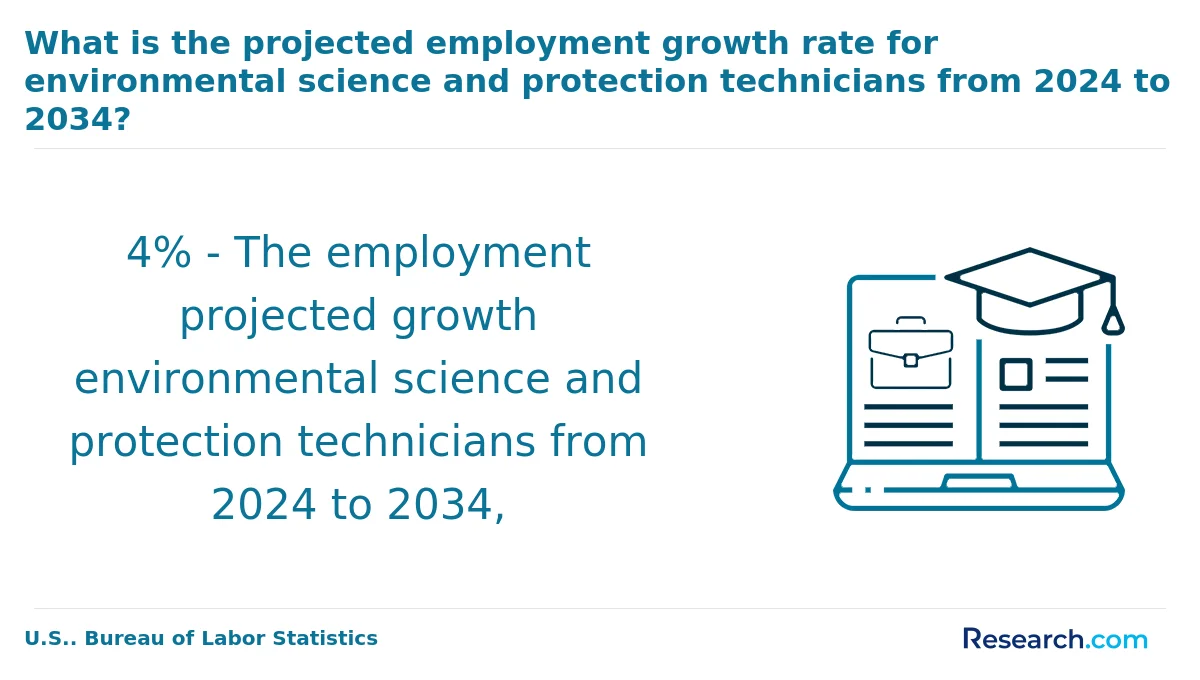
- Employment for environmental scientists is expected to grow about 8% from 2022 to 2032, faster than the average for all jobs.
- Starting salaries for graduates are generally between $50,000 and $60,000 annually, with mid-career professionals earning $70,000 to $85,000 or more.
- Many programs teach practical skills such as data analysis, environmental law, and GIS to improve job opportunities.
- Accredited programs meet standards from recognized agencies, ensuring qualifications are valid for career advancement.
Completing an online environmental science degree in America typically spans from two to four years, yet the duration varies widely depending on degree level and pacing. For example, graduates from the University of Florida's online program often complete their bachelor's degrees in about four years, matching traditional expectations. However, working professionals enrolled part-time at Arizona State University may take five or six years to balance work, family, and study commitments.
Associate degrees, often offered by community colleges like Northern Virginia Community College, usually require around two years of full-time study. Graduates appreciate the flexibility, especially when transitioning toward bachelor's degrees at institutions such as Oregon State University, where transfer policies can accelerate their progress.
Master's programs offer even greater variation; some at Colorado State University can be finished in as little as 18 months if studying full-time, while others extend to three years due to research components and part-time enrollment. Graduates often praise the ability to tailor completion time to personal circumstances, though many stress the importance of verifying credit transferability early, given the hands-on lab requirements common in environmental science.
Online and on-campus environmental science degrees in America differ primarily in their delivery and experiential learning. Graduates from online programs at universities like Arizona State commend the flexibility to juggle coursework alongside jobs or family, accessing lectures and discussions anytime. Conversely, alumni from on-campus programs, such as those at the University of California, Berkeley, emphasize the value of hands-on labs and fieldwork, which deepen practical skills essential in environmental science.
While online students benefit from adaptable schedules, they sometimes miss out on the spontaneous interactions and networking that campus environments naturally foster. Some online programs attempt to replicate labs through partnerships with local facilities or virtual simulations, although the quality varies. Public institutions often charge about $38,000 annually for in-person degrees versus potentially lower tuition online, but students note accreditation and program reputation as crucial for their degree's worth.
Ultimately, deciding between formats involves weighing personal circumstances - whether the freedom of remote study or the immersive, tactile experiences of campus best supports individual goals in this field.
The average cost of an online environmental science degree in America varies notably based on residency status and institution type. Median total tuition for in-state students typically hovers around $37,440, while out-of-state students may face significantly higher expenses, averaging close to $56,880. These figures reflect the reality many graduates from popular universities experience, where the affordability of public institutions often makes completing a degree feasible without overwhelming debt. For example, students pursuing environmental science at well-regarded state universities frequently appreciate the balance between cost and quality, especially when compared to private colleges.
Private institutions, by contrast, often charge tuition rates well above these medians, which can challenge prospective students' financial planning. Despite the heftier price tags, many graduates feel that resources, smaller class sizes, and specialized curriculum justify the investment, especially when complemented by scholarships or financial aid targeted at environmental science fields. These nuances are key when considering the average cost of online environmental science degree in USA and highlight why some students prefer public universities while others choose private schools.
In addition to tuition, students typically encounter costs for technology fees, textbooks, and software licenses. While these additional fees are generally lower for online learners, they contribute to the overall financial picture and impact budgeting decisions. Prospective students are encouraged to explore financial aid options tailored to the environmental science community and to consult resources like online environmental sustainability degrees to better understand their opportunities.
Students pursuing online environmental science degrees at universities like Oregon State or the University of Florida frequently rely on federal financial aid as a cornerstone of their funding. Completing the FAFSA is essential to access Pell Grants, which can cover up to $7,395 annually without the burden of repayment. Many graduates recall how this grant substantially eased their tuition costs at public institutions, where in-state fees average around $10,940 per year.
In addition to grants, Federal Direct Loans provide subsidized and unsubsidized options, offering flexibility that fits various financial situations. Some students find merit-based scholarships from their colleges, rewarding strong academic performance and making the education journey feel rewarding and achievable.
- State grants often lower costs for residents attending public universities, which can be a decisive factor for those balancing budget constraints
- Private foundations and organizations like the EPA offer scholarships up to $5,000, motivating students committed to environmental careers
- Work-study programs provide practical experience alongside income, valued by many online learners striving to manage expenses while building resumes
While financial aid options are diverse, students note that proactive research at specific schools and awareness of external scholarships is vital to maximize support and reduce debt. This blend of aid sources makes the pursuit of an online environmental science degree in America more attainable and encouraging for committed learners.
To enroll in an online environmental science degree in America, students commonly need a high school diploma or its equivalent, such as a GED. Many programs, like those at well-regarded institutions, expect a strong background in biology, chemistry, physics, and math, reflecting the interdisciplinary nature of environmental science. Graduates often recall how foundational courses built their confidence for later complex topics.
Standardized tests like the SAT or ACT may be required, although increasingly popular colleges have adopted test-optional policies, which some students find less stressful when applying. Personal statements and recommendation letters also play a critical role, revealing genuine passion and readiness beyond mere grades.
Transfer students usually face requirements such as a minimum GPA and completed college credits in relevant subjects, ensuring they are prepared for advanced coursework. For graduate programs, applicants generally need a related bachelor's degree and often benefit from prior research or professional experience, which can deepen engagement and motivation.
Technical readiness, such as reliable internet and suitable computer equipment, is essential, with some programs incorporating fieldwork or lab opportunities that require flexible arrangements. This blend of academic, personal, and technological prerequisites shapes a realistic, accessible path for those committed to studying environmental science online.
Online environmental science degree programs in America commonly include courses that blend natural sciences, social sciences, and policy studies. Graduates from popular institutions such as Oregon State University or the University of Florida often recall foundational courses like Environmental Biology, which immerses students in understanding ecosystems and biodiversity through virtual labs and real-world case studies. Others highlight Environmental Chemistry and Geology, where they learn about earth systems and resource management, often applying these concepts using interactive simulations.
Many students appreciate courses in Environmental Policy and Law, which tackle the complex regulations shaping environmental protection in the U.S., bringing classroom debates to life by connecting them to current policy challenges. Additionally, classes focused on data analysis, such as statistics and GIS, help students feel prepared to interpret real environmental data critically.
From personal accounts, the inclusion of classes like Environmental Ethics and Climate Change Science enables learners to connect with the societal impacts of their studies, fostering motivation to pursue meaningful careers. Electives like Renewable Energy or Wildlife Management allow learners to tailor their path, making their learning experience both relevant and inspiring.
Online environmental science degree specializations in America offer diverse pathways reflecting the complexity of the field. Common tracks include Environmental Policy and Management, which prepares students to navigate regulatory frameworks and sustainability initiatives, and Wildlife and Conservation Biology, focusing on protecting ecosystems and species. Other prevalent specializations like Environmental Chemistry and Geosciences emphasize understanding pollutant effects and earth system processes respectively, while Sustainability Studies encourages developing real-world solutions for resource conservation.
Graduates from well-regarded programs at various colleges often share experiences of applying classroom learning to practical challenges, such as crafting conservation strategies or analyzing climate data. These specializations help students align their studies with career ambitions in environmental science career paths in America, balancing scientific rigor with policy and technological applications. For those budget-conscious, exploring options like the cheapest sustainability bachelor degree can provide a financially viable route without compromising quality.
Choosing the best online environmental science degree programs USA involves looking beyond rankings to factors like accreditation and curriculum depth. Graduates from well-known American colleges often emphasize how programs accredited by bodies such as the Higher Learning Commission ensure their degree was respected by employers and transferable across institutions. However, assumptions about program quality can be misleading if accreditation alone is the sole criterion. A curriculum that balances core subjects like ecology and GIS with options for specialization, such as climate change or sustainability, better prepares students for diverse career paths.
Affordability also plays a crucial role; affordable environmental science degrees online America offer access to education without overwhelming debt. Some students recall how hidden costs like technology fees or limited financial aid modified their true expenses. Equally important are faculty expertise and support services, where programs tied to active research or industry provide practical insights and motivation, closely mirroring graduates' experiences at prominent universities.
Finally, consider programs updating content to reflect real-world environmental challenges and explore connections to job markets. Programs offering career advising or internships reflect this well. Those interested may also find value in exploring sustainability mba programs which complement an environmental science background with business insights.
Graduates of online environmental science degree programs in America often pursue diverse career paths responding to evolving environmental priorities. Many find roles as environmental scientists or specialists, conducting vital research and developing policies to reduce hazards. Others become environmental consultants advising companies on sustainable practices, a path where specialists from universities like Oregon State or Arizona State feel rewarded by tangible improvements in local industries.
Wildlife biologists and ecologists are also common career choices, especially among those passionate about species conservation and habitat preservation. These roles, frequently pursued by graduates from institutions such as the University of Florida, bring a sense of fulfillment by directly contributing to biodiversity. Additionally, environmental engineers and conservation scientists address challenges like pollution control and land management, blending scientific acumen with creativity.
Career options extend to renewable energy analysts who actively support America's shift toward sustainable resources, embracing the optimism graduates express about impacting energy policies nationwide. Students exploring online environmental science careers USA often weigh these paths carefully, combining their academic experiences with personal values. For those seeking guidance on an easy path to enter the field, the easy online degree environmental science options can offer a practical starting point.
The job market for graduates holding an online environmental science degree in America shows promising signs, driven by growing attention to climate change and sustainability. Many graduates report finding roles as environmental consultants, analysts, or sustainability specialists across government agencies and private companies. Schools known for strong environmental science programs, such as the University of Florida and Oregon State University, provide online students with real-world case studies and internship opportunities that improve job readiness. This practical experience helps bridge the gap between academics and employment.
While the median annual wage for these professionals was about $79,100 in 2022, entry-level salaries can vary widely, sometimes starting between $45,000 and $55,000 depending on location and sector. Notably, graduates from online programs have noted satisfaction in securing competitive wages and meaningful roles that align with their values. The field's growth is supported by increasing federal regulations and expanding renewable energy sectors.
Prospective students curious about what degree qualifies may explore advice on what degree do you need to become an environmental biologist before committing to their studies. Overall, the online environmental science degree job outlook USA highlights diverse career opportunities that encourage optimism among new graduates.
2027 Best Online Environmental Science Degree Programs Ranking in the USA
Investing in your education is a significant decision that can shape your future, and the Research.com team understands the importance of making informed choices. To assist prospective students interested in environmental science, we have meticulously created the "2027 Best Online Environmental Science Degree Programs Ranking in the USA." Our commitment to quality, credibility, and accuracy is demonstrated through rigorous research and analysis conducted to develop this ranking.
We utilized the following reputable data sources to ensure a comprehensive evaluation of programs:
By exploring this ranking, readers will gain valuable insights into the best online environmental science degree programs available across the USA, empowering them to make well-informed decisions about their education. For more information about how this ranking was created, please visit our Research.com methodology page.

# 2 position
University of Illinois at Urbana-Champaign
Master of Natural Resources and Environmental Sciences

# 3 position
Louisiana State University and Agricultural & Mechanical College
Master of Environmental Sciences


# 8 position
Western Kentucky University
Master of Social Responsibility and Sustainable Communities


# 11 position
Texas Tech University
Master of Environmental Sustainability and Natural Resource Management

# 12 position
Western Kentucky University
Bachelor of Health Science (Environmental Health Science concentration)




# 18 position
University of Maryland Global Campus
Master of Environmental Management


Frequently Asked Questions About environmental science
Online environmental science degree students in America can maximize their learning by actively engaging with interactive course materials and participating in virtual labs, which simulate real-world ecological analysis. Utilizing resources from reputable organizations like the Environmental Protection Agency (EPA) can deepen understanding of current environmental policies and data.
Networking with peers and faculty through discussion boards and scheduled video conferences enhances collaborative learning and professional growth. According to the National Center for Education Statistics, nearly 40% of science undergraduates use such platforms to improve their academic performance.
Moreover, students should seek internships or volunteering opportunities with U.S.-based environmental organizations to gain practical experience and apply theoretical knowledge in real settings.
Emerging niches within the environmental science field in the United States focus on interdisciplinary approaches to complex ecological challenges. One fast-growing area is climate resilience and adaptation, where professionals develop strategies to help communities withstand changing weather patterns and natural disasters. According to the U.S. Bureau of Labor Statistics, jobs related to climate science are projected to grow by over 8% by 2031.
Another promising niche is environmental data analytics, which uses big data and machine learning to predict environmental impacts and inform policy decisions. Renewable energy technology, including solar and wind power development, also remains a key growth sector.
Urban sustainability is gaining traction as cities seek to reduce carbon footprints through green infrastructure and smart city designs. Conservation biology, focusing on protecting endangered species and biodiversity, continues to be crucial.
These niches reflect the evolving priorities of environmental science education and career paths in the U.S., particularly in online degree programs that emphasize flexibility and current industry demands.
After completing an online environmental science degree in America, preparing for the job market requires a strategic approach. Environmental science jobs are expected to grow 8% from 2022 to 2032, according to the U.S. Bureau of Labor Statistics (BLS), making practical skills and experience vital for competitiveness.
Internships and volunteer opportunities with government agencies like the EPA or local environmental organizations provide valuable hands-on experience. Networking through professional groups such as the National Association of Environmental Professionals expands job leads and mentorship options.
Additionally, certifications like the Certified Environmental Scientist (CES) credential enhance credibility. Developing technical skills, including GIS mapping and data analysis, aligns with employer demands in fields like conservation, consultancy, and sustainability.
Employers in the United States highly value environmental science graduates who possess strong analytical and problem-solving skills. These abilities enable professionals to assess environmental data effectively and develop sustainable solutions. According to the U.S. Bureau of Labor Statistics, proficiency in data analysis tools and Geographic Information Systems (GIS) software is increasingly important.
Communication skills are also essential, as environmental scientists must convey complex findings to diverse audiences, including policymakers and the public. Additionally, knowledge of environmental regulations and compliance frameworks is crucial for navigating federal and state laws.
Critical thinking and teamwork are often emphasized, reflecting the collaborative nature of environmental projects across sectors.
Finding internships related to an environmental science degree in America often begins with university career services. Many online programs partner with organizations to connect students with local and national internship opportunities. The U.S. Environmental Protection Agency (EPA) offers internships that provide hands-on experience in environmental research and policy development.
Students should also explore websites like the National Environmental Education Foundation and professional groups such as the Ecological Society of America. These platforms list numerous internship openings tailored to environmental science majors.
According to the National Association of Colleges and Employers, about 60% of internships lead to job offers, making these experiences vital for career development in this growing field.
Obtaining an online environmental science degree in America can significantly enhance career mobility by equipping students with flexible learning schedules and up-to-date knowledge. According to the U.S. Bureau of Labor Statistics (BLS), environmental science jobs are projected to grow 8% from 2022 to 2032, faster than average growth across all occupations.
With an accredited online degree, graduates gain qualifications recognized by employers nationwide, improving prospects in government agencies, consulting firms, and nonprofits. Additionally, the online format allows working professionals to advance without interrupting employment.
Research from the National Environmental Health Association highlights how advanced credentials accelerate promotion potential in technical roles and management. This trend underlines the degree's value in career progression across multiple sectors.
Studying for an environmental science degree online in America equips students with skills across multiple disciplines such as biology, chemistry, geology, and social sciences. This interdisciplinary approach is essential since environmental challenges require understanding natural systems alongside human impacts. According to the U.S. Bureau of Labor Statistics, environmental science roles frequently involve collaboration with policymakers, engineers, and health professionals, highlighting the need for broad expertise.
American programs often integrate data analysis, environmental law, and sustainability practices, preparing students for diverse workplaces. The interdisciplinary curriculum fosters critical thinking and problem-solving abilities applicable in government agencies, nonprofit organizations, and private industries.
Moreover, online formats provide flexible access to coursework aligned with real-world issues, promoting application of theory to practice across fields.
When choosing between a thesis and a non-thesis environmental science degree program in America, consider your career goals first. Thesis programs typically involve original research and are preferred if you plan to pursue a PhD or a research-focused career. According to the National Center for Education Statistics, about 40% of master's environmental science degrees involve a thesis component.
Non-thesis programs concentrate more on coursework and practical skills, appealing to professionals aiming for immediate employment in government or industry roles. These programs often require a capstone project instead of a thesis.
Time commitment is another factor: thesis options may take longer due to research demands.
Students based in America seeking to study environmental science abroad can explore several recognized options through US universities offering international partnerships or study-abroad programs. Many American institutions collaborate with foreign universities, enabling students to earn credits toward their online environmental science degrees while gaining global experience.
According to the Institute of International Education, approximately 18% of US students studying science fields participate in some form of international education, often focusing on ecosystems and sustainability practices abroad. Popular destinations include European and Australian universities known for their environmental research programs.
These opportunities provide access to diverse ecological systems and scientific perspectives, often through faculty-led study tours or virtual exchanges. However, students should verify accreditation and credit transfer policies with their home institutions to ensure seamless progress toward degree completion.
Students pursuing an online environmental science degree in America can benefit from various part-time job opportunities that reinforce their academic knowledge. Positions like research assistantships at universities allow hands-on experience with data collection and environmental analysis, strengthening practical skills.
Environmental consulting internships offer exposure to real-world problem solving and regulatory compliance, valuable in states with active environmental policies such as California and New York. According to the U.S. Bureau of Labor Statistics, environmental scientists and specialists have a median annual wage of $76,530, reflecting the importance of relevant work experience for career advancement.
Other options include roles with local government agencies, non-profits, or conservation groups, providing insight into environmental policy and community engagement. These opportunities help students build professional networks while earning income, making them ideal complements to coursework.
Online environmental science students in America have access to a variety of networking opportunities essential for career growth. Many universities offer virtual career fairs and alumni networking events specifically designed for online learners. According to the National Environmental Education Foundation, connecting with professionals in the field can increase job prospects by up to 30%.
Students can join national organizations such as the Ecological Society of America or the National Association of Environmental Professionals, which provide online forums, webinars, and local chapter events. Additionally, LinkedIn groups focused on environmental science serve as active platforms to engage with industry experts and peers.
Internship and research collaborations facilitated by universities also enhance practical connections, often leading to paid positions or mentorships.
Alumni networks play a crucial role for students pursuing online environmental science degrees in America. These networks connect current students with graduates working in diverse fields such as conservation, policy, and sustainability.
Participation in alumni groups offers access to mentorship, internships, and job opportunities, helping students navigate the competitive environmental job market. According to the National Environmental Education Foundation, over 70% of environmental science graduates find employment within a year, often relying on professional contacts.
Moreover, alumni events and online platforms facilitate knowledge sharing about emerging trends in climate science, renewable energy, and ecological research. This ongoing engagement supports career growth in a rapidly evolving sector.
Customizing an online environmental science degree in America allows students to tailor their education to specific career goals. Many accredited programs offer elective courses in areas such as conservation, policy, sustainability, or GIS mapping. This flexibility helps students develop expertise aligned with current job market demands.
Students can often choose between research-focused or applied learning tracks. Internship opportunities and capstone projects provide practical experience, enhancing employability. According to the U.S. Bureau of Labor Statistics, environmental science jobs are projected to grow 8% from 2022 to 2032, emphasizing skill development in specialized fields.
Institutions also provide options for certificate additions or dual degrees, further broadening career pathways.
Online environmental science students in America often face challenges related to gaining practical experience. Environmental science relies heavily on lab work and field studies, which can be difficult to replicate virtually. Many programs address this by offering local internships or requiring occasional campus visits.
Time management is another common issue. Balancing coursework with work or family commitments can be stressful, especially as environmental science often involves complex subjects like ecology and geospatial analysis. According to a 2023 survey by the National Center for Education Statistics, 45% of online STEM students reported time constraints as a major challenge.
Furthermore, students may experience limited networking opportunities compared to on-campus peers, potentially affecting career growth. Access to up-to-date software and data for research can also be restricted in some cases, impacting the learning process.
With an online environmental science degree, graduates can pursue several valuable professional certifications to enhance their careers. One popular option is the Certified Environmental Scientist (CES) credential offered by the National Registry of Environmental Professionals (NREP). This certification demonstrates expertise in environmental regulations and scientific principles.
Another widely recognized certification is the Registered Environmental Manager (REM), which focuses on environmental management skills and is often sought by employers nationwide. Additionally, becoming a Certified Hazardous Materials Manager (CHMM) is beneficial for those interested in waste management and pollution control.
These certifications typically require relevant work experience and passing an exam. According to the U.S. Bureau of Labor Statistics, professionals with certifications often earn higher salaries and possess greater job security in environmental science roles.
When applying to an online environmental science program in America, start by thoroughly researching accredited institutions recognized by the Council for Higher Education Accreditation (CHEA). Strong applications clearly demonstrate your passion for environmental issues and highlight relevant experience, such as internships or volunteer work with organizations like the Environmental Protection Agency (EPA) or local conservation groups.
Include a personalized statement explaining your career goals and why environmental science matters to you. Emphasize your ability to manage online coursework effectively, a key skill for distance learning.
Additionally, meeting or exceeding standardized test score requirements and submitting strong letters of recommendation strengthen your application. According to the National Center for Education Statistics, online degree enrollment has increased by over 30% in recent years, making it vital to stand out with a well-crafted submission.
Environmental science careers are increasingly recognized worldwide due to growing concerns about climate change and sustainability. In the United States, the Bureau of Labor Statistics projects a 8% growth in environmental science jobs from 2022 to 2032, reflecting strong domestic demand. Globally, similar trends appear as countries invest in green technologies and environmental policies. American degree programs often emphasize international environmental agreements and global ecosystems, preparing graduates to work on cross-border issues.
Many U.S. online environmental science degrees include coursework on global perspectives, allowing students to understand challenges like biodiversity loss and pollution in a global context. This approach helps graduates participate in international collaborations and policy development.
Gaining practical experience while studying online for an environmental science degree in America is essential. Many accredited programs partner with local organizations, offering internships that allow students to work on real-world projects.
Students can also participate in virtual labs and simulations, which replicate field conditions and data analysis. According to the National Environmental Education Foundation, about 70% of environmental science students in the US engage in internships or research opportunities during their studies.
Additionally, volunteering with environmental agencies or nonprofits helps build experience and networks. Many universities encourage this alongside coursework to strengthen practical skills.
Choosing the right concentration within an online environmental science degree in America depends largely on your career goals and interests. Common concentrations include ecology, environmental policy, sustainability, and natural resource management. According to the U.S. Bureau of Labor Statistics, jobs in environmental science are expected to grow 8% from 2020 to 2030, highlighting diverse opportunities.
Consider how each concentration aligns with sectors such as government agencies, private industry, or non-profits. For instance, environmental policy focuses on regulations and compliance, while ecology emphasizes scientific research.
Review program curricula closely to ensure it covers current technologies and approaches. Accredited programs listed by the Council on Education for Public Health (CEPH) or similar bodies guarantee quality. Online options also vary in flexibility and practical experience offerings, which are vital for skill development.
- How To Get Environmental Science Work Experience https://www.savemyexams.com/learning-hub/careers/environmental-science-work-experience/
- Alumni Put Environmental Science Degrees to Work at Chesapeake Watershed Initiative https://www.fandm.edu/stories/alumni-put-environmental-science-degrees-to-work.html
- CES - Certified Environmental Scientist https://www.nrep.org/certifications/certified-environmental-scientist-ces
- Graduate Schemes and Internships - Green Jobs for Nature https://greenjobsfornature.org/get-that-green-job/graduate-schemes-and-internships/
- How to Find Entry Level Jobs with an Environmental Science Degree https://facs.com/blog/how-to-find-entry-level-jobs-with-an-environmental-science-degree/
- Strong Programs in Environmental Studies https://toptieradmissions.com/strong-programs-in-environmental-studies/
- Top Trending Research Topics in Environmental Science - Agriculture Journal IJOEAR Blog https://ijoear.com/blog/top-trending-research-topics-in-environmental-science
- How to Become an Environmental Scientist: 8 Steps to Success - Prereqcourses https://www.prereqcourses.com/environmental-scientist/
- Guide to Environmental Internships | Higherin https://higherin.com/career-guides/science-research/environmental-internships
- MESPOM Alumni Association https://mespom.eu/mespom-alumni-association