
2027 Best Associate in Legal Studies Online Degree Programs

Co-Founder and Chief Data Scientist
You do not have to become an attorney to build a career in the legal field. An online associate degree in legal studies can prepare you for legal support roles in law firms, courts, government offices, insurance companies, corporate legal departments, and compliance-focused workplaces. For students who want a shorter and more affordable route into legal work, this degree can be a practical first credential.
This guide explains what an online associate in legal studies covers, how it compares with paralegal-focused programs, what it may cost, which schools stand out, and how to decide whether this path fits your career goals. It also covers common mistakes to avoid, career outcomes, technology trends, transfer options, and ways to reduce the total cost of earning the degree.
Quick answer: Is an online Associate in Legal Studies worth considering?
An online associate in legal studies is worth considering if you want an entry-level legal support career, need a flexible college format, or plan to transfer later into a bachelor’s degree. It is not a law degree and does not qualify you to practice law, but it can help you qualify for roles such as paralegal, legal assistant, legal secretary, court clerk, or compliance support specialist. Paralegals and legal assistants earn a median salary of $60,970 per year, and many roles require an associate degree or related postsecondary training.
What are the main benefits of an Associate in Legal Studies online degree?
- Career access without law school: Graduates can pursue legal support positions such as paralegal, legal assistant, legal researcher, court clerk, or legal secretary.
- Competitive legal support earnings: Professionals with this type of background may pursue roles where the median salary is $60,970 per year for paralegals and legal assistants.
- Flexible study format: Online programs can make it easier to study while working, parenting, serving in the military, or managing other responsibilities.
- Lower-cost pathway: Many associate programs cost less than bachelor’s programs, especially at public community colleges.
- Transfer potential: A well-planned associate degree can support later transfer into a bachelor’s program in legal studies, criminal justice, public administration, business, or a related field.
What can I expect from an Associate in Legal Studies online degree?
An online associate degree in legal studies introduces students to the structure, language, and procedures of the legal system. Coursework usually covers legal research, legal writing, ethics, civil litigation, contracts, torts, criminal law, family law, and the role of non-lawyer professionals in legal settings.
The degree is designed to combine legal theory with workplace skills. Students learn how to read legal materials, organize case information, draft basic legal documents, communicate professionally, and support attorneys or legal teams. Most programs do not train students to give legal advice or represent clients, because those responsibilities are reserved for licensed attorneys.
| What students usually learn | Why it matters in legal support work |
| Legal research and writing | Helps students locate legal sources, summarize findings, and prepare organized written materials. |
| Civil and criminal procedure | Builds understanding of how cases move through courts and agencies. |
| Legal ethics | Clarifies confidentiality, unauthorized practice of law, conflicts of interest, and professional conduct. |
| Document preparation | Supports drafting, formatting, filing, and organizing legal documents under attorney supervision. |
| Technology and case management | Prepares students for digital research tools, e-filing systems, and electronic document management. |
Where can I work with an Associate in Legal Studies online degree?
Most graduates use an associate in legal studies to pursue legal support roles. In 2022, most paralegals and legal assistants worked for legal services firms, but law firms are not the only option. Graduates may also find opportunities in courts, government agencies, banks, insurance companies, real estate offices, corporate legal departments, healthcare organizations, and compliance teams.
Students should compare the degree’s curriculum with the requirements of the jobs they want. Some employers prefer candidates with paralegal-specific coursework, internship experience, or familiarity with legal databases and case management software.
How much can I make with an Associate in Legal Studies online degree?
Salary depends on job title, location, employer, experience, and specialized skills. An online associate degree in legal studies can support entry-level legal and law-adjacent positions with different earning ranges. Legal assistants typically earn more than $49,000 annually. Law enforcement officers earn around $40,500 per year. Court reporters generally make over $51,000 each year, while legal secretaries have an average annual income of approximately $52,841.
For paralegals and legal assistants, the median salary is around $61,000 per year. Students should treat salary figures as benchmarks rather than guarantees. Local demand, internship experience, certifications, and technology skills can affect outcomes.
- Best online Associate in Legal Studies programs for 2027
- How long does an online Associate in Legal Studies take?
- Online vs. campus Associate in Legal Studies programs
- Average cost of an online Associate in Legal Studies
- Financial aid options for online legal studies students
- Admission requirements for online Associate in Legal Studies programs
- Common courses in an online Associate in Legal Studies
- Legal studies specializations to consider
- How to choose the right Associate in Legal Studies program
- How to verify accreditation and academic quality
- Career paths after an Associate in Legal Studies
- How career services improve job readiness
- Job market outlook for legal studies associate graduates
- Associate in Legal Studies vs. accelerated paralegal program
- How legal technology is changing career options
- Cost-saving strategies for legal studies students
- Legal studies associate degree vs. paralegal associate degree
- Interdisciplinary careers with a legal studies degree
- Transferring from an associate degree to a bachelor’s program
- How industry partnerships improve outcomes
- Careers beyond traditional legal support roles
- Challenges of online legal studies programs
- Networking and mentorship after graduation
- Using a one-year online master’s program after legal studies
- Further education options after an associate degree
- How programs keep pace with legal trends
- Long-term ROI of further legal education
- Cost-effectiveness compared with other majors
- How internships and practical training help
- Certifications and skills that can improve employability
- Government legal career pathways
- Advantages of accelerated Associate in Legal Studies programs
- References
List of the Best Associate in Legal Studies Online Degree Programs for 2027
How do we rank schools?
Choosing a legal studies program requires more than comparing tuition or picking a familiar school name. Research.com rankings are built to help students evaluate programs using transparent data, institutional indicators, and program-level review. To learn more about how rankings are developed, review the Research.com methodology.
Ranking data comes from established sources, including the IPEDS database, Peterson’s database and its Distance Learning Licensed Data Set, the College Scorecard database, and the National Center for Education Statistics. These sources help support comparisons involving costs, institutional characteristics, online availability, and student outcomes.
| School | Program | Credits | Cost information | Accreditation |
| American Public University | Associate of Science in Legal Studies | 60 | $350 per credit | Higher Learning Commission (HLC) |
| Purdue Global | Associate of Applied Science in Legal Support and Services | 90 | $371 per credit | HLC |
| State University of New York, Herkimer County Community College | Associate of Applied Science in Legal Studies | 62 | $2,558 per semester for in-state residents; $4,000 per semester for out-of-state residents | Middle States Commission on Higher Education |
| Mount Wachusett Community College | Associate of Science in Legal Studies | 60-63 | $225 per credit for in-state residents; $430 per credit for out-of-state residents and international students | New England Commission of Higher Education |
| Berkeley College | Associate in Applied Science Degree in Legal Studies | 60 | $13,450 per semester | Middle States Commission on Higher Education |
1. American Public University
American Public University offers an online Associate in Legal Studies that introduces students to the U.S. legal system, court processes, judicial structure, and legal vocabulary. The program is useful for students who want a broad legal foundation before entering legal support work or continuing into further study. It also emphasizes critical thinking, ethics, and problem-solving for non-lawyer legal roles. Students may benefit from no application fees, no transfer credit evaluation fees, and textbooks and eBooks included at no additional cost.
- Program Length: 8 to 16 weeks
- Tracks/concentrations: N/A
- Cost per Credit: $350
- Required Credits to Graduate: 60
- Accreditation: Higher Learning Commission (HLC)
2. Purdue Global
Purdue Global offers an Associate of Applied Science (AAS) in Legal Support and Services consisting of 18 courses. Students should expect to spend 15–18 hours per week on coursework. The program prepares students for legal support work in law firms, corporate environments, healthcare organizations, and other settings that need legal documentation, research, and compliance assistance. Coursework includes legal research and writing, civil litigation, and legal ethics, with an optional internship for applied experience. Students comparing shorter credentials can also review online paralegal certificate options. Purdue Global also offers a three-week trial period at no cost.
- Program Length: 2 years
- Tracks/concentrations: N/A
- Cost per Credit: $371
- Required Credits to Graduate: 90
- Accreditation: HLC
3. State University of New York
State University of New York offers a fully online Associate of Applied Science in Legal Studies through Herkimer County Community College. Online students receive the same diploma as campus students, which can be important for employer recognition and transfer planning. The curriculum is designed for legal support work in law offices, banks, real estate organizations, and government agencies. Students also receive access to a personal tutor and round-the-clock student support.
- Program Length: N/A
- Tracks/concentrations: N/A
- Cost: $2,558 per semester (in-state residents); $4,000 per semester (out-of-state residents)
- Required Credits to Graduate: 62
- Accreditation: Middle States Commission on Higher Education
4. Mount Wachusett Community College
Mount Wachusett Community College offers an Associate of Science in Legal Studies for students preparing for paralegal work in law offices, courts, and corporate legal departments. The program emphasizes practical tasks performed under attorney supervision, including fact collection, legal research, document drafting, witness preparation, and evidence organization.
- Program Length: N/A
- Tracks/concentrations: N/A
- Cost per Credit: $225 (in-state residents); $430 (out-of-state residents and international students)
- Required Credits to Graduate: 60-63
- Accreditation: New England Commission of Higher Education
5. Berkeley College
Berkeley College offers an Associate in Applied Science Degree in Legal Studies online and at multiple campuses. Students study the U.S. legal system, court organization, sources of law, contracts, property law, legal research, legal writing, and legal ethics. The program includes career-focused coursework and an internship component to help students practice workplace skills before graduation.
- Program Length: N/A
- Tracks/concentrations: N/A
- Cost: $13,450 per semester
- Required Credits to Graduate: 60
- Accreditation: Middle States Commission on Higher Education
Key findings for prospective students
- An online associate in legal studies usually combines legal research, writing, ethics, and selected areas of law with practical legal support skills.
- The median salary for paralegals and legal assistants is around $61,000 annually.
- Students residing within the district and attending public community colleges can expect to pay an average total of $3,990 for the entire program.
- 74% of paralegals and legal assistants are employed by legal services firms.
- There were around 354,300 paralegal and legal assistant jobs in 2022.
- The U.S. Bureau of Labor Statistics projects 4% employment growth for paralegals and legal assistants from 2022 to 2032.
What graduates often value about online legal studies programs
Students who choose online legal studies programs often cite flexibility, access to digital course materials, and the ability to continue working while studying. The best online programs do more than post readings online; they provide instructor access, writing feedback, legal research practice, virtual collaboration, and career guidance.
- Working students: Online courses can make it easier to keep a job while completing assignments during evenings or weekends.
- Parents and caregivers: Asynchronous courses may reduce scheduling conflicts, although deadlines still require consistent planning.
- Career changers: A structured legal studies curriculum can introduce legal terminology and procedures without requiring a four-year commitment upfront.
How long does it take to complete an online Associate in Legal Studies program?
Most full-time students complete an online associate in legal studies in about two years. Some schools offer accelerated formats that can shorten completion time to as little as 18 months, especially when students take heavier course loads or enroll year-round. Students looking for shorter college routes can compare this option with other quick online degrees.
Part-time students usually need more time. Depending on course availability and personal schedule, completion may take three to four years. Before enrolling, ask whether courses are offered every term, whether legal courses must be taken in sequence, and whether transfer credits can shorten the timeline.
| Enrollment pace | Typical timeline | Best for |
| Accelerated | As little as 18 months | Students with strong time management who want to enter the workforce sooner. |
| Full-time | About two years | Students who can carry a standard course load each term. |
| Part-time | Three to four years | Working adults, caregivers, and students who need a lighter course schedule. |
How does an online Associate in Legal Studies degree compare to an on-campus program?
Online and campus-based legal studies programs can lead to the same credential, but the student experience differs. The right format depends on your schedule, learning style, need for in-person interaction, and local access to legal employers.
| Factor | Online Associate in Legal Studies | On-campus Associate in Legal Studies |
| Course content | Often covers the same core areas: legal research, writing, ethics, civil litigation, and selected practice areas. | Usually follows a similar curriculum and may include more face-to-face classroom discussion. |
| Flexibility | Best for students who need to study around work, family, or military obligations. | Best for students who prefer scheduled class meetings and campus routines. |
| Networking | May rely on virtual events, discussion boards, alumni networks, and remote internships. | May provide easier access to campus events, in-person faculty meetings, and local legal employers. |
| Costs | Can reduce commuting and housing costs, although students still need reliable technology and internet access. | May include commuting, parking, and campus living expenses, which can reach up to $12,770 at public colleges and $14,650 at private institutions. |
| Best fit | Independent learners who can manage deadlines without frequent in-person reminders. | Students who learn better through direct classroom structure and immediate interaction. |
When comparing formats, do not assume online automatically means lower quality. Accreditation, curriculum depth, faculty experience, student support, and internship access matter more than delivery mode. Students focused specifically on paralegal preparation may also compare legal studies programs with affordable paralegal certificate programs.
For comparison purposes, below are the estimated cost of attendance for traditional programs:
What is the average cost of an online Associate in Legal Studies program?
The cost of an online associate in legal studies depends heavily on institution type, residency status, tuition model, and fees. According to the 2023 trends in college pricing report, students at public community colleges who live within the district can expect to pay an average of $3,990 for the entire program. Students prioritizing low tuition can compare this route with an affordable online legal studies degree.
Private colleges generally cost more. Tuition for two-year programs at private colleges ranges between $16,444 and $20,019. Higher tuition may be connected to smaller classes, expanded support services, specialized legal coursework, or institutional resources, but students should verify whether those benefits justify the added cost.
Tuition is only one part of the bill. Students should also ask about technology fees, textbooks, legal database access, proctoring fees, graduation fees, and whether online learners pay different rates than campus students.
What are the financial aid options for students enrolling in an online Associate in Legal Studies program?
Students in accredited online associate programs may qualify for several types of financial aid. The first step is usually completing the FAFSA and confirming that the school participates in federal student aid programs.
- Federal grants and loans: Eligible students may receive federal grants such as the Pell Grant, which does not require repayment. Federal student loans may also be available and generally offer lower interest rates and more flexible repayment options than many private loans. In 2020, 38.2% of veteran students received an average amount of $3,904.
- State aid: Many states offer grants and scholarships for residents attending approved colleges. Some opportunities are based on financial need, academic performance, or field of study. Online learners can also review financial aid and scholarship options for online students.
- Institutional scholarships: Colleges may offer awards based on GPA, financial need, service background, first-generation status, or other factors.
- Work-study: Some institutions offer federal work-study to eligible online students, although availability varies by school and location.
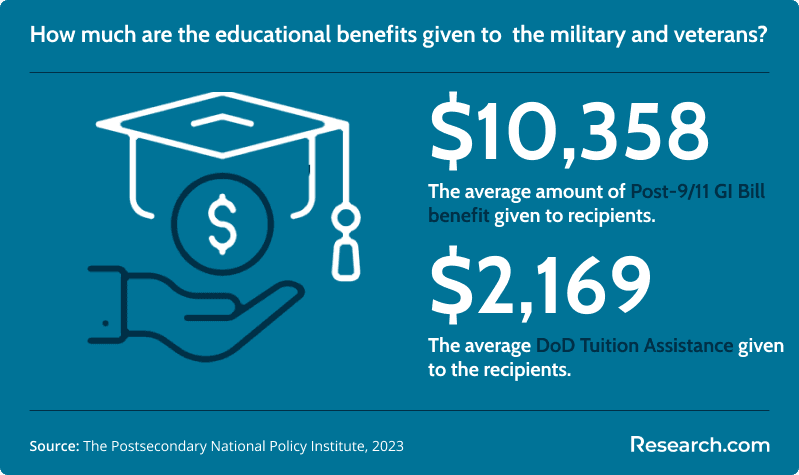
- Military and veterans benefits: Active duty service members, veterans, and eligible family members may qualify for benefits such as the GI Bill or Department of Defense Tuition Assistance. IPEDS data for the 2020-21 academic year shows that approximately 484,406 students used Post-9/11 GI Bill benefits and 223,959 used Department of Defense Tuition Assistance.
What are the prerequisites for enrolling in an online Associate in Legal Studies program?
Admission requirements vary by school, but most online associate in legal studies programs are designed for students beginning college-level study. Always confirm requirements directly with the admissions office before applying.
- High school diploma or GED: Most associate programs require proof of secondary school completion.
- Minimum GPA: Some colleges set a minimum GPA, while open-admission community colleges may be more flexible.
- Application form: Applicants usually submit basic personal, academic, and residency information.
- Placement tests: Some schools require English or math placement exams to determine whether college readiness courses are needed.
- Technology access: Online students need a reliable computer, stable internet access, and the ability to use the school’s learning platform.
- English proficiency: Non-native English speakers may need TOEFL, IELTS, or another approved proof of English proficiency.
What courses are typically in an online Associate in Legal Studies program?
Legal studies associate programs are built around legal knowledge, communication, research, and administrative precision. The exact course list differs by school, but many programs include the following subjects.
- Introduction to Legal Studies: Covers the U.S. legal system, court structure, legal terminology, and differences between civil and criminal law.
- Legal Research and Writing: Teaches students how to locate legal sources, use digital and print research tools, and draft memos, letters, and other legal documents.
- Civil Litigation: Explains how civil cases progress from filing through trial and appeal, including case preparation, discovery, and document management.
- Contract Law: Introduces contract formation, performance, breach, remedies, common law principles, and relevant parts of the Uniform Commercial Code.
- Tort Law: Examines civil wrongs involving personal, property, and economic harm, including negligence, intentional torts, product liability, defenses, and remedies.
What types of specializations are available in associate in legal studies programs?
Not every associate program offers formal concentrations, but many allow students to choose electives that align with a legal practice area or future transfer plan. Students considering graduate study later can compare long-term options such as online master’s in legal studies programs.
- Corporate law: Useful for students interested in business transactions, corporate compliance, contracts, or legal departments. Students planning business advancement may later consider broader options such as a bachelor’s degree or a 6 month MBA program.
- Criminal law: Fits students interested in courts, prosecution support, defense support, corrections, or public safety environments. A student focused mainly on criminal justice may also compare an online associate degree in criminal justice.
- Family law: Covers legal issues involving divorce, custody, adoption, juvenile matters, and domestic violence.
- Real estate law: Focuses on property transfers, leases, zoning, title issues, and real estate documentation.
- Intellectual property law: Introduces copyrights, trademarks, patents, and legal protection for creative and commercial assets.
How do you choose the best Associate in Legal Studies program?
The best program is not always the cheapest, fastest, or highest ranked. It is the program that fits your career target, transfer goals, budget, schedule, and learning needs.
| What to evaluate | Questions to ask before enrolling |
| Accreditation | Is the institution accredited by a recognized accreditor? Will credits transfer? Is the school eligible for federal financial aid? |
| Curriculum | Does the program include legal research, writing, ethics, litigation, and the practice areas that interest you? |
| Career alignment | Is the program broad legal studies, paralegal-focused, or designed mainly for transfer? |
| Faculty | Do instructors have legal practice, paralegal, compliance, court, or related professional experience? |
| Student support | Do online students receive tutoring, writing help, library access, career coaching, and technology support? |
| Internships | Are internships, externships, simulations, or employer partnerships available to online students? |
| Format | Are courses asynchronous, live, hybrid, or accelerated? Can you manage the weekly workload? |
| Cost | What is the total program cost after tuition, fees, textbooks, software, and technology requirements? |
Students who want to finish quickly should compare course intensity carefully. Some accelerated online associate degree programs can save time, but they may require heavier weekly study commitments.
How can you verify the accreditation and academic quality of an Associate in Legal Studies program?
Start by confirming institutional accreditation through the school’s website and the accreditor’s official directory. Accreditation matters because it can affect federal financial aid eligibility, credit transfer, employer recognition, and access to further education.
Then review program quality. Look for a curriculum that includes legal research, writing, ethics, litigation, and technology. Check whether faculty have legal or legal support experience. Ask for graduation rates, retention rates, internship availability, and post-graduation employment data where available. If you plan to continue beyond the associate level, compare transfer pathways and future options such as affordable online master’s in legal studies programs.
What career paths are available for graduates of Associate in Legal Studies programs?
An associate in legal studies can prepare graduates for legal support and law-adjacent roles. Job titles vary by employer, and some positions may require additional training, certification, experience, or local qualifications.
| Career path | Typical responsibilities | Important note |
| Paralegal | Conducts legal research, drafts documents, organizes case files, and supports attorneys before hearings, trials, or transactions. | Works under attorney supervision and cannot provide legal advice. |
| Legal assistant | Maintains records, schedules appointments, files documents, communicates with clients, and assists with case preparation. | Responsibilities may overlap with paralegal work depending on the employer. |
| Legal secretary | Handles legal correspondence, formatting, filing, calendars, and administrative office duties. | Strong document accuracy and legal terminology skills are important. |
| Court clerk | Manages court records, prepares dockets, handles exhibits, and supports courtroom administration. | May require knowledge of court procedures and local government hiring rules. |
| Claims adjuster | Reviews insurance claims, interprets policy language, investigates facts, and works with legal staff when disputes arise. | Insurance employers may require additional licensing or training. |
| Compliance officer | Monitors organizational practices, reviews policies, supports audits, and helps identify regulatory risks. | Some compliance roles prefer bachelor’s-level education or industry-specific experience. |
| Law enforcement officer | Applies legal knowledge in public safety settings after required academy and agency training. | An associate in legal studies does not automatically qualify someone for law enforcement. A properly accredited online criminal justice degree may provide a more direct route. |
According to the most recent U.S. Bureau of Labor Statistics work environment data, there were around 354,300 paralegal and legal assistant jobs in 2022, with many working in government and legal services firms.
How can career support services boost career readiness in online legal studies programs?
Career services can make a major difference for online legal studies students because legal support hiring often depends on writing samples, professionalism, attention to detail, and applied experience. Strong programs may offer resume reviews, interview coaching, internship placement help, mock interviews, employer information sessions, alumni networking, and guidance on legal writing portfolios.
Students interested in criminal law, courts, or public safety may also compare further education routes such as a criminal law degree online or a broader criminal justice bachelor’s pathway. Before enrolling, ask whether career services are available to online students in the same way they are available to campus students.
What is the job market for graduates with an Associate in Legal Studies program?
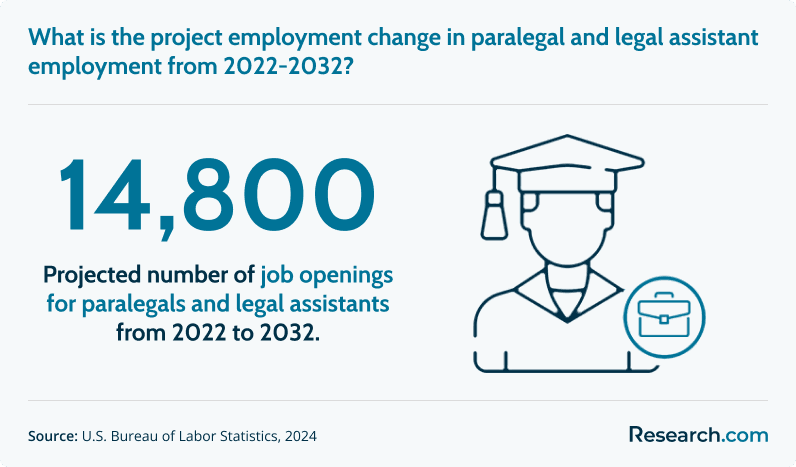
The job market for legal support graduates is steady but competitive. According to U.S. Bureau of Labor Statistics employment projections, employment for paralegals and legal assistants is expected to grow 4% from 2022 to 2032, faster than the average for all occupations.
Demand is influenced by law firms and other employers using paralegals and legal assistants to improve efficiency and control legal service costs. Compliance, risk management, corporate regulation, insurance, healthcare, and government operations may also create opportunities for graduates with strong legal research, writing, and document management skills.
How does an online Associate in Legal Studies degree compare to an accelerated paralegal program?
An online Associate in Legal Studies gives students a broad legal foundation and can support transfer into further education. An accelerated paralegal program is usually shorter and more focused on immediate paralegal job skills. The better choice depends on whether you want a degree, a fast job-focused credential, or a pathway to a bachelor’s program.
| Option | Best for | Trade-off |
| Online Associate in Legal Studies | Students who want a college degree, broad legal knowledge, and transfer potential. | Takes longer than many certificate or accelerated paralegal options. |
| Accelerated paralegal program | Students who already have some college background or want focused paralegal preparation quickly. | May offer less general education and fewer transfer benefits than an associate degree. |
Students focused on the fastest paralegal route can compare programs in this guide to an accelerated paralegal program.
How are emerging legal technologies impacting career opportunities?
Legal support work is becoming more technology-dependent. Students should expect employers to value comfort with electronic discovery, legal research platforms, e-filing systems, document automation, AI-assisted research tools, case management software, and secure digital communication.
Technology does not remove the need for legal support workers; it changes the skills employers look for. Graduates who can combine careful legal reasoning with digital fluency may be more competitive. Students planning long-term advancement can also compare legal studies with other high-return graduate pathways, including highest paying master’s degrees.
What are the cost-saving strategies for pursuing an online associate in legal studies degree?
Online programs can reduce commuting and relocation costs, but students still need a cost-control plan. Use the following strategies before committing to a program.
- Compare total program cost: Look beyond advertised tuition. Include fees, books, software, technology, and graduation costs. Students prioritizing tuition should review the cheapest online legal studies degree programs.
- Check residency rules: Public colleges may charge lower rates to in-state or in-district students.
- Transfer prior credits: Previously completed college courses may reduce both time and cost if accepted by the school.
- Apply early for aid: Federal aid, state grants, institutional scholarships, and private scholarships often have deadlines.
- Reduce materials costs: Ask whether the program uses digital texts, open educational resources, library access, or included legal databases.
- Avoid unnecessary retakes: Meet with an advisor before choosing electives, especially if you plan to transfer to a bachelor’s program.
What distinguishes an Associate in Legal Studies degree from an online paralegal associate degree?
An Associate in Legal Studies is usually broader. It introduces legal systems, legal theory, research, writing, ethics, and several areas of law. An online paralegal associate degree is typically more occupation-specific, with stronger emphasis on paralegal procedures, litigation support, legal document preparation, and attorney-supervised work.
Choose legal studies if you want flexibility across legal, compliance, government, and transfer pathways. Choose paralegal studies if your primary goal is paralegal employment and you want a curriculum aligned closely with that role.
How can an Associate in Legal Studies degree unlock interdisciplinary career paths?
Legal studies builds transferable skills: reading complex information, analyzing rules, writing clearly, organizing records, and communicating with precision. Those skills can apply beyond law firms in compliance, insurance, human resources, public administration, real estate, banking, corrections support, victim services, and regulatory operations.
Students comparing legal studies with public safety or forensic pathways may also review career information related to criminology degree salary. The best interdisciplinary path usually combines legal coursework with an industry focus, internship, or additional certification.
How can an Associate in Legal Studies degree facilitate a seamless transition to a bachelor's program?
An associate degree can reduce the time and cost of earning a bachelor’s degree if credits transfer efficiently. The key is planning transfer before enrolling, not after graduation. Ask whether the school has articulation agreements with four-year institutions and whether legal studies courses count toward the intended bachelor’s major.
Students who want a simpler transfer route should compare general education requirements, elective flexibility, and degree completion formats. Research.com also provides guidance on easiest bachelor’s degree options, which may help students compare workload and completion planning across majors.
How do industry partnerships enhance career outcomes in Associate in Legal Studies programs?
Industry partnerships can improve the practical value of an online legal studies program. Relationships with law firms, courts, public agencies, legal aid organizations, and corporate legal departments may lead to internships, guest speakers, mentoring, job shadowing, applied projects, or employer referrals.
When evaluating programs, ask which partners work with online students, how often internships are available, and whether placements can be completed remotely or near your location. Students comparing legal studies with broader justice pathways may also ask whether a criminal justice degree is worth it for their goals.
How can an Associate in Legal Studies degree broaden career avenues beyond conventional legal roles?
Legal studies can support careers where rules, documentation, investigation, and compliance matter. Graduates may apply their skills in regulatory compliance, risk management, government administration, insurance claims, real estate transactions, healthcare records, or corporate operations.
Students should be realistic: some roles beyond legal support may require industry experience, additional training, or a bachelor’s degree. If you are comparing college and noncollege career pathways, Research.com’s guide to trade school jobs can provide broader context for career planning.
What challenges do students encounter in online Associate in Legal Studies programs?
Online legal studies can be flexible, but it is not automatically easy. Students often struggle with legal terminology, dense reading assignments, citation rules, writing expectations, and the discipline required for asynchronous coursework.
| Common mistake | Better approach |
| Choosing a program without checking accreditation | Verify institutional accreditation before applying. |
| Looking only at tuition | Compare total cost, including fees, books, technology, and transfer risk. |
| Assuming online means self-paced | Check whether courses have weekly deadlines, live sessions, or proctored exams. |
| Ignoring writing support | Use tutoring and writing centers early, because legal writing is skill-based. |
| Waiting until graduation to think about jobs | Build a resume, writing sample, internship plan, and professional contacts while enrolled. |
Students comparing legal studies with adjacent investigation or forensic careers can also review options such as the cheapest forensic science college pathways, but they should confirm that any alternative program matches their intended job requirements.
How can professional networking and mentorship accelerate career growth after an Associate in Legal Studies degree?
Networking can help legal studies graduates learn about entry-level openings, employer expectations, local court procedures, and specialized practice areas. Useful networking channels include alumni groups, local bar association events for legal professionals, online legal forums, internship supervisors, faculty contacts, and professional associations for paralegals or legal assistants.
A mentor can review resumes, suggest certifications, explain law office culture, and help students avoid early career mistakes. Students exploring forensic or investigation-related academic environments may also find Research.com’s guide to colleges with strong forensic science programs useful for comparing adjacent career networks.
Can a one-year master's program online accelerate my legal career after an Associate in Legal Studies degree?
A one-year online master’s program cannot usually be entered directly after an associate degree unless the student first completes a bachelor’s degree or meets specific graduate admission requirements. However, accelerated graduate study may become relevant later for students who complete a bachelor’s degree and want to move into compliance, legal operations, policy, administration, or specialized legal studies roles.
If long-term graduate education is part of your plan, compare bachelor’s transfer options early and then research 1 year master programs online to see whether the timeline, admission standards, and career outcomes match your goals.
What are the opportunities for further education after completing an Associate in Legal Studies program?
After earning an associate degree, graduates can enter the workforce, transfer to a bachelor’s program, pursue paralegal-specific training, or add certifications. A student who wants deeper paralegal preparation may compare options such as a paralegal studies online degree.
Common next steps include a bachelor’s degree in legal studies, criminal justice, public administration, political science, business, or compliance-related fields. Students considering law school should understand that an associate degree alone is not enough; law school generally requires a bachelor’s degree first.
How do online Associate in Legal Studies programs stay current with emerging legal trends?
Strong online legal studies programs update coursework as legal practice changes. Relevant updates may include electronic discovery, digital evidence, privacy regulations, cybersecurity issues, AI-supported legal research, remote court procedures, and modern case management tools.
Students should ask how often the curriculum is reviewed and whether legal professionals contribute to course design. Those who want a faster route through updated coursework may also compare fast-track accelerated degree programs.
What is the long-term return on investment for further legal education?
ROI depends on the cost of each credential, how quickly you complete it, whether credits transfer, and whether the next degree unlocks better roles. An associate degree may offer a lower-cost entry point, but advancement into management, compliance, policy, or specialized legal work may require a bachelor’s or graduate degree.
Before continuing, compare cumulative education costs with realistic job outcomes. Students considering advanced academic routes should understand broader cost questions, including how much a PhD costs in the USA, even if a doctorate is not required for most legal support careers.
Is an Associate in Legal Studies degree a cost-effective investment compared to other college majors?
An associate in legal studies can be cost-effective when it leads to employment, transfers cleanly into a bachelor’s program, or helps a student avoid unnecessary debt. It may be less cost-effective if the student chooses an expensive private program without checking outcomes, transfer policies, or employer expectations.
Compare this degree against your career alternatives. If your primary goal is maximum earnings, review broader labor market information and program outcomes, including Research.com’s guide to college majors that can lead to higher pay. If your goal is legal support work, focus on accreditation, internships, writing training, and employer connections.
How can internships and practical training enhance job readiness?
Internships, externships, simulations, and legal clinic-style projects help students turn coursework into workplace skills. They also give students examples to discuss in interviews and may produce writing samples, supervisor references, and professional contacts.
Practical training is especially valuable for students without prior office, legal, or administrative experience. Ask whether internships are required, optional, remote-friendly, or available near your location. Students who want additional job-focused credentials can also review certification programs for careers that pay well.
What additional certifications and skills can enhance career prospects?
Legal studies graduates can strengthen their employability by adding skills that employers can immediately use. Valuable areas include legal research platforms, Microsoft Office, document management, e-filing, proofreading, legal citation, calendar management, client communication, confidentiality practices, and case management software.
Depending on the career goal, additional credentials may help. Paralegal certification, notary training, compliance certificates, court reporting skills, or specialized legal technology training can make a resume stronger. Students interested in criminal law or justice pathways may also consider a criminal law degree online as part of a longer education plan.
How can an Associate in Legal Studies degree pave the way for specialized government legal careers?
Government agencies need workers who understand rules, records, procedures, confidentiality, and public-facing communication. An associate in legal studies may support entry-level roles in courts, public agencies, regulatory offices, corrections support, administrative hearings, immigration-related support, or compliance units.
Some government careers require additional testing, background checks, citizenship requirements, physical standards, academy training, or higher degrees. Students exploring federal law enforcement pathways should review role-specific guidance, such as qualifications to become an ICE agent, before assuming a legal studies degree is sufficient.
What are the advantages of accelerated Associate in Legal Studies programs?
Accelerated associate in legal studies programs can help motivated students finish sooner, enter the workforce earlier, or transfer more quickly into a bachelor’s program. These programs may use shorter terms, year-round scheduling, or heavier course loads. Students comparing fast options can review accelerated associate degree online programs.
The main advantage is time. Finishing faster may reduce some education-related costs and allow earlier access to legal support roles such as paralegal or legal assistant. The main drawback is workload. Legal reading and writing take time, and compressed courses can be difficult for students who are working full time or managing family responsibilities.
Before choosing an accelerated format, ask whether courses are asynchronous, how many hours per week are expected, whether legal research support is available, and whether the faster schedule affects internship access or transfer planning.
Questions to ask before enrolling
- Is the institution accredited by a recognized accreditor?
- Does the program prepare students for legal support jobs, transfer, or both?
- Are online students eligible for the same tutoring, library, legal database, and career services as campus students?
- Does the curriculum include legal research, writing, ethics, litigation, and technology?
- Can I complete an internship or practical project online or near my location?
- What is the full cost after tuition, fees, textbooks, software, and technology?
- Will credits transfer into the bachelor’s program I may want later?
- What job titles have recent graduates pursued?
Key Insights
- An online Associate in Legal Studies is a practical entry point for legal support careers, but it does not qualify graduates to practice law or give legal advice.
- The strongest programs combine legal research, writing, ethics, litigation, technology, and practical experience rather than relying only on general legal theory.
- Cost varies widely. Public community colleges can be highly affordable, while private programs may cost significantly more, so total cost and outcomes should be compared carefully.
- Accreditation is non-negotiable. It affects financial aid, transferability, and employer confidence.
- Students who want paralegal work should compare broad legal studies programs with paralegal-specific associate degrees or accelerated paralegal programs.
- Legal technology skills are becoming increasingly important, especially in electronic discovery, digital research, e-filing, and case management.
- The best decision depends on your goal: immediate legal support employment, transfer to a bachelor’s degree, government work, compliance roles, or long-term advancement.
References
- College Board. (2023, November). Trends in college pricing 2023. College Board Research. Retrieved August 15, 2024.
- O*NET OnLine. (2024). 23-2011.00 - Paralegals and legal assistants. O*NET OnLine. Retrieved August 14, 2024.
- PNPI. (2023, November). Veteran students in higher education: Census overview. The Postsecondary National Policy Institute. Retrieved August 15, 2024.
- U.S. BLS. (2024, April 22). Occupational outlook handbook: Paralegals and legal assistants. U.S. Bureau of Labor Statistics. Retrieved August 14, 2024.
- U.S. BLS. (2024, July 13). Paralegals and legal assistants: Work environment. U.S. Bureau of Labor Statistics. Retrieved August 15, 2024.
Other Things You Should Know About Associate in Legal Studies Online Degree Programs
The 2027 best associate in legal studies online degree programs were ranked based on accreditation status, curriculum comprehensiveness, faculty expertise, student satisfaction, graduation rates, and post-graduation employment data.
To enroll in an associate in legal studies online program in 2027, applicants must typically have a high school diploma or GED. Some programs may require standardized test scores or prior coursework in related subjects like government or history for admission.
Most online associate in legal studies programs require 60 semester credits for graduation. Students usually complete general education, legal research, and introductory paralegal courses. Full-time learners often finish in about two years, while part-time schedules take longer.


