2027 What Is a BSN: Salary and Career Paths

Co-Founder and Chief Data Scientist
Choosing a Bachelor of Science in Nursing is not only a school decision; it affects how quickly you can become licensed, where you can work, how much flexibility you may have later, and whether you are prepared for graduate nursing roles. A BSN is increasingly valuable because many hospitals prefer or require bachelor’s-prepared nurses, while healthcare systems continue to manage complex patient needs, staffing shortages, and higher expectations for evidence-based care.
This guide is for high school students, transfer students, licensed practical nurses, registered nurses with an ADN or diploma, and career changers comparing nursing education options. It explains what a BSN includes, how long it takes, what admission requirements to expect, how BSN pathways compare with ADN and diploma routes, where graduates work, what salaries can look like, and how to decide whether a BSN is the right next step.
Quick answer: Is a BSN worth pursuing?
For many aspiring and current nurses, a BSN is worth considering because it can improve access to hospital roles, leadership tracks, public health positions, and graduate programs such as MSN, DNP, and nurse practitioner pathways. According to the Bureau of Labor Statistics (BLS, 2023), registered nurse employment is projected to grow by 6% from 2023 to 2033, which is much faster than the average for all occupations. A BSN does not guarantee a specific salary or job, but it can make a nurse more competitive in healthcare settings that prefer bachelor’s-prepared RNs.
What are the main benefits of earning a BSN?
- Stronger earning potential. BSN-prepared nurses earn an average salary of $81,220 per year (BLS, 2023), though pay varies by state, employer, specialty, shift, and experience.
- Broader career options. A BSN can support roles in hospitals, public health, case management, research, education, administration, and specialty clinical practice.
- Pathway to advanced practice. A BSN is commonly the academic foundation for graduate nursing programs, including Nurse Practitioner pathways. These advanced practice positions are projected to see a 40% growth in compensation from 2023 to 2033 (BLS, 2023).
- Higher job satisfaction potential. In 2023, approximately two-thirds of registered nurses in the United States reported satisfaction with their jobs (Statista, 2024), although workplace conditions, staffing levels, specialty, and employer culture strongly influence satisfaction.
- What is a BSN?
- What are the admission requirements for a BSN?
- How long does a BSN take?
- What skills do BSN students learn?
- How does a BSN compare with ADN and diploma nursing programs?
- What BSN pathways are available?
- Where can BSN nurses work?
- What careers can BSN graduates pursue?
- How can BSN nurses move into advanced roles?
- How much do BSN nurses earn?
- What should students know about accreditation and clinical standards?
- How should you choose a BSN program?
- Are self-paced RN-to-BSN programs a good fit for working nurses?
- What is the job outlook for BSN graduates?
- Is an accelerated nurse practitioner program a good next step?
- How can nurses enroll in fast RN-to-BSN online programs?
- How can BSN graduates become Nurse Practitioners?
- What should BSN graduates review before choosing direct entry NP programs?
- References and key insights
What is a BSN?
A Bachelor of Science in Nursing is an undergraduate nursing degree that prepares students for registered nurse licensure and professional nursing practice. Unlike shorter RN pathways that focus mainly on direct clinical care, a BSN usually includes broader preparation in nursing science, health assessment, leadership, research, public health, ethics, informatics, and care coordination.
Most traditional BSN students spend about four years in either campus-based or online nursing program options that combine general education, nursing coursework, laboratory practice, simulation, and supervised clinical experiences. Students who already have college credits, a previous degree, or RN licensure may qualify for shorter bridge or accelerated formats.
Typical BSN coursework includes:
- Foundational sciences and nursing basics. Students study anatomy and physiology, microbiology, pharmacology, pathophysiology, nursing fundamentals, and health assessment.
- Specialty nursing areas. Programs usually introduce students to medical-surgical nursing, pediatrics, mental health, maternal-child care, gerontology, and critical care concepts.
- Leadership and healthcare systems. BSN students learn how care teams operate, how policies affect nursing practice, and how nurses contribute to quality improvement and patient safety.
- Community and public health. Coursework often covers prevention, health promotion, population health, patient education, and care for underserved communities.
- Research and evidence-based practice. Students learn to evaluate clinical evidence and apply research-supported practices in patient care.
BSN programs also require supervised clinical practice. These placements allow students to build patient-care skills in real healthcare environments under the guidance of licensed professionals.
What are the educational requirements for enrolling in a BSN?
BSN admission requirements vary by school and pathway, but most programs evaluate academic readiness, prerequisite preparation, communication skills, and the applicant’s ability to succeed in a demanding clinical program.
- High school diploma or GED. Entry-level BSN applicants generally need proof of high school completion or an equivalent credential. Competitive programs may expect a minimum GPA, often 3.0 or higher.
- Prerequisite coursework. Before upper-division nursing courses, students usually complete general education and science courses such as English, psychology, sociology, nutrition, anatomy, physiology, microbiology, and statistics or math.
- Entrance exams, if required. Some institutions ask for SAT or ACT scores, while nursing schools may also require the Test of Essential Academic Skills (TEAS) to assess readiness in reading, math, science, and English.
- Recommendation letters. Many colleges, including some of the easiest nursing schools to get into, may request two to three references from instructors, employers, supervisors, or healthcare professionals.
- Clinical compliance requirements. Before clinical rotations, students commonly need background checks, immunization records, drug screening, CPR certification, health documentation, and proof of liability coverage if required by the school or placement site.
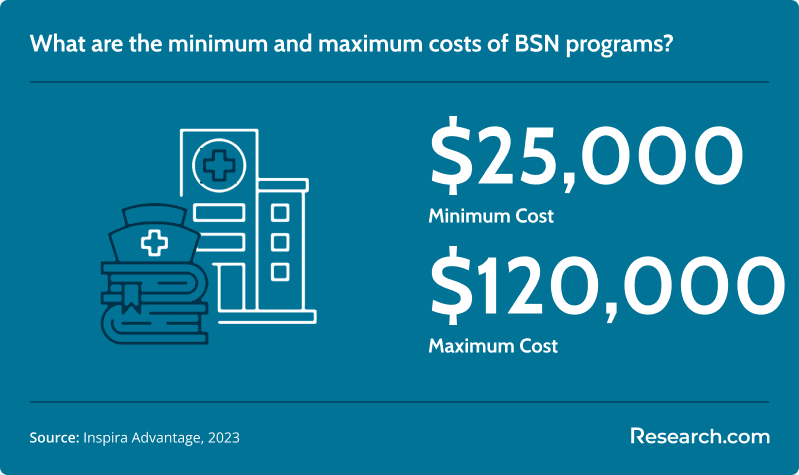
Cost planning should begin early. Tuition for this type of nursing program can range from $25,000 to $120,000 (Inspira Advantage, 2023), and that figure may not include books, uniforms, clinical fees, testing fees, commuting, background checks, or lost work hours.
How long does it take to complete a BSN?
The BSN timeline depends on your starting point. A first-time college student usually needs more time than an RN who already completed an associate degree or diploma program.
| BSN pathway | Typical student | Common completion time | Best fit |
| Traditional BSN | High school graduate or first-time college student | 4 years | Students who want a full undergraduate nursing experience with general education and clinical preparation |
| Accelerated BSN | Student with a bachelor’s degree in another field | 12 to 18 months | Career changers who can handle a fast, intensive schedule |
| RN-to-BSN | Licensed RN with an ADN or diploma | 1 to 2 years | Working nurses who want a bachelor’s degree for career mobility or graduate school |
| ADN-to-BSN or diploma-to-BSN | RN with prior nursing education below the bachelor’s level | 1 to 2 years | Nurses seeking leadership, specialty, public health, or advanced education options |
Students entering online nursing programs should confirm whether the online format applies only to theory courses or whether campus visits, skills labs, simulations, or local clinical placements are required.
What skills can students gain from pursuing a BSN?
A strong BSN program develops more than bedside technique. It prepares nurses to think clinically, communicate clearly, coordinate care, use evidence, and adapt to changing healthcare environments.
- Clinical judgment and critical thinking. Students learn to assess patients, recognize changes in condition, prioritize care, and make decisions using evidence and professional standards.
- Direct patient care. BSN training includes medication administration, patient monitoring, documentation, care planning, procedure support, and use of healthcare technology.
- Team leadership. Students study delegation, supervision, conflict resolution, quality improvement, and coordination across interdisciplinary teams.
- Patient and family communication. Nurses must explain conditions, answer questions, provide emotional support, and educate patients in ways they can understand.
- Cultural competence. BSN programs often emphasize respectful care for patients from different cultural, linguistic, socioeconomic, and religious backgrounds.
- Evidence-based practice. Students learn how to interpret research, question outdated routines, and apply current evidence to improve care quality.
- Public health awareness. Coursework in ethics, policy, prevention, and community health helps nurses understand healthcare beyond the individual patient encounter.
- Adaptability with technology. Modern nurses use electronic health records, clinical decision-support tools, telehealth platforms, medication systems, and monitoring devices, making digital fluency increasingly important.
How does BSN compare with other nursing degree types?
The BSN, Associate Degree in Nursing, and Diploma in Nursing are common pathways toward registered nurse licensure. All three can prepare graduates to take the NCLEX-RN exam, but they differ in length, academic depth, career flexibility, and employer preference.
| Pathway | Typical length | Main focus | Career considerations |
| BSN | 4 years | Clinical care, leadership, research, public health, evidence-based practice, and healthcare systems | Often preferred by hospitals and useful for graduate nursing programs |
| ADN | 2 years | Core clinical nursing skills and direct patient care | Faster entry into RN practice, but some employers may prefer a BSN for advancement |
| Diploma in Nursing | 2-3 years | Hospital-based clinical training | Less common today and may include less academic coursework than ADN or BSN programs |
Some students also explore accelerated online RN programs 1 year when they already have relevant coursework or healthcare experience. These programs can be appealing for speed, but students should carefully verify accreditation, clinical placement support, state authorization, and NCLEX eligibility before enrolling.
Clinical expectations also differ by pathway. BSN students complete 700–1,000+ hours of clinical practice in multiple specialties, ADN programs require around 500–700 clinical hours, and diploma programs vary but are heavily clinical-focused. Students should check each program’s handbook and state board requirements because clinical structure can affect licensure readiness.
NCLEX outcomes can also help students compare preparation quality. According to the 2024 NCLEX Pass Rates, 91.92% of baccalaureate degree holders passed the exam, compared with 90.83% for diploma holders and 90.63% for associate degree holders.
Are there other paths to obtaining a Bachelor of Science in Nursing degree?
Yes. The best BSN pathway depends on whether you are new to college, already licensed as an RN, changing careers, or moving from a diploma or ADN into a bachelor’s degree.
- RN-to-BSN program. This route is built for licensed RNs who already completed an ADN or diploma and want to earn a bachelor’s degree. Programs commonly take 1 to 2 years and are often online to accommodate working nurses.
- Direct-entry BSN program. Some universities admit students from high school directly into a BSN pathway. Students typically complete general education and nursing requirements in a 4 to 5-year structure, depending on the school’s progression rules.
- ADN-to-BSN program. This bridge option is for nurses who hold an Associate Degree in Nursing and want bachelor’s-level preparation in leadership, research, population health, and advanced nursing concepts. Many are designed for working RNs and can often be completed online.
- Diploma-to-BSN program. Nurses who entered the profession through a hospital-based diploma program can use this pathway to earn a bachelor’s degree while building academic preparation in areas that may not have been emphasized in the original diploma curriculum.
- Accelerated BSN program. Students who already hold a bachelor’s degree in another discipline may complete nursing-specific coursework in a compressed format, commonly 12 to 18 months.
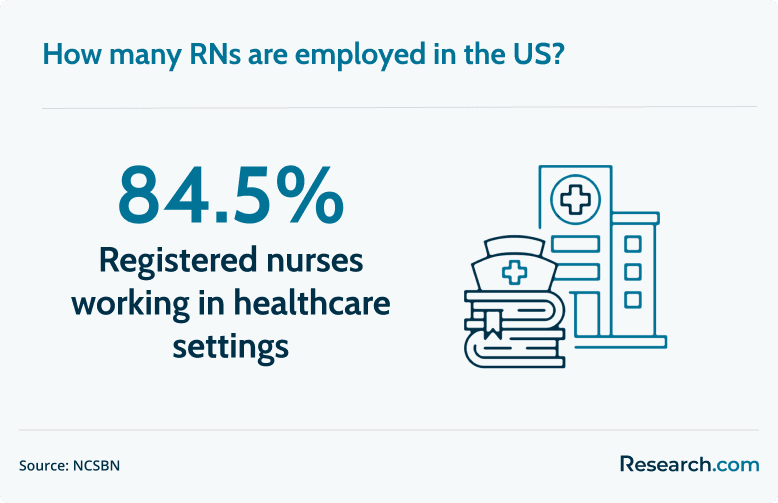
Is nursing school worth it? From an employment perspective, nursing remains a strong field. According to the National Council of State Boards of Nursing (NCSBN, 2025), 4,901,304 of the 5,796,312 licensed nurses in the US are actively practicing. That equals 84.5% of RNs working across healthcare settings in the US.
Where do BSN nurses work?
BSN nurses work in direct care, community health, education, case management, occupational health, research, and administrative environments. For readers comparing the highest paying medical jobs with the least schooling, nursing requires more preparation than many short healthcare programs, but it can offer stronger long-term mobility.
- Hospitals. BSN nurses commonly work in emergency departments, intensive care units, surgical floors, labor and delivery units, medical-surgical units, oncology, pediatrics, and specialty care units.
- Clinics and outpatient centers. These roles may involve triage, patient education, chronic disease management, care coordination, preventive screenings, and procedure support.
- Long-term care and rehabilitation facilities. BSN nurses may supervise teams, manage care plans, monitor recovery, support older adults, and educate families.
- Home health care. Nurses visit patients at home to manage medications, monitor conditions, provide wound care, support recovery, and teach caregivers.
- Public health organizations. BSN-prepared nurses may work in schools, community clinics, local health departments, prevention programs, and agencies involved in emergency response.
- Corporate and occupational health. Some nurses manage employee wellness, workplace injuries, immunizations, health screenings, and compliance programs.
- Academic and training settings. BSN nurses may serve as clinical instructors or staff development educators, though many faculty roles require graduate education.
- Insurance companies and managed care organizations. Nurses may work in utilization review, case management, care navigation, claims review, and quality improvement.
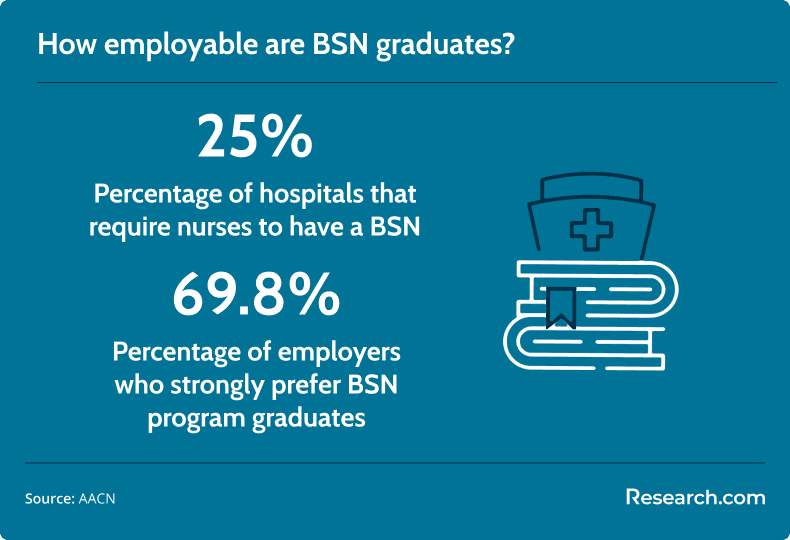
Employer expectations matter. According to the American Association of Colleges of Nursing (AACN, 2023), 25.0% of hospitals and other healthcare settings require new hires to have a bachelor’s degree in nursing, while 69.8% of employers strongly prefer BSN program graduates.
What are the main career paths available for BSN graduates?
A BSN can lead to bedside nursing, specialty practice, leadership, community health, education support, research, and graduate-level nursing pathways. Some roles are available immediately after RN licensure, while others require experience, certification, or an advanced degree.
| Career path | Typical responsibilities | Additional education or experience often needed |
| Staff Nurse or Registered Nurse | Provide direct patient care, administer medications, monitor patient conditions, document care, and educate patients | RN license after passing NCLEX-RN |
| Charge Nurse or Nurse Manager | Coordinate shifts, supervise nursing staff, support quality care, and manage unit workflow | Clinical experience and leadership ability |
| Nurse Educator | Teach nursing students or train practicing nurses in clinical settings | MSN is commonly required for many academic roles |
| Nurse Practitioner | Diagnose and treat illness, prescribe medications where permitted, and manage patient care in a specialty | MSN or DNP and advanced practice certification |
| Clinical Nurse Specialist | Improve care quality in a specialty such as cardiac, neonatal, or oncology nursing | Graduate education and advanced certification often required |
| Nurse Anesthetist | Provide anesthesia care for surgeries and procedures | Advanced graduate education and certification |
| Nurse Case Manager | Coordinate services for patients with chronic or complex needs and communicate with providers and insurers | RN experience; certification may help |
| Public Health Nurse | Promote prevention, support community programs, and address population health needs | BSN is often useful because of public health coursework |
| Healthcare Administrator | Manage teams, departments, budgets, operations, or care delivery systems | Management experience or graduate study such as programs leading to healthcare administration master's degree jobs |
| Research Nurse | Support clinical trials, collect data, coordinate participants, and contribute to healthcare innovation | Research training and experience; some roles prefer graduate education |
How can BSN nurses advance their careers?
Career advancement for BSN nurses usually comes through one or more of four routes: experience, specialization, certification, or graduate education. The right route depends on whether the nurse wants more clinical authority, higher leadership responsibility, better schedule flexibility, or a move away from bedside care.
- Earn an MSN. Nurses who want to become Nurse Practitioners, Clinical Nurse Specialists, nurse educators, or advanced clinical leaders often compare options such as the cheapest online MSN programs.
- Pursue a DNP or Ph.D. A Doctor of Nursing Practice can support high-level clinical leadership, while a Ph.D. is often more research-focused. These degrees may appeal to nurses interested in policy, scholarship, executive practice, or academic leadership.
- Move into administration. Nurses who want to manage departments, operations, or healthcare organizations may consider business or administration programs, including online MHA programs or MBA pathways.
- Build specialty expertise. Experience in areas such as critical care, oncology, pediatrics, emergency nursing, informatics, quality improvement, or case management can open doors to higher-responsibility roles.
- Seek employer support. Tuition reimbursement, residency programs, preceptor support, certification reimbursement, and internal leadership tracks can reduce the cost and risk of advancement.
Is an Accelerated Nurse Practitioner Program Right for You?
An accelerated nurse practitioner pathway may make sense for BSN graduates who already know they want advanced clinical practice and can manage a demanding academic and clinical workload. These programs can shorten the route to NP preparation, but speed should not be the only factor. Students should compare accreditation, clinical placement support, faculty credentials, state authorization, certification preparation, and whether the schedule is realistic alongside work and family responsibilities.
Before choosing a fast graduate path, review whether the curriculum aligns with your intended population focus, such as family practice, acute care, pediatrics, psychiatric-mental health, or adult-gerontology. You can begin comparison research with an accelerated nurse practitioner program guide.
How Can I Enroll in the Fastest RN to BSN Online Programs?
Fast RN-to-BSN programs are usually designed for licensed RNs who already completed substantial nursing coursework. To enroll efficiently, confirm that your RN license is active, request official transcripts early, ask how many credits will transfer, and verify whether the program requires clinical projects, practicums, community health hours, or capstone work.
Do not choose the shortest program automatically. A strong accelerated RN-to-BSN option should still have recognized accreditation, clear faculty access, transparent tuition and fees, realistic weekly workload expectations, and support for working nurses. Reviewing the fastest RN to BSN online programs can help you compare accelerated structures before applying.
How much is the salary of BSN Nurses?
RN pay varies widely by location, employer, specialty, union status, shift differentials, overtime, and years of experience. The average hourly rate of RNs in hospitals is $39 and approximately $81,000 per year (ZipRecruiter, 2025). BLS wage data also show that some industries pay registered nurses more than others. Below is an overview of BSN nurse salaries in 2023 across selected sectors according to BLS.
| Industry | Salary | What BSN nurses may do in this setting |
| Federal, State, and Local Government | $114,860 | Work in public health agencies, correctional healthcare, military settings, VA hospitals, emergency preparedness, regulatory compliance, or policy-related roles |
| Employment Services | $110,230 | Serve as travel nurses, temporary contract nurses, or staffing agency RNs filling urgent workforce gaps |
| Pharmaceutical and Medicine Manufacturing | $108,640 | Support clinical research, drug safety, patient trials, regulatory work, and healthcare product development |
| Navigational, Measuring, Electromedical, and Control Instruments Manufacturing | $106,470 | Work with medical device companies on product training, clinical trials, medical technology testing, or equipment improvement |
| Merchant Wholesalers, Nondurable Goods | $103,940 | Support medical supply distribution, product education, technical support, and sales-related clinical guidance |
Salary should not be evaluated in isolation. Government, travel, research, manufacturing, and specialty roles may have different schedules, stress levels, travel expectations, credential requirements, and career ladders. For comparison, RN salaries are typically significantly higher than how much do certified nursing assistants make, but nursing also requires more education, licensure, and professional responsibility.
The chart below outlines the industries with the highest concentration of employed registered nurses.
What should I consider about BSN program accreditation and clinical standards?
Accreditation is one of the first items to verify before applying to any BSN program. It can affect licensure eligibility, transfer credit, graduate school admission, employer recognition, and access to some forms of financial aid. Students should confirm both institutional accreditation and nursing program accreditation, then check that the program meets the requirements of the state board of nursing where they plan to become licensed.
Clinical standards deserve the same attention. Ask where clinical placements occur, whether the school arranges them, how many hours are required, what specialties are included, and whether online students must find their own sites. Some RN-to-BSN programs structure clinical learning differently than prelicensure BSN programs, so students comparing flexible options may want to review Does Capella RN to BSN have clinicals? for context on how programs may handle practice-based requirements.
What factors should I consider when choosing a BSN program?
A good BSN program should match your licensure goals, budget, schedule, learning style, and career plans. Rankings can be useful, but they should not replace a careful review of accreditation, outcomes, costs, and clinical quality.
| Factor to check | Why it matters | Questions to ask |
| Accreditation and state approval | Protects licensure eligibility and employer recognition | Is the nursing program accredited and approved by the state board of nursing? |
| NCLEX preparation | Passing the NCLEX-RN is required for RN licensure | What are recent NCLEX pass rates and how does the program support students at risk? |
| Clinical placement support | Clinical experiences are essential for prelicensure nursing preparation | Does the school arrange placements, or must students find their own sites? |
| Total cost | Tuition is only one part of nursing school expenses | What are the full costs for fees, books, testing, uniforms, travel, and background checks? |
| Format and flexibility | Online, hybrid, evening, and accelerated formats affect workload | How many hours per week should students expect to study, attend labs, and complete clinicals? |
| Transfer credit policy | Accepted credits can reduce time and cost | How many prior credits will apply, and are science courses subject to expiration rules? |
| Student support | Nursing programs are academically and emotionally demanding | Are tutoring, advising, simulation labs, career services, and mental health resources available? |
Students considering a shorter second-degree route can compare the top accelerated BSN online programs, but should verify that any accelerated option still provides rigorous clinical preparation and meets licensure requirements.
Are self-paced online RN-to-BSN programs suitable for working professionals?
Self-paced RN-to-BSN programs can work well for licensed nurses who need flexibility around rotating shifts, family responsibilities, or unpredictable work schedules. They are typically best suited for disciplined students who can manage deadlines without frequent live class meetings.
However, flexibility does not remove the need for quality checks. Working nurses should confirm accreditation, tuition structure, faculty access, transfer credit rules, and whether projects or clinical-style practice experiences are required. A comparison of self-paced online RN-to-BSN programs can help identify options that balance speed, independence, and academic support.
Common mistakes to avoid when choosing a BSN program
- Choosing a program before checking accreditation. This can create problems with licensure, employment, transfer credits, or graduate school admission.
- Looking only at tuition. Nursing school costs may also include lab fees, clinical fees, exams, uniforms, supplies, travel, and reduced work hours.
- Assuming online means fully remote. Many online nursing programs still require in-person labs, simulations, practicums, or clinical placements.
- Ignoring state authorization. An online program may not meet requirements in every state, especially for licensure-focused pathways.
- Prioritizing speed over fit. Accelerated programs can be efficient, but they can also be difficult for students who need to work full time.
- Assuming salary outcomes are guaranteed. Pay depends on location, experience, specialty, employer type, overtime, shift, and local labor market conditions.
- Relying only on rankings. A highly ranked program may still be too expensive, too far away, or poorly aligned with your licensure state or schedule.
What is the job outlook for graduates with a Bachelor of Science in Nursing?
The employment outlook for registered nurses remains favorable. BLS data for 2024 ranks Registered Nurses as sixth in the occupations with the most job growth in 2023 and projects continued growth through 2033. For BSN graduates, this demand may be strongest in hospitals, specialty care, long-term care, outpatient care, public health, case management, and advanced practice pipelines.
Global demand also shapes the nursing labor market. The World Health Organization reported a global shortage of 4.5 million nurses by 2030 (WHO, 2024). That shortage does not mean every graduate can work anywhere immediately, because licensure, language requirements, immigration rules, credential evaluation, and local hiring conditions still matter. However, it does show that nursing remains a critical workforce priority in many regions.
Technology is also changing nursing work. Electronic health records, telehealth, remote monitoring, clinical decision-support tools, and AI-assisted workflows are becoming more common. These tools may reduce some administrative burden, but they do not replace nursing judgment, patient education, hands-on assessment, ethical decision-making, or relationship-based care.
How can I transition from a BSN to a Nurse Practitioner role?
To become a Nurse Practitioner after earning a BSN, you generally need RN licensure, clinical experience, and completion of an accredited graduate nursing program in a specific NP population focus. Common options include MSN and DNP pathways. Students should compare curriculum focus, clinical placement support, certification preparation, faculty expertise, and state licensure alignment before applying.
Cost is also important because NP education can require several years of graduate study and supervised clinical training. If affordability is a priority, review options related to how much is nurse practitioner school and compare total program expenses, not only advertised tuition.
What should BSN graduates consider when exploring direct entry NP programs?
BSN graduates comparing direct entry Nurse Practitioner programs should look beyond convenience. The right program should match the student’s intended specialty, meet accreditation expectations, provide strong clinical placements, prepare graduates for certification, and be authorized for the state where the student plans to practice.
Before applying, ask whether the program requires RN experience, how clinical sites are secured, what certification exams graduates pursue, and whether the schedule is realistic for working nurses. A direct entry NP programs list can be useful for narrowing options, but final decisions should be based on fit, licensure alignment, cost, and outcomes.
References
- American Association of Colleges of Nursing. (2023). New graduate employment data. American Association of Colleges of Nursing. Retrieved March 12, 2025, from https://www.aacnnursing.org/news-data/research-data-center/new-graduate-employment-data
- Bureau of Labor Statistics. (2024, January 18). Nurse anesthetists, nurse midwives, and nurse practitioners. U.S. Bureau of Labor Statistics. Retrieved March 12, 2025, from https://www.bls.gov/ooh/healthcare/nurse-anesthetists-nurse-midwives-and-nurse-practitioners.htm#tab-6
- Bureau of Labor Statistics. (2024, January 18). Registered nurses. U.S. Bureau of Labor Statistics.
- Bureau of Labor Statistics. (2024, January 18). Occupations with the most job growth, 2023 and projected 2033. U.S. Bureau of Labor Statistics.
- Gallup. (2023, July 13). Americans' ratings of professions stay historically low. Gallup. Retrieved March 12, 2025, from https://news.gallup.com/poll/655106/americans-ratings-professions-stay-historically-low.aspx
- National Council of State Boards of Nursing. (2024). NCLEX statistics: 2024 quarter 4 pass rates. National Council of State Boards of Nursing. Retrieved March 12, 2025, from https://www.ncsbn.org/public-files/NCLEX_Stats_2024_Q4_Passrates.pdf
- Statista. (2024, February 15). Current job satisfaction in nursing career in the United States as of 2023. Statista. Retrieved March 12, 2025, from https://www.statista.com/statistics/1389150/current-job-satisfaction-nursing-career-united-states/
- World Health Organization. (2024, March 12). Nursing and midwifery. World Health Organization. Retrieved March 12, 2025, from https://www.who.int/news-room/fact-sheets/detail/nursing-and-midwifery
- Salary.com. (2024, March 12). Certified nurse anesthetist (CRNA) salary. Salary.com. Retrieved March 12, 2025, from https://www.salary.com/research/salary/benchmark/certified-nurse-anesthetist-crna-salary
Key Insights
- A BSN is one of three major RN education pathways in the US, alongside the ADN and Diploma in Nursing, but it usually offers broader preparation in leadership, research, public health, and evidence-based care.
- The 2024 NCLEX pass rate for BSN graduates was 91.92%, compared with 90.83% for diploma graduates and 90.63% for associate degree graduates.
- Employer preference is a major reason to consider a BSN: 25.0% of hospitals and other healthcare settings require a bachelor’s degree in nursing for new hires, and 69.8% strongly prefer BSN graduates.
- BSN pathways are not one-size-fits-all. Traditional BSN, accelerated BSN, RN-to-BSN, ADN-to-BSN, and diploma-to-BSN programs serve different students and timelines.
- Cost can be substantial, with tuition ranging from $25,000 to $120,000, so students should compare total cost, transfer credit, financial aid, clinical travel, and work schedule impact.
- Government nursing roles show the highest mean salary among the listed sectors at $114,860 per year, but salary depends heavily on location, specialty, employer, schedule, and experience.
- A BSN can support graduate study for Nurse Practitioner, Clinical Nurse Specialist, Nurse Educator, CRNA, leadership, research, and healthcare administration roles, but advanced positions often require additional education and certification.
- The safest program choice is accredited, state-approved, transparent about outcomes, realistic about workload, and strong in clinical placement support.
Other Things To Know About BSN Degree
To enroll in a BSN program in 2027, candidates typically need a high school diploma or equivalent, completed prerequisites in subjects like biology and chemistry, and a satisfactory GPA. Some programs may also require passing the TEAS exam and submitting letters of recommendation.
Most BSN programs require about 500 to 1,000 clinical hours before graduation. These hours are completed in hospitals, clinics, or community health settings and are supervised by faculty or preceptors. State boards of nursing set licensing rules, but schools decide the exact clinical-hour total.